One year after Texas' deadliest flood in decades, survivors rebuild as families still seek answers
Saturday marks one year since floods ripped through Texas' Hill Country region, claiming 137 lives and leaving behind devastation in the wake of the waters. The flash floods remain the second-deadliest flood disaster in state history, with the Thrall flood of 1921 still the most devastating at 215 deaths.
Since then, communities have stayed on the path to rebuilding homes and businesses impacted by the storm. It's been estimated that the floods caused between $18 to 22 billion in damage across the region. Meanwhile, questions have been raised about the safety measures meant to keep neighbors safe, while leaders at Camp Mystic have faced hearings and state action aimed at accountability.
How did the Hill Country floods unfold? A tragedy's timeline
The flash flooding was partly triggered by the remains of Tropical Storm Barry, which hit Mexico just days earlier on June 29, 2025. The atmosphere was loaded with water vapor from the storm; the vapor moved north into the middle parts of Texas.
Days prior, the National Weather Service was tracking the possibility of rain for Central Texas. As early as 3:30 a.m. on July 3, more than 24 hours before the flooding, NWS warned of potential "isolated flooding". At 2:30 p.m., the agency issued an official flood watch for western portions of the Hill Country, including Kerr County.
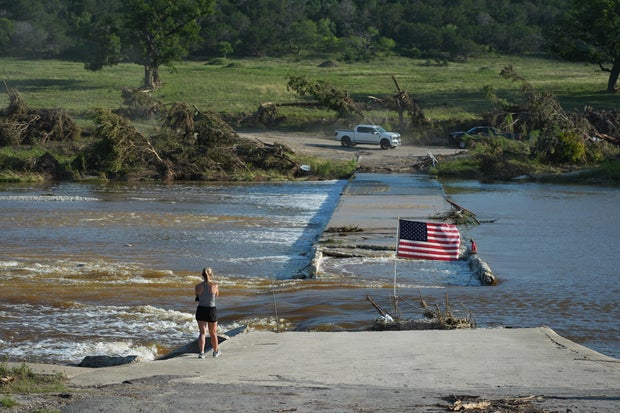
The first flash flood warning came at 11:42 p.m. on July 3 for Medina, just south of Kerr County, urging people to immediately get to higher ground. By 1:14 a.m. on July 4, flash flood warnings were issued for Ingram and Hunt too, where several summer camps – including Camp Mystic – were located. The warnings, again, urged people to seek higher ground.
The Guadalupe River at Hunt, meanwhile, according to NOAA's National Water Prediction Service, had barely started to rise. It wasn't until 3 a.m., about two hours after the warning was issued, that the river hit 10 feet, what NOAA labels its "minor flooding" stage. That also marks the "action" stage, the level at which, NOAA says, when reached by a rising stream, "some type of mitigation" becomes necessary to prepare for possibly significant activity.
From there, the river surged. In just 10 minutes, it reached 12 feet, the moderate flooding stage.
An hour later, at 4:10 a.m., the Guadalupe River reached 22 feet – the major flooding stage.
At 5:10 a.m., the river hit its peak, cresting at 37.52 feet.
More than a foot of rain fell in less than 12 hours on July 4, over a large part of the western Guadalupe River basin. Communities like Kerrville and Hunt were the headwaters of the river and among those most impacted.
The floodwaters rose 26 feet in just 45 minutes before daybreak that day, washing away homes and vehicles. But the danger persisted as torrential rains continued to hit communities near San Antonio the next day. Flash flood warnings and watches remained in effect.
Search efforts began in earnest. Crews used helicopters, boats and drones to look for victims and handle rescues. On July 6, 2025, President Donald Trump signed a major disaster declaration for Kerr County, and Gov. Greg Abbott visited flood-damaged areas.
Rain wasn't the only factor in the flooding; experts also said the soil played a key role.
"The Hill Country has very unique soil conditions," said Dr. Nick Fang, a civil engineering professor and flood infrastructure researcher at the University of Texas at Arlington. "The soil layer is pretty thin, and underneath is mostly granite and limestone. The ground just can't take in much water."
With nowhere to go, rainwater rushed across the surface, straight into creeks and streams, creating rapid flash floods with little time for residents to respond.
Texas hydrologists also told CBS News Texas last year that this kind of outcome was a known risk; the region along the Guadalupe River Basin is informally known as "Flash Flood Alley" and has seen deadly floods before, including the 1987 flood in Comfort. Ten people died including children after camp buses were caught in the rising current. Similar deadly floods happened again in 2015. Further back in history, in 1869, the Guadalupe crested to above 40 feet.
Responding to tragedy at Camp Mystic
Of the 137 people who died in the flooding, 27 of them were campers and counselors from Camp Mystic, a private Christian girls' summer camp in Hunt operated by the Eastland family.
It was established in 1926 by a University of Texas coach, then purchased by a couple in 1939. It remained in operation continuously, except during the years 1943-1945; during that period, the federal government leased it as a rehabilitation camp for Army Corps veterans of World War II.
Dick and Tweety Eastland owned the camp starting in 1974, with their family members also helping with camp operations. Dick, who was the camp's director, also died in the flooding while trying to save girls at the camp. About 550 children were at the camp when the flooding struck.
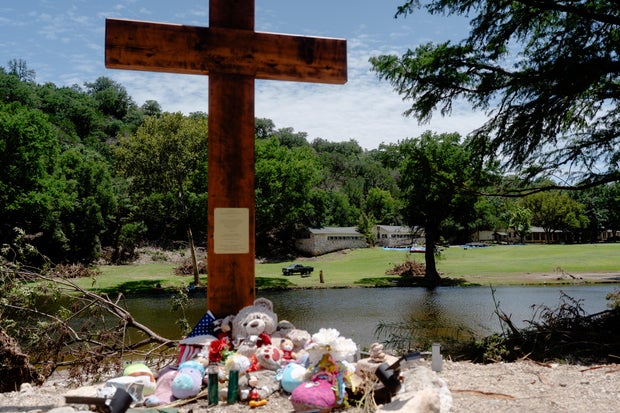
In the wake of the deaths of the 27 campers and counselors, families of the victims demanded answers and accountability from state leaders.
In February 2026, several families sued Texas officials, with one claiming the Department of State Health and Services (DSHS) violated their daughters' "constitutional rights to life and bodily integrity." That suit claimed DSHS licensed the camp despite its failure to comply with state law requiring youth camps to maintain a written and posted evacuation plan for each building. The lawsuit also said the department inspected and licensed the nearly 100-year-old camp two days before the flood. The inspection found no deficiencies or violations at the camp in a long list of health and safety criteria.
Updated legislation from 2025 mandates annual approval of evacuation plans, enhanced emergency training, and posting illuminated evacuation routes. In December of 2025, the camp announced that it was implementing safety upgrades and installing the new warning system. That announcement came just three months after Camp Mystic said it planned to reopen its Cypress Lake location, which is separate from the part of the camp that was hit by the July 2025 flood. However, Lt. Gov. Dan Patrick sent DSHS a letter urging the agency not to issue a camp license to Camp Mystic in 2026 after the families filed suit.
In April 2026, the the Texas Rangers joined the investigation into the camp led by DSHS. That same month, Texas lawmakers sharply criticized the camp's operators, blasting their evacuation planning ahead of the storm and hearing emotional testimony.
Camp Mystic withdrew its application for a summer 2026 camp license after that first public hearing.
Nearly a year after the floods, Camp Mystic filed for Chapter 11 bankruptcy reorganization. The camp estimated liabilities between $10 million and $50 million, a significantly wider range than previously known. The camp said it has assets between $100,001 and $500,000, and that funds will be available for distribution to between 1,000 and 5,000 unsecured creditors.
Joyce W. Lindauer, a bankruptcy attorney not involved in the case but who has been following it closely, said the filing is unsurprising given the scale of the camp's legal exposure
"Kind of not a surprise to me that they would file bankruptcy because that is a way for them to deal with a number of the problems they are currently facing," Lindauer said.
Under Chapter 11, Camp Mystic could attempt to reorganize and continue operating - or liquidate entirely. Lindauer believes liquidation is the more realistic outcome.
"Given the size of the debt and the litigation they were involved in, I would think they would be opting more for a liquidating case, but I don't know," Lindauer said.
Sam Taylor, an attorney representing the families of six of the victims, told CBS News Texas the filing was an attempt to stall accountability.
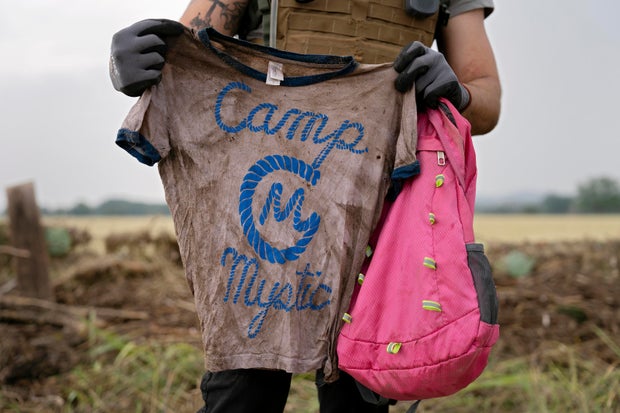
"Every step of the way, they've tried to avoid accountability," Taylor said, calling the bankruptcy "another effort by them to avoid a trial."
The bankruptcy filing happened days after a new investigative report into the failed evacuation of Camp Mystic during the deadly July 2025 floods identified a series of missteps that led to the deaths at the camp. Investigators told a joint Texas House and Senate committee they reached four conclusions in their exhaustive review of what contributed to the deaths of 28 people, including the camp's director.
"Nobody had any instruction whatsoever about what to do in an emergency. Particularly, here we are talking about a flood emergency," state investigator Casey Garrett told lawmakers. "There were no specific assignments given to staff."
Among the findings, investigators said Camp Mystic lacked written emergency plans that complied with state requirements. They also found the camp did not adequately prepare for the storm and did not evacuate in a timely manner despite having ample opportunities.
Investigators further concluded that reunification efforts and incident management were chaotic and had traumatic effects on families.
Mary Elizabeth Eastland, the camp's chief health officer, saw her nursing license temporarily suspended. A week later, the Texas Board of Nursing said she could practice with a limited license.
According to an agreed order approved on May 19, the board found Eastland failed to ensure the camp's emergency nursing manual included adequate emergency planning procedures, failed to contact 911 after campers and staff were reported missing and failed to report the deaths to state authorities within the required 24-hour timeframe. According to the order, this created an unsafe environment that likely contributed to physical, emotional and psychological harm as well as loss of life.
The order also alleges Eastland allowed camp nurses to administer medications under inadequate standing orders between March and July 2025.
Demands for improved emergency response in Texas
Lawmakers and community leaders also faced scrutiny over a missed opportunity to improve emergency response.
House Bill 13 was discussed in one legislative session prior to the floods. It aimed to create a new government council to develop a statewide strategic disaster plan to improve emergency communication. It included provisions for outdoor warning sirens — a system that could have helped counties like Kerr prepare for future emergencies. While it passed in the House, the bill died in the Texas Senate without a hearing.
HB 13 came up in the wake of the 2024 Smokehouse Creek Fire, the largest wildfire in Texas history. A Texas House investigative report later cited "inefficient communication," often due to mismatched and outdated technology, as a key factor that hindered the emergency response to the fire. But the deadly floods in the Hill Country called attention back to communication concerns.
"We do not have a warning system," Kerr County Judge Rob Kelly said on July 5, 2025, responding to a question during a news conference about whether the county had flood sirens.
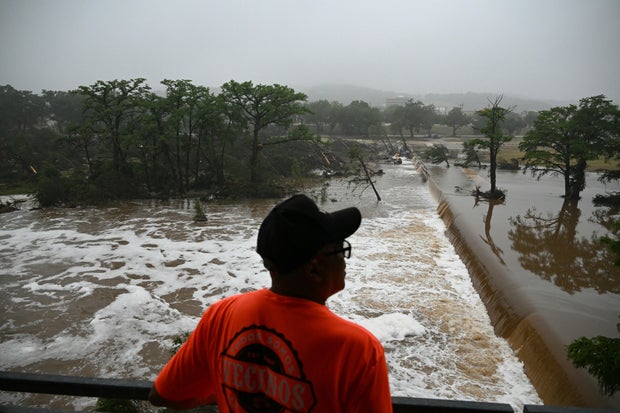
House Speaker Dustin Burrows, a supporter of HB 13, stood beside Gov. Abbott at a news conference after the floods, promising action during a special session. Abbott expanded that special session's agenda to prioritize disaster readiness, including flood alerts, emergency upgrades, and recovery aid.
The absence of the warning system in Kerr County drew scrutiny from residents, emergency preparedness advocates and state officials.
"If the city can't afford to do it, then let us do it," Lt. Gov. Patrick said in an interview with CBS News Texas days after the flood. "We have a special session starting two weeks from today, and I think we can take that up and do some other things of funding these sirens. If there had been a siren, maybe that would have sparked people to say, 'Oh, we have a massive disaster, like, five minutes away.'"
Two Senate bills were signed into law by Gov. Abbott in September 2025, aimed at bolstering safety operations at camps in Texas.
Nearly a decade ago, neighboring counties, Guadalupe and Comal, installed flood sirens. Nearby New Braunfels regularly tests its outdoor warning system, which is designed to alert residents to flash floods that are common in the area.
But in Kerr County, officials admitted that no such system existed. County commissioner records show that in 2017, Kerr County officials considered installing a warning system but ultimately rejected the idea. Cost was a major concern; In an August 2016 commissioners court meeting, then Commissioner Buster Baldwin voted against a $50,000 flood engineering study, saying, "I think this whole thing is a little extravagant for Kerr County and I see the word sirens and all that stuff in here."
Banding together to rebuild
In the days and weeks following the floods, neighbors and organizations stepped up to help in any way they could, from clearing debris and rescuing pets to offering donations and raising funds in creative ways. Millions of dollars raised went to groups aimed at housing relief assistance and other forms of aid.
Fundraising efforts included the Loud for Love Concert hosted by CBS News Texas and Chef Tim Love, which raised more than $100,000. Hosted by CBS News Texas anchor Madison Sawyer, the concert took place at Tannahill's Tavern & Music Hall in the Fort Worth Stockyards, featuring performances by Amanda Shires, Coffey Anderson, Grady Spencer & the Work, Nate Burnham and David Tribble.
Along with a salute to first responders, the silent auction raised money for the Salvation Army's efforts in the Hill Country.
The funds raised include over $61,000 from the auction and donations, plus $25,000 from Paramount and $10,000 from CBS News Texas' partnership with the Dallas Cowboys. The concert also featured a special appearance by Annabel Dwyer, a Nashville-based musician who grew up attending camp along the Guadalupe River near Camp Mystic. In the aftermath of the floods, she shared a tribute song on Instagram, which she performed live at the event.
Late last month, the Community Foundation of the Texas Hill Country shared that 130 households had returned to stable, permanent housing in less than a year. Another 98 households were actively progressing to that stage, with more than 180 families in temporary housing programs.
Austin Dickson, CEO of the foundation, said stable housing is the cornerstone to broader recovery for families.
"Housing has been our single largest investment," he said, "because housing is the foundation upon which every other aspect of recovery depends."
Dickson noted that 43% of granted funds have been dedicated to housing.


