Chicago In Memoriam: 62 notable Chicagoans who passed away in 2025
Each year, CBS News Chicago remembers some of the many people who made the city tick through a variety of talents and achievements, and even in some cases infamy.
Some of the people on this list will be recognizable by name. Others you may not have heard of, but they left a mark that changed Chicago just the same.
Here are 62 people whose memories Chicago is honoring in 2025.
Bill Applegate, 79, former CBS Chicago general manager
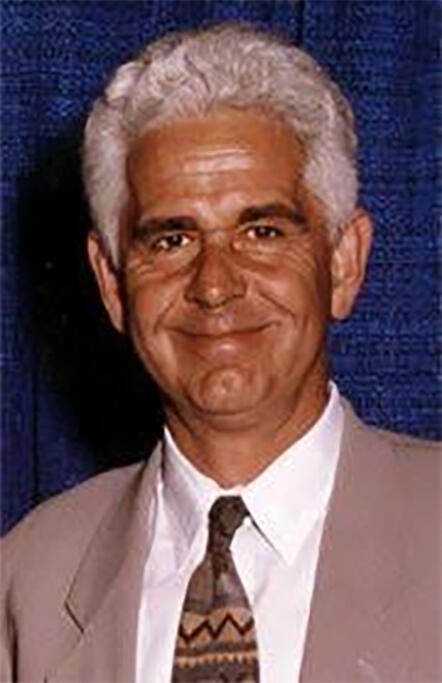
Bill Applegate, a television news executive whose 45 years in the business included a memorable and controversial stint running CBS Chicago, died July 1.
A native of Fort Wayne, Indiana, William Joseph Applegate joined a carnival after his mother's untimely passing, according to an obituary published by his family. He held a dozen different jobs before joining the Army and serving in the DMZ in Korea in the early 1960s, his family wrote.
Applegate initially followed his father into the print news industry, launching his career as a newspaper reporter in 1968, according to a Cleveland Plain Dealer biography. He soon went on the air as a local news reporter, first with WJBK-TV 2 in Detroit and later with KNXT-TV, now KCBS-TV, Channel 2 in Los Angeles.
Applegate told the Cleveland Plain Dealer he found he was better suited as a writer and a news manager, and he advanced quickly in local news management roles. His first management job was in Eugene, Oregon, in 1976.
Applegate quickly moved to larger markets, serving as news director at KPIX-TV, CBS San Francisco and at stations in Buffalo and Boston. His first stint in Chicago began in 1983, when he took over as news director at WLS-TV, Chicago's ABC 7.
Applegate went on to serve as news director and station manager at WABC-TV in New York for several years before CBS recruited him to return to Chicago, where he took over as vice president and general manager of CBS Chicago, WBBM-TV, in 1990.
At CBS Chicago, Applegate drew his share of both bouquets and brickbats during his three years at the helm. Critics charged that the newscasts grew flashier and more aggressive while emphasizing stories about crime, danger and sex. Applegate also acquired the rights to the nightly lottery drawings during Channel 2's 10 p.m. news, and aired the drawings, as Chicago media columnist Robert Feder put it, "punctuated with flashing lights and pulsating music."
Applegate's stint as general manager of CBS Chicago also coincided with the departure of some of the station's most famous faces, including feature reporter Bob Wallace and anchorman and commentator Walter Jacobson.
But Feder wrote that Applegate also set the tone for the rest of the Chicago market, with other stations taking their cues from CBS Chicago's new style.
In 1993, Applegate took over as general manager of CBS Los Angeles, the station that had let him go as a reporter in a round of layoffs in 1976. He went on to manage WSTM-TV in Syracuse and WMC-TV in Memphis, before taking over at CBS affiliate WOIO Channel 19, and sister station WUAB-TV Channel 43, in Cleveland in January 2001. At WOIO, Applegate began appearing on the air again, delivering station editorials.
Applegate retired in 2014.
Jim Avila, 70, former CBS Chicago reporter
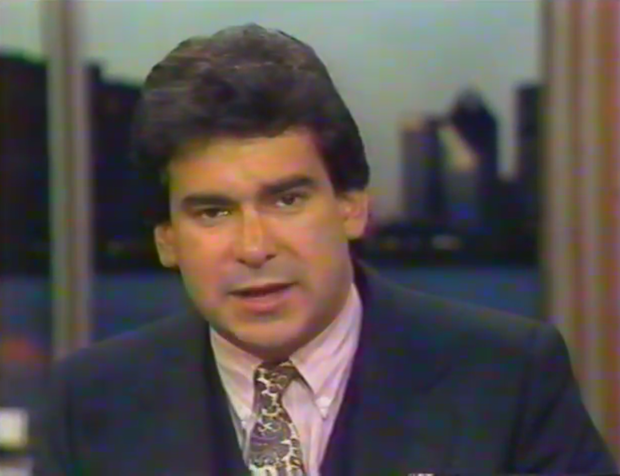
Jim Avila, an esteemed journalist who spent nearly a decade as a frontline reporter for CBS Chicago, died Nov. 12.
A graduate of Glenbard East High School in Lombard, Avila worked for KCBS radio in San Francisco, KPIX-TV CBS Bay Area, and ABC 7 Chicago before joining CBS Chicago. He was a high-profile member of the Channel 2 News team from 1984 until 1994.
At CBS Chicago, Avila covered a variety of stories around Chicago, and around the country and the world with a Chicago angle.
Avila was live on the scene at Northwestern Memorial Hospital when Mayor Harold Washington died on Nov. 25, 1987. He was also one of the chief reporters, along with the late Mike Parker, on the still-unsolved murder of college student Tammy Zywicki in 1992.
In 1991, Avila reported on the Persian Gulf War from Tel Aviv, the West Bank, and Saudi Arabia. He also reported for Channel 2 News on the TWA Flight 847 hijacking and the Mexico City earthquake in 1985, as well as the Lebanese and Nicaraguan civil wars, as noted in his official ABC News bio.
After CBS Chicago, Avila worked as an investigative reporter for KNBC-TV in Los Angeles, where he was the principal reporter for the O.J. Simpson trial. He then advanced to NBC News, working in the Chicago bureau and then as a national correspondent covering the attacks of Sept. 11, 2001, and reporting from Iraq and Afghanistan.
Avila then joined ABC News as senior law and justice correspondent, covering a variety of high-profile trials. He covered the White House during the Obama administration from 2012 until 2016 for ABC News.
In 2021, Avila left ABC News and returned to local news, joining San Diego ABC affiliate KGTV 10 as a senior investigative correspondent in 2023.
Avila won multiple Emmy and Edward R. Murrow Awards, and the Merriman Award from the White House Correspondents Association, his family noted.
Justin Baren, 40, founding member of The Redwalls
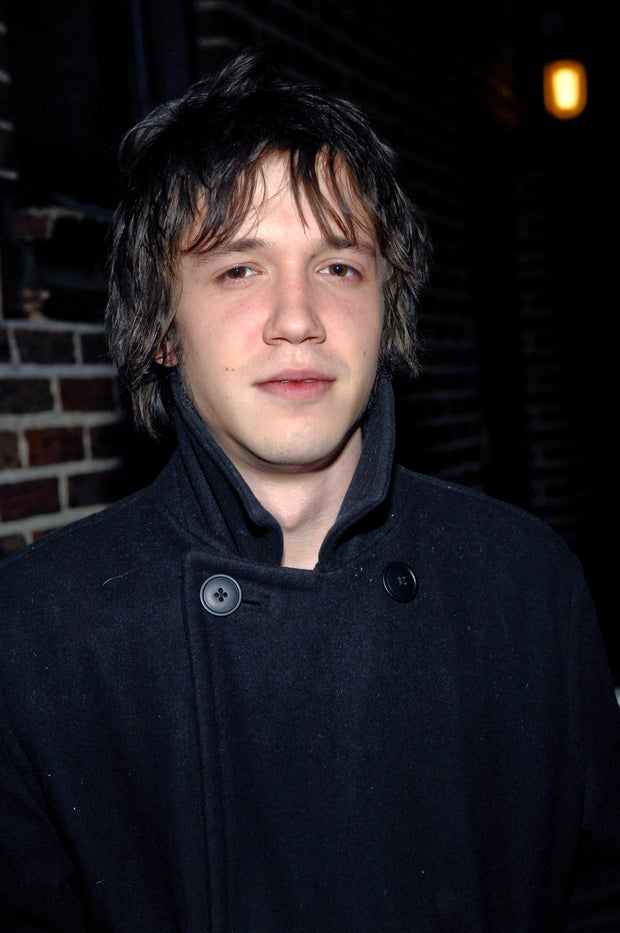
Justin Baren, a founding member of the Chicago-area rock band The Redwalls, died Nov. 28.
Baren was a singer, songwriter, and bassist for the group, which he formed with his brother, singer and guitarist Logan Baren, lead guitarist Andrew Langer and drummer Jordan Kozer. All four members of the quartet grew up in the north Chicago suburb of Deerfield.
The band was formed in 2001 when the Baren brothers were still in high school. They started out as The Pages and performed covers of 60s-era British Invasion songs.
As noted by AllMusic, the group played its first gig at Pops for Champagne in River North when all the members were still in high school, and began playing regular gigs at Nevin's Live in north suburban Evanston as they began to write original songs.
In 2003, the group's demo got the attention of Capitol Records with the help of former Wilco drummer Ken Coomer. The group was renamed The Redwalls.
The group released their first album, "Universal Blues," on indie label Undertow in November 2003. They released "De Nova" on Capitol in 2005, with Ben Greeno replacing Kozer on drums.
That same year, CBS Chicago anchor Susan Carlson profiled The Redwalls on the Channel 2 Sunday program "Eye on Chicago."
The Redwalls opened for Oasis for that band's 2005 tour in the U.K. and the U.S., and appeared at Lollapalooza in 2005 and 2006. Capitol Records dropped The Redwalls in 2007, and the group distributed their third album through the student-run MAD Dragon, the Chicago Reader noted. A North American tour followed in 2008.
The Redwalls called Justin Baren "a musician of rare instinct, a generous spirit, and a cornerstone of The Redwalls from the beginning."
A published obituary noted that in more recent years, music had remained central to Baren's life.
"He continued to write, record, and collaborate, and had recently been working to bring previously unheard recordings to release," the obit said. "His passion, creativity, and generous spirit will be remembered by his family, his bandmates, and the countless fans whose lives he touched."
Jerry Butler, 85, soul singer and Cook County commissioner
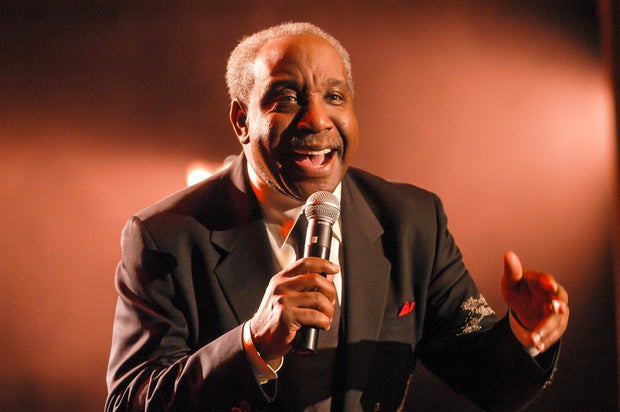
Jerry "Iceman" Butler, a soul singer and songwriter remembered for his rich, intimate baritone, and also a commissioner on the Cook County Board for more than 30 years, died Feb. 20.
Butler was popularly known as "Iceman," a nickname given for his cool, understated style.
Butler was the son of Mississippi sharecroppers who moved north to Chicago when he was 3. He grew up in what became the Cabrini-Green housing development on Chicago's Near North Side.
Butler loved all kinds of music as a child and was a good enough singer that a friend suggested he come to a local place of worship, the Traveling Souls Spiritualist Church on Chicago's West Side, presided over by the Rev. A.B. Mayfield. Her grandson, Curtis Mayfield, soon became a close friend. (Mayfield died in 1999.)
In 1958, Mayfield and Butler, along with Sam Gooden and brothers Arthur and Richard Brooks, recorded "For Your Precious Love" for Vee-Jay Records. The group called itself the Impressions, but Vee-Jay, anxious to promote an individual star, advertised the song as by Jerry Butler and the Impressions, leading to estrangement between Butler and the other performers and to an unexpected solo career.
A decade later, Butler joined the Philadelphia-based production team of Kenneth Gamble and Leon Huff, who worked with him on "Only the Strong Survive," "Hey Western Union Man," and other hits. Butler's albums "Ice on Ice" and "The Iceman Cometh" are regarded as early models for the danceable, string-powered productions that became the classic "Sound of Philadelphia."
By the 1980s, Butler's musical career had faded, and he was becoming increasingly interested in politics. Encouraged by the 1983 election of Harold Washington, Chicago's first Black mayor, Butler ran successfully for the Cook County Board in 1986.
Butler was one of several candidates elected to the County Board with Mayor Washington's backing that year, along with attorney and future Chicago alderman Charles Bernardini and teacher Bobbie Steele. Before Butler and Steele were elected, John H. Stroger Jr. — who went on to be elected County Board President in 1994 — had been the only Black commissioner on the board, the Chicago Reader noted.
On the County Board, Butler served for many years as chairman of the Health and Hospitals Committee. He was at the forefront in opening John H. Stroger Jr. Hospital of Cook County — replacing the old Cook County Hospital — in 2002.
Butler retired from the board in 2018. Current Cook County Commissioner Bill Lowry succeeded Butler in the 3rd District seat.
Contributing: The Associated Press
Joseph Caldwell Sr., 92, tailor
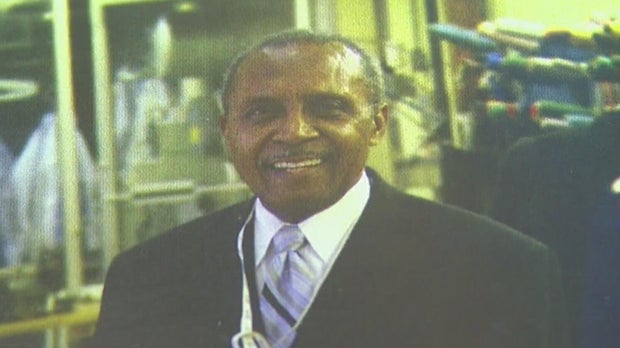
Pioneering South Side Chicago businessman Joseph Caldwell Sr. died Oct. 14.
Caldwell was born in Arkansas and moved to Chicago at the age of 16, according to the office of Illinois state Rep. LaShawn Ford (D-Chicago). Caldwell served in the U.S. Air Force during the Korean War, then attended a tailoring school and opened TailoRite Complete Clothing in 1956 with fellow veterans, according to Ford's office.
As recounted by Vogue, TailoRite initially focused on custom suiting. But many of the Black Chicagoans who were customers at the store were more in need of expert repairs, Caldwell said.
"We realized fast that most folks weren't buying $500 suits, but they needed a zipper replaced or a hem taken up," Caldwell told Vogue. "That's how we stayed in business."
Caldwell also told Vogue that the community kept TailoRite alive and thriving over the years. Black-owned Seaway Bank stepped in when major banks refused the business capital, he told the magazine.
Caldwell was always known for having a reputation for quality.
Caldwell maintained a long relationship with the White Sox, keeping their uniforms looking sharp for nearly 30 years. He also worked with prominent figures, including the Rev. Jesse Jackson and the late Mayor Harold Washington.
TailoRite Complete Clothing has two locations, at 8459 S. Cottage Grove Ave. in Chatham and 6507 S. Dr. Martin Luther King Dr. in West Woodlawn. As noted by Vogue, Caldwell was still coming into the shop to work at the age of 92.
Ford's office also noted that Caldwell was active in religious, charitable, political, business and civic organizations.
Lori Cannon, 74, LGBTQ+ activist and advocate for people with HIV/AIDS
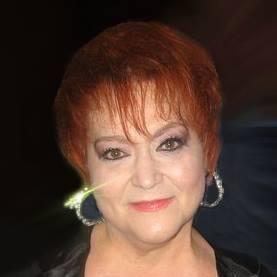
Lori Cannon, a renowned Chicago activist and advocate for Chicago's LGBTQ+ community and people living with HIV/AIDS, died Aug. 3.
As noted in a 2004 Chicago Tribune profile, Cannon was born in Chicago's Ravenswood neighborhood and grew up in West Rogers Park. She earned a degree in cinematography filmmaking from Columbia University in New York.
The Chicago LGBT Hall of Fame noted that Cannon was drawn into Chicago's organized gay and lesbian activist community while working as a show business "Bus Driver to the Stars." In the mid-1980s, Cannon began working as one of the earliest volunteers for Chicago House, the first local agency to provide housing to people with AIDS.
Cannon also helped residents complete routine tasks with which they were struggling, such as personal care, shopping and laundry, the Hall of Fame noted. She called on friends and business associates to help out, scheduled hair stylists, and planned recreational outings for Chicago House residents, according to the Hall of Fame.
In 1987, Cannon traveled to Washington, D.C., for the National March on Washington for Gay and Lesbian Rights, where she encountered the NAMES Project AIDS Memorial Quilt. The quilt, conceived of by San Francisco AIDS and LGBTQ+ rights activist Cleve Jones, covered a space larger than a football field and included 1,920 panels when it was put on display at the march in Washington, according to the National AIDS Memorial.
Cannon, who wrote that she was losing many of her closest friends to AIDS at the time, helped create the local chapter of the NAMES Project and brought the quilt to Chicago — at Navy Pier in 1988 and McCormick Place in 1990.
Meanwhile, Cannon ramped up her involvement in activism and protests on behalf of those with HIV and AIDS. She organized the ACT UP-Chicago demonstrations along with her best friend, cartoonist Danny Sotomayor, as well as fellow activist Paul Adams.
Also in 1988, Cannon cofounded Open Hand Chicago, which served as a meals-on-wheels program for people with AIDS. Cannon and Open Hand Chicago went on to open the GroceryLand food pantry, initially in Lakeview, now in Edgewater.
Cannon was also a volunteer with AIDS Legal Counsel of Chicago, STOP AIDS Chicago, Howard Brown Health, and the AIDS care unit at Advocate Illinois Masonic Medical Center. Cannon was also a cofounder of the Chicago-based Legacy Project honoring LGBTQ+ history and culture.
Ron Carroll, 54, house music vocalist and DJ
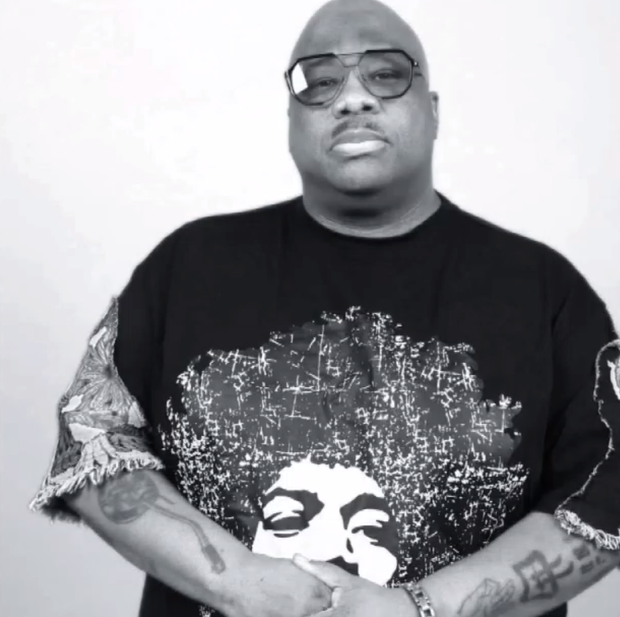
Ron Carroll, a well-known DJ and house music staple, died Sept. 21.
As noted in the Windy City Times, Carroll grew up in Chicago's South Shore neighborhood. He played Little League baseball, and sang in the Ebenezer Missionary Baptist Church choir.
Carroll told Maurice Joshua's "Everything House Music and More" podcast that he loved metal bands when he was young, but his father thought such music was evil and threw away all his cassette tapes. Carroll went on to discover house music by watching a DJ at a dance at South Shore High School, the paper reported.
Carroll graduated from high school in 1989, and became a full-time musician and DJ afterward. He released his debut single, "My Prayer," in 1993. The following year, Carroll began working with producer "Little Louie" Vega, and wrote the lyrics for Barbara Tucker's hit "I Get Lifted."
Carroll went on to work with Destiny's Child, Missy Elliot, Frankie Knuckles, and other icons, according to Slug Mag.
As a DJ, Carroll performed around North America and the world, with visits to cities in Asia, Europe, and South America, according to EDM Identity. He also created MOS [Ministers of Sound] Productions, the publication reported.
Speaking to Slug Mag in 2004, Carroll said, "My role in the community is to serve people. I feel as though my job in this community [house music] is to help people love this music and for them to forget all of their problems when they're on the dance floor."
Joe Colborn (Joe "JoBo" Bohannon), 70, Chicago radio jock
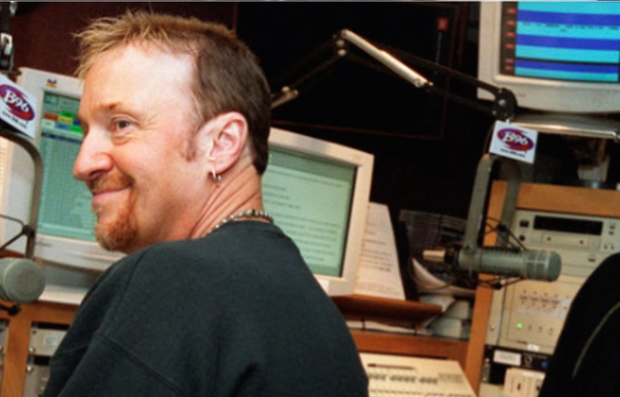
Joe Colborn, better known as Joe "JoBo" Bohannon on Chicago radio, died Nov. 24.
According to a published obituary, Colborn was born in Benton, Illinois, as one of six brothers. He went to school in West Frankfort, Murphysboro, and Sterling, Illinois, and graduated from Ottawa Township High School in 1973.
Colborn first got into radio in high school and made stops in several markets, including Rockford, Little Rock, and Milwaukee, before joining the former WGCL in Cleveland in 1982.
In 1984, using the name Joe Bohannon, Colborn joined Chicago's B96, WBBM-FM.
Colborn initially did an evening show, but in 1988, he was paired with Eddie Volkman, son of CBS Chicago Channel 2 meteorologist Harry Volkman, for the morning drive.
On Facebook, Volkman wrote that even before he and Colborn were teamed together on the air, he was "immediately amazed at [Colborn's] incredible energy, style, and people skills."
On the air, Colborn was known for the catchphrase, "Are we in Chicago, or what?"
In 1994, Eddie and JoBo were fired from B96 for gross misconduct after Colborn spread a false rumor on the air that a local TV anchorwoman was carrying the child of a Chicago Bulls basketball player. The claim also resulted in a libel lawsuit.
Eddie and JoBo went on to work briefly at Q102 in Philadelphia before returning to B96 in 1996. They remained immensely popular on the air at the station until 2008, when they were let go.
Eddie and JoBo went on to host a talk show together on WLS-AM beginning in 2010, and appeared on the former K-HITS 104.3 FM in 2011 and 2012.
Colborn later retired from radio and moved back to Freeport, Illinois, where his family lived, though Eddie and JoBo did make an appearance together again on B96 in 2024.
B96 called Colborn a legend, who helped make the station what it is today.
Sister Rosemary Connelly, 94, head of Misericordia and champion for people with disabilities
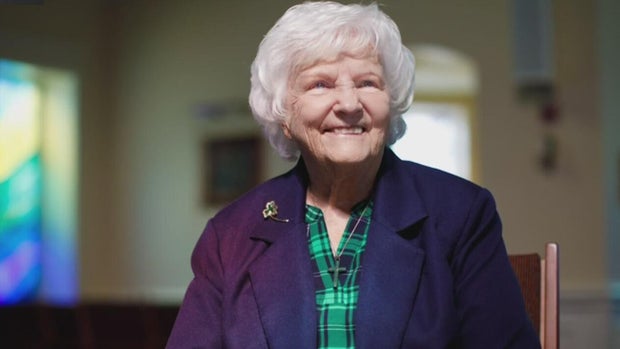
Sister Rosemary Connelly, who dedicated her life to helping people with disabilities, died June 19.
According to the Chicago Catholic, Sister Connelly was born in Chicago to an immigrant couple from County Mayo, Ireland. She joined the Sisters of Mercy order when she was 18.
Sister Rosemary earned a bachelor's degree in social science from St. Xavier University in 1959, and went on to earn a master's degree in sociology from St. Louis University in 1966 and a master's degree in social work from Loyola University Chicago in 1969, the Chicago Catholic reported.
That same year, Sister Connelly was appointed the administrator of Misericordia Heart of Mercy. Misericordia was founded in 1921 as a maternity hospital for women in need, but pivoted to treating young children with developmental and physical disabilities in 1954.
When Sister Connelly was appointed administrator at the Misericordia facility on West 47th Street, there were "no challenges or goals" for the children with disabilities at the facility, Misericordia said. So Sister Connelly started up a variety of programs to foster the greatest level of independence possible for the youngsters, Misericordia said.
She built classrooms for primary education and developed programs for self-help skills, speech and physical therapy, and recreation, Misericordia said.
In 1976, Sister Connelly joined 39 children and 35 staffers from Misericordia in a move to the former site of the Angel Guardian Orphanage, at 6300 N. Ridge Ave. in Chicago's West Rogers Park neighborhood.
In 2023, Sister Connelly was awarded the University of Notre Dame's Laetare Medal, considered the oldest and most prestigious honor given to an American Catholic.
Gary Deeb, 79, media critic
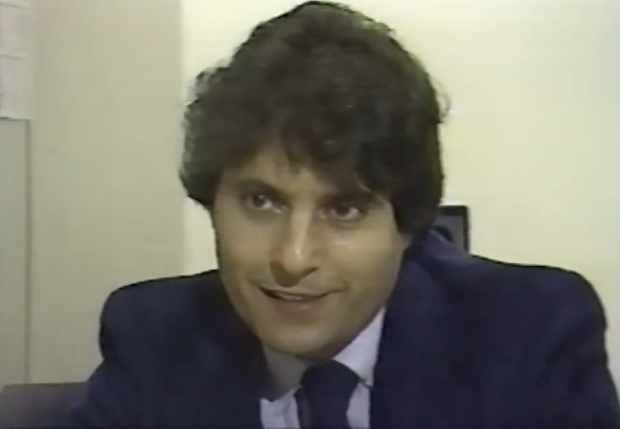
Gary Deeb, an award-winning media columnist known for his outspoken and sometimes scathing commentary on the TV industry, died May 17.
A native of Buffalo, New York, Deeb worked for several local radio stations in Buffalo as a teenager and attended the University of Buffalo, according to The Buffalo News. In 1970, he became a radio and TV critic for that newspaper.
In 1973, Deeb joined the Chicago Tribune in the same role. By 1975, the then-30-year-old critic was nationally syndicated and was profiled in Time Magazine as the "Terror of the Tube." In the Dec. 1, 1975, profile, Time Magazine called Deeb "the sourest, crudest ravager of the medium since [Nixon Vice President] Spiro Agnew put away his thesaurus."
Some of Deeb's comments on primetime TV series in the 70s are preserved on Rotten Tomatoes.
Deeb proclaimed the David Carradine action-adventure series "Kung Fu" to be "a violent TV show that insidiously exploits the mass audience's craving for blood and guts, and yet astonishingly wraps it all up in a pretty package topped by a stylish ribbon that proclaims the Golden Rule."
He called "Little House on the Prairie," starring Michael Landon and Karen Grassle, "a soupbone — a meatless sausage of cloying sweetness, padded dialog, and soap-opera background music."
Deeb also covered and criticized local radio and television and the Chicago news business. He was behind a 1976 letter-writing campaign launched when CBS Chicago removed beloved weatherman John Coughlin from evening newscasts and brought Tom Alderman on to take his place. After more than 10,000 letters, Coughlin was restored as CBS Chicago's chief weatherman in February 1977.
In 1980, Deeb moved to the Chicago Sun-Times, where the renowned media columnist Robert Feder worked with him as a legman. While working as a newspaper columnist, Deeb also appeared daily on Fred Winston's WLS-AM radio show, Buffalo Broadcasting noted.
In covering and critiquing Chicago TV news, Deeb was especially hard on ABC 7, and the congenial and sometimes comedic chemistry between that station's anchors Fahey Flynn and Joel Daly and weatherman John Coleman. But in 1983, Deeb moved to television and joined ABC 7, where he spent the next 13 years covering radio, television, and print media on that station's newscasts.
Deeb moved on from Chicago in 1996, returning to Buffalo and later moving to Charlotte, where The Buffalo News said he lived for nearly 20 years.
Deeb was a nine-time Pulitzer nominee and an Emmy Award winner with ABC 7 Chicago.
Bruce Dold, 70, Chicago Tribune editor-in-chief

Former Chicago Tribune publisher and editor-in-chief R. Bruce Dold died Dec. 3.
A native of New Jersey, Dold earned his bachelor's and master's degrees from Northwestern University, studying at the Medill School of Journalism. After earning his master's, Dold joined the Tribune in 1978 to cover the suburban beat.
Dold went on to cover city, state, and national politics and other hard news for the Tribune. Speaking to his own newspaper in 2016, Dold pointed to the bitter fight in the City Council over the selection of an acting mayor following the death of Mayor Harold Washington in 1987.
"While the city was in grief, all the aldermen were scurrying around and trying to pick a puppet who was going to run the city for them," Dold said. "It was the richest story I've ever seen in my life, and I got an opportunity to do that because I worked for the Chicago Tribune."
Dold also covered the special election in 1989 that brought Mayor Richard M. Daley into the Chicago mayor's office.
Editorial page editor Lois Wille invited Dold to join the Tribune editorial board in 1990. In 1993, Dold wrote a series of editorials exposing serious problems in the Illinois child welfare system, focusing on a 3-year-old boy named Joseph Wallace who was killed by his mother.
The editorials resulted in policy changes, and a Pulitzer Prize for Editorial Writing for Dold in 1994.
Dold wrote a column for the Tribune for five years, and also appeared frequently as a panelist on WTTW-Channel 11's "Chicago Week in Review" news analysis program with host Joel Weisman.
In 2000, Dold was promoted to editorial page editor. The Tribune editorial board won a dozen national awards, including a Pulitzer in 2003, Northwestern said.
Meanwhile, Dold interviewed an assortment of movers and shakers, from Mayor Rahm Emanuel to President Barack Obama — both before and after he was elected in 2008, Northwestern recalled. Dold also wrote the Tribune's 2008 endorsement of Obama for president, which marked the first time the Trib had endorsed a Democratic presidential nominee.
Dold was named editor-in-chief of the Tribune in 2016, and also publisher soon afterward. The paper won the Pulitzer Prize for feature photography and was a Pulitzer finalist for public service, investigative reporting, and commentary in Dold's first year at the top of the masthead, Northwestern noted.
Dold stepped down from the Tribune in February 2020.
Bruce DuMont, 81, political analyst and Museum of Broadcast Communications founder
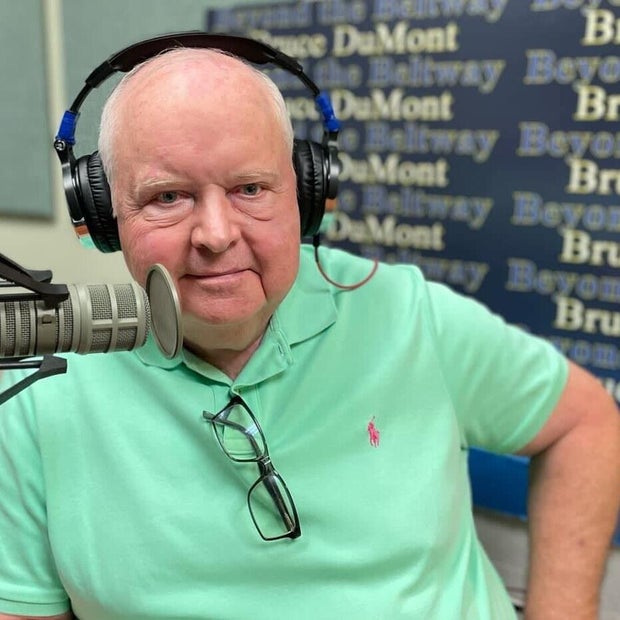
Bruce DuMont — the longtime host of the "Beyond the Beltway" political radio talk show, founder of the Museum of Broadcast Communications and former television producer, host, and analyst — died Sept. 10.
DuMont was born in New London, Connecticut, and grew up in Chicago's Logan Square neighborhood. His uncle Allen DuMont was the founder of the DuMont television network, an early rival to CBS, NBC, and ABC that once counted WGN-TV Channel 9 as among its affiliates.
As recalled in a 1987 Chicago Reader article, DuMont made his first appearance on radio in the summer of 1964 while studying at Columbia College Chicago as a fill-in weekend disc jockey at WEEF in Highland Park. He went on to broadcast semiprofessional Chicago Panthers' football games on WLS-FM radio, and then signed on as the original producer of the WGN radio show "Extension 720" beginning in 1968.
In 1970, DuMont changed gears and ran for Illinois State Senate as a Republican. DuMont lost the race and returned to broadcasting and WGN-AM afterward as producer of conservative talk show host Howard Miller's program. In 1974, DuMont went on the air with his own show at radio stations WEAW and later WLTD in Evanston.
In 1978, DuMont joined CBS Chicago, WBBM-TV, Channel 2 as a producer — working with renowned talk show host Lee Phillip on the midday news-talk show "Noonbreak." DuMont also produced the public affairs show "Channel 2: The People," hosted by Harry Porterfield. While at CBS Chicago, DuMont won an Iris Award for his work on a documentary on teen suicides, and a Golden Gavel Award for the documentary "What Can Johnny Read?" which focused on library censorship.
In 1982, DuMont left CBS Chicago for WTTW-Channel 11 after catching the attention of that station's master interviewer and talk show host John Callaway. Two years later, DuMont became the original producer of "Chicago Tonight," WTTW's nightly panel interview program hosted by Callaway.
DuMont soon went on the air himself on "Chicago Tonight." He anchored the program's coverage of the 1984 Democratic and Republican national conventions, served as senior political analyst on the air with Callaway, and sometimes hosted the show himself.
While with Channel 11, DuMont also hosted the program "Illinois Lawmakers" beginning in 1987. The program on Springfield politics aired on public television stations across Illinois, and ran until 2006.
Meanwhile, DuMont remained on the radio all through his career in local TV. He hosted a weekly Thursday night program called "The Chicago Show" — later the Bruce DuMont Show — on WBEZ beginning in 1976. The program first featured general discussions with such guests as traveling authors, but pitched an idea to WBEZ general manager Carole Nolan to turn it into a discussion show "by, for, and about political junkies."
The initial 13-week run for "Inside Politics" was a runaway success. In 1989, WBEZ program director Ken Davis took "Inside Politics" national as a WBEZ-produced show.
In 1992, "Inside Politics" moved to commercial radio on WLS-AM, and was renamed "Beyond the Beltway." The program went into national syndication a few years later, and aired on WLS-AM for more than 22 years before the station dropped the program in 2015. "Beyond the Beltway" ran on other stations until production wrapped in January 2025, and a televised version of "Beyond the Beltway" also aired on former secondary Chicago public TV station WYCC-Channel 20 for several years.
In 1982, DuMont began development of the Museum of Broadcast Communications, with a mission to preserve the archives of radio and television stations that did not have the space or resources to do so themselves. The Museum of Broadcast Communications opened in 1987 with a variety of historical artifacts and recordings from old-time radio and TV, a vast video archive, and a mockup news studio where youngsters could read a scripted newscast before real cameras and even toss to a pre-recorded weather forecast by WGN-TV's Tom Skilling.
The Museum of Broadcast Communications moved to the Chicago Cultural Center in 1992. The museum remained at the Cultural Center until 2003, and then operated online only for several years before opening a new space in River North in 2012. The museum is now housed at a pop-up location at 440 W. Randolph St.
Thomas Anthony Durkin, 78, defense attorney
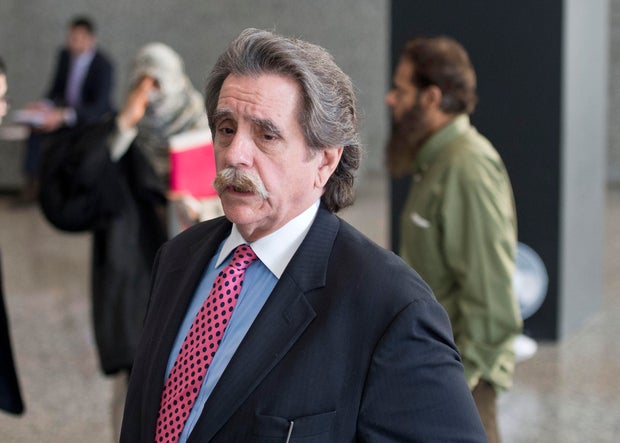
Thomas Anthony Durkin, a Chicago defense attorney who rose to national prominence as he advocated for a roster of notorious clients, died July 21.
Durkin was born on the South Side of Chicago to a steel mill worker's family. He graduated from Leo High School in Chicago in 1964, and earned a bachelor's degree from the University of Notre Dame in Indiana in 1968 and a law degree from the University of San Francisco in 1973.
Back in Chicago, Durkin clerked for U.S. District Judge James B. Parsons in 1973 and 1974. He went into private practice in Chicago specializing in federal criminal cases, and tried jury cases as a panel attorney for the Federal Defender Program.
From April 1978 until March 1984, Durkin worked as a federal prosecutor in Chicago under U.S. attorneys Thomas Sullivan and Dan Webb. In that role, Durkin personally investigated and prosecuted corruption cases in the City of Chicago Electrical Inspection Department and two major Medicaid fraud cases, as well as the first federal criminal civil rights open housing case in the area involving a racially motivated bombing in south suburban Burnham, according to his bio on Durkin & Thomas law firm website.
Over more than 40 years in private practice, Durkin cultivated a reputation as one of the country's foremost advocates of defendants whom other attorneys would pass on representing.
Durkin's clients included Adel Daoud, who was accused in a plot to bomb a Chicago bar, and Mohammed Hamzah Khan, who as a teenager was arrested on charges of conspiring to provide support to the Islamic State.
Durkin won an acquittal on terrorism charges for Jared Chase, one of the so-called NATO 3 defendants accused of plotting to bomb the 2012 NATO summit in Chicago. Durkin also represented Matthew Hale, a white supremacist leader accused of domestic terrorism offenses for soliciting the murder of a federal judge in Chicago.
Beyond Chicago, Durkin did legal work for detainees at Guantanamo Bay, including helping represent Ramzi bin al-Shibh, an accused facilitator of the Sept. 11, 2001, terror attacks, and representing others who have since been returned to their home countries. Durkin's experiences there, he said, helped show him the "dark side" of American intelligence.
Contributing: The Associated Press
Jim Edgar, 79, former Illinois governor
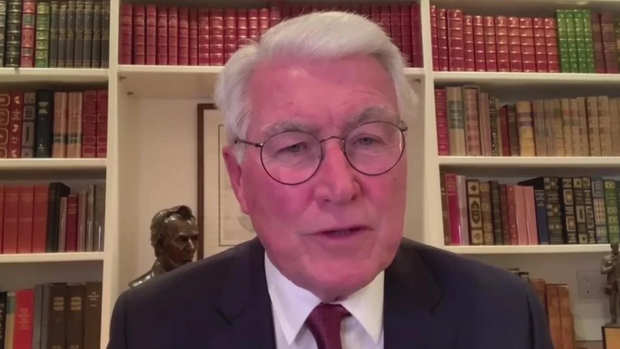
Jim Edgar, a two-term Illinois governor who has gone down as one of the most successful and popular politicians in the state's history, died Sept. 14 from complications of pancreatic cancer.
Edgar was born in Vinita, Oklahoma, but raised in Charleston, Illinois, in the central part of the state. He graduated from Eastern Illinois University, and first entered Illinois state politics as a young man in 1968.
Edgar first served as a legislative intern with the staff of Illinois Senate President Pro Tempore W. Russell Arrington, who was described on Edgar's website as his "first and most influential mentor."
Edgar ran unsuccessfully for the Illinois House of Representatives in 1974, but ran again and won in 1976. He was reelected in 1978.
Early in 1981, after Illinois Secretary of State Alan Dixon was elected to the U.S. Senate, Edgar was appointed to fill the vacancy. He was elected to full terms in that office in 1982 and 1986, and was credited with a crackdown on drunken driving in Illinois in that role.
When Illinois Gov. Jim Thompson decided not to run for a fifth term in 1990, Edgar ran for governor and won, defeating Illinois Attorney General Neil Hartigan, who was the Democratic nominee.
Edgar was sworn in as Illinois' 38th Governor on Jan. 14, 1991.
When Edgar took office, the U.S. was in a recession, and the State of Illinois had nearly a $1 billion spending deficit. In 1991, Edgar faced a three-month stalemate with lawmakers over his proposed budget, which called for hundreds of millions in cuts to welfare and other state programs.
In the summer of 1993, Edgar led the state through the Great Flood along the Mississippi River, joining volunteers sandbagging. To this day, the flood remains the most expensive natural disaster in Illinois history.
Edgar was reelected in 1994, easily defeating Illinois Comptroller Dawn Clark Netsch.
Edgar in his second term focused on education, abused and neglected children, and school reform. He once called Chicago school reform his proudest achievement.
But Edgar's time in office was not without controversy. He clashed with Chicago Mayor Richard M. Daley over the fate of Meigs Field on the lakefront, whether casino gambling should be allowed in Chicago, and a proposal for a domed stadium for the Bears near McCormick Place that was never built.
The biggest scandal that brushed Edgar's administration came as he testified in the bribery trial of state contractors. Consulting firm Management Services of Illinois, its cofounder Michael Martin, and former Illinois Department of Public Aid staffer Ron Lowder were all convicted of bribery and mail fraud in 1997, on the grounds that they misappropriated funds for the consulting firm's contract with the Public Aid Department. Edgar himself was never accused of wrongdoing.
Late in his second term, Edgar made the surprising decision to retire from politics. But he remained active in political and economic matters in Illinois for more than 25 years after he left public office, and went on record as a strong critic of President Trump late in his life.
Lee Elia, 87, former Cubs manager
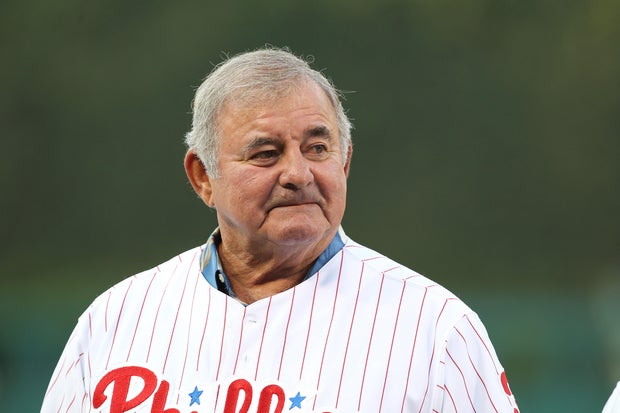
Lee Elia, the former manager of the Chicago Cubs and Philadelphia Phillies who is perhaps best known for his rant at Cubs fans critical of his team in 1983, died July 9.
A Philadelphia native, Elia signed with the Phillies as a player in September 1958 after attending the University of Delaware. He spent several years playing in their farm system.
Elia's first tour in Chicago came in 1966, when he played part of a season as an infielder with the White Sox. He also played several games for the Cubs in 1968. He played in 95 Major League games between Chicago's North and South Side teams.
In 1975, the Phillies gave Elia his first crack at managing a team. He first coached for minor league teams, and was hired as third-base coach for the Philadelphia Phillies by manager Dallas Green just after the 1979 season ended. Elia held that post as the Phillies won the World Series in 1980.
The Cubs hired Green as general manager in 1981, and Green brought Elia with him. Elia took over as manager of the Cubs in 1982.
That year, Elia guided the Cubs to a 73-89 record and a last-place finish in the National League East. Early in the 1983 season, with the Cubs' fortunes not looking much better, fans had turned on the team, and Elia was having none of it.
On April 29, 1983, the Cubs had just lost a game to the Los Angeles Dodgers 4-3. A wild pitch by the Cubs' Lee Smith gave the Dodgers their winning run. As the book "Entangled in Ivy" recalls, after the game, fans poured beer on the Cubs' Keith Moreland, Larry Bowa and Ron Cey as they walked back to the left-field clubhouse. Elia was furious, and did not mince words in expressing himself.
"I'll tell you one f***ing thing. I hope we get f***ing hotter than s**t, just to stuff them 3,000 f***ing people that show up every f***ing day. Because if they're real Chicago f***ing fans, they can kiss my f***ing a** right downtown and print it! They're really, really behind you around here — my f***ing a**," he ranted.
The f-bombs and other curse words continued, as Elia defended the 5-14 Cubs and derided the way fans had treated them. He characterized those fans as "f***ing nickel-dime people" who should "go out and get a f***ing job" instead of coming to Cubs games.
The late Les Grobstein of WLS-890 AM captured the only audio recording of the rant, which has been legendary since.
Elia was fired in August 1983. His Cubs tenure ended with a record of 127-158.
Elia returned to Major League Baseball as manager of the Philadelphia Phillies in 1987. After being fired by the Phillies in 1988, Elia coached Phillies minor league teams, then served in coaching posts with the New York Yankees, Toronto Blue Jays, Tampa Bay Devil Rays, Baltimore Orioles and Seattle Mariners.
Contributing: CBS Sports
Maury Ettleson, 93, auto dealer
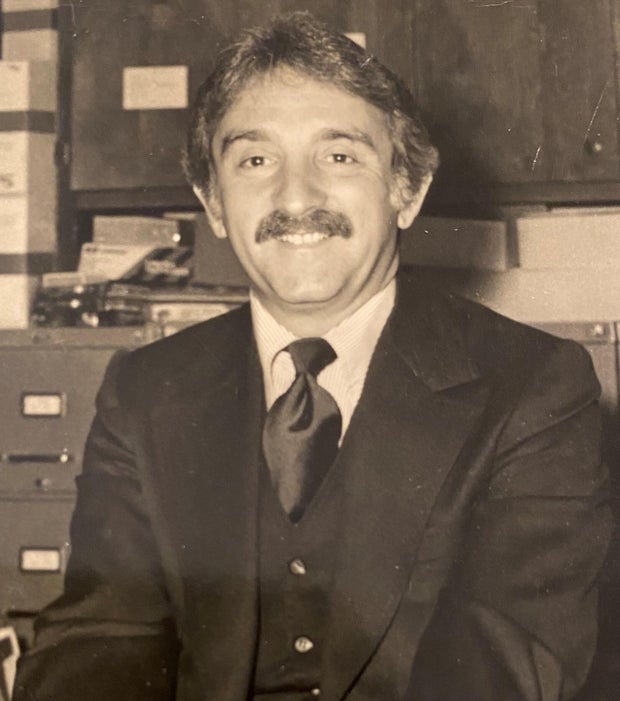
Maury Ettleson, known by generations of Chicagoans for his TV commercials alongside business partner Nick Celozzi for their Elmhurst, Illinois Chevrolet dealership, died July 16.
Ettleson told the Chicago Tribune in 1992 that he grew up in the Wicker Park neighborhood, near the iconic intersection of Milwaukee, Damen, and North avenues. Ettleson co-founded Celozzi-Ettleson Chevrolet with Celozzi in 1968.
The dealership thrived throughout the 1970s, 80s, and 90s, and was known as "the biggest Chevrolet dealership in America."
In their fondly remembered commercials, appearing side-by-side often in colorful suits or sweaters and ties in line with the fashions of the times, Celozzi and Ettleson would trade lines as each showed off various vehicles in their inventory.
"At Celozzi-Ettleson Chevrolet, in Elmhurst, at York and Roosevelt Roads," Ettleson would say at the conclusion of each commercial, before the pair each held up sheaves of cash and said in unison, "Where you always save more money!"
Crain's Chicago Business reported at one point that Celozzi-Ettleson spent $1 million per year on television advertising, and to great success.
At one point, Celozzi and Ettleson even parodied themselves in a Pizza Hut commercial, waving sheaves of pepperoni instead of cash as they touted Pizza Hut, in unison, "Where you always get great pepperoni!" The Pizza Hut commercial also featured the late Elmer Lynn Hauldren, the Empire Man of Empire Carpet ad fame.
Celozzi and Ettleson sold their dealership in 2000, according to published reports. Ettleson's son, Mike Ettleson, followed his father into the auto dealership business.
Renee Ferguson, 75, former CBS Chicago reporter
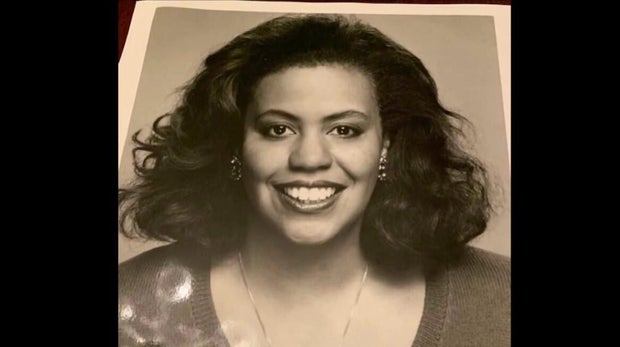
Renee Ferguson, a longtime Chicago TV news correspondent who spent several years with CBS Chicago, died June 6.
Ferguson was the first African American woman to work as an investigative reporter in Chicago television. She was also a longtime member of the Chicago chapter of the National Association of Black Journalists.
A native of Oklahoma City, Ferguson covered student unrest at Jackson State and Kent State universities while attending Indiana University. She also worked as a student intern with the Washington Post in 1970.
After graduating, Ferguson worked as a writer for The Indianapolis Star and a reporter for WLWI-TV in Indianapolis.
Ferguson worked as an investigative reporter for CBS Chicago from 1977 to 1983. Among Ferguson's best-known works at Channel 2 was an investigative report that called into question the methods and results of celebrated Chicago educator and Westside Preparatory School founder Marva Collins.
A few years before that, Ferguson went undercover as a 17-year-old student for a series of Channel 2 News reports on Waller High School — now Lincoln Park High School — and its student body that, at the time, came largely from the Cabrini-Green public housing development. Ferguson's 1977 series on Waller High School led to calls for a new principal for the school.
Ferguson also hosted the public affairs show "Common Ground" at CBS Chicago.
In 1983, Ferguson went to work as a correspondent for network-level CBS News. She returned to Chicago in 1987 as an investigative reporter for WMAQ-TV, and went on to spend the bulk of her career at the NBC station.
Ferguson reported for NBC 5 until retiring in 2008.
Tony Fitzpatrick, 66, artist, writer, and actor
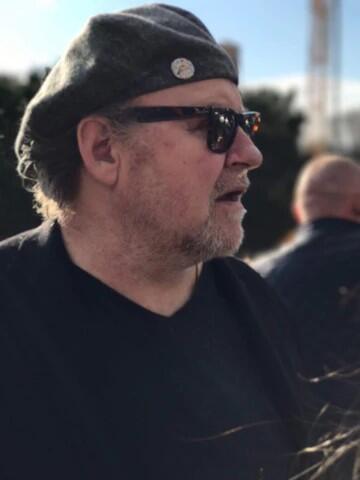
Tony Fitzpatrick, an esteemed Chicago artist, writer, actor, and jack of many other trades, died Oct. 11.
The Chicago-based artist was best known for his multimedia collages, as well as prints, paintings and drawings. Over the course of his life, Fitzpatrick also worked as a radio host, bartender, bouncer, boxer and construction worker, as well as a film and stage actor, according to a biography posted on his website.
According to the Poetry Foundation, Fitzpatrick grew up in the western suburb of Lombard, where his father worked as a burial vault salesman.
In 1978 and 1979, Fitzpatrick attended the College of DuPage.
As noted in a biography from the Hexton Gallery of Aspen, Colorado, Fitzpatrick went to New York in the 1980s and hung out in Washington Square Park selling his drawings on the sidewalk. Keith Haring and Jean-Michel Basquiat were amongst his early supporters, the bio noted.
The New Orleans R&B, soul, and funk group the Neville Brothers noticed Fitzpatrick's work and tapped him to design the cover for their album "Yellow Moon."
Fitzpatrick's artwork began appearing in galleries in Chicago, New York, Los Angeles and London in the 1980s, and he also began doing album cover work for Steve Earle.
Fitzpatrick was awarded a solo show at MOMA PS1 contemporary art institution in 2007, and a 10-year retrospective of his work appeared at the Chicago Cultural Center the following year. Fitzpatrick also participated in the New Orleans Biennial in the winter of 2008-2009. His works can be found in the collections of the Art Institute of Chicago, the Museum of Modern Art in New York, and the Museum of Contemporary Art in Miami, among many others.
Artnet characterized Fitzpatrick's work as influenced by "life in urban Chicago, religious imagery, and comic books," similar to such earlier Chicago artists as Ed Paschke. Artnet noted that Fitzpatrick's works integrated "cartoon-like figures and birds with poetic text and vintage ephemera," while drawing attention to items that might typically be considered disposable.
Fitzpatrick also published several books of his own art and poetry, among them, "The Hard Angels and the Neighborhood," "The Apostles of Humboldt Park," "Bum Town," and "The Secret Birds." His most recent book, "The Sun at the End of the Road: Dispatches from American Life," was published just this past Oct. 1.
As an actor, Fitzpatrick appeared in 15 major motion pictures — including "The Fugitive," "Married to the Mob," "Mad Dog and Glory," "U.S. Marshals," and "Philadelphia." Onstage, Fitzpatrick starred in the Lookingglass Theatre's production of "Race," an adaptation of a Studs Terkel novel directed by David Schwimmer. Fitzpatrick also wrote and starred in several plays with the Steppenwolf Theatre.
Fitzpatrick's nostalgia for and evocation of an older and rougher-around-the-edges Chicago was also evident in his "Dime Stories" columns that appeared in Newcity.
Ken Flores, 28, comedian
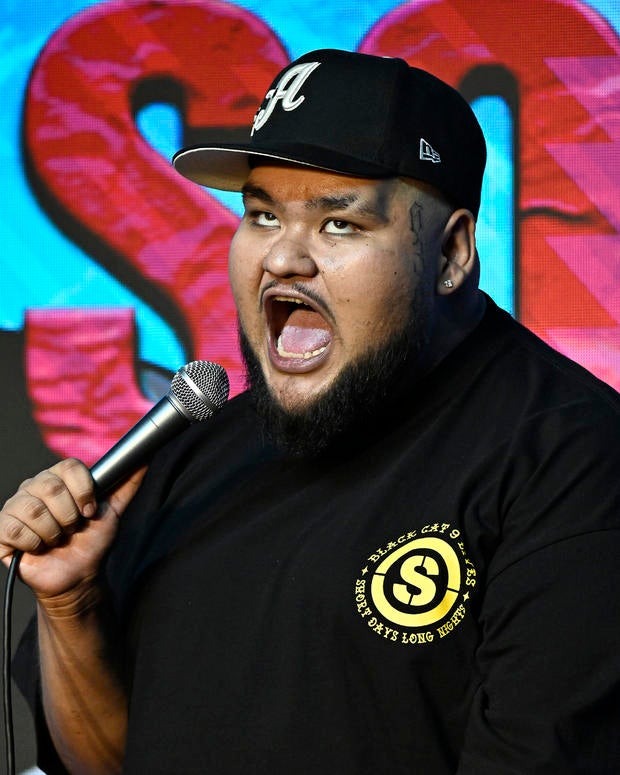
Standup comedian and Chicago native Ken Flores died Jan. 28, in the middle of a national tour.
Flores was born in Chicago and grew up in Humboldt Park, but moved with his family to Aurora after he started "hanging out with the wrong crowd," he told The Comedy Gazelle.
Flores started making YouTube videos as a young teen, and had some videos go viral on WorldStarHipHop. By his early 20s, he wanted to get back into entertaining, but he had ambitions beyond YouTube.
Flores was working as a teller at a PNC Bank when the owner of the Comedy Shrine in Aurora, a client of the bank, invited him repeatedly to their open mic night.
Soon afterward, Flores got his first paid gig. As his car had been repossessed, Flores commuted to Chicago from Aurora on Metra trains to get to gigs, he told the Gazelle.
Flores said he did an open mic on the patio at The Comedy Bar during the height of the COVID pandemic, and got into the Laugh Factory afterward. Flores went on to get a gig at Zanies from there, and was about to sell out two shows at Zanies Rosemont by June 2023, he told The Comedy Gazelle.
Flores moved to Los Angeles from Chicago that same year.
Flores was scheduled to appear in Phoenix on Thursday and Tempe, Arizona when he died.
George Freeman, 97, jazz guitarist
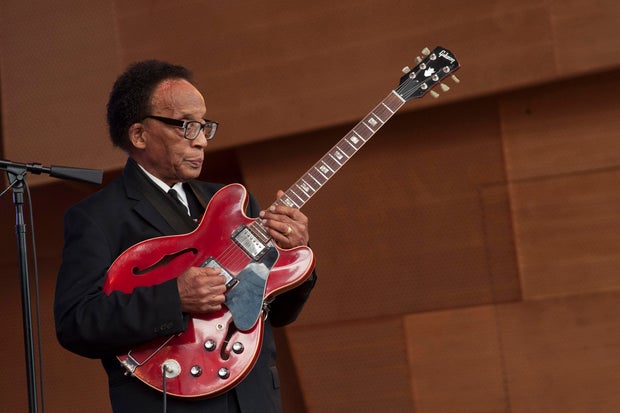
George Freeman, a renowned jazz guitarist who played with legends like saxophonist Charlie Parker, died April 1.
Freeman was a Chicago native. The Free Market Funk reported Freeman's father was a police officer whose beat was close to Chicago's jazz club scene, and jazz icons such as Earl Hines and Fats Waller would come to the Freeman family's house and play.
Freeman and his brothers all became musicians. Von Freeman took up the saxophone, Eldridge "Bruz" Freeman the drums. Older brother Von became George Freeman's mentor.
According to a 2024 Jazz Times article, the teenage George Freeman would sometimes sneak backstage at jazz clubs like the Rhumboogie Café in Washington Park, where he saw T-Bone Walker.
George Freeman started sitting in with future Dave Brubeck Quartet bassist Eugene Wright's Dukes of Swing while attending DuSable High School, where Capt. Walter Dyett ran a respected music program. By the late 1940s, Freeman was leading a group that he told Jazz Times was "the first bebop band to come out of Chicago."
Freeman's band played at the Pershing Ballroom in the Woodlawn neighborhood with guest musicians such as tenor saxophonists Coleman Hawkins and Lester Young, according to The HistoryMakers.
Freeman moved to New York City in 1947, and joined tenor saxophonist Johnny Griffin and trumpeter Joe Morris in a band. When he returned to Chicago, Freean performed at the Pershing Ballroom again and played often with Parker.
Freeman toured nationally with R&B singer Jackie Wilson of "Lonely Teardrops" fame, and saxophonist Gil Austin in 1959, and appeared on four of organist Richard "Groove" Holmes' albums in the 1960s.
In 1969, Freeman joined up with saxophonist Gene Ammons' band and worked on several of his albums. He also worked with organist Jimmy McGriff.
Freeman's first solo record, "Introducing George Freeman with Charlie Earland Sitting In," was released in 1971 on the Giant Step label. His album "Birth Sign," recorded earlier, was released on Delmark in 1972.
Freeman kept performing in Chicago clubs and studios throughout the 70s. He signed with Southport Records in 1995, and recorded several albums with the label.
Freeman also headlined the Chicago Jazz Festival numerous times, and performed at the Green Mill in Uptown before packed crowds well into his 90s.
Richard Garwin, 97, UChicago professor and designer of first hydrogen bomb

Richard L. Garwin, a creator of the first hydrogen bomb who also studied and taught at the University of Chicago, died May 13.
A prominent scientist who advised several U.S. presidents, Garwin made contributions in nuclear weapons, physics, and military technology, among many other areas. He published more than 500 papers and was granted 47 U.S. patents, according to The Garwin Archive maintained by the Federation of American Scientists.
A native of Cleveland, Garwin earned his undergraduate degree from Case Western Reserve University in that city in 1947. He came to the University of Chicago for graduate school on a fellowship to study physics.
At UChicago, Garwin worked in the lab with Professor Enrico Fermi, the creator of the world's first artificial nuclear reactor at the university. Garwin earned his Ph.D. by December 1947, and joined the U of C Physics Department faculty.
Among other achievements, Garwin worked with Fermi to build an analog computer to visualize the solutions to the Schrödinger equation, a key equation in quantum physics that defines the motion of particles.
While on the faculty at UChicago, at the age of just 23, Garwin went to Los Alamos National Laboratory in New Mexico, where he designed the first hydrogen bomb, according to a profile written in IEEE Spectrum magazine. It was detonated in a test codenamed Ivy Mike at Enewetak Atoll in November 1952, yielding 10.4 megatons of TNT, the measurement that quantifies the force of nuclear weapons.
Until 2001, Garwin's role was largely unknown outside of a small circle of physicists, mathematicians, and engineers at Los Alamos who were involved with the project, the profile said.
Garwin moved from the Physics Department at UChicago to IBM in New York State, where he started working in 1952. He advanced image and sound processing in that role, and held 47 patents in all as an inventor, Nature reported.
Garwin began advising the U.S. government on numerous programs, some of them secret, beginning under the administration of President Dwight D. Eisenhower. He served on the President's Science Advisory Committee in two stints in the 1960s and 70s.
In 2016, then-President Obama awarded Garwin the Presidential Medal of Freedom for his scientific work. Mr. Obama said Garwin "made pioneering contributions to U.S. defense and intelligence technologies."
Garwin was honored with the National Medal of Science in 2002 and was awarded the Vannevar Bush Award in 2023, which honors exceptional lifelong leaders in science and technology.
David Greenwood, 68, Bulls basketball player
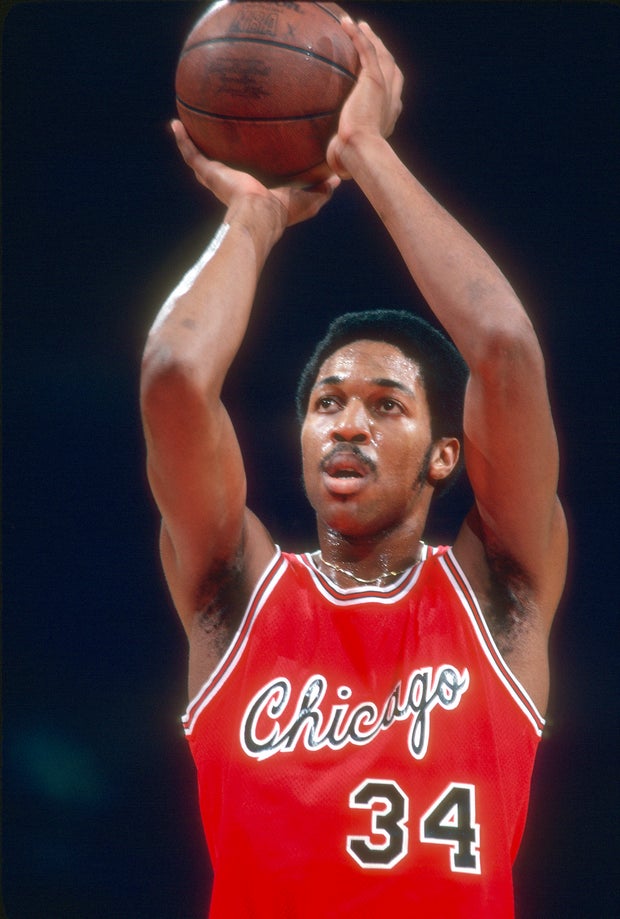
David Greenwood, who played six seasons for the Chicago Bulls and played alongside Michael Jordan during the star's rookie year, died June 8.
A Los Angeles area native, Greenwood excelled on the basketball court at Verbum Dei High School. In 1975, he enrolled at UCLA, where he set standing records on the court with the Bruins.
The 6-foot-10-inch Greenwood averaged 14.8 and 8.7 rebounds during his college career, and earned MVP honors and first-team All-America honors as a junior and senior, UCLA noted. Greenwood helped the Bruins to advance to the Final Four in 1976, UCLA said.
The Bulls selected Greenwood at No. 2 in the NBA Draft in 1979 after losing a coin flip that would have allowed the team to pick Magic Johnson instead. But Hall of Fame executive Rod Thorn told NBA.com that if the Bulls had picked Johnson at that time, they never would have won Jordan five years later.
The Bulls only made the playoffs once when Greenwood was on the team, losing the conference semifinals in the 1980-81 season, but NBA.com's Sam Smith wrote that Greenwood did the "dirty work" for the Bulls — more likely to pass the ball than make the shot.
Greenwood earned 16.3 points and 9.4 rebounds in his rookie year with the Bulls. He led the Bulls in rebounding three times and in free-throw shooting one season, NBA.com reported.
After playing one season alongside Jordan in 1984-1985, Greenwood was traded to the San Antonio Spurs. He spent four seasons with the Spurs, and then went to the Detroit Pistons for their 1989-1990 championship season.
Greenwood returned to the Spurs for the 1990-91 season, and then went back to the West Coast to coach his high school to consecutive California state titles, NBA.com reported.
Rev. David Gregg, 58, executive American Baptist minister
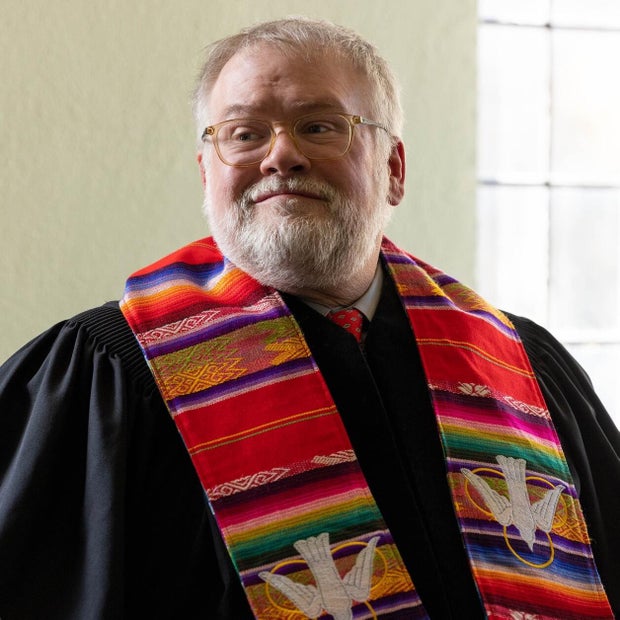
The Rev. Dr. David Gregg, a respected pastor and scholar who led the American Baptist Churches of Metro Chicago, died June 26.
Gregg grew up in Ann Arbor, Michigan. He earned his bachelor's degree from Harvard University, a master's in English from the University of Michigan, and a Master of Divinity from the University of Chicago School of Divinity.
Gregg spent 10 years as minister of congregational life at the Lake Street Church of Evanston back in the 1990s and 2000s, working alongside the Rev. Robert V. Thompson.
At Lake Street Church, Gregg was revered for leading the "moment as children" segments of each Sunday service, in which the congregation's youngsters would gather at the altar as Gregg taught a spiritual lesson. Gregg was also revered for the guidance he provided as a leader of the church's teen youth group.
Gregg held interim pastorates at several other Chicago-area congregations, including the Community Church of Wilmette, the South Church of Mount Prospect, the North Shore Baptist Church in Chicago's Edgewater neighborhood and the United Church of Hyde Park.
He served as executive regional minister of the American Baptist Churches of Metro Chicago for seven years.
In 2020, Gregg earned his Ph.D. from the University of Chicago School of Divinity. His dissertation explored the cosmology of English philosopher Alfred North Whitehead — which views the divine as being involved in and affected by the physical processes of the world rather than a distant "unmoved mover" — and the philosophy of art and human creativity that could stem from such a cosmology, with a focus on theater and an emphasis on the works of Samuel Beckett.
Gregg also edited the most recent edition of the seminarian training document, "A Baptist Manual of Polity and Practice."
Gregg, who was openly gay, was a former chairman of the Association of Welcoming & Affirming Baptists, which supports churches in acceptance and celebration of all people regardless of sexual orientation or gender identity, that organization noted.
"David Gregg leaves behind a legacy far richer than positions held or honors earned. It lives on in the seminarians he mentored, the congregations he nurtured, the justice-focused initiatives he championed — and in every friend and family member who was welcomed to his table," a published obit read. "He believed hospitality is ministry in its most elemental form — and he practiced it with style, substance, and great affection."
Lori Healey, 65, urban planner and Chicago civic leader
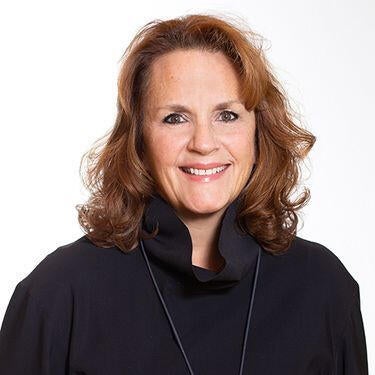
Lori Healey, who served as chief of staff to Chicago Mayor Richard M. Daley, chief executive officer of the Metropolitan Pier and Exposition Authority, and most recently leader of the Obama Presidential Center project, died May 3.
Healey was born in New Orleans. After earning a bachelor's in economics and a master's in public administration from the University of Kansas, she began her career as a policy aide to Kansas Gov. John Carlin in 1983, according to the City Club of Chicago, where Healey was a board member.
In Chicago, Healey served as commissioner of the Department of Planning and Development under Mayor Richard M. Daley, and was appointed his chief of staff in 2007 — replacing Ron Huberman, who moved to head up the Chicago Transit Authority and later the Chicago Public Schools. In 2009, Healey was appointed president of Chicago 2016, where she co-led Chicago's ultimately unsuccessful bid for the 2016 Summer Olympics.
Healey also coordinated the organizational and planning activities for the 2012 NATO Summit in Chicago as executive director of the NATO Host Committee, the City Club of Chicago noted.
Healey later served as chief executive officer of the Metropolitan Pier and Exposition Authority — MPEA or McPier for short. McPier owns Navy Pier, McCormick Place, and the 1,258-room Hyatt Regency McCormick Place.
In her role with McPier, Healey oversaw the development and construction of the Wintrust Arena and the Marriott Marquis Chicago, the City Club noted.
In 2019, Healey became the president of the Chicago regional business unit at Clayco, a Chicago-based development and design firm. In that position, she led enterprise activity for Clayco's development, design, and construction-related activities in the Chicago area, the City Club noted.
In December 2020, Healey joined the Obama Foundation as senior vice president and executive project officer for the Obama Presidential Center. She was at the helm of the project to develop the 19.3-acre Obama Presidential Center campus in Jackson Park, which is still under construction.
Healey's family called her "a remarkable woman — a deeply devoted mother and grandmother who found her greatest joy in time spent with her adoring family."
Jack Helbig, 66, theater critic, playwright, teacher
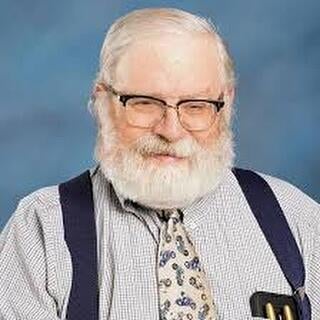
Jack Helbig, a Chicago theater critic who wrote for the Chicago Reader, Newcity, the Daily Herald, and the Wednesday Journal of Oak Park and River Forest, died Jan. 28.
Helbig was also a playwright, improviser, and high school English teacher.
Published reports noted that Helbig was born in St. Louis, graduated from college at the University of Chicago in 1980, and later earned a master's in education from the University of Illinois Chicago.
He went on to review works of the stage for more than 40 years.
Chicago Tribune theater critic Chris Jones noted in an obit story that Helbig was famously caustic, calling one show he reviewed "the worst thing that happened in Chicago since the St. Valentine's Day massacre." But Jones also wrote that Helbig was a "generous, ego-free, warm-hearted spirit" who enjoyed a camaraderie with other creatives.
As noted in more than one published obit story, Helbig was also particularly caustic in his Chicago Reader review of the Next Theatre Company's production of playwright Tracy Letts' "Killer Joe" in August 1993.
"Nothing in this artful, intelligently executed production can make up for the fact that at the center of the play is something so disturbing, so gratuitously nasty, brutish, and misogynistic it all but cancels out the work's finer qualities," Helbig wrote. "Peppered through with random acts of violence and cruelty, especially cruelty against women, Letts's play — like slasher films and hard-core pornography — quickly proves as degraded and symptomatic of our society's sickness as anything it portrays."
The Reader's Kerry Reid wrote that years later, Letts ran into Helbig at a premiere of another of his plays and called the critic a "horse's c**k."
As a playwright, Reid wrote, Helbig worked with composer Jack Hollmann of "Urinetown" fame on "Girl, The Grouch, and the Goat." Helbig also worked with composer Gregg Opelka on "Hotel d'Amour," based on Georges Feydeau's farcical play "A Flea in Her Ear," and wrote the plays "Thinking of Her Made Him Think of Her," produced at the Talisman Theatre in Elgin, and "Kitten with a Whip," produced at the old Café Voltaire in Lakeview.
Reid wrote that Letts also studied at iO and Second City, and was particularly fond of Chicago improv.
Helbig taught English for many years and served as the English department chair at Holy Trinity High School in West Town. He also directed student-led productions at Holy Trinity, the school said.
Helbig taught more recently at Rochelle Zell Jewish High School in north suburban Deerfield.
Aaron Jaffe, 95, Illinois state legislator and judge
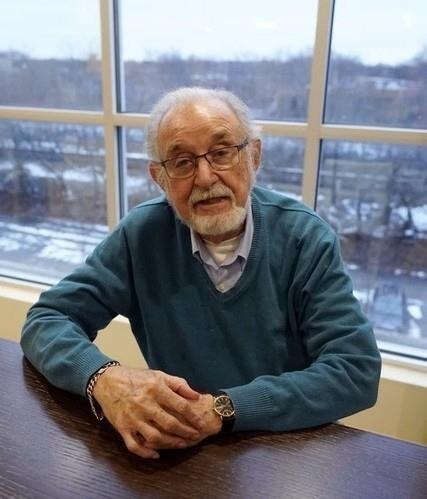
Aaron Jaffe, a renowned former Illinois state lawmaker, judge and chairman of the Illinois Gaming Board, died Sept. 10.
A Chicago native, Jaffe grew up on the city's West Side and attended Marshall High School, according to an Illinois court history document. He attended UCLA and the University of Illinois Chicago campus at Navy Pier, and earned his J.D. from DePaul University in 1953, according to the Illinois Digital Archives.
Jaffe moved to Skokie in 1959, and served as Niles Township Democratic committeeman from 1969 to 1973. Meanwhile in 1971, Jaffe was first elected to the Illinois House of Representatives.
As a state lawmaker, Jaffe worked to ensure that all children had access to a quality education regardless of where they lived. He also led a successful push for a change to Illinois rape laws to reflect the perspectives of the victims, published reports noted.
Jaffe fought throughout his time as an Illinois state lawmaker to "dismantle systemic barriers and create a more just society for all," his published library read.
Jaffe served as an Illinois state representative until 1985, when he was appointed to Cook County Circuit Court as a judge. He was elected to a full term as judge the following year, and served in the Domestic Relations, Law, and Chancery divisions, according to Illinois Court History.
As a judge, Jaffe presided over divorce cases — and in 1998, he made headlines for a decision that handed Roosevelt University control of the Auditorium Theatre following a long battle with a council that had been in charge, as noted in published reports.
Jaffe retired from the bench in 2004, and was appointed to head the Illinois Gaming Board by then-Gov. Rod Blagojevich in 2005. This came after the previous board decided to award the notorious Emerald Casino a license in Rosemont six years earlier, over objections that some investors had ties to organized crime.
A revocation hearing dragged out for years afterward, but ultimately, Emerald Casino's license was revoked.
Jaffe served as head of the Gaming Board until 2015, surviving a 2011 overhaul by Gov. Pat Quinn.
Dick Jauron, 74, former Bears head coach
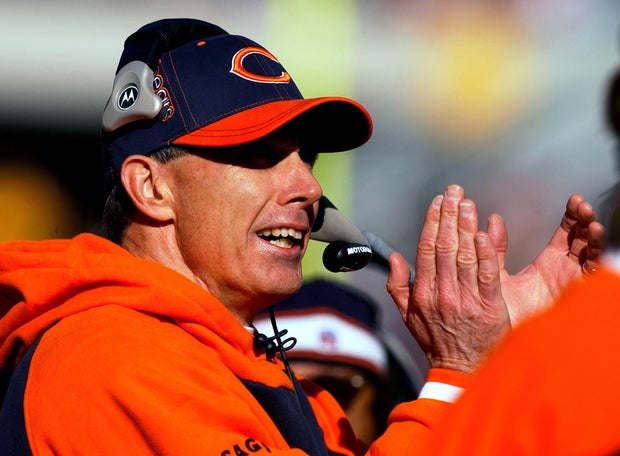
Dick Jauron, who served as head coach of the Chicago Bears for five seasons and took them to the NFC Central championship in 2001, died Feb. 8.
Jauron was born in Peoria, and attended elementary school in Rensselaer, Indiana, in an era when the Bears happened to be holding training camp there at St. Joseph's College. Jauron's family later moved to Massachusetts, where he lettered in football, basketball and baseball at Swampscott High School, the Bears said.
Jauron went on to play football at Yale University, where he was a three-time first-team all-Ivy League selection. He finished as the all-time leading rusher at Yale with 2,947 yards, and was named first-team All-America, the Bears said. He also excelled in baseball at Yale, and was picked by the St. Louis Cardinals in the MLB Draft.
Jauron was also picked in the NFL Draft out of Yale in 1973, selected by the Detroit Lions in the fourth round. He had four interceptions, 208 return yards, and a 95-yard touchdown in his rookie year, and went to the Pro Bowl after leading the NFC in punt return average with the Lions in 1974, the Bears noted.
Jauron had 80 starts as a safety for the Lions between 1973 and 1977, and the Cincinnati Bengals from 1978 through 1980, the Bears said.
In 1985, Jauron began his coaching career with the Buffalo Bills as defensive backs coach. The following year, he joined the Green Bay Packers in the same role.
Jauron served as defensive coordinator for the expansion Jacksonville Jaguars from 1995 to 1998.
In 1999, Jauron was named head coach of the Bears, replacing Dave Wannstedt. With a powerful defense led by safety Mike Brown, linebacker Brian Urlacher and tackle Ted Washington, Jauron led the Bears to the NFC Central championship with a 13-3 season in 2001.
Jauron was named AP Coach of the Year in 2001.
After Jauron was let go from the Bears, he returned to the Lions as defensive coordinator in 2004. He took over as interim head coach for the Lions in 2005 and then took over as head coach of the Buffalo Bills in 2006.
Jauron also served as defensive backs/assistant head coach for the Philadelphia Eagles, and finally as defensive coordinator for the Cleveland Browns for the 2011 and 2012 seasons.
Bobby Jenks, 44, White Sox pitcher
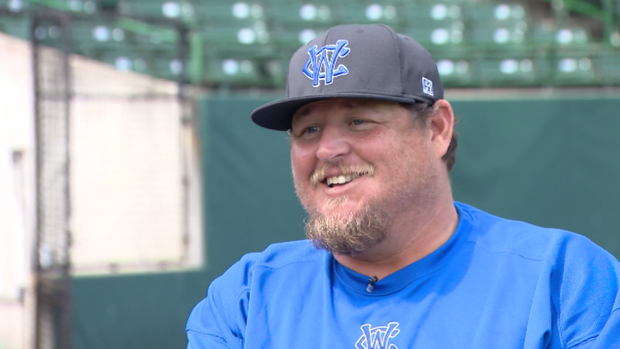
Bobby Jenks, a World Series champion with the 2005 White Sox and two-time All-Star closer, died July 5.
Jenks, who pitched for the White Sox for six seasons from 2005 through 2010, died in Portugal, where his family had moved. He had been battling adenocarcinoma, a form of stomach cancer.
Jenks was born in Los Angeles and grew up in Idaho. He was ineligible to play for much of high school due to academic underperformance, but wowed scouts with his fastball in American Legion summer ball, according to the Society for American Baseball Research.
Jenks played in the minors with the Angels organization, but ran into challenges with his elbow that sidelined him in 2003 and 2004. The Angels put Jenks on waivers at the end of the 2004 season, and he was picked up by the White Sox.
Jenks was called up to the majors on July 5 of what would become the first World Series championship season for the White Sox in 88 years.
Jenks, who routinely reached 100 mph with his fastball, helped the White Sox win the 2005 World Series, saving four games in six appearances during the postseason run, including the clinching game of the series.
He was an All-Star in each of the next two seasons while saving a total of 81 games in 2006 and 2007. Over the next three seasons, Jenks averaged 28-plus saves a year.
In 2007, Jenks retired 41 consecutive batters, matching a record for a reliever.
Overall, Jenks went 14-18 in his six seasons with the White Sox, with a 3.40 ERA and 334 strikeouts over 329 relief appearances. He ranks among franchise relief leaders in saves (2nd), appearances (6th) and strikeouts (7th).
Jenks became a free agent in 2010, and signed with the Boston Red Sox in 2011.
In December 2011, Jenks went to Massachusetts General Hospital to remove bone fragments from his lower back. Later in the month, Jenks was rushed into emergency surgery due to complications related to the first procedure.
Jenks sued the doctor who performed the surgery, Dr. Kirkham Wood, and received a $5.1 million settlement in 2019. The Boston Globe reported that Wood was overseeing another operation at the same time he was operating on Jenks' spine.
Following his surgeries, Jenks worked as a coach, first as a roving pitching instructor in the White Sox organization and then with the Grand Junction Rockies of the Pioneer League as pitching coach and later field manager.
After a season with the Princeton WhistlePigs in the Appalachian League, Jenks returned to the Chicago area and became manager of the Windy City Thunderbolts, an Frontier League team based in southwest suburban Crestwood.
José "Cha Cha" Jiménez, 76, activist and organizer
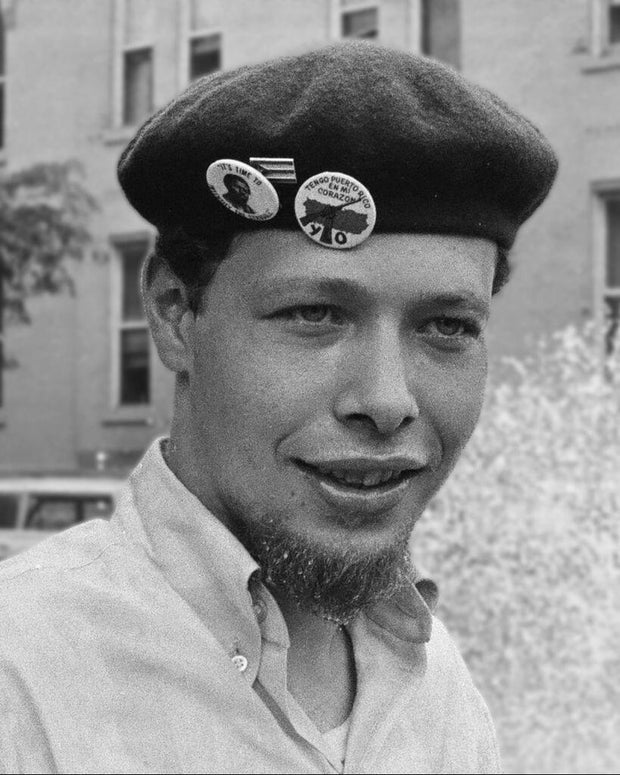
Longtime Chicago activist and organizer José "Cha Cha" Jiménez, who transformed the Young Lords from a Lincoln Park neighborhood street gang into a civil and human rights activist organization, died Jan. 10.
According to the 1973 published biography "Que Viva El Pueblo," Jiménez was born in Caguas, Puerto Rico. His mother brought him to the continental U.S. when he was a young child, and they lived near Boston for a short time before coming to Chicago, where the family had relatives.
Upon arriving in Chicago, Jiménez and his family moved into an apartment hotel at LaSalle and Superior streets. By 1956, his family had moved nine different times as urban renewal wiped out the Near North Side Puerto Rican community known as "La Clark."
Jiménez and his family were among numerous Puerto Rican families from "La Clark" who ended up in Lincoln Park.
Jiménez became involved with the Young Lords, a street gang founded by Orlando Davila, who had met Jiménez at a catechism class that Jiménez's mother taught, according to his biography.
After attending Catholic elementary school, Jiménez applied to the Redemptorist seminary in Wisconsin, only to be rejected after getting in trouble in school for throwing eggs at a bus on which the pastor was riding. Jiménez went on to get arrested repeatedly for gang- and drug-related activity.
It was in 1968, while Jiménez was serving a 60-day sentence at the Cook County Jail for a heroin offense, that he decided to change his ways, according to a historical account. While in maximum security on a rumor that he and several others were plotting to escape the jail, Jiménez read "Seven Story Mountain" by Thomas Merton, and went on to read about Dr. Martin Luther King Jr., and social justice and resistance movements.
After being released from jail, Jiménez continued to focus on social justice and resistance, reading about Malcolm X, the 1937 Ponce massacre in Puerto Rico, and activist and Puerto Rican nationalist Pedro Albizu Campos.
Jiménez focused on turning the Young Lords into a civil and human rights group modeled after the Black Panthers. He also became personal friends with Illinois Black Panther Party Chairman Fred Hampton, with whom he led the Rainbow Coalition movement.
The new Young Lords found a purpose in particular as the Puerto Rican community was being pushed out of Lincoln Park in the late 1960s.
In 1969, with the support of pastor Rev. Bruce Johnson, Jiménez and the Young Lords occupied the Armitage Avenue Methodist Church on Armitage Avenue at Dayton Street, renaming it the People's Church. The Young Lords also set up mutual aid programs, organized protests, and helped organize the multiracial Poor People's Coalition of Lincoln Park, which fought the city's urban renewal initiatives and protested the construction of expensive new buildings as the neighborhood gentrified.
Jiménez's 1973 biography said police trailed him throughout his activist work. He was arrested and indicted repeatedly on various charges and went underground for 27 months until surrendering to police and admitting to taking $23 worth of lumber in December 1972.
In 1975, Jiménez ran unsuccessfully for alderman of the 46th Ward. In 1983, he took part in getting out the vote for Harold Washington, who became Chicago's first Black mayor that year.
Jiménez later moved from Chicago to Grand Rapids, Michigan, where he worked as a substance abuse counselor.
Margie Korshak, 86, public relations executive
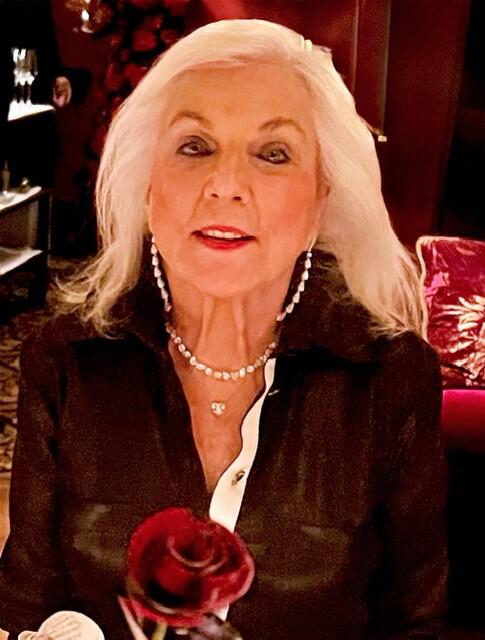
Margie Korshak, a public relations executive whose powerhouse agency specialized in the entertainment industry, died March 2.
Speaking to WBBM Newsradio in 2014, Korshak said she was a young housewife with two small children when she spent a few hours talking to liquor distribution tycoon and Chicago Blackhawks owner Bill Wirtz.
"He looked at me and said, 'Margie, you have the greatest gift of gab.' He said, 'I think you'd be great in PR,'" Korshak said.
Korshak launched her public relations career in 1967, joining the PR department of the American Furniture Mart.
In 1969, Korshak founded her own public relations firm, Margie Korshak Inc. She quickly began attracting clients.
"The biggest break I had was when Mill Run Theater opened in Niles and we had all the big stars," Korshak said in 2011. "I remember Michael Jackson when he was 5 years old. He came there. Woody Allen came there. Shecky Greene came there."
Korshak became an A-list Chicago publicist for the entertainment industry, as well as the retail and restaurant industries and corporate business. She represented every Broadway show that came to Chicago, and worked for decades with Chicago's two largest theatrical institutions, the Nederlander and Shubert organizations.
As noted on her website, Korshak was also instrumental in the publicity for the restoration of many of the most famous downtown stage venues: the Cadillac Palace Theatre, the James M. Nederlander Theatre, the Chicago Theatre, and the Auditorium Theatre of Roosevelt University. She also publicized the opening of the Joan W. and Irving B. Harris Theater for Music and Dance at Millennium Park.
Korshak also provided counsel to Sears, Bloomingdale's, Plaza Escada, The Gap and Old Navy, as well as the most prominent malls on the Magnificent Mile, according to her website. She maintained an office for her firm in the building formerly known as the John Hancock Center.
Steve Lasker, 94, photojournalist

Steve Lasker, an award-winning newspaper and television photojournalist who spent 25 years with CBS Chicago, died May 1.
Lasker was just 13 years old when he began photographing World War II aircraft at Midway Airport, according to a bio from the National Academy of Television Arts and Sciences.
Lasker shot photos for the student newspaper at Hyde Park High School and the Hyde Park Herald neighborhood paper. As a young man, he also hung out at Chicago firehouses and rode with fire crews on emergency calls, where he took photos and sometimes sold them to insurance companies.
On May 25, 1950, Lasker was hanging around at a firehouse when a Green Hornet Streetcar collided with a gasoline truck at 63rd and State streets, causing a horrific fire that killed 34 people.
Lasker was the first photographer on the scene, and he sold his photos to Life Magazine and WNBQ-TV (now WMAQ-TV), NBC 5, where he was hired to shoot still photos for television newscasts.
After five years with NBC 5, Lasker was hired as a press photographer at the Chicago American newspaper. In this role, Lasker was the first photographer on the scene for the tragic fire at Our Lady of Angels Catholic School in Humboldt Park on Dec. 1, 1958. The fire killed 92 students and three nuns.
In 1969, Lasker joined CBS Chicago as a news and documentary cameraman. Here, Lasker worked in the field for many years on a two-man electronic news gathering team with sound man Bob Gadbois.
Lasker spent 27 years at CBS Chicago. His assignments included a trip to Poland with Walter Jacobson in the late 70s, a trip to New York with reporter Phil Walters to cover the murder of John Lennon in 1980, a variety of assignments with Bill Kurtis, and covering organized crime and society's seedy underbelly with John Drummond.
Lasker also worked at CBS Chicago with the late producer Scott Craig on several award-winning documentary projects, including "The Trial of Shoeless Joe Jackson," a dramatic reenactment that brought viewers to the courtroom after the 1919 scandal in which members of the White Sox conspired to throw the World Series.
After retiring from CBS Chicago in 1995, Lasker shot photos part-time for the Chicago Tribune and later shot commercial photography. He was inducted into the National Academy of Television Arts and Sciences Silver Circle in 2012.
Juju Lien, 78, community activist and advocate for refugees
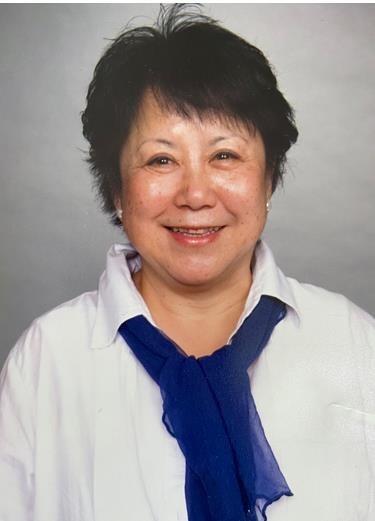
Juju Lien, an activist who blazed trails in Chicago's Asian American community, died Nov. 3.
Lien was known for her advocacy for immigrants and women, and for her work assisting and settling refugees in Chicago.
Lien was born in Tianjin, China, and grew up in Taiwan. She graduated from Fu Jen Catholic University in Taipei.
One obituary called Lien a "formidable community activist" who worked tirelessly to provide social services and advocate for justice for Asian American refugees and immigrants in Chicago.
Lien was the first executive director of the Uptown-based Chinese Mutual Aid Association, which was founded in 1981 by ethnic Chinese refugees and was dedicated to helping refugees start new lives in new lands.
Lien worked with the Vietnamese "Boat People," refugees from Vietnam who came to the U.S. after the end of the Vietnam War. Speaking to the Chicago Tribune in 1986, Lien talked about how some Vietnamese refugees found a community along Argyle Street in Uptown.
Lien later served as executive director of the Asian American Institute, now Asian Americans Advancing Justice.
Lien was also a strong advocate for women's rights and gender equality. She was involved with the Chicago Foundation for Women since the founding of that organization in 1985, and served on the board of directors.
Lien was working as a social worker when she met her future husband, the late Chicago Tribune travel writer Bob Cross, when Cross interviewed Lien for a story on Cambodian refugees.
Lien retired in 2020 after 21 years with the Social Security Administration.
Illinois state Rep. Theresa Mah (D-Chicago) introduced a resolution honoring Lien, noting her achievements as a community activist and advocate and saying she "kept her friends very close and loved to host and cook for them, and she was a source of humor and inspiration to almost every person she met."
"Juju was such a trailblazer," Mah said at Lien's memorial service, which was streamed live. "You know, she was a champion advocate for the Asian American community well before there was any official representation at any level of government."
Lien's daughter, Amy Cross, said at the memorial service that her mother's version of parenting was taking her along while moving through the world with purpose — from board meetings to rides in vans full of interns to the Democratic National Convention or to protests.
"She taught me that time should not be wasted, that it should be used in the service of others, and that one should always fight the right battles — even if they seem impossible to win," Cross said.
Jim Lovell, 97, astronaut
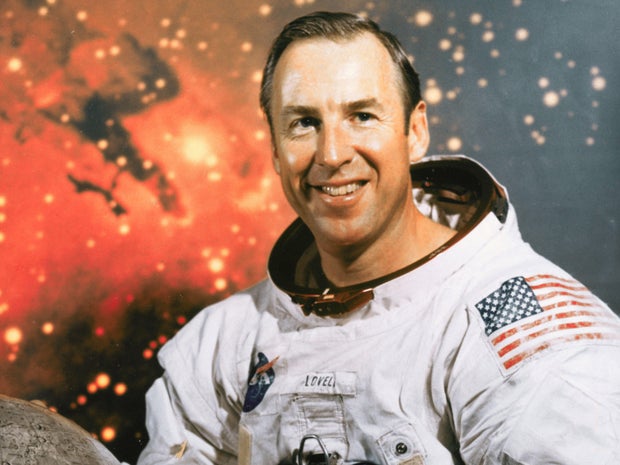
Jim Lovell, the astronaut who commanded the famous Apollo 13 mission and a longtime resident of Chicago's northern suburbs, died Aug. 7.
Lovell, a Cleveland native, moved around the country several times growing up after his father died when he was 5 years old — with stints living in Terre Haute, Indiana, and Milwaukee as a youngster, according to published reports.
Lovell graduated from the U.S. Naval Academy in 1952 and went on to become a naval aviator, including a four-year tour at the Naval Air Test Center in Maryland. He was selected as an astronaut by NASA in 1962.
On Dec. 4, 1965, Lovell and Frank Borman were launched into space on the history-making Gemini mission, which lasted 330 hours and 35 minutes and involved the first rendezvous of two manned maneuverable spacecraft, according to NASA.
Lovell also commanded the four-day Gemini 12 mission with pilot Edwin "Buzz" Aldrin in 1966.
In 1968, Lovell was the command module pilot for the Apollo 8 mission, the first to carry humans to the moon and back, though it did not land on the lunar surface.
Apollo 8 circled the moon 10 times and sent back the famous "Earthrise" photo of our world from space. Lovell reflected on that journey 50 years later in an interview with CBS News.
Two years later, the Apollo 13 flight to the moon became known as a "successful failure" after the spacecraft experienced an oxygen tank explosion thousands of miles from Earth but managed to return home safely. Lovell was supposed to be the fifth man to walk on the moon on that mission, but instead, the astronauts barely survived, spending four cold and clammy days in the cramped lunar module as a lifeboat.
Actor Tom Hanks played Lovell in the 1995 movie "Apollo 13," which was nominated for Best Picture at the Oscars.
Lovell retired from the Navy and the space program in 1973. When he was back on Earth, Lovell worked for a time in Houston, and then moved to Chicago, where he became group vice president and later senior vice president of Centel Business Systems. By 1985, Lovell was president of Centel Communications Company, directing efforts in telecommunications fields such as cable TV and advanced business information systems, according to DePauw University.
Lovell was executive vice president and a member of the board of directors at Centel in Chicago when he retired on Jan. 1, 1991.
He also served on the board of directors for Federal Signal Corporation in Chicago.
After retiring, Lovell settled in north suburban Lake Forest, where he opened the restaurant Lovell's of Lake Forest in 1999. He also cultivated a deep connection with Chicago's Adler Planetarium, which has items from Apollo 13 on display that Lovell himself grabbed.
"He was a real inspiration and a real joy to be with," said Adler Vice President Andrew Johnston.
"Todd Mack" MacGillivray, 57, gift shop owner
Todd MacGillivray, or "Todd Mack," founder of Chicago's Foursided framing and gift shops and a founder of the Lakeview East Festival of the Arts, died Jan. 7.
Mack was born in Detroit and raised in the suburb of Sterling Heights, Michigan. His obit described him as "incredibly creative from a young age," and said he took adult classes at art centers in the Detroit area while still in high school.
Mack founded the Todd Mack Designs picture framing gallery and the 'Ganza gift shop in East Lansing, Michigan.
Mack met his future husband, Gino Pinto, in Ohio in 2000. They moved to Chicago the following year, and Mack opened the first Foursided location in East Lakeview in 2002.
The original Foursided started out as a picture framing gallery, but was renovated in 2011 to accommodate an assortment of gifts and art for sale.
A sister store — first called Twosided, then Foursided Card & Gift — opened in 2003 a couple of blocks west.
A third location followed in Andersonville in 2005. All three of the Foursided gift shop locations feature greeting cards, gifts, and antiques. Shoppers can also find jewelry, candles, locally made goods, and as the store puts it, "quirky things you didn't know you needed."
Foursided also operates two framing galleries. Mack and Pinto operated the five stores with 40 employees between them.
Mack served on the board of the Lakeview East Chamber of Commerce from 2004 to 2012, and served as its president from 2009 to 2010.
The chamber noted that one of Mack's lasting legacies is the Lakeview East Festival of the Arts, held every September along Broadway between Belmont Avenue and Stratford Place.
"As a founding member, he helped turn it into one of the best art festivals in the Midwest," the chamber said in a statement. "Todd believed in the power of art to bring people together, and the festival stands as a beautiful reflection of his vision and dedication."
The chamber added that Mack stood out for how much he cared about the community.
"He wasn't just a business owner — he was a neighbor, a mentor, and a friend. He loved this neighborhood and worked tirelessly to make it a place where people felt welcome and connected," the Lakeview East Chamber said. "Whether you were visiting for the first time or had lived here for years, Todd had a way of making you feel like you belonged."
Michael Madsen, 67, actor
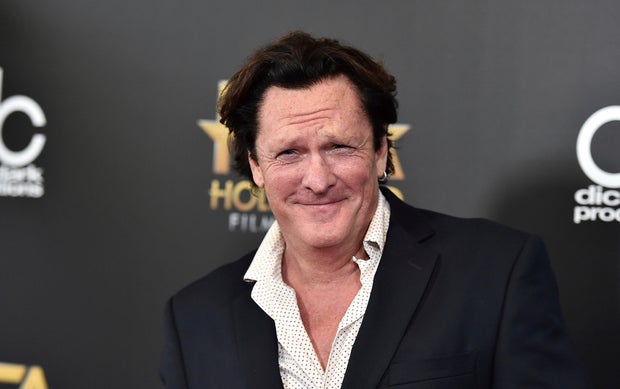
Michael Madsen, the actor best known for roles in Quentin Tarantino films including "Reservoir Dogs," "Kill Bill Vol. 2" and "The Hateful Eight," died July 3.
Madsen was born in Chicago. His father, Calvin, was a Chicago firefighter, while his mother, Elaine, was a poet, playwright, and producer with Emmy Awards to her name.
Madsen began his career with Chicago's Steppenwolf Theatre Company, under the tutelage of John Malkovich. Actress Rondi Reed, a longtime Steppenwolf company member, posted about the company's first encounter with Madsen.
"This guy walked into Steppenwolf Theater one day in Chicago to audition for the Young Audience Cast for 'Of Mice and Men' directed by Terry Kinney," Reed wrote. "He looked a bit like Elvis or Robert Mitchum, soft spoken and shy, funny and sweet."
"Michael was a car mechanic when we started rehearsals. He wrote long handwritten letters to me for years about how art saved his life," Kinney said in a statement. "He was wonderful in that production, and you could see his future success from the outset."
Madsen later moved to Los Angeles and became a star of the screen. He is perhaps best known for his role as Mr. Blonde in Tarantino's directorial debut "Reservoir Dogs," and the iconic scene in which he tortures a police officer while the 1973 Stealers Wheel hit "Stuck in the Middle with You" plays in the background.
Not typically a leading man, Madsen's unmistakable gruff voice made him a memorable presence in character roles in movies including "Sin City," "Donnie Brasco" and "Once Upon a Time in Hollywood."
Madsen also published several collections of poetry, including "Burning in Paradise" and "Expecting Rain."
During a speech at his handprint ceremony at Los Angeles' famous TCL Chinese Theatre in 2020, Madsen reflected, "I could have been a bricklayer. I could have been an architect. I could have been a garbageman. I could have been nothing. But I got lucky. I got lucky as an actor."
Madsen was the brother of actress Virginia Madsen of "Candyman" and "Sideways" fame.
Contributing: Jordan Freiman
Rev. Martin Marty, 97, religious scholar
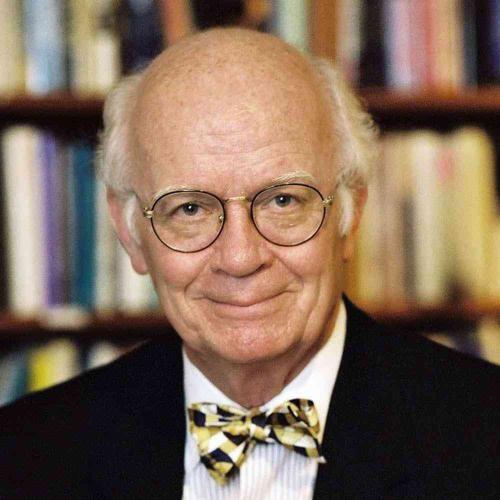
University of Chicago professor emeritus the Rev. Dr. Martin E. Marty, once described by Time Magazine as "the most influential interpreter of religion in the U.S.," died Feb. 25.
Marty earned his Ph.D. from UChicago, and was on the faculty at the university's Divinity School for 35 years. The university said Marty's understandings of Protestant Christianity and fundamentalism "still frame the view of modern American religion."
A native of West Point, Nebraska, Marty attended Concordia Seminary and Chicago Lutheran Theological Seminary before he earned his Ph.D. from the U of C Divinity School in 1956.
Historian L. Benjamin Rolsky called Marty "arguably the public intellectual of the 1980s," while biographer Grant Wacker suggested Marty belonged with Dr. Martin Luther King Jr., Billy Graham, and 18th-century revivalist and preacher Jonathan Edwards on the "Mount Rushmore of American religious history."
Marty became the founding pastor of the Lutheran Church of the Holy Spirit in Elk Grove Village in 1958. He joined the University of Chicago Divinity School faculty in 1963, and wrote more than 450 books, 5,000 articles, essays, and other documents in that role.
Marty was also editor of the newsletter Context, and served as an editor for The Christian Century magazine for 50 years.
As a practicing pastor, Marty marched for civil rights in Selma, Alabama, with Dr. King in 1965, and served as a Protestant observer during the Second Vatican Council the year before, UChicago said.
UChicago cited the six-year "Fundamentalism Project" — a scholarly effort from 1988 until 1994 — as one of Marty's "most significant Scholarly achievements." The project, which Marty directed with his onetime advisee R. Scott Appleby, examined the role of conservative religious movements in societies around the world.
The result was five volumes of case studies and analysis that the U of C said "quickly became the standard works in comparative political religion."
Marty was also the founding president and later the scholar-in-residence at the Park Ridge Center for the Study of Health, Faith, and Ethics.
Marty may be known best for the study of "public theology," a phrase he coined "to describe the critical engagement of religious and cultural issues that can foster the common good."
Jim Maurer, 78, former Chicago police chief of patrol
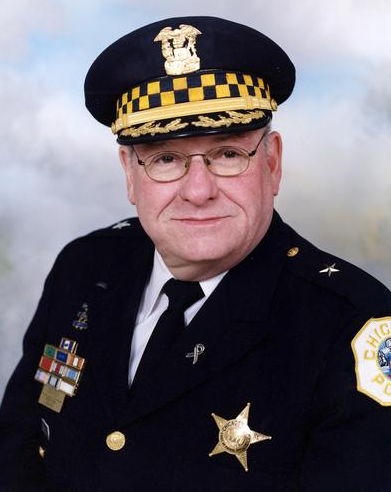
James Maurer, who spent more than four decades on the force with the Chicago Police Department and rose to the rank of chief of patrol, died Jan. 2.
As noted in a 2005 profile by Crain's Chicago Business, Maurer was born in the Logan Square neighborhood and attended St. Patrick High School on the city's Northwest Side. He became a police cadet at 17 in 1964 and a patrolman at 20 — which at the time was the minimum age, Crain's reported.
Maurer went on to earn a bachelor's degree in physical education and history from Valparaiso University and a master's degree in social and criminal justice from Lewis University in Romeoville, Crain's reported.
As a Chicago police officer, Maurer was on the force during the Democratic National Convention of 1968, which remains infamous to this day for its clashes between protesters and police. He told the Chicago Tribune he worked at the police academy teaching defensive tactics to recruits, and provided security along with the recruits to protect Chicago Police Headquarters.
Maurer also worked as a vice officer and a tactical sergeant, and ran two of the five Chicago police detective areas, Crain's reported. He also taught judo and karate at the CPD, the publication reported.
In 1980, Maurer went on leave to serve as the director of Mayor Jane Byrne's newly created Office of Municipal Investigations, according to published reports.
In April 2002, Chicago police Supt. Terry Hillard appointed Maurer as chief of patrol, which placed him in charge of the day-to-day operations at all of what were then 25 Chicago police districts, Crain's reported.
Maurer was at the helm for several major events, including a protest during the Transatlantic Business Dialogue forum in November 2002. He told The Associated Press how he prepared officers for dealing with rowdy demonstrations.
"We dressed recruits like lunatics and gave them boxes of water balloons, silly string, Nerf bats and then took the coppers out there and made them take all that," Maurer said, adding that there ended up being only three arrests during the protests.
Maurer retired from the Chicago Police Department in 2005, and took over afterward as the head of security for O'Hare and Midway international airports. After being let go from that position in 2009, Maurer filed a lawsuit, claiming that he was fired because he kept bringing up security issues those in charge did not want to address. He called O'Hare the "least secure airport in the country" in the 2010 lawsuit, according to published reports.
In more recent years, Maurer made media appearances offering perspective on the CPD and fighting crime.
Virginia McCaskey, 102, Chicago Bears owner
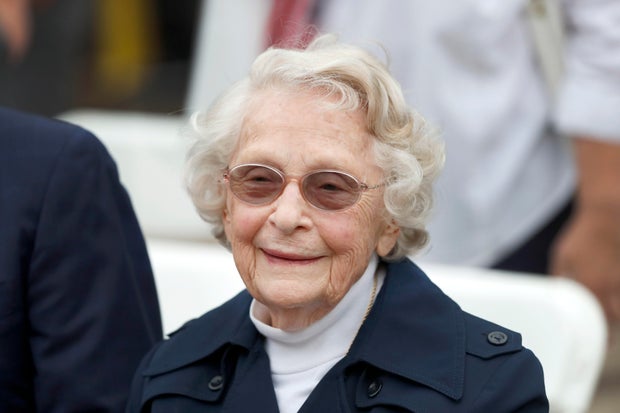
Chicago Bears owner Virginia McCaskey, the daughter of founding team father George S. Halas Sr., died Feb. 6.
McCaskey was the eldest child of "Papa Bear" Halas, who was also a founding father of the National Football League.
McCaskey said she learned all about the Bears from her father, and inherited the team after his death in 1983. Her only brother, George "Mugs" Halas Jr., had died of a heart attack in 1979, leaving her the sole heir to the franchise.
Guided by core principles of faith and family, she served at the helm of the iconic football franchise for over 40 years. Two years after her father's death, McCaskey oversaw the team's ninth world championship and first Super Bowl title at the end of the historic 1985 season, as the Bears dominated the Patriots in a 46-10 victory in Super Bowl XX in New Orleans on Jan. 26, 1986. In 2007, she once again accepted the George S. Halas NFC Championship trophy.
The last Bears game Mrs. McCaskey saw was their season-ending win over the arch-rival Packers on her 102nd birthday, Jan. 5.
While staying out of the spotlight, McCaskey was a fixture at games and the various charitable causes she championed. The mother of 11 carried herself with class and dignity as a rare female owner in the NFL.
Despite her calm demeanor, "Mama Bear" had the same competitive spirit as her fiery father, and agonized with Bears fans when the "Monsters of the Midway" didn't have success on the field.
"The Bears have been my life all these years. I feel very blessed and grateful," she said in 2019 as the Bears celebrated the franchise's 100th anniversary.
Mrs. McCaskey attended Chicago Public Schools until the eighth grade, when she transferred to St. Hilary Catholic school. She attended St. Scholastica Academy high school in West Rogers Park before getting her college degree from Drexel University in Pennsylvania in 1943.
At Drexel, Mrs. McCaskey met her future husband, Ed. The two married in February 1933 at St. Margaret Mary's Church in Maryland. Ed McCaskey was already the team's vice president when George Halas Sr. died in 1983. He took over as team chairman until he died in 1999.
Ed and Virginia McCaskey's eldest son, Michael McCaskey, took over as president of the Bears after Halas' death, and became chairman of the board in 1999, following his father's death.
Michael McCaskey retired as team chairman in 2011, and his brother, George — a former CBS Chicago news writer — has run the team since. Michael McCaskey died of cancer at the age of 76 in 2020.
"Virginia Halas McCaskey, the matriarch of the Chicago Bears and daughter of George Halas, the founder of the NFL, leaves a legacy of class, dignity, and humanity. Faith, family, and football — in that order — were her north stars and she lived by the simple adage to always 'do the right thing,'" NFL commissioner Roger Goddell said in a statement. "The Bears that her father started meant the world to her and he would be proud of the way she continued the family business with such dedication and passion. Our thoughts and prayers go out to the McCaskey and Halas families and Bears fans around the world."
Contributing: Todd Feurer, Ryan Baker
Steve McMichael, 67, Bears hall-of-famer
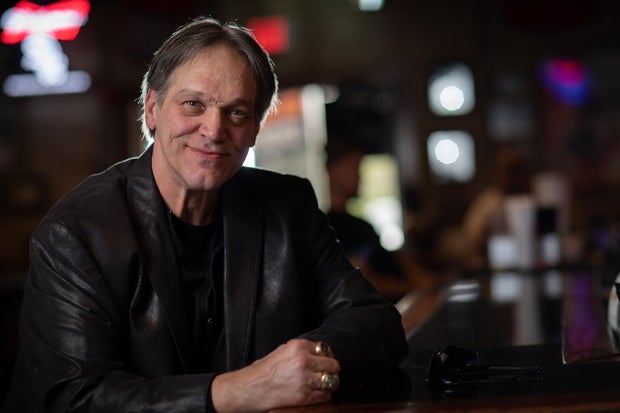
Chicago Bears icon and Pro Football Hall of Famer Steve "Mongo" McMichael died April 23 after a years-long battle with ALS.
Born in Houston, McMichael was a six-sport standout in high school in Texas, where he would also play college football. At the University of Texas, McMichael led a Longhorns defense in 1979 that allowed fewer than nine points per game, according to the National Football Foundation.
He graduated as the university's all-time leader in career tackles with 380, and sacks with 30, and the Longhorns posted a record of 32-12-1 with McMichael on the team.
McMichael was the consensus All-America selection at the University of Texas.
The New England Patriots picked McMichael in the third round, at No. 73 overall, in the 1980 NFL Draft. They released him after just six regular-season games in one season, and he joined the Bears in 1981. He would become a key part of what is widely regarded as one of the best defenses in NFL history.
The 6-foot 2-inch, 270-pound McMichael played a franchise-record 191 games for the Bears, and became a starter at defensive tackle in 1983.
In 1985, the first of three straight All-Pro seasons as defensive tackle, McMichael helped lead the Bears to their only Super Bowl title to date.
McMichael played 13 seasons with the Bears from 1981 to 1993, and ranks second only to Richard Dent in team history with 92.5 sacks. A part of six division championship teams, McMichael was a two-time first-team All-Pro, and he made the NFL Pro Bowl twice, in 1986 and 1987.
McMichael went to the Green Bay Packers for one season to finish his football career and retired after the 1994 season.
McMichael appeared briefly with the WWF before wrestling and commentating for World Championship Wrestling for five years.
McMichael also ran for mayor in Romeoville, and coached the Indoor Football League team the Chicago Slaughter. He was also famously ejected from a Cubs game in 2001 by home plate umpire Angel Hernandez, who didn't care for Mongo calling him out before singing "Take Me Out to the Ballgame."
In 2021, McMichael revealed he was battling ALS. Three years later, in 2024, McMichael was joined by family and friends as they celebrated Mongo's election to the Pro Football Hall of Fame at his home in Homer Glen, where he lived with his wife, Misty.
Contributing: Ryan Baker
Michael Miner, 81, Chicago Reader editor and columnist
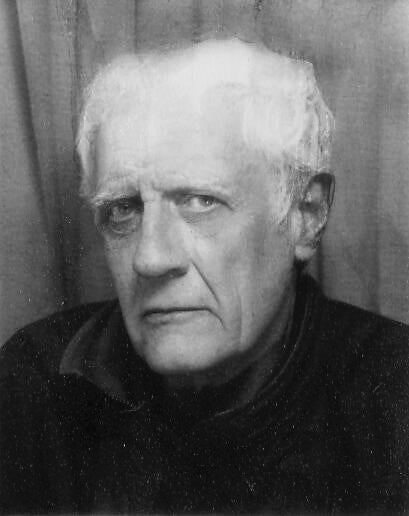
Michael Miner, a renowned Chicago journalist best known as an editor and columnist for the Chicago Reader, died May 1.
In a 2011 column, fellow Chicago Reader writer Steve Bogira characterized Miner as "the Reader's rock," and "the conscience of Chicago journalism."
A native of St. Louis, Miner graduated from Kirkwood High School outside that city at just 15. He had hoped to write short stories and plays, but instead earned a bachelor's in journalism four years later from the University of Missouri-Columbia.
Miner's first job was for Watkins products, where he sold household goods door-to-door in suburban St. Louis. His first writing job was with the Disciples of Christ publication house, where he wrote catalog copy, including advice like, "Before you chow down, bow down."
Miner enlisted in the U.S. Navy, where he served on an aircraft carrier off North Vietnam, and joined the St. Louis bureau of the UPI wire service after an honorable discharge. He then moved to Chicago and joined the Chicago Sun-Times, where he worked from 1970 to 1978.
Miner took a leave of absence from the Sun-Times in 1975 to return to Vietnam to cover the end of the war. But instead of getting a spot in a helicopter out of Saigon, he posed as the husband and father of a young family to help them escape to Paris.
Meanwhile, while working for the Sun-Times, Miner began freelancing for the Reader. He had a story in the very first issue of the paper on Oct. 1, 1971, documenting observations of people and sights along Chicago's lakefront on a cloudy fall night.
Miner joined the Reader full-time in 1979. He became the editor for the Hot Type media column, and later started writing the column while also editing other writers.
While Miner did not typically center his own life in his columns, he did write a powerful and harrowing firsthand account in 1982 of being called at the office about a fire where his 10-month-old daughter was rescued, but her babysitter was found brutally murdered. Miner took the column as an occasion to reflect on the exercise of dealing with the news media from the other side.
Among the work Miner edited was John Conroy's stories exposing Chicago Police Cmdr. Jon Burge and allegations of torture, which Miner edited for 10 years.
Miner won the Chicago Headline Club's Peter Lisagor Awards for Best News Column or Commentary in 1991, 1992, and 2008.
Joyce Piven, 94, theater teacher
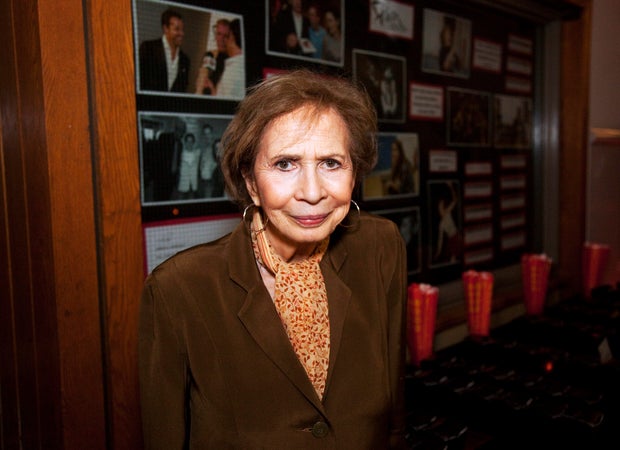
Joyce Piven, the co-founder of a celebrated acting school in Evanston and the mother of actor Jeremy Piven, died Jan. 19.
Ms. Piven became involved in the campus theater scene as an undergraduate at the University of Chicago in the early 1950s. UChicago had an active theater scene led by U of C student and later inaugural director of The Second City Paul Sills.
As documented in a 1992 Chicago Reader article, Ms. Piven and her future husband, Byrne Piven, became members of the Playwrights Theatre Club in Old Town led by Sills and director David Shepherd. The group began in 1953 and only lasted a couple years, but put on 25 productions.
The Pivens moved to New York City, where they taught acting and joined a touring production of "Camelot." While in New York, the couple also became the parents of two children — Shira, now 63, and Jeremy, now 59.
The Pivens later returned to Chicago and established what became the Piven Theatre Workshop in Evanston in 1971. The workshop, located at 927 Noyes St. just west of the Northwestern University quads, became famous as a training studio for young people. Alumni include Joan and John Cusack, Aidan Quinn, Aimee Garcia and Jeremy Piven himself.
The school is known for the Piven Training Technique, a group of skill-building exercises and theatre games that help students develop their creativity and voice while also focusing on collaboration and ensemble work.
The Piven Training Technique was inspired by the work of theatre teacher and acting coach Viola Spolin — Paul Sills' mother — and Byrne and Joyce Piven's own collaborations with Sills himself, according to the workshop website.
Marian "Cindy" Pritzker, 101, family matriarch and governor's aunt
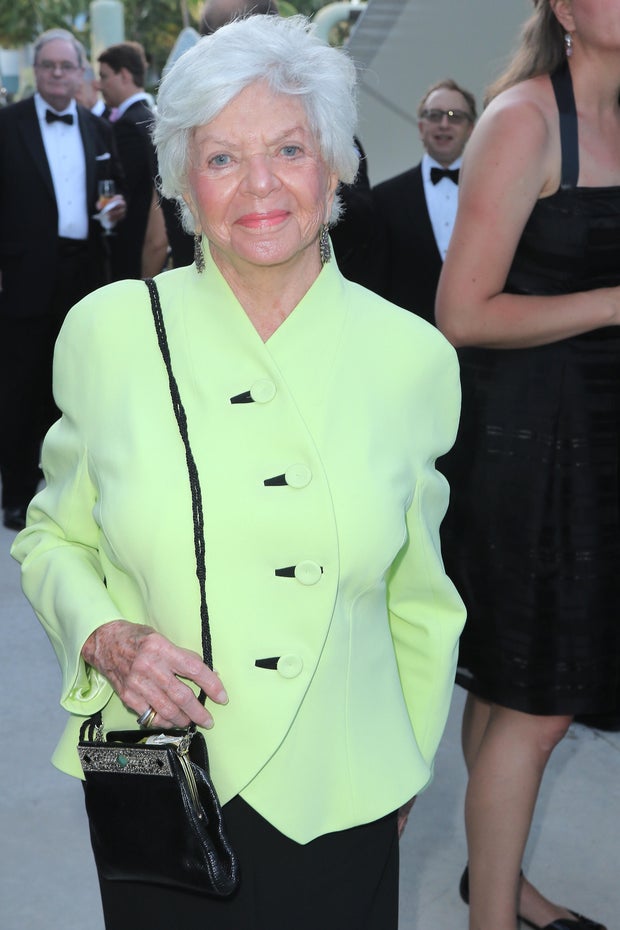
Marian "Cindy" Pritzker, the matriarch of one of Chicago's most powerful and generous families and aunt of Illinois Gov. JB Pritzker, died March 15.
"When my father died and my mother was ill and I was just 12 years old, she and my uncle Jay took me in and made sure I felt safe and loved," Gov. Pritzker wrote of his aunt. "I would not be who I am today without her love, laughter, and kindness."
Cindy Pritzker was born to Sadie and Judge Hugo Friend. Judge Friend famously heard the case of the 1919 Black Sox scandal in which eight members of the Chicago White Sox were accused criminally of throwing the World Series as for a payout, Mrs. Pritzker's obit noted.
Ms. Pritzker grew up in Kenwood, attended Hyde Park High School in Woodlawn and Grinnell College in Iowa, according to an obituary.
She met her future husband, Jay Pritzker, in Eagle River, Wisconsin, when she was 13, and their respective families had houses on the same lake.
The couple married on Aug. 31, 1947. Jay Pritzker went on to found the Hyatt Corporation. He died in 1999.
After her husband's death, Ms. Pritzker commissioned architect Frank Gehry to create the Jay Pritzker Pavilion at Millennium Park. Also, while on the board of the Chicago Public Library, she helped get the Harold Washington Library built.
Ms. Pritzker and her husband co-founded the Pritzker Architecture Prize, which her obituary said is widely considered the architecture equivalent of the Nobel Prize.
Ms. Pritzker is survived by four children — Tom, John, Dan, and Gigi — 14 grandchildren and 13 great-grandchildren. Thomas Pritzker took over The Pritzker Organization and as executive chairman of Hyatt after his father's death. His son, Jason Pritzker, is managing director and vice chairman of The Pritzker Organization.
Jay Pritzker's brother, the late Donald Pritzker, was the father of Illinois Gov. JB Pritzker; Penny Pritzker, who served as U.S. Secretary of Commerce under President Barack Obama; and Pritzker Group managing partner Anthony Pritzker. Another of Jay Pritzker's brothers, the late Robert Pritzker, is the father of Pritzker Military Museum & Library founder Jennifer Pritzker and former child actress Liesel Pritzker, along with daughters Linda and Karen and son Matthew.
Mike Quinlan, 80, former McDonald's CEO
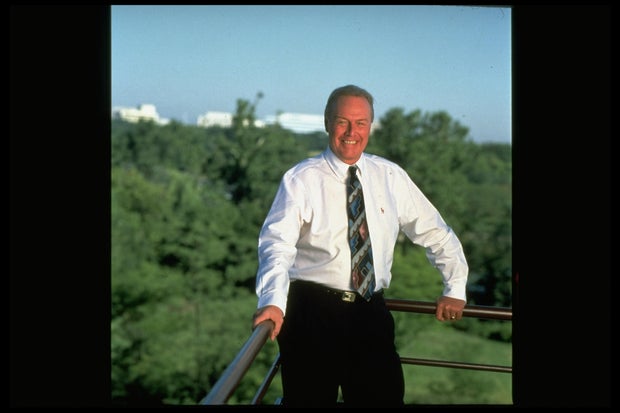
Michael R. Quinlan, who started in the mailroom at McDonald's and rose to the helm of the company, died Sept. 22.
Quinlan was a native of Chicago's West Side, and graduated from Fenwick High School in Oak Park in 1962. He earned a full scholarship to Loyola University Chicago, where he graduated with a bachelor's degree in philosophy and psychology and later a master's in business administration.
McDonald's Corporation hired Quinlan part-time in 1963 while he was in college at Loyola — not behind the counter or in a kitchen at a restaurant where many teens start out, but in the mailroom. He took the job so he could earn money for books and housing, according to a published obituary.
Quinlan told the Chicago Tribune's John Gorman in a 1986 interview that he was paid $2 an hour, and was able to name his own hours as long as the job got done. Quinlan told the paper he "did some accounting, purchasing, a potpourri of things."
McDonald's hired Quinlan full-time in 1966 while he began pursuing his MBA at Loyola, according to the Tribune archive report. He kept rising through the ranks — from managing restaurants to overseeing multiple franchises and running a district office in St. Louis and a regional office in Washington, D.C., according to the Trib.
Quinlan was named senior vice president at McDonald's in 1976, was named to the board of directors in 1979, became president of McDonald's U.S.A. in 1980, and became president of McDonald's Corporation in 1982, the Trib reported.
In 1987, Quinlan was named president and chief executive officer of McDonald's. In 1990, he became the third chairman of the board at McDonald's, after Ray Kroc and Fred Turner.
Quinlan's published obit noted that under his leadership, McDonald's saw exponential growth and worldwide expansion.
Quinlan was also a dedicated philanthropist — giving back to Fenwick High School, and championing the construction of a Ronald McDonald House near Loyola University Medical Center in west suburban Maywood to support children facing serious illness and their families.
Quinlan earned an honorary doctor of law degree from Loyola in 1988, and was named the chairman of the board of trustees at the university in 1999 — overseeing a rise in enrollment and major capital improvements on the university's campuses, his obit said. Quinlan was named a life trustee at Loyola in 2013.
In 2004, Quinlan and his wife donated to fund the construction of the Michael R. and Marilyn C. Quinlan Life Sciences Education and Research Center on the Loyola Lake Shore Campus in Rogers Park. In 2012, Quinlan donated $40 million to the business school at Loyola, which was renamed the Michael R. Quinlan School of Business.
Quinlan's obit noted that he "frequently spoke of the Jesuit ethic of being 'people for others,' and of gratitude."
Rob Riley, 80, actor
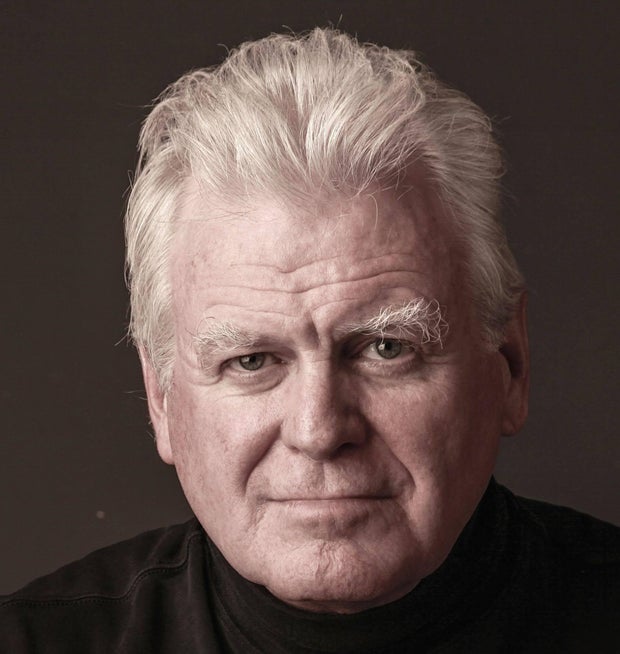
Rob Riley, a celebrated actor and alum of Chicago's Second City, died Aug. 8.
Riley was born in Concordia, Kansas, grew up in Long Grove, Illinois, and attended the University of Michigan.
He studied under improv icon Del Close, and paid his dues at the Reification Company improv group, Reel Chicago noted.
In 1980, Riley joined the Second City mainstage where he worked alongside Jim Belushi, Danny Brenn, Tim Kazurinsky, and George Wendt, who also died this year.
Riley made his "Saturday Night Live" debut alongside Belushi in the SNL short film "Sugar or Plain" in March 1984 and then joined the writing staff, working with icons such as Billy Crystal, Larry David, Christopher Guest and Martin Short, according to Late Nighter.
At SNL, Riley was known for his musical sketches, including, "A Couple of White Guys," which depicted Belushi and Alex Karras as "two nerdy guys in Connecticut who rap about things like owning a Volvo, living in the suburbs, and commuting to their office jobs."
Reel Chicago noted that Riley also worked with Belushi and filmmaker John Davies on Eggboy Productions Inc., which produced comedy shorts for HBO, Cinemax, and Showtime, as well as SNL. The company also produced original comedies such as "V.T. The Videotape," with Dan Aykroyd, Del Close, Megan Fay, and John Kapelos for Chicago's WTTW-Channel 11, according to Reel Chicago.
In Chicago, Riley was celebrated for his work on the local stage. He co-wrote, directed, and performed in the musical "Wild Men!" at Chicago's Body Politic Theatre and the off-Broadway Westside Theatre in New York.
In a 1993 review, Variety described "Wild Men!" as the story of "four city men who take to the woods for a retreat in which they'll seek the 'wild man' within." Wendt was among the stars.
Riley was nominated for Jeff Awards for "Good for Otto" at The Gift Theatre and Chicago Dramatists' production of "Cadillac." He starred in numerous shows on other famed Chicago stages, including the Chicago Shakespeare, the Northlight, the Steppenwolf, and the Goodman.
On the big screen, Riley's voice is heard in "Groundhog Day" as the radio DJ who wakes up Bill Murray's character repeatedly to Sonny & Cher's "I Got You Babe."
Reel Chicago noted that Riley split his time between Chicago and Los Angeles after 2013, but remained a Chicago actor, "equally at home in storefronts and on major stages, in sketch rooms and rehearsal halls."
George Ryan, 91, former Illinois governor
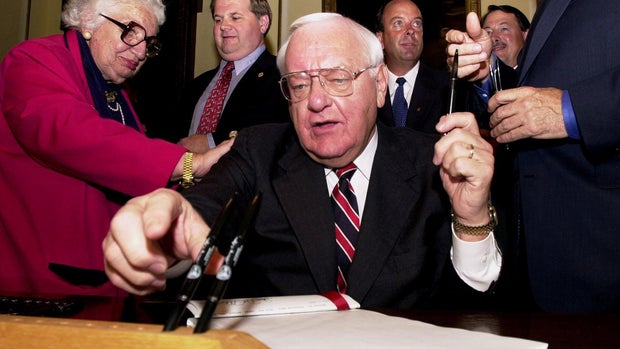
George Ryan, who served as Illinois lieutenant governor, secretary of state, and finally governor from 1999 to 2003 before a high-profile fall from grace, died May 2.
Ryan was born in Maquoketa, Iowa in 1934 and raised in Kankakee County. He married Lura Lynn, his high school sweetheart, in 1956. They had six children together.
A Republican, Ryan began his political career as chairman of the Kankakee County Board before being elected to the Illinois House of Representatives to represent the 43rd District in 1973. He was reelected to the Illinois House five times, and served as speaker from 1981 to 1983.
Ryan served as lieutenant governor from 1983 to 1991 under Republican James R. Thompson. He was elected Illinois secretary of state in 1990 and served two terms.
In 1998, Ryan was elected governor, defeating conservative Democrat Glenn Poshard.
The following year, Ryan became the first sitting governor to meet with Cuban President Fidel Castro. That year, he also created Illinois First, a multi-billion-dollar public works program to rebuild roads, schools and transit.
Ryan received national attention in 2000 when he put a moratorium on executions in Illinois after several inmates on death row were found to be wrongfully convicted. Before leaving office in 2003, Ryan commuted the death sentences of more than 160 Illinois inmates. Democratic Governor Pat Quinn eventually signed the bill that abolished the death penalty in Illinois.
But after leaving office, Ryan ran into criminal trouble linked with a scandal that dated back to 1994, when he was still secretary of state.
Prosecutors said workers in Ryan's office issued driver's licenses to truck drivers in exchange for bribes. One of those drivers was involved in a fatal crash caused by a part falling off a truck, which struck a van carrying the family of Rev. Duane "Scott" Willis and his wife, Janet. The ensuing inferno killed six children.
Facing a federal corruption probe that was part of the Operation Safe Roads investigation, Ryan didn't run for reelection in 2002. He was indicted on 22 charges in December 2003, including racketeering, bribery, extortion, money laundering and tax fraud.
Ryan was convicted in 2006 and sentenced to six and a half years in prison, which he began serving in 2007.
In January of 2011, Ryan was allowed to leave prison to visit his dying wife, Lura Lynn. She died six months later, and Ryan was again released from prison to be at her side, but was denied release to attend her funeral.
Ryan was released from prison in 2013 to serve the rest of his sentence under home confinement.
Despite his legal troubles, Ryan's former press secretary, Dennis Culloton, said, "he was the best guy I ever worked for."
"He took on issues that other elected officials, even today, would be afraid to come near," Culloton said.
After his release from prison, Ryan continued to campaign against the death penalty and worked on a book about all the people he met in politics.
In 2020, Ryan and Pulitzer Prize-winning journalist Maurice Possley published a book, "Until I Could Be Sure: How I Stopped The Death Penalty In Illinois." Ryan called his decision to place a moratorium on the death penalty in 2000 the greatest accomplishment of his career.
Bruce Sagan, 96, newspaper publisher and arts patron
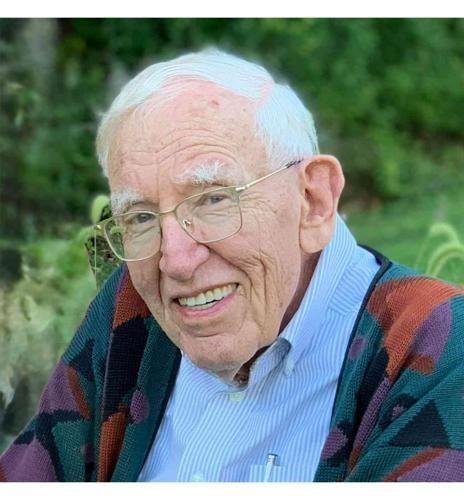
Bruce Sagan, who built one of the nation's largest newspaper chains and is celebrated for his role in bolstering the performing arts in Chicago, died Sept. 21.
Sagan was born in Summit, New Jersey, to Jewish immigrants from present-day Ukraine, the Hyde Park Herald reported. He was the cousin of astronomer and planetary scientist Carl Sagan.
Sagan went to college for one term at the University of Wisconsin, and then transferred to the University of Chicago, where he wrote for the Chicago Maroon student newspaper. Sagan went on to pursue journalism as a career, working as a copy boy at the Hearst International News Service and then as a reporter for Chicago's City News Bureau wire service.
"Everyone from Chicago politicians to local business leaders knew him for his everpresent trademark bow ties, and some knew he kept a trenchcoat in a hall closet of the apartment building where he lived on the South Side because it reeked from the smell of smoke from the many fires he covered as a cub reporter," Sagan's family wrote in an obit published by the Herald.
In 1953, at the age of 24, Sagan bought the Hyde Park Herald, described as a "failing neighborhood weekly" at the time. Sagan turned the paper into a force for investigative reporting during a time of racial change, urban renewal and housing discrimination on Chicago's South Side.
Sagan went on to buy the Economist Newspaper Group, which published the Southtown Economist, now known as the Daily Southtown. When Sagan sold the newspaper group 35 years later, it had grown to almost 30 papers with a circulation of almost 400,000.
Sagan was also credited with helping develop independent stage theater in Chicago. Sagan renovated and reopened the Harper Theater in Hyde Park as a playhouse and a dance and music venue in 1964, according to the Chicago Public Library. He also developed the model that was adopted for the National Endowment for the Arts' dance residency program and spearheaded preservation efforts for Frank Lloyd Wright's Robie House in Hyde Park.
Sagan was appointed to the Illinois Arts Council in the 70s, and he chaired the council through the U.S. Bicentennial celebration in 1976 and the creation of the Chicago Architecture Center.
He also facilitated the Joffrey Ballet's move from New York to Chicago in the 1990s, helped create the Printers Row Lit Fest, and served as a trustee on the board for the Steppenwolf Theatre for more than 40 years and as board chair from 1987 to 1992. Sagan led the creation of the Steppenwolf Theatre Company's permanent home at 1650 N. Halsted St. in 1991, the theater said.
Sagan also served as chairman of the Illinois Housing Development Authority and in leadership positions with numerous other organizations, including WFMT radio and the Chicago Sun-Times.
In 2024, Sagan was honored with a National Medal of Arts by President Joe Biden.
Ryne Sandberg, 65, Cubs Hall of Famer
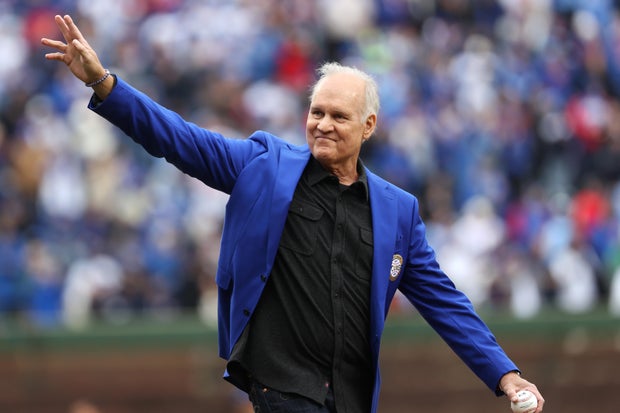
Hall of Fame Chicago Cubs slugger and second baseman Ryne Sandberg died July 28, following a battle with prostate cancer.
Sandberg played in parts of 16 big-league seasons, almost entirely with the Cubs.
Sandberg was born in Spokane, Washington. He was the youngest of four children of Derwent "Sandy" Sandberg, a mortician, and Elizabeth "Libby" Sandberg, a nurse, according to the Society for American Baseball Research.
At North Central High School in Spokane, Sandberg was a standout in baseball, as well as football and basketball. He received All-America Team honors from Parade Magazine as a quarterback and punter on the school's football team, and received second-team Greater Spokane League basketball honors his junior and senior years.
It was the baseball diamond that turned out to be Sandberg's calling. In high school, Sandberg made the All-City team twice, hitting .417 with four home runs, and helped lead his high school team to a 25-3 record and a second-place finish in the state tournament championship.
The Philadelphia Phillies drafted Sandberg in 1978 in the 20th round. He played in the minor leagues until the Phillies called him up in 1981.
Following the 1981 season, the Phillies and Cubs exchanged shortstops, but Cubs general manager Dallas Green wanted Sandberg too, according to the Baseball Hall of Fame.
In his first season with the Cubs in 1982, Sandberg played third base and hit .271 with 33 doubles and 32 stolen bases. Sandberg was switched to second base for the 1983 season. In 1984, he was a starter alongside other legends such as Jody Davis, Leon Durham, and Keith Moreland.
When the Cubs took on the St. Louis Cardinals at Wrigley Field on June 23, 1984, Sandberg kept driving in runs to overcome an early 7-1 Cubs deficit. But the Cubs were still down 9-8 as the bottom of the ninth began — only for Sandberg to hit a homer and tie it up.
The game went into extra innings. St. Louis scored two more runs in the top of the 10th and took an 11-9 lead, but with two out and no one on base, Bob Dernier worked a walk from ex-Cub Bruce Sutter, and Sandberg hit another homer to tie the game at 11.
The Cubs scored one more time on an RBI single by Dave Owen and won 12-11. The game became known as the "Ryne Sandberg Game" and propelled the 1984 Cubs toward success that season.
Sandberg announced his first retirement suddenly in the middle of a season on June 13, 1994, saying he had "lost the edge it takes to play — the drive, the motivation, the killer instinct." But he returned in 1996 and played two more seasons, before finally calling it quits as a player at the end of the 1997 season.
Sandberg finished his career as a .285 hitter with 282 home runs and a fielding percentage of .989. He notched roughly 68 Wins Above Replacement.
Sandberg was a 10-time All-Star and a winner of nine Gold Glove Awards and seven Silver Slugger Awards. He was inducted into the Baseball Hall of Fame in 2005, earning more than 76% of the vote in his third year on the ballot.
After his retirement, Sandberg served as a spring training instructor with the Cubs in Mesa, Arizona. From 2007 until 2010, Sandberg was a manager in the Cubs' minor-league system — first with the Single-A Peoria Chiefs, then the Double-A Tennessee Smokies and finally the Triple-A Iowa Cubs.
After being passed over for Cubs manager in 2010, Sandberg left the Cubs organization and became a minor league manager for the Phillies, working with the Triple-A Lehigh Valley IronPigs in the Phillies' farm system. He served as Philadelphia's bench coach and then as manager of the Phillies for three seasons from 2013 to 2015.
For the last decade of his life, Sandberg served as a popular Cubs ambassador.
Allen Sanderson, 81, economist and sports business expert
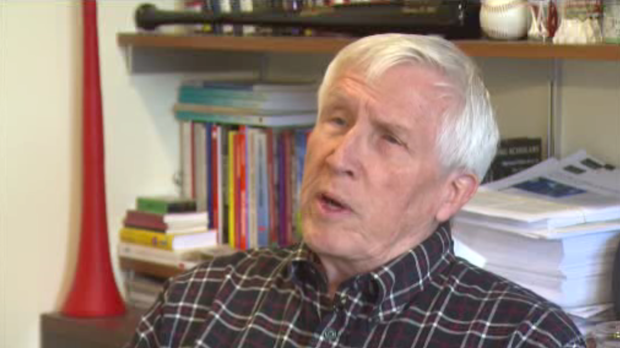
Longtime University of Chicago economist Allen Sanderson died Jan. 23.
Sanderson was known for his courses, research, and commentary about the economics of sports.
Sanderson, a graduate of Brigham Young University and the University of Chicago, returned to UChicago in 1984 after teaching at the College of William and Mary and Princeton University. He served in numerous roles at the U of C over the following 40 years, including associate provost, senior research scientist at the National Opinion Research Center, and senior instructional professor in economics.
Sanderson contributed columns to op-ed pages in sports and non-sports topics in newspapers around the country, and appeared frequently on Chicago-area TV and radio programs.
He offered perspective in several CBS Chicago news stories about economics, and particularly the economics of sports, over the years.
Sanderson also served on the editorial board for The Journal of Sports Economics, and had a bimonthly column in Chicago Life Magazine.
In relatively recent years, he wrote about the NCAA and the case for paying college athletes, the economic impact of colleges and universities on their communities, the economics of professional sports stadiums holding "big-ticket" events, and the political economy of the unsuccessful bid by the City of Chicago to host the 2016 Summer Olympics, according to his online biography.
UChicago said Sanderson was known as a student advocate, enthusiastically supporting the Collegiate Scholars Program for Chicago Public Schools high school students, and contributing to Aims of Education discussions for first-year college students and the Taking the Next Step program in which UChicago college students explored career paths.
Sanderson received a Quantrell Prize for Excellence in Undergraduate Teaching in 1998, and held the distinction of teaching more students than anyone in UChicago history, according to his obituary.
Sister Jean Dolores Schmidt, 106, Loyola basketball chaplain
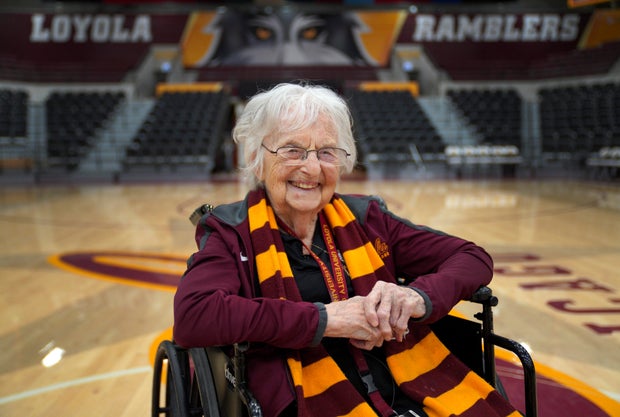
Sister Jean Dolores Schmidt, BVM, who became world-famous as the chaplain and biggest fan of the Loyola University Ramblers men's basketball team, died Oct. 9.
She became a national and worldwide celebrity during the Loyola Ramblers' Cinderella Final Four run in 2018.
Sister Jean was born in San Francisco. She played basketball at St. Paul High School, according to Angelus News.
But long before that, as a third grader, she was inspired by her teacher, a member of the Sisters of Charity of the Blessed Virgin Mary, or BVMs, and had a calling to join the order herself.
Sister Jean joined the BVM order in Dubuque, Iowa, after graduating from high school. She received her habit at the BVM motherhouse on March 19, 1938. In the 1940s, Sister Jean began her ministry in elementary education in the Los Angeles area.
As a teacher at St. Charles Elementary School in North Hollywood, Sister Jean started a sports program and coached women's basketball, softball, volleyball, track, ping-pong, and yo-yo, Loyola University said.
While teaching on weekdays, Sister Jean pursued a college education, taking classes on Saturdays and during the summer. After completing her master's degree, Sister Jean moved to Chicago and began teaching college courses at Mundelein College in 1961.
Sister Jean was named acting dean of Mundelein College in 1970, having already served as associate dean and director of summer sessions, Loyola said. She continued teaching and serving in several other administrative positions at the all-women's Mundelein College, until the school merged with Loyola University Chicago in 1991.
At that point, Sister Jean became an assistant dean and academic adviser at Loyola.
In 1994, Sister Jean was 75 and ready to retire, Loyola said. But she had a new calling to help student athletes maintain their grades and thus keep up their eligibility. She soon became chaplain of the men's basketball team, offering pregame prayers and becoming crucial to the team's success, providing a scouting report on their opponent during prayer before every game.
"I tell them guys to watch out for on the other team and to not let anybody get under their skin," she told CBS News Chicago in 2017. "We ask God to keep us free from injuries and play with great sportsmanship. We pray for the referees that they can see clearly and fairly."
In 2018, the Ramblers' Final Four run catapulted Sister Jean to international celebrity. The Ramblers won the Missouri Valley Conference Tournament to appear in the NCAA Tournament for the first time since 1985, and the Final Four for the first time since 1963.
Sister Jean became a star along with the team. Orders for a Sister Jean bobblehead broke records, and Sister Jean got a shout-out from former president and Chicago resident Barack Obama.
After the 2018 season, Sister Jean remained a visible presence at games and on campus.
In 2023, Sister Jean published a book, "Wake Up with Purpose! What I've Learned in My First 100 Years." She did not retire from all her roles at Loyola until the age of 106, shortly before her passing.
"Jean's life was a testament to her inexhaustible energy. With that characteristic twinkle in her eyes, she sums it up: 'Feeling connected to my students was like oxygen to me. When you love what you do, it never really feels like work," said Sister Mary Ann Zollmann, BVM, in delivering Sister Jean's eulogy. "Jean revealed her own heart's desire for racial and gender equity, peace without war, and an inclusive church. Jean and the Ramblers were made for each other, and eventually, the whole world would know it."
Harry Teinowitz, 64, sports radio host
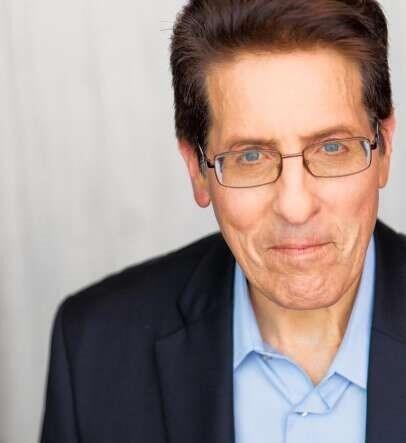
Harry Teinowitz, a popular sports radio host known for the "Mac, Jurko and Harry" show on Chicago's ESPN 1000, died July 15.
Teinowitz was born in Glencoe, attended the University of Kansas, and earned a theater degree from Columbia College Chicago. He launched an acting and comedy career, with roles in the movies "Up the Academy," "Risky Business," "The Package,' and "Return to Me," and a standup comedy act that took him across the country.
Teinowitz told Chicago Radio Spotlight his first radio gig was on Tom Saher's show on WSCR The Score, in which he did a segment called "Ten Minute Misconduct" composed of 10 minutes of topical sports jokes.
In 1994, Teinowitz joined Spike Manton on WMVP AM 1000 for the "Harry and Spike Show" on Saturday nights, the Tribune archive reported. The duo moved to a midday slot on weekdays in 1996, but this promotion was short-lived as WMVP dropped its all-sports format nine weeks later.
Teinowitz also worked with Jonathon Brandmeier and Danny Bonaduce on WLUP-FM 97.9, and Pete McMurray at WCKG-FM 105.9.
In 1998, with ESPN in charge at WMVP, Harry and Spike were reunited. Beginning in 2001, Teinowitz was teamed up with Dan McNeil and former NFL player John Jurkovic for "Mac, Jurko and Harry." The trio was known for their sparring on the air, particularly between Teinowitz and McNeil.
"Mac and I are like oil and water, and for whatever reason, it sometimes bubbles up to the surface," Teinowitz told Chicago Radio Spotlight in 2007. "It's strange, it really is. We can go three months with nothing happening — getting along great, everything is rosy, and then boom, we get into a big fight about the littlest thing."
Teinowitz's obit emphasized his passion on the air.
"A passionate fan of all Chicago teams — especially the Cubs — Harry brought humor, heart, and authenticity to the airwaves for more than two decades," the obit read.
Teinowitz stayed with the ESPN 1000 program after Carmen DeFalco replaced McNeil.
In 2011, Teinowitz was arrested for drunken driving in Skokie. He pleaded guilty and was sentenced to conditional discharge and community service. He was suspended by ESPN 1000 and went to rehab, and returned to the air for two years before being let go in 2013, according to The New York Times' The Athletic.
Teinowitz wrote the play, "When Harry Met Rehab," with his former on-air partner Manton. Described as "a comedy that takes sobriety seriously," the play was loosely based on Teinowitz's own experiences.
Dan Butler of "Frasier" fame starred as Harry in the run of "When Harry Met Rehab" at Chicago's Greenhouse Theater Center from November 2021 to January 2022.
Jeff Tobolski, 61, former Cook County commissioner
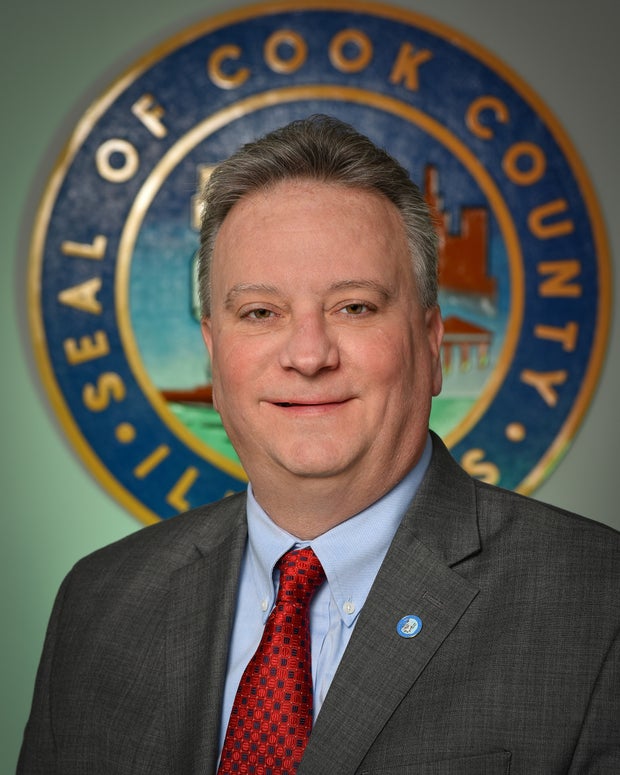
Former McCook, Illinois mayor and Cook County commissioner Jeff Tobolski died Nov. 9, shortly before he was to enter prison for a corruption conviction.
Tobolski was born and raised in McCook. His father, Raymond Tobolski, was a McCook firefighter and later the police chief and mayor.
After earning a degree in history from Knox College in Galesburg, Illinois, Jeff Tobolski served as a trustee for the McCook Park District and then as its president. He was appointed interim mayor of McCook in 2007, and was elected to a four-year term in 2009.
Tobolski also worked for the Firemen's Fund Insurance Company for 15 years as a claims adjuster and fraud investigator.
His now-defunct campaign website credited him with reducing the Village of McCook budget deficit while increasing police, fire, and public works personnel, and securing the MAX indoor sports arena in McCook.
In 2010, while still serving as McCook mayor, Tobolski was elected to the Cook County Board, representing the west suburbs in the 16th District. The Democrat defeated incumbent Republican Tony Peraica, a firebrand who had run unsuccessfully for Cook County Board president four years earlier.
On the County Board, Tobolski served as the chair of the Homeland Security and Emergency Management Committee and vice chair of the Veterans Committee.
In 2019, the McCook Village Hall was raided by federal agents.
In February 2020, Tobolski's chief of staff, Patrick Doherty, was indicted on federal bribery charges connected to red light cameras in Oak Lawn, accused of paying bribes to a relative of a village trustee so red light cameras could be installed. The following month, Tobolski resigned as both Cook County commissioner and McCook mayor.
In August 2020, Tobolski was charged with conspiracy to commit extortion and filing a false tax return. A month later, he pleaded guilty to accepting multiple bribes totaling more than $250,000.
According to his plea agreement, Tobolski conspired with a McCook police officer to squeeze an unidentified restaurant owner seeking permission to host events involving the sale of alcohol at his restaurant — which had a five-year lease with the village — for a $29,700 cash bribe in 2016. At the time, Tobolski also served as liquor commissioner in McCook.
McCook police Chief Mario DePasquale also pleaded guilty to charges in connection with that scheme.
In total, federal prosecutors said Tobolski took more than $250,000 in bribes in schemes involving more than five other participants, by abusing his positions as mayor of McCook and Cook County commissioner. Prosecutors did not reveal how many victims were involved.
Tobolski also admitted to falsifying his 2018 income tax return to claim his income was $214,270, "when defendant knew the total income substantially exceeded that amount." Although he pleaded guilty to only one tax charge, the plea agreement said he also filed false tax returns from 2012 through 2017.
Tobolski was sentenced to four years in prison.
Tobolski had been set to report to prison in November, but illness delayed the start of his sentence, which was moved to January 2026. Tobolski died before that date.
Jeff Torborg, 83, former White Sox manager
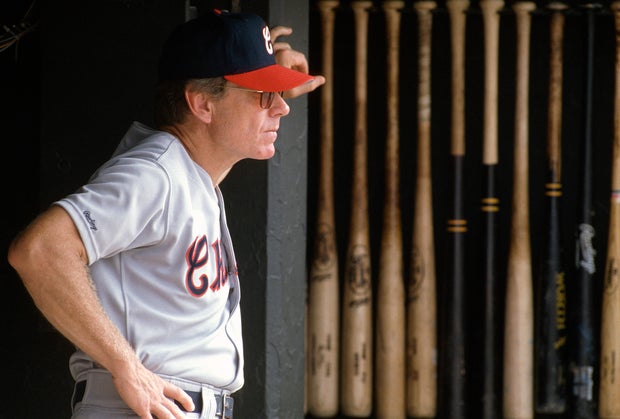
Jeff Torborg, a pro baseball veteran who was named American League manager of the year with the White Sox in 1990, died Jan. 19.
Torborg spent 50 years in Major League Baseball altogether.
Born in Plainfield, New Jersey, Torborg was a star baseball player at Westfield High School. At Rutgers University, he was a three-year starter for the Scarlet Knights from 1961 to 1963, according to the Society for American Baseball Research. He was a 1963 All-American, and set a single-season record for Rutgers with a .537 batting average.
The Los Angeles Dodgers signed Torborg in May 1963, and he played a season in the minors before being called up by the team in 1964.
Torborg was behind the plate for three no-hitters, the first with pitcher Sandy Koufax and the Dodgers for a perfect game against the Cubs in 1965.
Torborg had a second no-hitter in 1970 with Bill Singer for the Dodgers against Philadelphia. He was traded to the California Angels in 1971, and caught the first of Nolan Ryan's record seven no-hitters in a May 15, 1973, in a game against Kansas City.
Torborg took over as manager of the Cleveland Indians from 1977 until 1979. Afterward, he joined the New York Yankees as bullpen coach through 1988.
The White Sox hired Torborg as manager on Nov. 3, 1988. The Sox did not do well in 1989, but their fortunes turned around the following year, which also happened to be the last at old Comiskey Park.
"He was a leader. Jeff managed a young, coming-of-age White Sox team that featured Jack McDowell, Alex Fernandez, Ozzie Guillén, Frank Thomas and Robin Ventura among others," White Sox chairman Jerry Reinsdorf said in a news release. "That core nucleus, led early on by Jeff, really turned the fortunes of the franchise around on the field with that exciting 1990 season."
The 1990 White Sox finished the season in second place, nine games behind the Oakland A's in the AL West. Torborg was named American League Manager of the Year by the Baseball Writers Association of America and The Sporting News in 1990.
In 1991, the White Sox won seven games in a row and found themselves within a game of the division-leading Minnesota Twins in August, but ended up collapsing afterward.
After the 1991 season, Torborg moved back east and became manager of the New York Mets. He held that post for the 1992 and 1993 seasons, and then served as an MLB broadcast analyst for CBS Radio and Fox Sports.
In 2001, Torborg took over as manager of the Montreal Expos, and brought on former White Sox shortstop and future champion White Sox manager Ozzie Guillén for his coaching staff. Torborg managed the Florida Marlins in 2002, but was fired in the spring of 2003.
Torborg was diagnosed with Parkinson's disease in 2010.
José Torres, 65, former Elgin school superintendent, interim Chicago Public Schools CEO

Dr. José Torres, an educator who served as superintendent of Elgin Area School District U-46 and briefly as interim chief executive officer of Chicago Public Schools, died May 2.
District U-46 said Torres "embodied the values of equity, service, and humanity."
Torres was born in La Playita, Santurce, Puerto Rico, where his family struggled with poverty.
"He loved learning — so much so that he often bought more books than he read, not out of neglect, but out of hope. His shelves were filled with possibility," Torres' obituary read. "He cried freely at sad movies, TV shows, and even commercials, finding in them a thread of humanity that touched him deeply. He viewed emotion not as weakness, but as witness to what matters."
Torres earned his bachelor's, master's, and doctoral degrees from the University of Maryland in College Park, according to published reports. He began his career as a middle school teacher and human relations specialist at the Montgomery Public Schools in Maryland.
Torres was also a fellow at the Harvard University Graduate School of Education.
Torres held top administrative roles at the Baltimore City Public Schools and the National Association of State Boards of Education. He served as an associate superintendent for the San Jose Unified School District, led the San Ysidro School District in southern California, and served as an assistant superintendent for Anne Arundel County Public Schools in Annapolis, Maryland, before joining the Chicago Public Schools in 2006.
Torres served as a regional superintendent for CPS from 2006 to 2008, in charge of about two dozen schools on the South Side.
That year, after his first stint with CPS, Torres took over as superintendent for District U-46. The district noted that its award-winning dual language program was launched under Torres' leadership, and Torres also established the superintendent's scholarship program for first-generation scholarship students and supported the creation of leadership institutes for Black and Latino parents in the Elgin district.
Torres spent seven years, from 2014 to 2021, as head of the Illinois Math and Science Academy in Aurora. IMSA credited Torres with developing a board-approved diversity, equity and inclusion policy, and securing the three-year residential high school as host of the 14th annual International Student Science Fair. IMSA was the first U.S. school to host the event.
Torres also guided IMSA through the height of the COVID-19 pandemic and three years without a state-appropriated budget, the school said.
In June 2021, then-Chicago Mayor Lori Lightfoot appointed Torres as interim CEO of the Chicago Public Schools when CEO Janice Jackson was set to step down. Torres served in the role for about three months, until CEO Pedro Martinez took over on a permanent basis.
Torres died in San Juan, Puerto Rico after a brief illness.
Angela Piazza Turley, 97, social worker and activist
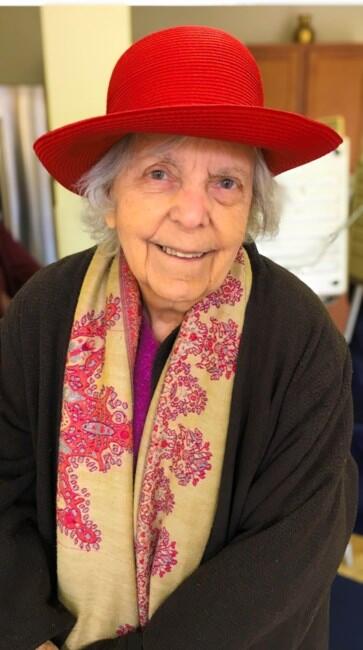
Angela Piazza Turley, an activist in Chicago's Uptown neighborhood who fought for better quality housing, education, and safety for the city's poorest residents, died July 12.
Turley grew up during the Great Depression in the steel and coal town of Yorkville, Ohio.
"Some nights, she would go to sleep looking at the burning crosses on the nearby hill, a message from the local Ku Klux Klan that she and the other Italians were not welcome in the valley," Turley's son, attorney and legal analyst Jonathan Turley, recounted in an essay in The Hill.
Ms. Turley's father, Dominick, was one of the earliest organizers of the United Mine Workers until he contracted black lung disease, her son wrote.
Turley moved to Chicago after meeting her husband, Jack Turley, in Florida after World War II. Jonathan Turley wrote that his parents arrived in Chicago with $1.37 in their pockets, but his mother got a job as a waitress on the spot when they stopped for a cup of coffee. Her husband studied architecture under Ludwig Mies van der Rohe and became a celebrated architect in his own right.
The Turleys were successful, and able and eager to help others, Jonathan Turley wrote. They founded one of the first inner-city community credit unions to provide loans for local businesses and families.
Ms. Turley also served as president of the Jane Addams Hull House, and founded numerous organizations to help the poor with regard to housing, education, and safety.
Ms. Turley ran for alderman of the 46th Ward in Uptown in a special election in 1978 and again in 1979. She lost both times to Ralph Axelrod.
Jonathan Turley described his mother as "fearless; the embodiment of will."
"I remember going into slums with her as she faced down violent landlords and pimps," he wrote. "On one occasion, she and other mothers literally chased pimps and gang bangers out of a playground and a low-income building."
Turley's obit also described her as "a fierce defender of family, as any Sicilian mother is, and a devout Catholic, in a way that every Sicilian mother is, and she very much liked to sing, embarrassingly to her children, in a full Italian soprano voice that shook the rafters and the parishioners equally."
The Turleys lived in a stately old house in Uptown, which they opened to foreign students and people who were struggling. After her husband died, Turley said she wanted to die in the house, rather than a hospital or care facility, Jonathan Turley wrote.
Mary Carol Vanecko, 86, sister of Mayor Richard M. Daley
Mary Carol Vanecko, the sister of former Chicago Mayor Richard M. Daley, died Feb. 28.
Vanecko was the second oldest of the seven children of former Mayor Richard J. Daley and First Lady Eleanor "Sis" Daley. Her published obituary said she was "fiercely proud of her family's contributions to the city."
Vanecko graduated from Nativity of Our Lord grammar school, St. Xavier High School, and St. Mary's College, and taught kindergarten in the Wilmette Public Schools in Chicago's northern suburbs before she started her family.
"She loved golf, tennis, Grand Beach, shopping, parties, Sunday dinner and travel. Her pancakes, emojis and rapid-fire telephone calls were legendary," Vanecko's obituary read. "Mary Carol was a lifelong parishioner at Queen of All Saints, a proud church lady and the longest-standing member of the Misericordia Women's Board."
Vanecko's father served as mayor of Chicago from 1955 until his death on Dec. 20, 1976. Her brother served as mayor from 1989 until 2011.
Vanecko was also preceded in death by Dr. Robert Vanecko, her husband of 59 years. Dr. Vanecko was a surgeon who became chief of staff at Northwestern Memorial Hospital.
Landon "DJ Commando" Wallace, 36, DJ and radio personality
Landon Wallace, better known as Power 92 radio and Chicago Bulls mixer DJ Commando, died Dec. 5.
Power 92 said Wallace began DJ'ing at 17, beginning with neighborhood parties and school functions. He fell in love with hip-hop and became more and more enthusiastic about DJ'ing as time went on.
Wallace attended Southern Illinois University Carbondale, and was a member of the Beta Eta Chapter of Alpha Phi Alpha Fraternity Incorporated, according to the SIUC Black Alumni Group.
As DJ Commando, Wallace started out as a guest mixer on WPWX Power 92, and then became a daily voice on Maha's Midday Show.
Wallace was the DJ for the Chicago Bulls, and for Northwestern Wildcats football and basketball. He also worked with Notre Dame sports.
Power 92 said Wallace "created his own lane in the entertainment and nightlife industry" as a Chicago influencer.
"With his unique style on the mic, and a keen ear for music, DJ Commando can be heard DJ'ing in premier venues and on radio airwaves everything from Hip Hop, Top 40 to 90's and more," Power 92 said.
Wallace also got behind the turntable at weddings, corporate events, and private engagements, Power 92 said. He planned not only to be an international DJ, but to venture into the music production and fashion industries.
George Wendt, 76, comedian and actor
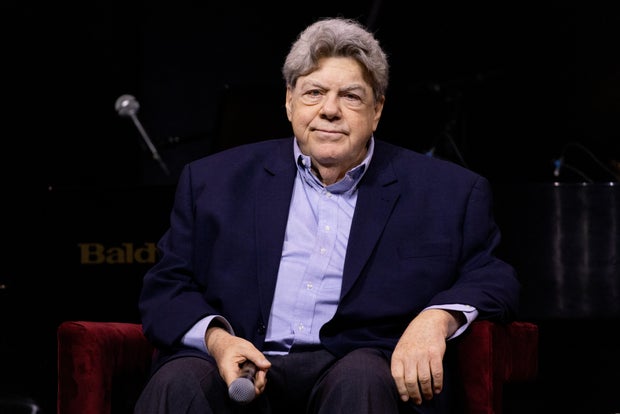
George Wendt, the comedian and actor known for his beloved role as Norm on "Cheers," died May 20.
Wendt's Norm Peterson character may have seemed as Bostonian as the Red Sox and the Freedom Trail, but the man who portrayed him was a native Chicagoan who was forever proud of his hometown.
Wendt grew up in the South Side's Beverly neighborhood, at 92nd Street and Bell Avenue.
The Ridge Historical Society notes that Wendt's father, also named George, was a U.S. Navy veteran in the real estate business, and his mother, Loretta, was active in the junior service club at Little Company of Mary Hospital.
He had two brothers and six sisters.
The Second City noted that Wendt famously dropped out of the University of Notre Dame with a 0.00 GPA after moving to an off-campus apartment and not having a car to get to campus in the depths of winter. He later earned a B.A. from Rockhurst University in Kansas City.
Wendt started his comedy career at The Second City in Old Town in 1975. He would appear on the main stage there for five years.
After taking on a few film roles, he won his famous role on "Cheers" in 1982, always occupying his spot at the end of the bar with a mug of beer in hand, talking about his life with Sam (Ted Danson), Coach (Nicholas Colasanto), and Woody (Woody Harrelson), and of course, his best friend Cliff Clavin (John Ratzenberger). Wendt appeared in every episode of "Cheers" over 11 years.
Wendt was also well-known for honoring Chicago sports during "Saturday Night Live" in the 1990s. The original "Superfans" sketch featured Joe Mantegna as head fan of "Da Bears" Bill Swerski, along with Mike Myers, Chris Farley, and Robert Smigel. Appearing later as Bill Swerski's brother Bob, Wendt became famous for the sketches too.
Jeremy Smith, general manager of The Second City, said what Wendt learned on the stage there carried him throughout his career.
"In here, he was George — the guy with the biggest heart in the room," Smith said.
The Second City stage is also where Wendt's nephew, Jason Sudeikis, performed before he took off.
Wendt often returned to Chicago, making stops back at The Second City, and taking the stage at other local theater venues — including the Northlight in Skokie, where he most recently starred alongside fellow Second City alum Tim Kazurinsky in the premiere of Bruce Graham's "Funnyman" in 2015.
Wendt also promoted the Green Ribbon Motorcycle Ride, benefiting the Walter Payton Liver Center at UI Health.
In October, the City of Chicago gave Bell Avenue between 91st Street and 92nd Place the honorary street name of George Wendt Way.
Contributing: Marissa Sulek
Edmund White, 85, author
Edmund White, a groundbreaking gay author who lived in the Chicago area as a youngster, died June 3.
A celebrated writer of both fiction and nonfiction, White was named by the Chicago Tribune as "the godfather of queer lit."
White was born in Cincinnati, and moved to the north Chicago suburb of Evanston when he was 7 years old after his parents divorced.
"It was the city of churches," White told the New York State Writers Institute in 2015. "Many of the kids I knew, their parents were either professors at Northwestern, or they were preachers at the local churches, of which there were many."
White attended Miller School in Evanston. Miller School closed as a public school in 1976, but its building remains in use as the Chairavalle Montessori School.
"The schools in those days, before Sputnik, they were very, very progressive, and they were Deweyite schools, in which there were no grades, and there were only written evaluations by teachers," White said. "There was no competition, and if students tried to compete with one another, or said, 'My painting is better than his,' or, 'My story is more interesting than hers,' the teacher would rush over and try to squelch that right away."
White told the institute he also learned creative dramatics in elementary school in Evanston, which involved "getting on stage and improvising according to a set theme, like the life of Joan of Arc or something." Creative dramatics ensured that the students never grew up to have stage fright or fear of public speaking, White said.
White told the Tribune he and his mother, a psychologist, moved briefly to Rockford, which he said he hated. They later returned to Evanston.
White told the Trib his mother lived most of her life in Chicago's Gold Coast, while his sister lived in Oak Park. White also wrote of other experiences in Chicago in his works. In a 2018 New Yorker column, he mentioned spending time at a bookshop on Rush Street that was "tucked in between an art-house cinema and a narrow, expensive café."
He called the bookstore owner a "pockmarked, sombre Texan" whom he knew was also a gay man.
"His shop glittered before my eyes. This was before bookstores sold cute coffee mugs and stuffed animals; there was nothing but Kierkegaard, Joseph Campbell, and a translation of Thomas Mann's 'Doctor Faustus,'" White wrote.
During his sophomore year of high school, White moved to the exclusive Cranbrook School, an all-boys' boarding school in Bloomfield Hills, Michigan, outside Detroit. He attended the University of Michigan and majored in Chinese, and then moved to New York City.
In New York, the New York Times reported in an obit, White worked for Time-Life Books while writing during off-hours. On June 28, 1969, White was passing by the Stonewall Inn on Christopher Street in Greenwich Village, when patrons fought back during a police raid in what became one of the pivotal events in the fight for gay rights.
For many years, White saw therapists who tried to cure his homosexuality with his encouragement. But he went on not only to embrace his identity, but to invent a genre as a gay writer at a time when no one else was writing novels about being gay.
White lived in Rome and San Francisco before returning to New York in 1973. That same year, he published his first novel, "Forgetting Elena." In 1977, he penned "The Joy of Gay Sex" with psychotherapist Dr. Charles Silverstein, a guide to intimacy that became a bestseller.
In 1982, White published the semiautobiographical novel "A Boy's Own Story," which became a trilogy that continued with "The Beautiful Room is Empty" (1988) and "The Farewell Symphony" (1997). Also in 1982, White cofounded the Gay Men's Health Crisis in New York and served as the first president of the organization, working as an advocate and activist as the AIDS crisis began.
White moved to Paris in 1983 and lived there for the next 15 years. He tested positive for HIV in 1985, and he lost many of his closest friends to AIDS, including five members of The Violet Quill writers' group in New York.
While in Paris, White also penned other novels, and biographies of the French authors Jean Genet, Marcel Proust, and Arthur Rimbaud.
After returning to the U.S., White served as a professor of creative writing at the Lewis Center for the Arts at Princeton University. He also penned several more literary works after the turn of the millennium — including four memoirs, "My Lives" (2005), "City Boy" (2009), "Inside a Pearl: My Years in Paris" (2014), and "The Loves of My Life: A Sex Memoir" (2025).
He is survived by his husband, Michael Carroll.
Chad Willetts, 61, musician and jazz club owner

Chad Willetts, a Chicago musician who drew crowds to Rogers Park at the intimate jazz club Le Piano, died Oct. 17.
A native of Monroe, Michigan, Willetts attended Michigan State University and Columbia College Chicago before restaurateur Gordon Sinclair brought him on as musical director at Gordon Restaurant in River North in the mid-1980s.
Willetts played piano at the fine dining restaurant for several years, and also provided musical accompaniment at the Knickerbocker Hotel and the Palm Court at the Drake Hotel.
In 2018, Willetts and business partner Joe Quinlan opened Le Piano at 6970 N. Glenwood Ave., along a cobblestoned right-of-way right across from the CTA Red Line tracks and just north of the Morse station. The space had previously been home for more than 20 years to the No Exit Café coffeehouse and live music venue.
At Le Piano, Willetts' grand piano dominated the room. Singer, writer, producer and booking agent Barb Bailey — who called Willetts her best friend in Chicago — said he encouraged and inspired amateurs to get up and perform.
"He had a funny moniker. It was, 'Destroy your reputation' — in other words, come to the piano if you've always had the urge to sing and play music at Le Piano, and just step up to the microphone. He would welcome you," Bailey said, "and believe me, a lot of talent was discovered at Le Piano."
Visitors to Le Piano enjoyed a different style of music every night — jam sessions, cabaret nights, Latin and swing jazz, Hammond B-3 organ performances, and Willetts' own quartet, with Willetts himself on drums, Bradley Williams on piano, Stacy McMichael on bass, and Dez Desermeaux on tenor sax.
During the summer months, the live jazz action spilled out onto Glenwood Avenue.
Willetts was also known at Le Piano for inviting guests to lie down on a pile of pillows under the grand piano as he played. Among the visitors to take a spot beneath the piano over the years was CBS News Chicago reporter Sabrina Franza, who got a bonus experience when she spoke with Willetts about al fresco dining for a story in April 2022.
Willetts also hosted visual artists at Le Piano, who would create paintings and drawings in real time as the music was presented, Bailey said. At the end of the evening, he would have the artists come up and show their work and then raffle off the artworks and give the proceeds to the artists, Bailey said.
When Le Piano had to close during the height of the COVID-19 pandemic in 2020, Willetts converted the business into a makeshift mask factory.
Le Piano celebrated Willetts' life in conjunction with the seventh anniversary of the venue in November.
Charlie Williams, 77, former Chicago director of energy management
Dr. Charles Howard Williams, who bolstered Chicago's environmental consciousness as the city's director of energy management in the 1980s and 90s, died Jan. 30.
Williams was at the forefront of a proposal for a municipal takeover of the city's electrical power system, which the city did not go ahead with, but which spurred a dialogue about the management and cost of electricity in Chicago.
Williams grew up in Lewiston, Idaho, and earned his undergraduate degree from Portland State University in Oregon. He earned a master's and Ph.D. in political science and public policy analysis from the University of North Carolina.
Williams arrived in Chicago in the fall of 1979, and joined the city's Department of Planning as director of energy management in 1983 under new Mayor Harold Washington and Commissioner Elizabeth Hollander. In the role, Williams was in charge of the city's energy and utility policy.
As reported by the Chicago Tribune, Mayor Washington gathered a 31-member commission in the fall of 1985 to consider alternative energy strategies in an effort to offset skyrocketing electric bills from ComEd. Proposals included "dropping off the Edison system and finding alternative sources of energy."
The possible strategies included creating a municipal utility that Williams told the Tribune "would involve the buyout of a distribution and/or generation system," in which the city, rather than ComEd, would supply residents and businesses with electricity.
Also on the table were a proposal to create a Municipal Power Purchasing Authority that would buy power from other utilities at cheaper wholesale rates than ComEd was offering, and proposals involving generating energy using new trash-fueled power plants.
Upon completion in 1987, a study by consulting firm R.W. Beck & Associates concluded that the city could save $18 billion through a partial municipal takeover of the power system — a claim that ComEd challenged.
A new deal was ultimately struck to keep ComEd as the city's power supplier in 1991 under Mayor Richard M. Daley.
As quoted in a 1989 Chicago Reader story, Williams also took ComEd to task for what he said was a failure to invest in conservation — in particular with regard to new buildings with electric heat. He said ComEd was building the power infrastructure in new buildings at no cost to the builders, but failing to talk with the builders about ways to conserve energy.
"For instance, there are new heat windows that could save massive amounts of money. But builders, residential builders especially, are not willing to invest in those things because the tenants are the ones who bear the ultimate costs. But Com Ed could make that investment or finance it to create long-term savings in energy and costs," Williams told the Reader's Florence Hamlish Levinsohn. "Whether Com Ed, with its huge excess capacity, can ever be convinced to make such investments is another matter."
Williams and his position as director of energy management moved from the Department of Planning to the Department of Environment, which was created by Mayor Daley, in 1992. Williams remained in the Chicago municipal post until 1996, when he moved to the private sector as senior government services representative at Honeywell, where he focused on lowering energy costs for government.
Williams was also active in Chicago politics. In 1998, he opened his home to host a meet-and-greet for then-congressional candidate Jan Schakowsky.
Williams taught public policy at the University of Illinois Chicago and DePaul University. He also made the Tribune for taking his daughter, Sonja, to a Rolling Stones concert in 1994 — and "punching the Ticketmaster phone number for 45 minutes" in search of tickets the day they went on sale in that pre-digital era.
In 1998, Williams moved with his family to the San Francisco Bay Area, where he took a position as senior program manager at the U.S. Department of Energy's Lawrence Berkeley National Laboratory. In that role, Williams coauthored a study on power supply options for data centers, developed training exercises for public housing authorities to save energy, and worked on studies on federal energy savings performance contracts that could reduce greenhouse gas emissions and reliance on fossil fuels while saving billions in federal dollars.
After retiring, Williams moved to North Carolina, where he lived with his wife, Jeanne.
Bob Wilson, 63, actor
Bob Wilson, a veteran of the Chicago stage who could channel the comedic, the surreal, the absurd and the melancholy, died Oct. 7 after a battle with glioblastoma.
A native of Jamestown, New York, Wilson graduated from SUNY Binghamton in upstate New York with a degree in cinema.
Wilson moved to Chicago, where he got involved with the legendary Second City improvisational theatre troupe, his family said. He later joined the since-disbanded WNEP Theater company, founded by fellow Second City alum Don Hall along with friends Joe Janes and Jeff Hoover.
Wilson worked as technical director for WNEP while also taking the stage for the company, notably as a dynamic performer in the company's acclaimed surrealist revue "Soiree Dada."
As described in a June 2000 review by Jenn Goddu for the Chicago Reader, "Soiree Dada" featured "silence, screaming, gibberish, and baffling exchanges." Wilson and three other performers dressed in whiteface and suits that didn't quite fit.
In addition to the WNEP Theater's own space, "Soiree Dada" took several other stages in Chicago and beyond over the years, including the Chicago Cultural Center, the all-night Looptopia arts festival downtown in 2007, and the New York International Fringe Festival.
Wilson was also involved in several other WNEP productions.
Having first taken to the stage of the Trap Door Theatre for "Soiree Dada" in 1996, Wilson went on to appear in numerous productions with Trap Door and became a full-fledged member of the theatre company in 2009.
Critics gave Wilson accolades for his performance in Trap Door's 2008 staging of "No Darkness Round My Stone," an English-language adaptation of a play by French dramatist Fabrice Melquiot that a Tribune review called a "meditation on death, grief, and grave robbers."
Wilson played Louis, the father of a pair of grave-digging brothers, who also "spends his nights dressed in his dead wife's clothes, prowling for tricks as 'Lullaby,'" the Tribune review noted. Tribune critic Kerry Reid called Wilson "simply marvelous, his sadly comic and understated demeanor imbued with unbearable loss."
In Trap Door's 2005 production of Matei Visniec's "Old Clown Wanted," Wilson starred as one of what NewCity's John Beer described as "the banter between… three desiccated old clowns waiting for an audition opportunity." Beer called Wilson's "menacing" clown Peppino "reminiscent of a grouchy David Lynch patriarch."
Wilson also appeared in other Trap Door productions, and toured Poland and Romania for Trap Door's 2009-2010 production of playwright Dorota Masłowska's "A Couple of Poor, Polish Speaking Romanians."
Yvonne Zipter, 71, author, poet, columnist
Yvonne Zipter, a Chicago author, poet, columnist and massage therapist, died Feb. 10.
Zipter grew up in the Milwaukee area, and earned a bachelor's degree from the University of Wisconsin-Milwaukee in 1976, according to the Windy City Times. She moved a couple of years later to the San Francisco Bay, where she came out as a lesbian and attended rallies where San Francisco Board Supervisor Harvey Milk spoke.
Zipter briefly lived in New York City, and then moved to the Chicago area, where she worked at Bell Labs in Naperville as a technical writer. Zipter then worked for more than 35 years, beginning in 1981, for the University of Chicago Press — first in the marketing department, then as a senior copywriter and manuscript editor.
In Chicago, Zipter cofounded the magazine "Hot Wire: A Journal of Women's Music and Culture," which the Windy City Times said was the only publication exclusively covering the lesbian music and cultural scene at the time.
Zipter also wrote a nationally syndicated column called "Inside Out" that appeared in LGBTQ papers from 1983 until 1993. She wrote book reviews and feature stories and conducted celebrity interviews for the Windy City Times.
She was the author of the essay collection "Ransacking the Closet," selections from which won an Illinois Arts Council finalist award, according to the Chicago LGBT Hall of Fame. Zipter also wrote a nonfiction retrospective of lesbian softball titled, "Diamonds Are a Dyke's Best Friend," and three poetry collections — The Patience of Metal (1990), Kissing the Long Face of the Greyhound (2020), and The Wordless Lullaby of Crickets (2023).
In 2021, Zipter published the novel "Infracton," set in 19th-century Russia and described in the Philadelphia Gay News as taking on "the mysterious world of numbers and forbidden lesbian love."
Zipter earned a Master of Fine Arts from Vermont College in 1995. She also attended the Cortiva Institute for massage therapy and wellness education in 2006 and 2007, and became a massage therapist.
Zipter met her future wife, longtime University of Chicago academic adviser Kathy Forde, at a comedy show in DeKalb in 1987. They married in 2014, and lived happily with a succession of retired racing greyhounds.
We also honor the memories of two beloved members of the CBS News Chicago family who passed away this year — writer and producer Alan Thompson, and editor Wendy Simmons.