9 more states will end pandemic unemployment aid on Saturday
The GOP-led states say the benefits aren't needed. But some out-of-work people say they are still struggling.
Watch CBS News
The GOP-led states say the benefits aren't needed. But some out-of-work people say they are still struggling.

More than half of states are ending the federal government's $300-per-week unemployment bonus months before the scheduled phaseout on September 6. CBS MoneyWatch's Aimee Picchi spoke with CBSN's Tanya Rivero about the impact this is having on everyday workers.

The number of Americans filing for first-time unemployment claims rose last week, ending a six-week streak of improving jobs numbers. Lori Bettinger, president of BancAlliance and former director of the "Troubled Asset Relief Programs" under the Obama Administration, joined CBSN to discuss what the numbers means for the U.S. economy.

It joins 25 GOP-led states to end the $300-per-week federal enhanced unemployment benefits ahead of their September expiration.

About half a million people applied for some sort of jobless aid last week, while 15 million still collect benefits.

The U.S. economy added 559,000 jobs in May and that number is expected to grow this summer. Lavare Bland, CEO of Kandidate - North America, and Karin Kimbrough, LinkedIn's chief economist, joined CBSN's Lana Zak for the MoneyWatch special "Employment in America: A Shifting Workforce" to discuss the post-pandemic job market.

Some businesses are trying to make open positions more enticing by offering incentives to potential employees.

As CBS News' Omar Villafranca reports, the Labor Department says 376,000 Americans filed first-time unemployment claims last week — marking the lowest level since the pandemic began. But many businesses say they're having trouble filling open position. Joe Minarik, senior vice president and director of research for the Committee for Economic Development, joins CBSN's Lana Zak to discuss the new unemployment numbers and America's continuing economic recovery.

Unemployment claims dropped to a new pandemic low while job vacancies hit a record high. Omar Villafranca takes a look at how employers are struggling to fill those job openings.

Some 2.8 million people who filed taxes early got refunds this week, while millions more could qualify for a payment.
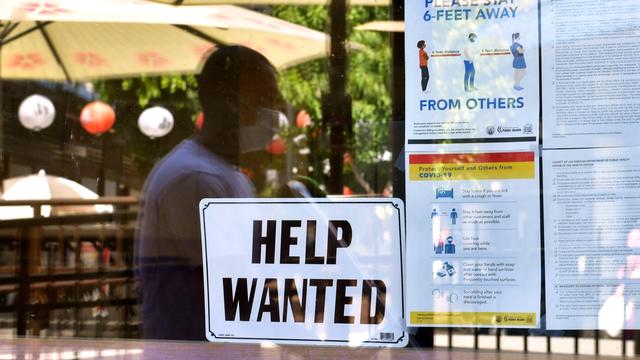
The federal fund for restaurants and bars had three times as many applications as its initial funding could pay for.
Half of all U.S. states are cutting off enhanced jobless aid two months early. Benefit recipients say that's cruel.

Hiring is up and unemployment is dropping. President Biden said Friday that the May jobs report is a sign that the U.S. is "on the move again."
Hiring across U.S. strengthened in May, with employers adding 559,000 jobs as economy continues to rebound.

At least 25 states have announced they will end enhanced federal unemployment benefits in June and July, ahead of the benefits' September expiration date.

The Labor Department revealed the U.S. added 559,000 new jobs in May, nearly twice as many as April though lower than analysts' expectations. The nation's unemployment rate fell to 5.8%, its lowest point since the start of the pandemic. Michelle Meyer, head U.S. economist for Bank of America securities, joined CBSN to discuss the state of the economy.

Job growth in the U.S. is picking back up as pandemic restrictions ease and COVID-19 vaccinations continue. The Labor Department's latest report shows the country added 559,000 jobs in May and the unemployment rate fell to 5.8%. Frances Stacy, director of portfolio strategy at Optimal Capital, joined CBSN to discuss.

The U.S job report comes out Friday morning as California is expected to have high economic growth post-pandemic. The recovery leaves many unemployed people hopeful for an uptick even if they haven't received the call into work yet.

The number of people of filing for weekly jobless aid has dropped for five straight weeks as layoffs slow.

The Labor Department said Thursday 385,000 people filed for unemployment last week, another pandemic low. Mark Hamrick, a senior economic analyst at Bankrate, joined CBSN's Tanya Rivero with more on the new numbers.

A government moratorium on federally backed college debt expires on December 31. Student loan borrowers are worried.

Self-employed people waited an average of five weeks for their first check, while some long-term unemployed waited months.

A growing number of GOP governors have said they will end increased unemployment insurance benefits, citing workforce shortages.
Mississippi is one of the poorest states in the country, with many jobless on the sidelines as low-paying jobs go unfilled.

Twenty GOP-led states plan to cut pandemic assistance for nearly 1 million self-employed workers. These include many housekeepers, dog walkers and Uber drivers. CBS MoneyWatch reporter Aimee Picchi has been following this story closely. She joins CBSN's Tanya Rivero to discuss why this is happening and what it means for freelance employees.