Watch CBS News

6/29/2025: Humans in the Loop; Sealand; Werner Herzog

First, a report on how training AI takes a toll on Kenyan workers. Then, welcome to Sealand, the world's smallest state. And, Werner Herzog: The 60 Minutes Interview.
Jun 30, 2025 (43:12)

TRANSCRIPT FOR: “6/29/2025: HUMANS IN THE LOOP; SEALAND; WERNER HERZOG”

LESLEY STAHL:
00:00:07

Tonight, meet the people who sort, label, and sift through reams of data to make artificial intelligence run smoothly for American tech companies, jobs that are often farmed out to developing countries with conditions that have been likened to sweatshops with computers instead of sewing machines. It's terrible to see just how many American companies are just doing wrong here. And it's something that they wouldn't do at home. [CLOCK TICKING]

JON WERTHEIM:
00:00:38

Enter some countries, you arrive in style. Here, you arrive in what's basically, a backyard swing hoisted by a crank 60 feet above the North Sea. And if you're wondering about the safety regulations, yeah, us too. Then again, when you are a sovereign nation, you, by definition set your own rules. That's a hell of a way to get into a country. The only way to travel. Welcome to Sealand, a monarchy that declared its independence in 1967. Just wait till you hear this story. [CLOCK TICKING] In celluloid we trust.

ANDERSON COOPER:
00:01:13

In all of Herzog's feature films and documentaries, you'll find remarkable moments, nightmarish ones as well. His curiosity has taken him to the remotest regions of our planet, an apocalyptic oil fires in Kuwait after the first Gulf War.

WERNER HERZOG:
00:01:29

You have to have a certain amount of good criminal energy-- To make a film.

WERNER HERZOG:
00:01:35

Sometimes, yes. You have to go outside of what the norm is. [CLOCK TICKING] I'm Lesley Stahl. I'm Bill Whitaker. I'm Anderson Cooper. I'm Sharyn Alfonsi. I'm Jon Wertheim. I'm Cecilia Vega. I'm Norah O'Donnell. I'm Scott Pelley. Those stories tonight on 60Minutes. [CLOCK TICKING] The familiar narrative is that artificial intelligence will take away human jobs. Machine learning will let cars, computers, and chatbots teach themselves, making us humans obsolete. Well, that is not very likely, as we first reported in November. There's a growing global army of millions toiling to make AI run smoothly. They're called humans in the loop, people sorting, labeling, and sifting reams of data to train and improve AI for companies like Meta, OpenAI, Microsoft, and Google. It's grunt work that needs to be done accurately, fast. And to do it cheaply, it's often farmed out to places like Africa. The robots are the machines. You are teaching them how to think like human and to do things like human.

LESLEY STAHL:
00:03:04

We met Naftali Wambalo in Nairobi, Kenya, one of the main hubs for this kind of work. It's a country desperate for jobs because of an unemployment rate as high as 67% among young people. So Naftali, father of two, college educated, with a degree in mathematics, was elated to finally find work in an emerging field, artificial intelligence. You were labeling. I did labeling for videos and images.

LESLEY STAHL:
00:03:35

Naphtali and digital workers like him spent eight hours a day in front of a screen studying photos and videos, drawing boxes around objects and labeling them, teaching the AI algorithms to recognize them. You would label, let's say, furniture in a house, and you say, this is a TV, this is a microwave. So you are teaching the AI to identify these items. And then there was one for faces of people, the color of the face. If it looks like this, this is White. It looks like this, this is Black. This is Asian. You're teaching the AI to identify them automatically.

LESLEY STAHL:
00:04:13

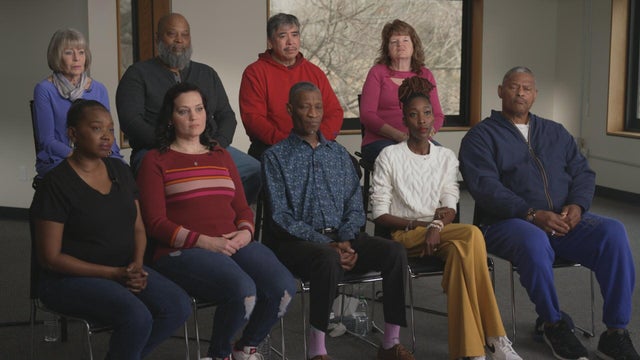
Humans tag cars and pedestrians to teach autonomous vehicles not to hit them. Humans circle abnormalities to teach AI to recognize diseases. Even as AI is getting smarter, humans in the loop will always be needed because there will always be new devices and inventions that will need labeling. You find these humans in the loop not only here in Kenya, but in other countries thousands of miles from Silicon Valley, in India, the Philippines, Venezuela, often countries with large, low-wage populations, well-educated but unemployed. Quite honestly, it's like modern-day slavery because it's cheap labor. Whoa. It's cheap labor. LESLEY STAHL (VOICEOVER): Like modern-day slavery, says Nerima Wako-Ogiwa, a Kenyan civil rights activist, because big American tech companies come here and advertise the jobs as a ticket to the future. But really, she says, it's exploitation. What we're seeing is an inequality. It sounds so good, an AI job. Is there any job security? The contracts that we see are very short term. And I've seen people who have contracts that are monthly, some of them weekly, some of them days, which is ridiculous. LESLEY STAHL (VOICEOVER): She calls the workspaces AI sweatshops with computers instead of sewing machines. I think that we're so concerned with creating opportunities. But we're not asking, are they good opportunities? LESLEY STAHL (VOICEOVER): Because every year, a million young people enter the job market, the government has been courting tech giants like Microsoft, Google, Apple, and Intel to come here, promoting Kenya's reputation as the Silicon Savannah, tech savvy and digitally connected. The president has been really pushing forward opportunities in AI. President? Yes. Ruto? Our President Ruto. Yes. The president does have to create at least jobs 1 million a year, the minimum. So it's a very tight position to be in. LESLEY STAHL (VOICEOVER): To lure the tech giants, Ruto has been offering financial incentives on top of already lax labor laws. But the workers aren't hired directly by the big companies. They engage outsourcing firms, also mostly American, to hire for them. There's a go-between. Yes. They hire. They pay. Mm-hmm, I mean, they hire thousands of people. And they are protecting the Facebooks from having their names associated with this. Yes, yes, yes, yes. We're talking about the richest companies on earth. Yes. But then they are paying people peanuts. AI jobs don't pay much. They don't pay well. They do not pay Africans well enough. And the workforce is so large and desperate that they could pay whatever and have whatever working conditions, and they will have someone who will pick up that job. So what's the average pay for these jobs? It's about $1 and a half, $2 an hour. $2 per hour. And that is gross, before tax. LESLEY STAHL (VOICEOVER): Naphtali, Nathan, and Fasika were hired by an American outsourcing company called Sama, that employs over 3,000 workers here, and hired from Meta and OpenAI. In documents we obtained, OpenAI agreed to pay Sama $12.50 an hour per worker, much more than the $2 the workers actually got. Though, Sama says that's a fair wage for the region. If the big tech companies are going to keep doing this business, they have to do it the right way. So it's not because you realize Kenya is a third world country. You say, this job, I would normally pay $30 in US, but because you are Kenya, $2 is enough for you. That idea has to end. OK, $2 an hour in Kenya, is that low, medium? Is it an OK salary? So for me, I was living paycheck to paycheck. I have saved nothing because it's not enough. Is it an insult? It is. It is. Of course it is. Why did you take the job? I have a family to feed. And instead of staying home, let me just at least have something to do. LESLEY STAHL (VOICEOVER): And not only did the jobs not pay well, they were draining. They say deadlines were unrealistic, punitive, with often just seconds to complete complicated labeling tasks. Did you see people who were fired just because they complained? Yes, we were walking on eggshells. LESLEY STAHL (VOICEOVER): They were all hired per project and say Sama kept pushing them to complete the work faster than the projects required, an allegation Sama denies. Let's say the contract for a certain job was six months. What if you finished in three months. Does the worker get paid for those extra three months?

MAN:
00:09:31

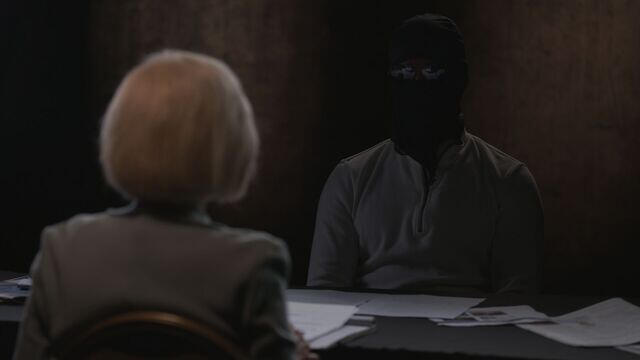
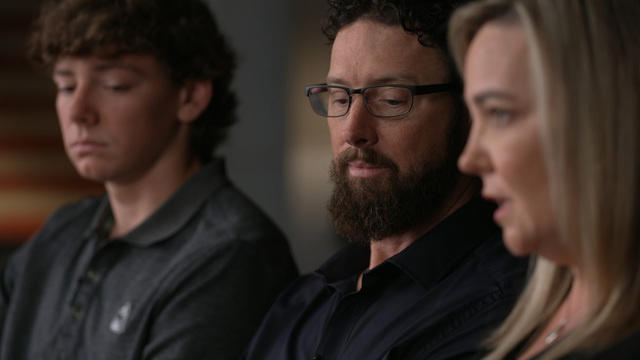
No. KFC. What? We used to get KFC and Coca-Cola. They used to say, thank you. They gave you a bottle of soda and KFC chicken, two pieces, and that is it. LESLEY STAHL (VOICEOVER): Worse yet, workers told us that some of the projects for Meta and OpenAI were grim and caused them harm. Naphtali was assigned to train AI to recognize and weed out pornography, hate speech, and excessive violence, which meant sifting through the worst of the worst content online for hours on end. I looked at people being slaughtered, people engaging in sexual activity with animals, people are abusing children physically, sexually, people committing suicide. All day long? Yes, all day long, 8 hours a day, 40 hours a week. LESLEY STAHL (VOICEOVER): The workers told us they were tricked into this work by ads like this that describe these jobs as call center agents "to assist our clients' community and help resolve inquiries empathetically." I was told I was going to do a translation job. Exactly what was the job you were doing? I was basically reviewing contents, which are very graphic, very disturbing contents. I was watching dismembered bodies or drone attack victims, or you name it. Whenever I talk about this, I still have flashbacks. Are any of you a different person than they were before you had this job? Yeah, I find it hard now to even have conversations with people. It's just that I find it easier to cry than to speak. You continue isolating yourself from people. You don't want to socialize with others. It's you, and it's you alone.

LESLEY STAHL:
00:11:29

Are you a different person? Yeah, I'm a different person. I used to enjoy my marriage, especially when it comes to bedroom fireworks. But after the job, I hate sex. You hated sex? After countlessly seeing those sexual activities, pornography on the job that I was doing, I hate sex. LESLEY STAHL (VOICEOVER): Sama says mental health counseling was provided by, quote, "fully licensed professionals." But the workers say it was woefully inadequate. We want psychiatrists. We want psychologists, qualified, who know exactly what we are going through and how they can help us to cope. Trauma experts.

MAN:
00:12:10

Yes.

LESLEY STAHL:
00:12:10

Do you think the big company, Facebook, ChatGPT, do you think they know how this is affecting the workers? It's their job to know-- It's their [BLEEP] job to know. --actually, because they are the ones providing the work. LESLEY STAHL (VOICEOVER): These three and nearly 200 other digital workers are suing Sama and Meta over unreasonable working conditions that caused psychiatric problems. It was proven by a psychiatrist that we are thoroughly sick. We have gone through a psychiatric evaluation just a few months ago, and it was proven that we are all sick, thoroughly sick. They know that we're damaged, but they don't care. We're humans. Just because we're Black or just because we're just vulnerable for now, that doesn't give them the right to just exploit us like this. LESLEY STAHL (VOICEOVER): Sama, which has terminated those projects, would not agree to an on-camera interview. Meta an OpenAI told us they're committed to safe working conditions, including fair wages and access to mental health counseling. Another American AI training company facing criticism in Kenya is Scale AI, which operates a website called Remotasks. Did you all work for Remotasks-- Yes.

LESLEY STAHL:
00:13:32

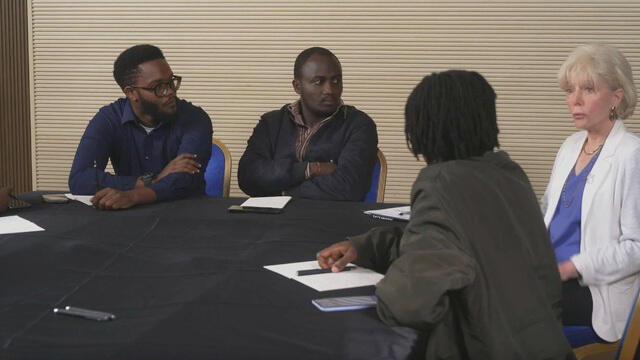
--or work with them? LESLEY STAHL (VOICEOVER): Afantis, Joan, Joy, Michael, and Duncan signed up online, creating an account, and clicked for work remotely, getting paid per task. Problem is, sometimes the company just didn't pay them. When it gets to the day before pay day, they close the account and say that you violated a policy. They say you violated their policy-- Yes. --and they don't pay you for the work you've done? Would you say that that's almost common, that you do work, and you're not paid for it? Yeah. And you have no recourse. You have no way to even complain. There's no way. LESLEY STAHL (VOICEOVER): The company says, "any work that was done in line with our Community Guidelines was paid out." Last year, as workers started complaining publicly, Remotasks abruptly shut down in Kenya altogether. There are no labor laws here? Our labor law is about 20 years old. It doesn't touch on digital labor. I do think that our labor laws need to recognize it, but not just in Kenya alone. Because what happens is when we start to push back in terms of protections of workers, a lot of these companies, they shut down, and they move to a neighboring country. It's easy to see how you're trapped. Kenya is trapped. They need jobs so desperately that there's a fear that if you complain, if your government complained, then these companies don't have to come here. NERIMA WAKO-OGIWA: Yeah, and that's what they throw at us all the time. And it's terrible to see just how many American companies are just doing wrong here, just doing wrong here. And it's something that they wouldn't do at home. So why do it here? [CLOCK TICKING]

REPORTER:
00:15:24

How Kenya became a global hotbed for technology. Kenya is the tech capital of East Africa.

REPORTER:
00:15:30

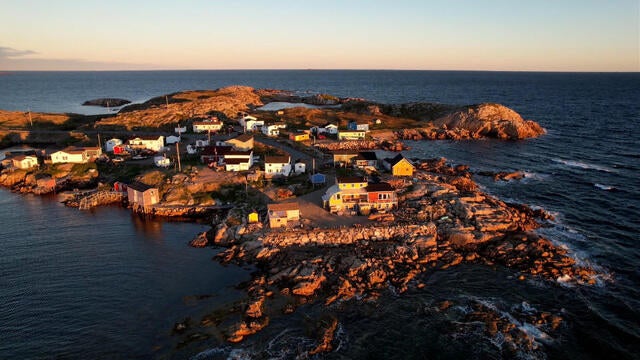
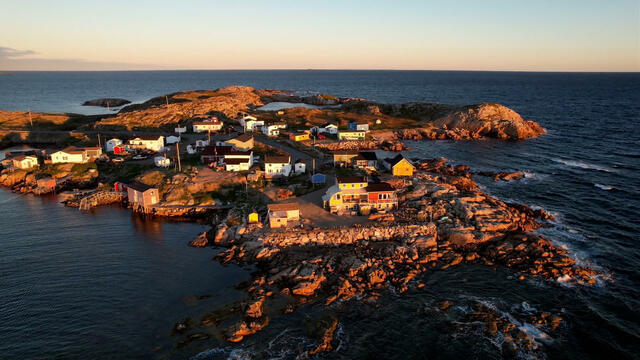
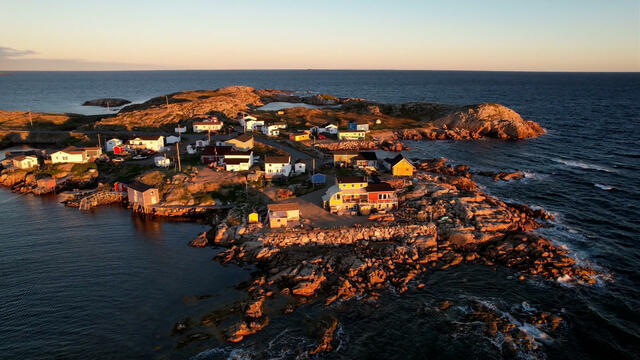
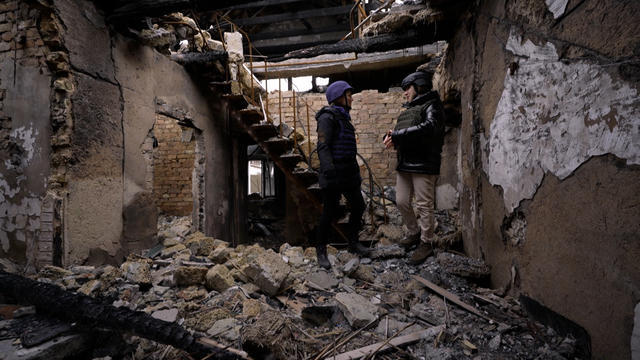
At 60MinutesOvertime.com, sponsored by Pfizer. OK, name that country. It's planted opposite Europe, sitting proudly on the other side of the North Sea. It's a monarchy that features its own currency, postage stamps, constitution, national anthem, love of tea, and a pair of handsome princes born two years apart. We speak of Sealand, a crumb of real estate off the English Coast that declared its independence in 1967. Sealand has a full-time population of one. It has a landmass the size of roughly two tennis courts. Its leading export might be the national mythology, a history of piracy, coups, counter-coups, rogues, and offshore internet schemes. It may make tiny Liechtenstein look like China by comparison. But as we first told you in 2023, by rights, Sealand is a sovereign nation. Join us as we compile some notes from a truly small island. We can see Sealand over there, by the way, now. You see that? Oh, there she is. Yeah, yeah, on the starboard bow. JON WERTHEIM (VOICEOVER): Behold the world's smallest state. It's a micronation in the extreme, a principality which sits or stands only seven miles off the coast of England. Its self-described reigning monarch is this guy, Prince Michael Bates. Here we are.

JON WERTHEIM:
00:17:01

Yeah, a platform and a couple of concrete husks. And this is a state. Yeah. JON WERTHEIM (VOICEOVER): Enter some countries, you arrive in style. Here, you arrive in what's basically a backyard swing hoisted by a crank 60 feet above the North Sea. And if you're wondering about the safety regulations, yeah, us too. Then again, when you are a sovereign nation, you, by definition, set your own rules. That's a hell of a way to get into a country. The only way to travel. JON WERTHEIM (VOICEOVER): On the plus side, there's no long line at the arrivals hall. I'm following you to passport control. JON WERTHEIM (VOICEOVER): Mike Barrington fills various roles and positions on Sealand. Right now, it's immigration and customs. He also happens to be the only permanent resident.

MIKE BARRINGTON:
00:17:49

There you are, sir.

JON WERTHEIM:
00:17:51

So now I'm official. You are. Welcome to Sealand. JON WERTHEIM (VOICEOVER): It wasn't always named Sealand. And it was never intended to be a country. Originally called his Majesty's Roughs Tower, it was a hastily constructed nautical fort, one of several the British set up in the North Sea during World War II. Fire! JON WERTHEIM (VOICEOVER): Equipped with anti-aircraft artillery, these forts were designed to prevent German bombing raids on London. During the war, more than 100 Royal Marines were crammed into these towers for months on end. Descending the seven story towers, it feels and smells like a cross between a tree house and a diesel-soaked submarine. First up, the first-class bedroom suite.

MICHAEL BATES:
00:18:39

This is the nice one. Yeah, nice TV. JON WERTHEIM (VOICEOVER): Our claustrophobic tour continued downward.

JON WERTHEIM:
00:18:45

Now we're underwater at this point. So we've still got a couple floors to go. Yeah. You hear ships going past. You hear the propellers going ding, ding, ding, ding. JON WERTHEIM (VOICEOVER): Like many countries, there's a national cathedral. We have freedom of worship in Sealand. I think there's even the Koran here somewhere. JON WERTHEIM (VOICEOVER): On the bottom floor, the jail.

MICHAEL BATES:
00:19:06

Two days in the brig, bread and water.

JON WERTHEIM:
00:19:08

I have to look at the Sealand Constitution and see what my rights are. Very limited at the moment. JON WERTHEIM (VOICEOVER): If you're wondering by now how this concrete island constitutes a country, stick with us here.

MAN:
00:19:20

This is Radio Caroline on 199. JON WERTHEIM (VOICEOVER): Back in the 1960s, these same waters played host to the burgeoning unlicensed commercial radio business that operated on ships and old forts, what the British government called pirate radio. [GIRLS SCREAMING] It was the time of the Beatles, the Rolling Stones, the Kinks. But the stodgy BBC, which had a monopoly on broadcasting in Britain, gave the rock bands just an hour of airtime a week. [MUSIC PLAYING] The younger set in Britain, millions of them, tuned their radio knobs to the pirate stations. In 1965, Prince Michael's father, Roy Bates, an enterprising, swashbuckling World War II veteran, commandeered a Fort. Where another pirate station operated. It was the Wild West on the North Sea.

MAN:
00:20:13

The DJs may not be highly experienced, but they certainly pull their weight. JON WERTHEIM (VOICEOVER): Bates set up Britain's first 24-hour outfit. He called it Radio Essex.

MAN:
00:20:22

You're in tune with Radio Essex Broadcasting, on 220-- We're doing a job that's needed. The public wanted us to do the job. So do businesses. And I think while this demand is here, we'll remain in business. JON WERTHEIM (VOICEOVER): But not for long. The British government enacted a new law rendering all pirate radio stations illegal. Bates was forced to shut down. But true to his nature, he was something other than scared off. He just would not back down. Form of surrender, if he had said, You know what? I'm out. He wouldn't know that word "Surrender." I mean, no. JON WERTHEIM (VOICEOVER): Far from surrendering, Bates seized another fort, Roughs Tower, which was outside UK territorial waters. Instead of restarting Radio Essex, he did something bolder still. On September 2, 1967, he declared it an independent state, Sealand, and declared himself its prince. It was his wife Joan's birthday.

MICHAEL BATES:
00:21:19

And it was, of course, a hugely romantic gesture to make my mother a princess.

JON WERTHEIM:
00:21:23

In addition to taking you out to dinner, I'm going to make you a princess. He didn't take her out to dinner, but he just made her a princess, yeah. JON WERTHEIM (VOICEOVER): Prince Roy and Princess Joan, along with their two children, Michael and Penny, set up home on Sealand. The sheer novelty of their lifestyle was a constant source of amusement on the mainland. This newsreel is from 1969.

RADIO HOST:
00:21:45

The start of another day, even for the new royals, is no different than for millions of others, the request for a common cuppa.

INTERVIEWER:
00:21:52

Mrs. Bates, how is it possible to keep looking glamorous in conditions like these? It's no more difficult than anywhere else in the world. We're quite comfortable here, and we have all the things I want. Look, makeup, brushes, and things. JON WERTHEIM (VOICEOVER): At age 16, Penny was less convinced. It was freezing cold, and it had no electricity. To flush the toilet, you'd have to chuck a bucket over the side, drop it down about 80 feet, pull it up, and flush the toilet. That was your toilet. Yes. JON WERTHEIM (VOICEOVER): The Bates family had big ambitions to turn Sealand into a tax haven, a luxury island and casino. And they went all in on the trappings of statehood, fashioning a flag, stamps, currency, an anthem, even a national motto, Imara libertas, from the sea, freedom. [MUSIC PLAYING] As teens, Michael and Penny would spend months on Sealand holding down the fort, as it were, firing off warning shots and tossing Molotov cocktails overboard to fend off periodic attempts of invasion from rivals and Buccaneers.

JOAN BATES:
00:22:58

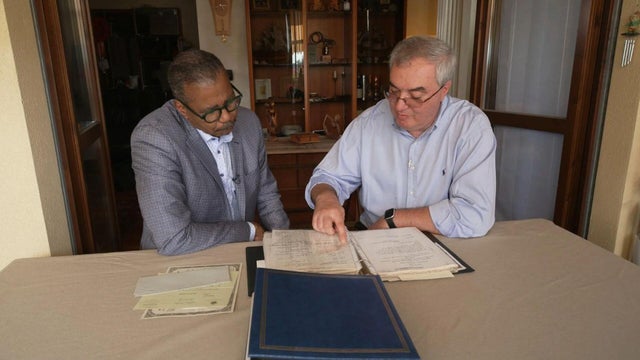
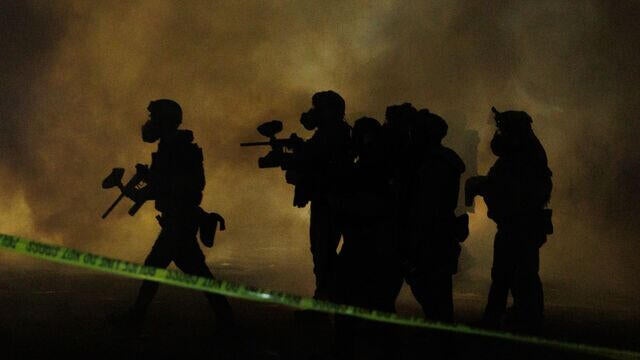
When the press eventually came out and took photographs, my father called me down, and he said, now look. He said, how many times have I told you, you do not hold a gun like that? You weren't holding the gun the right way? And actually, if you look at the picture, the way I'm holding the guns is dreadful. JON WERTHEIM (VOICEOVER): Firmly settled on Sealand, the Bateses remained a nuisance to the British government, so much so, as a warning to the family, a team of Royal Engineers blew up a similar North Sea fort. At Sealand's National Archives, which doubles as Prince Michael's dining room table, we were shown declassified plans, drawn up by the British Ministry of Defense to take Sealand by force. "The following units are to be available to the execution of the operation-- Royal Navy, two Wessex 5 helicopters, crafts from HM Naval Base Chatham, Portsmouth, Medway, and a clearance diving team. It's crazy, isn't it? JON WERTHEIM (VOICEOVER): But it wasn't just the British government that wanted to dislodge the family. In August 1978, a band of rogue German and Dutch lawyers and diamond merchants launched a coup d'etat, with designs of founding their own offshore casino. They arrived by helicopter with a film crew in tow, taking Prince Michael by surprise and then roughing him up. They tied my elbow together, my knees together, my feet together, my hands down to my knees. And they picked me up, and then one says to the other in German, let's chuck this bastard over the side. He's too much trouble. You're a full-on political prisoner right now. Yeah. JON WERTHEIM (VOICEOVER): Sealand had fallen. After three days, Michael was released. Did Michael and his father then return via helicopter, fully armed and flanked by a group of bruisers to stage a successful counter coup? Yes. Yes, they did. But I jumped and landed crash in the middle of the Germans. A sawn-off shotgun hit the deck. Boom. All the Germans went like that.

JON WERTHEIM:
00:24:59

They surrender. That's it. You've reclaimed your principality.

MICHAEL BATES:
00:25:02

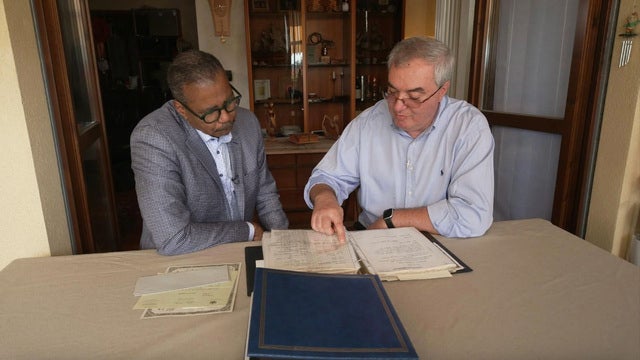
Yeah, yeah. JON WERTHEIM (VOICEOVER): Disarmed, the plotters were released, All. Except for one. His name was Puts. And he was made to clean the bathroom, make coffee, and imposed a fine for treason, $37,000. His imprisonment brought a German diplomat to Sealand. But if you have German emissaries coming here to try and negotiate the release of this prisoner, doesn't that imply that Sealand is a state that's having relations? Absolutely. It's de facto recognition, isn't it? It happened, yeah. JON WERTHEIM (VOICEOVER): This diplomatic visit was critical for the Bates family. An international treaty signed in the 1930s established four requirements for statehood. One is recognition by another state. Sealand had already met the other tests-- a government, check; a defined territory; check; and a permanent population, check, thanks to Michael Barrington.

JON WERTHEIM:
00:25:59

So what's your position here?

MIKE BARRINGTON:
00:26:01

Well, I do most of the engineering work, electrically and whatever. Apparently, I'm head of Homeland Security. What are you protecting this place from? Well, the British government or anybody else that decides to take us over. We're our country, after all, a small nation. You're ready to use weapons if you have to. If need be, yes, no hesitation. JON WERTHEIM (VOICEOVER): But in recent years, to keep Sealand afloat, the Bates family has updated their pirate radio sensibilities for the times. In the early 2000s, they partnered with fringe internet entrepreneurs who invested millions with designs of turning Sealand into an offshore data haven. Prince Michael's son, Prince James, showed us the old server room. We used to run things like gambling sites, porn sites. We had a few dubious people asking us to do things that we didn't really agree with. There was an organ transplant company, like human organs, that wanted to host out here, which my father was against. Gambling and porn is OK, but we draw a line at harvesting human organs. Yes, exactly. JON WERTHEIM (VOICEOVER): That venture failed dismally. But today, James and his younger brother, Prince Liam are still harnessing the power of the internet. The Bates family won't disclose the size of the national debt or the yearly budget, but it is serviced through the online sale of noble titles. Become a lord or lady for $30. $600 will make you a Sealand duke or duchess.
JON WERTHEIM:
00:27:28

And people are buying these titles. What is that all about? I think it means so many things to so many different people. Some people love the act of political defiance. Some people love the love story that ran through it with my grandma and grandpa. Some people love the David against Goliath. JON WERTHEIM (VOICEOVER): That national myth, the very idea of Sealand, has now far outgrown the country itself. As for the House of Bates, well, Roy and Joan have passed on. And the rest of the lineage lives in the small English resort town of Southend-on-Sea. Princes James and Liam run a business harvesting cockles. Princess Penny runs a botox clinic nearby. And seven years ago, Prince Michael married and welcomed a new princess, Mi Chi, a former artillery major in China's People's Liberation Army. Six decades after founding their private little country, the royal family remains committed to the bit.
JON WERTHEIM:
00:28:30

Is this a golden age for Sealand? Hopefully. If the British Navy rolled up tomorrow and said, it's time to reclaim Sealand, how do you respond? Well, first of all, I'm sure they wouldn't. But if they did, I'd just get the best China out and make them a nice cup of tea. Sealand's flag now adorns football helmets? Yes, the micronation now fields men's and women's tackle football teams. The Sealand Seahawks play opponents from the UK, Europe, and the US. Naturally, all their games are held away from home. [CLOCK TICKING] Werner Herzog may not be a household name, but he is one of the most respected and unusual filmmakers of our time. Over the last six decades, the German director has made more than 70 documentaries and feature films about everything from an unhinged cop in New Orleans to a guy who thought he could live with Grizzly bears. He did until they ate him. Werner Herzog has never shied away from the extreme. If anything, he's drawn to it. His movies are often dreamlike explorations of the power of nature, the frailties of man, and the edges of sanity. Today, he's 82 years old, and as we reported last March, he is still working constantly, still making movies no one else would or could ever dream of. [MUSIC PLAYING] ANDERSON COOPER (VOICEOVER): This was the film that introduced Werner Herzog to the world in 1972, Aguirre, the Wrath ofGod, about a group of conquistadors searching for a lost city of gold in the Amazon-- Enough. ANDERSON COOPER (VOICEOVER): --who gradually descend into madness. The wrath of God. ANDERSON COOPER (VOICEOVER): Shot on a shoestring budget in Peru, it only got finished because of Herzog's force of will and determination.

ANDERSON COOPER:
00:30:33

I read that you sold your shoes in order to get some fish to feed the crew. Well, it's not normally what a director has to do. It's good to have some good boots. And you can barter it for a load of fish. Or my wristwatch, I would give away. I would give away everything. And it's worth it. Of course. Of course it's worth it. I get away with the loot. I have a film. That's the loot, though. You're not talking about making millions and millions of dollars. The loot for you is the film. Yeah. And of course, I make money sometimes, and I invest it in the next film. ANDERSON COOPER (VOICEOVER): If you've seen any of Herzog's documentaries, it may be GrizzlyMan,one of his most commercially successful. It tells the strange tale of Timothy Treadwell-- Oh, hi, Grinch. ANDERSON COOPER (VOICEOVER): --an eccentric drifter who spent 13 summers in the wilds of Alaska recording himself interacting with Grizzly bears. If I show weakness, I may be hurt. I may be killed. ANDERSON COOPER (VOICEOVER): Treadwell seemed convinced he had a spiritual connection with the Grizzlies and was somehow their protector. In the end, he's the one who needed protecting.

TIMOTHY TREADWELL:
00:31:44

Go back and play. ANDERSON COOPER (VOICEOVER): We sat down with Herzog to watch the film and others at the Academy Museum of Motion Pictures David Geffen Theater, in Los Angeles.

WERNER HERZOG:
00:31:55

And what haunts me is that in all the faces of all the bears that Treadwell ever filmed, I discover no kinship, no understanding, no mercy.

ANDERSON COOPER:
00:32:06

You have a distinctly unromantic view of nature. Yes. Nature is utterly indifferent. We are not made to become brothers with the bears. That happens in Walt Disney, not in real life. Take a step to the left. OK. ANDERSON COOPER (VOICEOVER): In all of Herzog's feature films and documentaries, you'll find remarkable moments, nightmarish ones as well. His curiosity has taken him to the remotest regions of our planet. In celluloid we trust. ANDERSON COOPER (VOICEOVER): With his distinctly teutonic tone, he narrates his documentaries himself and asks questions that rarely have easy answers.

WERNER HERZOG:
00:32:48

Do fish have souls? Do fish have dreams? [DREAMY MUSIC] ANDERSON COOPER (VOICEOVER): Herzog has revealed hidden landscapes under the Antarctic ice sheet and apocalyptic oil fires in Kuwait after the first Gulf War.

WERNER HERZOG:
00:33:09

Has life without fire become unbearable for them? ANDERSON COOPER (VOICEOVER): He's risked his life to capture the power of volcanoes-- [EXPLOSION] --and filmed ancient cave paintings in France rarely seen before. Yeah, hold it, hold it, hold it. ANDERSON COOPER (VOICEOVER): Herzog is now working on a new documentary in Los Angeles with his editor, Marco Capaldo. And now music. Wow. Schubert's good to have. [MUSIC PLAYING] ANDERSON COOPER (VOICEOVER): It's a movie about the search for a legendary herd of elephants in Southern Africa. But Herzog insists it's not a wildlife film.

WERNER HERZOG:
00:33:52

It's a fantasy of elephants, maybe a search like for the white whale, for Moby Dick. It's a dream of an elephant. ANDERSON COOPER (VOICEOVER): Herzog never had any formal training as a director. He was born in Munich, just two weeks before the Allies bombed it in 1942. His father was away serving in the German army when his mother fled with Werner and his older brother to the mountains of Bavaria. We grew up in complete poverty. And we had no running water, no sewage system, hardly ever electricity. We had one loaf of bread per week. And we were hanging at her skirt, wailing that we were hungry. And she spins around, and she looks at us, and she says, boys, if I could cut it out of my ribs, I would cut it out of my ribs. But I can't. To this day, that experience shapes you. Yes, it does. Follow me. ANDERSON COOPER (VOICEOVER): Herzog didn't see his first film until he was 11. He got hooked on American B-movies like Zorro and decided filmmaking was his destiny. He just needed a camera. He finally found one in a film school in Munich. One day I saw this camera room, and nobody was in there. And I took one and tested it, walked out. And they never noticed that a camera was missing. I mean, that's a stolen camera. It was more expropriation than theft. You have to have a certain amount of-- I said good criminal energy. To make a film. Sometimes, yes. You have to go outside of what the norm is. ANDERSON COOPER (VOICEOVER): He's been going outside the norm his whole life. In 1979, he began working on a fever dream of a film called Fitzcarraldo. [OPERA MUSIC] It took him three grueling years to make. German actor Klaus Kinski plays an obsessed Irishman who'll stop at nothing to build an opera house in the Amazon. I want my opera house! [BELL RINGING] Give it a go! ANDERSON COOPER (VOICEOVER): To raise the money for it, Fitzcarraldo hatches a plan to harvest lucrative rubber trees in a remote jungle and hires Indigenous laborers to haul a ship over a mountain to do it. Herzog refused to cut corners. He insisted on buying the 340-ton steamship and actually moving it up a mountain.

ANDERSON COOPER:
00:36:24

Couldn't you have used special effects with a model of a ship being moved over a mountain, rather than actually moving an enormous-- Yes, it was a Discussion with 20th Century Fox. And they said we could shoot it in the Botanic Garden in San Diego, and we could move a tiny miniature boat. And I said, no, we are not speaking the same language. It certainly would have been easier. No, it would have been a lousy film. ANDERSON COOPER (VOICEOVER): That was the least of it. A border war forced Herzog to move the production 1,000 miles away to a new location. There were money problems, plane crashes, fighting between local Indigenous groups, and constant battles against the rain and mud. Herzog's relentless pursuit of his vision took a toll on the cast and crew and on him as well. Documentary filmmakers shot the chaos behind the scenes and turned it into a movie all its own, called Burden ofDreams. It's just been re-released in theaters.

MAN:
00:37:23

We are challenging nature itself, and it hits back. It just hits back. That's all. And that's grandiose about it. And we have to accept that it is much stronger than we are. Of course, there's a lot of misery that is all around us. The trees here are in misery, and the birds are in misery. I don't think they sing. They just screech in pain.

ANDERSON COOPER:
00:37:49

Did you feel that every day? Every day, every night, and the next day, and the next night, and on. [NON-ENGLISH SPEECH] ANDERSON COOPER (VOICEOVER): Herzog also had to deal with Klaus Kinski, the star of the film, who was prone to explosions of rage.

WERNER HERZOG:
00:38:09

I had a madman as a leading character.

ANDERSON COOPER:
00:38:13

He had a temper. As demented as it gets. You had to contain him. And I made his madness, his explosive destructiveness, productive for the screen. How do you do that? Whew, every gray hair on my head, I call Kinski. ANDERSON COOPER (VOICEOVER): Kinski appeared in five of Herzog's films and died in 1991, but not before putting his own thoughts about Herzog down on paper.

ANDERSON COOPER:
00:38:42

This is what Klaus Kinski said of you in his autobiography. "I've never in my life met anybody so dull, humorless, uptight and swaggering. Herzog is a miserable, hateful, malevolent, avaricious, money-hungry, nasty, sadistic, treacherous, cowardly creep. Yes, it's beautiful stuff. I actually helped him-- You helped him write this? --with a dictionary, with Roget's Thesaurus. [SINGING IN NON-ENGLISH] ANDERSON COOPER (VOICEOVER): When Fitzcarraldowas finally released in 1982, Herzog won the Best Director award at the Cannes Film Festival.

ANDERSON COOPER:
00:39:17

You must have been deluded to make this or crazy in some way. No, no, no. But the fact is, when you look at the film industry, there is so much craziness around, so much illusion, so much dementia, so much ego. And when I look at this, I know I'm the only one who is clinically sane.

ANDERSON COOPER:
00:39:38

This shows you're the only one who's sane?

WERNER HERZOG:
00:39:40

It shows it, yes, yes. That's my proof. Notebooks-- ANDERSON COOPER (VOICEOVER): Herzog still has the journals he wrote while making Fitzcarraldo. Over the months, as the pressure on him grew, his writing became barely readable.

WERNER HERZOG:
00:39:54

But it becomes macroscopic almost. ANDERSON COOPER (VOICEOVER): He turned those journals into a book called The Conquestof the Useless. He's published 11 others, as well, fiction, poetry, and memoirs. I've always maintained since more than four decades that my writing, my prose, and my poetry will outlive my Films. You think your writing will outlive your films? Yes, I'm totally convinced of that. ANDERSON COOPER (VOICEOVER): Herzog doesn't just work behind the camera. Every now and then he acts. That's him in the Star Wars series, TheMandalorian. Please lower your blaster. You would do well to remember that life is heartless. ANDERSON COOPER (VOICEOVER): He's also lent his distinctive voice to several characters on TheSimpsons. I'd say goodbye, but what's the point? I have to know when I'm keeping away from them. ANDERSON COOPER (VOICEOVER): Last September, we joined Herzog as he taught aspiring filmmakers on the Spanish island of La Palma, off the West Coast of Africa. It's covered in volcanic rock and ash from an eruption three years ago, a Herzogian landscape, if ever there was one. [SPEAKING SPANISH] You want to leave him. And he looks in this direction. You just pan away. ANDERSON COOPER (VOICEOVER): It's an 11-day workshop--

WERNER HERZOG:
00:41:12

On this shot when-- ANDERSON COOPER (VOICEOVER): --less about the fundamentals of filmmaking and more about poetic vision and grit. It's his fantasies. It's his ghosts that he's searching. ANDERSON COOPER (VOICEOVER): He calls it a film school for rogues.

WERNER HERZOG:
00:41:25

And for the rogues, I also say, you are able-bodied. Earn money to finance your first films. But don't earn it with clerical works in an office. Go out and work as a bouncer in a sex club. Work as a warden in a lunatic asylum. Go out to a cattle ranch and learn how to milk a cow. Earn your money that way in real life. You do not become a poet by being in a college. And I teach them a few things, like forging a shooting permit. Can I have this? You see, it should look really authentic. How to fake a shooting permit. The shooting permit during a dictatorship. Have you made those? Yes, of course. And I teach lock picking. You have to know-- [LAUGHS] Yes, you have to be good at that. To make a film, you have to know how to forge a permit and pick a lock. And you better carry bolt cutters everywhere. It's not for the faint hearted. [CLOCK TICKING] I'm Lesley Stahl. Stick around. Another edition of 60 Minutesis coming up next. [UPBEAT MUSIC] I can see clearly now No matter how you start your day, one thing is clear. Actually, two things. Pretty sure it's three. Guys, whether it's news, money, health, or wellness, sports, movies, or even inspiration-- Clearly, CBS Mornings isthe place to be. That's seven things. OK, clearly, I'm bad at math, always been. Clearly, clearly, clearly. OK. Clearly. (SINGING) Sunshine is--

ANCHOR:
00:43:07

Clearly, CBS Mornings,weekdays at 7:00--

ANCHOR:
00:43:09

On CBS.

Videos
View CBS News In
CBS News App Open
Chrome Safari Continue