PAYAM KHASTKHODAEI:
00:01:17
If you learn 1, 3, 5-- BILL WHITAKER (VOICEOVER): He's come up with a new method of teaching that has students loving their piano lessons.
PAYAM KHASTKHODAEI:
00:01:24
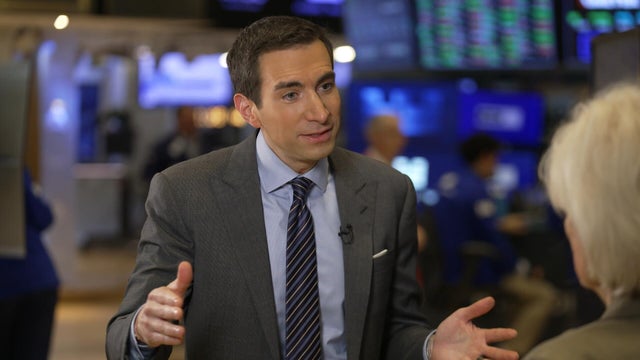
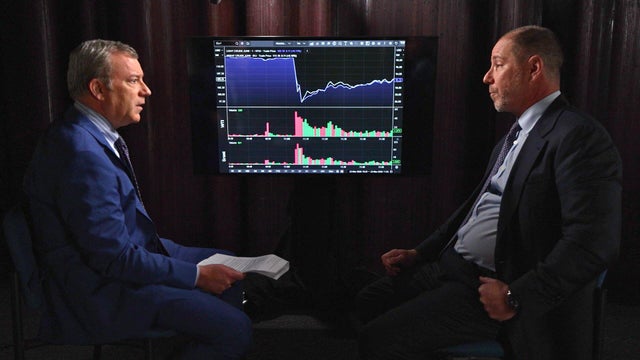
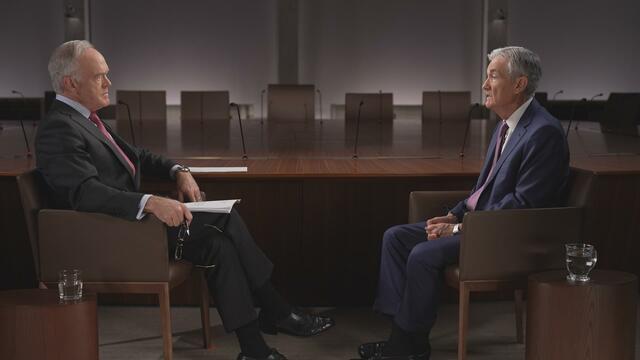
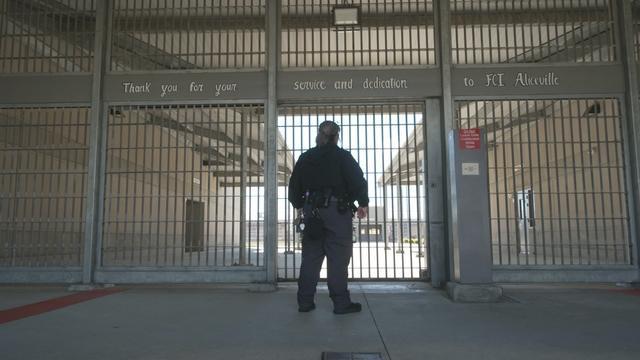
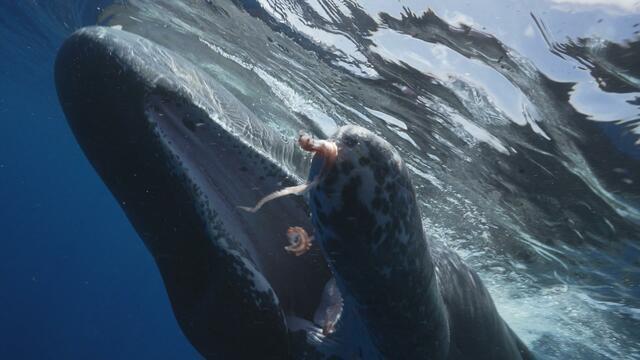
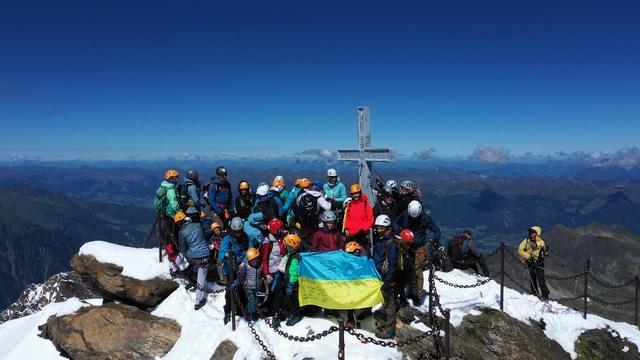
Piano is not supposed to be fun. It's supposed to be strict. It's supposed to be stressful. And we're like, why? [PIANO PLAYING] Our students don't just learn piano. They love piano. [CLOCK TICKING] I'm Lesley Stahl. I'm Bill Whitaker. I'm Anderson Cooper. I'm Sharyn Alfonsi. I'm Jon Wertheim. I'm Cecilia Vega. I'm Scott Pelley. Those stories and, in our Last Minute, actress Sally Field with a childhood lesson about America, tonight on 60 Minutes. [CLOCK TICKING] The stock market has been steadily rising for many months now, despite occasional volatility around issues like tariffs and war. This resilience got us thinking about booms, busts, and bubbles. So we decided to talk to one of the country's top financial reporters, Andrew Ross Sorkin. As we first reported in October, Sorkin had just written a book called 1929about the market crash a century ago. We wondered if he ran out of news to cover, or was he alerting us that what's happening in the markets right now is a replay of what led to the most devastating financial collapse in our history?
REPORTER:
00:02:51
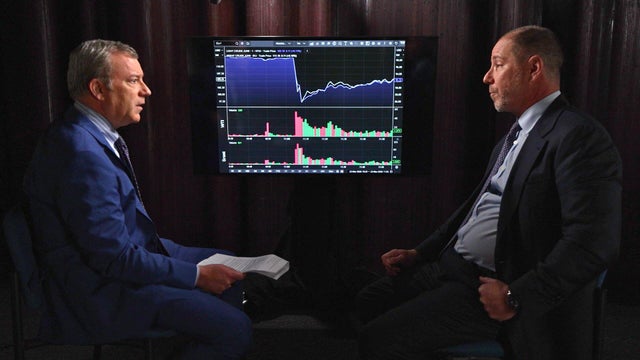
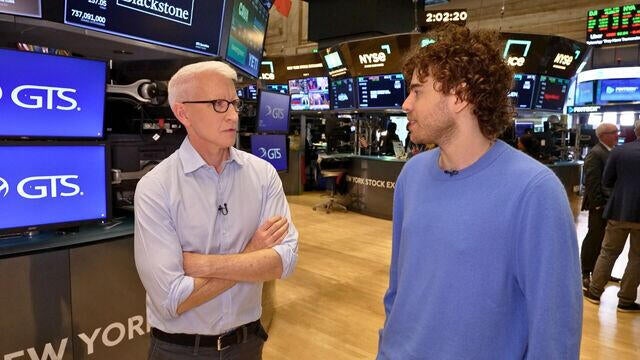
Tuesday, October 29, 1929-- LESLEY STAHL (VOICEOVER): Imagine the New York Stock Exchange back then-- the crush of frightened traders dumping stocks, investors losing their shirts, businesses, their homes, sweeping away the Roaring '20s. Walking that same but transformed floor today-- --is everything's digital. Well, yeah. OK. --Andrew Ross Sorkin says we're in our own Roaring '20s, the 2020s, with stocks climbing for months. just like then. The crazy part about this is from 1928 to September of 1929, the stock market was up 90%. When you say the stock market was way up, immediately I think of now. Are you scared? I'm anxious. I'm anxious that we are at prices that may not feel sustainable. And what I don't know is we are either living through some kind of remarkable boom-- and part of that is artificial intelligence and technology and all of that-- or everything's overpriced. Or we're reliving-- 1929. There was so much anxiety. LESLEY STAHL (VOICEOVER): Sorkin has covered the markets for two decades. He joined The New York Timesafter college, soon founding the DealBook newsletter covering finance. He also co-hosts Squawk Boxon CNBC-- Good to see you, too. Thanks for having me. LESLEY STAHL (VOICEOVER): --runs the DealBook Summit, where he interviews the high and mighty. He co-created Billions,the TV show, wrote a bestseller about the 2008 crash, and now a book about 1929. We're always being undone by bubbles. There was the internet bubble in 2000, the housing in 2008. Are we in another bubble? An AI bubble or something like that? I think it's hard to say we're not in a bubble of some sort. The question is always, when is the bubble going to pop? One symptom of a bubble is when the market goes up and up, but the underlying economy, the real economy, goes soft. And that appears to be happening right now. I would argue to you that the economy is being propped up, almost artificially, by the artificial intelligence boom. There are hundreds of billions of dollars that are being invested today in artificial intelligence. This is either a gold rush or a sugar rush, and we probably won't know for a couple of years which one it is.
REPORTER:
00:05:35
--4 million shares a day. LESLEY STAHL (VOICEOVER): 1929 was a sugar rush caused by speculation and debt. People who didn't really have much money were lured by Wall Street bankers to invest using a newfangled concept to take on debt, called credit. You only had to put down 10% of the stock price, borrowing the rest from your broker. Prior to 1919, most people did not take on credit or debt at all. It was a sin. It was a moral sin to use credit to buy anything. And it was really General Motors that basically came up with the idea that we're going to lend you money so you can afford to buy our cars. Brilliant. And then the bankers realized what's happening, and they realized that they can lend out money so that more folks can buy stocks. It was all sort of wrapped in the flag of democratizing access. And in good times, when the stock is going up, it's like free money. In bad times, you're on the hook, and you're on the hook in a very bad way. LESLEY STAHL (VOICEOVER): Since then, laws, regulations, and agencies have been put in place to protect investors, especially the less affluent, from being exploited. We put up barriers after 1929. Yes.
LESLEY STAHL:
00:07:04
Protections. So those are coming down. They're tumbling down. The SEC rules aren't as stringent anymore.
ANDREW ROSS SORKIN:
00:07:12
Yes. The Consumer Protection Bureau practically doesn't exist anymore. Correct. That's what concerns me. It's not that we're going off a cliff tomorrow. It's that there's speculation in the market today. There's an increasing amount of debt in the market today. And all of that's happening against the backdrop of the guardrails coming off. LESLEY STAHL (VOICEOVER): Including guardrails that allow only the wealthy to invest directly in private companies that have fewer regulations, like AI startups, before they go public. So over the last 20 or 30 years, folks who had access to, who could invest in private equity and venture capital, clearly outperformed folks who didn't. That's how you really made money. But you have to remember that these kind of assets are gambles. Public companies, after the SEC was created, were required to have all sorts of disclosure rules so that the public could understand what's going on inside them. Private companies don't have that. But historically, the average, ordinary American wasn't really allowed to invest in the private companies. But in this flag of democratizing finance, there's a lot of people who want access to that. Wow. Isn't this something? This is spectacular. Sorkin took us to the Fifth Avenue mansion of one of the big bankers back then who pushed democratization. If this idea of bringing the regular guy into buying stock, if that was a big problem back in 1929, why are we going there again? Doesn't that defy some kind of logic? There is a view that it's been only the elites that have had access to these investments-- Facebook before it ever went public, Uber before it went public. So there's this idea that it's unfair, actually, to the ordinary investor because we haven't allowed them to get access to some of these investment opportunities early. And there is a real push, partially by the Trump administration, partially by the industry itself, which wants to-- Get more money. Get more money in. To open up the market to more and more people. So we have these guardrails for a reason. They're there to protect, and they have protected. They have protected a lot of people. But some people would say they protected people from getting rich. Many people don't believe in capitalism anymore. And I think a lot of it is because they were not a part of the growth of the economy. LESLEY STAHL (VOICEOVER): We went to Larry Fink, CEO of BlackRock, the world's biggest money manager, handling about $14 trillion in assets, like pension funds. His annual letter to investors is a kind of industry roadmap. In 2025, it suggested opening our retirement 401(k)s-- bastions of caution-- to riskier private investments in the name of-- wait for it-- democratizing investing. As I wrote, there are many great opportunities to be investing in startup companies, to invest in AI or data centers. Right now, we are precluded to put those type of assets in many retirement products. And the Trump administration has now said we are going to allow in our 401(k) products the opportunity to invest in these private markets. But they are risky, aren't they? Yes. But everything's risky other than keeping your money in a bank account overnight. But we're talking about 401(k)s, investing out of retirement accounts.
LARRY FINK:
00:11:10
Yes. You're risking the nest egg or a little part of the nest. But what the markets will teach you over the last hundred years, even at the worst moments, if you have the ability to persevere and you have a long-term horizon, you're going to do fine. And a diversified portfolio is essential. We're not suggesting one shoe fits all. We are suggesting the opportunity to have that ability to invest in these private market investments. LESLEY STAHL (VOICEOVER): He also believes we should be investing in crypto. It wasn't that long ago that the big bankers, Jamie Dimon and Larry Fink, were saying that crypto was stupid and a fraud. I did say Bitcoin, because we were talking about Bitcoin then, was the domain of money launderers and thieves. But the markets teach you, you have to always relook at your assumptions. There is a role for crypto in the same way there's a role for gold, that it's an alternative. For those looking to diversify, this is not a bad asset. But I don't believe that it should be a large component of your portfolio. LESLEY STAHL (VOICEOVER): But Sorkin says some crypto can be abused in ways similar to 1929. Take meme coins, cryptocurrencies that can be manipulated by speculators who pump them up, then let them crash. There are a number of examples where it felt like there was an inside group of people who were colluding to pump up some of these cryptocurrencies and other things. I'll give you a bizarre story of my own. I was on television with Larry Fink, and he makes a joke, I think, about how there should be a Sorkin coin. I think the Sorkin coin should--
ANDREW ROSS SORKIN:
00:13:05
Sorkin coin. Well, two hours later, somebody makes a Sorkin coin. And all of a sudden, the Sorkin coin is now worth millions of dollars, and I'm watching it-- Are you serious? --go up and up and up and up and up. LESLEY STAHL (VOICEOVER): The Sorkin coin peaked at $170 million worth of trading in a day. And I think today it does something like $20 or $21 a day, so-- Woo-woo-woo-woo. I'm thrilled to have Bill Gates with us. LESLEY STAHL (VOICEOVER): Sorkin is trusted by the world's top business leaders, who talk to him often exclusively. I have no problem being hated, by the way.
LESLEY STAHL:
00:13:42
What role do you think these business leaders should be playing now? My own view is that most CEOs in America today are very scared to speak out publicly about anything. They are so worried that they are going to be potentially attacked by the administration, or regulated. They're going to have a merger in front of some agency that's not going to be allowed to go through. They are so nervous about criticizing anything that's going on with this administration. There are some economists who suggest that because Mr. Trump ties his success to the success of the market, that he's not going to let anything like what happened in 1929 happen and that we should feel secure because of that. I think it's hard to know how things get out of control. When confidence disappears, it happens like this.
LESLEY STAHL:
00:14:43
So you spent nearly 10 years on this book. The inevitable question is, do you think that we will have a crash or not? The answer is, we will have a crash. I just can't tell you when, and I can't tell you how deep. But I can assure you, unfortunately-- I wish I wasn't saying this-- we will have a crash. [CLOCK TICKING] Now, Dr. Jon LaPook on assignment for 60 Minutes. Biologist Charles Darwin began crafting his theory of evolution on a trip to the Galapagos Islands, where he discovered animals had developed unique traits that varied from island to island. Nearly two centuries later, on a different island, scientists aren't just observing evolution, they now have the technology to shape it. We met a team of modern-day Darwins on Nantucket, where, as we first told you last fall, they're hoping to use genetic engineering to reduce the transmission of Lyme disease, a tick-borne illness found primarily in the Northeast and Upper Midwest, but also throughout the United States. The scientists' target may surprise you. It's not the deer often associated with the disease, or even the ticks, but wild mice, the main carriers of Lyme. With the rate of emergency room visits for tick bites at a record high in some regions, this could be the summer Americans consider a new strategy to fight disease, sculpting evolution. 30 miles off the coast of Cape Cod, Massachusetts, is the island of Nantucket, a 14-mile long, 3-mile wide oasis known for its natural beauty, pristine shorelines, and protected landscape. But hidden is a scourge that's afflicted 15% of its residents. The natural disaster in our area is not hurricanes or tornadoes or earthquakes. It is Lyme disease. It is the one plague that might be severe enough that communities might want to engineer a wild organism in order to get rid of it, or at least reduce the level a lot. JON LAPOOK (VOICEOVER): Deep in the island's brush, in 2024, we found MIT associate Professor Kevin Esvelt, a pioneer in genetic engineering, waving a White flag in search of ticks. So we just grab it. JON LAPOOK (VOICEOVER): These tiny vectors of Lyme disease were not hard to find. And you just pop it in. These are the big ones because these are largely adults. If the adults are this small, imagine the tiny, tiny-- what are they called, nymphs? Nymphs, yeah. We often think of poppy-seed-sized. JON LAPOOK (VOICEOVER): Esvelt's collaborator is Sam Telford, an epidemiologist at Tufts University who's been studying ticks on Nantucket for the last 41 years. There's a 50% chance, maybe more, that this is actually carrying Lyme disease. But you're not afraid because it has to be embedded and attached. It has to be attached for more than 24 hours. Right. To infect you. That's correct. These guys will swell up 50 to 100 times that size with blood. It becomes that big. And that's how you know, when they're engorged, that they've been feeding on you. If you see it that big, then you're in trouble. JON LAPOOK (VOICEOVER): The scientists aren't here just to collect ticks. They're interested in this critter. This is a wild mouse? This is a wild white-footed mouse. And you've tagged it? I've tagged it. So when I come back in April or May of next year, we get an idea of what overwintering success is. JON LAPOOK (VOICEOVER): Telford is tracking the mouse population on Nantucket as part of a novel project. The scientists want to use genetic engineering to interrupt a cycle of infection necessary for Lyme disease to flourish. White-footed mice are the main host of Lyme bacteria. When an uninfected tick bites an infected mouse, the bacteria transfer to the tick. When that infected tick then bites an uninfected mouse, the cycle continues. Deer don't get infected, but they help spread the disease because ticks embed on them to feed, then reproduce, with a single female tick laying as many as 2,000 eggs. Here's Esvelt and Telford's big idea-- change the genetic makeup of the mice so they're immune to Lyme. That way, the ticks that bite them won't get infected. You don't have to kill the mouse in order to interrupt the cycle. It'd be so much more economical and straightforward to just go out and poison all the mice, right? Get rid of the mice. But then there's a whole food chain that might depend on these mice that would be impacted. The dream is that we can use new technologies to ensure that wild creatures can live in peace, playing their normal ecological role, but without causing disease that make people suffer. Come on in, [? Winnie. ?] JON LAPOOK (VOICEOVER): If Esvelt's dream becomes a reality, 80-year-old Dr. Timothy Lepore might finally be able to retire. So how did you get Lyme disease, do you think, [? Winnie? ?] Was it because of the tip of my heel? JON LAPOOK (VOICEOVER): Over the past 40 years, he's been the island's emergency room head, sole surgeon, even its medical examiner. Today, Dr. Lepore runs the only private practice on Nantucket, where he treats dozens of patients with Lyme disease each year Follow my finger. JON LAPOOK (VOICEOVER): And, yes, that's a giant tick in his waiting room. Being in private practice, while not well paid, it's-- You get paid in what, chickens and donuts and-- We prefer lobsters, actually. Lobsters, clams, and scallops.
JON LAPOOK:
00:20:43
But you'll take anything, right? I will take anything. Come on down, Shauna. JON LAPOOK (VOICEOVER): Lyme disease can be treated with antibiotics, but if left untreated, the infection can spread to the heart, joints, and nervous system, as it did for 33-year-old Shauna Asplint. My body hurts all the time. OK. I don't know if that's from my Lyme disease or what. My neck is stiff. My ankles are sore, and my hips. JON LAPOOK (VOICEOVER): Asplint was first diagnosed with Lyme when she was 10 years old. A few years later, the left side of her face stopped moving. A residual effect from the disease is still noticeable today.
TIMOTHY LEPORE:
00:21:21
Let's see a smile. It's still a little off, and then if I raise my eyebrows, it just doesn't move. We see people with facial palsies. We see little kids with swollen knees. We see people with Lyme rashes. So it alters people's behavior and activities. JON LAPOOK (VOICEOVER): The problem on Nantucket can be traced back to 1926, when locals voted to import two female deer to the island to give a lone buck company. As the deer population grew, so did the ticks. On top of that, by the 1950s, half the land on the island was put into conservation. The untamed brush and wild grasslands create an ideal ecosystem for Lyme's host to thrive. We have a problem with tick-borne disease because we engineered the environment to maximize the number of ticks and to maximize the number of mice that are the best host of Lyme disease. And it came back and bit us, literally. JON LAPOOK (VOICEOVER): A trip at age 11 to the Galapagos Islands sparked Esvelt's lifelong obsession with evolution. In 2013, he was the first to propose that CRISPR, a revolutionary technology that enables scientists to edit DNA, could be used to change a species genetics in perpetuity, hacking the laws of inheritance. It's not like we won a fitness advantage. JON LAPOOK (VOICEOVER): This idea led to the project they call Mice Against Ticks in the Sculpting Evolution lab Esvelt runs at MIT. For the last 10 years, he and researcher Joanna Buchthal have been studying whether they could add a gene for an antibody that prevents Lyme infection to a mouse embryo that, as we see here, has progressed into two cells. Is it going to be into one of those cells or both of them? So our technique involves injecting both cells to maximize the likelihood that we get the antibody gene in their DNA. JON LAPOOK (VOICEOVER): Buchthal and embryologist Zach Hill showed us how they genetically engineer lab mice. He's going to actually inject through the plasma membrane and into the nucleus for both of these cells. How are you at darts? Not very good. [LAUGHTER] But you're going to hit-- A lot better at this. You're going to hit the center of this? Oh, yeah. OK. So I already have an embryo set up on the dish here. So I'm just trying to find the nucleus here. It is amazing to see this. So that little burst that you can see in the nucleus is when he's actually injecting the genome engineering tools directly into the nucleus where the DNA is. JON LAPOOK (VOICEOVER): The injection mix contains both the antibody Gene and CRISPR, which acts like molecular scissors. After CRISPR finds and cuts the targeted area of DNA, the cell inserts the gene into the mouse's genetic code. When this mouse is born, it will be immune to Lyme disease, and so will its children. If I get a polio vaccine, my kids aren't going to be immune to polio unless they get the vaccine, too. That's exactly right. So this is a heritable immunization. What do you mean by that? What we're actually doing is we're encoding immunity so that that immunity is passed on generationally, and every mouse that gets the antibody gene is actually immune.
JON LAPOOK:
00:24:41
Typical standard evolution happened very slowly, right? Over thousands, maybe millions of years. Are you speeding up evolution here? We are absolutely speeding up evolution. And that's precisely why we have to be careful, because we are doing things that couldn't happen naturally. JON LAPOOK (VOICEOVER): The plan is to release thousands of engineered mice on Nantucket over time, starting during the winter months, when the native mouse population is low. But first, Esvelt needs community buy-in. I pledge allegiance to the flag of the United States of America. JON LAPOOK (VOICEOVER): He chose Nantucket not only for its high rate of Lyme, but also for its tight-knit, well-educated community, with the tradition of town hall democracy. I am going to call the October 23 select board meeting to order at 5:30 PM. We also need to start small. JON LAPOOK (VOICEOVER): We saw this in action in October 2024, when, for the 10th time, the scientists presented their latest findings to locals-- So it appears that we have indeed produced the first heritably Lyme-immune laboratory mice capable of breaking the disease transmission cycle. JON LAPOOK (VOICEOVER): --followed by a public Q&A. We have a huge population of field mice here. Shall we expect a larger population? Having had Lyme disease twice, I thought, what a cool idea. But mice are kind of the foundation of the food chain, so tinkering with the food chain makes me a little cautious. How long before it's actually going to take effect and keep me from getting Lyme disease again?
JON LAPOOK:
00:26:21
When you're in these meetings, what's that been like? Some people are really gung ho about this. Some people have deep reservations. But what I found heartening about this, and Nantucket in particular, is that pretty much everyone agrees that this is how we should go about developing these kinds of technologies, that it should not just be scientists in their laboratories, get a clever idea, and then, boom, it's there. JON LAPOOK (VOICEOVER): Dr. Timothy Lepore says he's supportive of the proposal.
TIMOTHY LEPORE:
00:26:52
Right here. JON LAPOOK (VOICEOVER): But as an avid falconer, he wants more testing to be done to ensure there won't be unintended consequences to the island's ecosystem. Could a change in the field mouse lead to a change in the hawk? Well, that's the question. I don't think so.
JON LAPOOK:
00:27:09
But we don't know? But I think that has to be shown.
JON LAPOOK:
00:27:12
Do you worry about fooling around with Mother Nature? Absolutely. But on the other hand, I'm not terribly fond of Mother Nature if she's going to give my kids disease. All of technology is saying to Mother Nature, you're beautiful, and we appreciate you very much, and we need to conserve you, but we're not always happy with the way things work naturally. And so we're going to change it. But in this case, you're changing the environment for everybody. This is, I agree, different. Because it's hard for individuals to opt out. And I think that means we need to do the science differently because we need to ensure that people have a voice early enough to actually influence the direction that the technology is developed. JON LAPOOK (VOICEOVER): If federal and state regulators agree, the team plans to first release the engineered mice in a small field trial on a private island so they can better understand the ecological impacts before any potential experiments on Nantucket.
JON LAPOOK:
00:28:11
What is the home run for you? I think it's a field trial that works. It's something that allows us to dramatically reduce the fraction of ticks that are infected, that doesn't have anything obviously go wrong with the ecosystem. And then the community has a good discussion, and then they decide. And I think there's benefits, as we discussed, even if they say no. And then we walk away. [CLOCK TICKING] It's a fairly safe bet that most kids taking piano lessons don't like them. That was certainly my experience. I took piano from age 5 to 12 before quitting in frustration. The scales and sheet music and strict teacher just got the best of me. Now along comes a piano teacher named Payam Khastkhodaei. The 32-year-old son of Iranian immigrants says he's come up with a new method of teaching that has students loving their piano lessons. What makes this near unknown worth a 60 Minutestory? Well, his students are sweeping national competitions. He's won over a legendary tech innovator and an Oscar-winning composer. They'll both tell you why they've joined his musical revolution. But we think you ought to hear from Payam first. Piano is not supposed to be fun. It's supposed to be strict. It's supposed to be stressful. It's supposed to be this very intense instrument you're learning. And we're like, why? Why can't it be fun? [PIANO PLAYING] Why can't we actually enjoy the songs we're learning? [PIANO PLAYING] Our students don't just learn piano, they love piano. And that's one of the biggest keys to it. Can you play a little bit for me right there? Same spot. [PIANO PLAYING] Now, can you play a little game? Can you show us how you can play without looking? You want to look up? Yeah? Let's look up and play. [PIANO PLAYING] BILL WHITAKER (VOICEOVER): In nearly every room of a converted home in the Seattle suburb of Bothell, Washington, Payam and his team of young teachers, all former students of his, are giving piano lessons and having fun. That was really good. Pum-pum-pum-pum-pum-pum-pum. BILL WHITAKER (VOICEOVER): Students are charged between $75 and $100 per lesson-- Start from here. BILL WHITAKER (VOICEOVER): --and range from preschool beginners to high school talents. [PIANO PLAYING] [APPLAUSE] Wow. High five. Amazing.
BILL WHITAKER:
00:31:08
Wow. How long have you been practicing that? I think for four-ish weeks. Four weeks? [LAUGHTER] In piano, we have this thing called the diploma, which is sort of like the black belt of the musical world. Traditionally, about 1% to 2% of students reach diploma level, and it takes them about 12 years. In our school, 96% reached it, and it takes them about four years. I can hear the traditionalists saying, hold on a minute. It can't be that easy. It can't be that fun. In order to be a really good pianist, you've got to have discipline. You've got to have hard work. You've got to have rigor.
PAYAM KHASTKHODAEI:
00:31:51
Mhm. Are they wrong? I agree and disagree. Of course, nobody will become phenomenal at anything unless they actually put in the time and energy. [PIANO PLAYING] But when you actually enjoy what you're doing, you don't realize that you're putting in the time for that. So they love it first? They love it first. If you learn 1, 3, 5 and if you learn that's just this-- BILL WHITAKER (VOICEOVER): The Payam method begins not with sheet music, but with ABC's and 123's and with actually writing numbers on piano keys. This is a song I would teach my three-year-old student that would come into class one day. And we understand this is 1, this is 5. They're not reading notes. They're not even sometimes looking at sheet music. We're playing a game. And it's fun for them, because they'll go 1, 2, 3. And then I'll say, good job. Let's go 1, 1, 2, 5. And then they'll think, and they'll go-- [PLAYS NOTES] And what they're doing is building this coordination. BILL WHITAKER (VOICEOVER): And using tools they already know-- numbers and letters-- to learn a new language, the language of music. For example, I really want to learn Chinese. If somebody put a book in front of me that was in Chinese, my brain would just-- Lock up. Exactly. And I have no idea what I'm doing. But if they taught me using a language I know, which is ABC's and 123's, it would make sense. I'd be like, oh, I learned it, and then I'm just mapping it out. [PIANO PLAYING] BILL WHITAKER (VOICEOVER): And just as students of Chinese eventually learn Chinese characters, Payam's students do shift to sheet music as they move through the 18 levels of his curriculum. How long does it take to go from this to this? This is our level 2. This is our level 13. This would take about a year and a half to two years for students. And during all that time, you're learning songs that you actually enjoy. The operative word in music is, after all, play. So be playful. [MUSIC PLAYING] BILL WHITAKER (VOICEOVER): Hans Zimmer has written the musical scores for more than 150 films. He's been nominated for 12 Oscars and won two, including for his score for The Lion King. But before he was a renowned composer and performer, he was a frustrated music student. You had an unconventional music education. Is-- I had an unconventional education, to say the least. Eight schools asked me to leave. I left with pleasure. The unconventionality of the education, is that what drew you to Payam and his method? Yes, absolutely. It's exactly what I wish I could have had. BILL WHITAKER (VOICEOVER): Most of Payam's students don't aspire to be concert pianists. Pum-pum-pum-pum-pum-pum. BILL WHITAKER (VOICEOVER): And his playful approach seems to have them loving their lessons. But what really sets him apart is that he's also teaching them to compose their own original songs at very young ages. Delara is just 12. [PIANO PLAYING] This is your third composition you've written? Yeah.
BILL WHITAKER:
00:35:18
This is your composition? Yeah.
BILL WHITAKER:
00:35:20
Oh, that's excellent. [PIANO PLAYING] Payam wrote this, his first original song, when he was nine years old, as a gift for his newborn sister. At age 11, he entered a different original composition into an arts competition, sponsored by the National PTA. The first composition competition I ever entered was the PTA Reflections program, and I won. So you have students now-- Yes. Many. --who perform and write for this very same competition. Exactly. How have they done?
PAYAM KHASTKHODAEI:
00:35:59
Phenomenal. The best I ever did in the competition was win second place at state, and I thought that was the biggest achievement in the world. In 2024, we submitted 41 of our students to compete in the Reflections competition. There was 300,000 nationwide. So we made up a very, very small portion of them. But we won 13 out of 15 district winners. We won five out of five Washington State first-place winners. And then those five students went on to compete nationally, and four of them won 4 of the 14 national medals that were awarded. Wow. [PIANO PLAYING] Play from the pickup note. Pum. BILL WHITAKER (VOICEOVER): Even when they're learning other people's compositions, Payams students are encouraged to play around with tempo and style and mood. [PIANO PLAYING] That is not how I learned piano at all. Not how I learned it either. There's a certain way to do it, and you better do it that way. Exactly. Yeah. That's what we're trying to change about the musical world. On day one, I said, I want to help scale this thing. BILL WHITAKER (VOICEOVER): Hadi Partovi met Payam when his then-12-year-old son Darius enrolled in piano lessons. So how have you seen-- BILL WHITAKER (VOICEOVER): Partovi is the co-founder and CEO of Code.org, a nonprofit that has a free online platform that millions of teachers have used to teach the basics of computer coding to hundreds of millions of kids. There's a lot of parallels between Payam Music and code.org. One is we don't teach coding with ones and zeros or angle brackets and semicolons. We teach it with blocks and dragging and dropping to make it easier. Similarly, Payam Music teaches music starting with ABC's and 123's before you learn the code of how music is written. [PIANO PLAYING] BILL WHITAKER (VOICEOVER): So Hadi Partovi is now CEO of Payam Music, with the goal of taking this tiny school, now with just a few hundred students, national. So the plan is to open Payam schools all across the country? That's correct. [PIANO PLAYING] BILL WHITAKER (VOICEOVER): Partovi has raised money to fund the expansion from an impressive list of investors, including film composer Hans Zimmer. What made you decide to not just recognize Payam's method and what he's doing, but to actually invest in it? To this day, I just remember these piano lessons as being horrible, and here's a man who figured out a way of giving children this opportunity to have absolute happiness, to love music and love themselves. [PIANO PLAYING] BILL WHITAKER (VOICEOVER): Zimmer visited Payam's first new location in Santa Monica, California, and listened to star pupils play their compositions, including Hadi Partovi's son Darius, now 19. I'd love to hear the piece slightly slower. Just breathe with it more. [PIANO PLAYING] With my son, I didn't even realize that he was writing music until one day I was like, oh, whose piece are you playing? And he was like, I'm just making it up as I go. And I was like, what? [PIANO PLAYING]
BILL WHITAKER:
00:39:27
Do you have to, or how do you, convince the music establishment, music school instructors that what you've got here is something special? Over time, we'll be able to convince the music establishment that this new way of teaching is better. But right now, we just need to convince parents. And the easiest way to convince parents is when they watch their son or daughter fall in love with music. Best decision I made.
BILL WHITAKER:
00:39:52
The best decision you made? The best decision I made. Yes. Definitely. BILL WHITAKER (VOICEOVER): Shahrzad Salestani's daughter Eilee is nine. [PIANO PLAYING] Saswati Sanyal's daughter Aaniya is 15. [PIANO PLAYING] And Julia Ying's son Jonathan is away at college after years of lessons at Payam Music. [PIANO PLAYING] It is life-changing for Jonathan. In what way? In the way that learning can be fun. So I see my daughter, Aaniya, to be more confident, and you feel good about yourself. So that is really different about this school. So they're all having fun. But they're learning.
SASWATI SANYAL:
00:40:36
But they're learning.
BILL WHITAKER:
00:40:38
They want to work hard at the piano? Mhm. It's contagious. [PIANO PLAYING] Give me high five. Wow. Amazing.
BILL WHITAKER:
00:40:53
That was fantastic. So to the skeptics, you say? Try it once, and you'll understand. I'm doing great. We couldn't resist a piano lesson 50 years after my last one. Back up here?
PAYAM KHASTKHODAEI:
00:41:09
Exactly. Perfect. [PIANO PLAYING] And then last one. You did it. That was it. Finished level 2. Amazing. How about that? Yeah. [LAUGHTER] [CLOCK TICKING]
NARRATOR:
00:41:36
Improvising the classics. Same song, but you have a different feeling.
NARRATOR:
00:41:42
Go to 60minutesovertime.com. [CLOCK TICKING]
NARRATOR:
00:41:51
The Last Minute of 60 Minutes is sponsored by UnitedHealthcare, coverage you can count on for your whole life ahead. As the nation celebrates 250 years of independence, Oscar winner Sally Field wanted to share something she learned as a child in Van Nuys, California. When I was in the seventh grade, I was asked to memorize something that I never forgot. "Congress shall make no law respecting an establishment of religion, or prohibiting the free exercise thereof, or abridging the freedom of speech, or of the press, or the right of the people peacefully to assemble." It's the First Amendment to the US Constitution. I barely knew what it meant at the time. I certainly didn't know the importance of it. And now, almost 67 years later, I understand it like never before. I have the right to speak out, make a sign, and peacefully join a protest without fear of punishment or retribution or worse. I have learned that this fragile thing called democracy needs to be protected, that the brilliance of our Constitution begins with the words "we, the people." I believe in the resilience of our Constitution, and I believe in the goodness and strength of the people. I'm Scott Pelley. We'll be back next week with another edition of 60 Minutes. [CLOCK TICKING]