MAN:
00:00:06
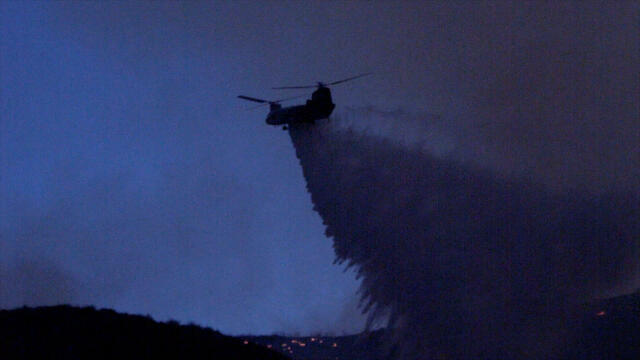
We have visual for probable unidentified drones.
BILL WHITAKER:
00:00:09
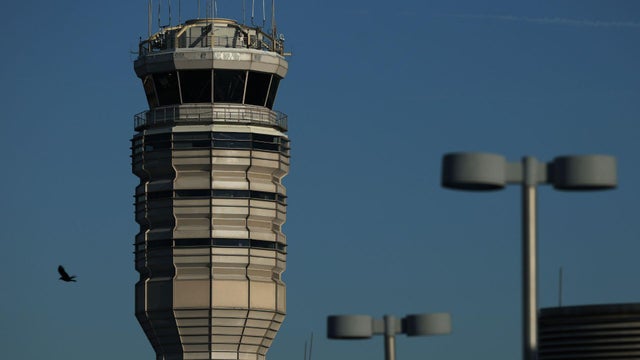
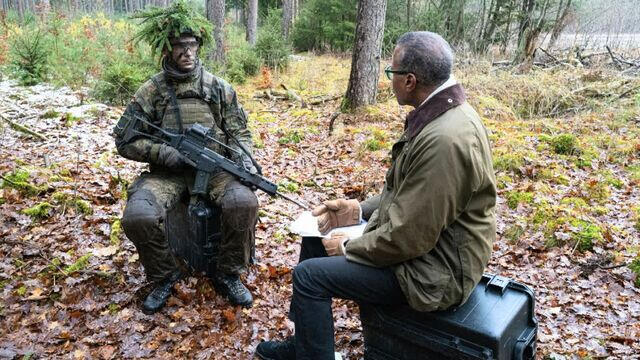
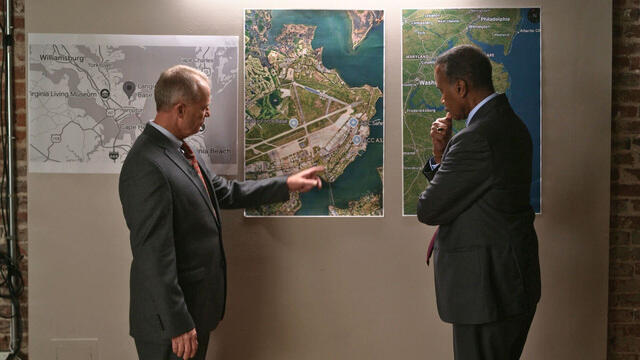
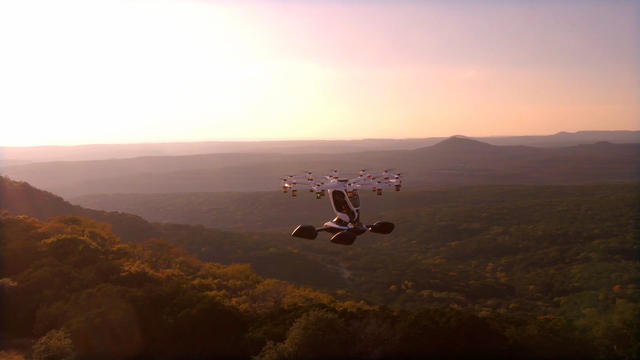
Tonight, 60Minutes investigates the mysterious drones that have been spotted flying over some of the most restricted military sites in the United States, including Langley Air Force Base, home to our most advanced fighter jets. Do you believe that these drones are a spying system, a spying platform? What would a logical person conclude? That. [CLOCK TICKING] The most dangerous animal in the world is man. Because other animals will hurt you, if they're hungry, or it's their nature of hunting, but man can turn into an animal in no time. All he needs is permission.
ANDERSON COOPER:
00:01:01
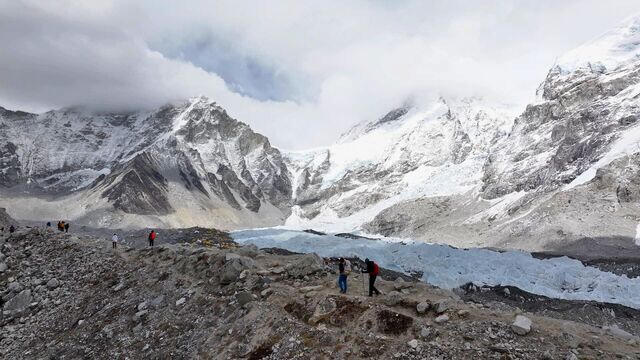
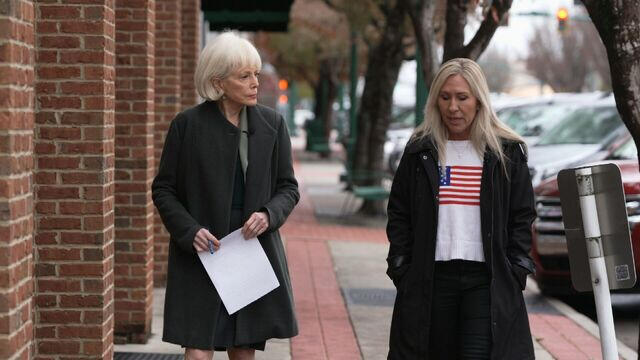
A unique new play with lessons from the past that pose a warning for today. To this image. [CLOCK TICKING] This one. This is a Tasmanian tiger or was a Tasmanian tiger. Most scientists believe the apex predator to be extinct. But like Bigfoot and the Loch Monster, plenty of people believe otherwise, that this tiger is still roaming this beautiful island. And then, all of a sudden, was there a mighty howl, like this. [HOWLS] [CLOCK TICKING] I'm Lesley Stahl. I'm Bill Whitaker, I'm Anderson Cooper. I'm Sharyn Alfonsi. I'm Jon Wertheim. I'm Cecilia Vega. I'm Scott Pelley. Those stories tonight on this special edition of 60Minutes. [CLOCK TICKING] The head of NORAD and NORTHCOM, the military commands that defend North America, told Congress earlier this year that some of those mysterious drones seen flying inside the United States may, indeed, have been spying. He did not say for whom. 60Minuteshas been looking into eerily similar incidents, going back more than five years, including those attention getting flyovers in New Jersey. In each, drones first appeared over restricted civilian or military sites, coming and going, often, literally, under the radar. As we first reported in March, the wake up call came just over a year ago, when drones invaded the skies above Langley Air Force Base in Virginia over 17 nights, forcing the relocation of our most advanced fighter jets. Our story starts with an eyewitness and an iPhone.

JONATHAN BUTNER:
00:02:52
Close to around 7 o'clock, I would say, I started seeing these reddish, orange flashing lights that were starting to come in from the Virginia Beach area. It began slowly, like one at a time.
BILL WHITAKER:
00:03:06
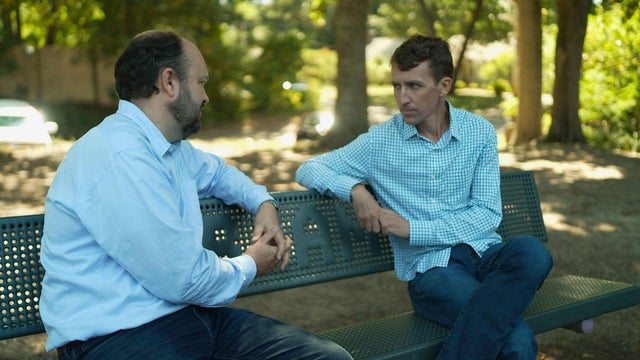
Jonathan Butner's close encounter with drones came on December 14, 2023. He was at his family's cabin on the James River in Virginia, about 100 miles South of Washington, DC, with a commanding view of several military installations across the water. They started really coming in almost like on a conveyor belt. How many in total? Well, I probably saw upwards of 40 plus. When I first saw that, I was like, those are going directly over Langley Air Force Base.
BILL WHITAKER:
00:03:39
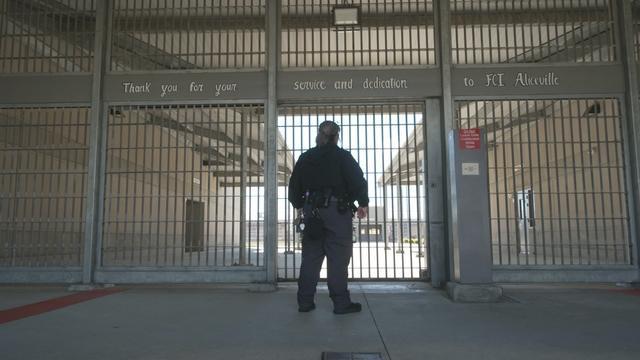
Langley is one of the most critical air bases on the East Coast, home to dozens of F-22 Raptors, the most advanced stealth fighter jets ever built. Butner says, from his perch, he has seen it all. I'm very familiar with all the different types of military craft. We have Blackhawks. We have the F-22s, and these were like nothing I've ever seen.
BILL WHITAKER:
00:04:05
Butner took these iPhone videos of the objects coming and going for nearly an hour and a half. These are the only public videos of the drones over Langley. Here's another one from each other.
JONATHAN BUTNER:
00:04:17
Yes.
BILL WHITAKER:
00:04:17
He shared this video with the FBI for its investigation. And another.
JONATHAN BUTNER:
00:04:22
Yes. The reports were coming in, 20 to 30 sightings, same time every evening, 30 to 45 minutes after sunset.
BILL WHITAKER:
00:04:30
Retired four-star General Mark Kelly was the highest ranking officer at Langley to witness the swarm. A veteran fighter pilot, Kelly went up to the roof of a squadron headquarters for an unobstructed view of the airborne invaders. So what did you see? Well, what you saw was different sizes of incursions of aircraft. You saw different altitudes, different air speeds. Some were rather loud. Some weren't near as loud. What was the smallest one? What was the largest one? The smallest, you're talking about a commercial-sized quadcopter, and then the largest ones are probably size, what I would call, a bass boat or a small car. The size a small car. Mhm.
BILL WHITAKER:
00:05:12
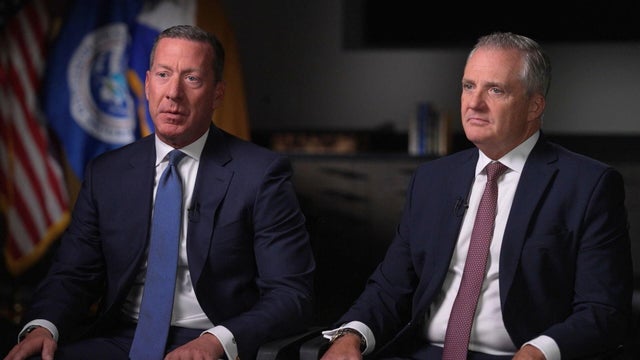
At the time, General Glen vanHerck was joint commander of NORAD and NORTHCOM, the military commands that protect North American airspace. He has since retired. I actually provided support in the form of fighters, airborne warning, and control platforms, helicopters to try to further categorize what those drones were at the time.
BILL WHITAKER:
00:05:36
10 months earlier, he ordered an F-22 from Langley to shoot down that Chinese spy balloon over the Atlantic after it had sailed across the US. But this time, he found himself ill-equipped to respond. NORAD's radar systems designed during the Cold War to detect high altitude air, space, or missile attacks, were unable to detect low flying drones that could be seen with the naked eye. Why don't we just shoot them down? Well, first, you have to have the capability to detect, track, identify, make sure it's not a civilian airplane flying around. If you can do that, Bill, then it becomes a safety issue for the American public. Firing missiles in our homeland is not taken lightly. We're not able to track them? We're not able to see where they originate? No, it's the capability gap. Certainly, they can come and go from any direction. The FBI is looking at potential options, but they don't have an answer right now.
BILL WHITAKER:
00:06:41
And there haven't been answers for similar encroachments for more than five years.
MAN:
00:06:46
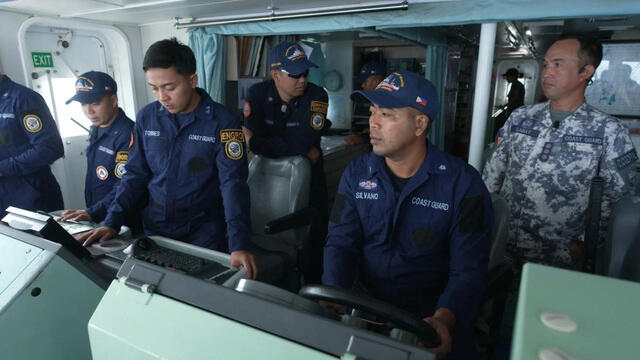
There are multiple UAS in vicinity of Paul Hamilton, CPA, 100 feet in altitude off the bow.
BILL WHITAKER:
00:06:51
In 2019, Naval warships, training off the California Coast were shadowed for weeks by dozens of drones.
MAN:
00:07:00
We have visual of four probable unidentified drones, with cause unknown and speed unknown.
BILL WHITAKER:
00:07:06
For years, the Pentagon did little to dispel speculation these images, taken with night vision equipment, were UFOs, but ships logs show they were identified as drones at the time, and the Navy suspected they came from this Hong Kong flagged freighter sailing nearby, but couldn't prove it. Since then, the defense news site, the war zone, has documented dozens of drone intrusions at sensitive infrastructure and military installations. In 2019, the Palo Verde nuclear plant in Arizona, the largest power producer in the country. In 2024, an experimental weapons site in Southern California, where defense contractors are building the next generation of stealth bombers. Last December, the army confirmed 11 drone sightings over the Picatinny Arsenal in Northern New Jersey, where advanced weapons are designed and built.
MAN:
00:08:03
What is that?
BILL WHITAKER:
00:08:05
Which ignited a public frenzy, with sightings of unidentified flying objects all over the region. New Jersey remains the epicenter of the drone mystery.
BILL WHITAKER:
00:08:15
While much of the country was fixated on New Jersey, another swarm of drones was disrupting operations at an air base in the UK, where US nuclear weapons have been stored. Clearly, there is a military intelligence aspect of this.
BILL WHITAKER:
00:08:32
Republican Senator Roger Wicker of Mississippi is chairman of the Armed Services Committee that oversees the Pentagon. We talked to him this past December. Do you believe that these drones are a spying system, a spying platform? What would a logical person conclude? That, these are spying incursions. And yet, I can tell you, I am privy to classified briefings at the highest level. I think the Pentagon and the National Security advisors are still mystified. Still mystified? Yes.
BILL WHITAKER:
00:09:15
More alarming, with drones overhead, some of the F-22S stationed at Langley were moved to a nearby air base for their own protection. There's a new wartime reality. Drones that can spy can also destroy. Deep inside Russia, advanced aircraft have been destroyed by Ukrainian drones. General vanHerck told us, drones could do the same thing here. I have seen video of drones in various sizes flying over the F-22 flight line at Langley. What's your reaction to that? They could drop ordnance on them, drop bombs on them. They could crash into them to disable them. Was that a concern? Absolutely, it's a concern. Small UAS or drones can do a myriad of missions.
BILL WHITAKER:
00:10:06
President Biden was informed of the Langley intrusions, and meetings were held at the White House to figure out how to bring the drones down. But after 17 nights, the drone visitation stopped. A senior official in the Biden White House later downplayed the incident to 60Minutes, saying it was likely the work of hobbyists. From what you saw, did you rule out that these might be hobbyists sending these drones up? No, it would be my assessment they weren't hobbyists because of the magnitude of the events, the sizes of some of the drones, and the duration. So what's going on? Well, I wish I had the answer. It certainly could have a foreign nexus, a threat, a nexus. They could be doing anything from surveilling critical infrastructure, just to the point of embarrassing us, from the fact that they can do this on a day-to-day basis, and they we're not able to do anything about it.
BILL WHITAKER:
00:11:06
In overseas war zones, the US military has broad authority to bring down menacing drones with gunfire, missiles, and electronic jamming. Here at home, any of those actions would pose a threat to civilians on the ground and in the air. Well, we certainly need new systems to counter this threat.
BILL WHITAKER:
00:11:28
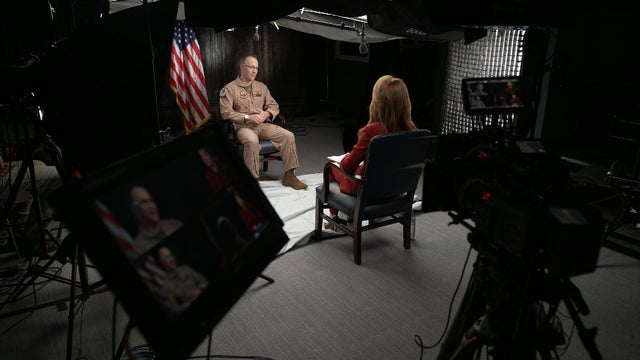
A year ago, General Gregory Guillot, a combat veteran, took control of NORAD and NORTHCOM. He ordered a 90 day assessment of operations and says the drones, or UAVs at Langley became the centerpiece. We're the most powerful military on the face of the Earth, and yet, drones could fly over a major Air Force base, and we couldn't stop them? How is that possible? Well, I think the threat got ahead of our ability to detect and track the threat. I think all eyes were rightfully overseas, where UAVs were being used one way attack to attack US and coalition service members. And the threat in the US probably caught us by surprise a little bit. As it stands today, could you detect a swarm of drones flying over or flying into the airspace at Langley? Could you detect that today? At low altitude, probably not with your standard FAA or surveillance radars.
BILL WHITAKER:
00:12:48
Complicating his efforts-- bureaucracy. When the drones flew outside the perimeter of Langley Air Force base, other agencies had jurisdiction-- the Coast Guard, FAA, FBI, and local police. There was no one agency in charge. So what did you determine went on at Langley? Well, that investigation is still ongoing, so I don't think we know entirely what happened. When we hear things from the White House, that it's not deemed a threat, it seems to me that this is alarming. I mean, this is hair on fire time. It is alarming, and I would say that our hair is on fire, here in NORTHCOM in a controlled way, and we're moving out extremely quickly.
BILL WHITAKER:
00:13:38
This past November, General Guillot was given the authority to cut through the Red Take And coordinate counter-drone efforts across multiple government agencies. He says, new, more sensitive radar systems are being installed at strategic bases, and NORTHCOM is developing what it calls flyaway kits, with the latest anti-drone technology to be delivered to bases besieged by drones. My goal is inside of a year that we would have the flyaway capability to augment the services and the installations, if they're necessary. So within a year, were Langley to happen again, there'd be some ability to respond? That's my goal.
BILL WHITAKER:
00:14:23
His predecessor, Glenn vanHerck says the Pentagon, White House, and Congress have underestimated this massive vulnerability for far too long. It's been one year since Langley had their drone incursion, and we don't have the policies and laws in place to deal with this. That's not a sense of urgency. Why do you think that is? I think it's because there's a perception that this is fortress America, two oceans on the east and west, with friendly nations north and south, and nobody's going to attack our homeland. It's time we move beyond that assumption. [CLOCK TICKING]
ANNOUNCER:
00:15:07
Why it is so hard to stop drone incursions? There are gaps in capability. There are gaps in policy.
ANNOUNCER:
00:15:15
At 60minutesovertime.com. By the time a new play opened last spring off Broadway by acclaimed writer and director Moises Kaufman, it had already been nominated for a Pulitzer Prize. It's based on the true story of a photo album from Auschwitz that was sent to the United States Holocaust Memorial Museum in Washington, DC, in 2007. Museum historians weren't sure what to make of it at first, but the album turned out to be the scrapbook of a Nazi, an SS officer who helped run the day-to-day operations of Auschwitz, where about 1.1 million people, mostly Jews, were murdered between 1940 and 1945. As we first reported last May, the album doesn't show any prisoners or gas chambers. What it does show are some of the most notorious killers in history, seemingly enjoying themselves. That's what museum officials found so chilling, and what Moises Kaufman spent 14 years creating a play about. When I first saw the photographs, I got goosebumps. And I remember thinking, many of the people in my family died in Auschwitz, and these are the people who were doing it. And they don't seem to have any remorse. Seeing that in a photograph so clearly articulated is terrifying. This is terrifying because they all look so much like us.
ANDERSON COOPER:
00:16:42
The photographs may appear unremarkable at first-- SS officers at dinner parties, drinking, socializing, flirting with their young Nazi secretaries. But when these pictures were taken, the Germans were losing the war, and exterminating more Jews in Auschwitz than at any other time in the Holocaust. Several images show an SS officer giving his secretaries blueberries, while a man plays an accordion. The inscription reads, here, there are blueberries. Moises Kaufman picked that for the title of his play.
MOISES KAUFMAN:
00:17:15
I wanted the audience to have the experience that we had, looking at the photographs. What was it about the series of the women eating blueberries that so struck you? That they were just teenage girls, who were secretaries. Everyone is showing the photographer their empty plates. But there's one of the women who's pretend crying, so she's so sad, because she's run out of blueberries. And outside of the frame, there's 1.1 million people, who are being killed. So how do you lead your daily life, and at the same time, participate in one of the largest killing machines in the history of mankind? The caption says rain from a clear sky. [EXPLOSION]
ANDERSON COOPER:
00:18:09
Kaufman's play is centered on the museum historians, who worked with survivors and even descendants of Nazis themselves to uncover what the album was. The images appear to be straight out of a holiday scrapbook.
ANDERSON COOPER:
00:18:22
No one had ever seen images like these before. There are few photos of Auschwitz because the Nazis worked hard to conceal their crimes. I count 116 photographs.
ANDERSON COOPER:
00:18:33
Kaufman's main character is Rebecca Erbelding, a historian at the Holocaust museum, played by actor Elizabeth Stollman. This is when the album becomes an obsession for me.
ANDERSON COOPER:
00:18:46
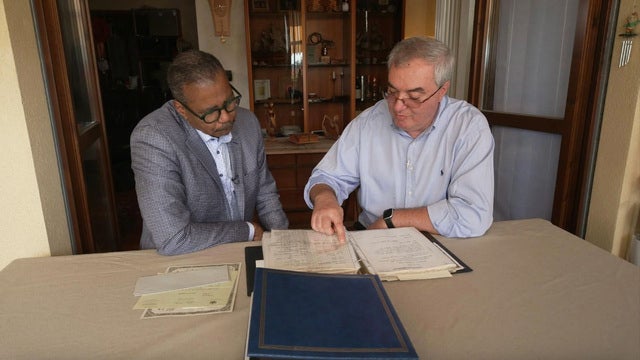
The real Rebecca Erbelding received the album from a former US counterintelligence officer. He said he found it in 1946, in an abandoned apartment in war torn Frankfurt, while hunting down Nazi war criminals. He donated it to the museum but wanted to remain anonymous. How did you go about finding out who made this? I didn't see any trains. I didn't see anything I recognized. It was maybe the third time flipping through it, and that's when I saw Josef Mengele.
ANDERSON COOPER:
00:19:14
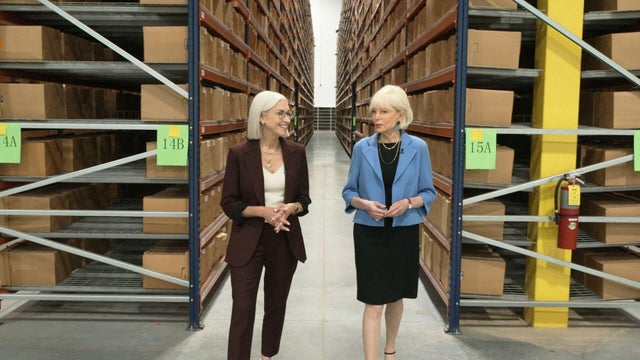
No pictures of Dr. Josef Mengele in Auschwitz had ever been found before. To see the album, we went to a high security, climate-controlled facility in Maryland, where the original pages are stored. That's Dr. Mengele. That's Mengele, and these are still the only known photos of Mengele while he was stationed at the camp.
ANDERSON COOPER:
00:19:33
Mengele was known by prisoners at Auschwitz as the angel of death. He conducted gruesome medical experiments, mostly on children, and often, stood on the platform when trains arrived, selecting who would be sent to work and who would die immediately in gas chambers.
REBECCA ERBELDING:
00:19:50
Not only is it Mengele, these are some of the most infamous officers at the camp. So you see, there's Beyer.
ANDERSON COOPER:
00:19:56
Richard Beyer is on the album's first page. He was the last commandant of Auschwitz. That helped historians identify his deputy, Karl Hocker. And it turned out, this was Hocker's personal album, his cherished memories behind the scenes of a massacre. May 1944, is when Hocker got to Auschwitz. Yes. So this is the entirety of his time at Auschwitz.
ANDERSON COOPER:
00:20:19
Before the war, Hocker had been a struggling bank teller. Becoming an SS officer at Auschwitz was considered a big step up.
REBECCA ERBELDING:
00:20:26
He had been staffed at the Majdanek Camp before this, and so he had experience with prisoners arriving, with selections, with gas chambers. He signed receipts for Zyklon B, the lethal gas that was used for killing people. He is a crucial cog in the Nazi killing machine.
ANDERSON COOPER:
00:20:44
The 116 photos in the album show Auschwitz as Karl Hocker wanted to remember it. Wow. It's a mix of candid things and, really, officials. This is his dog. His dog's name is Favorite. I mean, what's so stunning about them is how-- Normal? Yeah. I mean, who hasn't taken a photo of them shaking their dog's hand?
REBECCA ERBELDING:
00:21:05
Mhm so this is Yule Fire, 1944, which is Nazi Christmas. They know that the Soviets are coming. They are not far. They can probably hear the bombs. They're lighting--
ANDERSON COOPER:
00:21:15
They are lighting Christmas trees.
REBECCA ERBELDING:
00:21:16
Yeah.
ANDERSON COOPER:
00:21:16
The album reveals something else museum officials hadn't seen before. The Nazis built a vacation resort at Auschwitz. It was called Solahütte. These pictures show a gathering of top SS officers there in July 1944. Rebecca Erbelding believes it was a party. They were congratulating themselves for successfully murdering more than 350,000 Hungarian Jews in just 55 days. This looks like they're singing. They are. And this front row is really what the director of the museum, Sarah Bloomfield, calls the chorus of criminals. So you have Hocker. You have Otto Moll, the head of the gas chamber section. There's Rudolf Hoss.
ANDERSON COOPER:
00:21:57
The former commandant of Auschwitz.
REBECCA ERBELDING:
00:21:58
The former commandant of Auschwitz. Mengele is here.
ANDERSON COOPER:
00:22:01
They're celebrating the successful slaughter. The successful mass murder, yeah. It was somebody labeled it a metropolis of death, and that's what it was. It worked like an assembly line factory.
ANDERSON COOPER:
00:22:17
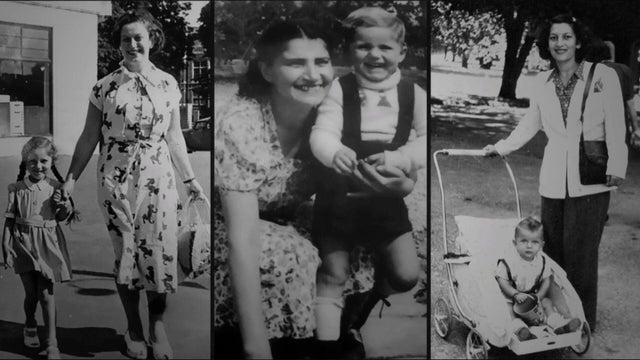
Irene Weis got to Auschwitz, the day after Karl Hocker started working there. She arrived when she was 13, on a train packed with Jews from Hungary. Separated from her parents and four of her siblings, she says she found herself on the platform, holding her younger sister, Edith's hand, as they approached Dr. Mengele. And everything was a matter of seconds, that stick came down between us. He held life and death with that stick. All of a sudden, I was alone.
ANDERSON COOPER:
00:22:49
She didn't know it at the time, but that moment was captured by a Nazi photographer, documenting the arrival and processing of Hungarian Jews. It appears in one of the only other albums of Auschwitz. This photo has been colorized. This is the group already going to the gas chamber.
ANDERSON COOPER:
00:23:06
Where are you in this picture?
IRENE WEISS:
00:23:08
Well, I am right here.
ANDERSON COOPER:
00:23:10
This is you.
IRENE WEISS:
00:23:11
That's me, right here.
ANDERSON COOPER:
00:23:12
So this is the moment after you've been separated from your little sister, Edith.
IRENE WEISS:
00:23:15
The very moment, yes. That's what I'm looking at. I can't leave. I left her.
ANDERSON COOPER:
00:23:21
Irene Weis never saw Edith, her parents, or her brothers alive again. What she has is this photo. That's her mother, Leah, sitting on the ground, just behind her brothers, Gershon and Rubin, at Auschwitz. After this picture was taken, they were led into a gas chamber.
IRENE WEISS:
00:23:39
They had to kill the children so they will not be a new generation, and they discovered that if they also killed the mothers, then they didn't have to worry about the chaos that would create, separating. The children wouldn't be upset by being separated. And the mothers wouldn't be upset.
ANDERSON COOPER:
00:23:59
Weiss spent the next eight months working outside one of those gas chambers. She sorted shoes and other belongings of the dead. We saw these columns of women, mothers and children, and going into the door, they're talking to us, and they're told they're walking into a bathhouse. They're asking questions, where are you from? And a half hour later, the chimneys belching fire. And that went on day after day and night after night. So you saw thousands of women, children walking into gas chambers. Absolutely. And you talked to some of them? Absolutely. In the last seconds of their life, minutes of their lives? Yes, but we couldn't cry. It was an amazing thing. This is beyond crying. Tears are for normal pain. That kind of brutality from fellow mankind is so deep that people say broken heart, the heart keeps working, but the soul never forgets.
ANDERSON COOPER:
00:25:15
Irene Weiss wasn't surprised by the photos in Karl Hocker's album, but when they were released publicly, they made headlines around the world. Tilman Taube read about them online in Germany while on his lunch break. And there was an article, new photos from Auschwitz have appeared. I thought, this is interesting.
ANDERSON COOPER:
00:25:34
When he looked at the photos, he was surprised to see his grandfather, Dr. Heinz Baumkotter.
TILMAN TAUBE:
00:25:40
On the first picture, it wasn't 100% clear, but then, I flipped two more pictures, and it was absolutely 100% clear that was him.
ANDERSON COOPER:
00:25:47
Taube knew his grandfather was head physician at Sachsenhausen concentration camp and had done medical experiments on prisoners and sent thousands to be killed at other camps. But Taube wasn't sure why his grandfather had gone to Auschwitz. He connected with Rebecca Erbelding and soon discovered just how deeply involved his grandfather was in the Holocaust. When you see the picture of your grandfather, I mean, does that feel like your grandfather? For me, strictly speaking, it's two different persons. The grandfather that I knew was a rather normal grandfather. And the SS officer is a different person for me. It's impossible to reconcile the two. It is difficult-- difficult. Really? Taube now helps the museum search for more photos and documents by reaching out to other descendants of Nazis. Of course, you want to be part of some kind of movement, that helps preventing things like that from happening again. You know your grandfather, and you know what he did. Does it make you think differently about human beings, what we are all capable of? Absolutely, absolutely. How could highly educated physicians, people whose entire professional purpose was to heal, become systematic killers?
ANDERSON COOPER:
00:26:58
The play about the Hocker album by Moises Kaufman and Amanda Gronich, his co-writer and longtime collaborator, raises difficult questions, not just about our past, but about ourselves. When we look at these pictures, we're looking through the lens of how they saw what they were doing. Why is it important to see Auschwitz through their eyes? Because they didn't wake up each morning thinking, I'm an evil monster. I'm going to do evil, monstrous things. They woke up each day, and they went about their lives, filled with justifications and beliefs in what they were doing. It makes all of us ask the question, well, what am I capable of doing? I think that's what's happening. When the audience comes in, they sit here and they go, who would I have been in that picture? The most dangerous animal in the world is man. Because other animals will hurt you if they're hungry, or it's their nature of hunting, but man can turn into an animal in no time. All he needs is permission. As soon as permission is given from higher ups, from government, it accelerates. Even a hint of permission that it's OK to attack this group or exclude this group or shame that group, it's happening. It's never stopped. Irene Weiss, now 94, has continued to share her story as a volunteer at the United States Holocaust Memorial Museum. Here, There areBlueberries has been performed in cities across the US, and the play will open in London in January. There's the Loch Monster in Scotland, and in the Himalayas, there's the Yeti, the Abominable Snowman. In Tasmania, a teardrop of an island under the eye of the Australian mainland, there's the thylacine, a creature, as we first reported last year, that brings out folklore and folks, armed with grainy images, convinced they've seen the thing. But unlike other mythical creatures, the thylacine or Tasmanian tiger actually, indisputably existed, an apex predator the size of a small wolf that roamed the island as recently as last century, which gives hope to so many obsessive dreamers and true believers looking for the Tasmanian tiger in the Bush, and as you'll see in the lab. This is a story that says as much about human nature, as it does nature-nature, further proof that even in the face of science and logic, passion survives in the wild just fine. You've been doing this how many years now? I've been doing this for over 30 years, and every day is an adventure. All right, here we go.
JON WERTHEIM:
00:30:04
Getting there wasn't easy, but Adrian "Richo" Richardson, a retired military man turned self-declared tiger seeker, retraced his steps. Tramping around the dense Outback of Tasmania, on January 28, 2017, 12:45 PM, he heard the sound. And then, all of a sudden, was this a mighty howl like this. [HOWLS] I was gobsmacked. The hairs on my arm and my neck stood on end. And as that call finished, another one came from the other side of the forestry track, another howl like that. What did that one sound like? Exactly like [HOWLS].
JON WERTHEIM:
00:30:47
Richo craned his neck, but saw no creature. Still, he's sure of what it was-- a Tasmanian tiger. The whole environment went quiet for about a minute. It was unbelievable feeling. I just can't explain it. Yeah, you're still emotional talking about this. Look, I'm going to remember that call until the time I die. And then I had to try and prove to others what I've heard.
JON WERTHEIM:
00:31:13
When he returned to his home in Hobart, Tasmania's capital, he didn't go down to the pub to share his account. No, he took to his desk and stayed up writing a detailed report, flushed with 22 footnotes. What my passion is, it's the thylacine. I know it's there. And this only reinforced your faith? Oh, without a doubt.
JON WERTHEIM:
00:31:35
One slight hitch, one crimp on the Barbie as it were. The creature Richo describes so vividly and breathlessly, it was declared extinct almost 40 years ago.
JON WERTHEIM:
00:31:46
You thought, maybe it's a dingo, maybe it's a wolf? In Tasmania, we do not have anything remotely like it. We do not even have wild dogs in any form. The only thing we have around here is deer or cats. I don't think deers are making that noise you just made. No, sir, they did not.
JON WERTHEIM:
00:32:06
The Tasmanian tiger roamed these parts for thousands of years. More wolf than tiger, it was, is a marsupial weighing about 55 pounds.
MAN:
00:32:16
The Tasmanian tiger, easily distinguished by his straight unjointed tail.
JON WERTHEIM:
00:32:21
It was also a carnivore that preyed on farmers sheep, recalling the fate of the wolf of the American West around the same time, the local government paid out bounties to hunters presenting carcasses. By the mid 1930s, the Tassie tiger population had dwindled to one, captive at Hobart's Beaumaris Zoo, where it died in 1936. With the required 50 years elapsing, without a confirmed sighting, the tiger was put on the extinct list in 1986, yet putting the mania in Tasmania, the search became a national obsession. And the Tasmanian tiger, not the Tasmanian devil, became a sort of local mascot. Its image adorns Tasmania's coat of arms and government buildings. Here's the island's current license plate. At local watering holes, the regulars put down their Tassie tiger beer, long enough to tell you they've seen the animal, or know someone who has. I stood there and held the torch on it for 40 seconds, I reckon.
JON WERTHEIM:
00:33:21
When Nick Mooney was a full-time Hobart biologist, it fell to him to investigate the various Tasmanian tiger accounts. Now, in retirement, he's the island's unofficial arbiter. I know several people who've got clusters of cameras in very remote areas, serviced remotely by satellite, and who go and check on the cameras with their own helicopter, all sorts of things. They moved way beyond the guy with binoculars saying, I think I may have seen something. Oh, absolutely.
JON WERTHEIM:
00:33:54
He can't help notice, no one ever quite captures a clear image. Still, reported sightings come by the thousands.
JON WERTHEIM:
00:34:03
Have you ever gotten a report or ever looked into something that gave you a little pause? Yes, sometimes, people are dead accurate with the times, the places, the distances, and the very good naturalists, often, don't exaggerate, like they take their skills very seriously. And it's very hard to say to those people, I don't think you saw a thylacine.
JON WERTHEIM:
00:34:29
For the devoted army of seekers, the investment isn't just one of hope and time. Each year, Richo spends more than he cares to admit dollars on trail cam batteries alone. How much money have you sunk into this succession? Sir, I wouldn't like to speculate. And please don't tell my wife. We'll make it our secret. That's our secret. She often asks, and I go, go and get your hair done, darling. Yeah. Can I stop that one? Can I stop that one? Can you redo that one again?
JON WERTHEIM:
00:35:03
In the bush, we met another enthusiast, Chris Rehberg, who flies down from mainland Australia and approaches the search in the manner of a CSI detective. Apart from the cameras, I gather you've been scouring for prints, fur, even poo?
CHRIS REHBERG:
00:35:19
Yeah, everything. Scats footprints is a big one, and I found a series of 18, 19 Individual steps in a track line that are an excellent match for Tassie tiger. Not only are they an excellent match, the quality of the prints is pristine. Scats keep an eye out, check it out, what's the animal been eating? Yeah. And calls if you hear them.

JON WERTHEIM:
00:35:40
There are even tracking collectives. Richo was part of the booth Richardson Tiger Team. Thank you for joining us on what we believe is a historic day.
JON WERTHEIM:
00:35:51
Which made worldwide news in 2017 after calling a press conference to announce a sighting. But when they provided this image as proof, Nick Mooney assessed it as a chance, but not an official confirmation. What is the middle ground? You can be right? You can be lying, or-- You can have an illusion, and there's all sorts of ways that memory can be affected by time. I've had lots of talks with psychiatrists and detectives, trying to figure out this. You really often have to make a choice, a personal call in the end. To essentially tell them they're wrong, and their mind is deceiving them. Oh, you can't tell them that because you don't know. Essentially, if you weren't there, you don't know.
JON WERTHEIM:
00:36:35
Richo and all the other seekers won't have to wait long. They won't even have to go into the bush, if a group of tech investors and biologists deliver on their goal. Andrew Pask counts himself among the Tassie tiger transfixed. He comes to the quest, though, armed, not with binoculars, but a microscope in his tiger lab.
JON WERTHEIM:
00:36:54
Envision that day when you're not just wearing it on a pin. Yeah, 100%. I think about it all the time, what it would be like to be in that landscape, and just to see one walking past in the bush, an actual one, rather than a crappy photograph. Tell us exactly what you're doing. We can't magically bring the Tasmanian Tiger back. We have to start with a living cell and then engineer our thylacine back into existence. So the way you do that is, you find the closest living relative to your animal that has gone extinct. And for us, that is a small marsupial species called the fat tailed dunnart.
JON WERTHEIM:
00:37:30
A developmental biologist at the University of Melbourne, Pask has raised $15 million for a de-extinction project that recalls JurassicPark,in partnership with American company, Colossal Biosciences, which counts, wait for it, Leonardo DiCaprio, Paris Hilton, and even the CIA among its backers. He's adamant he'll replicate the genome of a dunnart, a mouse-like marsupial, and turn it into a much larger Tassie tiger. We'll let him explain. We examine all of its DNA. We compare that to the DNA of your extinct species, the Tasmanian tiger, and we look at everywhere that those two genomes or those two piles of DNA, if you like, are different. And once you've identified those differences. It's just a matter of then going in and making all of those edits to turn your fat-tailed dunnart genome or cell into a thylacine cell. And you're saying, that dunnart, that little field mouse, marsupial dunnart is closer than, say, the Tasmanian devil? But that little dunnart is a ferocious carnivore, even though it's very, very small. And it's a very good surrogate for us to be able to do all of this editing in.

JON WERTHEIM:
00:38:40
A native of Minnesota, Chris Helgen was director of the Australian Museum Research Institute in Sydney. He understands the push to de-extinct the Tassie tiger. This is one of my favorite mammals. Really? And I love all mammals. I am a mammal guy. This is a special, special animal.

JON WERTHEIM:
00:39:00
He took us upstairs to his lab to show us why. So this is Tasmanian tiger of the 19th century.
CHRIS HELGEN:
00:39:08
See the stripes? See the thick tail? See this gaping mouth with the sharp teeth? What do you make of this de-extinction effort with respect to the Tasmanian tiger? I would be the first person to line up, to see this animal, if it could be somehow brought back from extinction.
JON WERTHEIM:
00:39:26
That said, Helgen is the skeptic, gently explaining that wishing Tassie tigers were running rampant doesn't overcome science.
CHRIS HELGEN:
00:39:34
The idea that you could actually tweak the DNA of this mouse-sized animal into making this apex predator of Australia, it stretches imagination in many different ways. This is an impossible project. We all love optimism. We all love innovation. What they're saying is we're going to modify the genome of a dunnart to create a genetically-modified dunnart that might look a bit more like a thylacine. Maybe we'll be able to tweak it, genetically, and it gets a bit bigger. Maybe we'll be able to tweak it genetically, and it has some stripes on it. But there's about 1,001 steps in between.

JON WERTHEIM:
00:40:14
Helgen has thought about the source of the current Tassie tiger passion and wonders how much of it is driven by remorse.
CHRIS HELGEN:
00:40:22
It's a special symbol about Australia and about what we've lost. We've had a lot of extinctions here. In the last 100, 200 years, 30 mammals alone. So in the United States, only one or two mammal species have disappeared entirely. So why are people taking this seriously? And why are people investing so much in this? So many people have the dream-- if we could just get this animal back. Maybe it would help us think different about extinction or the guilt that we might feel of having removed such a special animal from the planet, whether they imagine it might be still hiding in Tasmania or in a lab to be reborn, there's this burning hope.
JON WERTHEIM:
00:41:06
Richo reckons that if his countrymen in the DNA sequencing labs can resurrect a Tassie tiger, good on them. But regardless, he'll continue coming here. Faith unshaken, he's certain this animal, most famous for being extinct, is not extinct at all. If someone accused you of being obsessed, would you plead guilty? Oh, sir, I'll put my hand up to that. Your Honor, I am guilty. You're a Tasmanian tiger obsessive. I am, indeed. It's been my love. Why is that? Why have you continued to search so long for this? I just know it's there. I do. In my own heart, I know it's there.
JON WERTHEIM:
00:41:46
And if it isn't there, well, we say, what's the harm in searching? Coming to the planet sub-basement, bush bashing this gorgeous terrain, there are worse ways and places to spend your days. [CLOCK TICKING] I'm Anderson Cooper. We'll be back next week with another edition of 60Minutes.
ANNOUNCER:
00:42:18
Go to the ends of the Earth. We'll hit the heights. [VOCALIZING] A great adventure together.
ANNOUNCER:
00:42:24
And reach for the stars. Star power. I like it. So cool. But wait, there's more.


ANNOUNCER:
00:42:29
Experience thought provoking-- Something that's undeniable. With mindfulness.
ANNOUNCER:
00:42:34
--innovative-- Magical. It's like being a child.
ANNOUNCER:
00:42:37
--and truly original reporting. God, you do your research. I tell a good story.
ANNOUNCER:
00:42:41
Because there's always something new under the sun on CBS SundayMorning.
MAN:
00:42:48
The all new CBS EveningNews.
REPORTER:
00:42:51
Ley is facing up to $1 million in tariff payments this year alone.
ANCHOR:
00:42:56
Jo Ling, is Ley going to be able to keep her workers under these conditions?
EMILY LEY:
00:42:59
We don't have the same options as large businesses. Can your business survive this? If this is the end of my American dream, I'm going to go down swinging.