Watch CBS News

8/10/2025: The Cap Arcona; Jamie Lee Curtis

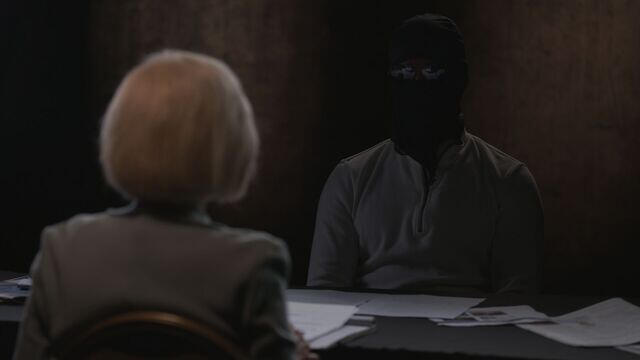
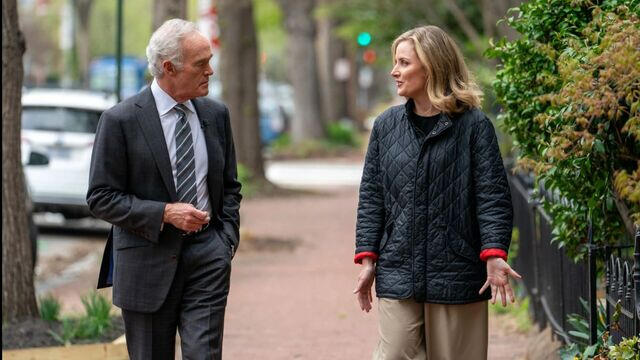
First, a report on the sinking of the Cap Arcona Nazi ship. And, Jamie Lee Curtis: The 60 Minutes Interview.
Aug 11, 2025 (41:36)

TRANSCRIPT FOR: “8/10/2025: THE CAP ARCONA; JAMIE LEE CURTIS”

BILL NIVEN:
00:00:10

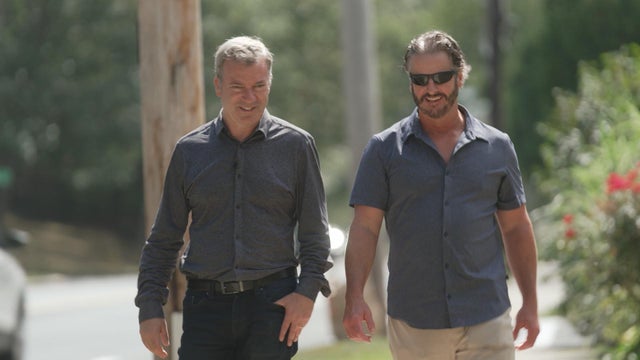
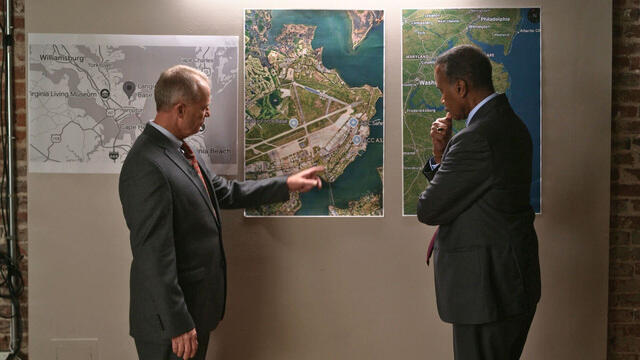
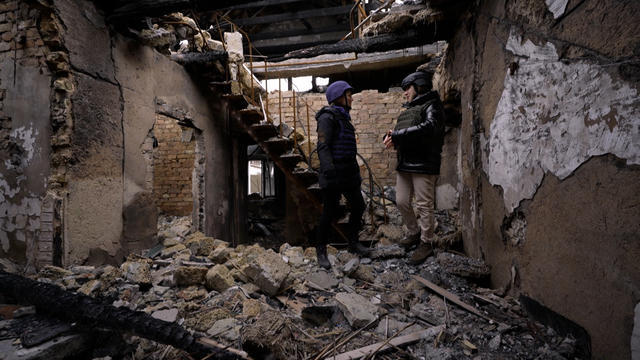
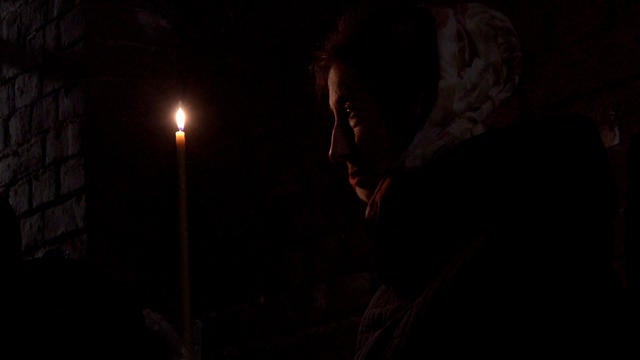
It had its own tennis court. It had a heated swimming pool. It had the most wonderful restaurant, where you could look out onto the sea. The most wonderful first-class cabins. It was a luxury cruise ship. It was a luxury cruise liner. Absolutely was. BILL WHITAKER (VOICEOVER): But during World War II, the Nazis turned the CapArcona into a floating concentration camp. Just days before liberation, the ship was bombed, killing thousands on board. Why was it targeted and who sent the warplanes? The answers might surprise you. [CLOCK TICKING] LAURIE (ON PHONE): Annie? SHARYN ALFONSI (VOICEOVER): Four decades after she cemented her place in Hollywood with the horror movie Halloween,Jamie Lee Curtis is savoring a new wave of award-winning performances, playing a string of raw, volatile characters that suck the oxygen out of the room.

SHARYN ALFONSI:
00:01:01

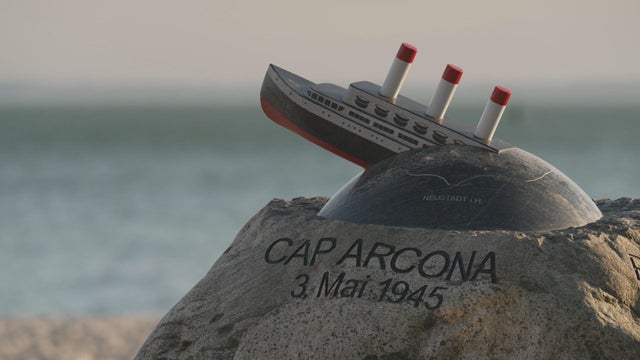
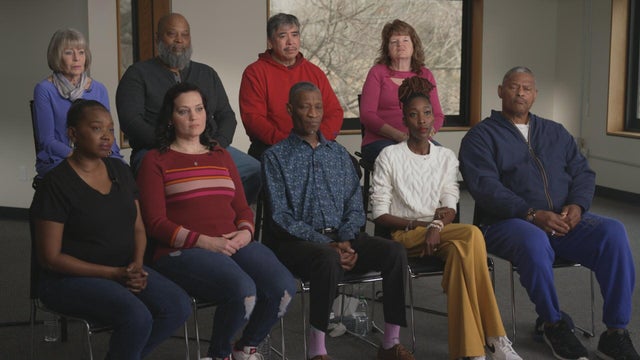
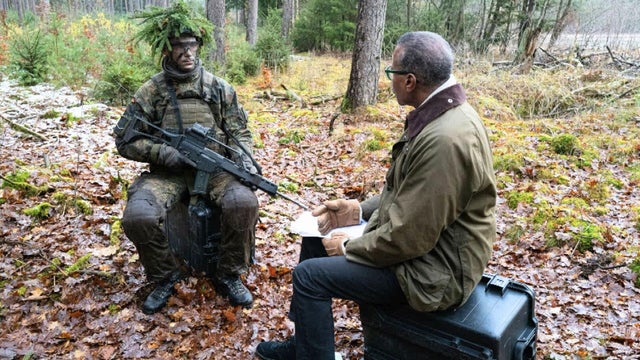
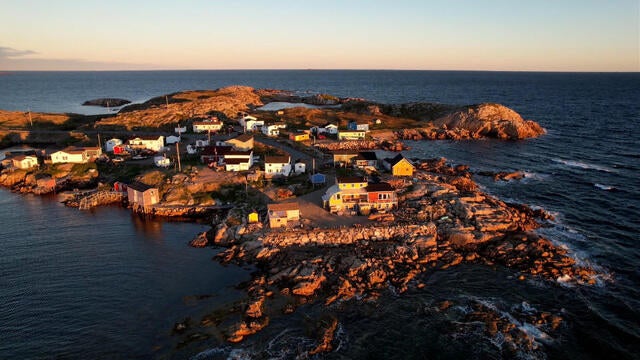
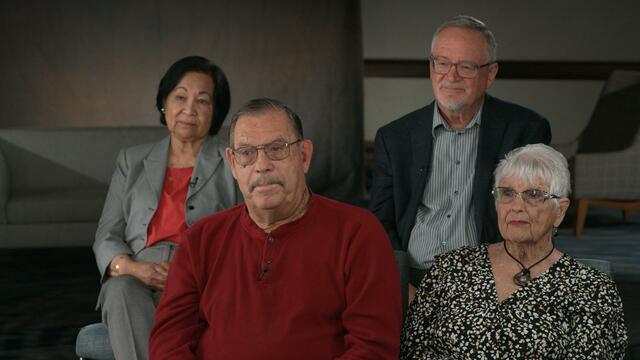
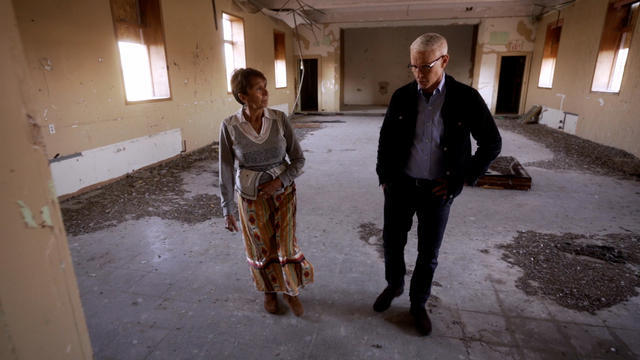
Donna, the images in my mind of her buttering the bread with the nails and the eyelash on the cheek. The eyelash. That single eyelash, I think, won me an Emmy. I swear to God. Go. Go sit. [CLOCK TICKING] I'm Lesley Stahl. I'm Bill Whitaker. I'm Anderson Cooper. I'm Sharyn Alfonsi. I'm Jon Wertheim. I'm Cecilia Vega. I'm Scott Pelley. Those stories tonight on 60Minutes. [CLOCK TICKING] Everyone knows the story of the Titanic, the opulent British ocean liner that struck an iceberg and sank. But it's likely you have never heard of the CapArcona,a German version ofthe Titanic. Before World War II, the vessel was a cruise ship for the well-to-do. By the end of the war, the Nazis had transformed it into a floating concentration camp. Packed with prisoners, the CapArcona was anchored in Lübeck Bay in the Baltic Sea when an aerial attack, just hours before liberation, killed nearly everyone on board. As we first reported in October, the ship's improbable journey from luxury liner to death trap is one of the most horrific and little-known war stories we have encountered. BILL WHITAKER (VOICEOVER): On sunlit days, Germany's Baltic coast looks idyllic, but this beauty masks an unthinkable horror, one that's etched in the local memory and on this beachside marker bearing the name CapArconaand the German words for fear, panic, and grief. It's so calm, so peaceful. And yet out there is a graveyard. You can come to a place like this and just feel the weight of the history. BILL WHITAKER (VOICEOVER): British historian Bill Niven has spent much of his career studying the Holocaust. We met him at Lübeck Bay, where the memory of the CapArcona and a smaller cargo ship bombed on May 3, 1945, still haunts this shore. What is this place? This is a memorial, an honorary memorial, to the victims of the two ships that went down, with a loss of some 7,000 lives. It recalls all the nationalities that were victims of the sinking of the ships.

BILL WHITAKER:
00:03:24

There were Americans on the ships?

BILL NIVEN:
00:03:26

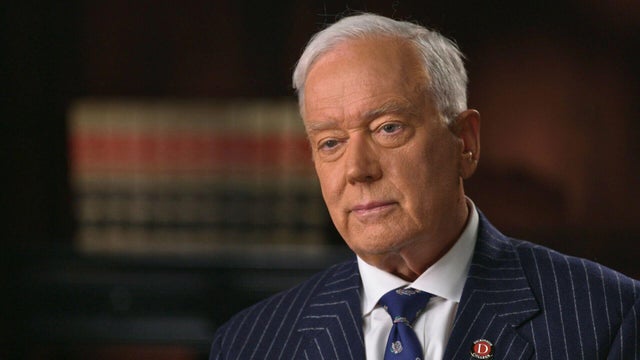
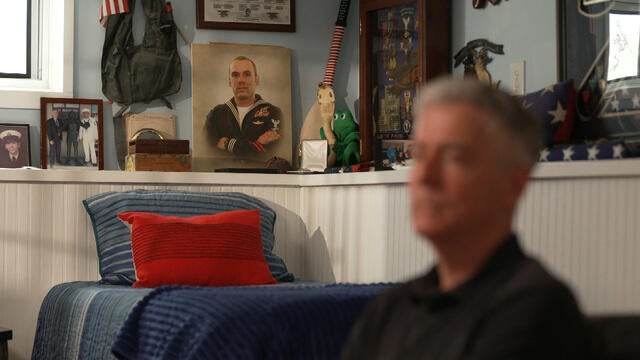
Yes. There were Greeks. There were Italians, and the Jewish people, of course, represented here by the Star of David. BILL WHITAKER (VOICEOVER): Most of the victims were on the CapArcona. [NON-ENGLISH SINGING] BILL WHITAKER (VOICEOVER): Every year on the anniversary of the attack, a somber ceremony is held at this site to remember those who perished and those who suffered. BRUNO NEURATH-WILSON: My father was one of the survivors of the sinking of the CapArcona. BILL WHITAKER (VOICEOVER): Bruno Neurath-Wilson came to honor his father, Willi, a political prisoner held on the CapArcona. Only about 400 prisoners survived the attack, including Bruno's father.

BILL WHITAKER:
00:04:08

What's it like for you to be in this place? When we go to the place where the CapArconasank, I try to imagine what happened. I really cannot imagine what happened on the ship. BILL WHITAKER (VOICEOVER): No one could have imagined this end for the CapArcona. Launched with great fanfare in 1927, the ship became known as the "Queen of the Atlantic," transporting well-heeled passengers from Europe to South America in two weeks.

BILL WHITAKER:
00:04:39

What was it like in its heyday? Well, it was one of the most beautiful ships the Germans had. It had its own tennis court. It had a heated swimming pool. It had the most wonderful restaurant, where you could look out onto the sea. The most wonderful first-class cabins.

BILL WHITAKER:
00:04:53

It was a luxury cruise ship.

BILL NIVEN:
00:04:54

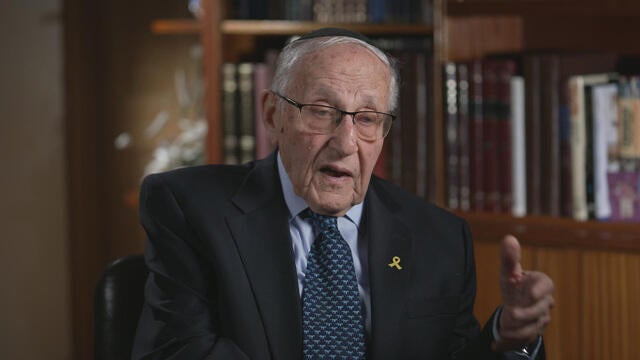
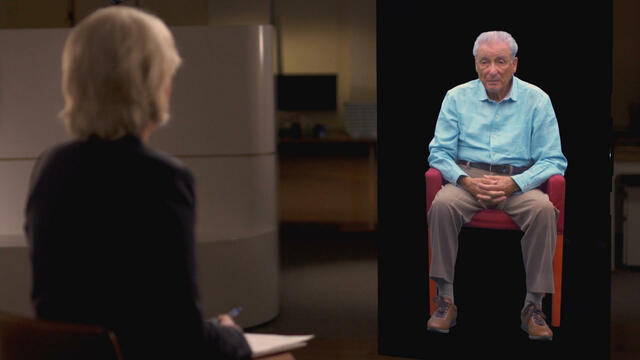
It was a luxury cruise liner. Absolutely was. BILL WHITAKER (VOICEOVER): The CapArcona traversed the Atlantic dozens of times, but in 1933, Germany underwent a sea change. [GERMAN] [SOLDIERS SHOUT] BILL WHITAKER (VOICEOVER): Adolf Hitler came to power. [EXPLOSION] In 1939, as German troops invaded Poland, the Nazis commandeered the CapArcona to serve as a floating barracks in the Baltic. Ironically, on one of its last trips before the war, the ocean liner carried some German Jewish passengers who had bought tickets to safety in South America. But most Jews had no way to escape. We were rounded up and sent to the concentration camp, just the three of us, my mother, I, and my younger brother. BILL WHITAKER (VOICEOVER): 95-year-old Manfred Goldberg was just 11 when the Nazis forcibly removed him and other Jews from his hometown of Kassel in central Germany. The cruel experiences during my young years, between 11 and 15, they're firmly lodged clearly in my mind to this day. BILL WHITAKER (VOICEOVER): He would survive confinement in the Riga, Latvia ghetto and four different concentration camps.

MANFRED GOLDBERG:
00:06:15

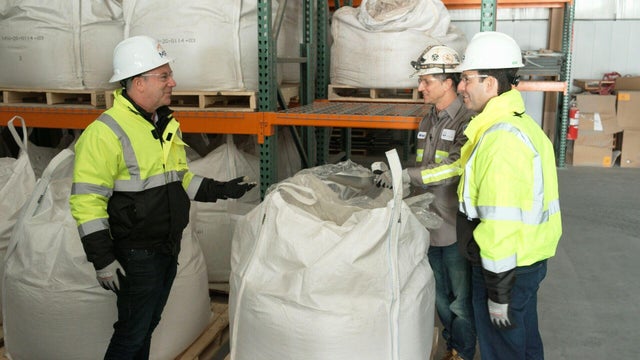
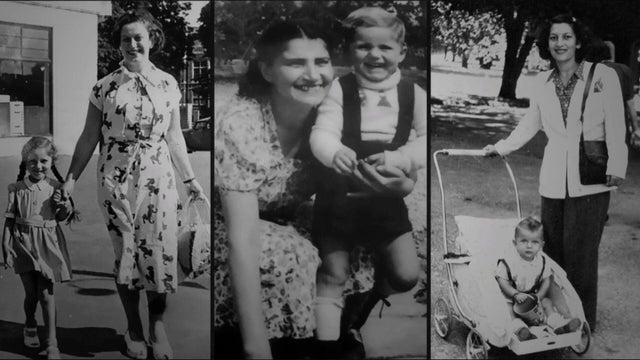
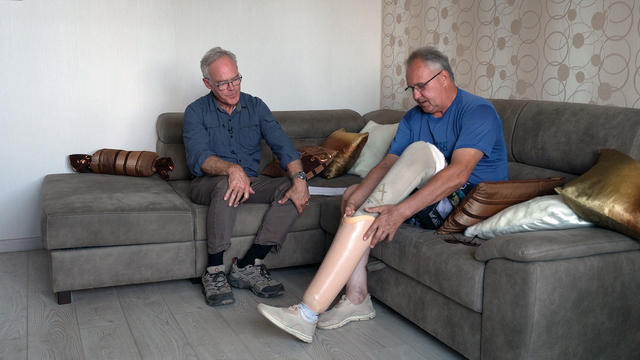
We lost our names. Each one of us was given a number instead. In the well-known camp of Auschwitz, people had their number tattooed on their arm. But we had to remember our numbers. My number, incidentally, was 56478. If you forgot it in the camps, you were usually punished for it. So I buried it in my mind so as never to forget it. And I won't, as long as I live. BILL WHITAKER (VOICEOVER): In Nazi-held Latvia, Goldberg, his mother, Rosa, and other prisoners were forced to repair bombed out railroad tracks during the day. When they returned to camp one night, they learned the SS had taken Manfred's little brother, Hermann, and three other children. They were never seen again. They just disappeared off the face of the earth. The next morning, both my mother and I had to line up and go to work as though nothing untoward had happened. What did that do to you and your mother? I had grown close to my brother because my mother packed some fairy tale books, stories for small children. And we would lie on the floor, side by side, and I would read to him. Because he couldn't read himself. As a result, we were very close to each other. So when he disappeared, I was nearly as heartbroken as my mother at the loss of her little baby, so to speak. He was seven when he went into the camps and nine the day he disappeared. BILL WHITAKER (VOICEOVER): Goldberg and his mother ended up in the Stutthof camp in Nazi-occupied Poland. Another young boy, George Schwab, was imprisoned there, too. The crematoria, burning of bodies all the time, gassing them. Terrible. BILL WHITAKER (VOICEOVER): Schwab is 93, but he was only nine when German soldiers invaded his hometown of Liepaja, Latvia. Schwab's father, a prominent physician, tried to protect other Jews in town. He noticed SS trucks were approaching, and he waved for fellow Jews to disperse. And they arrested him, knocked out one eye, threw him down the cellar, and then killed him. BILL WHITAKER (VOICEOVER): Bruno's father, Willi Neurath, was not Jewish, but he actively opposed the Nazi regime. My parents belonged to the small minority of German people who fought against the Nazis. They didn't fight with weapons, of course. Fight with their words? BRUNO NEURATH-WILSON: Yes. Fighting with papers, with printed papers. BILL WHITAKER (VOICEOVER): Willi was arrested for distributing anti-fascist flyers. They brought them to Buchenwald. And from Buchenwald, they brought him to the concentration camp Neuengamme by Hamburg. BILL WHITAKER (VOICEOVER): The Neuengamme work camp mostly held political prisoners. Inside this massive warehouse, historian Bill Niven told US prisoners like Willi Neurath made bricks. What does it feel like to walk in here? It feels like a factory of death. You can sense what went on in this place. But this was not a death camp. This was a work camp.

BILL NIVEN:
00:09:30

It's a very, very slim distinction. In the course of this work, they die. They die in droves. BILL WHITAKER (VOICEOVER): Willi Neurath managed to survive, but as fate would have it, he, Schwab, the Goldbergs, and the CapArcona all would end up at Lübeck Bay, one of the last Nazi defensive positions. [GUNFIRE] In 1945, as the Allies were closing in, the CapArcona,now rusted and battered, was repositioned to Lübeck Bay. At the same time, SS Chief Heinrich Himmler ordered the evacuation of concentration camps.

BILL WHITAKER:
00:10:08

Why were they trying to clear these places out? There is an order by Himmler that no prisoner is to be delivered into the hands of the enemy alive. But I think the main concern was to get rid of evidence. Because prisoners are evidence. They can talk. They can tell. They can speak to those atrocities that were committed by the Nazis. So getting rid of the evidence meant getting rid of human beings. BILL WHITAKER (VOICEOVER): Thousands of prisoners were sent to the Nazi holdout at Lübeck Bay. Willi Neurath was forced north from Neuengamme, about 50 miles. From Stutthof in the east, George Schwab, Manfred Goldberg, and his mother were sent to a nearby town, aptly named Hel, and put on barges. We had to sit down and spread our legs wide apart so the next person could sit between our legs, so that their back was touching our chest. That way they could get the maximum number of people into that confined area of the barge. Four tugs appeared. The crews were SS people. Each one coupled themselves to one of the barges, and they told us out to sea. We had absolutely no idea what was planned, what was happening. People kept speculating that they would just sink us at sea to get rid of us.

BILL WHITAKER:
00:11:33

What were the conditions? Oh, terrible. Just beyond description. No toilet facilities, hardly any food. You could hardly sit. You can certainly not sleep. It sounds like hell. Hell? Hell on earth. Absolutely. BILL WHITAKER (VOICEOVER): The barges, each packed with about a thousand prisoners, were towed by tugboat for six days, about 400 miles across the Baltic, to where the Cap Arcona was positioned.

BILL WHITAKER:
00:12:01

The Cap Arcona arrived in Lübeck Bay on April 14, 1945, two weeks before Hitler killed himself and three weeks before the end of the war in Europe. It was anchored out there, about 2 miles off shore. With its engines barely running and little in the way of food and water, the former queen of the Atlantic, a playground for the rich and famous, was about to become a floating concentration camp. BILL WHITAKER (VOICEOVER): With nowhere to hold the amassed prisoners, SS guards jammed more than 4,000, including Willi Neurath, on to the CapArcona. And one must remember, this is a ship that's meant for 1,500 people. It's not meant for 4,000 to 5,000 prisoners. So they were jammed in there? They were jammed like sardines. Do we know what the Nazis intended to do with the prisoners on the ship? I think they intended them to die. BILL WHITAKER (VOICEOVER): Prisoners already were dying on the barges fleeing Stutthof carrying Schwab in the Goldbergs.

BILL WHITAKER:
00:13:03

You had been without food and water? Very little. Next to nothing. Very little. BILL WHITAKER (VOICEOVER): Once in the bay, the SS guards uncoupled the tugboats, leaving the prisoners adrift. And we were left on the high seas, in the barges, alone. They just abandoned you? Abandoned. We were left alone, supposedly on minefields. BILL WHITAKER (VOICEOVER): Schwab and Goldberg told us mixed in with the concentration camp victims were a few prisoners of war. They had been better fed and better treated, and they seized the opportunity. They managed to prise loose some very long floorboards and began using these planks of wood as oars. And they rowed in that manner into the night. Shortly before dawn, the barge ran aground. And anyone who still had an ounce of strength began clambering onto the top deck. It meant jumping into the water and wading through the water to shore. But there were a proportion of people on board that were still alive. They were still breathing, but their mind had ceased functioning. They just sat there, listlessly, awaiting their fate. BILL WHITAKER (VOICEOVER): Norwegian prisoners on George Schwab's barge took advantage of the wind blowing toward shore. They came and collected the blankets that we had and made sails. And we managed to sail towards land. What was your condition? Terribly weak. Terribly weak. I was a walking skeleton. BILL WHITAKER (VOICEOVER): Like many on board, he was almost too weak to move. But a fellow prisoner, an acquaintance from his home town named Jule, saw him and demanded he get up. Jule sort of dragged me. I begged him, leave me alone. I have no strength. No, no, no, no, no. BILL WHITAKER (VOICEOVER): With Jule's help, Schwab managed to climb out of the barge. The Goldbergs got out of theirs, too, only to be intercepted by the SS and German troops on the beach. They, of course, were livid that we had moved the barge and had jumped off. So in revenge, one part of them clambered onto the barge and brought here a lot of shooting. Every one of these unfortunate people who no longer knew what to do to save themselves were shot, because they were just sitting there listlessly. And we felt practically certain that we would be shot next. But instead, they lined us up into a column. We were told that we were going to be shipped to a liner by the name of CapArcona. And while we stood there, we saw quite a large number of bombers, airplanes, moving overhead. The CapArconawas in the bombers' sights. The war was nearly over, but the prisoners' ordeal was not. That part of our story when we come back. [CLOCK TICKING] At the beginning of May 1945, the war in Europe was all but over. Adolf Hitler was dead. German forces were in retreat, and the Third Reich was crumbling. One of the last Nazi defensive positions was at Lübeck Bay in the Baltic Sea, where German ships fled, seeking safe harbor, including the CapArcona,a luxury ocean liner commandeered by the Nazis for the war effort. As the Allies closed in, the SS evacuated concentration camps and packed thousands of prisoners onto the CapArcona. BILL WHITAKER (VOICEOVER): Around noon on May 3, 1945, 13-year-old George Schwab was ordered to line up to board the ship. But the CapArcona could not come close to shore because it was a large liner. It's a big ship. So we were going to be transported to the CapArcona by another ship. I was in the back of the line. I was in no hurry. You purposely got to the back of the line? Back of the line. BILL WHITAKER (VOICEOVER): He was at a dock near this German naval, base where Manfred Goldberg and his mother were lined up, too. And it is while we stood there that we witnessed bombers and fighter planes coming along. Could you see any markings on the plane? No. We had no idea what nationality they were. You could see the planes coming in. Oh, you could see the planes clearly. You could see the bombs dropping. Can you remember what it sounded like? There were some pretty powerful explosions, and there were quite a few. BILL WHITAKER (VOICEOVER): The CapArconawas hit. With more than 4,000 prisoners on board, the floating concentration camp became a fiery tomb. In a hard-to-believe turn of events, the attackers were British typhoon fighters like these, part of the Allied forces moving in to finish off the Nazis.

BILL WHITAKER:
00:18:20

The British came to liberate these prisoners and ended up killing thousands of them. It's like horror on top of horror. It is, and yet some of them did survive to remember it. BILL WHITAKER (VOICEOVER): Bill Niven is a British historian and scholar of the Holocaust. He told us the mistaken attack on the CapArconaand a smaller ship is one of the most wrenching tragedies of the war.

BILL NIVEN:
00:18:47

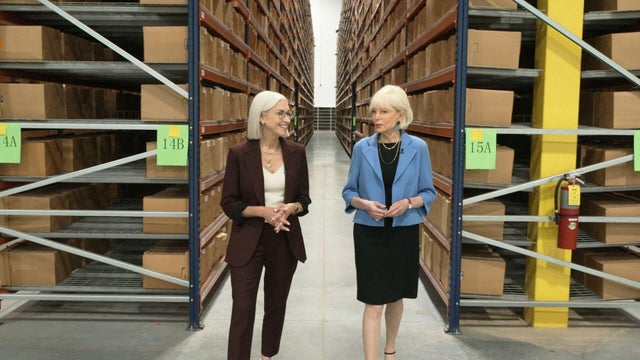
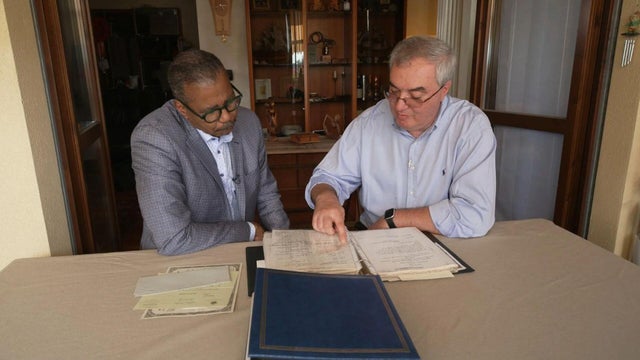
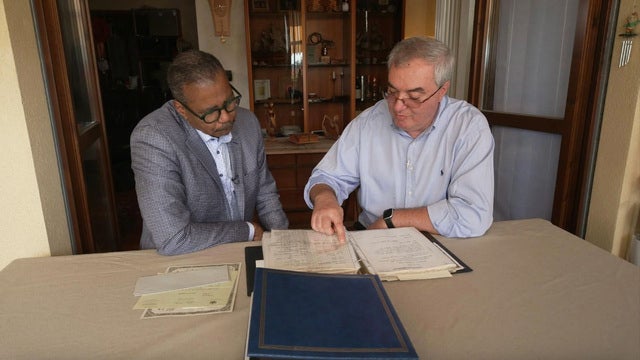
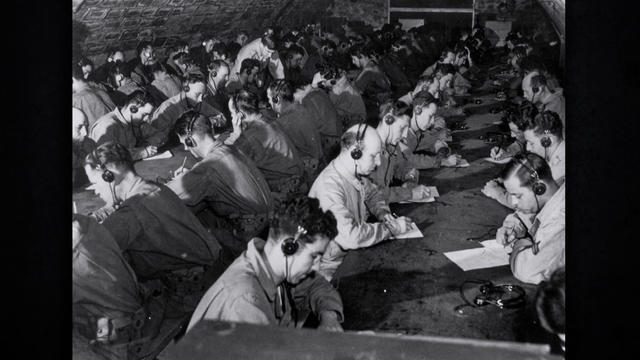
The prisoners knew that the war was nearing its end. I think a lot of them probably had hopes that they would survive, and that gave them the strength and the courage to hang on. BILL WHITAKER (VOICEOVER): At the CapArconamuseum in the town of Neustadt, by Lubeck Bay, he described the attack. British typhoons struck in waves. The CapArconawas hit around 3:00 PM. You have any idea how many bombs were dropped on the ship? Some people say 60 or over 60. You can imagine the panic and the horror that broke out when the bombs hit the ship, especially for those concentration camp prisoners. We were in the very lower decks of the ship. And they were unable to get up to the top because of the flames. Was this the worst case of friendly fire in the Royal Air Force's history? Quite probably, yeah. BILL WHITAKER (VOICEOVER): Sebastian Cox recently retired as chief historian for Britain's Royal Air Force, the RAF. He blames the incident on the fog of war. Why was the Cap Arconatargeted? Because the Allies believed that there was going to be an attempt to flee-- by certain Nazi elements across the Baltic to Norway and essentially continue the war. Did the British military have any idea that concentration camp survivors were on the CapArcona? If you mean, "did the pilots have any idea," absolutely not. BILL WHITAKER (VOICEOVER): But other members of the British military did know. What we learn from the records, that the British were handed two opportunities very close to the 3rd of May in regards to the placement of prisoners on board the ship. Concentration camp prisoners on those ships? Indeed. BILL WHITAKER (VOICEOVER): Daniel Long wrote his PhD history thesis on the attack on the CapArcona. We met him at the British National Archives in London, where he showed us these fragile war documents. This is the only official investigation that was carried out into the tragic sinking of the Cap Arcona. BILL WHITAKER (VOICEOVER): Shortly after the bombing, a British war crimes investigator interviewed the intelligence officer for the squadrons that attacked the CapArconaand other ships in the bay.

DANIEL LONG:
00:21:02

The intelligence officer admitted on two occasions that a message was received on the 2nd of May 1945 that the ships had been loaded with concentration camp prisoners. BILL WHITAKER (VOICEOVER): That intelligence came in the day before the attack. Which then leads to suggest that there was ample time to warn the pilots on the planes. That information did not make it to the RAF pilots? That's correct. BILL WHITAKER (VOICEOVER): The report does not say why the intelligence officer failed to inform the pilots, but it did blame RAF personnel for the error and called for further inquiry. The report strongly urged that there be a follow-up investigation. That has never happened, has it? Not to my knowledge. Why not? Attempting to conduct a detailed investigation would, in many respects, be a little pointless. What are you going to conclude? To find out what went wrong, what mistakes were made. We know what happened. The RAF made a mistake. An individual made a very tragic mistake, and we know the consequences. BILL WHITAKER (VOICEOVER): About 7,000 prisoners perished when the ships were bombed in the bay. Of the more than 4,000 on the CapArcona, only about 400 survived. Bill Niven told us several survivors later wrote accounts of the hell they endured at sea.

BILL NIVEN:
00:22:31

[SPEAKING GERMAN] Thousands of prisoners were packed together like herrings. [SPEAKING GERMAN] So they stretched their arms up, and they cried out, I want out. I want out. This is really quite terrible, to have to read this. The fire suddenly got more and more intensive, and this was because the flesh of the prisoners was burning so strongly. It made this intensity happen. It's distressing to read. BILL WHITAKER (VOICEOVER): Bruno Neurath Wilson's father, Willi, a political prisoner, was trapped on the ship when the bombs hit. My father managed to go to the back of the ship where it was not burning, and there he survived because he couldn't swim. He survived because he couldn't swim. Couldn't swim. He did not jump into the water. And prisoners who jumped into the water were shot by the SS. BILL WHITAKER (VOICEOVER): When the British realized their mistake, they dispatched rescuers, who plucked Willi Neurath and others from the listing deck of the CapArcona and took them to shore. This is the stretch of beach where your father came ashore? This front of the beach, yes. BILL WHITAKER (VOICEOVER): Bruno told us, in an improbable twist of fate, his mother, Eva, a naval staff assistant, had been transferred to the naval base at Lübeck Bay. When she saw the bombing, she was drawn to the beach. She had only one hope-- to know, where is my husband? Is he still living? And maybe my husband is on the ship. How did they find each other? She came from this direction, and she saw a man coming towards her. She didn't recognize the one person she wanted to see. He must have been thin and weak. And dirty from the burning. But he came over to her and called his nickname he had for her-- muppel. What does "muppel" mean? Muppel means something like "I love your round face." She recognized his voice by this one word, muppel.

BILL WHITAKER:
00:24:33

That ship was a graveyard for so many people, but yet it brought your parents back together. Yeah. I don't know if there are hidden meanings in life, but one meaning can be that I am alive now and can tell you about this story. BILL WHITAKER (VOICEOVER): As for George Schwab, he pulled inspiration from the horror. This is a prize for having helped Latvia get into NATO. BILL WHITAKER (VOICEOVER): The native of Latvia moved to New York, earned a PhD in political science, and had an illustrious career as an academic and peace broker.

GEORGE SCHWAB:
00:25:11

Here I'm with King Hussein.

BILL WHITAKER:
00:25:13

Bill Clinton.

GEORGE SCHWAB:
00:25:14

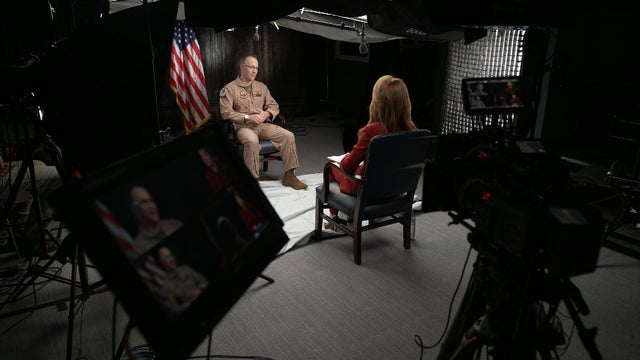
And Bill Clinton. Dr. Schwab, I think you knew everyone. Somewhat. [LAUGHTER] BILL WHITAKER (VOICEOVER): Manfred Goldberg and his mother settled in London. She passed away in 1961. Goldberg married, started a business and a family. In 2017, he returned to the Stutthof concentration camp with the then duke and duchess of Cambridge. He has made it his life mission to share his story. I consider that part of my revenge on the Nazis. They wanted to exterminate us, and here we are, not only having survived, we are now great-grandparents. That's your revenge? My revenge on the Nazis, yes. BILL WHITAKER (VOICEOVER): The CapArconalay half-sunken in Lübeck Bay for four years before being dismantled, but the story has lain beneath the surface, little known beyond this Baltic coast. It's now tradition on the 3rd of May for families of victims and survivors to sail to the site where the ship was bombed. [BELL RINGING] They want the world to remember. [BELL RINGING] This past May, Manfred Goldberg returned to Lübeck Bay to commemorate the 80th anniversary of his liberation at the end of the war in Europe. He stood on the site where he witnessed the attack on the Cap Arconaand went to a Jewish cemetery to chant a Memorial prayer. [CLOCK TICKING] In Hollywood, it's not unusual for actors to try and fit the industry standard of beauty and marketability, plotting every outfit and career move with the prowess of a chess master. But Jamie Lee Curtis is not one of them. Candid and spontaneous, she fearlessly calls it as she sees it, even when it comes to herself. We met Jamie Lee Curtis in Los Angeles, and as we said when we first aired this story in May, at 66 years old, she is savoring a new wave of award-winning performances. We asked her about her decades-long career. She told us it was anything but planned. My life hinged on a couple seconds I never saw coming. I never thought I'd be an actor in my life. My teeth were the color of concrete. They were gray. I was cute, but not pretty. And so I never saw that coming. SHARYN ALFONSI (VOICEOVER): She probably should have. Jamie Lee Curtis was born into Hollywood royalty, the daughter of screen idols Tony Curtis and Janet Leigh, two of the biggest stars during the golden age of cinema. But Jamie Lee says she wanted to be a cop. She was home from college when a friend convinced her to audition for Universal Studios. I did the scene, and she said that was very good or whatever. And I was like, OK, great. Thanks. I said, listen, if this is going to work out, I need to know because I'm going back to college in two days. Very practical. So she laughed or whatever. And they called me the next day, and they gave me a seven-year contract at Universal. And I quit college. SHARYN ALFONSI (VOICEOVER): Almost immediately, she booked the 1978 horror film Halloween. Well, I'm here tonight. I'm not about to let anything happen to you. SHARYN ALFONSI (VOICEOVER): Curtis was cast as the bookish babysitter, Laurie Strode, terrorized by an unrelenting killer. It was her first movie. She was 19 years old playing the lead. Were people saying, oh, she got the job because of who her parents are, because of the pedigree?

SHARYN ALFONSI:
00:29:04

You know what? I know. I guarantee you the fact that my mother was in Psychowas a determining factor, that maybe that will get them a little extra publicity. Now, did it get me to that final two? No. My auditions got me to the final two. This was a $300,000 horror movie. This was not a job that a lot of people wanted. SHARYN ALFONSI (VOICEOVER): Halloweenended up grossing more than $70 million and became a cult classic. But it didn't exactly launch Jamie Lee Curtis's career. My big break after Halloween I was on LoveBoatwith Janet Leigh. Beautiful Janet Leigh playing my mother. And then I was in a Charlie'sAngelsepisode where I am Cheryl Ladd's best friend, pro golfer. So those are the two jobs I get post post-Halloween. Were you thinking at this point, people aren't hiring me, they just want my mom around or the name? You know what? Sure. But didn't that bother you? No. Because I was doing my thing. SHARYN ALFONSI (VOICEOVER): Curtis's thing was transforming into a scream queen for a new generation with a string of horror movies. I read that you didn't even like scary movies. I don't like scary movies.

SHARYN ALFONSI:
00:30:27

Still? Still. Oh, please. Awful. Why?

JAMIE LEE CURTIS:
00:30:31

Awful. The smart aleck answer is, because life is scary. SHARYN ALFONSI (VOICEOVER): It's a surprising thing to hear from an actress who's known for being fearless. Before that spin around the bedpost opposite Arnold Schwarzenegger in TrueLies, Curtis held her own next to Eddie Murphy and Dan Aykroyd in her first comedy feature, TradingPlaces, directed by John Landis. She says her role as Ophelia, a wise, kind-hearted streetwalker, is what really launched her career. That part-- she's gritty and the gum and the whole thing-- how much of that did you bring to her? John stuck gum in my mouth every day. Literally I would stand there, and he'd walk up, and I'd go, OK. It's just a great part. But here's the other thing. And this is crucial, and this will make the piece. If I'm not in Trading Places,John Cleese does not write A Fish called Wandafor me. I'll treasure it.

JAMIE LEE CURTIS:
00:31:32

If I'm not in A Fish calledWanda, Jim Cameron does not write the part in TrueLiesfor me. And that grouping of films gave me my career, for sure. SHARYN ALFONSI (VOICEOVER): If it all sounds like a fairy tale, it wasn't. By the mid-'80s, Jamie Lee Curtis was a well-established actor when she made a movie with John Travolta called Perfect. By all accounts, and from every angle, she was. I took it very seriously as an actor. And, of course, I look really good in a leotard. And believe me, I've seen enough pictures of me in that leotard where even I go, really? Come on! SHARYN ALFONSI (VOICEOVER): But she says a cinematographer working on the film criticized the way she looked. He was like, yeah, I'm not shooting her today. Her eyes are baggy. And I was 25? So for him to say that was very embarrassing. So as soon as the movie finished, I ended up having some plastic surgery. And how did that go? Not well. That's just not what you want to do when you're 25 or 26. And I regretted it immediately and have kind of regretted it since. Even now? Way so now, because I've become a really public advocate to say to women, you're gorgeous, and you're perfect the way you are. So, oh, yeah, it was not a good thing for me to do. That's when you started taking-- you've been public about this. You started taking painkillers and--

JAMIE LEE CURTIS:
00:33:03

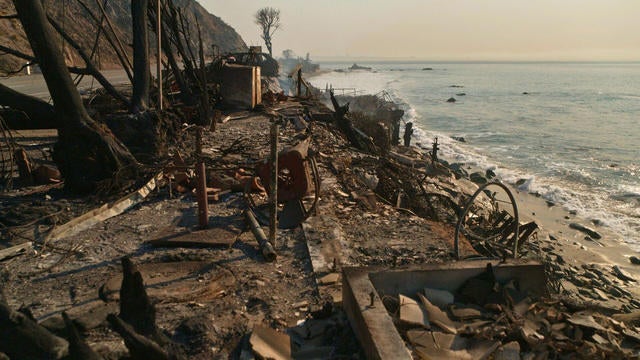
Well, they give them to you. I became very enamored with the warm bath of an opiate. Drank a little bit. Never to excess, never any big public demonstrations. I was very quiet, very private about it. But it became a dependency, for sure. SHARYN ALFONSI (VOICEOVER): Curtis says she's been sober for 26 years. Did you worry when you shared your story of how you got sober that it would impact your career? I think I worried more that selling yogurt that makes you [BLEEP] was going to impact my career than for me to acknowledge that I had an addiction. I make the joke. It's a funny joke, but it's true. Take the Activia challenge now. It works, or it's free. SHARYN ALFONSI (VOICEOVER): Ah, that yogurt commercial, famously parodied by Saturday NightLive. Now the good news. I just disco-- SHARYN ALFONSI (VOICEOVER): Curtis, one of the biggest stars in Hollywood, suddenly began selling pantyhose and hawking rental cars. In every survey, Hertz came out on top. TrueLieshad made $400 million. You could have done anything you wanted to do. But you were taking those spokesperson jobs. Why? For the most part, because they allowed me to stay home with my kids. So I am an imperfect working mom. Because no working moms are perfect. It's all scotch-taped together. I'm looking at one. You're speaking to one. We make it look good. We think we've done it. But the truth is, we feel badly. But I know how much time away from them I spent in pursuit of my own creativity. SHARYN ALFONSI (VOICEOVER): Curtis has two children with Christopher Guest, the actor and director best known for This is SpinalTap-- It's famous for its sustain. You can just hold it-- Well, I mean-- so you'd have to-- [VOCALIZING] SHARYN ALFONSI (VOICEOVER): --and taking aim at dog shows and even filmmaking in a series of documentaries. They've been married for more than 40 years. My mother was married four times. My father was married five times. That's nine. My stepfather was married three. So I come from an immediate family of 12 marriages. So my joke, "I'm still married to my first husband," it was important to me that I stay married to my husband, that he's my husband. Did you ever pass a role that you wish you had taken? No. SHARYN ALFONSI (VOICEOVER): Once their kids were grown, Curtis traded in carpool duty for unapologetically driving her own career. We're going this way. SHARYN ALFONSI (VOICEOVER): She runs her own production company, which has a TV series in the works, starring Nicole Kidman, and a feature film about the catastrophic Paradise wildfires in 2018. She's also running her own charity. Curtis has raised over $1 million for Children's Hospital Los Angeles and donated another million to victims of the recent wildfires, which destroyed much of Altadena and the Pacific Palisades, including this home, where she filmed the millennial hit FreakyFriday and its sequel,Freakier Friday, out now. And four decades after the first Halloween, she finally put that franchise to rest. (SINGING) A total eclipse of the heart SHARYN ALFONSI (VOICEOVER): But it is a string of raw, vulnerable characters that came to Curtis in her 60s that led to a comeback even she never imagined-- You know, I mean, he's cute-ish. SHARYN ALFONSI (VOICEOVER): --playing the aging waitress in The LastShowgirl-- I could also get you a job. SHARYN ALFONSI (VOICEOVER): --or sucking the oxygen out of the kitchen as the combustible matriarch Donna Berzatto in Hulu's TV series TheBear.

SHARYN ALFONSI:
00:37:04

Donna, the images in my mind of her buttering the bread with the nails and the eyelash and the cheeks. The eyelash. That single eyelash, I think, won me an Emmy. I swear to God. Go. I'm good. Go. Go sit.

JAMIE LEE CURTIS:
00:37:20

I've waited my whole life for Donna. Patiently, quietly cooking. My own creative mental life, my own alcoholism. And it's just so beautifully written that you don't have to do anything. SHARYN ALFONSI (VOICEOVER): But it was 2022's mystical, somewhat mind-bending Everything Everywhere All atOnce that pushed Jamie Lee Curtis out of her comfort zone. Did you understand that role when you got it? Not one second of it. Did I understand that script? No. With nothing but a stack of receipts, I can trace the ups and downs-- SHARYN ALFONSI (VOICEOVER): Curtis says she did understand Deirdre Beaubeirdre, the hard-boiled bureaucrat from hell. It does not look good. We all know Deirdre. She's a woman who's not loved. She's a woman who uses her power in her job to control people because she has no love in her life. SHARYN ALFONSI (VOICEOVER): Curtis was unrecognizable, but her performance did not go unnoticed. Jamie Lee Curtis! [CHEERS, APPLAUSE]

SHARYN ALFONSI:
00:38:40

Before the moment, though, first, when they call your name--

JAMIE LEE CURTIS:
00:38:43

Yes. --you say, I think--

BOTH:
00:38:46

"Shut up." Totally. Because that wasn't supposed to happen. Your mom never won an Oscar. Dad never won an Oscar.

JAMIE LEE CURTIS:
00:38:55

No, they didn't. They were both nominated. Does this make you feel like you're on an even footing with your parents, who were these gigantic stars?

JAMIE LEE CURTIS:
00:39:03

You know what? I think about surpassing my parents, which I have, emotionally. I've surpassed my parents with sobriety. My mother was restricted by what the industry wanted from her and expected from her and would allow from her. My mother would have hated The LastShowgirl because I showed what I really looked like. And so I have-- I don't want to say surpassed them, but I have freedom. SHARYN ALFONSI (VOICEOVER): The morning after her Oscar win, a photographer asked Curtis to recreate a photo of actress Faye Dunaway and her statue from nearly 50 years ago. She agreed with one condition. And I said to him, yeah. But I won't do it seriously. We have to make it funny. SHARYN ALFONSI (VOICEOVER): Jamie Lee Curtis hasn't just embraced imperfection, she's made it an art. [CLOCK TICKING] SHARYN ALFONSI (VOICEOVER): Revisiting cinema history. She never took a shower again. at 60minutesovertime.com. I'm Sharon Alfonsi. We'll be back next week with another edition of 60Minutes. (SINGING) I can see clearly now No matter how you start your day, one thing is clear. Actually, two things. Pretty sure it's three. Guys, whether it's news, money, health or wellness, sports, movies, or even inspiration-- Clearly, CBSMornings is the place to be. That's, like, seven things. OK, clearly I'm bad at math. Always been. Clearly. Clearly. Clearly Oh, OK. OK. (SINGING) I can see clearly now. Clearly CBSMornings, weekdays at 7:00 on CBS. It's a bright, bright, bright way to start your day. (SINGING) Sunshiny day

NARRATOR:
00:41:16

Go to the ends of the Earth. We'll hit the heights. [VOCALIZING]

NARRATOR:
00:41:19

Reach for the stars. Star power. I like it. Experience thought-provoking-- Something that's undeniable. Ta-da!

NARRATOR:
00:41:26

--and truly original reporting. I'm in on this.

NARRATOR:
00:41:30

There's always something new under the sun on CBS SundayMorning.

Videos
View CBS News In
CBS News App Open
Chrome Safari Continue