JON WERTHEIM:
00:00:07
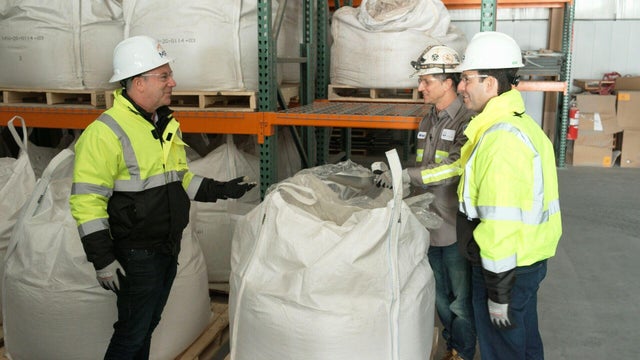
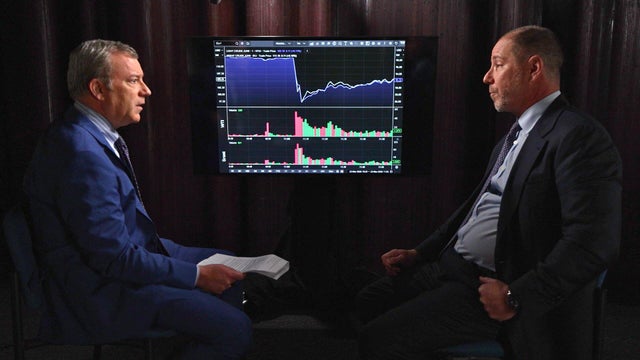
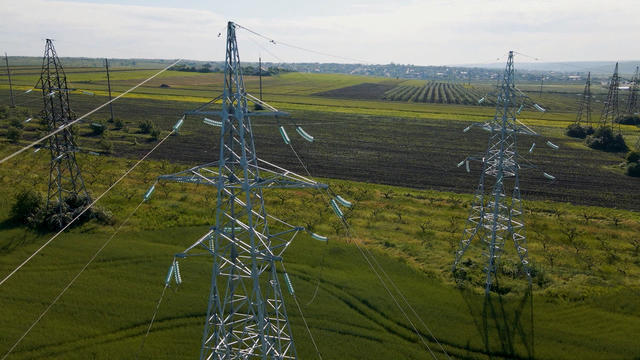
An hour southwest of Las Vegas, in the guts of the Mojave, sits the only active rare-earth mine in the US, an unlikely battlefield in our trade war with China, which has a near monopoly over the strategic metals. When Beijing choked off supplies last year, James Litinsky and his company got the call. We got called into the Pentagon, and it was clear that there was a directive from the president to solve this problem as quickly as possible. [CLOCK TICKING]
ANDERSON COOPER:
00:00:36
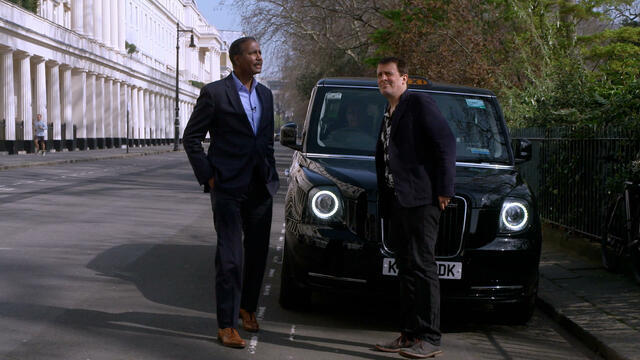
On ancient roads in London, a very modern battle is brewing. If we do a left here, the Goldsmith's Hall.
ANDERSON COOPER:
00:00:42
Black cabs will soon be competing with the artificial intelligence-powered autonomous taxis. But as we found out, London's cabbies aren't about to hand over their keys. Your knowledge is better than what a Google map will tell you to go. Oh, don't make me laugh. Seriously, it's like comparing a hot dog vendor to Gordon Ramsay. [CLOCK TICKING]
LESLEY STAHL:
00:01:07
It looks like baseball and feels like baseball. But then there's this. An umpire feeling the music? A batter on, no, stilts? Gymnastics in the outfield and on the way home. Longtime baseball writer Tim Kurkjian came to a game, and he said, "This is the stupidest thing I have ever seen. I loved it." [LAUGHS] [CLOCK TICKING] I'm Lesley Stahl. I'm Jon Wertheim. I'm Anderson Cooper. I'm Bill Whitaker. Those stories tonight on 60 Minutes. [CLOCK TICKING] In May, President Trump traveled to Beijing for a summit with his Chinese counterpart, Xi Jinping. One agenda item that figured prominently-- rare-earth elements. Right now, China holds a near monopoly over these strategic metals that are key components in so much that makes the modern world go-- smartphones, robotics, EVs, also fighter jets, drones, and radar technology. That is, China controls materials essential to America's ability to wage war. But tonight, the story of an American company confronting this elemental crisis. It mines rare-earth elements, processes them, and makes them into super-powered magnets. And as we first reported in March, it's part owned by us, American taxpayers, in an unusual deal crafted by the federal government. An hour southwest of Las Vegas, in the guts of the Mojave, Mountain Pass, California, might be the ultimate front of our trade war with China. This massive cavity in the ground behold the only active rare-earth mine in the US. This is an unlikely battleground. Are we stepping on rare earths as we speak? Yes. Everywhere you look is rare earths.
JON WERTHEIM:
00:03:09
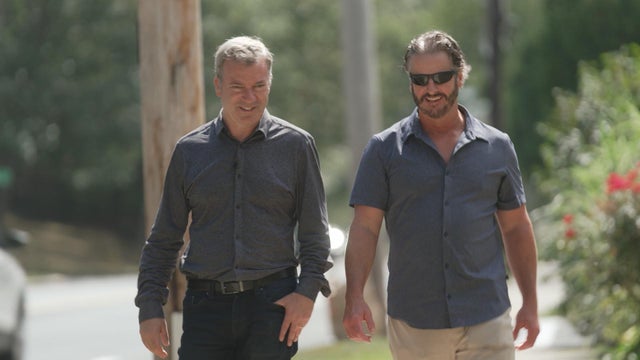
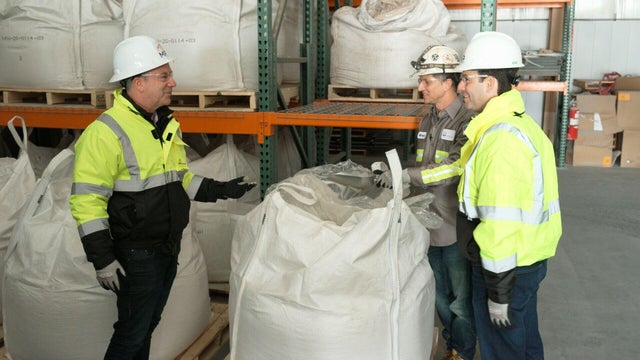
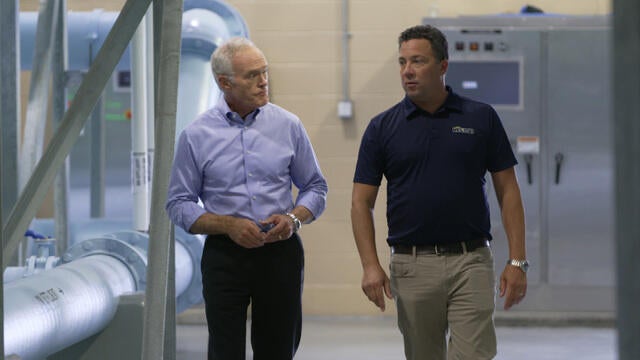
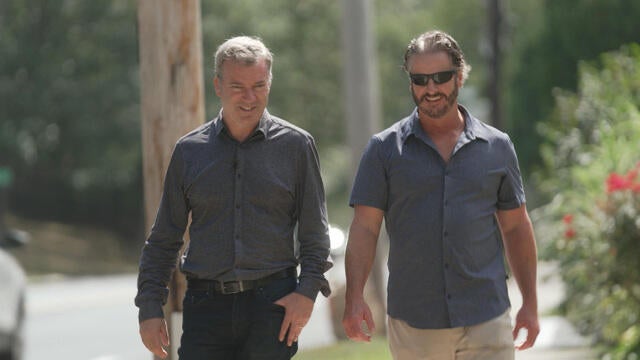
Michael Rosenthal and James Litinsky are the unlikely men in charge-- two Floridians in the snow, two finance types suddenly trafficking in mining and metallurgy. You have no background in geology, and now you're running the biggest rare-earth mining in the US. This is just such an important site, and the idea that this entire supply chain was on the other side of the world, in China, it just occurred to us that someone had to help fix this problem.
JON WERTHEIM:
00:03:39
The Trump administration is keenly aware of the problem of China's rare-earth dominance. Doug Burgum is secretary of the interior. If you have a cell phone, have a laptop, if you drive a car, then you're touching rare-earth minerals and rare-earth magnets. It's essential to everyday life, but it's also essential to aerospace, telecom, defense systems.
JON WERTHEIM:
00:04:02
Yes, defense systems. According to the military, one F-35 fighter jet contains about a hundred pounds of rare earths incorporated into its various parts. Just to be clear, the US defense industry is subject to the whims of China and Xi Jinping for military technology? Well, this is one of the reasons why President Trump created the National Energy Dominance Council with a broad set of objectives. One of those was to make sure that we had secure supply chains for critical and rare-earth minerals.
JON WERTHEIM:
00:04:33
Right now, we don't have secure supply chains of rare earths because China has cornered the market. They also weaponize it, because if anybody in the rest of the free world said, hey, we're going to start mining, we're going to start refining, then they would target that particular mineral, dump a quantity onto the market, drive the price down, and companies, including US companies, that were profitable suddenly became unprofitable.
JON WERTHEIM:
00:04:55
Before we proceed, let's dispense with the misnomer. Rare earths aren't rare. Here's what is rare-- sites with high enough concentrations of rare earths and accessible enough locations to make extraction worthwhile. In their purest form, rare earths aren't rocks, but elemental metals-- deep cuts on the periodic table, numbers 57 through 71 and two others, for those scoring at home. Lanthanum, cerium, praseodymium, neodymium, samarium.
JON WERTHEIM:
00:05:25
Julie Klinger is a professor of environmental studies at the University of Wisconsin-Madison and a rare-earths expert who's visited mines worldwide and written extensively on the subject. What are their qualities? The thing that distinguishes rare-earth elements are their fantastic magnetic, conductive, and optical properties. So they're used often the way you might use spices in cooking. Because if you add just a little bit of a certain rare-earth element, say, to a magnet, that enables that magnet to be both very small and very powerful.
JON WERTHEIM:
00:05:57
Geologists found rare earths at Mountain Pass in 1949. By the '60s, individual rare earths were being mined, separated, and utilized, not least europium, which enhanced the color red in early television sets.
ANNOUNCER:
00:06:12
CBS presents this program in color.
JON WERTHEIM:
00:06:16
Then, in 1982, researchers found that another, neodymium, strengthens magnets. And these super-high-powered magnets are used in everything from making your cell phone buzz to the navigation components for drones and smart bombs to high-speed rail and electric vehicles.
JON WERTHEIM:
00:06:36
For decades, Mountain Pass was the world's rare-earth mine. But gradually, then suddenly, mining and magnet making began moving offshore. Familiar story-- China could do it cheaper. The US disinvested in rare earths. Absolutely. Why? It's a dirty business. It's a risky business. It's a difficult business to really break even.
JON WERTHEIM:
00:06:58
In the 1990s, Mountain Pass fell victim to economics and to environmental regulators after radioactive water leaked into the desert. The mine languished for a decade, until a new company, Molycorp, tried, unsuccessfully, to compete with China and revive the business. James Litinsky was running a Chicago hedge fund looking for value in distressed companies. When Molycorp filed for bankruptcy in 2015, Litinsky glimpsed opportunity. When you're running a hedge fund, there's not much tangible to it. You're moving numbers on a screen. And then I made the mistake of going out and looking at the site, actually seeing the assets-- Actually seeing what your investment looked like. Yes, yes. And I was just blown away by the scale of the assets.
JON WERTHEIM:
00:07:42
The assets? This massive open pit, these concentric circles, a mine 3,000 across, 600 deep, with one of the world's richest deposits. Litinsky turned to Michael Rosenthal, then working for a New York hedge fund. The two were close friends growing up, and they decided to partner. You appreciate the absurdity of the story. For sure. Two hedge fund guys buy a mine. What could go wrong?
JON WERTHEIM:
00:08:09
For a while, plenty. When they bought the mine in 2017, it was underwater, financially and literally. 30 million gallons had puddled at the bottom. There were only eight employees. They called their new company MP Materials and got the mine back up and running-- blasting earth, then crushing rocks into gravel, then milling it into fine powder. Litinsky took over the business as CEO, while Rosenthal spent long days on site, becoming an expert on rare-earth mining and refining. How do you characterize the division of labor here? I get dirty, and Jim explains what we're doing.
JON WERTHEIM:
00:08:49
Today, Mountain Pass employs more than 700. Rosenthal manages the operation. I cannot get over how extensive and intensive all of this process is once you're done with the actual mining. The mining is really the easiest part.
JON WERTHEIM:
00:09:10
The hard part? Separating the rare earths from the rock and then each other. Three years ago, MP reached a milestone. After investing hundreds of millions of dollars, it was able to refine neodymium and praseodymium to 99.9% purity.
JAMES LITINSKY:
00:09:25
This is the refined product. This is the money room. This is it? This is it.
JON WERTHEIM:
00:09:30
Each bag was worth around $120,000. There were 300 bags, roughly $36 million in inventory, when we visited. So this fine powder will end up-- Could end up in your pocket. Could end up in my iPhone? Yeah.
JON WERTHEIM:
00:09:43
MP needed one last link to bypass China and reclaim the supply chain, making the final product-- those high-powered rare-earth magnets. So in Fort Worth, Texas, MP built this facility, where pure rare-earth powder from Mountain Pass gets melted, cooled, compressed, diced, and eventually turned into, well, these. In a matter of months, millions will be going into GM cars and into Apple products starting next year. MP was fulfilling its business plan, taking rare earths from mine to magnets. In the spring of 2025, it alchemized from a vertically integrated business into a pivotal player in our national security. We will supercharge our domestic industrial base--
JON WERTHEIM:
00:10:28
Last year, President Trump unveiled his global tariffs plan, so-called Liberation Day. China retaliated to devastating effect, choking off rare earths to the US. Ford Motors, for one, suddenly without magnets, had to temporarily stop making Explorer SUVs. After a series of trade truces between the US and China, the rare-earth spigot came back on. Litinsky says few realize how close we were to economic catastrophe. There were major manufacturers that didn't even realize the extent of the rare-earth magnets that they had in their supply chain. We were seeing the economy on the verge of shutdown.
JON WERTHEIM:
00:11:08
With markets reeling, senior Trump administration officials summoned Litinsky and Rosenthal to Washington. We got called into the Pentagon, and it was clear that there was a directive from the president to solve this problem as quickly as possible. What did the government want from you? The Pentagon wanted a Manhattan-style project to accelerate the entire supply chain of rare-earth magnetics in the country. That's the analogy? Those exact words were used. Manhattan Project or Operation Warp Speed. We've got to work to scale up everything that you're doing as quickly as we possibly can.
JON WERTHEIM:
00:11:43
A Manhattan Project for rare earths resulted in an unusual deal. The Pentagon agreed to inject $400 million into MP Materials and took a 15% ownership stake. So we, Americans, are all in the rare-earth business now. Plus, critically, the deal came with a guaranteed 10-year price floor for rare earths. So even if China tries to flood the market again driving down prices, MP is covered. Has there ever been anything like this? Well, exactly like this, maybe not. But if you look back, whether it was the railroads or aluminum for aviation prior to World War II or the semiconductor industry, there's actually a long tradition of really critical industries where our country needs to bring online infrastructure. And I think this is one of those industries.
JON WERTHEIM:
00:12:32
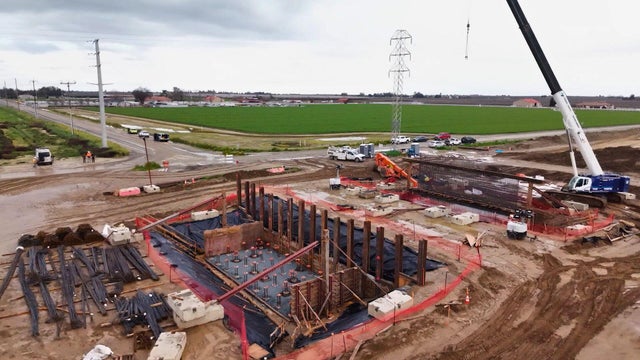
And the government had one more stipulation for MP-- ramp up rare-earth magnet production tenfold. To do so, MP is building an even bigger rare-earth magnet factory, also in Texas, that, it says, could produce enough to meet the country's needs. It's expected to be complete in 2028. Still-- As we sit here today, what percentage of the world's rare-earth magnets are made in China? Well north of 90%. So China, in effect, can still hold the world hostage here. They currently do.
JON WERTHEIM:
00:13:04
Back in Washington, Secretary Burgum has been a vocal supporter of stockpiling America's critical minerals. He defends the MP deal even if it strays from the principles of market capitalism. You're talking about equity positions in private companies and price floors, and in this case, a demand that production increases 10x, tenfold. Wait a second, that has a whiff of socialism. I wouldn't call it socialism. I'd certainly call it pragmatism. Because free markets work, but they don't work if you have an adversary that controls a monopoly that control the prices-- You're talking China.
DOUG BURGUM:
00:13:40
I'm talking about China. There's no market setting the price. It's China setting the price. To get this industry started again, we have to do some things to kick-start the private capital. This kind of industrial policy you're talking about, does this happen but for China's retaliation to last April? I think it was a catalyst. Frankly, we probably needed a crisis to wake up. And so I think if there's a silver lining, in the sense what happened last year was a big-time crisis that we needed. I'm struck by how quickly the economics bleed into geopolitics. If China says, listen, we're going to go invade Taiwan, and if you stand in our way, we're shutting off our rare-earth magnets. Well, that's the risk. As it stands today, we need permission from the Chinese government to make things. We need permission from the Chinese government to make military things. And the practical reality that is not an acceptable condition. And so we have to change this dynamic. The current US-China trade truce is set to expire in November. Absent a new deal, our rare-Earth supply-- short-term anyway-- remains vulnerable. [CLOCK TICKING] On ancient roads and in medieval alleyways and London, a very modern battle is brewing. Black cabs, which are as synonymous with that city as Buckingham Palace, will soon be competing with artificial intelligence-powered autonomous taxis. Tech companies promise these AI inventions, some of which are already operating in several American cities, are safer and smarter than human drivers. But as we first told you earlier this year, London's cabbies aren't about to hand over their keys. After all, just to get a license, they've already proven their own kind of intelligence, studying often for years to pass a 161-year-old test called the Knowledge. There's nothing artificial about it. They just have to memorize 25,000 streets and thousands of landmarks businesses and know the shortest routes between them all.
TOM SCULLION:
00:15:55
Look, we're the oldest form of transport in the world. In fact, we come before buses and trains and stuff. Yeah, we are the icons of London. If we do a left here, you'll have the Goldsmith's Hall.
ANDERSON COOPER:
00:16:08
Tom Scullion has been driving one of London's famous black cabs for the past 34 years. What's the weirdest request you've gotten from a passenger? What, this week? You wouldn't believe. There's a guy. It's a regular ride. And he's got an Irish wolfhound, dog. Gives you a bit of paper where the dog lives. Dog jumps in the back. One of the best customers I've got. Never says a word. Never complains about it, right? But we get people hailing us down in the morning, take my kid to school. Never seen me before in my life, probably never seen me again. That's the trust we get.
ANDERSON COOPER:
00:16:44
The trust and confidence in cabbies here dates back to 1865, when the Knowledge exam was first introduced to London's horse-drawn cabman. Do you have riders testing your knowledge? Every ride. Which way are you going, mate? And Google says this, and Google says that. You're never going to beat the Knowledge. Your knowledge is better than what a Google map will tell you to go? Oh, don't make me laugh. Seriously, it's like comparing a hot dog vendor to Gordon Ramsay.
ANDERSON COOPER:
00:17:16
At the transport for London office, nervous aspiring cabbies dress up in their Sunday best to take a series of oral exams known as Appearances.
MARK HANSFORD:
00:17:25
Whenever you're ready, sir. We'll go from Soho House at 40 Greek Street to the Chancery Rosewood, please.
ANDERSON COOPER:
00:17:31
Candidates are quizzed on how to get between two random points-- Leave on left Greek street, right Shaftesbury Avenue, left Great Windmill Street, forward Haymarket--
ANDERSON COOPER:
00:17:42
--as examiners measure the distance, ensuring they're calling the shortest route.
MARK HANSFORD:
00:17:46
Unfortunately, I can't score you today.
ANDERSON COOPER:
00:17:48
He failed this round, but for those who do pass the Knowledge, this memorization has proven to be so challenging, it can change the structure of their brains. A study from University College London found cab drivers' posterior hippocampi-- the part of the brain linked to memory-- got bigger throughout their careers. Everyone in their profession has had to train themselves with knowledge to be the best what they are. And that's what we're doing.
ANDERSON COOPER:
00:18:15
Steven Fairbrass has been trying to pass the Knowledge for eight years. Anshu Moorjani for five. They showed us the official study guide known as the Blue Book. These are the points of interest for any paying customer would want you to take them to. There's thousands of them. Yeah, 6,000 of them. I just have to look at this. The Last Judgment PH, the Law Society Hall, the Londoner Hotel, the Marquee, the Maughan Library, the National Gallery. This is crazy that you have to know all this. You have to learn individual restaurants? Individual restaurants. Public houses. What if a restaurant goes out of business? Then it changes names, and then you learn the new name. Then it comes on the list. Comes on the list. Yeah, it goes on the list.
ANDERSON COOPER:
00:18:57
Now their knowledge is being tested like never before. Autonomous vehicles haven't been approved to pick up passengers in London yet, but several companies are already trying out their cars here. Wayve, a British startup backed by NVIDIA and Microsoft, hopes to be operational later this year. As does Waymo, which is owned by Google's parent company, Alphabet. Tekedra Wakana is Waymo's co-CEO. She says putting more of its robotaxis on the roads can save lives by reducing the million traffic deaths worldwide each year. You believe driverless cars are safer than a human-driven vehicle? In the case of Waymo, we actually have the data that shows us that we're five times safer than a human driver.
ANDERSON COOPER:
00:19:43
Waymo has already made significant inroads in the US. It first began offering rides to customers in a Phoenix suburb in 2020. Now, millions of riders across 11 major US cities are being driven by Waymos each month. Humans want to get in the car, send that last email they didn't get to send, and check on the kid that's screaming. But we're trying to drive and do that. So this really gives you the chance to take care of all of those things and then let the Waymo driver safely get you from point A to point B. You call it Waymo driver, but there's no driver. We really think it's important to think of it as there is a driver, right? This driver is the most experienced driver in the world. We travel over 2 million miles a week. So humans drive about 700,000 miles in a lifetime. So this is almost three lifetimes per week that our fleet is driving. Because it's been trained on every other ride that Waymo's given? The whole fleet, yes.
ANDERSON COOPER:
00:20:44
Waymo's AI has also driven billions of miles in simulation to train for the countless rare scenarios it might face on roads, like snow on the Golden Gate Bridge or even an elephant stopping traffic. Start ride whenever you're ready.
ANDERSON COOPER:
00:20:59
In San Francisco, we took a trip in one of its robotaxis with product manager Chris Ludwick.
WAYMO:
00:21:06
Happy Friday.
ANDERSON COOPER:
00:21:08
It's a little Freaky not to have a driver. You hear this all the time, but I'm watching the wheel very, very carefully.
CHRIS LUDWICK:
00:21:15
Yep.
ANDERSON COOPER:
00:21:15
But after a few minutes, the ride felt strangely normal. It feels like a very careful driver. Our goal is kind of blissfully boring.
ANDERSON COOPER:
00:21:24
The car is outfitted with 29 cameras, six radars, five microphones, and 5 LiDAR sensors, which continuously pulse to measure distances, objects, and people as far as three football fields away. Inside, a screen shows riders what the car is seeing. It sees an intersection, I don't know, 300 feet away, but because there's other cars, I can't see it. But it sees around these other cars. That's right, and that's partly the design of the placement of the sensors. Makes it super human compared to what a human would be able to do.
ANDERSON COOPER:
00:21:57
Waymo says the data gathered from these sensors enables the AI to respond faster than a human. We saw that when a woman talking on her phone crossed right in front of us. It's kind of crazy to see a person change their mind and how quickly the Waymo responded to a slight motion of them moving forward. Exactly. The system has learned to react to those subtle cues because that's what's necessary.
ANDERSON COOPER:
00:22:22
Waymo's AI may have a lot of training, but it still makes some rookie mistakes.
MAN:
00:22:26
Oh my god. What is that Waymo doing?
ANDERSON COOPER:
00:22:29
In Los Angeles, a Waymo drove through an active police scene.
WOMAN:
00:22:33
Waymo, come on!
ANDERSON COOPER:
00:22:34
There's also been incidents of the robotaxis getting in the way of emergency responders and illegally passing stopped school buses, leading to a software recall and a federal investigation. Back in London, Waymo'S robotaxis have been driving the streets to build a detailed 3D map to train its AI, a company standard before operating in a new area. But it does have competition. We want to make sure our AI can understand every concept it might encounter.
ANDERSON COOPER:
00:23:04
Alex Kendall is Wayve's CEO. Unlike Waymo's, his artificial intelligence doesn't map out a city before driving in it. How is it possible you don't need to map a city entirely before getting your vehicles to drive autonomously in it? Well, think about how you and I learned how to drive. I learned how to go through a few traffic lights, and that taught me how the concept of traffic lights works. In a similar way, that's how our AI learns. We train it on millions of hours of experience driving all around the world. So this means when it goes somewhere it's never seen before or that's never been mapped, it can understand what's in front of it and make decisions in real time.
ANDERSON COOPER:
00:23:42
Wayve's robotaxis are still in testing and not yet available to the public. The products that we're building will use in-built sensors.
ANDERSON COOPER:
00:23:50
But Kendall believes his AI will be able to more easily adapt to new environments. Let's go for a drive. OK. He took us to Westminster, a district in London that's home to some of the city's most historic landmarks, to show us where he's been training his fleet since Wayve's early days in 2019. And your foot is not-- you're not touching it at all. So I'm not touching the controls. The AI is controlling the steering, the speed, the indicators, the brake.
ANDERSON COOPER:
00:24:15
Until robotaxis are approved by the government here, a human has to sit in the driver's seat for safety. Here's one of the busier roundabouts in front of Westminster, right in front of Parliament. Lots of tourists around, different vehicles. This guy just crossed into our lane.
ALEX KENDALL:
00:24:37
Now back to another lane. There's a bike that we're going to have to wait for before making the lane change. It's just such a long list of things that can happen on the road. I think that's the main advantage of an AI driver here, is that it can have the intelligence to deal with things that you may never expect on the roads. I'll go leave by [INAUDIBLE], left into Marlborough road.
ANDERSON COOPER:
00:25:00
Aspiring cabbie Steven Fairbrass didn't seem too concerned about that. Do you worry about the future of this, autonomous vehicles driving around? No. Why don't you worry? To me, the human brain will always be the strongest tool. Mhm. Can you imagine you're trying to hold down a vehicle with no driver in it? You're standing there in the rain, trying to get home, and that vehicle just drives straight past you because it hasn't got a sensor or a human brain or an eye to turn. So to me, human beings, drivers, always going to be needed. Always.
ANDERSON COOPER:
00:25:37
Anshu Moorjani, however, didn't seem so sure. Every profession is being affected by AI. I don't know what it's going to do in the near future, but it's always there on your mind that, yes, you're getting into a career not knowing what--
ANDERSON COOPER:
00:25:55
The future is. --the future is.
ANDERSON COOPER:
00:25:57
Over the last decade, London's black cab industry has seen a steep decline. The number of drivers has fallen from 25,000 to 16,000 today. So has their income, as Uber and other ride-hailing companies have been cutting into their business. Mr. Fairbrass.
ANDERSON COOPER:
00:26:16
Even so, hundreds still sign up for the Knowledge each year. Good say, sir. Hello, sir.
ANDERSON COOPER:
00:26:21
This was Steven Fairbrass's 20th attempt. We're going to go to the Riding House Café, please. Riding House Café is on Great Titchfield Street, sir. OK, sir. Go right into Mortimer Street, right into Nassau Street, left into Riding House Street, left into Portland Place. Great Titchfield Street, said that. All right. OK, all right.
STEVEN FAIRBASS:
00:26:45
Sorry, sir. I can't remember that other name after Portland Place. All right, calm down, OK? Deep breaths, yeah?
ANDERSON COOPER:
00:26:53
Fairbrass failed this round and will have to try again. For Anshu Moorjani, this was his 41st try. Run me down to Ladywell Station, please. Leave by Brockley Road, left Adelaide Avenue, come down on Maudley by Ladywell Road, right Railwood Terrace, set down left.
MARK GUNNING:
00:27:12
Mhm. Today I'm going to score you, OK? Oh, thank you, sir.
ANDERSON COOPER:
00:27:15
He passed.
ANSHU MOORJANI:
00:27:16
Thank you. Congratulations, Mr. Moorjani. Thank you as well. Very well done. Thank you.
ANDERSON COOPER:
00:27:19
And in May-- [BELL RINGING] Thank you.
ANDERSON COOPER:
00:27:23
--after five years of trying, Moorjani finally completed the Knowledge. He'll now earn his license. There's probably some people going to be watching who think, why spend years of your life studying for this exam when you could be Uber drivers much faster? You want to drive around in one of them famous cabs out there. Hundreds of years of all of history.
STEVEN FAIRBASS:
00:27:45
It means a lot to the people of London. It's like London without the queen, I'd say. You can't have a London without a king or queen. You can't have London without a black cab. No. Correct. Impossible. [CLOCK TICKING] There's been something unusual going on in a whole lot of Major League Baseball stadiums lately, and it isn't baseball. Well, at least not exactly. It's Banana Ball. And if you've never heard of it, get ready for something, well, bananas. As we first reported last year, it's a classic against-the-odds story that started with a scrappy college summer league baseball team in Savannah, Georgia, lovingly named the Savannah Bananas, with an unorthodox owner who dreamed of making America's pastime livelier and more fun, with dancing players, trick plays, and nonstop entertainment for the fans. Think Harlem Globetrotters, only more so. Take a look.
COMMENTATOR:
00:29:00
Now Dan Oberst. That one chopped up the middle.
LESLEY STAHL:
00:29:03
It looks like baseball--
COMMENTATOR:
00:29:05
[INAUDIBLE] takes off for second.
LESLEY STAHL:
00:29:07
--and feels like baseball. But then there's this. An umpire feeling the music? A batter on, no, stilts? Gymnastics in the outfield--
COMMENTATOR:
00:29:22
Catches the ball. Are you kidding me?
LESLEY STAHL:
00:29:25
--and on the way home.
COMMENTATOR:
00:29:26
The Bananas have won the innings!
LESLEY STAHL:
00:29:29
Banana Ball is the creation of Jesse Cole, who dresses in banana yellow daily. Clap those hands. Here we go.
LESLEY STAHL:
00:29:37
He's the owner and ringmaster of this circus. It's not baseball. Or is it baseball? Obviously, it started from the idea of baseball. But now let's just turn it up a little bit.
LESLEY STAHL:
00:29:49
Turning it up a little bit Savannah Bananas style means the show starts hours before the game, with fans and players dancing outside before the doors open. Then on the field, gymnasts, the Banana Splitz, a dance team made up of grandmas, the Banana Nanas, and instead of cheerleaders, these guys, the Man-Nanas. It's all intentional. So this is the script. You have a script?
JESSE COLE:
00:30:20
There's almost 50 things that happen before the game starts.
LESLEY STAHL:
00:30:23
The idea is to have something entertaining for everyone, like the six-year-old leading a crowd warm-up, to appeal to all ages, baseball fans or not. How long in the car? 10 hours. You drove here for 10 hours? The game itself, between the Bananas and their main Banana Ball rivals, the Party Animals, also owned by Cole, is a real baseball competition, with some rule twists. There's a two-hour time limit, no mound visits, no walks or bunts. And if a fan catches a foul ball, it's an out.
COMMENTATOR:
00:31:02
What a snag by that guy.
LESLEY STAHL:
00:31:04
Trick plays, like between-the-leg throws to make an out and back flip catches, are encouraged. And a few times a game, players go to bat with lip-synced, choreographed productions, like this one featuring infielder Jackson Olson. Longtime baseball writer Tim Kurkjian came to a game, and he said, "This is the stupidest thing I have ever seen. I loved it." So grateful he finished with the "I love it."
LESLEY STAHL:
00:31:39
Exactly right. But there are people who would be offended that you're changing baseball. I believe if you're not getting criticized, you're playing it too safe.
LESLEY STAHL:
00:31:49
Safe isn't Jesse Cole's style. His early dreams of playing for his hometown Red Sox ended with a shoulder injury in college that sent him into coaching and a discovery he wasn't expecting. I'm sitting in the dugout, and I realized something. I'm bored out of my mind. And if I'm bored, there's gotta be other people that are probably bored with baseball as well.
LESLEY STAHL:
00:32:13
He got a job managing a failing college summer league team in Gastonia, North Carolina, called the Grizzlies, where he started shaking things up with dancing and silliness. The first time I saw Jesse, he's the general manager of the team, keep in mind.
LESLEY STAHL:
00:32:30
Emily McDonald was working for a minor league team in Augusta at the time. He is on the field teaching his players how to do the "Thriller" dance. So you gotta get the arms into it. You gotta get the head. You said, oh, that guy's for me. Oh, we nailed that dance. We nailed that dance.
LESLEY STAHL:
00:32:45
Emily joined the Grizzlies and, three years later-- Will you make me the luckiest guy in the world? Will you marry me, Emily?
LESLEY STAHL:
00:32:52
--joined Jesse permanently. And, yes, he was already wearing that yellow tux, inspired by his idols, showman PT Barnum and Walt Disney.
JESSE COLE:
00:33:03
It's something I believe in. It's standing out. It's being different. And if your owner is dressed up in a yellow tuxedo, I think that gives permission to everyone else to not take themselves too seriously, to have fun.
LESLEY STAHL:
00:33:13
Were you able to turn the Grizzlies around? Yeah, from the team that was probably worst in the country in attendance, we climbed up to be fourth in the country in attendance. But what about playing? Oh, we won championships. When you have fun, you play better.
LESLEY STAHL:
00:33:26
In 2015, the newlyweds launched the Bananas as a new college summer league team in Savannah, building fans with all-you-can-eat food and always upping the fun. They won titles, but something kept gnawing at Jesse. Some fans were leaving the stadium before the game was over. Even with everything going on? It was eating me up inside. But then I realized that means there's a fundamental problem with the actual game.
LESLEY STAHL:
00:33:55
He began videotaping the crowd and studying. When are fans looking at their phones? When are they not paying attention to the game? Mound visits. Batters stepping out, taking forever. All right, if you step out-- Oh, I hate that. And they play with their gloves. And so we said what are all the normal rules of a baseball game? What would be the exact opposite?
LESLEY STAHL:
00:34:11
He started dreaming up ideas for a faster, more exciting game.
JESSE COLE:
00:34:15
Think about this. In a baseball game, there's a play called a walk. It's unathletic. It's called a walk. So we said, what would be the exact opposite? A sprint.
LESLEY STAHL:
00:34:26
And so was born the ball 4 sprint, where the batter takes off and can't be tagged out until every fielder has touched the ball.
COMMENTATOR:
00:34:35
He's going to be rewarded with two bases. So now a walk becomes one of the most exciting plays in sports.
COMMENTATOR:
00:34:40
Bang, bang. And then what about bunting? Now, I know this is controversial, but if you bunt in Banana Ball, you're thrown out of the game. What's wrong with bunting? There's no bunting. I like bunting. Some traditionalists do. When I came up to the plate the first time as a five-year-old, my dad said, Jess, swing hard in case you hit it. And I believe in baseball, Banana Ball, come up and swing the bat. Try to create something really special instead of the bunt. So that first tryout--
LESLEY STAHL:
00:35:03
Coaches Tyler Gillum and Adam Virant helped create the new game and recruit players to try it out. You were looking for really strong baseball players. Exclusively. I was pushing a wheelbarrow full of concrete, and my phone went off. And it was my mama.
LESLEY STAHL:
00:35:20
Dakota Allbritton had played high school baseball in his Georgia hometown, then got a job in construction. She said, hey, we got a baseball tryout this weekend. I said, why'd you do that? I ain't played ball in two years. She said, well, I told them you could walk on stilts. And with me not having any knowledge on what the Bananas was, I asked her again, well, why'd you do that? I hadn't done that in 10 years. You hadn't walked on stilts in 10 years? I had not walked on stilts in 10 years.
LESLEY STAHL:
00:35:46
They'd been a Christmas present when he was 10. As a matter of fact, on the way to tryouts, I realized that the straps that held them on my legs were dry-rotted, and we stopped by Tractor Supply and got dog collars that-- they were held on my leg by dog collars. Are you serious? He had played high school baseball, not the highest level. And he probably wasn't going to make the team. He said, I brought my stilts. Do you want me to wear them? And I said, nuh-uh. Unless you can hit in them. I said, heck yeah, I can. I got up there and-- And had no idea? I had no idea I could do it, but I wasn't going to back down from a challenge. And the entire tryout stops. I wonder why. It's dead quiet. Did you hit the ball? I did. I surprised myself just as much as I surprised everybody else. [LAUGHTER]
LESLEY STAHL:
00:36:27
The coaches were still going to cut him, till Jesse intervened. Jesse says, guys don't see the vision. The vision is things being done on a baseball field nobody has ever seen.
LESLEY STAHL:
00:36:39
Other players, like Robert Anthony Cruz-- RAC for short-- joined the Bananas with stronger credentials. He'd been signed by the Washington Nationals. This video of him sharing the news with his dad-- Oh, my god. Congratulations, son.
LESLEY STAHL:
00:36:55
--went viral. But as with so many players-- One year later, I got released by the Nationals, and my wife and I moved back in with my parents.
LESLEY STAHL:
00:37:07
Bananas players told us they'd all dreamed of playing in the Major Leagues. Raise your hand. Yep. When baseball didn't work, did you all think you were done? Yeah. Big time.
LESLEY STAHL:
00:37:21
They say Banana Ball is a second life. They're still practicing that old game, plus one-upping each other on cool tricks and smooth moves. That elaborate batter walk-up routine? Also part of afternoon practice. Literally four hours before the game. Oh, my god. Yes! Sway back. So in the middle of the afternoon, they are learning a dance for that night for the first time? Players, the talent level, they learn a tremendous amount of steps for about 20 minutes, 30 minutes rehearsal, and then they do it in front of a sellout crowd.
LESLEY STAHL:
00:37:58
And sometimes practicing in front of the crowd. I remember looking at you, and you were doing the dance, too. You were trying to learn it. We're all trying to learn this stuff during the game. Keep it fresh.
LESLEY STAHL:
00:38:09
Banana Ball players have full-year contracts and are paid significantly more than most minor leaguers. Their salaries have risen every year, as has their fan base. [CHEERING] This was the home stadium of the Philadelphia Phillies on a Saturday night in September 2024. A completely sold-out, standing-room-only crowd of 45,000. Game time.
LESLEY STAHL:
00:38:39
It was one of six Major League Baseball stadiums the Bananas sold out that season, including Fenway Park. With clips of dances like this going viral, the Bananas now have more TikTok followers than all 12 of last year's MLB playoff teams combined. Philly, are you ready?
LESLEY STAHL:
00:39:03
As in Savannah, crowds gather hours early. Banana Ball is now a multimillion-dollar private business. Jesse turns away investors. To build fans, he reinvests. He keeps ticket prices low, $60 max, and broadcasts all games free on YouTube. What's up, guys?
LESLEY STAHL:
00:39:25
Playing in an MLB stadium, players told us, is thrilling, even for someone already 10 feet tall. Just this section right here is big as my whole entire hometown.
LESLEY STAHL:
00:39:36
Stilts told us he'd be pitching this game. Do you really throw strikes? Oh, absolutely. It coming straight down like that. They gotta hit it just perfect, or they're going to ground out or pop up.
ANNOUNCER:
00:39:46
Now, coming to--
LESLEY STAHL:
00:39:47
And sure enough--
ANNOUNCER:
00:39:48
--the world's tallest pitcher. [CHEERING]
LESLEY STAHL:
00:39:52
In the top of the sixth, facing the Party Animals' version of a switch hitter--
COMMENTATOR:
00:39:58
Going to show off his switch-hitting skills.
LESLEY STAHL:
00:40:01
--there was one of those strikes.
COMMENTATOR:
00:40:03
Now a 3-2 count.
LESLEY STAHL:
00:40:05
With the pressure on--
COMMENTATOR:
00:40:09
Bouncer grabbed. 360. Olson bounces it to first.
LESLEY STAHL:
00:40:12
--he got the third out.
COMMENTATOR:
00:40:14
Stilts continues to shine.
LESLEY STAHL:
00:40:16
Then in the bottom of the seventh, with a runner on first and the Bananas down by one, Jackson Olson took off on a ball 4 sprint.
COMMENTATOR:
00:40:27
Ball 4 sprint for the Bananas.
LESLEY STAHL:
00:40:29
Then, with men on the corners, the former National signee, RAC, was up.
COMMENTATOR:
00:40:34
Uh-oh, Robert Anthony Cruz. See you later.
LESLEY STAHL:
00:40:40
A 3-run homer. As far as we could see, nobody left early. Last season, Banana Ball officially became a league with two more teams, and they were set to play not just at 17 MLB stadiums, but at three NFL football stadiums as well. Will you fill those stadiums? They're sold out. Already? It's crazy. All of it's crazy. [LAUGHTER]
LESLEY STAHL:
00:41:12
Some might even say bananas. This season, the Bananas signed a Broadway musical star as a singing pitcher and upped the number of Banana Ball teams to six. They'll play in 75 stadiums, including two that seat more than 100,000 fans. [CLOCK TICKING]
ANNOUNCER:
00:41:40
See how Bananas Foster celebrates foster families. There are so many superheroes out there.
ANNOUNCER:
00:41:47
At 60minutesovertime.com. [CLOCK TICKING] I'm Lesley Stahl. We'll be back next week with another edition of 60 Minutes.
ANNOUNCER:
00:42:03
Go to the ends of the Earth-- We'll hit the heights. [VOCALIZING] The great adventure together.
ANNOUNCER:
00:42:09
--and reach for the stars. Star power. I like it. So cool. Ta-da! But wait, there's more.
ANNOUNCER:
00:42:14
Experience thought-provoking-- Something that's undeniable. --with mindfulness.
ANNOUNCER:
00:42:19
--innovative-- --magical-- It's like being a child.
ANNOUNCER:
00:42:22
--and truly original reporting. God, you do your research. I tell a good story.
ANNOUNCER:
00:42:26
Because there's always something new under the sun on CBS Sunday Morning. [INSPIRING MUSIC] The only way to get a 360-degree understanding of America is to get out there in America. There really is no swing at all when it comes to the priorities of everyday people. We care about how secure our job is, whether we can plan on retiring with dignity, whether our kids can have a brighter future than we have today. These are the fundamentals of American life. And I think they can be again.