Watch CBS News

1/4/2026: Maduro; Here Come the Humanoids; Alysa Liu

First, a report on the capture of Venezuelan President Nicolás Maduro. Then, a look at the progress made on AI-powered humanoid robots. And, Alysa Liu: The 60 Minutes Interview.
Jan 5 (43:09)

TRANSCRIPT FOR: “1/4/2026: MADURO; HERE COME THE HUMANOIDS; ALYSA LIU”

SCOTT PELLEY:
00:00:17

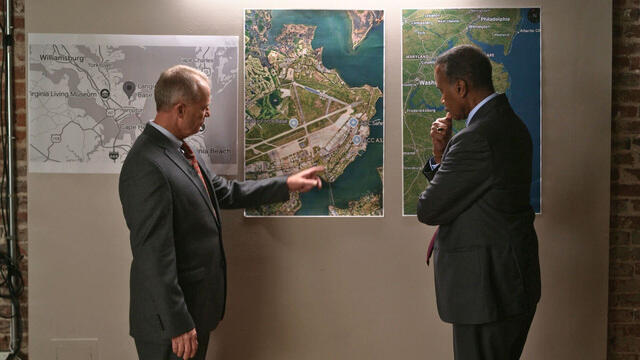
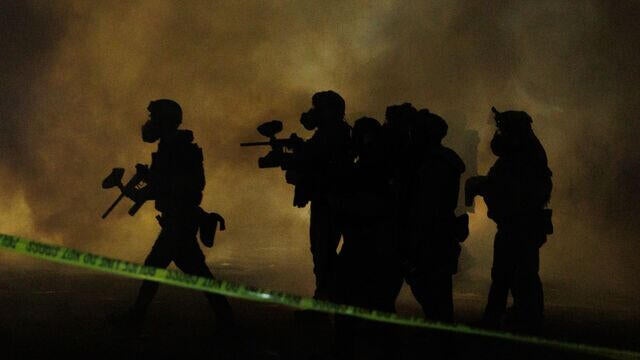
Nicolas Maduro faces drug-related charges in the US, and this DEA agent was at the center of the investigation. What was the most significant evidence against Maduro? It's a state-sponsored drug-trafficking organization, so it's a massive conspiracy.

BILL WHITAKER:
00:00:36

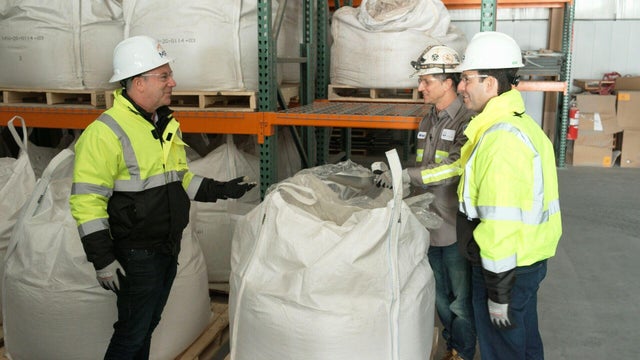
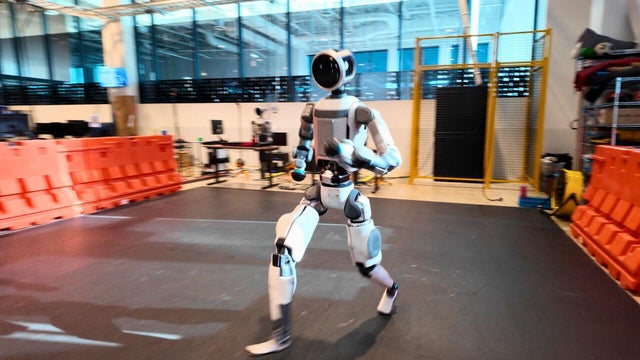
At Hyundai's sprawling auto plant, more than 1,000 robots work alongside almost 1,500 humans. This may look like the factory of the future, but we found the future of the future in the parts warehouse, getting ready for work. Meet Atlas, a 5-foot-9, 200-pound, AI-powered humanoid. I just can't believe what my eyes are seeing. [CLOCK TICKING]

SHARYN ALFONSI:
00:01:05

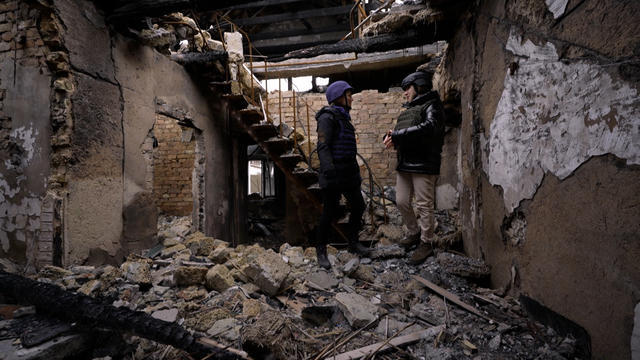
After becoming the youngest US women's figure skating champion at age 13, Alysa Liu shocked the skating world when she quit a few years later. Now Alysa is back and a favorite to win gold at the Winter Olympics. That was really pretty. I don't even know what to say. That was really pretty. [CLOCK TICKING] I'm Lesley Stahl. I'm Scott Pelley. I'm Bill Whitaker. I'm Anderson Cooper. I'm Jon Wertheim. I'm Cecilia Vega I'm Sharyn Alfonsi. Those stories, and in our last minute, Astronaut Suni Williams with a reflection on America from high above tonight on 60 Minutes. [CLOCK TICKING] Perhaps no American official has spent more time face to face with Venezuelan President Nicolas Maduro than Roger Carstens. Carstens was America's top hostage negotiator in the Trump and Biden administrations. He freed a total of 65 Americans unjustly held in countries, including Russia, Iran, and Maduro's Venezuela. Yesterday, US forces captured the Venezuelan dictator and his wife. Both are in jail in New York tonight, awaiting trial on drug-trafficking charges. Over the years, Roger Carstens convinced Maduro to release 20 American hostages. And in that time, Carstens got to know the man who is at the center of US foreign policy tonight. The administration would paint Maduro as a bloodthirsty drug dealer. Is that the man you knew? I don't think so. And yet, let me answer that by this way. On one way, I could say I'm not naive to the crimes that were committed by the regime writ large. And if you're the president of a country, you, of course, have responsibility for what's happening in your government. On the flip side, I would say that, being the person in the room with President Maduro, my job was to get Americans back. And that's best done by building a very human relationship. And in doing so, I didn't find him to be a bloodthirsty maniac. I found him to be a practical person, someone who wanted to find ways to solve the problems that were faced by his country. When you first heard that Maduro had been captured, what did you think? In a way, I wasn't shocked. I think probably as early as August or September, in watching the different military moves and the diplomatic moves take place, it seemed that unless he were willing to make some sort of deal or accommodation with the United States, I felt that the possibility of Delta Force showing up at 2:00 AM was very real. Do you believe that the Maduro that you met was an international drug dealer? From all the information that I've received, I would say no. I think the country clearly touched drugs. And there's information-- I always have to be very clear that I might see certain amounts of information, and there's always a treasure trove of information that I've never seen or never will see due to classification or compartmentalization. But what I witnessed was not someone who was necessarily hardcore in the drug business. And I'll be interested to see in how the prosecution goes about proving their case.

SCOTT PELLEY:
00:04:35

63-year-old Nicolas Maduro was in power 12 years. In 2024, he lost his re-election bid but remained in power and forced the winner into exile. Maduro ruled Venezuela's 28 million people as an autocrat, imprisoning his opposition and leaving the economy of an oil-rich nation in shambles. Yesterday, the US Department of Justice revealed an indictment of Maduro, accusing him in a so-called narco-terrorism conspiracy. These investigations aren't easy. They can be stressful. And they can take up a lot of time, this one 10-plus years.

SCOTT PELLEY:
00:05:17

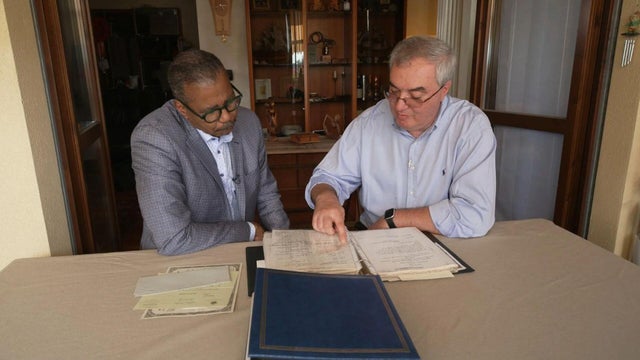
One of the investigators at the center of the case was Sandy Gonzales. He served 25 years in the Drug Enforcement Administration, part of that in Venezuela and investigating Maduro. Close to 20 years ago, DEA, the Special Operations Division, started looking at high-level drug trafficking in Venezuela. And it eventually led to high-ranking military police officials in Venezuela and, ultimately, government officials. And Maduro was among them? Yes. What was the most significant evidence against Maduro? It's a state-sponsored drug-trafficking organization, so it's a massive conspiracy. And what I mean by that is, not everybody is going to be holding the kilos of cocaine. But in a conspiracy, you link everybody together that's part of the chain. Maduro was part of that chain, first as a minister of foreign affairs and then later as a president. So when you're the president of a country and you are giving the green light to engage in this activity, and you're putting people in critical positions, in governors, ministers, heads of agencies, and allowing them to carry out these drug-trafficking activities, you're just as guilty as the person making the drugs and transporting the drugs. But is it a matter of Maduro simply looking the other way, or was he enriching himself from the drug trade? I believe the evidence is going to show he was enriching himself. It was much more than just looking the other way. There was direct involvement. With Maduro now gone, what, in your view, changes? So it was a great step, but Maduro isn't the only person in that government that was involved in drug trafficking. There are still several DEA fugitives in Venezuela in positions in that government. The job's just started. Maduro may be gone, but the drug conspiracy remains. Yes.

SCOTT PELLEY:
00:07:10

Also remaining in Venezuela are a few Americans reportedly held in prisons who were not rescued Saturday morning. Former hostage negotiator Roger Carstens told us that Maduro held and tortured Americans who had been arrested for minor offenses. Everyone had a different story. But the bottom line is that they were arrested for something in Venezuela, and within a few days, they were eventually sent to the intelligence or the military prisons in Caracas. Once in prison, then they were used as leverage by President Maduro in negotiations with the United States. But I can say, to my mind and my knowledge, and having read all the intelligence, there did not seem to be a concerted program to go find Americans to use them as leverage. It's just that whenever an American was arrested, they would end up being used as leverage. What did Maduro want in exchange? I think, initially, I wasn't sure that he knew what he wanted. But eventually, in meeting with President Maduro and discussing what it is that he might want, he settled on person-to-person swaps. There were a few people in US prisons that he wanted to have returned, and that's what we ended up settling on over time. How many Americans are still held there? I don't have the numbers exactly anymore because I'm no longer in the government, but as I understand it, four or five. In your view, should they have been rescued during this military operation? I think I would have loved to have seen that. I imagine-- the challenges of conducting a military hostage raid are significant. The advantage of doing it the other night, when we eventually went to Maduro, is that you've already eradicated the air defense capabilities of the Venezuelan military. You've challenged their command-and-control architecture. So adding on an additional mission of trying to get some hostages out, that might have been doable. But where are they? So since we may not know where all of them, you could find yourself having to hit two, three, or four objectives. And now you're taking it to a level of complexity that might have been too much for that night. It might have been just enough to get President Maduro, and then after the fact, work on trying to get the release of these remaining Americans.
SCOTT PELLEY:
00:09:22

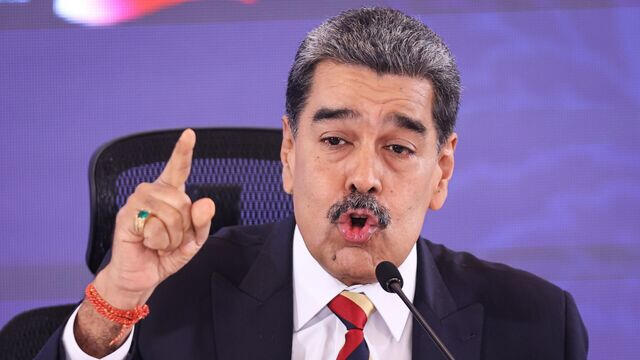
To release any remaining Americans and run Venezuela, the administration is speaking to Maduro's same government, now headed by Maduro's loyal vice president, Delcy Rodriguez. The US did not leave troops on the ground. And Venezuela's repressive military, intelligence, and police units are still in place. Yesterday, the president said this about Venezuela's near future. We're going to run the country until such time as we can do a safe, proper, and judicious transitions.

SCOTT PELLEY:
00:10:00

Democrats, including Arizona Senator Mark Kelly, are asking what's next. Yesterday, the president said, quote, "We're not afraid of boots on the ground." I think right now, we run the risk of Venezuela falling into some form of chaos. Who's going to run the country? Is it Delcy Rodriguez? Is it Maduro's hand-picked person? Or is it a democratically elected leader? We should be on the side of democracy. We're the good guys here.

SCOTT PELLEY:
00:10:33

Kelly serves on the Senate Intelligence and Armed Services Committees. Isn't removing Maduro good for US national security? I think having Maduro out of the country, now in New York, being prosecuted for his crimes, is a positive thing. The big question is just what comes next and who winds up in charge in Venezuela. They weren't thinking ahead here. Now they say they're going to run the country. What does that actually mean? I think this president needs to do a much better job articulating to the American people what is the plan going forward here. And then explain to the American people, what is this really about? Is it about law enforcement? Is it about drug smuggling into the United States? Is it about regime change? Or is it about what the president said 20 times yesterday? This is about extracting mineral rights, oil, from a foreign nation. He hasn't made that clear.

SCOTT PELLEY:
00:11:32

Yesterday, the president said it was about drugs. The illegitimate dictator, Maduro, was the kingpin of a vast criminal network responsible for trafficking colossal amounts of deadly and illicit drugs into the United States. As alleged in the indictment, he personally oversaw the vicious cartel known as Cartel de Los Soles, which flooded our nation with lethal poison responsible for the deaths of countless Americans, many, many Americans. Hundreds of thousands over the years of Americans died because of him.

SCOTT PELLEY:
00:12:11

In an interview today, President Trump threatened Venezuelan Vice President Rodriguez with what he called "a fate worse than Maduro's" if she didn't cooperate with the United States. Roger Carstens has negotiated extensively with the Venezuelan vice president. The Venezuelan vice president is now in charge. Her brother is the head of the National Assembly. Are these people that the United States can work with? When you take a look at Delcy Rodriguez, she's a lawyer and lots of international experience, hardcore technocrat. And I would say, in my meetings with her, I found her to be pragmatic and rational and reasonable. But the vice president has said that she wants Maduro back, wants to have nothing to do with the United States going forward. I have to wonder, is she playing to a domestic audience? Is she playing to an audience made up of the military and the intelligence community of Venezuela? I'm not sure. But what I do know is, everyone's essentially going to and eventually going to have to deal with the cards that have been laid on the table. And her cards are going to be pretty tough, in that the United States right now, to my mind, has the upper hand. And she'll have to have some sort of accommodation. You've known the Venezuelan vice president for a long time. I wonder if you've sent her a message since all this happened. I did pass a message off to her and her brother. And the message was simply, like, look, if you can find a way, work towards cooperating with the United States. And I think my fear is that if the current people in charge really dig in hard, than the United States, having already eradicated Venezuela's air defense capability and shown an ability to degrade their communications modes and their command-and-control structures, that it would probably be very easy for the United States to rearm, re-up, and then go right back in to grab people. Probably a harder legal case to make to do such a thing. But I think the right move for everyone is to just start to work together. And so the message I passed was one of simply saying, this is a time for trying to solve problems. And please be willing to and open to working with the US. [CLOCK TICKING] For decades, engineers have been trying to create robots that look and act human. Now rapid advances in artificial intelligence are taking humanoids from the lab to the factory floor. As fears grow that AI will displace workers, a global race is underway to develop human-like robots able to do human jobs. Competitors include Tesla, startups backed by Amazon, and NVIDIA, and state-supported Chinese companies. Boston Dynamics is a front runner. The Massachusetts company, valued at more than a billion dollars, is hard at work on a humanoid it calls Atlas. South Korean carmaker Hyundai holds an 88% stake in the robot maker. We were invited to see the first real-world test of Atlas at Hyundai's new factory near Savannah, Georgia. There, we got a glimpse of a humanoid future that's coming faster than you might think. Hyundai's sprawling auto plant is about as cutting edge as it gets. More than 1,000 robots work alongside almost 1,500 humans, hoisting, stamping, and welding in robotic unison. This may look like the factory of the future, but we found the future of the future in the parts warehouse, tucked away in the back corner, getting ready for work. Meet Atlas, a 5-foot-9, 200-pound, AI-powered humanoid created by Boston Dynamics. The rise of the robots is science fiction no more. I have to say, every time I see it, you just can't believe what my eyes are seeing. Is this the first time Atlas has been out of the lab? This is the first time Atlas has been out of the lab, doing real work.

BILL WHITAKER:
00:16:22

Zack Jackowski heads Atlas development. He has two mechanical engineering degrees from MIT and a mission to turn the robot into a productive worker on the factory floor. We watched as Atlas practiced sorting roof racks for the assembly line without human help. So he's working autonomously.

ZACK JACKOWSKI:
00:16:44

Correct.

BILL WHITAKER:
00:16:45

You're down here to see how Atlas works in the field. And you'll be showing Atlas off to your bosses at Hyundai? Yeah. Do you feel like a proud papa? I feel like a nervous engineer. [LAUGHTER]

BILL WHITAKER:
00:17:01

Jackowski has been preparing for this moment for a year. We first met him and Atlas a month earlier at Boston Dynamics headquarters, just outside the city, where he and his team were teaching Atlas skills needed to work at Hyundai. And Atlas, with its AI brain, was gaining knowledge through experience. In other words, it seemed to be learning. You know how crazy that sounds? Yeah, a little bit. And I think a lot of our roboticists would have thought that was pretty crazy five, six years ago.
BILL WHITAKER:
00:17:38

When 60 Minuteslast visited Boston Dynamics in 2021, Atlas was a bulky hydraulic robot that could run and jump. Back then, Atlas relied on algorithms written by engineers. When we dropped in again this past fall, we saw a new-generation Atlas with a sleek, all-electric body and an AI brain powered by NVIDIA's advanced microchips, making Atlas smart enough to pull off hard-to-believe feats autonomously. We saw Atlas skip and run with ease. Do you ever stop thinking, gee whiz? I remain extremely excited about where we are in the history of robotics, but we see that there's so much more that we can do as well.

BILL WHITAKER:
00:18:27

Scott Kuindersma is head of robotics research, a job he proudly wears on his sleeve. You even have on a robot shirt. Well, once I saw that this shirt existed, there was no way I wasn't buying it.

BILL WHITAKER:
00:18:41

He told us robots today have learned to master moves that, until recently, were considered a step too far for a machine. And a lot of this has to do with how we're going about programming these robots now, where it's more about teaching and demonstrations and machine learning than manual programming. So this humanoid, this mechanical human, can actually learn? Yes. And we found that that's actually one of the most effective way to program robots like that.
BILL WHITAKER:
00:19:15

Atlas learns in different ways. In supervised learning, machine learning scientist Kevin Bergamin, wearing a virtual reality headset, takes direct control of the humanoid, guiding its hands and arms move by move through each task until Atlas gets it. And if that teleoperator can perform the task that we want the robot to do and do it multiple times, that generates data that we can use to train the robot's AI models to then later do that task autonomously.

BILL WHITAKER:
00:19:46

Kuindersma used me to demonstrate another way Atlas learns. That very stylish suit that you're wearing is actually going to capture all of your body motion to train Atlas to try to mimic exactly your motions. And so you're about to become a 200-pound metal robot.

AUTOMATED VOICE:
00:20:03

The calibration process is now complete.

BILL WHITAKER:
00:20:06

He asked me to pick an exercise. They captured the way I work as well. I am here at the AI Lab at Boston Dynamics. All of my movements, my walking, my arm gestures are being picked up by these sensors. Then engineers put my data into their machine learning process. Atlas's body is different from mine, so they had to teach it to match my movements virtually. More than 4,000 digital Atlases trained for six hours in simulation. And they're all trying to do jumping jacks just like you. And as you can see, they're just starting to learn, so they're not very good at it.

BILL WHITAKER:
00:20:46

The simulation, he told us, added challenges for the avatars, like slippery floors, inclines, or stiff joints, and then homed in on what works best. And it can eventually get to a state where we have many copies of Atlas doing really good jumping jacks.

BILL WHITAKER:
00:21:06

They uploaded this new skill into the AI system that controls every Atlas robot. Once one is trained, they're all trained.

SCOTT KUINDERSMA:
00:21:16

So that's what you look like when you're exercising.

BILL WHITAKER:
00:21:19

Uh-huh. And what I look like doing my job. I am here at the AI Lab at Boston Dynamics. All of my movements, my walking, my arm gestures are being picked up by these sensors. This is mind blowing. Through the same processes, Atlas was taught to crawl, do cartwheels. It didn't fare as well with the duck walk. Oh, that was fun. And then this happens.

BILL WHITAKER:
00:21:51

And then this happens. We love when things like this happen, actually, because it's often an opportunity to understand something we didn't know about the system.

BILL WHITAKER:
00:22:00

What are some of the limitations you see now?

SCOTT KUINDERSMA:
00:22:03

Well, I would say that most things that a person does in their daily lives, Atlas or other humanoids can't really do that yet, Like what? Well, just putting on clothes in the morning or pouring your cup of coffee and walking around the house with it. That's too difficult for Atlas? Yeah, I think there are no humanoids that do that nearly as well as a person would do that. But I think the thing that's really exciting now is we see a pathway to get there.

BILL WHITAKER:
00:22:26

A pathway provided by AI. What stands out in this Atlas is its brain. NVIDIA chips, the ones that helped launch the AI revolution with ChatGPT, process the flood of collected data, moving this humanoid robot closer to something like common sense. So the analogy might be, if I was teaching a child how to do free throws in basketball, if I allow them to just explore and come up with their own solutions, sometimes they can come up with a solution that I didn't anticipate. And that's true for these systems as well.

BILL WHITAKER:
00:23:01

Atlas can see its surroundings and is figuring out how the physical world works.

SCOTT KUINDERSMA:
00:23:07

So that someday, you can put a robot like this in a factory and just explain to it what you would like it to do, and it has enough knowledge about how the world works that has a good chance of doing it. There's a lot of excitement in the industry right now about the potential of building robots that are smart enough to really become general purpose.

BILL WHITAKER:
00:23:28

Robert Playter the CEO of Boston Dynamics, spearheaded the company's humanoid development. He's been building toward this moment for more than 30 years. The cornerstone was this robotic dog, Spot, introduced almost a decade ago. Spots are trained in heat, cold, and varied terrain and roam the halls of Boston Dynamics. So we have some cameras, thermal sensors, acoustic sensors, an array of sensors on its back that lets it collect data about the health of a factory.

BILL WHITAKER:
00:24:04

Spots carry out quality control checks at Hyundai, making sure the cars have the right parts. They conduct security and industrial inspections at hundreds of sites around the world. What began with Spot has evolved into Atlas. So this robot is capable of superhuman motion. And so it's going to be able to exceed what we can do. So you are creating a robot that is meant to exceed the capabilities of humans. Why not, right? We would like things that could be stronger than us, or tolerate more heat than us, or definitely go into a dangerous place where we shouldn't be going. So you really want superhuman capabilities. To a lot of people, that sounds scary. You don't foresee a world of Terminators? Absolutely not. I think if you saw how hard we have to work to get the robots to just do some of the straightforward tasks we want them to do, that would dispel that worry about sentience and rogue robots.

BILL WHITAKER:
00:25:10

We wondered if people might have more immediate concerns. We saw workers doing a job at the Hyundai plant that Atlas is being trained to perform. I guarantee you there are going to be people who will say, I'm going to lose my job to a robot. Work does change. So the really repetitive, really backbreaking labor is going to end up being done by robots. But these robots are not so autonomous that they don't need to be managed. They need to be built. They need to be trained. They need to be serviced.

BILL WHITAKER:
00:25:47

Playter told us it could be several years before Atlas joins the Hyundai workforce full time. Goldman Sachs predicts the market for humanoids will reach $38 billion within the decade. Boston Dynamics and other US robot makers are fighting to come out on top. But they're not the only ones in the ring. Chinese companies are proving to be formidable challengers. They are running to win. Are they outpacing us? The Chinese government has a mission to win the robotics race. Technically, I believe we remain in the lead. But there's a real threat there that, simply through the scale of investment, we could fall behind.

BILL WHITAKER:
00:26:32

To stay ahead, Hyundai made that big investment in Boston Dynamics. Four robots--

BILL WHITAKER:
00:26:38

We were at the Georgia plant when Atlas engineer Zack Jackowski presented Atlas to Heung-soo Kim, Hyundai's head of global strategy. He came all the way from South Korea to check in on the brave new world the carmaker is funding. What do you think of the progress that they've made with Atlas? I think we are on track about the development Atlas. So far, it's very successful. It's a kind of a start of a great journey.

BILL WHITAKER:
00:27:11

The destination? That humanoid future we mentioned at the start-- robots like us, working beside us, walking among us. It's enough to make your head spin. [CLOCK TICKING]

ANNOUNCER:
00:27:28

The challenge of humanoid hands-- I think there's still a lot of opportunity to do even more dexterous manipulation tasks with robots.

ANNOUNCER:
00:27:36

--at 60minutesovertime.com. [CLOCK TICKING]

SHARYN ALFONSI:
00:27:46

Very few people retire at the age of 16. Then again, few people have careers with as many twists as American figure skater Alysa Liu. After becoming the youngest US Women's Champion in history at age 13, the phenom shocked the skating world when she abruptly quit a few years later. Now 20 years old, Alysa is back and a favorite to win gold at the Winter Olympics next month. Her return to the sport was almost as surprising as her departure from it. No one knew what to expect when she started training again. But somehow, on a Friday night this past March in Boston, Alysa Liu was leading at the World Championships with one performance to go. [POP MUSIC] She was the final skater of the night, a world title hung in the balance. [CHEERING] Within seconds, it was clear she was up to the moment. As Donna Summer's disco beat pulsated, Alysa Liu blissfully dashed around the ice, weaving intricate jump combinations with artistic flair. The sold-out crowd in Boston roared its approval. [CHEERING]

ALYSA LIU:
00:29:07

In my spin, right before I hit my ending pose, I saw everybody already standing up. Oh my god. I was like, this is wild. That was the most hype I've ever felt in my entire life. It's a crazy sensation.

SHARYN ALFONSI:
00:29:24

Alysa Liu had seized the night. She was the world champion. You did it!

SHARYN ALFONSI:
00:29:31

Her coaches, Phillip DiGuglielmo and Massimo Scali, were overjoyed. Wow. Did you guys see this coming? No. No. No. A year after she stepped back on the ice, she was at the top. It's unheard of. In our sport, it is. It is.

SHARYN ALFONSI:
00:29:52

Unheard of in women's figure skating because Liu has come back now as a grown woman-- That wasn't bad for how I feel.

SHARYN ALFONSI:
00:30:01

--a little edgier, bleached hair and more piercings, but also a full 7 inches taller than when she first broke through-- [CHEERING] --by winning the 2019 US championship at 13. She was still a child. The 4-foot-7 dynamo needed a lift to ascend to the top of the podium. Liu won another national title at age 14 and was hailed as the great American hope in figure skating. And I skated every day when I was, like, 13, 14. So it was a very abnormal childhood.

SHARYN ALFONSI:
00:30:39

She says coaches told her when to practice, what to wear, which music to skate to, even how much to eat. Was it a job? Yes yeah. Especially as a kid, you don't really know what you want. Skating feels more like a responsibility or a burden, even. Like this is what I have to do? Yeah.

SHARYN ALFONSI:
00:30:59

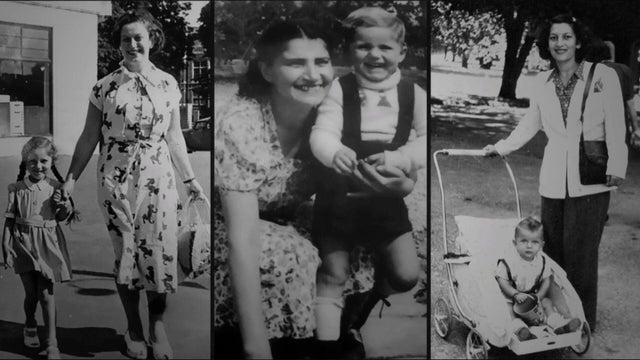
It was Alysa's father who was the engine of ambition. He was really in your business when you were younger. Oh, yeah. It was basically his business. It wasn't even really mine. Arthur Liu had no skating background. In his native China, he had organized demonstrations during the time of the Tiananmen Square protests and was forced to flee. He came to America with nothing. Arthur built a law practice and a family in the Bay Area. A single dad, he had five kids with the help of surrogates. Alysa was his oldest child. And her figure skating career became his second fulltime job. I took her everywhere. I took her to Japan to learn from the top coaches there. I took her to Canada. How much do you think you spent to help her become the figure skater that she is? I would say half a million to a million dollars. [LAUGHS] Arthur. I spared no money, no time, just-- Why? I just saw the talent.

SHARYN ALFONSI:
00:32:08

With so much at stake, Arthur began cycling and recycling through coaches. How many times did he fire you? Me once. I think three times. Three times? Once in person two via text, I think. Yeah. "Your services are no longer needed."

SHARYN ALFONSI:
00:32:26

Some coaches tried to keep Arthur away from the rink. But one afternoon, he just couldn't help himself. Just one time, I sneaked into the ice rink. Why?

SHARYN ALFONSI:
00:32:38

Big jacket, sunglasses, head covered, entered the ice rink from the back, not from the front. So I was sitting there, up in the bleachers, watching. And I didn't like what I saw, standing around for 20 minutes, skated around the rink a few times. That's where my money was going? And how did that go down? We stopped working with that coach. These stories make it sound like you were like this tiger dad who was all over her career and pushing her. Is that fair? Not quite, not quite. I was laissez-faire, yes. A laissez-faire dad doesn't bring a radar gun to the skating rink. Well, the radar gun is to measure her speed.

SHARYN ALFONSI:
00:33:30

Alysa says everything changed when the pandemic hit in 2020. Her rink in Oakland closed, allowing her to catch her breath. I was like, wow, this is what a break feels like. And then I was like, I really like not skating. The pandemic hits. Most people are like, oh, this is such a bummer. Honestly, I was hoping the rinks wouldn't open.

SHARYN ALFONSI:
00:33:53

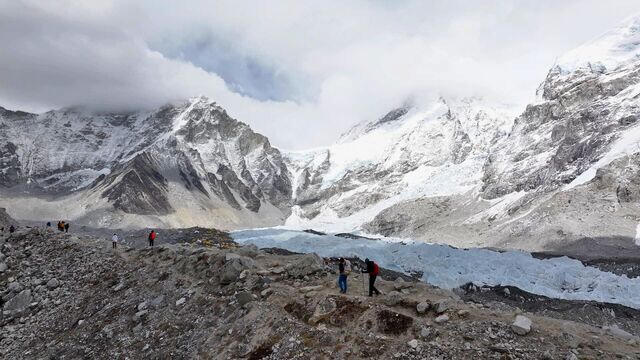
When rinks did open, Alyssa reluctantly returned to the ice. She made the 2022 US Olympic team, finishing sixth in Beijing. But she'd had it with figure skating. And then I was like, yeah, I'm calling it quits right now. She did it on Instagram, catching the sport by surprise. So tell me about the decision to retire. It was a crucial time in my life. I was 16, and college was coming up. I wanted to do so much. I went to Nepal, and I trekked to Everest base camp. Me and my friends would do tons of road trips. Yeah. I was really just living it up. I would say it was my best life. At any point, are you like, gosh, I kind of miss skating. No. Not at all? You're not thinking about it at all? No, not a thought. I deleted my Instagram so I wouldn't see any skating. No one ever brought it up. So I never even had the chance to think about it.

SHARYN ALFONSI:
00:34:47

But nearly two years into her self-imposed exile, she secretly laced up her skates. And did you tell your family you were putting your skates back on? I wasn't planning to return to competition at this point. I just wanted quick hits of dopamine, basically.

SHARYN ALFONSI:
00:35:03

Soon, she wanted more. She pestered one of her many former coaches, Phillip DiGuglielmo. And so I call up Philip. And I tell him, hey, I think I want to go back to skating. And I said, oh, that's fun. And I thought, like, oh, you want to do collegiate competitions. And she goes, no, I want to compete again. And I said let me call you back. I go, and I grab a bottle of red wine. And I open that bottle, and I pour myself a really big glass. And are you thinking this is a terrible idea? This is a terrible idea, terrible idea. Two and a half hours later of conversation with me trying to talk her out of it-- and everything I said, like, oh, I said, other people have tried this, and it was hard because they're older. She goes, I'm only 18.

SHARYN ALFONSI:
00:35:58

Alysa made it clear on the FaceTime call, if she came back, she would be in charge going forward. I get to pick my own program music. I get to help with the creative process of the program. If I feel like I'm skating too much, I'll back down. If I feel like I'm not skating enough, I'll ramp it up. No one's going to starve me, tell me what I can and can't eat. I love the--

SHARYN ALFONSI:
00:36:22

Phillip DiGuglielmo agreed with Alysa's conditions-- It's really the stretch.

SHARYN ALFONSI:
00:36:27

--and brought back choreographer Massimo Scali. It's like, bam. I got my team. I told US Figure Skating. And then I told my dad. And how did Dad react when you told him that? He was really happy. He's a great father. I just didn't want him to be as invested in it as he was before. When she said she didn't want you on the team anymore, were you hurt? A little bit. A little bit. It's like, I brought you up to two US National titles. Do you think Alyssa's a little bit of a rebel? Yes. Like her father? I think so. I really think so. She is a very free spirit, like me in many ways. God has a sense of humor, right? Yes, absolutely.

SHARYN ALFONSI:
00:37:16

In June 2024, Alysa started training again full time at her home rink, the Oakland Ice Center. The idea was to take it slowly to see where her comeback might lead, if anywhere. At first, she was out of shape. When you got back on the ice, how long did you think it would take you to be a contender for a world championship? Oh, never. I never-- That was not the plan? No. Guys, high five.

SHARYN ALFONSI:
00:37:43

But her coaches saw the old magic reappear. Oh, beautiful. That was really pretty. I don't even know what to say. The jumps came back like that. How amazing is that? Oh, incredible. And there was something different about the way she moved her body that was no longer a child. I kind of don't like that the leg and arm both move together.

SHARYN ALFONSI:
00:38:13

With her in charge, is she a better skater? Oh, yeah. 100%. What do you see? For many years, she was dropped off at the rink. She was told what to do. Now she comes in, and it is all collaborative. I could, like, hold. Yes, yes, yes, yes. I like that.

SHARYN ALFONSI:
00:38:31

Her attachment to her coaches can be literal. This harness and what looks like a fishing pole help reel her in before she falls. But eventually, they have to let her go. No. Nah. Ugh.

SHARYN ALFONSI:
00:38:49

This is what it takes to become a champion, constant pounding-- I'm so tired.

SHARYN ALFONSI:
00:38:56

--in pursuit of perfection. One more. I saw that when you were training and they're like, OK, that's good. And you're one more, one more. You don't need somebody pushing you. No, I have my own determination. My determination is, like, up there. You're pretty scrappy. I love struggling, actually. You do? Yeah. It makes me feel alive.

SHARYN ALFONSI:
00:39:17

Skating isn't Alysa Liu's entire life anymore. She's traded her ice princess tiara for a little freedom-- When you pulled your skirt out like that, that was cute.

SHARYN ALFONSI:
00:39:27

--and room for expression. Oh, yeah, this is it.

SHARYN ALFONSI:
00:39:31

What's unique about Alysa skating is her blend of jumping ability and alluring movement. Do you view yourself as an athlete or an artist? An artist, actually. But I love being an athlete too. I think it's really cool. I view competitions more as like a stage for performing. [LADY GAGA, "BAD ROMANCE"] I want your loving I want your revenge

SHARYN ALFONSI:
00:39:55

There will be no bigger stage than next month's Winter Olympics in Italy, where Alysa will be a gold medal favorite. No American woman has won an Olympic figure skating singles title in 24 years. Do you feel any kind of pressure that now I've got to do the Olympics and I need to win gold?

ALYSA LIU:
00:40:15

No. Actually, I'm really excited because my goal, honestly, is just to hype people up, give them an experience, whether it's negative or positive. As long as people are feeling some strong emotions and anticipation, I'm fine with that. [LADY GAGA, "BAD ROMANCE"] Roma, roma ma, Gaga, ooh, la, la Want your bad romance [CLOCK TICKING]

ANNOUNCER:
00:40:43

Now, the last minute of 60 Minutes. To mark the 250th anniversary of American independence, we're inviting leaders in the arts, science, and business to end this broadcast with their reflections on America. We begin with astronaut Suni Williams. She spent 608 days in space on three separate missions. We asked her, what struck you about the view of America from orbit? Looking at Earth from 250 miles above on board the International Space Station is just amazing. And I can't help but think about the 250 years of American innovation that got us to that point where we actually can have this view. MAN 1: Houston, Station 2 for [INAUDIBLE]. MAN 2: Go ahead on 2.

SUNI WILLIAMS:
00:41:31

It's actually really, really fun when you start to head toward the United States. You come over the West Coast. You start to recognize things. And that's home. You start to see the beaches that you know. You start to see the Rocky Mountains, the Plains, the Great Lakes, the Mississippi River, the Appalachians, and finally, the East Coast, where my family and friends are from. And then you have to automatically sit back and look at the country as a whole. We are working together as one country. And that's the view that we have. It is so special. From that view, it's hard not to think about where we, as a country, will be in the next 250 years. I think our possibilities are only limited by our imagination I'm Sharyn Alfonsi. Next Sunday, CBS broadcasts the Golden Globe Awards. So we'll be back in two weeks with another edition of 60 Minutes. [CLOCK TICKING] To be moderator of Face the Nation means bringing the most powerful stakeholders to the table. Why doesn't he tell Republicans, come into my office, let's hammer this thing out? Margaret, it's a totally fair question. [SUSPENSEFUL MUSIC]

ANNOUNCER:
00:42:49

Go to the ends of the Earth. We'll hit the heights.

ANNOUNCER:
00:42:53

Reach for the stars. Star power. I like it.

ANNOUNCER:
00:42:55

Experience thought-provoking-- Something that's undeniable. Ta-da.

ANNOUNCER:
00:43:00

--and truly original reporting. I'm in on this.

ANNOUNCER:
00:43:03

There's always something new under the sun on CBS Sunday Morning. [AUDIO LOGO]

Videos
View CBS News In
CBS News App Open
Chrome Safari Continue