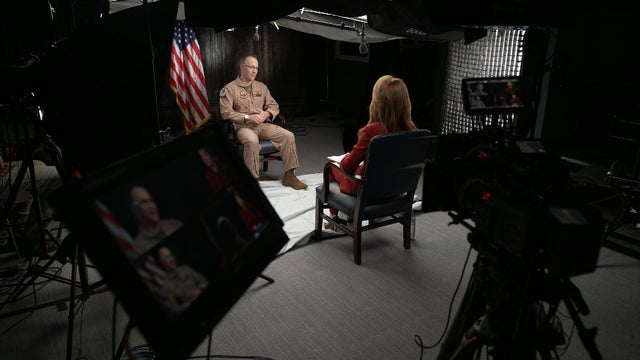
BILL WHITAKER:
00:01:01
Stay tuned. [CLOCK TICKING] JON WERTHEIM (VOICEOVER): 18-year-old Spanish soccer sensation Lamine Yamal is not yet licensed to drive, not yet liberated from wearing braces. But already the world, like the ball he dribbles, is at his feet.
JON WERTHEIM:
00:01:19
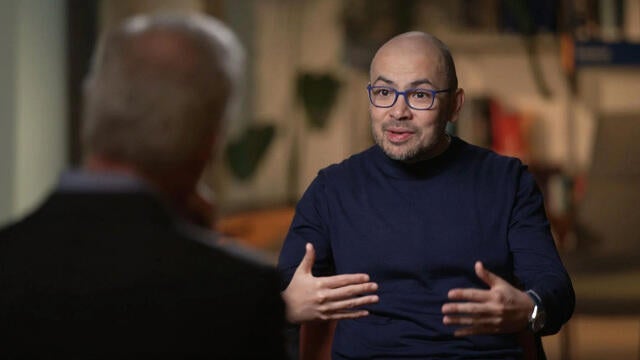
One thing we keep hearing is, this kid's got it. Right. What is "it"? How do you describe moonlight? How do you describe candlelight? How do you count the bubbles in a glass of champagne? I don't know. I just know when I see it, it's bloody beautiful. [CLOCK TICKING] I'm Lesley Stahl. I'm Scott Pelley. I'm Bill Whitaker. I'm Sharyn Alfonsi. I'm Jon Wertheim. I'm Cecilia Vega. I'm Anderson Cooper. Those stories. And in our last minute, a breakthrough in tracking monarch butterflies, tonight on 60Minutes. [CLOCK TICKING] Nearly a year before Donald Trump was elected in 2024, an online prediction market called Polymarket offered its users a chance to bet against each other on who would win the presidency. $3.6 billion was wagered on that one question. In the final month of the campaign, most pollsters were saying the race was too close to call, but that was conventional wisdom. Polymarket relied on the wisdom of crowds and correctly predicted the outcome. It's not just elections Polymarket helps its customers bet on, it's all kinds of questions. Who will win the Super Bowl? Will Taylor Swift get married this year? When will there be a ceasefire in Ukraine? The company was founded by a precocious college dropout named Shayne Coplan, who started building Polymarket five years ago when he was just 21. Prediction markets aren't new, but not many have earned the backing of billionaire investors like Polymarket has. If it all sounds a bit confounding, it did to us too. So we started by asking Shayne Coplan the most basic question of all. What is Polymarket? It's a site where you can basically bet on current events, some question about the future, like an election. And as a result, when a ton of people are betting, you get the betting odds, which basically tell you how likely each outcome is. And how accurate is it? It's the most accurate thing we have as mankind right now, until someone else creates some sort of super crystal ball. ANDERSON COOPER (VOICEOVER): Shayne Coplan may be prone to hyperbole, but he's definitely onto something.
REPORTER:
00:03:35
The race is a dead heat. ANDERSON COOPER (VOICEOVER): In the run-up to the 2024 presidential election, while pundits opined and pollsters canvassed, Polymarket posted a simple question for users to put money on. Who will be the presidential election winner in 2024? Donald Trump started pulling away in early October. I think one thing that's important to understand about Polymarket is it is not a poll. That's not the function of Polymarket.
SHAYNE COPLAN:
00:04:01
Correct. Polymarket is trying to predict the outcome. The percentage of people who are going to vote for a candidate is not the same as who's likely to win. And you would look at Polymarket and you would say 70/30 for Trump. And people are like, no way it's gonna be 70/30. He could win by one point, but he's 70% likely to win. Which is a different question than pollsters are asking. Exactly, but it's the question people actually want to know. By the way, we brought on--
ANDERSON COOPER:
00:04:26
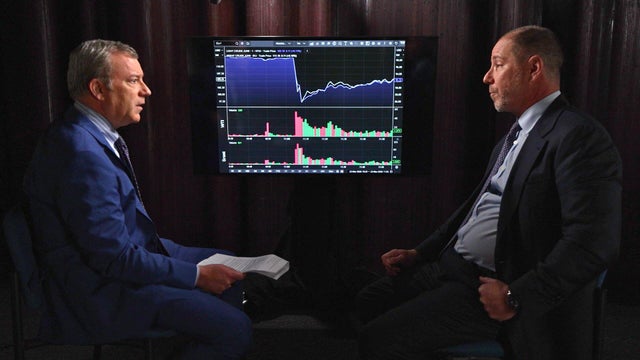
Polymarket posted another question months before President Biden's disastrous debate. "Biden drops out of presidential race?" Early on, the odds hovered between 10% and 30%. The market was pricing it that it was unlikely, but that it was possible. And ultimately, during the debate, the price started skyrocketing. You could watch it during the debate?
SHAYNE COPLAN:
00:04:48
Exactly. And everyone was talking about it. Because by that point, odds were-- Exactly.
ANDERSON COOPER:
00:04:53
--on Polymarket, he's gonna drop out.
SHAYNE COPLAN:
00:04:54
Yes. The idea that this was able to go and surface this at a time when a lot of the mainstream media-- and no knock to mainstream media, but a lot of people were trying to say, hey, he's gonna stay in. So the fact that Polymarket was able to be the signal through the noise there was our first step on the scene of mainstream politics. This is the main page for Polymarket. ANDERSON COOPER (VOICEOVER): At first glance, the site is a lot to take in. There are 15 categories to choose from, like politics, culture, sports, and finance. Within each, there are a lot of boxes with simple questions about an upcoming event. Fed decision. Bolivia presidential election. Russia and Ukraine ceasefire in 2025. How many questions are there at any one time? It usually fluctuates around 10,000, but a lot of them-- 10,000? But a lot of them have multiple outcomes or multiple variations. ANDERSON COOPER (VOICEOVER): Every question has a yes or no answer. To wager, you click on one of them. You make money if you're right. You lose money if you're wrong. And as a result, it creates this information that's really useful for people. ANDERSON COOPER (VOICEOVER): The percentages next to the questions are the odds, determined by all the other bets that have already been made. As more people wager and news breaks, the odds change. How do you select the questions? Look, if something is being discussed in the news, if something is of importance, whether it's geopolitically, macroeconomically, culturally, we want to have a Polymarket for it. So you can go through and you can-- ANDERSON COOPER (VOICEOVER): There are questions, or markets, to bet on just about everything, not just Taylor Swift's marriage, but when will she get pregnant. How many tweets will Elon Musk send in a week? This is predictions on who will be the top Spotify artist in 2025. Yeah, and the market's very confident it will be Bad Bunny. ANDERSON COOPER (VOICEOVER): Some markets are arguably in bad taste. Wagers on conspiracies, even wars. Elections everywhere, however, are one of the platform's biggest draws. Here you go to global elections. And you've got the Irish election. It's just-- There's $135 million being bet on the Irish election? Yeah. ANDERSON COOPER (VOICEOVER): When we met with Coplan last month, more than $3.6 million had been wagered on whether or not Venezuela's president, Nicolás Maduro, would be out of power by the end of the year. Polymarket users didn't think so. They gave it only a 23% chance. And if you buy no on that, and you're buying it at $0.78--


SHAYNE COPLAN:
00:07:13
Mm-hmm. --and at the end of the year, he's still in power-- Yep. You get $1 per share. So you've made a profit of more than-- $0.22 per share. I can see why this would be-- I don't want to use the term "addictive," but it would be compelling. Maybe it is addictive. I don't know. Well-- It's certainly compelling. This is how I see it. If you are into geopolitics, this creates an incentive for you to dig in to what's going on in Venezuela and try and get an edge. You grew up the west side. Uptown. Yeah. Uptown. ANDERSON COOPER (VOICEOVER): Shayne Coplan is a native New Yorker. He dropped out of NYU his freshman year, and when COVID hit, found himself looking for simple answers to complex questions.
SHAYNE COPLAN:
00:07:52
New York City was shut down. And it's like, when is this gonna end? When's the vaccine gonna be ready? When is shelter-in-place gonna be over? And prediction markets can take all these disparate opinions that people are pontificating about or that they have really good reason to believe and distill it down into one probability. But if nobody knows for sure-- Yeah, well, if people knew for sure, it would be 100%. But ultimately, it's gonna get you something that's better than whatever you're seeing on the internet, where it's just a complete free-for-all of open outcry. But predictive markets do rely on someone having some inside information.
SHAYNE COPLAN:
00:08:24
Mm-hmm. Yeah, I think that people going and having an edge to the market is a good thing. Obviously, you need to curate them. And you need to be really clear and stringent on where the line is drawn and ethics. And we spend a lot of time on that, but it's an inevitability that this will happen. And there's a lot of benefits from it. And people will adapt. ANDERSON COOPER (VOICEOVER): The site still has critics. Some worry certain questions could lead people to commit crimes to win a big enough bet. Polymarket was criticized for some of their markets about the LA wildfires earlier this year. There was a Polymarket bet about how many acres would burn in the LA wildfires. Some have labeled it arson markets. Someone could, in order to win that, try to burn more acreage. There were a lot of conversations about it, and there was a very select few of markets that felt that they were the most informational with the least, you know, risk. These are really small markets, and there's tons of markets. And I understand this is really sensitive. ANDERSON COOPER (VOICEOVER): It's the big markets that draw big bettors. And this is one of Polymarket's biggest. He's wagered more than $400 million so far. Online, he goes by the name Domer. I don't think of myself as a gambler. I'm taking very, very well-researched views on things. I feel like it's much more akin to investing. ANDERSON COOPER (VOICEOVER): Betting is Domer's full-time job. He said he made nearly $3 million last year on Polymarket. He used to be a professional poker player, but gave it up. Prediction markets, he says, are more exciting. Every day, I'm going into battle. You wake up-- Oh, yeah. --and you drink coffee, and you're in battle.
DOMER:
00:10:03
You are wrong. I look at my phone within five seconds of waking up. What have I missed? My phone is my coffee. What has happened overnight? Yeah, because the news doesn't sleep. Did you bet on the papal conclave? Yes, for sure. How? A papal conclave is a hermetically sealed environment. Information does not get out. Right. Nobody was putting money down that there would be an American Pope, but you were. Yeah, and his odds were 250 to 1. So he was a super, super, super long shot. ANDERSON COOPER (VOICEOVER): He won $100,000 on the Pope and even more picking JD Vance to be Donald Trump's running mate. He started betting on him five months before he was selected, when Polymarket was only giving Vance a 2% chance. What did you see that made you think, oh, he might pick JD Vance? So that goes back to 2016 when he picked Mike Pence. And buried in one of the articles for why he picked Mike Pence is that Mike Pence had a one-syllable name. And Trump has a one-syllable name. And Trump is very into marketing. And so I was looking at the names and I was like, who is one syllable? And not only is Vance one syllable, he's only two letters off of "Pence." So you bet $4,000, and you ended up winning $250,000? Yes. Yeah. That's a smart play. It is a good bet. Yeah. [LAUGHS] ANDERSON COOPER (VOICEOVER): Shayne Coplan made a risky bet when he built Polymarket in 2020. He did it fast, in just three months, and didn't seek regulatory approval as the law required. His chief competitor, Kalshi, did. In 2021, the Commodity Futures Training Commission launched an investigation into Polymarket. Coplan cooperated and ultimately paid a penalty.
ANDERSON COOPER:
00:11:42
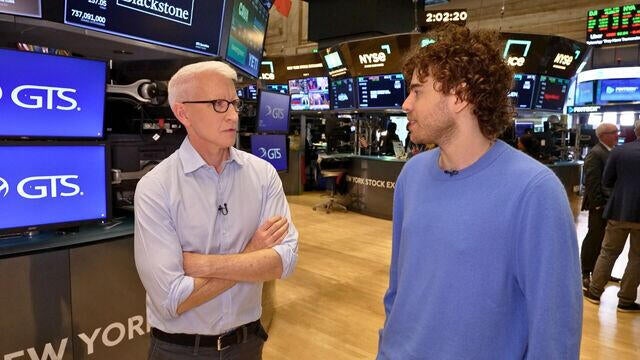
It was a $1.4 million fine, and also-- It was a settlement. --and you could not have customers in the United States. Yeah, we had to go and geoblock trading in the US and move certain operations offshore. And it wasn't, hey, you're banned from trading the US. It's until you're licensed. It was breaking the law. People say, breaking the law. It's like, which law? So if anything, it's incompatible. It's incompatible with the law? Yeah, with the regulatory matrix that existed. ANDERSON COOPER (VOICEOVER): The regulatory matrix was pretty clear. US customers couldn't trade on Polymarket, but plenty continued to. All they needed was a VPN connection to mask their computer's location. In 2024, in the final weeks of the Biden administration, Coplan got a surprise visit at home from the FBI. There was a lot of yelling and banging down the door. Knocking, this is the FBI, or-- No, a battering ram. ANDERSON COOPER (VOICEOVER): He wasn't arrested, but agents seized his phones and computers. But with a new administration came a new appreciation for prediction markets. In July, the government dropped its investigations. And Polymarket was able to buy a fully licensed, legally compliant trading platform, paving the way for their US customers to bet openly. Three months ago, Coplan named Donald Trump, Jr, already an advisor to Kalshi, to Polymarket's advisory board. And Trump, Jr.'s 1789 Capital fund invested around $10 million in the company. I think there's going to be people watching who think that you put the president's son on your advisory board to get influence, to be able to protect yourself. So it's definitely not to protect myself. Look, they invested. We're in this admin. This admin is very pro innovation and pro crypto and pro Polymarket, which is amazing. The administration. Yeah, and I need help navigating that. I'm a young entrepreneur. If I have people who believe in what I do, who understand how politics works and can help me, help guide me and teach me, there's nothing wrong about that. Let's go! Let's go! ANDERSON COOPER (VOICEOVER): Last month, Polymarket got its biggest validation yet. The company that owns the New York Stock Exchange announced it was investing $2 billion in Polymarket. You like the floor. ANDERSON COOPER (VOICEOVER): Days later, we met Coplan on the trading floor. What's it like to see your name up there, or to see Polymarket?
SHAYNE COPLAN:
00:13:58
Yeah, I love it. It's cool, man. ANDERSON COOPER (VOICEOVER): He told us Polymarket's data will soon be integrated into the exchange to help investors and traders get an edge. What valuation now has Polymarket been given? $9 billion post-money evaluation.
ANDERSON COOPER:
00:14:13
$9 billion. Did you anticipate that? [CHATTER] I didn't start it to not get here, you know? ANDERSON COOPER (VOICEOVER): Shayne Coplan is now a billionaire, at least on paper. And Polymarket, it still hasn't made any profit. It gives away its main product, its predictions, for free, and doesn't charge fees on trades, at least not yet. How many people use Polymarket today? There's tens of millions of people who are looking at the odds, and it's mid hundreds of thousands of people who are trading. But for you, the goal is a billion people. Yeah. So will Polymarket reach a billion people-- Mm-hmm. --in five years? Yes or no? It's a great question. What are the odds on it? I love it. A billion people is a lot. There's gonna be a lot that we have to get right. The thing that drives me is that there are billions of people who could find value in this, which means until those people have Polymarket, are getting value from Polymarket, job's not done. [CLOCK TICKING] America's future as a science leader may depend on students like the ones you're going to meet tonight, teenagers from Lambert High School in suburban Atlanta. They may have just found a better way to detect and treat Lyme disease, which affects nearly a half million Americans annually. Their primary tool, the revolutionary gene-editing technique known as CRISPR. And these CRISPR kids did it to try to prove they are the best in the world, competing at a science Olympics in Paris called iGEM, short for International Genetically Engineered Machine. But to win, they would have to go up against teams from China, the rising power in biotechnology. BILL WHITAKER (VOICEOVER): In Lambert High School's lab, Sean Lee and his classmates are teenage genetic engineers manipulating the building blocks of life. And what we're going to do is we're going to move each of these samples into these mixes. And these mixes have everything we need in order to amplify our DNA. It's currently amplifying. Yes. All right. And we'll have to do this three more times for our different samples.
WOMAN:
00:16:32
So you would swipe across. BILL WHITAKER (VOICEOVER): We went to check out the iGEM team's project for the big Paris competition. We first decided to map out where Lyme is most prevalent. BILL WHITAKER (VOICEOVER): Their presentation seemed more like a pitch from a biotech startup than a public high school science class. Along with Sean, senior Avani Karthik is also a team captain. And So it's a novel way of CRISPR that detects. And so we have to create a guide RNA. And when that guide RNA is recognized, the protein gets activated. And it collaterally cleaves or cuts everything around it. That just went right over my head. [LAUGHTER] BILL WHITAKER (VOICEOVER): This is light years beyond my biology class, where the high point was dissecting frogs. So you're just going to measure out 50. BILL WHITAKER (VOICEOVER): This is called synthetic biology. A popular example of synthetic biology is golden rice, where you're able to engineer this rice to have the specific vitamins that you want so that it's more nutrient-dense. And this would sound cliche, but it's just endless possibilities. So you can just do whatever you want with it, as long as it's ethically correct. BILL WHITAKER (VOICEOVER): To compete at iGEM, you need to use synthetic biology to solve real world problems. Lyme disease cases have doubled over the last decade. BILL WHITAKER (VOICEOVER): These teens set their sights on finding a better way to detect and treat Lyme disease, something that has eluded adult scientists for decades. Transmitted by infected ticks, Lyme can cause arthritis, nerve damage and heart problems if left untreated. One of the biggest problems with Lyme is the lack of being able to diagnose it. So a lot of people will go years. We met someone who went 15 years without a diagnosis. BILL WHITAKER (VOICEOVER): Current tests make it difficult to detect Lyme in the first two weeks, when it's easiest to treat. Lambert's big idea for better and earlier detection was to zero in on a protein generated by the infection.
BILL WHITAKER:
00:18:30
And this is the process where you work with CRISPR. Yes. BILL WHITAKER (VOICEOVER): Using the gene-editing tool CRISPR and a simulated blood serum, they were able to target specific DNA strands where the protein hides, then snip away extraneous genetic material to expose the protein, enabling them to detect it with a simple, kit-style test, like a COVID or pregnancy strip. Did you guys ever think, this is way above my abilities, way above my area of knowledge? Or you just dive right in? Yeah, so actually, we did reach out to a bunch of different professors and stakeholders who gave feedback on our project. And they did tell us in the beginning that this might not be so feasible because you're trying to tackle such a big thing. BILL WHITAKER (VOICEOVER): They were also tackling how to treat Lyme. Standard therapy uses antibiotics, but Lambert planned to use CRISPR instead, targeting the bacteria that causes the disease. To make it work, they had to build software to model how best to use CRISPR. So as a teacher, is it easy to teach them because they're so smart? They teach me. Are you kidding? They are so smart that I can't keep up. BILL WHITAKER (VOICEOVER): Kate Shera is their biotechnology teacher. Because they are still teenagers. So they're thinking so far out of the box. This project in particular. I warned them. This is very high risk, high reward. I can't imagine any of this working, but I'm happy to help you as much as I can. Oh my god. BILL WHITAKER (VOICEOVER): Lambert's team had advantages beyond audacity and brainpower. Their lab is college-level, funded by taxpayers and donors. This is one of Georgia's most affluent, high-achieving school districts. The student body is majority Asian-American. The iGEM team is entirely Asian-American children of immigrants. [CHATTER] [WHISTLE BLOWS] Lambert also is a sports juggernaut. You can't miss the signs. But the white iGEM lab coat might be the most coveted uniform of all. I understand that parents move to this district so their kids can get into iGEM program, and not just from Georgia, but from around the world. Yes, and there are families that move specifically thinking that, well, my kid will be in biotech. And then they'll have a chance to try out for the iGEM team. BILL WHITAKER (VOICEOVER): About 100 students compete for roughly 10 spots on Lambert's iGEM team each year. Applicants submit a project proposal, take a test, and face an interview. Having a special skill like engineering or coding doesn't hurt. And you have to be willing to put in insanely long hours. [LAUGHS] I need that to work. BILL WHITAKER (VOICEOVER): With a month to go-- Oh! Oh my god! BILL WHITAKER (VOICEOVER): --they hit a string of successes. Yay! BILL WHITAKER (VOICEOVER): That stripe showed they could detect Lyme as early as two days after infection, far sooner than the two weeks with existing tests. Senior Claire Lee told us they also saw promising results in treating the disease. Doctors will be able to use this to identify Lyme disease and perhaps treat Lyme disease. That's the goal. Mm-hmm. What do you think of that? We're doing something in our high school lab that could potentially have a huge impact for millions of people. It's not like we're just saying, oh, I'm just doing this little thing that it might help my grade. This thing could help save lives. BILL WHITAKER (VOICEOVER): What they found is just the first step. Much more testing will be needed, but they had more immediate concerns. They raced to finish before the international competition in Paris, pulling all-nighters to write results, code, and build a website explaining their project for the iGEM judges. It takes all that to be best in the world, the award Lambert won in 2022. Why do you do it? I like to win. And so a lot of this is a competition, so I like to win. You think you have a really good chance? I think it depends on what the other teams bring. BILL WHITAKER (VOICEOVER): Hopes were high as the Eiffel Tower when the students from Atlanta landed in Paris at the end of October. More than 400 teams, a third of them high schoolers, were competing in iGEM 2025. Elite synthetic biology with a dash of nerd proud culture. My first time coming here, I was so overwhelmed. BILL WHITAKER (VOICEOVER): This was Avani Karthik's third year at iGEM, and she was keeping an eye on the other teams. Is there a project here that has blown your mind? Almost every single one. BILL WHITAKER (VOICEOVER): One was just a few feet away from their booth. Great Bay in Shenzhen, China. Great Bay's project developed a new enzyme for treating indoor mold. Other high school projects included designing crops to grow on Mars and eye drops to treat cataracts. As iGEM teams filled the floor this year at the Paris Convention Center, one thing was easy to see. In the United States this year, we have 14 high school iGEM teams. Asia has 120. Yeah. BILL WHITAKER (VOICEOVER): Janet Standeven runs iGEM's international high school division. Before this, she taught at Lambert, created its iGEM program, and helped it win the grand prize in 2022. Are you thinking to yourself, this needs to be in every school? Yes. Oh, that's been our goal since day 1 is, let's start with Georgia as a little test bed and see what we can do here. BILL WHITAKER (VOICEOVER): She left Lambert three years ago after securing federal funding to take synthetic biology to high schools all across Georgia. But the Trump administration cut the money, claiming it fell under DEI, Diversity, Equity, and Inclusion. A judge temporarily restored the funding, but Standeven told us she's not sure it will extend beyond 2026. What did you think when your funding got cut? I was devastated. Absolutely devastated. I was angry. And again, I think anybody that's involved in this work at the high school level realizes this is necessary work. BILL WHITAKER (VOICEOVER): In Paris, Lambert presented its work on stage. Caused by the genus beryllium, Lyme is transmitted through the bites of infected ticks. BILL WHITAKER (VOICEOVER): And behind closed doors, the team dressed up to meet a panel of judges, answering questions about their lab work and its real world implications. Is this what you imagined it would be 20 years ago? Hard to imagine this. BILL WHITAKER (VOICEOVER): Stanford professor Drew Endy was one of iGEM's founders. Back in the early 2000s, Endy was at MIT teaching genetic engineering. And his students had a competitive streak. So we started iGEM because the people who wanted to work with us were the 18-year-olds. BILL WHITAKER (VOICEOVER): iGEM thrived as biotech boomed. But Endy warned Congress, America's lead in the field is slipping while China has made synthetic biology a national priority. How concerned are you that there are not more American participants in iGEM? It's a profound concern. It's urgent that leadership of the next generation of biotechnology has a strong presence in America and is represented by young American leaders. BILL WHITAKER (VOICEOVER): Endy was encouraged by the work done by the team from Georgia and wanted to know more. How do you deliver it? Yeah, so we want to deliver it through lipid nanoparticles. BILL WHITAKER (VOICEOVER): Endy echoed what other scientists told us, that Lambert's project could be a major scientific breakthrough if further testing pans out. This year, they appear to have developed a better diagnostic for Lyme disease than anything I've seen before. It's not only applicable to Lyme disease, but anything you could find in your blood. BILL WHITAKER (VOICEOVER): As groundbreaking as their lab work was, Avani Karthik knew Lambert was being judged on everything from their website to their software. How do you think you're going to do? I'm hoping we finish top 10, but even that I don't know. We'll see. BILL WHITAKER (VOICEOVER): That would be top 10 out of 140 teams. Fingers crossed. Yeah. Arms crossed. Knock on wood. Knock on wood. Everything.
MAN:
00:27:12
(SINGING) Oh-oh, oh-oh. We're here to celebrate each and every one of you for all of your hard work, creativity, and enthusiasm. BILL WHITAKER (VOICEOVER): On iGEM's final day, it was time to see what a year of work had earned Lambert High School. The nominees are-- BILL WHITAKER (VOICEOVER): It was a nail-biter.
AUDIENCE:
00:27:29
Yeah! BILL WHITAKER (VOICEOVER): They were nominated in five different categories and kept getting edged out. [CHEERING] They didn't win the grand prize. That went to China's Great Bay. So the winners are-- [CHEERING] BILL WHITAKER (VOICEOVER): But there was joy. They got to storm the stage for Best Software Tool.
ANNOUNCER:
00:27:54
Congratulations. Great job. Great job.
AVANI KARTHIK:
00:27:56
We thought our project was amazing. Hold on just a minute. Your project was amazing. We're very proud of it, but it's what the judges think at the end of the day. You're in the top 10-- Yes.
BILL WHITAKER:
00:28:06
--in the world. Yes. BILL WHITAKER (VOICEOVER): Lambert was the only American school to finish in the high school top 10, along with one team from South Korea, one from Taiwan and seven from China. [CLOCK TICKING] Want to see eyes pop and jaws drop? Ask your soccer-loving friends about Lamine Yamal, an 18-year-old sensation from Spain. Better yet, watch him play, ideally in person, which you can do next summer when the World Cup comes to North America for the first time in 32 years. The tournament draw will be held Friday in Washington, DC. This World Cup likely will double as a valedictory for global soccer's GOAT, Lionel Messi of Argentina. But it will also be a debut showcase for the extravagant generational talent of the player who's been cast as Messi's heir. Lamine Yamal is not yet licensed to drive, not yet liberated from wearing braces. Already, though, the world, like the ball he dribbles, is at his feet. JON WERTHEIM (VOICEOVER): Summer of '24. Munich, Germany. Semi-finals of the European soccer championship. Remember what you were doing at age 16? Spanish soccer whiz kid Lamine Yamal was doing this, a bit of sorcery that helped Spain vault to victory over France, and eventually to the European title. And it vaulted Lamine out of adolescence and into global sports stardom. Turned out he was just limbering up.
COMMENTATOR:
00:29:44
Ah! Lamal! JON WERTHEIM (VOICEOVER): Now, all of 18, he's a star winger for his pro club, FC Barcelona, a.k.a. Barca. He doesn't just score goals. He's a master of improv. Watch here. It's almost like slapstick comedy as he eludes a gaggle of grown men from the other team. [CROWD REACTIONS] You're a teenager. Sometimes these guys are 10, 15 years older than you. They've got kids at home. And you're still clowning them. [SPEAKING SPANISH]
INTERPRETER:
00:30:11
If I were a fullback, I wouldn't like it if a player who's much better than me were to keep getting away from me all the time. I'd ask them, please slow down a little. Otherwise, my friends would make memes about it. [SPEAKING SPANISH] What do you see as your soccer superpower? [LAUGHS]
INTERPRETER:
00:30:26
I think that I would like to brighten people's day. For example, if someone is sad, they can come to a game, watch me and feel better, so they go home happier than they were before.
PHOTOGRAPHER:
00:30:38
Lamine, this way! This way! Lamine! JON WERTHEIM (VOICEOVER): Having recently finished second in the Ballon d'Or, global soccer's equivalent of the MVP race, Lamine has currency with his generation. Oh. Oh, look at this. JON WERTHEIM (VOICEOVER): He's also enraptured soccer purists like 70-year-old Ray Hudson, a former pro player, coach and broadcaster who's covered Lamine's games. Astonishing.
JON WERTHEIM:
00:31:00
How good is this kid? He's extremely, extremely, extremely good. This is an absolute uncut diamond. [CROWD REACTIONS] There's times I've been watching him where I could swear that he's thrown his shadow the wrong way. And the defenders are just bewitched by this shift of the weight. He's a skitter bug. And like watching a dragonfly. You know how when you see a dragonfly? And [BUZZING]. And-- Put yourself in the defender's shoes. How would you defend that? Yeah, I-- you have to ignore him, which is ridiculous. Because once Yamal sends you the wrong way with that wonderful feign that he has, the defender has to pay to get back into the stadium. He needs a ticket to get back on the pitch. Exactly. Beautiful. Intoxicating to watch. [CROWD REACTIONS] JON WERTHEIM (VOICEOVER): Try averting your eyes from this. Note the touch and spin, enough to shame a pool hustler, that Lamine Yamal puts on the ball. It's also the play-making and vision expressed in exquisite passes. [CROWD REACTIONS] The ball is more than a sphere he kicks. He calls it his first love. Do you ever talk to the soccer ball? No. [SPEAKING SPANISH]
INTERPRETER:
00:32:16
No, I'm not that crazy. But it could happen in the future. What do you think you might say to the ball? [SPEAKING SPANISH] JON WERTHEIM (VOICEOVER): I'd probably ask it to marry me and to have lots of kids. [LAUGHS] JON WERTHEIM (VOICEOVER): Inasmuch as an 18-year-old can be said to have grown up, Lamine did so here in Rocafonda, a struggling North African immigrant enclave a half hour Northeast of Barcelona. He was born in Spain to a Moroccan father and Equatorial Guinean mother. He found his footing on this concrete slab a short kick from the Mediterranean, a make-do soccer pitch, but also a promenade. The steps still double as bleachers. The graffiti reads, "In the neighborhood of Rocafonda, more Lamine Yamals and fewer evictions." I'm wondering what's more stressful, playing for Barca or being the little kid playing in Rocafonda against the big kids. [SPEAKING SPANISH] JON WERTHEIM (VOICEOVER): I think that, without a doubt, when I was in Rocafonda. Because in the end, it was a neighborhood where no one knew what was going to happen in their lives. The truth is, no one knew whether they would become a soccer player, an architect, a painter, or whether they'd find a job. You see your parents working. They can't be with you all the time. And you feel not nervous, but uncertain about what's gonna happen to you. [CHEERING] Today, after Lamine scores a goal, he acknowledges the old neighborhood.
JON WERTHEIM:
00:33:37
The 304. What does that symbolize? What does that represent? [SPEAKING SPANISH] JON WERTHEIM (VOICEOVER): It's the symbol for our neighborhood's zip code. Because in Barcelona, the zip code starts with 0-8. And ours is 08304. So, what, it's right hand? This here. OK. Yes, like that. JON WERTHEIM (VOICEOVER): Just blocks from the concrete pitch in Rocafonda, Lamine's Uncle Abdul runs the LY 304 Cafe. Do you think, a few years ago, I was teaching this kid how to tie his shoe, and now he's scoring goals and bringing joy all over the world? [SPEAKING SPANISH]
INTERPRETER:
00:34:14
Yes. Lamine was very savvy as a child, doing everything on his own. [SPEAKING SPANISH]
INTERPRETER:
00:34:20
He has the maturity of a 25- or 30-year-old. JON WERTHEIM (VOICEOVER): Lamine's prodigious talent was such that he was spotted by Barcelona scouts at age six. Soon he was taking the train to practice at La Masia, Barca's famed youth academy.
COACH:
00:34:36
Lamine, Lamine, Lamine. JON WERTHEIM (VOICEOVER): From the start, he stood out.
COACH:
00:34:39
[SPEAKING SPANISH] JON WERTHEIM (VOICEOVER): By 15, he was making his pro debut for Barca, the youngest player in the club's 126-year history. Two years and one dye job later, he's lived up to his promise. One thing that struck us watching you play is that when the game tightens, you want to make something happen. You want to make magic. Where does that come from? [SPEAKING SPANISH]
INTERPRETER:
00:35:03
Where I used to play in my neighborhood. There were walls where people would sit. And I think there was no better feeling than getting the people who were sitting there to stand up, to laugh at the opponents. I think it's the best feeling in the world. And something that reminds me of that a lot is when I'm playing on the field and the fans get up and are surprised by a play I've made. I get the feeling you don't mind being a star. [SPEAKING SPANISH]
INTERPRETER:
00:35:28
No. Honestly, I don't. In fact, I like it. JON WERTHEIM (VOICEOVER): Lamine's soccer sensibilities jibe with Barcelona. This is the city of Antoni Gaudi, the architect whose distinct buildings define Barcelona, contorting possibility. Likewise, Lamine is not merely a creative talent, but a bender of convention. Still, he's most closely associated with another Barcelona icon, a player enshrined at the club's museum who played for Barca from 2004 to 2021 and won eight Ballon d'Or.
JON WERTHEIM:
00:36:02
You ever made it this far in an interview and not had to answer a question about Messi? [SPEAKING SPANISH]
INTERPRETER:
00:36:08
I was surprised, honestly. I was surprised because there were moments where you could have brought him up, but you didn't. So I knew the question was coming. But this topic has come up later than usual. [SPEAKING SPANISH] Should we get your standard answer, or should we try to put spin on the ball? No, you can. You can. You ever hear the expression "game respects game"? [SPEAKING SPANISH]
INTERPRETER:
00:36:28
I think that I respect him in the end for what he's been, for what he is to soccer. And if we ever meet one day on a soccer field, there will be that mutual respect. [SPEAKING SPANISH]
INTERPRETER:
00:36:39
He's the best in history. We both know I don't want to be Messi. And Messi knows I don't want to be him. I want to follow my own path, and that's it. JON WERTHEIM (VOICEOVER): The Messi-Lamine bracketing began way earlier than fans perhaps realize. We visited Joan Monfort in his photography studio in the middle of Barcelona. He showed us a series of images he took in October 2007, then 20-year-old Lionel Messi posing with a three-month-old and his mother. The family had won a raffle to appear alongside a Barca player in a UNICEF calendar. That chubby-cheeked baby? Impossibly, it's Lamine Yamal.
JON WERTHEIM:
00:37:18
What are the odds that you have Lionel Messi on the verge of stardom with Lamine Yamal, now on the verge of stardom? [SPEAKING SPANISH] JON WERTHEIM (VOICEOVER): It's like winning the lottery. It's a 1 in 10,000,000 chance. [SPEAKING SPANISH] JON WERTHEIM (VOICEOVER): And I don't know. Can you imagine if I told you right now that there's a photo of Michael Jordan giving a bath to LeBron James? Uh, LeBron James. JON WERTHEIM (VOICEOVER): Monfort, of course, had no idea at the time that he was taking historic photos. Do you believe in the soccer gods? [SPEAKING SPANISH]
INTERPRETER:
00:37:51
I didn't, but now I think I'm starting to believe in them a little bit. JON WERTHEIM (VOICEOVER): Fast-forward not even 18 years. Lamine's whole family, including his Moroccan grandma, came together last July when he signed a contract with Barca, widely reported to pay him around $30 million a season. That day, he was also conferred number 10, the same number Messi wore. Worried about the crushing weight of expectation? You've got the wrong guy. [CHEERING] There's some noise as well that, boy, life is coming at this kid so fast, and slow down, Lamine Yamal. What's your response to that? Hmm. [SPEAKING SPANISH]
INTERPRETER:
00:38:33
Well, I would say that if, for example, you have a job and you get asked if you want to be the boss, what would you say? Yes or no? Am I going too fast? So that's my answer. One thing we keep hearing is, this kid's got it. What is "it"? How do you describe moonlight? How do you describe candlelight? How do you count the bubbles in a glass of champagne? I don't know. I just know when I see it, it's bloody beautiful. JON WERTHEIM (VOICEOVER): Even Ray Hudson, for all his gushing, acknowledges there are plenty of blazing young soccer talents who fizzle out. What could go wrong? Any number of things. Injuries, personal disputes, his family life. We'll see it on the pitch because the green doesn't lie. Athletes have their fans and their support teams. The successful athletes have people in their circle, too, who can tell them no, who can call them on their nonsense. Who is that for you? [SPEAKING SPANISH]
INTERPRETER:
00:39:30
The truth is that everyone says no. Everyone in my circle says no to everything. [SPEAKING SPANISH] If I want to go out, no. If I say that I want to go out to eat, no. The question should be, who do you listen to? Mi madre.
INTERPRETER:
00:39:43
My mother. Can you be a normal 18-year-old at times? Mm-- [SPEAKING SPANISH] JON WERTHEIM (VOICEOVER): That's a difficult question, because in the end, an 18-year-old kid gets out of school and goes home. I go out to practice while four paparazzi are at my house, asking me questions about my life. I turn on the TV and I'm on TV. I walk down the street and I see a kid wearing my jersey. I want to go out for a drink and I can't because people will stop me. [SPEAKING SPANISH] JON WERTHEIM (VOICEOVER): I always try to find the simplest things to do, like play video games or spend time with my brother. But yes, honestly, I do believe that I'll never be a normal 18-year-old because people don't see me as normal, and I won't be able to act that way. Some athletes have signature tattoos. As you've no doubt noticed, Lamine has signature braces, "los brackets" in Spanish, containing him in a way defenders cannot. Braces come on or off before World Cup? [SPEAKING SPANISH]
INTERPRETER:
00:40:41
I wish it were up to me, but I don't know. I'll have to call my dentist and ask if I'll still have braces or not. But I think they suit me. I look good with brackets. Mm-hmm. I look good. Yes? [SPEAKING SPANISH]
INTERPRETER:
00:40:53
I'll leave them on, then. The goals and the assists are all well and good, but you've made braces cool. It doesn't get better than that. [SPEAKING SPANISH] JON WERTHEIM (VOICEOVER): With or without braces, Lamine and his Spanish teammates will be on the shortlist of World Cup favorites next summer in North America. Just ask the star himself. Whether it's Michael Jordan or Muhammad Ali or Joe Namath, these are all athletes way older than you, there is a history of guaranteeing victory. So I ask you, does Spain win the World Cup? In English, yes. [CLOCK TICKING] [CLOCK TICKING]
NARRATOR:
00:41:35
The last minute of 60Minutes is sponsored by UnitedHealthcare. Coverage you can count on for your whole life ahead. Tonight, an update on last season's story from the mountains of Mexico, where we witnessed the mysterious migration of monarch butterflies. You can actually hear the sound of butterfly wings. Yeah. Let's just be quiet for a second. [INTENSE RUSTLING]
ANDERSON COOPER:
00:42:16
Look at that. Look at that up there.
MAN:
00:42:18
Oh my gosh.
ANDERSON COOPER:
00:42:19
It's still something of a mystery how these monarchs find their way thousands of miles from the US to Mexico. But now scientists are using tiny, solar-powered radio tags to track individual butterflies, unlocking clues about one of the most remarkable migrations in the natural world. I'm Anderson Cooper. We'll be back next week with another edition of 60Minutes. [CLOCK TICKING]
NARRATOR:
00:42:45
If you love 60Minutes, see America's stories told every weeknight on the CBSEvening News. [MID-TEMPO MUSIC] [AUDIO LOGO] [CLOCK TICKING]