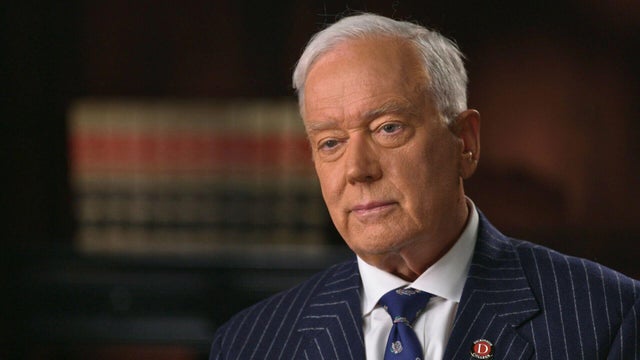
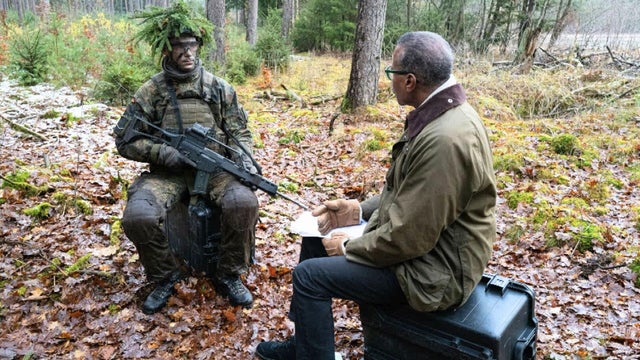
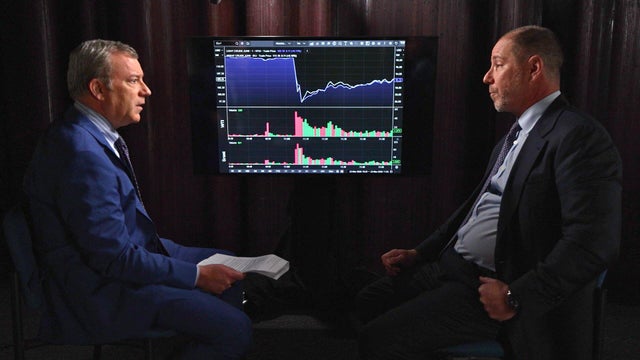
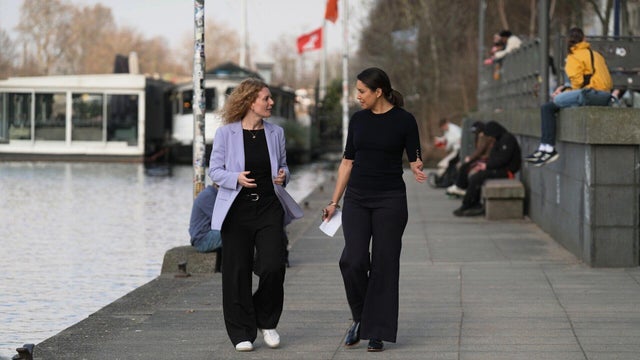
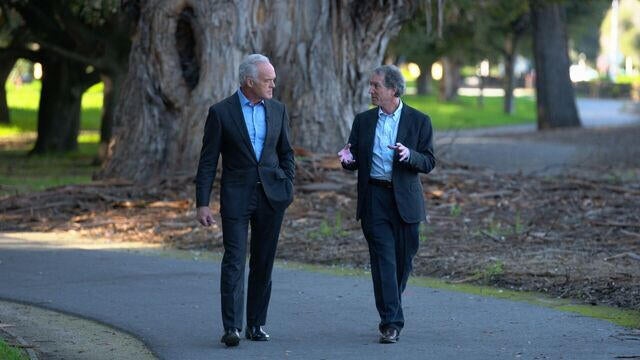
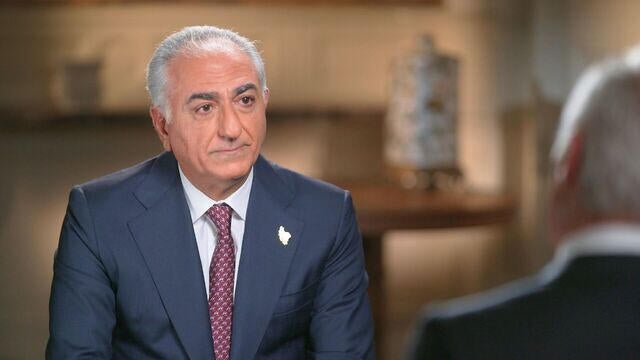
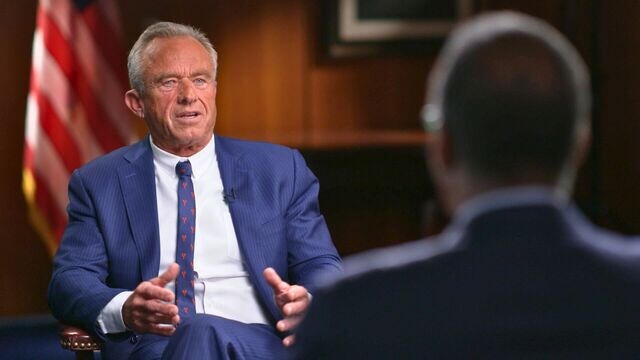
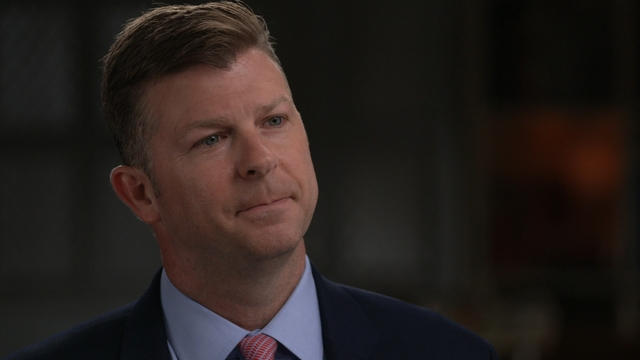
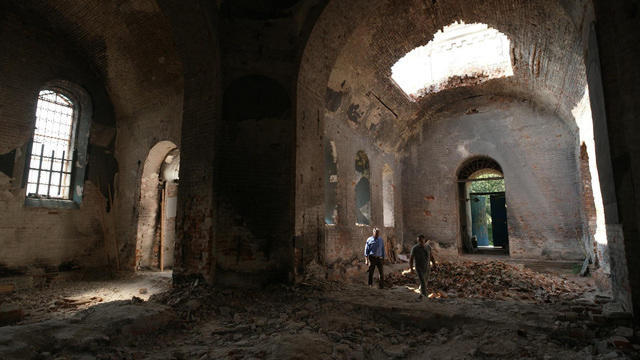
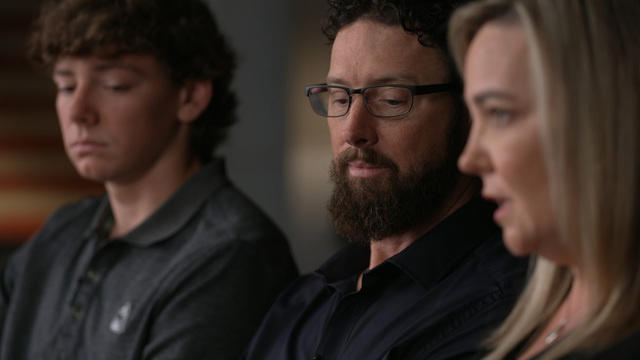
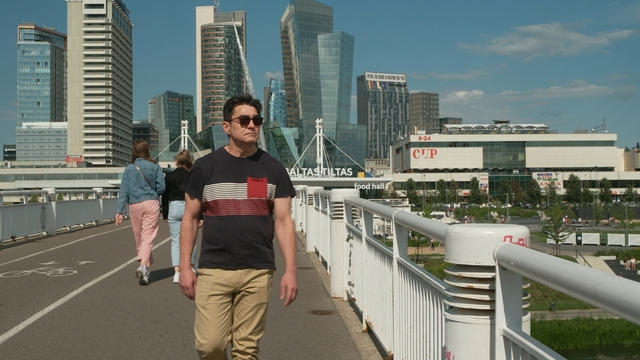
SCOTT PELLEY:
00:00:10
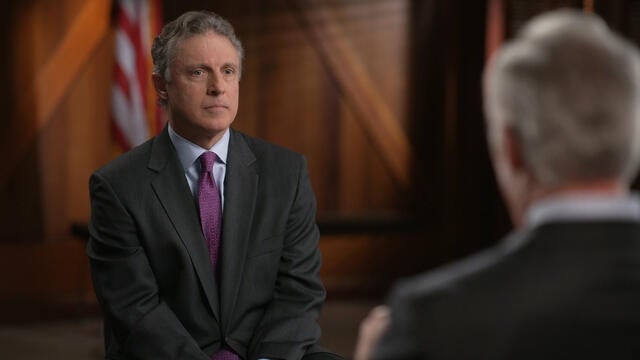
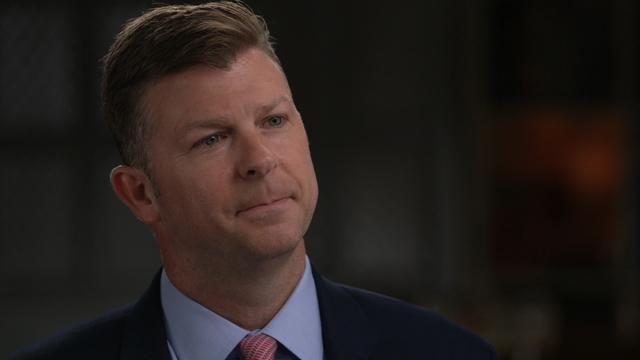
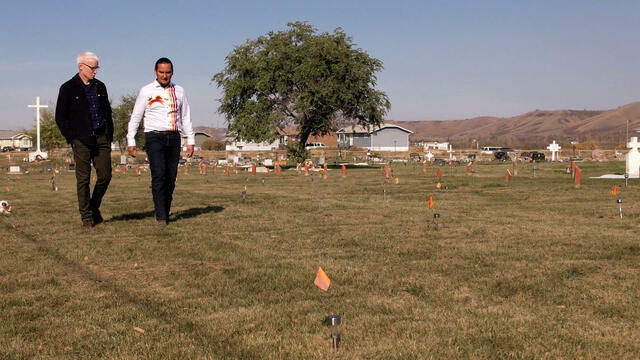
Not many knew Utah's governor before the assassination of Charlie Kirk. Our nation is broken.
SCOTT PELLEY:
00:00:19
But Spencer Cox has been on a years-long crusade to heal American politics. I don't think it's hyperbole to say that the future of our country is at stake. [TICKING]
BILL WHITAKER:
00:00:35
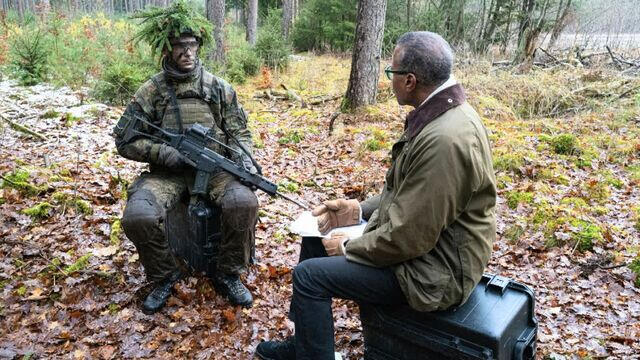
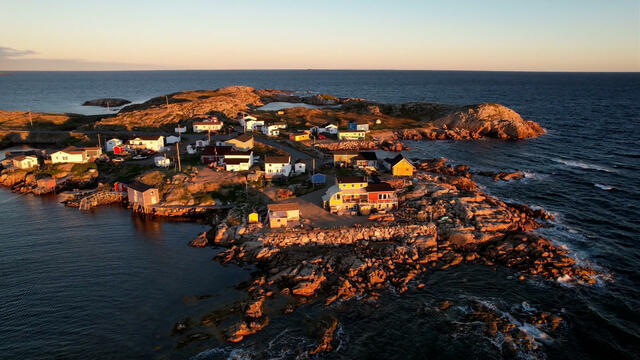
We cut across the Baltic in this small Navy dinghy, looking for clues to a nautical whodunit. Undersea cables that carry electricity, gas, digital communications have been severed in the waters off the coast of Finland. So I have to ask, what seems to be the obvious question. Is this Russia? [TICKING] [CROWD CLAMORS]
JON WERTHEIM:
00:01:03
The most prominent fighter in the UFC. Wow.
JON WERTHEIM:
00:01:06
Hint, he doesn't wear gloves. Good fight. Thank you very much. You got it.
JON WERTHEIM:
00:01:10
It's the all-powerful boss, Dana White. [ANNOUNCERS SHOUT]
DANA WHITE:
00:01:14
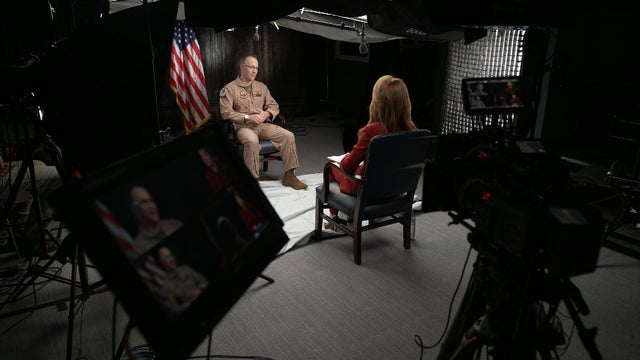
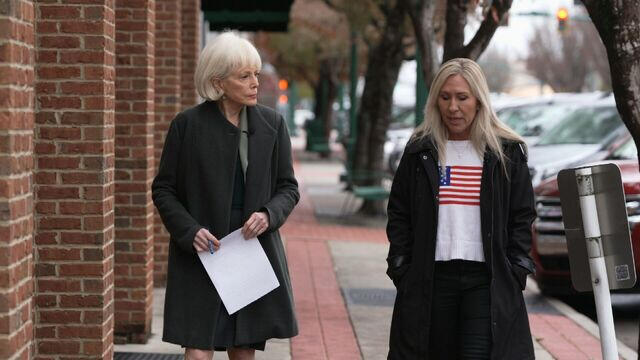
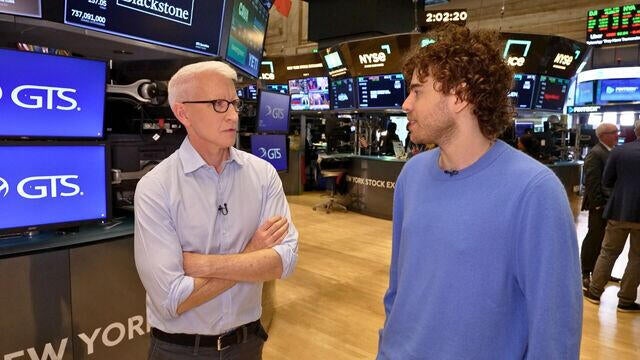
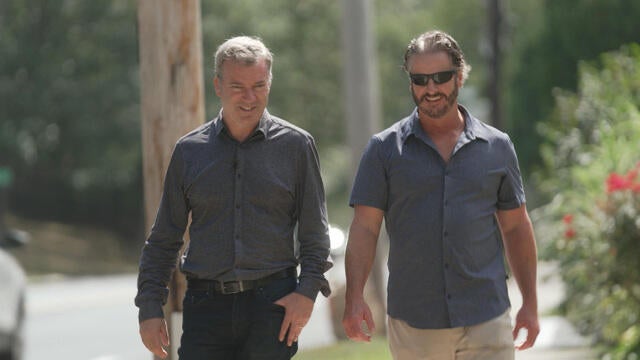
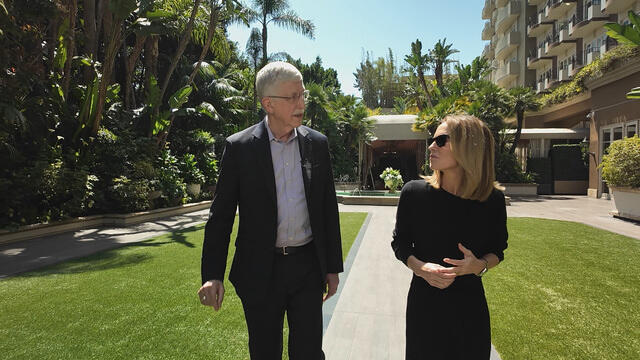
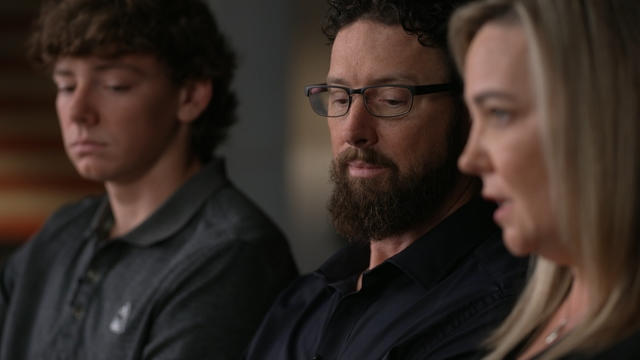
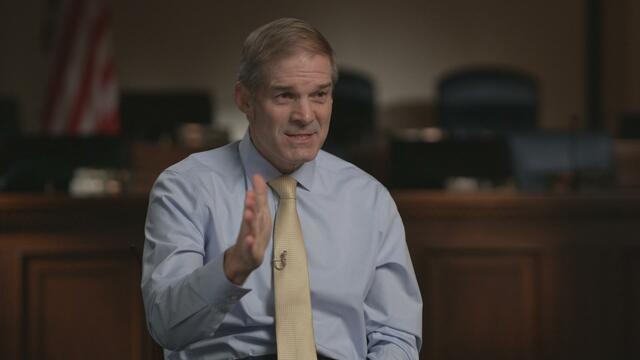
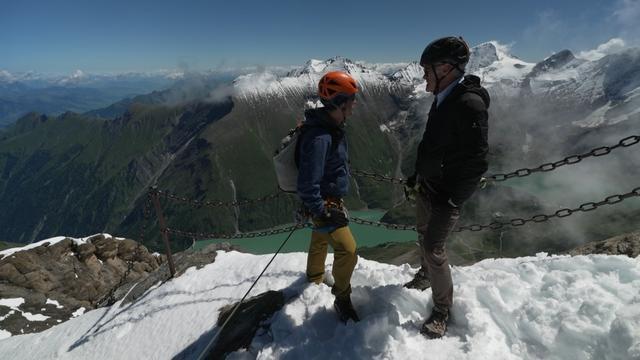
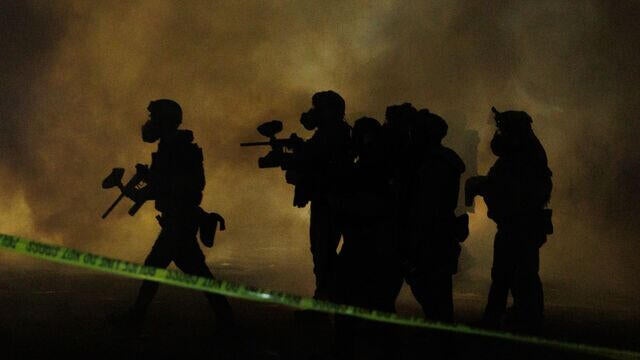
We're definitely, unapologetically masculine. Can this bubble over to too much? When you hear toxic masculinity, what do you-- What does that mean? You tell me. No, you just said it. Can you be too masculine? You tell me. The answer is hell no. [TICKING] I'm Scott Pelley. I'm Bill Whitaker. I'm Anderson Cooper. I'm Sharyn Alfonsi. I'm Jon Wertheim. I'm Cecilia Vega I'm Lesley Stahl. Those stories. And in our last minute, we tap into Director Rob Reiner's latest film. Tonight on the 58th season premiere of 60Minutes. [TICKING] A lonely voice rose above the rancor. After the murder of Charlie Kirk, Spencer Cox, the Republican Governor of Utah, may not have been familiar to many. But after the assassination in his state, he asked whether we could all stop hating our fellow Americans. We wanted to hear more, and we were surprised to learn the 50-year-old Republican has spent years campaigning for reconciliation. Cox is asking Americans to respect our differences, which in this moment is not universally admired in his own party. I get accused on the right all the time of I just want people to have a kumbaya moment. I want people to hold hands and just hug it out. And we're done with that. We're done holding hands and hugging it out. I'm not asking anybody to hold hands and hug it out. I'm not asking for that. I'm trying to get people to stop shooting each other. That's it. And I think what I'm doing and what I'm saying is the best way to do that. Some people will disagree with that. And that's OK. We should have these debates as a society. I'm not always right. I've made mistakes. Other politicians, I think, are making mistakes right now in trying to elevate the temperature. But I'm going to just keep having these conversations. In this moment, what's at stake? Scott, I don't think it's hyperbole to say that the future of our country is at stake. This grand experiment that we embarked on 250 years ago. Can we hold together? And what if our politics cannot find the path to the brighter light? That's the question I always ask when I hear people say that we're at war. I say, OK, and what does that mean? What is next? Who am I supposed to shoot now? [INAUDIBLE] [GUNSHOT] Made us move.
MAN:
00:03:59
Oh my god. He just got shot.
SCOTT PELLEY:
00:04:02
The shot, September 10, was the kind of attack now happening every couple of months or so. In April, the Democratic governor of Pennsylvania and his family escaped after their home was firebombed. In June, in their homes, two Minnesota Democratic lawmakers and their spouses were gunned down. A year earlier on the campaign, it was Donald Trump himself. When told this time it was Utah, Cox didn't believe it. But there it was on his phone. The video was already out. There was no fog of war. There was no doubt what had happened. That terrible, awful video that I wish I had not seen. I hate, again, social media, that almost every person in this country, including our young people, have seen that video on a loop over and over and over again. And I can't unsee it. I can't stop seeing it. Every time I close my eyes, that's what I see.
SCOTT PELLEY:
00:05:00
The governor sent an aide to the hospital who reported that Kirk was dead. Cox dialed a number. As you're calling the White House, what is in your heart? Just sickness, nauseous, disbelief, anger. At this point, I'm very angry. To whoever did this, we will find you. We will try you, and we will hold you accountable to the furthest extent of the law.
SCOTT PELLEY:
00:05:34
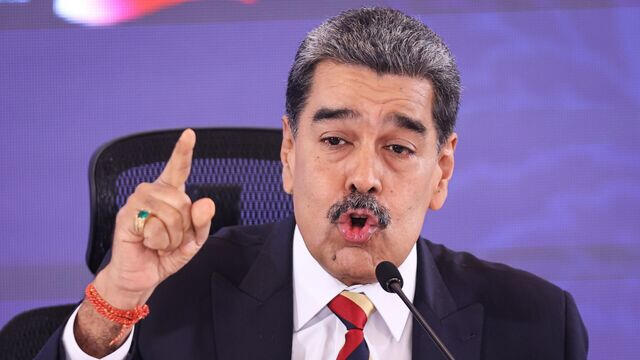
His anger was showing. I just want to remind people that we still have the death penalty here in the state of Utah.
SCOTT PELLEY:
00:05:41
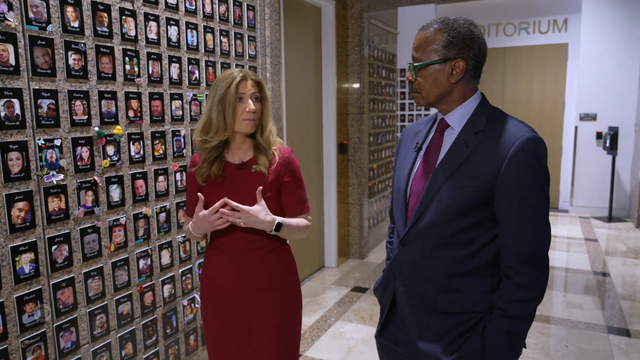
But when he searched for meaning, he recalled the suffering of both parties. Our nation is broken. We've had political assassinations recently in Minnesota. We had an attempted assassination on the governor of Pennsylvania. And we had an attempted assassination on a presidential candidate and former President of the United States and now current president of the United States. Nothing I say can unite us as a country. Nothing I can say right now can fix what is broken. We just need every single person in this country to think about where we are and where we want to be. I've been following, I've been studying political violence. And so I'm keenly aware when these things happen. And I'm seeing people get murdered, get attacked who are Democrats and Republicans. And that's where it came from in that moment. In the days after the murder as you're trying to bring the country together, Steve Bannon, the philosopher of the MAGA right, called you a national embarrassment. Yeah, I love free speech. I would give my life defending his right to say that about me. That's OK. We can have that debate. There are some people that think I am a national embarrassment. And that's OK too. Who do you blame for the division? I do believe that social media is a cancer, and it is taking all of our worst impulses and putting them on steroids. It is driving us to division. It is driving us to hate, these algorithms that have captured our very souls. They've captured our free agency, these dopamine hits that get our young people and our old people addicted to outrage and hate that serve us up on a regular basis are absolutely leading us down a very dark path.
SCOTT PELLEY:
00:08:02
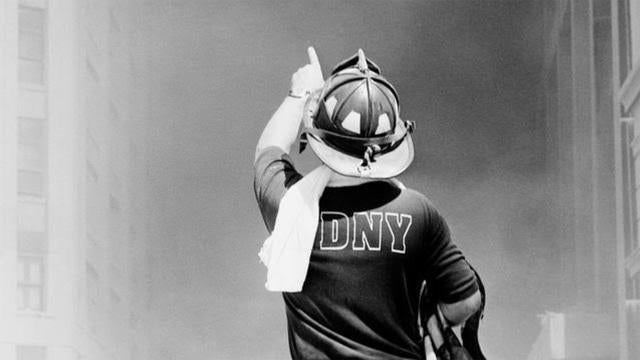
A path through platforms that look like civil war, powered by algorithms, programs written to amplify posts of rage. The algorithms are absolutely destroying us. Once they know what your political leanings are, then it's like a pack of wolves that just attack. We have this collective problem that we can't solve because we're all sucked in, and we don't know how to get out.
SCOTT PELLEY:
00:08:31
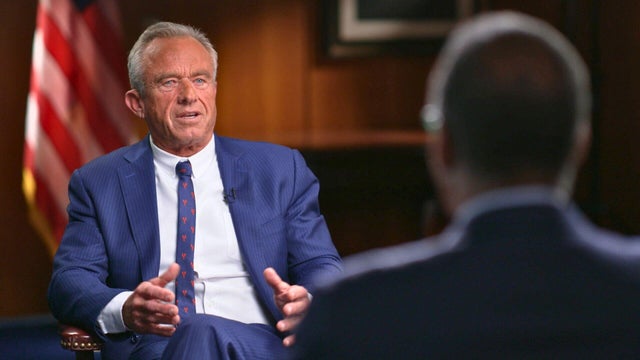
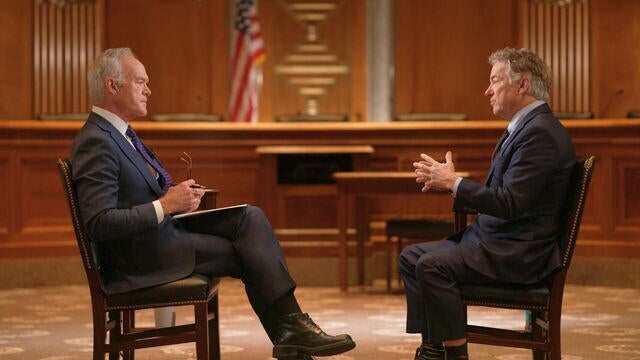
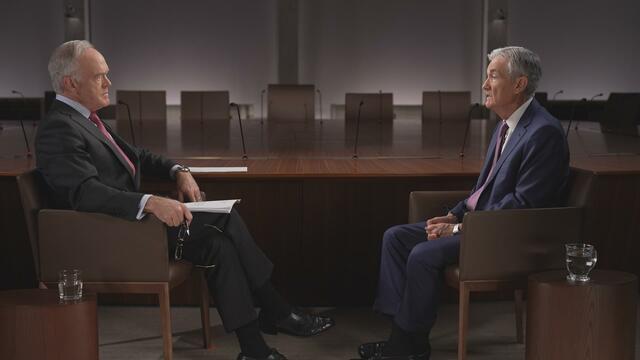
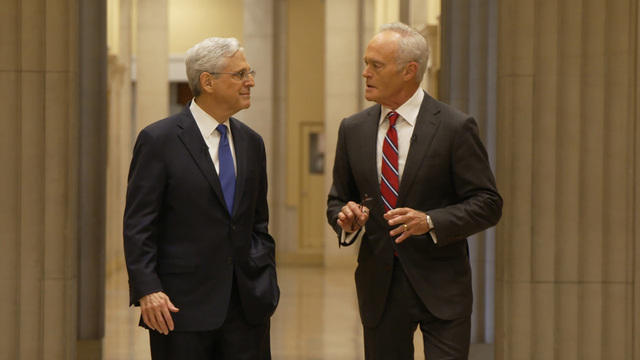
We met Spencer Cox in the Capitol at the foot of the Wasatch Range in Salt Lake City. He was raised one of eight on a farm of modest means. He's a lawyer, devoutly Mormon, with three years left on his second term. His conservative record includes tax cuts, expansion of gun rights, and restrictions on abortion. You are a Republican, but not a Trump Republican. Well, that depends. I did vote for him this last time. He jokes with me-- But not in '16 or 2020. That is also correct. And he gives me a very hard time about that, every time we're together. The tent is broad on the right. And I'm trying to show one way to do politics.
SCOTT PELLEY:
00:09:18
His way to do politics surprised many in 2020. Campaigning for governor, he refused to run negative ads. I think you should vote for me. Yeah, but really, you should vote for me.
SCOTT PELLEY:
00:09:31
Instead, he asked his Democratic opponent to join him on the air. We can disagree without hating each other. And win or lose, in Utah, we work together. So let's show the country that there's a better way. My name is Chris Peterson. And I'm Spencer Cox. And we approve this message.
SCOTT PELLEY:
00:09:49
Cox took the message beyond Utah when in 2023 he became chair of the Bipartisan National Governors Association. There, he launched a campaign called Disagree Better and went back on the air. I'm Spencer Cox, Republican governor of Utah. And I'm Jared Polis, Democratic governor of Colorado.
SCOTT PELLEY:
00:10:11
23 governors from both parties joined Disagree Better. Healthy disagreement means not assuming that the other side is deluded, misinformed, or actively trying to overthrow America. Thank you. Thank you for that.
SCOTT PELLEY:
00:10:26
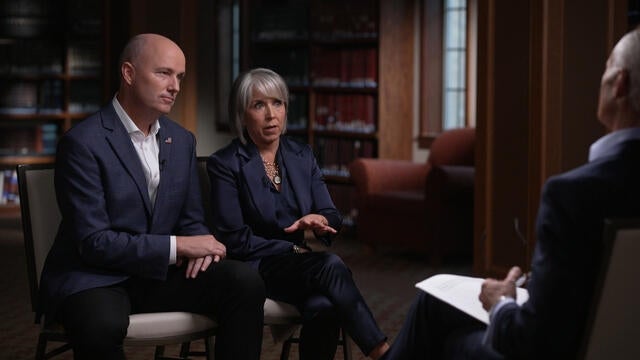
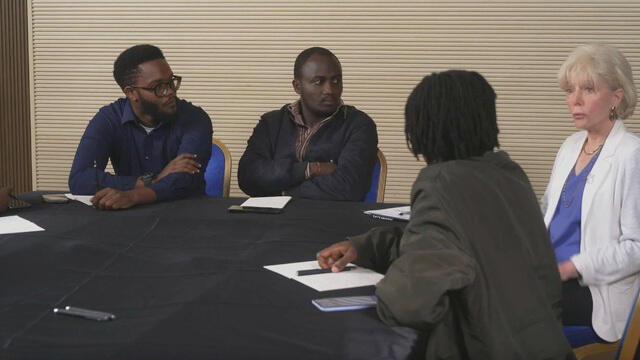
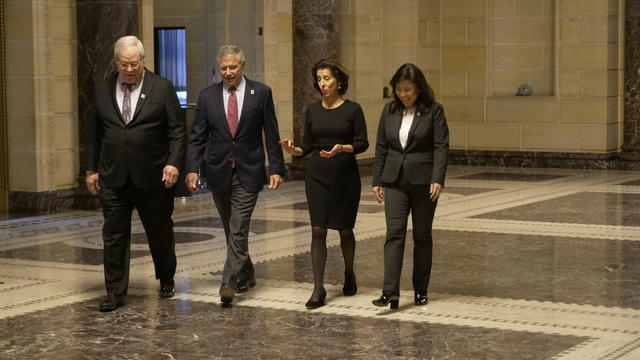
This month, Cox took the message to the University of Notre Dame. He's done more than 20 of these events nationwide, often with Democratic governors, including Michelle Lujan Grisham of New Mexico. Does disagree better mean that we should drop our differences and everybody meets in the middle? Absolutely not. In fact, it's the exact opposite of that. Abortion is an issue on which we disagree passionately. And yet even though we have these very strong, it looks like a chasm between us, I think we would both agree that we should be doing more to take care of single moms. I think those are the types of things that we can agree on, while still being pretty passionate about whether we think abortion should be legal or not. And when you do that and we listen and we find that there is some common ground, it reduces, it lowers the temperature, it provides opportunity not just for discourse but doing something. Do governors understand something that Washington does not? Yes. Yes. We're completely about results, not about rhetoric. We like to say that potholes aren't partisan, and governors do have to deliver actual results. Sadly, in DC, we've seen this performative politics and much less substance. There are some people watching this interview who are disgusted that you two are sitting together. Well, we need courage over comfort. I don't work for a partisan party. I work for every single New Mexican. Yeah, I see her as an American before I see her as a Democrat or anything else. I think we need more of these conversations. I think we need them in our own homes, in our own neighborhoods, in our school boards, in our city councils, all across the country.
SCOTT PELLEY:
00:12:22
The day Charlie Kirk was murdered, one of the first calls Spencer Cox received was from Democrat Michelle Lujan Grisham. We should be condemning at every chance we get political violence. Our democracy falters when we don't. This is an American. This is a person. This is a person who lost his life in free speech. And there's real grieving for that family. And it doesn't end tomorrow. It will last a lifetime. Says the Democrat. Says the Democrat because it's true. It's true. Please include that. It was late that afternoon.
SCOTT PELLEY:
00:13:05
We returned with Spencer Cox to Utah Valley University. That flag, that doesn't represent any single group. It doesn't represent one part of our country and not another part of our country.
SCOTT PELLEY:
00:13:19
Students gathered where Charlie Kirk was killed. Cox told the crowd they can't count on politicians. Change, he said, must come from all of you. Thank you. Thanks for leading us out. Thank you. Good job, governor. I'm desperately looking for more architects and fewer arsonists. Again, it's so easy to burn down and tear down. And we've got too much of that today. I'm hoping that a positive vision for our country, a positive vision for our party, treating everyone with dignity and respect. That's how we get our country back. Some people watching this interview might be thinking he should run for president, but the fact is you would never survive Republican primaries. Well, the thought of running for president makes me nauseous. I have no interest in that. I'm glad that there are good people who are willing to do that. But that is not something I've ever been interested in. And you're also correct. The way we select our candidates makes it almost impossible for someone like me to have an opportunity. Is it possible that your message is naive, that the violence will just continue? That's very possible. That's very possible. I think the founders were naive to believe that they could start a new country based on very different principles than virtually any country in the history of the world. I think that it was naive that we could rebuild after a Civil War had fractured us, and we had killed 600,000 of our fellow Americans. So I believe that naivete with some passion can change the world. It's probably the only thing that ever has. [TICKING]
ANNOUNCER:
00:15:12
Eyewitnesses to murder.
SCOTT PELLEY:
00:15:14
Yours was the last question Charlie Kirk ever heard. Yeah, I don't really know how to grapple with that.
ANNOUNCER:
00:15:19
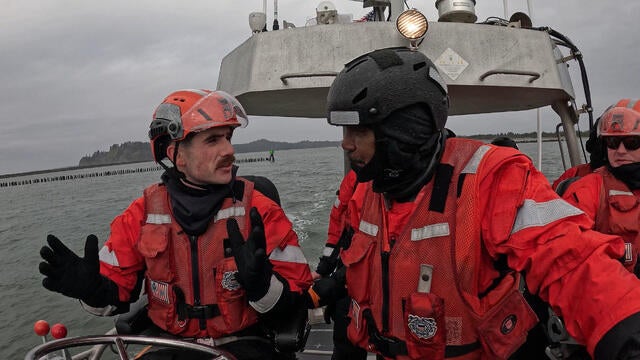
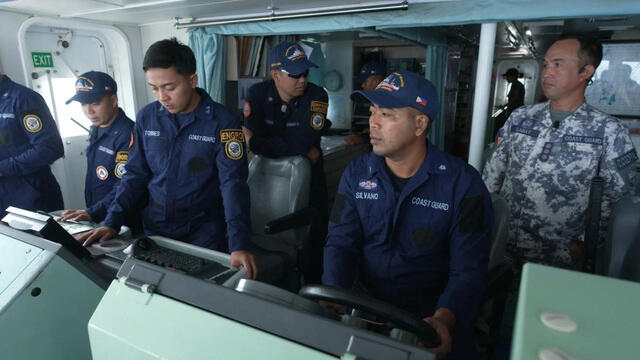
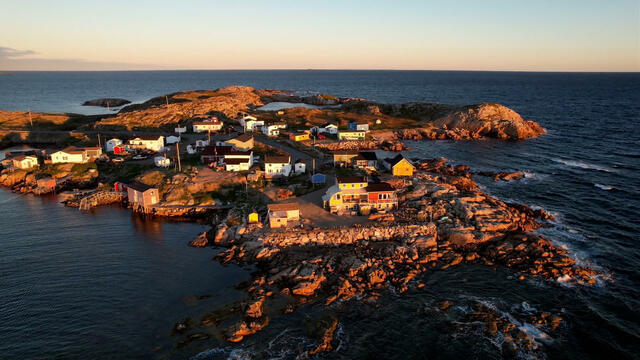
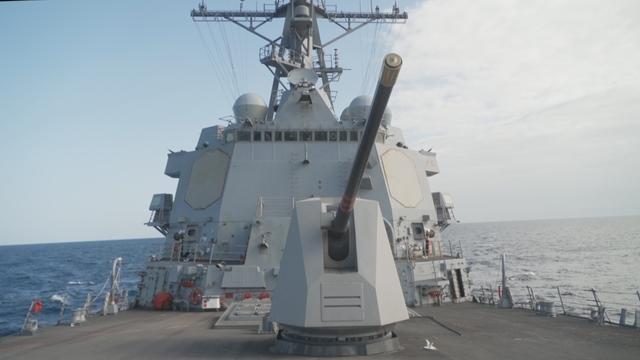
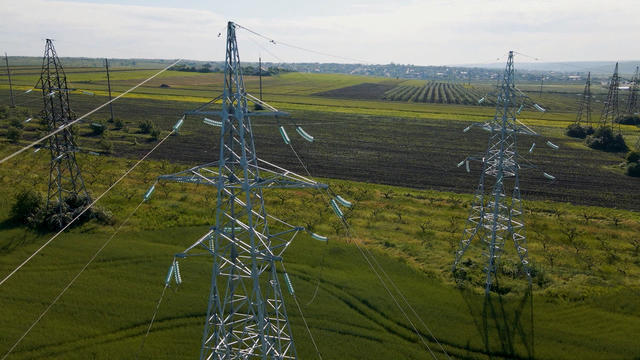
At 60minutesovertime.com. As tensions rise between Europe and Russia, Russian aircraft have pierced NATO airspace in Poland, Romania, and Estonia in recent weeks. And in the Baltic Sea, another incident has raised the stakes even higher. A tanker named the Eagle S was tracked, dragging its anchor across the sea floor, leaving severed cables in its wake. Undersea cables carry the lifeblood of modern existence, electricity, gas, digital communications, global banking, the internet itself. Without the cables, all that would grind to a halt. In the past two years, at least 11 cables have been cut in the Baltic, primarily in the waters off Finland, which shares an 832-mile border with Russia. Who's behind the rash of breaks is a mystery, but this much is known, before Russia's war with Ukraine, these types of incidents were extremely rare. We cut across the Baltic Sea in this small Navy dinghy, looking for clues to a nautical whodunit. We headed for the 170-foot Finnish minesweeper, Vahterppaa. This massive ship towering above us is a crucial part of Finland's maritime defenses, guarding these waters between Russia to the east and Estonia to the south. Everything is quite close here. You've got Estonia. You've got Russia. You've got Finland. You've got Sweden. All come together right in this area. Chief of Staff of the Finnish Navy, Toni Joutsia, told us the ship uses remote vehicles to monitor undersea cables in the Gulf of Finland, a narrow, shallow stretch of the Baltic crowded with thousands of vessels, many of them carrying Russian oil and gas, to India and China through Finnish waters day and night. We know what's happening in the Gulf of Finland at all times. That's a lot to keep an eye on. That's true. For example, Russia 40% approximately of their commercial traffic goes through the Baltic Sea. And a lot of that is the oil transport. Yes, definitely.
BILL WHITAKER:
00:17:46
It was one of those ships, the Eagle S, loaded with Russian gas headed to Egypt that triggered a nationwide alarm in Finland on Christmas Day 2024. I remember it very clearly because I was here in my residence, with my family, with my old father, spending Christmas Day.
BILL WHITAKER:
00:18:10
Prime Minister Petteri Orpo got an urgent call from Finland's Border Guard that shattered the holiday calm. I was told that we have a problem with electricity cable between Finland and Estonia.
BILL WHITAKER:
00:18:24
A critical undersea electric cable, Estlink-2, had been severely damaged 50 miles off the Finnish Coast. Because there had been five other recent suspicious cable and gas line breaks, the Border Guard told the prime minister it suspected this one was deliberately severed by a ship. What did they say? They told me there is suspected ship named Eagle S in area. And they are on their way to the place. And they are ready to react.
BILL WHITAKER:
00:19:00
With the Eagle S near Finnish territorial waters, Prime Minister Orpo authorized the extraordinary step of moving to intercept the tanker. I made a phone call to the chief of the Border Guards, and I said to him, you can trust that you have my and my government's full support. Use all the tools you have.
BILL WHITAKER:
00:19:28
Finland called all hands-on-deck as the Coast Guard vessel Turva sped toward the Eagle S. Police and Finland's National Bureau of Investigation monitored from shore. We had the possibility to intervene and apprehend and secure the evidence.
BILL WHITAKER:
00:19:47
Helsinki Police Chief Jari Liukku says the Coast Guard radioed the Eagle S asking if its anchors were up and secure. The reply was yes, sir. Our anchors are secured. But three hours later, at 6 PM, as the Turva closed in, the crew could see that was not true. The anchor chain was hanging in the water. We had a strong reason to believe that it was an intentional activity from their side.
BILL WHITAKER:
00:20:17
Liukku was informed that a total of five crucial undersea cables along the route of the Eagle S had been broken that day, and the ship was still on the move. And of course, there was a risk that criminal activity may continue unless the authorities intervene.
BILL WHITAKER:
00:20:35
Just after midnight, as the ship entered Finnish waters, Finland dispatched an armed team of special forces to the Eagle S by helicopter. They dropped onto the vessel in the dark and seized control from about two dozen crewmen from the countries of Georgia and India.
JARI LIUKKU:
00:20:53
The police, and the Border Guard, and the Defense Force were actually taking over the bridge. Is that unusual? Well, it was the first time when after the Second World War when Finnish troops boarded a boat. The first time since the Second World War? Yeah, that's right because we had to do something, in that case. There was an imminent threat that other critical infrastructure between Finland and Estonia would be damaged. Risto Lohi, overseeing the Eagle S case for Finland's National Bureau of Investigation, told us the next cables in the Eagle S's path could have strained Estonia's electricity and gas supply. So there was also a necessity to intervene.
BILL WHITAKER:
00:21:40
This is underwater video of the crime scene. Finnish investigators determined the Eagle S had raked its anchor across the sea bottom for more than six hours. When the ship was ordered to haul it up, the anchor was so battered it snapped off the chain. We found the anchor, and the drag mark on the seabed started from the first damaged cable. And the track mark was continuous until the location when the vessel was stopped.
BILL WHITAKER:
00:22:10
Police handed their evidence to Finnish prosecutors, who charged the captain and the Eagle S's two senior officers with aggravated criminal mischief and interference with communications. They pleaded not guilty. The damaged cables cost $70 million to repair. The case is still underway. In court, the captain claimed the anchor had been dragged by accident. How far did they drag this anchor? Approximately 100 kilometers altogether.
BILL WHITAKER:
00:22:41
That's 66 miles before the Coast Guard cutter Turva confronted and ultimately stopped the Eagle S. Commander Mikko Simola told us the tanker's behavior raised serious alarm. There are failsafe measures on the anchor to keep it from dropping accidentally. Are there not? Certainly there are safety mechanisms. There are three different safety mechanisms. Yeah, yeah. Different safety mechanisms. The captain of the ship says that he didn't know that the anchor had been lowered and dragged for 66 miles. Is that believable? It's hard to believe being a Coast Guard officer certainly. A captain of the vessel must always know whether the anchor is hoisted or in the sea. So interesting comment. This is what I would say. An interesting comment. Yeah, certainly.
BILL WHITAKER:
00:23:35
More suspicious, the ownership of the 20-year-old Eagle S. A seven-month investigation by 60Minutes found its owners hidden behind layers of shell companies. Public records list the primary owner as a woman from Azerbaijan with an office in Dubai. The ship is managed by a company in India and leased to a major Russian oil company. That oil company has financed a fleet of hard-to-trace tankers to move Russian oil, evading Western sanctions. This phenomenon has been called Russian shadow fleet. Shadow fleet. Shadow fleet. It is pumping money to Putin's war machine. He's still making-- Yes, it is still-- --profit off of Russian oil, even though the sanctions are in place? Yes.
BILL WHITAKER:
00:24:28
Prime Minister Orpo told us the shadow fleet's constant presence in the Baltic Sea is raising the temperature with Russia, barely 200 miles across the water. Do you consider Russia a threat? Of course, Russia is a threat. We can see what they have done against Ukraine. And also in Finland, we have seen many hybrid attacks. What do you mean by hybrid attacks? We have seen these incidents by Baltic Sea. We have seen sabotage in Europe. So we are not in the war. But we are under attacked. You're not in war. No, we are not in war. But you're under attack. Because we are the target.
BILL WHITAKER:
00:25:19
Beyond recent Russian aircraft incursions into NATO airspace, EU officials have connected Russia to numerous attacks in Europe, firebombings, assaults on rail and arms depots, explosive packages, and now the mystery of the Eagle S. This breaking of the undersea cables, this was not happening before the outbreak of war between Russia and Ukraine? No, we didn't have any this kind of incidents before Russian aggression against Ukraine. But after that, we have had many. So I have to ask what seems to be the obvious question, is this Russia? I can only say that there is clear connection between Russia and shadow fleet and these incidents. It's clear. Does it feel as though Russia is probing and prodding to find soft spots in not just Finland's defenses, but NATO's? This is their way to try to harm us, make us afraid.
BILL WHITAKER:
00:26:25
Prime Minister Orpo says the Eagle S was a test of Finland's resolve.
PETTERI ORPO:
00:26:31
We sent a clear signal to the shadow fleet and maybe to the actors behind that we have our limits.
BILL WHITAKER:
00:26:40
Finland joined NATO in 2023. The alliance recently launched Operation Baltic Sentry, deploying ships and planes to monitor the shadow fleet and safeguard critical seabed infrastructure. British Admiral Keith Blount, NATO's Deputy Supreme Allied Commander, told us the Eagle S incident was a provocation that demanded a response. We launched a response to try and deter, prevent similar incidents happening again in the Baltic. So it was kind of a triggering event for us. And, of course, we haven't seen another incident since we established Baltic Sentry. What is the message that Baltic Sentry is sending/ We're not going to be pushed around, interfered with. We're not going to be subject to illegal behaviors that either threaten the rule of law, or worse, threaten the safety and security of our people.
BILL WHITAKER:
00:27:42
Because of its connection to the shadow fleet, the Eagle S was sanctioned by the EU, England, and Canada, restricting its access to ports. On the face of it, the incident seems to be a small thing. But when I see your reaction, when I see NATO's reaction, that Eagle S incident has turned out to be quite a big deal. Yes, it was a big deal. We have to react. And it was the first time we react. We show that we are ready to defend our critical infrastructure, our property, and that's why it was a turning point. We have a saying in the United States, enough is enough. Yes, enough is enough. [TICKING] He holds no championship belt, but Dana White is the most prominent and pugnacious figure in the UFC, the Ultimate Fighting Championship. The CEO/hype man is the embodiment of the league itself, long on unapologetic force, short on precious formality, intoxicating to some, an acquired taste to others. And much like the UFC, White has penetrated the defense of mainstream culture, moving in from the fringes to join the ultra rich, serve on the board of Meta, and befriend the current president. A small disclosure, we've been speaking with White for years about his appearing on this broadcast. A heavyweight disclosure, this was before Paramount Skydance, parent company of CBS, recently paid almost $8 billion for the UFC's media rights. Yes, cage fighting on network television, perhaps the ultimate sign of how far this sport and its no-holds-barred leader have come. [CROWD CLAMORS]
ANNOUNCER:
00:29:39
[INAUDIBLE] Wow. Whoa.
ANNOUNCER:
00:29:42
Are you serious?
JON WERTHEIM:
00:29:44
Tuesday night's all right for fighting. We sat outside the octagon for Dana White's Contender series, a streaming show that doubles as the UFC's farm system. Yeah, yeah, yeah.
JON WERTHEIM:
00:29:55
If the fighters entertain White, like this first round knockout artist, he rewards them with a UFC contract. Good fight. Thank you very much. Incredible.
JON WERTHEIM:
00:30:04
An invitation by the big boss to the big show. [AUDIENCE ROARS] White is chief author of the greatest sports business story of this century, maybe ever. Oh, that looks good.
JON WERTHEIM:
00:30:16
In his 30s, he helped buy the UFC, then a renegade cage-fighting operation for $2 million.
ANNOUNCER:
00:30:22
USA--
JON WERTHEIM:
00:30:24
Now 56, he runs a global league valued at more than $15 billion, 675 fighters under contract. [AUDIENCE ROARS]
ANNOUNCER:
00:30:34
[INAUDIBLE]
ANNOUNCER:
00:30:35
Heel right to the body.
JON WERTHEIM:
00:30:38
A brutal match-up that includes kickboxing, wrestling and jiu-jitsu. Fire away. You know me, man. You've known me for a long time. Fire away, I don't give a [BLEEP].
JON WERTHEIM:
00:30:47
The entire business is built more on White's force of personality than on a traditional playbook. We met him at UFC headquarters in Las Vegas. Whenever I read stories about the business of UFC, I literally laugh and say nobody knows anything about the business-- So what is everyone missing? For 25 years, people have been trying to figure it out, and people have been trying to do it. Someone told me it all starts with Dana's gut. That's absolutely true. I don't know who told you that, but that's right. We got a sellout crowd here, 5,000 people.
JON WERTHEIM:
00:31:20
It was his gut that got him into the game. He managed boxers in Boston, then fighters in Vegas in the fledgling sport of MMA, Mixed Martial Arts. When White caught wind UFC's owners were out of money, his first call went to two high school buddies, Frank and Lorenzo Fertitta, Las Vegas Casino heirs. I said, I think they're going out of business. And we could probably buy this thing, and we should.
JON WERTHEIM:
00:31:43
The Fertittas put up the money. White got 10%, but he had to run the damn thing. The UFC wasn't just unprofitable, it was largely unsanctioned. In February 2001, White needed a home for the first fight of his regime.
DANA WHITE:
00:32:00
None of the venues wanted this. They didn't believe in it. They didn't like it. And they were worried about the type of crowd that would show up for this type of event.
JON WERTHEIM:
00:32:10
He found hospitality at the Taj Mahal in Atlantic City, then owned by a familiar fight fan, Donald Trump.
DANA WHITE:
00:32:18
When the Trump brand was here and the UFC brand was down there, he saw it and said, I'd love to have this at my Casino. He showed up the first prelim fight of the night and stayed till the main event was over. He watched the whole card. Watched the whole card. What are the balance sheets look like back in those early days? I mean, it was so bad that at one point Lorenzo called me and said, Dana, I can't keep doing this, man. I'm literally blowing all my family's money. And obviously, that night I'm thinking-- We're done. --it's a wrap. This is over. And he calls me the next day. And literally, this is what he said to me, [BLEEP]. let's keep going.
JON WERTHEIM:
00:32:57
So they did. Do you want to be a fighter?
JON WERTHEIM:
00:33:00
A reality series and its storylines helped draw in millions of fans. Obviously a massive, massive accomplishment.
JON WERTHEIM:
00:33:07
Electric matchups and Joe Rogan on the mic kept it rolling.
ANNOUNCER:
00:33:11
Oh, he's done, he's done.
JON WERTHEIM:
00:33:13
From the beginning, White imposed his will. Just ask the guys in the live TV production truck that didn't follow his direction. I literally got up from my seat and went back there and kicked the door open-- They disobeyed the boss. --to the truck. Yeah. Kicked the door open to the truck. I was basically like you ever do this again I'm firing every one of you. Long story short, we ended up firing everybody. It's been an honor calling your fight, sir. Thank you very much. You're welcome.
JON WERTHEIM:
00:33:38
By 2016, the sport sanctioned in every state, the UFC sold for $4 billion on the condition White stay on as CEO. [AUDIENCE ROARS] President Trump still routinely shows up at UFC fights, but now makes a grand entrance.
DANA WHITE:
00:33:57
The relationship that he and I have-- and when we get together, when I have dinner with him, we don't talk politics. What do you talk about? We talk about goofy guy stuff that all guys talk about. You know what I mean? Like what? We talk about Rocky movies. We talk about different fights that have happened. That's a real samurai.
JON WERTHEIM:
00:34:14
White's office is a shrine to guy stuff, the mother of all man caves. This is a piece of art that represents war. War is all about money.
JON WERTHEIM:
00:34:23
You once used a term with me that I quoted you on, the wussification of America. I think I said [BLEEP]. But yeah, I get it. We're on 60Minutes. Yeah. Has the pendulum swung the other way? I feel like it's starting to.
JON WERTHEIM:
00:34:37
Cage fighting has always celebrated male bravado. [ANNOUNCERS SHOUT] But White is intent that more women than ever follow the sport. He bristles at the suggestion that UFC fandom is taking on new edge. You don't think there's this cultural movement. It's a lot of guys, call it the manosphere. You're one of the leaders. You talk about knowing your fan base and knowing who they are. Who are they? 18 to 34-year-old males and growing global. We are definitely, unapologetically masculine. Can this bubble over to too much. When you hear toxic masculinity-- What does that mean? You tell me. No, you just said it. What's the definition of toxic-- how can somebody be too masculine? Is that a possibility? Can you be too masculine? You tell me. No. Do you think so? The answer is hell no.
JON WERTHEIM:
00:35:32
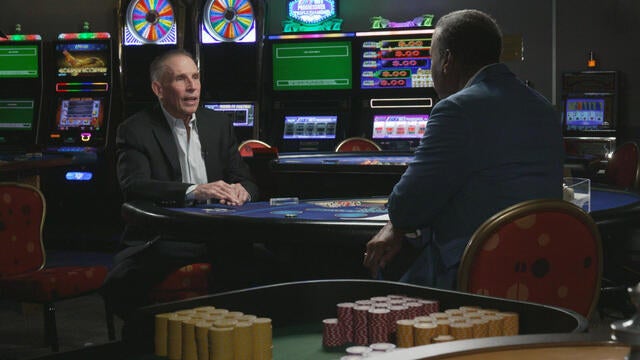
Hang out with Dana White in Vegas, and odds are good you'll end up here at the Bellagio. Hi. How are you guys? Good to see you. Thank you.
JON WERTHEIM:
00:35:40
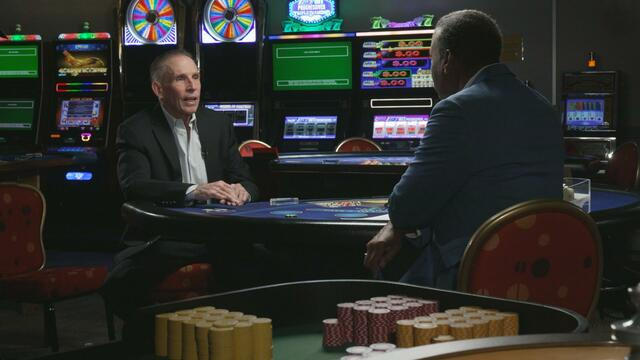
Enough of a regular, he's plied with whiskey and a cigar before heading to a private baccarat table. In this city, nothing is off limits.
JON WERTHEIM:
00:35:49
So how much are we betting here? 400,000. It's a $400,000 hand? Mm-hmm. Because these sissies won't give me a million a hand.
JON WERTHEIM:
00:35:58
A few hands in, fortune was not in his corner. Goddamnit. Ooh, no bueno. We're down $1,240,000.
JON WERTHEIM:
00:36:07
You heard right. He was down $1.2 million. What's this feeling in you? I'm a sick, sick guy. That's the only explanation I can give you.
JON WERTHEIM:
00:36:18
Not 10 minutes later-- Boom, let's go. Come on. Where's the stakes?
JON WERTHEIM:
00:36:26
He was cashing out up $700,000. This is how we do it. Another win for White's instincts. His gut proved golden once again in August, when Paramount Skydance outbid others and offered the UFC $7.7 billion over seven years for US media rights, putting the UFC right up there with other major sports leagues. You still have 10% of this enterprise? I have a deal here that would make Roger Goodell and every other guy go, holy [BLEEP]. Meaning what? I got a damn good deal. Listen, man, this business has worked just fine. The model isn't broken. I love when people who have no [BLEEP] idea what they're talking about--
JON WERTHEIM:
00:37:13
One question that hounds White.
ANNOUNCER:
00:37:15
Here we go, round 2.
JON WERTHEIM:
00:37:16
Does enough of the UFC's big money see its way to the fighters?
ANNOUNCER:
00:37:20
Tom Aspinall.
JON WERTHEIM:
00:37:22
The big stars can make millions per fight. But so-called bottom of the card fighters are paid as little as $12,000. Earlier this year, the UFC settled a class action antitrust lawsuit with fighters for $375 million. Your media rights deal basically doubled. Is fighter pay going to increase proportionally? I can't sit here right now and tell you, it's double, it's 1 and 1/2, it's triple. But, yeah, fighter pay is-- yeah, it's going to be good. Do you pay fighters a fair wage? Absolutely. People don't know how much a lot of these guys make. If you want to know what LeBron James makes, it's two keystrokes away. We're different in a lot of ways. We're different than most major sports. And this is the only sport where the athletes get to say whatever they want.
JON WERTHEIM:
00:38:12
Another difference, in most sports, offensive speech by athletes can result in suspension, not so the UFC. We don't have to agree with it. We don't have to like it.
JON WERTHEIM:
00:38:23
Is there anything a fighter can say, tweet, do that you say, you know what, there got to be consequences? I'm a big believer in free speech. And unfortunately, probably the most important speech to protect is hate speech. You're not a fan of cancel culture? No, I hate it on both sides. It's like all the stuff that's going on with Charlie right now, these people are going out and saying stuff. And you're seeing people getting fired or kicked out of school. You don't think they should be fired? I think you're a disgusting human being if you're celebrating the death of another human being. But people make mistakes. And people are going to do dumb things. I don't like trying to destroy people's lives over doing something dumb. So we're going to be here on the White House lawn.
JON WERTHEIM:
00:39:14
Top of mind for White, a fight card next summer. So the fighters will walk out of the Oval Office to come to the octagon.
JON WERTHEIM:
00:39:20
The same man who once offered White a Casino for staging the UFC now has offered his backyard. What can you tell me about the card? Everybody wants to fight on the card. There's going to be a fight on the South Lawn of the White House, weigh-ins at the Lincoln Memorial. I still can't believe I'm saying those words. Even an optimist like you-- I can't believe I'm hearing them. Inspiring the awe--
JON WERTHEIM:
00:39:43
This will hardly mark White's first trip to the halls of power. At President Trump's inauguration, he got the equivalent of a cageside seat. What do you say to the fans who say, I feel like the UFC's taken a side/ I am an American citizen. Biden was my president. Trump is my president. I was at the inauguration. And I was sitting behind all the ex-presidents. And there was the stuff going around like Dana's mad dogging President Obama. President Obama turned around, the only president that did, and shook my hand and said, congratulations on all your success. And I said, thank you very much, Mr. President. People wondered what you guys were talking about. That's what happened. I've never talked about that publicly. If President Obama called and said, hey, I'd like to come see a fight, we'd be like, yeah, buy some tickets and good luck to you, whatever. No, the sitting president or an ex-president of the United States wants to come to your event, you treat them with respect.
JON WERTHEIM:
00:40:43
Meanwhile, White's tent is expanding. Two weeks ago, he promoted championship boxing under the UFC umbrella.
DANA WHITE:
00:40:51
Almost 71,000 people. And it was the third biggest fight ever in the history of boxing. You're saying it went well. It didn't suck. Enjoy yourself tonight. Thank you so much. And have a good time. Thank you.
JON WERTHEIM:
00:41:02
After a big fight weekend, most execs might give their staff a pat on the back. Relax, drink, and smoke some cigars. Have a good night.
JON WERTHEIM:
00:41:10
White, the bluntest instrument in all of sports, threw his staff a weeknight bash. We asked around about you. One word came up again and again. You know what it was? Loyal. Boom. Yeah. Got some detractors, too. You want to guess this one. What? Bully. Bully? Yeah, that makes sense. You don't seem so bothered by that. Ah, I love it. Listen, if you want to be my friend, I'm the best friend you'll ever have. You want to be my enemy? I'm really good at being that too. [TICKING]
ANNOUNCER:
00:41:50
The last minute of 60Minutes is sponsored by UnitedHealthcare. Coverage you can count on for your whole life ahead. [TICKING] Now, a look ahead to next week's 60Minutes. We'll profile Rob Reiner, who went from a character nicknamed Meathead to director of some of the most memorable movies ever, including his unlikely first film, This is SpinalTap,a cult classic that mocked rock and gave new meaning-- The numbers all go to 11.
LESLEY STAHL:
00:42:28
--to the number 11. 1 louder. Why don't you just make 10 louder and make 10 be the top number and make that a little louder? These go to 11. All right, here we go. We joined Reiner on set as he directs-- OK, tap, tap, tap. Tap, tap, tap.
LESLEY STAHL:
00:42:45
--and stars in a sequel 41 years later. You got him right here. You're the director directing yourself. And the documentary-- I know. It's crazy. It's crazy. It's making me nuts. [LAUGHTER] [TICKING] I'm Lesley Stahl. We'll be back next week with another edition OF 60Minutes. [TICKING]