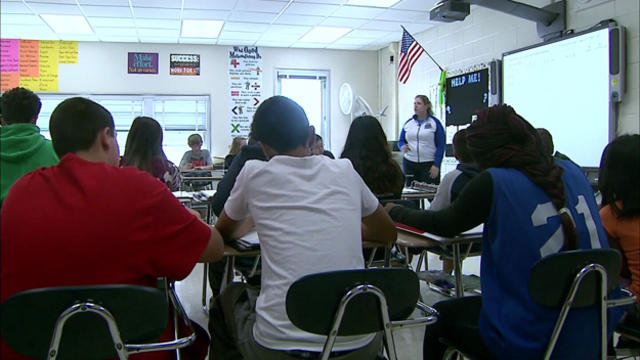
NY Students' Math, English Scores Up Slightly In 2017
Math and English scores for students who took New York state standardized tests last spring inched up slightly compared with 2016 scores, education officials announced Tuesday.
Watch CBS News
Math and English scores for students who took New York state standardized tests last spring inched up slightly compared with 2016 scores, education officials announced Tuesday.

Electronic testing rolled out this week, for children taking assessment tests was supposed to bring common core into the computer age.

For a second straight year, at least 20 percent of New York students sat out of this year's Common Core tests, but those who took them showed gains in English and to a lesser extent, math.

The decision stems from Governor Andrew Cuomo's Common Core Task Force, which released recommendations on revisions to the state's standardized testing program last week.
The standards -- assailed as rushed and flawed -- spawned a torrent of protests and a statewide opt-out movement.
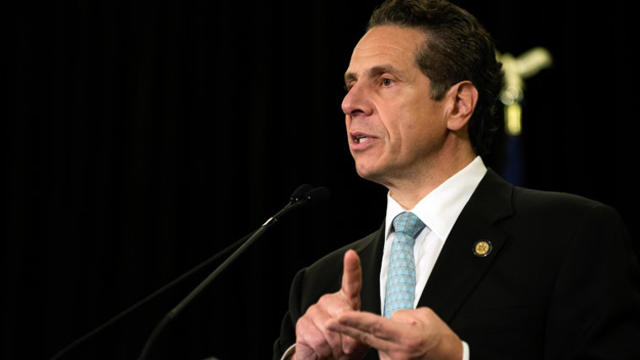
Task force recommendations include shortening the time spent testing students and delaying plans to use the tests to grade teachers.
Time is running out to take part in New York state's public opinion survey on the Common Core learning standards.
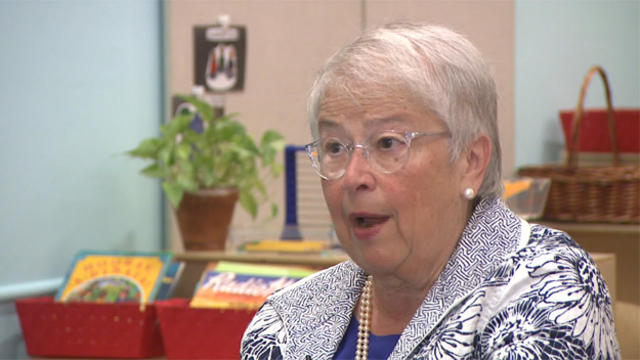
New York City public schools will be back in session officially Wednesday morning, and CBS2 was demanding answers the day before classes about struggling schools, test score fairness, and more.

The state's third- through eighth-graders – as well as those specifically of New York City – did slightly better on Common Core-aligned math and English assessments than last year.

The Common Core controversy in New Jersey has now taken on a political tone.

The likely Republican presidential contender says in remarks for a speech Thursday afternoon at Burlington County College that the national standards have brought confusion and frustration to parents and classrooms.
A Long Island high school principal is taking her fight against Common Core standards to a new level.
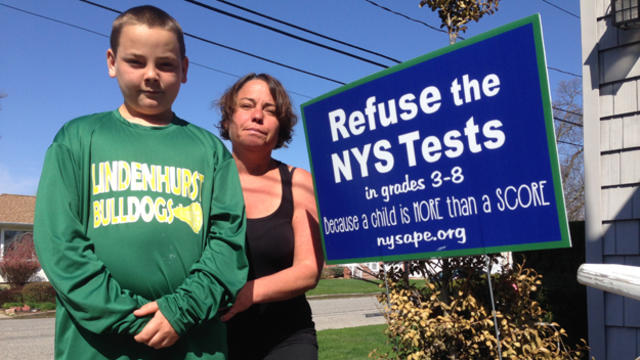
After seeing thousands of students sit out New York's statewide English assessments last week, school districts are beginning three days of math testing.

Amid the controversy over Common Core-aligned tests for public school students, one thing is clear: the opt-out movement is growing.
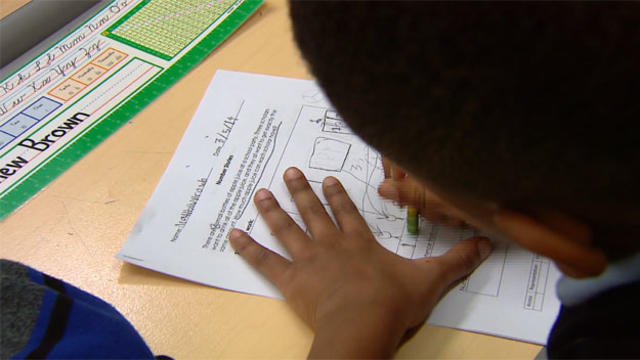
As thousands of public school students prepare to take standardized tests Tuesday, many parents have decided to have their children "opt out" of the exams.
Mahopac Superintendent of Schools Brian Monahan said he's walking a fine line between following the state's rules and respecting the concerns of parents.
Meanwhile, some superintendents have warned that if too many students opt out, districts will lose state funding.
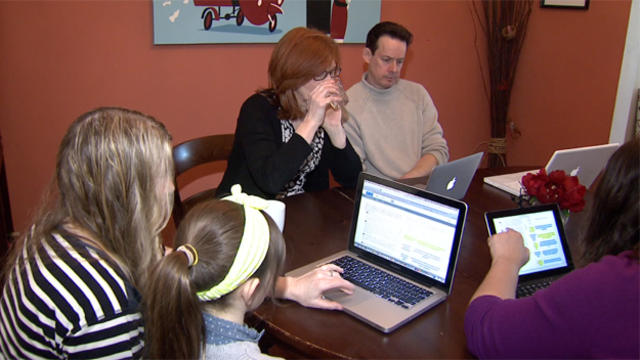
The New Jersey Education Department says it will do a review to make sure that students' privacy is not compromised by Pearson, the standardized testing firm monitoring social media.
A spokesperson for the testing company, Pearson, confirmed to The Washington Post that it will alert states when it finds test questions being posted publicly to the Internet, saying security maintains fairness for students as well as the integrity of the results.

Outraged parents around New York state voiced their discontent with the state's Common Core standardized testing program Tuesday.

New York's largest teachers union accused Cuomo of reneging on an agreement that he announced in June.
Nine out of 10 New York City school teachers were rated effective or highly effective in the first year of state-mandated evaluations.

While many in education and STEM fields embrace the new Common Core standards, many strongly oppose them. Some hold the belief that the Common Core will lead to a national curriculum, others believe the standards are weaker than what states have already implemented.

Nearly a decade ago U.S. Congress, warned that America will fall behind in the global economy if its education system doesn't produce more workers with science, technology, engineering and math (STEM) skills.
American students are falling behind students in other countries on international assessments of math and science. Statistics such as these are driving the call for education reforms to strengthen science, technology, engineering and math (STEM) education in the country's schools.