Watch CBS News

The documents seized from bin Laden compound

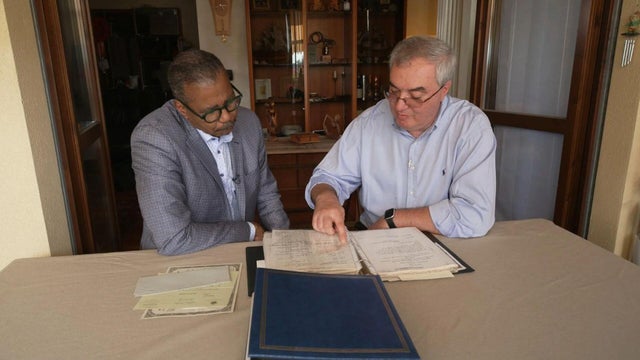
Ali Soufan, who was the FBI's lead investigator of al Qaeda after the 9/11 attacks, spent years analyzing documents seized in Osama bin Laden's compound, including bin Laden's handwritten will.
Sep 10 (12:28)

TRANSCRIPT FOR: “WHAT BIN LADEN DOCUMENTS REVEAL ABOUT AL QAEDA | 60 MINUTES ARCHIVE”

ANNOUNCER:
00:00:01

60 Minutes Rewind. Six years ago, when Navy SEALs hunted down and killed Osama bin Laden, it seemed as if the United States had the upper hand in the fight against al-Qaeda. But while the US has decimated its leadership with targeted strikes, there are new concerns that al-Qaeda has continued to grow and get stronger. Ali Soufan, who was the FBI's lead investigator of al-Qaeda after the 9/11 attacks, has spent the last two years analyzing and unprecedented cache of documents seized in bin Laden's compound, a treasure trove, in the words of the US government, including the personal correspondence of Osama bin Laden, al-Qaeda's dangerous new strategy, and the story of a new bin Laden waiting in the wings. Osama bin Laden was not just, you know, sitting in his house trying to avoid being captured or killed. He was, in some instance, micromanaging al-Qaeda and its affiliates. Micromanaging? Yeah, micromanaging. You know, you can plant this crops and this crops. It's very good. Oh, and by the way, stop beheading people and cutting heads. That makes me look bad. I have a brand to protect.
REPORTER:
00:01:19

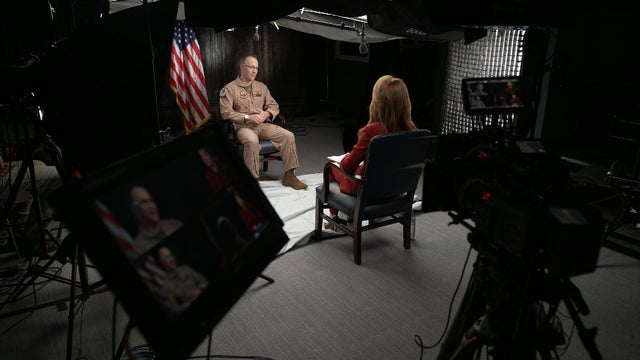
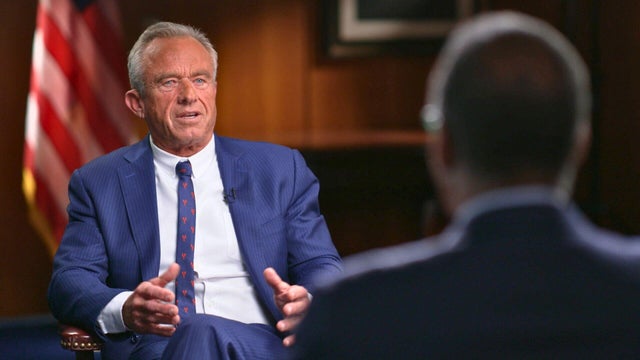
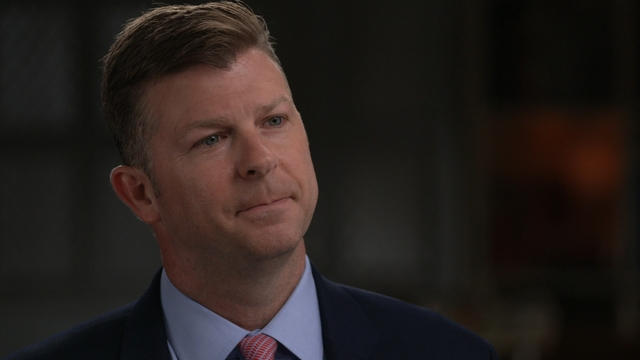
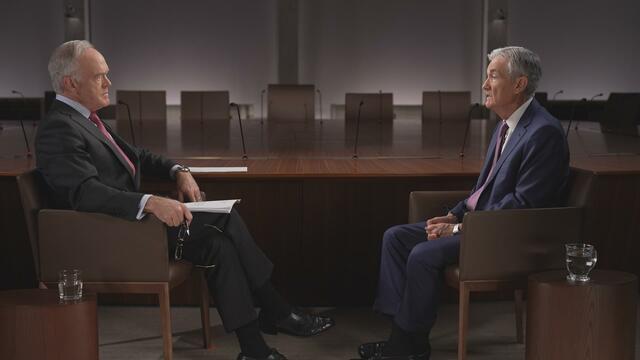
That's Ali Soufan's interpretation of some of the documents seized from bin Laden's hideout in Pakistan, showing him running al-Qaeda like a corporate CEO, worried about the reputation of his brand. Deciphering the inner workings of al-Qaeda has been a life's work for Soufan. A Muslim American who was born in Lebanon, he was the only Arabic-speaking FBI agent based in New York on 9/11. He now advises the United States government on national security issues and has written a new book, Anatomy of Terror. I mean, how useful are they? Do they tell you where al-Qaeda's next attack is going to be? They won't tell you where al-Qaeda next attack is going to be, but it gives you a window of the internal dynamics of the organization.

REPORTER:
00:02:11

The declassified documents include Osama bin Laden's handwritten will, with instructions that holdings of about $29 million should be spent on fighting in the cause of Allah, orders to militants to travel on cloudy days to avoid drone strikes, and al-Qaeda directives that future attacks should not be wasted on the British, but instead concentrate on America and not be limited to blowing up airplanes. Ali Soufan says some of the most significant documents shed light on a mysterious and menacing new figure in al-Qaeda, who may be poised to become leader. He's youthful, angry, and named bin Laden, Hamza bin Laden, the son of Osama. Seen here as a young boy, he was separated from his father when he went into hiding not long after 9/11. This is a letter from Hamza bin Laden to his father. And he hasn't seen his father for several years? Eight years, and he didn't see his dad. And he's basically just telling him how much he misses him. He tells him that I remember every look you looked at me, every smile you gave me, every word you told me.

REPORTER:
00:03:30

The letter, written when Hamza was around 22 years old, also reveals a son eager to follow in his father's footsteps. "I consider myself to be forged in steel," he writes. "The path of jihad for the sake of God is what we live." [NON-ENGLISH SPEECH]

REPORTER:
00:03:49

Before these documents were obtained, almost nothing was known about Hamza bin Laden. The few photographs and videos that do exist show him as a child, mostly featured in al-Qaeda propaganda. [NON-ENGLISH SPEECH] He was that kid that exhibited leadership skills early on. So he was a kind of al-Qaeda child star. Is that right? In a way, he was a poster kid for al-Qaeda. They featured him in so many of their propaganda. And for members of al-Qaeda who were indoctrinated with these propaganda videos, he means a lot to them.

REPORTER:
00:04:28

Now believed to be about 28 years old, in January, he was classified by the US as a Specially Designated Global Terrorist, the same label once given to his father. Since there are no known photos of Hamza as an adult, we asked a forensic artist to create this age progression illustration to give us an idea of what Hamza bin Laden might look like today. Does Hamza resemble his father? We believe so. Does he also sound like him? Well, interestingly enough, his recent message that came out, he delivered the speech as if it's his father delivering the speech, using sentences, terminology, that was used by Osama bin Laden.

REPORTER:
00:05:17

Hamza bin Laden has recorded four audio messages, all in the last two years. Ali Soufan believes the similarities with his famously charismatic father could help Hamza unite and inspire the jihadi movement. He's basically saying, America, and American people, we're coming, and you're going to feel it, and we're going to take revenge for what you did to my father. We're going to revenge what you did in Iraq. We're going to revenge what you did in Afghanistan. He still wants vengeance. Absolutely. The whole thing was about vengeance. He want to avenge his dad.

REPORTER:
00:05:58

After 9/11, to avoid being captured or killed, Hamza fled to Iran with his mother and three of bin Laden's top lieutenants. Ali Soufan believes these men were responsible for educating Hamza in extremist Islam and military tactics. He was educated by some of the founding members of al-Qaeda. He was educated by people who masterminded the East Africa embassy bombing, the USS Cole, by people who basically secured al-Qaeda from the day it started until 9/11, and they were preparing him to be the leader. You think they were consciously grooming him to be a future leader of al-Qaeda. I believe so. And also, Hamza himself basically told his father, I am ready. I am forged of steel now. I'm ready to go.

REPORTER:
00:06:52

Osama bin Laden was killed before he could be reunited with his son, who Ali Soufan believes is now hiding somewhere in Pakistan. Unraveling the secret world of bin Ladens, Soufan says, is crucial to stopping another attack like 9/11. Someone who knows you told me that you actually feel a sense of responsibility for what happened. In a way. It's hard not to. It's hard not to. It won't be honest to say that I don't feel a sense of responsibility that this thing could have been stopped. But no one in their right mind would hold you responsible for that. That's true. But you know what? We were involved in an investigation. We had all the information on our fingertips. You were so close. It does not matter how close we were. It happened. We failed. 3,000 people died. The world is very different today because of our failure. You've said that you felt a kind of dread before 9/11. Yes. Do you feel that same kind of dread today about the threat from al-Qaeda? Absolutely. I mean, look, if you look at 9/11, al-Qaeda had only about 400 members. They were based in Afghanistan. If you look at al-Qaeda today, they have thousands and thousands of members all over the Middle East.

REPORTER:
00:08:19

Al-Qaeda now has footholds in around a dozen countries throughout the Middle East, Africa, and into South Asia. [GUNFIRE] In Syria alone, it's estimated to have up to 20,000 followers. Al-Qaeda in the Islamic Maghreb operates across the Sahara Desert, taking foreigners hostage and attacking hotels used by Westerners. These regional groups are known as affiliates, with local leaders who have publicly sworn allegiance to al-Qaeda's Central Command. Al-Qaeda is stronger than ever. I don't believe even bin Laden, in his wildest dreams, thought that he will have followers who commands armies, troops, control lands, are extremely powerful geopolitical players as al-Qaeda today.

REPORTER:
00:09:16

Al-Qaeda owes much of its growth to the Arab Spring, a series of uprisings starting in 2010 that toppled dictators and sparked civil wars. From his hideout in Pakistan, Osama bin Laden anticipated the power vacuum that would result and the opportunity to expand al-Qaeda's reach. This order to his commanders tells them to support the people and encourage their rebellion. The strategy has paid off in the chaos of Syria's civil war, where al-Qaeda's affiliate has seized control of entire towns and villages. Though it now calls itself Hay'at Tahrir al-Sham. Osama bin Laden, from his hideout, was telling all of these local affiliates, don't call yourselves al-Qaeda. Mm-hm. Why not? Because he believed that the moment that they say the name al-Qaeda, the United States, the West, the local regimes will use it against them. And people won't listen to the message. They just listen to the fact that they are al-Qaeda. So each one of the affiliates we start seeing calling themselves a totally different name, that al-Qaeda is not even part of the sentence. So they were rebranding themselves. Yes.

REPORTER:
00:10:31

Al-Qaeda is a strategic and innovative enemy, the most dangerous kind, according to John Miller, head of Counterterrorism and Intelligence for the New York City Police Department. He and Ali Soufan have known each other for 15 years. Miller says Soufan helps him get inside the mind of al-Qaeda. Are we safer now than we were at the time of 9/11, do you think? Yes, exponentially so, because we have improved intelligence and improved collection. But remember, as we grow and we learn, the adversary grows and learns, too.

REPORTER:
00:11:09

John Miller is also a former journalist and CBS News correspondent, one of the few Westerners to have interviewed Osama bin Laden. The mistake that we risk making is to look back on 9/11 as a singular event and say, well, al-Qaeda was a one-attack wonder. And since then, they've been falling apart. Al-Qaeda has sustained itself in the shadows. And while other groups are getting more attention, they're getting bigger. And they're patient.

REPORTER:
00:11:40

What is the fear when it comes to Hamza? Is it that he helps recruit and radicalize young men? The base fear that, A, as he does more recordings and more messages, that he gets better at it, and B, that he is targeting a younger audience. And if you have a young figure with bin Laden as that brand name who becomes an effective communicator, that's a bad thing. Well, we killed Osama bin Laden, but his message lives. His message lives, and now there's a new messenger-- his young, charismatic son. Yeah. I think we're not done with bin Ladens yet. [CLOCK TICKING]

Videos
View CBS News In
CBS News App Open
Chrome Safari Continue