Watch CBS News

Ahmed al-Sharaa: The 60 Minutes Interview

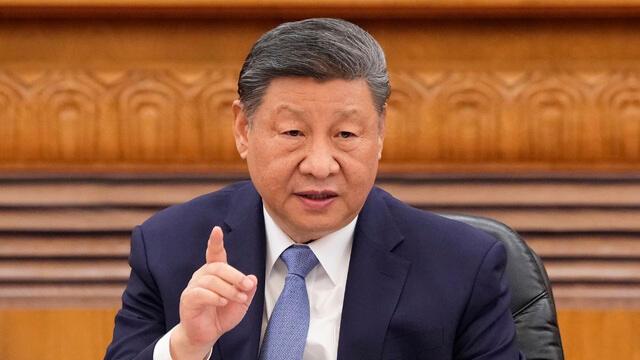
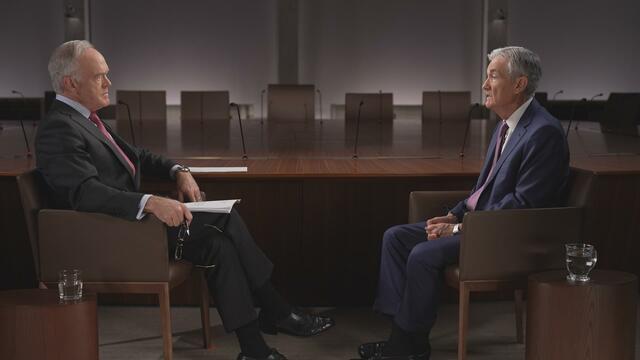
Nearly a year after the fall of the Assad regime, Syrian President Ahmed al-Sharaa discusses a fast-changing Middle East and what's being done to stabilize his fractured and traumatized country.
Oct 12, 2025 (13:08)

TRANSCRIPT FOR: “SYRIAN PRESIDENT AHMED AL-SHARAA: THE 60 MINUTES INTERVIEW”

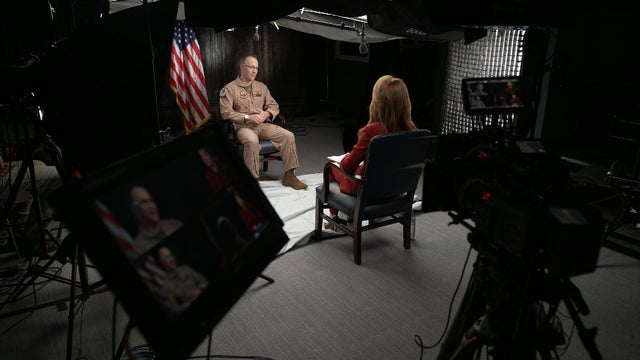
MARGARET BRENNAN:
00:01:19

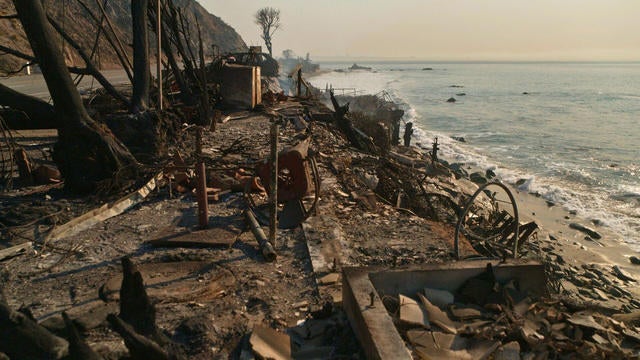
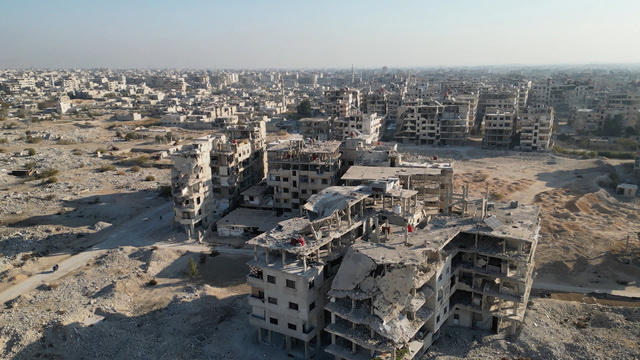
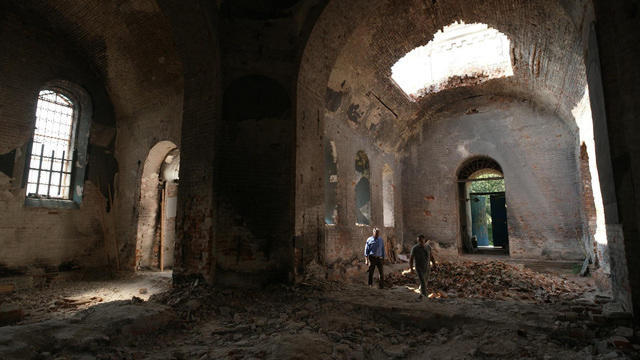
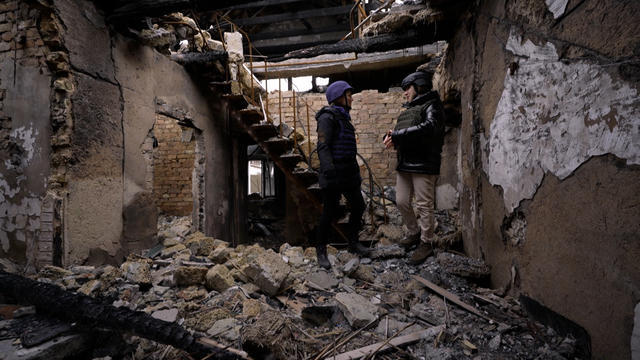
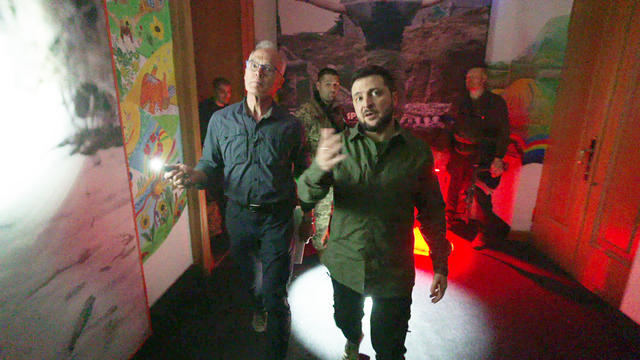
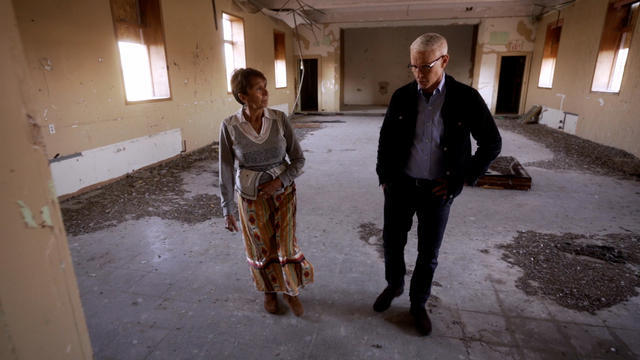
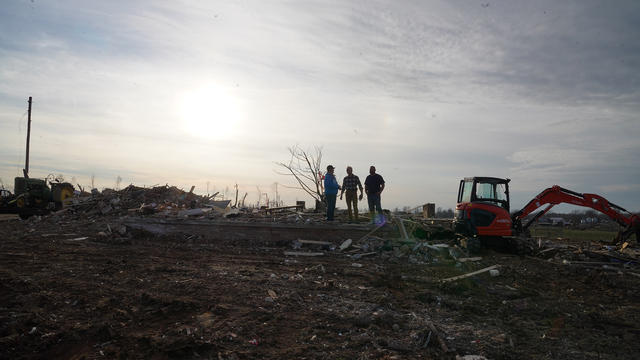
This is Jobar, on the outskirts of Damascus. 300,000 people once lived here. Syria's new president, Ahmed al-Sharaa, brought us here last month. It's shocking. It's-- Yes.

MARGARET BRENNAN:
00:01:37

There's just nothing left. AHMED AL-SHARAA: [SPEAKING ARABIC]

INTERPRETER:
00:01:40

This war was cruel. It was a hard war. Every single room in any one of these buildings holds memories for those people who lived here. This wasn't a mistake. This was a target. [SPEAKING ARABIC]
INTERPRETER:
00:01:58

Of course, all these were direct targets with one objective: to displace the people in these areas.

MARGARET BRENNAN:
00:02:06

About 13 million Syrians, half the population, are internally displaced or living abroad as refugees. Over half a million died during nearly 14 years of civil war. There are places like this throughout Syria where even mosques were bombed, al-Sharaa told us, rebel-held areas that were destroyed by Bashar al-Assad and his allies, Russia and Iran. [SPEAKING ARABIC]

INTERPRETER:
00:02:38

There are entire generations that have suffered tremendous psychological trauma. So it's very important that the period of liberation give people new hope for their return and for reconstruction. You're a father of young children. Do you think this will be rebuilt in their lifetime? [SPEAKING ARABIC]

INTERPRETER:
00:02:58

For sure. The Syrian people are strong.

MARGARET BRENNAN:
00:03:02

When al-Sharaa's Islamist forces launched a surprise attack on the city of Aleppo in November 2024, they not only won, they kept going. [SPEAKING ARABIC]

MARGARET BRENNAN:
00:03:13

By the time they got to Damascus, the capital, the dictator Bashar al-Assad had fled to Moscow. al-Sharaa's forces ended 54 years of the Assad family's tyrannical rule in just 11 days. In January, leaders of the militias that overthrew the regime appointed al-Sharaa president of Syria. We spoke with him in the cavernous building that Bashar al-Assad once occupied. What was it like when you first entered this place? [SPEAKING ARABIC]
INTERPRETER:
00:03:46

Entering this palace wasn't a very positive experience. Much evil towards the Syrian people came out of this palace since it was built.

MARGARET BRENNAN:
00:03:56

To understand his improbable path to the presidency, you have to go back about 20 years when al-Sharaa left an upper middle class life in Syria to join al-Qaeda in Iraq. He wouldn't go into details about what he did then, but he was arrested and spent six years in American and Iraqi prisons. Released in 2011, just as a popular uprising against Bashar al-Assad had begun, he started an al-Qaeda affiliate in Syria that staged suicide bombings and armed attacks against the Assad regime. AHMED AL-SHARAA (INTERPRETED): We did not take any external actions outside Syrian territory. We did not target anyone but the Syrian regime.

MARGARET BRENNAN:
00:04:38

But the United States stated that many of the attacks killed, quote, "innocent Syrian civilians," and designated al-Sharaa a global terrorist, putting him-- with his non de guerre-- on this wanted poster and offering a $10 million reward to anyone who could help, quote, "stop this terrorist." Have you ever seen that poster? The wanted poster. [SPEAKING ARABIC]

INTERPRETER:
00:05:02

Yes, of course. When you met President Trump back in May, he described you as handsome, tough. And he said you had a strong past. [SPEAKING ARABIC]

INTERPRETER:
00:05:14

Have you any doubt about that? I don't have any doubt about your strong past, but it's because of that past that you were designated as a terrorist by the American government. There was that $10 million bounty on your head until just a few months ago. AHMED AL-SHARAA (INTERPRETED): It would have been a waste. It would have been money ill-spent. We are talking about 25 years ago, I was 17 or 18 years old. The level of awareness that you have now is different from what it was 20 years ago.

MARGARET BRENNAN:
00:05:47

He eventually broke ties with a former ally, the founder of the terror group ISIS. And in 2016, renounced his allegiance to al-Qaeda. Did you actually believe in those terror groups then? Or were they just a means to an end? [SPEAKING ARABIC]

INTERPRETER:
00:06:05

If I had agreed with them, I would not have left them. Many of the officials that I spoke to about you describe you as a pragmatist. Other skeptics say that you change to meet what you need to be in that moment, and that's important to understand who you are and the direction you're taking Syria in. Are you saying that you are just a completely changed man? [SPEAKING ARABIC]

INTERPRETER:
00:06:32

I don't entirely agree with the description of pragmatist because in Arabic, it has some negative connotations. The point is, let's look at what's happening now, regardless of what was said in the media. Today, we have really saved the people from the oppression that was being thrust on them by the criminal regime. [WHISTLES] [TRAFFIC NOISE]

MARGARET BRENNAN:
00:06:58

Ten months after the fall of the Assad regime, we found signs of normalcy and difficulty, uncertainty and hope. In Damascus, one of the world's oldest cities, the bazaar still bustles. And the faithful still come to pray at the Umayyad Mosque, as they have for 13 centuries. One of the only places you'll still see Bashar al-Assad's face is on Syria's highly devalued currency. You need a brick of it to buy dinner. Many Syrians have electricity and running water for just a few hours a day. [SPEAKING ARABIC]

MARGARET BRENNAN:
00:07:36

The country's woes are the result of the long civil war, but also harsh economic sanctions the US and other countries imposed to punish Assad for his human rights abuses. Al-Sharaa wants all sanctions lifted. And in May, during a speech in Saudi Arabia, President Trump took a bold but provisional step in that direction. I will be ordering the cessation of sanctions against Syria in order to give them a chance at greatness. [APPLAUSE] AHMED AL-SHARAA: [SPEAKING ARABIC]

MARGARET BRENNAN:
00:08:08

Last month, al-Sharaa spoke at the United Nations General Assembly, the first Syrian leader to do so since 1967. He's seeking long-term investment in Syria and still needs the US to repeal sanctions permanently, which some lawmakers are reluctant to do. And at the UN, China and Russia would need to vote to lift terrorism sanctions against him. Al-Sharaa personally welcomed a high-level delegation from Moscow last month. A remarkable development given the Russian Air Force helped Bashar al-Assad pummel places like Jobar. There are millions of Syrians living in tents because things like this happen to them. Bashar al-Assad and Vladimir Putin are living in Moscow. What justice do they face? AHMED AL-SHARAA (INTERPRETED): We will use all legal means possible to demand that Bashar al-Assad be brought to justice. However, engaging in a conflict with Russia right now would be too costly for Syria, nor would it be in the country's interest.

MARGARET BRENNAN:
00:09:10

New sectarian violence at home has raised questions about whether al-Sharaa can control the fighters who helped bring him to power. On Syria's western coast in March, his security forces and allied militia were accused of participating in the massacre of 1,500 civilians, most of them members of the Alawite community that was loyal to Assad. The United Nations does say that your security forces violated humanitarian law. AHMED AL-SHARAA (INTERPRETED): I believe this is an exaggerated description, and I believe that Syria is committed to prosecuting anyone who committed crimes against civilians, of any party or side.

MARGARET BRENNAN:
00:09:48

But then again, this summer, during a fight between ethnic groups, al-Sharaa's security forces and Bedouin militia were accused of executing unarmed members of the minority Druze community in the southern city of Sweida. A Syrian TV broadcaster was reading the news when Israel, which also has Druze citizens, bombed Syria's army headquarters and defense ministry. Al-Sharaa told us Israel also bombed the grounds of his presidential palace twice. [SPEAKING ARABIC]

INTERPRETER:
00:10:17

One time I wasn't there, but the other time, I was in the palace close to the site that was bombed. To target the palace to convey a message, that's not a message. That's a declaration of war. But Syria doesn't want to engage in wars, and it doesn't want to be a threat to Israel or anyone else. Israel said publicly their intention was to protect a minority group there, the Druze. And the prime minister said he had to protect them because your forces did not. [SPEAKING ARABIC]

INTERPRETER:
00:10:48

This is a Syrian internal matter that should be resolved legally by Syrian authorities.

MARGARET BRENNAN:
00:10:54

After Assad fell, Israel occupied strategic parts of its shared border with Syria, and conducted air raids and land incursions, citing potential security threats. President Trump's special envoy to Syria, Tom Barrack, has been trying to broker an agreement that would ease tensions. Your government has been discussing a security agreement with Israel. Does that for you mean that Israel has to return all of the land that it seized after the Assad regime fell? AHMED AL-SHARAA (INTERPRETED): During negotiations, yes, for sure. Israel must retreat from any point taken after December 8. Syria has not provoked Israel since we arrived in Damascus.

MARGARET BRENNAN:
00:11:41

Meanwhile, this past week, parliamentary elections were held in much of Syria, but only a limited number of people were eligible to vote. Under an interim constitution al-Sharaa signed in March, he's supposed to serve as president for five years, leading a transition to elected government. What kind of government do you want to see here? Is it a democracy? AHMED AL-SHARAA (INTERPRETED): General elections will be held once the infrastructure is rebuilt and once the population has IDs and proper documents. So eventually, you want Syria to be a place where every person gets one vote. [SPEAKING ARABIC]

INTERPRETER:
00:12:19

Absolutely.

MARGARET BRENNAN:
00:12:21

If al-Sharaa can follow through on his promises, it would be a new day for Syria and for the Middle East. But as we saw, major challenges lie ahead. In Jobar, al-Sharaa told us it will cost $600 to $900 billion to rebuild his country, and that's going to require the international community's help. AHMED AL-SHARAA (INTERPRETED): The world watched this tragedy unfold for 14 years and couldn't do anything to stop this massive crime. So the world today should provide support to Syria. Anyone who obstructs the lifting of sanctions on Syria is an accomplice to those who committed this crime.

Videos
View CBS News In
CBS News App Open
Chrome Safari Continue