Watch CBS News

Rachel Goldberg-Polin | 60 Minutes Interview

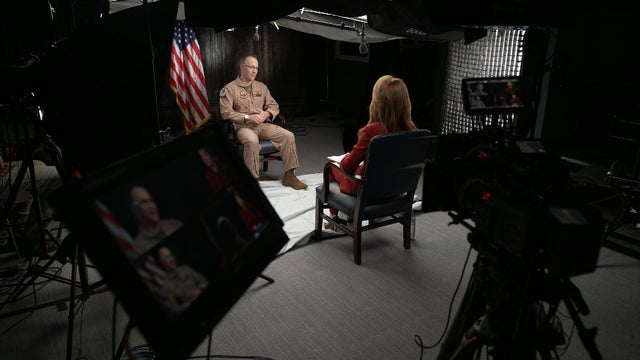
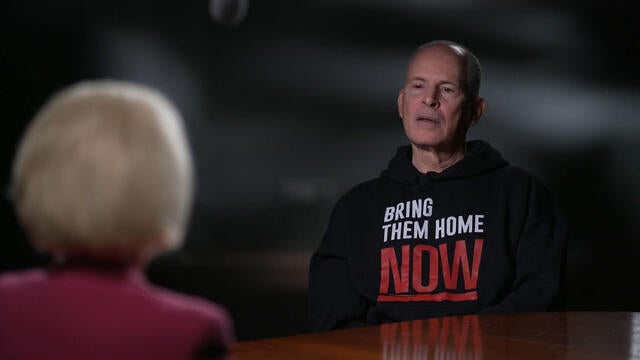
When Hamas abducted her son Hersh, Rachel Goldberg-Polin became the face of the hostage crisis in Israel. Since his murder, she says she has learned that the constant pain of grief is a "badge of love.
Apr 19 (13:11)

TRANSCRIPT FOR: “RACHEL GOLDBERG-POLIN ON GRIEF AFTER HAMAS ABDUCTED, KILLED HER SON | 60 MINUTES”

ANDERSON COOPER:
00:01:54

What was Hersh like? Easy. Easy. The universe really knew what it was doing when it said, Rachel's going to have one son. So this is the one for her. I was really blessed.

ANDERSON COOPER:
00:02:13

Hersh and his best friend Aner Shapira were at the Nova Music Festival near the Gaza border on the morning of October 7, when Hamas terrorists attacked. They slaughtered 378 people and wounded hundreds more. What do you remember about the morning of October 7? RACHEL GOLDBER-POLIN: The sirens started, and I went and turned on my phone. And at 8:11, two messages had come in from Hersh. The first one said, I love you. And the second one said, I'm sorry. And that was it. Everything that had ever happened in my life, from the day I was born until that second, was over. [NON-ENGLISH SPEECH]

ANDERSON COOPER:
00:02:55

Hersh sent those texts from inside this bomb shelter, crammed with more than two dozen people. That's Hersh against the wall and on air near the entrance. RACHEL GOLDBER-POLIN: Hamas came to the doorway and was throwing in hand grenades. Aner was picking them up and throwing them out. [GRENADES EXPLODING] Picking them up and throwing them out.

ANDERSON COOPER:
00:03:17

According to survivors, Aner threw back at least 10 grenades. When he was killed, others took his place. In all, 16 people were killed in the shelter. Hersh survived but was seriously wounded by a grenade. There were four young men who were not able to hide under bodies. They were all wounded, and they were taken outside and put on a pickup truck and driven into Gaza. And that footage we saw for the first time when we talked with you. We spoke on October 16 on CNN, you and Jon. Our son, by all accounts of the witnesses, had his left arm blown off.

ANDERSON COOPER:
00:04:00

When Jon said that, I realized I'd seen their son being kidnapped. Four days earlier at the Nova Festival site, Israeli soldiers showed me this gruesome video recovered from a terrorist cell phone.

SPEAKER:
00:04:13

[NON-ENGLISH SPEECH]

ANDERSON COOPER:
00:04:15

That's Hersh with the bone sticking out of his left forearm, being forced into a pickup truck. As soon as we got off, I said, I need to call you. But I still-- to this day, I am sorry that is how you found out, that I was the one to tell you that there's this video. But we were so thankful, and it made us know that he was taken alive, that he walked on his own two feet. And we also were really grateful that you did it in such a human way. In this sideways world, when we had the proof that he was kidnapped, that was actually good. The time is running out to save them. The time is running out to save all of us. [NON-ENGLISH SINGING]
ANDERSON COOPER:
00:05:09

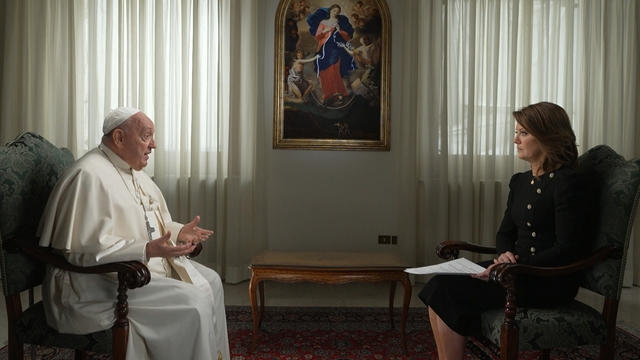
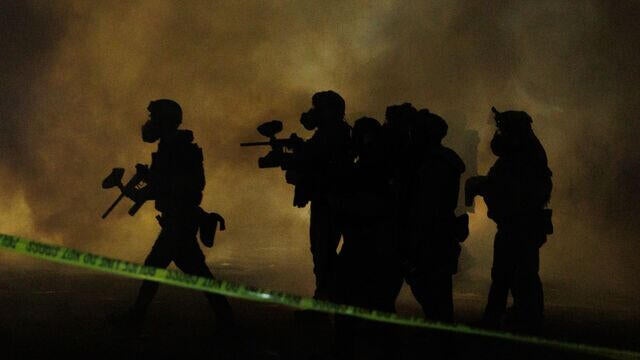
Rachel became, for many, the face of the hostage crisis, meeting the pope, world leaders and giving hundreds of interviews. We want to save Hersh's life. We want to save all of those hostages.

ANDERSON COOPER:
00:05:22

Every day, she wore a piece of tape. On it, she'd written the number of days since Hersh and the other 250 hostages were taken. I was always saying, I love you. Stay strong, survive. I love you. Stay strong, survive. I love you. Stay strong, survive. Was it a command to you as well? Yes, because there were times when I would just get seized with emotional and psychological and physical pain. And I would keel over onto Jon. And I would just say, how much longer? How much longer? How much longer? [NON-ENGLISH SPEECH]

ANDERSON COOPER:
00:06:00

On the 201st day, Hamas posted this video of Hersh. And we see the stump of his arm. It was a propaganda video. Yes, and that gave us another bolt of adrenaline. Keep going. Keep going. This child needs you. Hersh! Hersh! It's mama.

ANDERSON COOPER:
00:06:26

On the 328th day, Rachel and Jon joined other hostage families, screaming their loved ones names into a microphone towards Gaza. [NON-ENGLISH SPEECH]

ANDERSON COOPER:
00:06:40

Rachel didn't know it then, but that was the day her son was murdered by Hamas. We ended up finding out it killed him that day. And so I wonder, did he hear me? Do you think he did? I think there are other ways that you can hear your parents screaming for you, even if you don't hear them.

ANDERSON COOPER:
00:07:03

It was in this underground tunnel in Rafah on August 31, 2024 Israeli soldiers found Hersh's body. He and five other hostages had been executed. Hersh was shot six times at close range. When his body was brought back to Israel, thousands lined the streets and attended his funeral. Finally, my sweet boy, finally, finally, finally, finally, you're free.

ANDERSON COOPER:
00:07:31

Rachel and Jon continued to advocate for the remaining hostages, but they were desperate for details about the last year of their son's life. [NON-ENGLISH SPEECH]

ANDERSON COOPER:
00:07:40

Then, in February 2025, something remarkable happened. A hostage named Or Levy was released by Hamas along with two others. [CRYING] When Or was reunited with his family and three-year-old son, he learned his wife, Eynav, was killed on October 7. He was also told Hersh had been murdered. It broke me, and I told my parents right away, I want to meet their parents.

ANDERSON COOPER:
00:08:10

It turned out Or had spent three days with Hersh in a tunnel, and he says something Hersh told him saved his life. Seeing this guy without an arm, without a hand, and you know what he did? He laughed about it. About his hand?
OR LEVY:
00:08:26

Yeah, he laughed about everything. And he smiled the entire time. He wasn't broken.

OR LEVY:
00:08:31

No, he wasn't. Hersh kept repeating this mantra. He who has a why can bear any how.

ANDERSON COOPER:
00:08:37

He who has a why can bear any how is a mantra Hersh got from this book, Man's Search for Meaning,a 1946 concentration camp memoir by a survivor, Viktor Frankl, who'd adapted a similar saying by Friedrich Nietzsche.

OR LEVY:
00:08:53

It became our mantra.

ANDERSON COOPER:
00:08:55

Everybody there? Everybody there. That idea that if you have a why, you can survive. You can do anything.

ANDERSON COOPER:
00:09:03

Soon after he was freed, Or got Hersh's mantra tattooed on his arm.

OR LEVY:
00:09:09

My son asked me, what does it say? He doesn't speak English. And I just laughed. And I said, your name. Your name, because that's your why.

OR LEVY:
00:09:18

This is my why. The only reason why I survived was him. What was Hersh's why? I asked Or that, and he said-- he went like this, you. It was this shocking, life-affirming CPR from beyond to have Hersh through Or telling us what's your why going to be. Because you can bear this, even this, even losing me. You could do it. And so part of what I'm trying so hard to do now is to figure out what is my why.

ANDERSON COOPER:
00:09:56

Rachel was told something else by Or that gave her tremendous comfort. He said, it's important that you know that he told me that, "My mother spoke to the secretary of state in the US." Hersh had told him that? RACHEL GOLDBER-POLIN: Yeah. And I said, he heard on the news I had spoken to the secretary of state? And he said, no, he heard you on the news. And it was like, all of a sudden, thank God, first of all, that he heard my voice, and that he knew. We are nobodies. We are absolute nobodies. I even say the equivalent of John Doe in the Jewish world is Rachel Goldberg. But we tried so hard, and he knew.

ANDERSON COOPER:
00:10:49

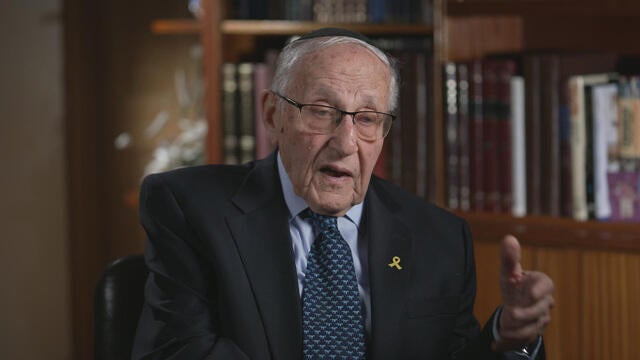
When we met Rachel in Jerusalem in February, days before the new war with Iran, she'd recently finished writing a book called When We See You Again, which comes out this week. You write in the book, people want hope, resilience, recovery, strength, survival, healing. They s thriving and rising from the ashes like the phoenix s the days of yore. The pain is chronic, ever present, constant, gnawing, circular, not linear. That's how it feels? That's how it feels now. I'm open to it feeling different. Have you noticed a change? I think my understanding of grief has changed. I was dreading and uncomfortable with grief. And recently, I had this whole different thought of maybe grief is actually just this precious badge of love that you wear because someone has died and your love is continuing to grow.

ANDERSON COOPER:
00:11:57

When the body of the last hostage was returned this past January, it had been 843 days since the October 7 attack. Rachel and Jon finally took down the pieces of tape their family had worn and stuck on a wall in their apartment. That's the day we buried Hersh. So many lives, so many innocent lives on both sides, lost.

ANDERSON COOPER:
00:12:25

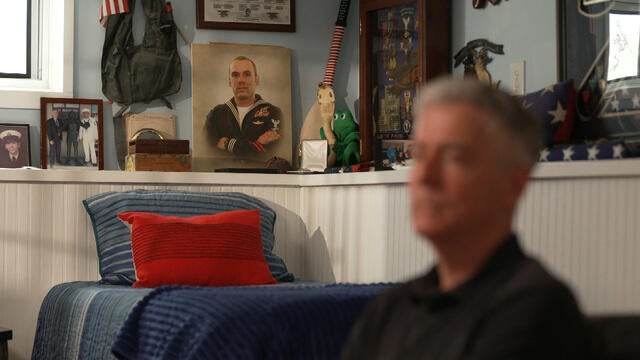
Rachel has kept Hersh's room as he left it. RACHEL GOLDBER-POLIN: And that's the tape that we took down.

ANDERSON COOPER:
00:12:31

Oh my gosh. It's extraordinary to see all the pain and everything that is in that ball. RACHEL GOLDBER-POLIN: It's like these symbols of failure. What we were fighting for did happen. We got all of these people home, not as we wanted. We wanted them home alive. But they had come home. You said it's-- these are all symbols of failure. Do you think you failed? Yeah. You did more than anybody could possibly do. It's true. And sometimes 100% is not enough. [AUDIO LOGO]

Videos
View CBS News In
CBS News App Open
Chrome Safari Continue