NARRATOR:
00:00:02
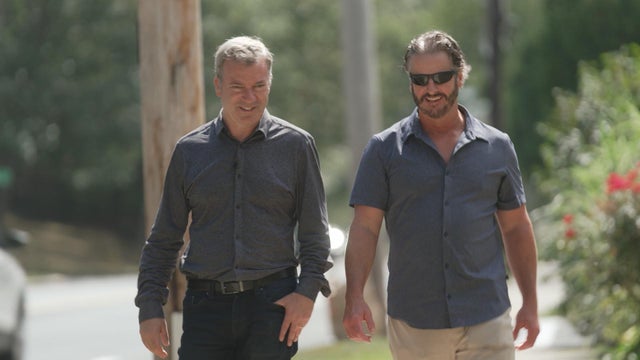
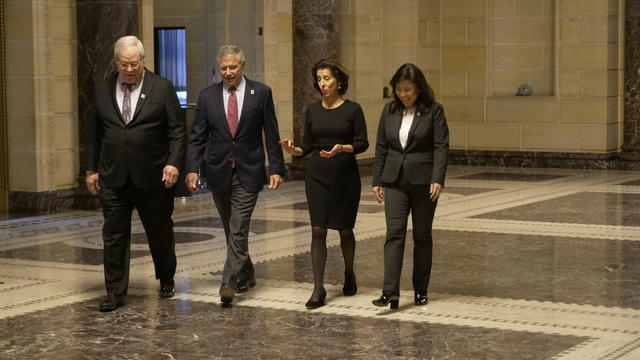
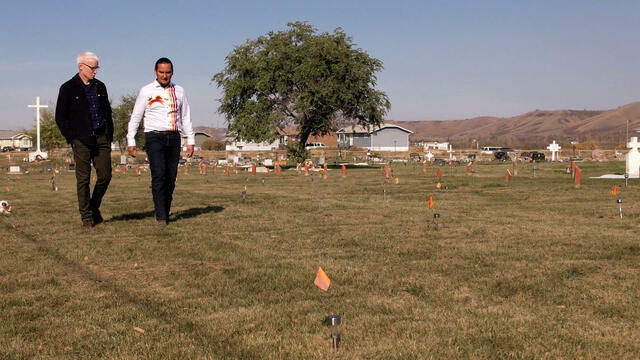
60 Minutes Rewind. 2 and 1/2 million Americans served in Iraq and Afghanistan, and we wondered what's become of them. Long after they cut down the yellow ribbons and the camo went into hiding in the back of the closet, what do they think of their war? Was coming home the homecoming they hoped for? Recently, we joined an annual reunion of men that we first met five years ago. It was back in 2009 that Golf Company, 2nd Battalion of the 8th Marines, was taking the highest casualties on Afghanistan's most lethal battlefield. When we met them again last summer in Washington, we found that their searing experience had made them brothers in war and peace. We caught up with them on a field trip, part of their Washington reunion. They fell in without uniforms, weapons, or the passing of years. They're mostly civilians now, gathered in one place they could be together, the place they could say things that had been left unsaid or deliver news of the last five years. Golf Company's Lance Corporal Burrow and Lieutenant Bourgeois were enlisted in the ranks of Arlington National Cemetery. Each stone arch a gateway through time. Lance Corporal Jonathan F. Stroud. Lance Corporal Gregory A. Posey.
SCOTT PELLEY:
00:01:33
This was September 2009. We were there as Golf Company stood rigid in a mud-walled memorial service. It was the first time the troops had come to grips with the terrible loss signified by seven battlefield crosses. First Sergeant Robert Pullen called the roll of the dead. Lance Corporal Patrick W. Schimmel Lance Corporal Dennis J. Burrow. Lance Corporal Javier Olvera. Lance Corporal David R. Hall.
SCOTT PELLEY:
00:02:13
The seven Marines had died fighting to clear and hold the Taliban heartland, exhausting months negotiating around landmines and skeptical elders. Back then, their orders were to use restraint, and Corporal Jonathan Quiceno told us what he thought of that. It sucks. I don't know another word to say. It sucks because all you want to do is get that guy. You just want to get them, for everything I don't-- revenge, to say the least.
SCOTT PELLEY:
00:02:43
Revenge for the death of his friend, Nick Xiarhos who was killed in 2009 by a roadside bomb. Five years later, Quiceno had used his veteran's benefits for college, and now he's selling retirement plans for Lincoln Financial outside Philadelphia. He moved on, but he never let go of Xiarhos. It's because of people like him that I want to continue to push harder in life and succeed because it's the good ones that pass, and I can't let that be in vain. It drives me. It motivates me. Is there anything that you miss about Afghanistan and the Marine Corps? Absolutely. The brotherhood. There's no question about that. You miss the sense of purpose, right? You had a mission. You felt accomplished with everything that you do, even at a young age. I think when you transition into the real world, you have to find out what your mission is. A lot of people would think you would try to forget Afghanistan, and it seems to me you're trying to remember it. I don't want to put it behind me. I want it to be real in everything that I do because it gives me something to live for. It gives me something to stand for. I love the camaraderie and everything that came along with it. There's nothing like it? Nothing. I haven't found anything like it.
SCOTT PELLEY:
00:04:02
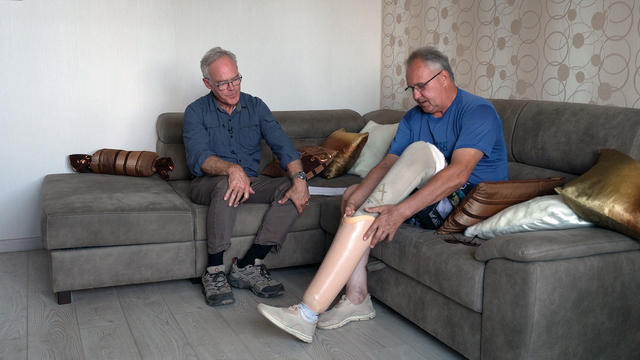
Golf Company's Rory Hamill was so dedicated to the camaraderie, he went back to Afghanistan for another tour in 2011. I suppose it was to try and get back at the guys that killed my brothers. Tell me about the day you were wounded. I came across a local national who gave us some intelligence on the ground that there was an IED in a compound next to his house. I took the minesweeper off my point man's back, and I jokingly said, see you on the other side. I got about 3/4 of the compound swept, and then I stepped on a low metallic pressure plate. And my leg was instantly sheared off. I remember it seemed very surreal. My vision went gray. There was a lot of ringing, dust everywhere.
SCOTT PELLEY:
00:04:48
When the dust settled, his right leg was gone halfway up the thigh. At Walter Reed Medical Center, President Obama brought him an honor.
RORY HAMILL:
00:04:57
He awarded me with a Purple Heart. It was amazing. It was an amazing experience.
SCOTT PELLEY:
00:05:01
You must have been in a pretty dark place otherwise. Oh, yeah. The first two weeks, a lot of the thoughts going through my head were, why didn't I die? What am I going to do now with my life? Were there times that you wish you hadn't survived? Yeah. I was contemplating taking my own life, but sitting and thinking about it, realizing that I have children that depend on me, I knew that that was not the right course of action.
SCOTT PELLEY:
00:05:34
Urged onto a different course by his father, Hamill pressed through counseling and physical therapy. He's found work managing logistics in a Navy program for wounded warriors. Having been through everything you've been through, would you do it again? In a heartbeat. It made me the man I am today. Whether they like it or not, I still feel responsible for them. They're still your Marines. They always will be. Golf's battalion commander was Lieutenant Colonel Christian Cabaniss In this summer of decision in Afghanistan in 2009, you are going to change history. Living the dream, one minute at a time.

SCOTT PELLEY:
00:06:15
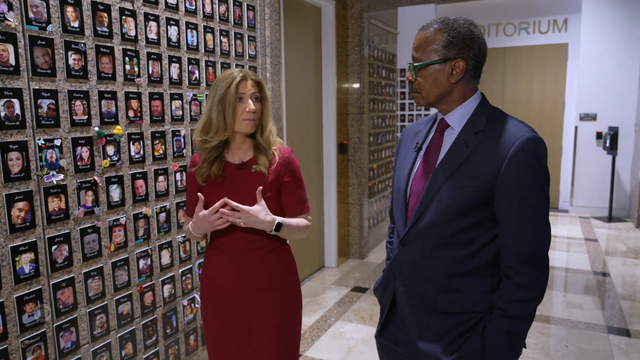
Today, he's Colonel Cabaniss, and he joined this reunion. Why do you think some of the Marines are still struggling after they've come home after five years? I think, in some ways, we all do when we come back. It's because we're trying to put that experience into perspective. I joked, I'm never more popular coming home from a deployment than right before the bus door opens. Superman's coming. Superman's coming. Superman's coming. The door opens. Oh, it's just him. And they expect you to fall back into those roles-- husband, father, brother, nephew, cousin, uncle-- as if nothing changed. There were definitely times when I questioned what we were doing over there.
SCOTT PELLEY:
00:07:01
Five years ago, Dan O'Hara was a fresh second lieutenant leading his first combat platoon. What's the biggest threat to your Marines? The biggest threat would be the improvised explosive devices.
SCOTT PELLEY:
00:07:13
He told us then that he joined the Marines because he didn't want to regret not serving. It turned out we met on what would be his worst day.
DAN O'HARA:
00:07:23
We should be good pushing up through here until we get near that IED site.
SCOTT PELLEY:
00:07:27
It was a mission to defuse a landmine, and it went exactly according to plan. But on the way back, Lance Corporal David Hall detonated a second bomb. And the next day, O'Hara tried to give meaning to Hall's death. So you understand, we're doing the right things. We're doing good work. We're making a difference here. We're here fighting for the people of Afghanistan, and we're here, ultimately, fighting for our country. Should we have been in Afghanistan? I don't know. Maybe the answer is yes. Maybe it's no. And so when I run into people who say, tell me about Afghanistan. What were our goals there? Should we have been there? I think I'm in the same boat where I would say, to be honest with you, I don't know.
SCOTT PELLEY:
00:08:07
After two tours and a lot of questions, O'Hara's been recruited into General Electric's program for returning vets. He's a project manager for GE oil and gas, and sometimes he thinks about running for office. I had done what I wanted to do in the Marine Corps. I could say I deployed twice in the defense of my nation, so that was something I was proud of. There's certainly a part of you that says, I'm glad that that's over with. Goodbye to all that. Yeah. Goodbye to Afghanistan. I won't be seeing you again. [CLOCK TICKING]
NARRATOR:
00:08:39
The story will continue after this. Those images are burned in your head, man. They never go away. They never go away.
SCOTT PELLEY:
00:08:55
Afghanistan did not leave Golf Company's Devin Jones. Like many others, Jones brought the war home. I mean, it was rough. I didn't do anything during the day. I moved at night. That was it.
SCOTT PELLEY:
00:09:08
The anxiety of post-traumatic stress left him isolated and jobless. You're getting closer and closer to being on the streets. You're getting eviction notices. You're getting those, and you're just like, man, this is bad. Did you lose the apartment? Yeah. I ended up losing it. I ended up--
SCOTT PELLEY:
00:09:27
Where did you go? For a little while, I stayed in my storage unit. You were living in a storage unit? Yeah. Yeah. Staying in the storage unit.
SCOTT PELLEY:
00:09:37
Why aren't you reaching out for help? I felt like a complete idiot, like a complete failure. I went from being a very proud combat veteran just to another percentage of the homeless vets. It's so much easier to give up. You go from having a job, a stable job, having everyone that cares about you around you 24/7 to being alone, broke, eating saltine crackers, living in a storage unit. Who wouldn't want to die?
SCOTT PELLEY:
00:10:10
But what torments Jones is that he isn't alone. There is the persistent presence of his friend Dennis Burrow. After Burrow was killed by a landmine, Golf Company put his name on a combat outpost so he wouldn't be forgotten. But it turns out that isn't the problem. The dead are immortal in the mind. Were you there when Burrow died? Yes. Yes, I was. What happened? I'm not sure if I really want to go into detail on that too much. I don't want to be the person that the family hears that from, if they don't already know. It's not easy to think about that day because that was a pretty rough day. Sorry. I'm sorry that it's so hard to remember that. It's all right. [CRYING] You're still looking out for Burrow. Yeah. You never stop looking out for your team. Your team's everything. I've had nightmares where I've just been sitting there just staring at him. Did you sometimes think you'd like to trade places?
DEVIN JONES:
00:12:01
Every day. Every single day. How do I deserve to be here? It's been a long time, buddy. I miss you, dude. Nothing else to really say. Just look after us. Look after everybody else, man. Just know I'm thinking about you, bud.
SCOTT PELLEY:
00:12:31
The men do look after one another, phone calls at 3:00 AM to be reminded that what got them through combat will get them through whatever they're fighting now. There is a bond that only a vet can know that does not loosen with time. Where do you think these Marines will be five years from now? What I really hope is five years from now, they're still coming together to see each other, to talk to each other, and they're talking about their kids and the things that are going on in their lives so that they've been able to put that experience in perspective and use it as a foundation because I said that these kids are our next greatest generation, but not necessarily because of what they did on the battlefield. It's going to be because of what they did when they got home.