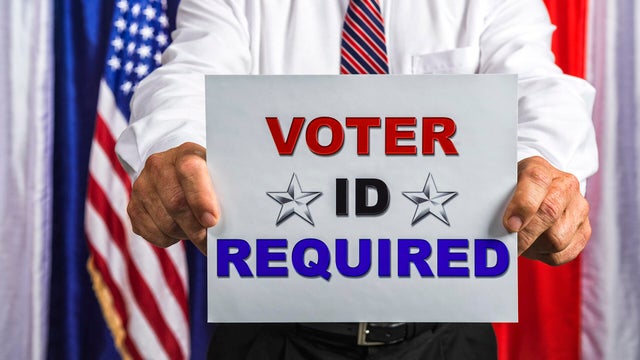
Florida legislature passes bills requiring proof of citizenship for voters
The measure, which the governor is expected to sign, is set to go into effect in January 2027, after the midterm elections.
Watch CBS News
The measure, which the governor is expected to sign, is set to go into effect in January 2027, after the midterm elections.

The measure, in part, restricts government contracts with entities in China, Russia, Iran, North Korea, Cuba, Venezuela, and Syria --- nations listed by Florida as foreign countries of concern --- and prohibits public officials and employees from accepting gifts from those countries.

As part of the move, the Department of Highway Safety and Motor Vehicles would have to note whether someone is a citizen on any new, replacement, or renewal driver's license or state ID card.

The move comes after the hotel development group had previously deferred its water park request following a large turnout of residents at a Miami Beach Historic Preservation Board meeting in February.

Domestic violence reform is at the forefront of the 2026 legislature session in Florida.

Starting Sunday, the state will cut its subsidies for the AIDS Drug Assistance Program (ADAP), and funds will only be available for people at or below 130% of the federal poverty level, a drop from 400%.

The bill contains wide-ranging changes to the state election code, including new proof-of-citizenship requirements when registering to vote, reductions to the kind of photo identification cards that can be used at polling locations, and requiring an individual's legal citizenship status to be posted on drivers' licenses and ID cards issued by the state.

Despite a contentious debate, the House voted along party lines to pass the bill, making October 14th the "Charlie Kirk Day of Remembrance" and designating a portion of SW 107th Avenue as "Charlie Kirk Memorial Avenue."

Some GOP members of the Senate Appropriations Committee argued that the proposal would put vulnerable children at risk and bring back previously eradicated diseases.

The Florida Senate unanimously passed a bill Friday that would create a public registry of people who abuse animals.

If 60 percent of voters approve the measure, it would take effect in the 2027 tax year, but the Senate has not advanced anything similar yet.

If DeSantis passes the bill, it will attach President Trump's name to the Palm Beach International Airport and give the legislature the authority to name other Florida airports.

This would change the current Florida High School Athletic Association bylaws that call those actions "impermissible benefits."

The task force will be under the Department of Legal Affairs with each person serving a two-year term and must report to the governor and legislative leaders each year.

The House passed the bill to name the Palm Beach International Airport after Trump, despite arguments about trademarks and his past behavior.

The fund that was set up by lawmakers in 2022, containing $4.77 billion, has been used by DeSantis for immigration enforcement since the governor declared it an emergency in 2023.

The change defines what constitutes "materials harmful to minors" in the controversial 2023 law and why certain material can be banned in the classroom.

The Florida Senate voted unanimously to approve the proposal, which will put the site near St. Augustine as the top choice over Opa-Locka and Eatonville.
Florida lawmakers are proposing a bill that would prevent undocumented immigrants from receiving worker's compensation.

A proposal that would further limit the number of out-of-state and international students at some Florida universities continues to gain steam in the House.

The bill will make October 14th the "Charlie Kirk Day of Remembrance," which has sparked outrage due to Kirk's controversial comments towards Black and Muslim people.

The bill would have students from 2nd to 5th grade learn how to write in cursive and then be tested on what they learned at the end of 5th grade.

The bill will also allow name changes for other airports across Florida subject to approval by the Federal Aviation Administration.

The bill, which will go to the Florida House, was passed unanimously by the Senate, giving permission for garage apartments to be built on lots where they were once prohibited.

A federal court in Florida has thrown out a lawsuit by Republican groups that challenged statistical methods used to produce the results of the 2020 census.