See 2026 Texas primary election results from key local races
Texans cast their ballots Tuesday in the 2026 primary elections, choosing their parties' candidates for key federal, statewide, and legislative races leading up to the November general election.
- U.S. Senate: In the Texas GOP Senate primary, CBS News projects Sen. John Cornyn and Texas Attorney General Ken Paxton will go to a runoff. On the Democratic side, State Rep. James Talarico defeated U.S. Rep. Jasmine Crockett in a primary race that drew national attention.
- Texas Attorney General: Republican candidates State Sen. Mayes Middleton and U.S. Rep. Chip Roy are advancing to a Republican runoff. Democratic candidates Joe Jaworski, Nathan Johnson and Tony Box are each making the case that they can bring stability and credibility to the office.
- Texas Governor: Republican Gov. Greg Abbott and Democratic Rep. Gina Hinojosa won their respective parties' nominations and will face off in November.
- Agriculture Commissioner: Republican challenger Nate Sheets ousted incumbent Sid Miller, who was seeking a fourth term.
Talarico urges unity, promises people-focused leadership in victory speech
In a victory speech on Wednesday night, Texas Rep. James Talarico said that Texans are done being divided and pitted against each other.
"One thing is clear today: we're about to take back Texas," he said. "To the billionaires who have taken over our state and our country: your unchecked power is coming to an end. Your days dividing working people are numbered."
Talarico will win the Democratic primary for U.S. Senate in Texas, defeating Rep. Jasmine Crockett and avoiding a runoff in one of the most closely watched races of the 2026 midterms. Crockett released a statement Wednesday morning, conceding to Talarico. She congratulated him after he was projected to win by 7 percentage points, with 53% of the vote.
"Texas is primed to turn blue, and we must remain united because this is bigger than any one person. This is about the future of all 30 million Texans and getting America back on track. With the primary behind us, Democrats must rally around our nominees and win. I'm committed to doing my part and will continue working to elect democrats up and down the ballot," Crockett's statement read.
Talarico thanked Crockett during his Wednesday night speech, calling her a colleague and a friend.
He went on to highlight his "grassroots" fundraising, drawing tens of thousands of supporters and over 28,000 volunteers. He emphasized bipartisan solutions on housing, healthcare, and education and called for unity and a shift away from divisive politics, aiming to challenge systemic corruption and promote a people-focused, inclusive approach to governance.
Trump says he will endorse "soon" in Texas GOP Senate runoff between Cornyn and Paxton
President Donald Trump said Wednesday he plans to announce an endorsement soon in the Texas Republican Senate primary runoff between Sen. John Cornyn and Attorney General Ken Paxton. In a social media post, Trump said he would ask the candidate he does not endorse to immediately drop out of the race, arguing Republicans must unite to win in November.
Neither Cornyn nor Paxton secured more than 50% of the vote in Tuesday's primary, forcing a May 26 runoff under Texas law. With about 98% of the vote counted, Cornyn led Paxton by fewer than 30,000 votes in what has already become the most expensive Senate primary race in history.
The winner of the GOP runoff will face Democratic nominee James Talarico in November. Talarico defeated U.S. Rep. Jasmine Crockett in the Democratic primary, allowing him to shift focus to the general election while the Republican contest continues.
Paxton, a close ally of Trump who has faced multiple controversies during his time as attorney general, and Cornyn, a longtime senator with strong support from Republican leadership, continued to attack each other after the primary. Meanwhile, Texas' other Republican senator, Ted Cruz, said he will stay neutral in the runoff and leave the decision to voters.
Dallas County processes tens of thousands of ballots overnight after extended voting hours
Dallas County election workers stayed late Tuesday and into Wednesday processing tens of thousands of ballots after polls closed.
Unofficial figures posted on the county's website show that more than 57,000 Democratic ballots were processed between 2 a.m. and just after 11 a.m., when the latest results were posted. Meanwhile, the Republican count continued overnight, with more than 12,000 ballots tallied before an unofficial final count was released shortly after 6 a.m.
According to the unofficial results, 279,788 Democratic ballots and 103,607 Republican ballots were cast in Dallas County's primary election. However, the exact number of Democratic ballots submitted after 7 p.m. remains unclear after a Dallas County judge ordered polls to remain open for two additional hours because of confusion over voting locations. The Texas Supreme Court later stayed that order, raising questions about the status of ballots cast after 7 p.m.
Overall, Dallas County Democrats recorded a 19% turnout, while Republicans saw a 7% turnout in the primary.
Dallas County has more than 1.4 million registered voters.
Jackson, Daniels head to runoff in GOP primary for Texas' 30th Congressional District
Everett Jackson and Sholdon Daniels are headed to a runoff in the Republican primary for Texas' 30th Congressional District after none of the four candidates secured a majority of the vote.
The race comes after the district was redrawn during Texas' recent redistricting, creating an open seat with longtime Democratic Reps. Jasmine Crockett and Marc Veasey no longer running in the district.
Despite the competitive GOP primary, the district remains heavily Democratic, giving the party's nominee a strong advantage in November.
Jasmine Crockett concedes to James Talarico in Democratic primary for Senate
Texas Rep. Jasmine Crockett released a statement Wednesday morning, conceding to Rep. James Talarico in the Democratic primary for U.S. Senate. She congratulated him after he was projected to win by 7 percentage points, with 53% of the vote.
In part, she called for unity among the Democratic Party.
"Texas is primed to turn blue, and we must remain united because this is bigger than any one person. This is about the future of all 30 million Texans and getting America back on track. With the primary behind us, Democrats must rally around our nominees and win. I'm committed to doing my part and will continue working to elect democrats up and down the ballot," Crockett's statement read.
Julie Johnson, Colin Allred advance to runoff in District 33 Democratic primary
Voters in Texas' 33rd Congressional District will decide the Democratic nominee in a runoff after Rep. Julie Johnson and former U.S. Rep. Colin Allred finished as the top two vote-getters in Tuesday's primary, preventing either candidate from clearing the majority needed to secure the nomination outright.
With no candidate surpassing 50% of the vote, Johnson and Allred now advance to a May runoff election that will determine who carries the Democratic banner into November in the heavily Democratic North Texas district.
Nate Sheets defeats Sid Miller in Republican primary for Texas agriculture commissioner
Collin County businessman Nate Sheets has won the Republican primary for Texas agriculture commissioner, unseating three-term incumbent Sid Miller in one of the most closely watched statewide races of the 2026 Texas primary election.
Sheets, the founder of the honey company Nature Nate's, rode a wave of support from prominent Republicans, including Gov. Greg Abbott, and a well-funded advertising campaign that saw him outspend Miller during the race.
With the primary victory, Sheets will advance to the November general election, where he is expected to face Democrat Clayton Tucker, a rancher and founder of the Texas Progressive Caucus, in the race to lead the state agency responsible for agriculture policy, rural development and consumer programs.
James Talarico wins Texas Democratic U.S. Senate primary, avoids runoff
Texas Rep. James Talarico will win the Democratic primary for U.S. Senate in Texas, CBS News projects, defeating Rep. Jasmine Crockett and avoiding a runoff in one of the most closely watched races of the 2026 midterms.
Talarico now advances to the November general election, where he will face either incumbent Republican Sen. John Cornyn or Texas Attorney General Ken Paxton, who are headed to a May 26 GOP runoff.
The race has drawn national attention amid deep divisions within both parties and record-breaking spending in the Texas Senate primary.
Key Texas primary races still undecided as of midnight
Several Texas primary races were still undecided Tuesday night into Wednesday.
Here are some of the key Texas races we're still watching:
Attorney General (D)
- Joe Jaworski
- Nathan Johnson
- Tony Box
Democratic voters are deciding which candidate will carry the party's banner in a race focused on restoring stability and credibility to the Texas attorney general's office.
On the Republican side, U.S. Rep. Chip Roy and state Sen. Mayes Middleton advanced to a head-to-head May runoff.
U.S. House District 30 (R)
- Everett Jackson
- Nils B. Walker
- Sholdon Daniels
- Gregorio H. Heise
Republican voters are selecting their nominee to compete in the Dallas-based district in November.
On the Democratic side, Rev. Frederick Douglas Haynes III won the primary for Texas' 30th Congressional District.
U.S. House District 33 (D)
- Julie Johnson
- Colin Allred
- Zeeshan Hafeez
- Carlos Quintanilla
Four Democrats, two very high-profile, are competing for the party's nomination in a closely watched North Texas congressional race.
U.S. House District 33 (R)
- Patrick David Gillespie
- John Sims
- Monte "Doc" Mitchell
- Kurt Schwab
Republicans are deciding which candidate will represent the party in the general election for this newly drawn North Texas district.
Texas Agriculture Commissioner (R)
- Sid Miller
- Nate Sheets
Incumbent Sid Miller faces a high-profile challenge from businessman Nate Sheets in one of the most closely watched statewide Republican primaries.
Rev. Haynes wins Democratic primary for District 30
With over 70% of the votes tallied, CBS News projects that Rev. Frederick Douglas Haynes III will win the 2026 Democratic primary for Texas House District 30 with more than 74% of the votes.
Man detained outside Paxton watch party told police he was making a delivery
A man detained outside Texas Attorney General Ken Paxton's watch party location Tuesday night said he was there to make a delivery to an employee, according to the Dallas Police Department.
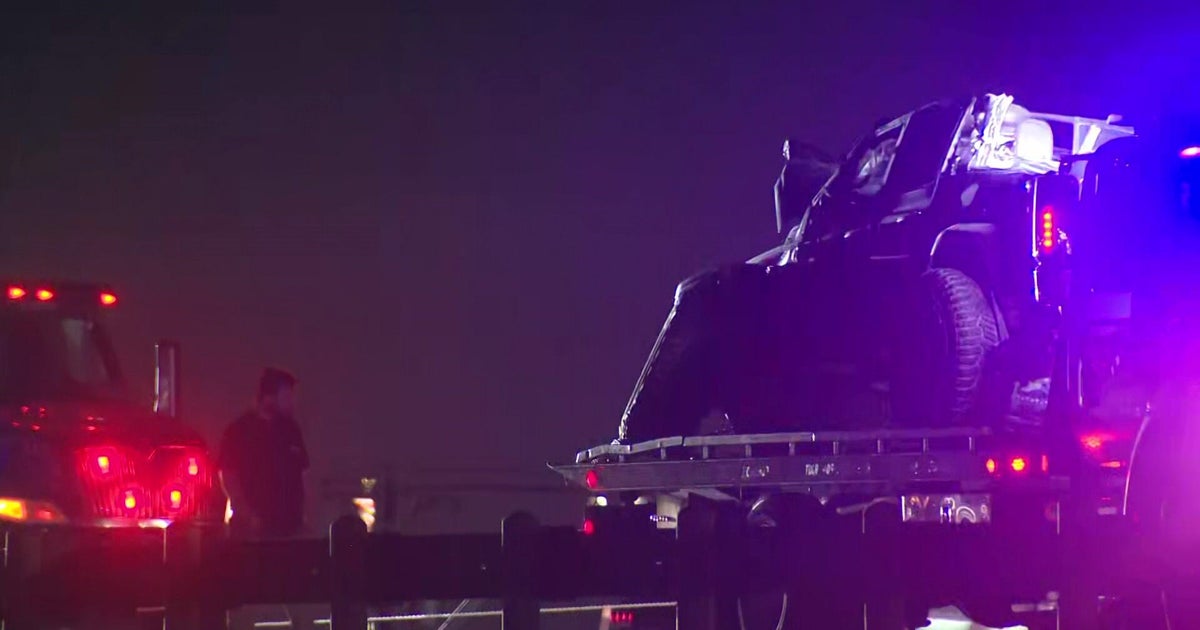
Police said officers were called to the 3000 block of Fairmount Street around 5:15 p.m. after receiving a report of a suspicious person. According to investigators, the individual got into a car without license plates and left the area.
Officers later stopped the car and arrested the driver for traffic violations. During an inventory search of the car, police said they found several rounds of ammunition. Police said they did not find any firearms.
Cornyn, Paxton head for May runoff in GOP Senate primary, CBS News projects
Sen. John Cornyn and Attorney General Ken Paxton are headed for a May runoff for the 2026 Texas GOP Senate primary, with neither clearing 50% of the vote.
Cornyn previously said that if Paxton wins the Republican nomination for Senate, he would be a dead weight at the top of the ticket for Republicans.
At his watch party, Cornyn promised that in the coming weeks, voters will hear more about Paxton's indefensible personal behavior and failures in office, and ended by saying, "Judgment day is coming for Ken Paxton."
Paxton said the night's results send a message to mainstream Republicans and "the establishment."
"We are not going to go quietly and we are not going to let you buy this seat," Paxton said.
Chip Roy, Mayes Middleton head to runoff in Texas Republican attorney general primary
The Republican primary for Texas attorney general is headed to a runoff after no candidate won a majority of the vote Tuesday night, according to CBS News projections.
U.S. Rep. Chip Roy and state Sen. Mayes Middleton finished as the top two candidates and will advance to a head-to-head runoff in May to determine the GOP nominee in one of the most closely watched races of the 2026 Texas primary election.
Roy and Middleton emerged from a four-candidate Republican field that also included state Sen. Joan Huffman and former Justice Department attorney Aaron Reitz. All four candidates campaigned on strong conservative credentials, though they emphasized different priorities, including legislative accomplishments, law enforcement policies, litigation experience and ideological positioning.
Gina Hinojosa wins Democratic primary for Texas governor, will face Abbott
With more than 60% of the vote, CBS News projects that State Rep. Gina Hinojosa will win the 2026 Democratic primary for Texas governor outright. She will face Gov. Greg Abbott in November.
"Tonight, working Texans sent a clear message: they're ready for change," Hinojosa said in a statement. "From the Rio Grande Valley to East Texas, Texans are united behind one message: we must end the Greg Abbott Corruption Tax and make Texas an affordable place where people can thrive again ... From skyrocketing energy bills, to countless neighborhood schools closures, and a healthcare system that leaves millions behind – Texans deserves better."
Texas Supreme Court blocks extension of Democratic primary voting hours
The Supreme Court of Texas has issued a stay against extending the Democratic primary voting hours to 9 p.m.
After the Dallas County Democratic Party Chair sought an order extending voting hours, and a Dallas County judge ordered Democratic primary voting to stay open until 9 p.m., the court said voting should occur "only as permitted."
The order also states that any votes cast by voters who were not in line to vote at 7 p.m. should be separated.
Campaigns for both Democratic candidates, Jasmine Crockett and James Talarico, called on Dallas County Elections to extend voting hours after confusion surrounding new precinct rules for this primary election.
Abbott and Patrick win the Republican primaries for governor, lieutenant governor
With about 35% of the votes tallied, CBS News projects that Gov. Greg Abbott will win the 2026 Republican primary for Texas governor.
"Texans made their voices heard loud and clear tonight," Abbott said in a statement. "As we look toward November, the mission is clear. There are activists and liberal politicians who want to turn Texas into a socialist state with more government, more regulation, and less freedom, and that will not happen on our watch. Together, we will continue to secure the border, support our law enforcement officers, empower parents, and expand opportunity for every Texan. Freedom is worth fighting for and we know that it means something to be a Texan. We are going to uphold the values our great state was built on, and we're going to fight to keep Texas, Texas."
CBS News also projects that Lt. Gov. Dan Patrick will win the 2026 Republican primary for Texas lieutenant governor.
"Texas Republicans have spoken clearly, reaffirming their commitment to keeping our state on a conservative path. Under my leadership, the Texas Senate has been the driving force for Texas becoming the most conservative state in the nation, and I will continue that push during my next term," Patrick said in a statement. "I would like to thank the conservative majority of Texas voters for re-nominating me."
Early voting totals delayed until 9 p.m. in Dallas County Democratic primary
The Democratic Party Chair in Dallas County said early voting numbers will not be released until after polls close on Tuesday night, which was pushed back to 9 p.m. after confusion surrounding new precinct rules for this primary election.
Man detained outside Paxton watch party in Dallas
Dallas police detained a man outside Ken Paxton's watch party location in Dallas on Tuesday night.
Dallas police said officers were told about a suspicious person in the 3000 block of Fairmount Street around 5:15 p.m. According to the report, that person got into a car without license plates and left the area.
Officers pulled the vehicle over and arrested the driver for traffic violations. During an inventory search of the car, officers found several rounds of ammunition.
Dallas PD said officers took the man to Jack Evans Police Headquarters for further investigation.
After the man was interviewed, Dallas PD said that investigators found out he was at the location to make a delivery to an employee. He was taken to the Dallas County Jail without incident.
Dallas County judge orders Democratic primary voting to extend hours
A Dallas County judge has ordered Democratic primary voting to stay open until 9 p.m., after confusion surrounding new precinct rules for this primary election.
Campaigns for both Democratic candidates, Jasmine Crockett and James Talarico, called on Dallas County Elections to extend voting hours. According to Crockett, nearly 200 people showed up at the wrong polling site in Oak Lawn due to confusion over where voters needed to go.
In an earlier statement to CBS News Texas, Dallas County Elections acknowledged voting issues and confusion and said it understood the request to keep polls open later, but that it did not believe the voting issues to be widespread.
Dallas County won't extend voting hours despite calls from Crockett, Talarico campaigns
After calls from the Crockett and Talarico campaigns to extend voting hours due to confusion surrounding new precinct rules for this primary election, Dallas County Elections said voting hours will not be extended unless a judge orders it.
The department acknowledged voting issues and confusion on Tuesday and told CBS News Texas it understands the request to keep polls open later, but that it doesn't believe the voting issues are widespread.
Talarico campaign calls for extending voting hours in Dallas, Williamson counties
Democratic primary candidate for Senate, State Rep. James Talarico has also called for Dallas County to extend voting hours after the new precinct rules for this primary election caused confusion among voters.
"We are deeply concerned about the reports of voters being turned away from the polls in Dallas and Williamson counties following the GOP's implementation of precinct-specific voting locations for election day," the Talarico campaign said in a statement. "We will continue to evaluate the situation on the ground and are calling for an extension of voting hours to ensure all Texans' voices are heard in this critical election."
This comes after Democratic primary candidate for the Senate, Congresswoman Jasmine Crockett called for the county to extend voting hours Tuesday afternoon after reporting that nearly 200 people showed up at the wrong polling site in Oak Lawn, due to confusion over where voters needed to go.
The state Democratic party said that voters being turned away and "having to decide whether they can afford to drive across town and wait in another line. That' not an accident. That's voter suppression."
James Talarico wraps up Senate primary campaign in Round Rock
James Talarico wrapped up his campaign for the Texas U.S. Senate Democratic primary in his hometown of Round Rock on Tuesday afternoon.
He stayed true to a personal tradition by eating donuts at Round Rock Donuts, which he said is part of his good-luck ritual.
Talarico told a crowd he is proud of the grassroots campaign his team has built over the past six months. He also made his closing case to voters, saying he believes he is the Democrat best positioned to flip the Senate seat blue and framing the race as a test of whether a "people-powered campaign" can compete statewide in Texas.
Jasmine Crockett calls for extended voting hours in Dallas County
Democratic Senate candidate Jasmine Crockett is calling on Dallas County to extend voting hours due to the new precinct rules for this primary election.
According to Crockett, nearly 200 people showed up at the wrong polling site in Oak Lawn, due to confusion over where voters needed to go.
Unlike past years, the Dallas County Republican Party did not want to hold a joint primary election with the Dallas County Democratic Party. As a result, residents must vote in their assigned precincts on Election Day. Longer lines and voting times on Election Day were predicted.
Dallas County residents who voted early had 74 vote centers to choose from.
Crockett's campaign sent the following statement, in part:
"The Dallas County Republicans and Williamson County GOP chose to implement precinct-specific voting locations for election day ... This effort to suppress the vote, to confuse and inconvenience voters is having its intended effect as people are being turned away from the polls ... I'm asking all voters in Dallas and Williamson Counties to check their county's election website or their voter registration card and identify the correct polling location for today. Do not give up and do not give in. The only way we can put an end to these maneuvers is by outvoting the Republicans and kicking them out of office. I'm calling on you to go out and cast your ballots so they know -- Texans don't appreciate having their votes suppressed and we won't take it lying down."
Talarico's campaign sent the following statement to CBS News Texas:
"We are deeply concerned about the reports of voters being turned away from the polls in Dallas and Williamson counties following the GOP's implementation of precinct-specific voting locations for election day.
We will continue to evaluate the situation on the ground and are calling for an extension of voting hours to ensure all Texans' voices are heard in this critical election."
The Texas Democrats said the decision to have separate primary elections "forced voters out of the countywide voting system they've used for over a decade and sent them scrambling to find their assigned precinct."
"Let's be clear about what happened here. Both counties have spent a million dollars trying to get the word out about this change — a million dollars of taxpayer money that didn't need to be spent. Democrats pushed for a joint election. As it has been for eight years, it would have been cheaper, simpler, and more accessible for every voter in the county. Republicans said no", Kendall Scudder, the chairman of the Texas Democratic Party, said in a statement.
The state Democratic party said that voters being turned away and "having to decide whether they can afford to drive across town and wait in another line. That' not an accident. That's voter suppression."
Residents in Denton County must also vote in their assigned precincts on Election Day.
"ShamWow Guy," running for Congress, sues Texas GOP over ballots
Vince Shlomi, best known for his star turns in informercials for the ShamWow, is running for Congress in the 31st House District, based north of Austin. On Monday, he filed a lawsuit against the state GOP and its chairman Abraham George over how his name is listed on primary ballots.
Shlomi submitted his paperwork to run for Congress under the name Offer Vince "ShamWow" Shlomi, but is listed on ballots as Offer Vince Shlomi. The lawsuit claims the GOP wrongly removed "ShamWow" from his name on the ballot after a challenge from the National Republican Campaign Committee. Shlomi is among eight candidates trying to unseat longtime incumbent Rep. John Carter in the Republican primary.
In a post on X announcing his lawsuit, Shlomi claimed the state party removed the nickname so "the voters don't recognize me" in an effort to help Carter. Shlomi said it was a "rigged election by these rhinos," the term used by some conservatives to refer to "Republicans in name only."
Court records do not show that the state Republican party or George have responded to the suit.
Paxton says he's "got a shot" at winning GOP Senate race outright
While campaigning in Fort Worth over the weekend, Attorney General Ken Paxton told supporters he believes he's "got a shot" at winning the Republican primary for Senate outright and avoiding a runoff.
"I just looked at some of the early voting totals," he said. "We do analytics on who's voted. They make their best guesses about that. It just looks really good. Obviously, it's a challenge with seven people, eight people in the race, but we've got a shot."
Most analysts believe Paxton will end up in a runoff with incumbent Sen. John Cornyn.
Jasmine Crockett and James Talarico draw national spotlight
The Texas Senate race has also drawn national attention with Democrats Jasmine Crockett and James Talarico gaining prominence, and Talarico's viral appearance on "The Late Show with Stephen Colbert" sparking $2.5 million in fundraising.
Polls show a tight race, with Crockett slightly ahead in some surveys. Talarico has emphasized his underdog status and critiques billionaire influence, despite massive ad spending, campaigning statewide while emphasizing grassroots support and community service efforts.
Crockett has campaigned for a unified Democratic turnout, predicting key flips in Republican districts.
President Trump endorsed Texas Gov. Abbott and Lt. Gov. Patrick
Last month, President Donald Trump officially endorsed Texas Gov. Greg Abbott for reelection, praising his leadership and record in a multi-paragraph post on Truth Social, calling him "strong and highly respected" with his "Complete and Total Endorsement."
Abbott faces no major GOP challengers, while Democrat Gina Hinojosa leads a crowded primary field. Mr. Trump credited Abbott with helping Republicans win five new congressional seats under the redistricting map and highlighted achievements on the economy, border security, education and energy.
The president also endorsed Lt. Gov. Dan Patrick, citing his role in past campaigns and commitment to conservative priorities, noting he, too, has his full support.
What impact do the Senate races have on the state of Texas?
The outcome of the Texas Senate races could ultimately influence the balance of power in Washington. Will Texas flip? Will there be a runoff election?
CBS News senior White House and political correspondent Ed O'Keefe said, depending on the results of the primary election, "The general election could become a real contest in this state for the first time in 30 years."
Here's the full interview.
Texas Senate primaries set record spending as Cornyn, Paxton, Talarico, Crockett vie for victory
As Election Night approaches, all eyes are on the Texas U.S. Senate primaries, with campaign spending surpassing $122 million — a record for a Senate race.
On the Republican side, Sen. John Cornyn faces challengers Attorney General Ken Paxton and Houston Congressman Wesley Hunt, while Democrats State Rep. James Talarico and current Congresswoman Jasmine Crockett compete for their party's nomination.
Crockett has backing from Kamala Harris, while Talarico emphasizes a big-tent approach to unite voters.
Polls show tight races in both parties, and analysts predict a likely GOP runoff. Voter turnout, ad spending, and contrasting campaign strategies make this one of Texas's most closely watched primary contests.
Key dates after the Texas primary: Runoffs, May elections and the road to November 2026
While Texas' March 3 primary marks the first major step in the 2026 election cycle, several key dates follow that will shape who ultimately appears on — and wins in — November's general election.
After the primaries, voters will turn their attention to the May 2 uniform election, which typically features local races such as school boards, city councils and bond measures. For that election, the last day to register is April 2, early voting runs from April 20 through April 28, and mail ballot applications must be received by April 20.
Some primary contests may not be settled in March. If no candidate earns more than 50% of the vote, the top two finishers advance to a primary runoff on May 26. For the runoff, the voter registration deadline is April 27, early voting is scheduled for May 9 through May 22, and mail ballot requests must be received by May 15. Polls will be open from 7 a.m. to 7 p.m. on runoff day.
The election cycle culminates in the November 3, 2026 general election, when voters choose officeholders for statewide positions, the Texas Legislature, Congress and other federal, state and local offices. The deadline to register for the general election is Oct. 5, with early voting set for Oct. 17 through Oct. 30 and mail ballot applications due by Oct. 23. As with other Election Days in Texas, polls statewide will be open from 7 a.m. to 7 p.m.
What's on your ballot and how to find out before you vote
Texas voters heading to the polls today for the 2026 primary elections will encounter dozens of different contests for statewide, legislative and local offices on their ballots. Every voter will see a different ballot depending on where they live, as races vary by county, congressional district and legislative boundaries. Statewide contests — including the primaries for governor and U.S. senator — will appear on every ballot, while many other races are specific to local districts.
Voters can preview what will be on their ballot by checking sample ballots posted by their county elections department. In Dallas County, for example, voters can enter their registration information online to see the exact ballot they'll receive at their polling place for either the Republican or Democratic primary. Counties also provide generic sample ballots to give voters a broader look at party contests.
Polls opened for the Texas primary. How to find your voting location before the deadline.
Polls opened at 7 a.m. Tuesday for Texas' March 3 primary election, giving voters across the state the chance to choose their party's nominees for statewide, congressional and local races. For many Texans, the first question is where to vote, since each voter is assigned to a specific precinct within their home county.
Voters can find their polling place by visiting votetexas.gov, the Texas Secretary of State's website, and clicking on the "Where's my Polling Place?" tab. The site's Voter Lookup Tool allows people to check their registration status and see their assigned location by entering their personal information. Voters can also contact their county elections office directly or check their voter registration card, which typically lists their polling site. Officials recommend confirming locations ahead of time, as polling places can change.
Large North Texas counties, including Collin, Dallas, Tarrant and Denton counties, also provide online polling place maps for voters. On Election Day, polling locations statewide remain open until 7 p.m. CT, and any voter in line by that time is allowed to cast a ballot.