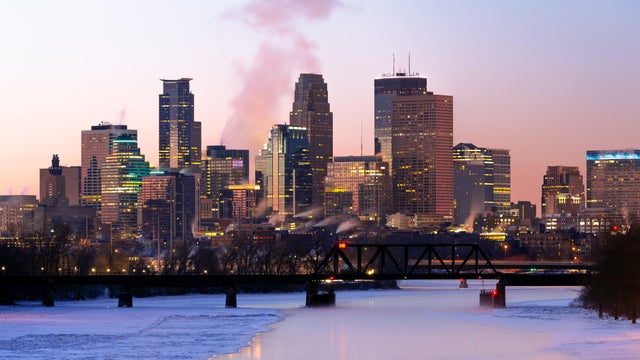
Cold settles in for the weekend in Twin Cities with holiday relief ahead
Snow showers are expected to move through central Minnesota on Friday night as temperatures across the state rise.
Watch CBS News
Director of Meteorology Mike Augustyniak was drawn to Minnesota by a love of active weather, and the opportunity to forecast for some of the most weather-savvy television viewers in the country.
Since joining the WCCO team in 2008, his forecasts have helped you prepare for Minnesota's increasingly extreme weather — including one of the coldest winters on record, one of the hottest summers on record, and the largest single-day tornado outbreak in Minnesota history — and all the small-but-important moments between. As the creator of the CBS Weather Watcher Network, leader within the CBS eTeam and Central Weather Group, his expertise helps to support and train CBS newsrooms across the country.
Mike's interest in weather began at an early age.
"I think my curiosity about the weather was fueled by the fact that, as a little guy, I was absolutely petrified of thunderstorms!"
In time (and with the help of a book called "Hippo Thunder"), Mike outgrew his fear, deciding in eighth grade that he wanted to study weather in college.
"The answers I gave on a 40-question 'interest survey' were fed into a computer, and the computer returned several careers that I might enjoy," Mike explained. "'Meteorologist' was one of the jobs the computer returned, and right then I knew it was the job for me." Mike studied atmospheric science under several of the world's leading research scientists at the University at Albany, where he received his Bachelor and Master of Science degrees. Findings from his master's thesis - original research on a local terrain effect called Mohawk-Hudson Convergence — is currently in use to help meteorologists make more accurate forecasts around the region.
Today, he continues to support lifelong learning, science, and scientists by serving as the past Commissioner on Professional Affairs for the American Meteorological Society and its 12,000 members. He is active in local and national non-profit organizations such as the National Marrow Donor Program (formerly 'Be the Match'), Twin Cities Pride, Twin Cities United Way and more.
Mike has appeared on the BBC, the Ellen DeGeneres Show, CBS Sunday Morning (where he serves as the show's meteorologist) and many other CBS News outlets. His work has been recognized with multiple Emmy Awards for broadcast excellence. He is an AMS Certified Broadcast Meteorologist, an AMS Certified Consulting Meteorologist, and is also a member of Phi Beta Kappa.
In his free time, Mike stays active by going to the gym, biking, mixing cocktails and traveling with his husband.
Snow showers are expected to move through central Minnesota on Friday night as temperatures across the state rise.
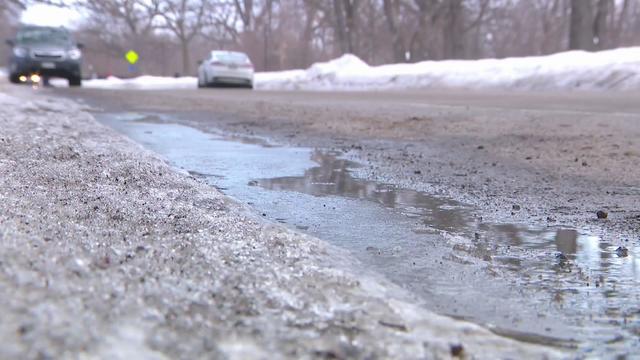
A NEXT Weather Alert is in effect Thursday for a little snow but a lot of wind and cold that could cause roads to freeze up across the Twin Cities.
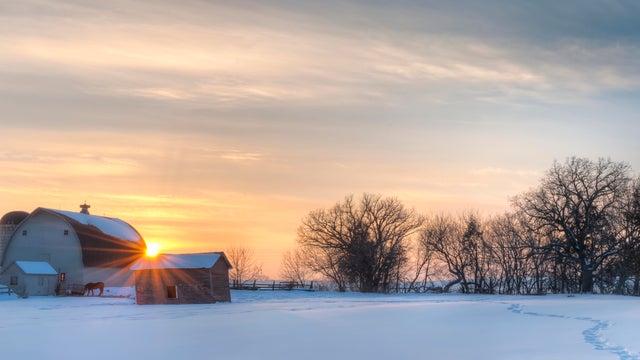
The Twin Cities will have another mild day Wednesday before things turn wet and colder.
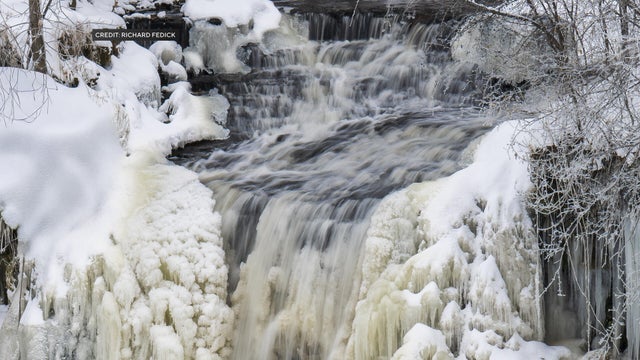
Dangerous cold is the big story all weekend as the Twin Cities as temperatures are expected to plummet overnight Saturday.
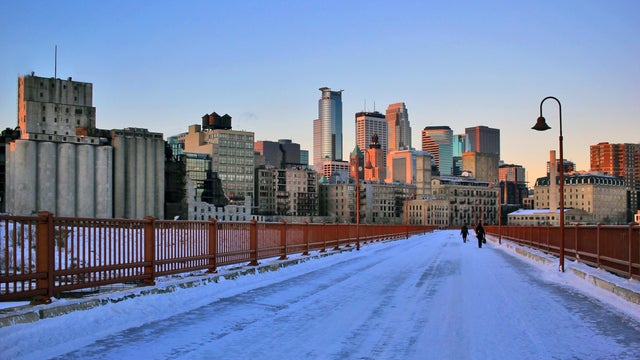
If temperatures remain below zero all day Saturday, it will be the coldest day in the metro since Feb. 17, the earliest zero-or-lower high since Dec. 12, 2000 and the 15th earliest zero-or-lower high on record.
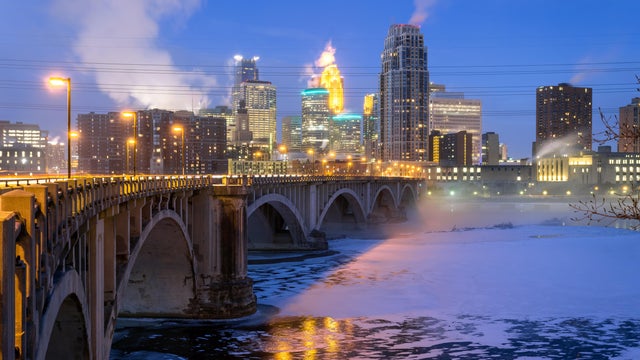
Clear skies are nice, but they will allow overnight temperatures to fall to a low of minus 6 degrees in the Twin Cities on Wednesday night. Feels-like temps will be closer to minus 15 to minus 20.
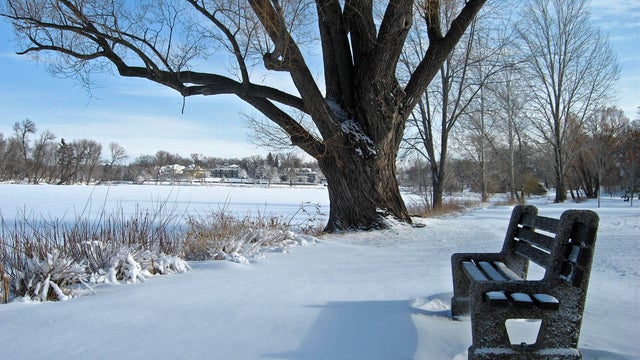
A cold pattern settles in across Minnesota Tuesday, with spotty light snow possible.

The work week will get off to a cold start in Minnesota before a steady warm-up in the coming days.
Wednesday's breezy, sunny conditions will close out the work week in the Twin Cities, but a major chill-down is on the way.
Friday night football games should be dry with temperatures in the 40s.
Thursday and Friday mornings will be cold with frost and freeze likely, but the next several days warm up.
Minnesota stands a greater-than-average chance for more snow and colder temperatures this winter, pertaining to the three months that make up the meteorological season: December, January and February.
After some northern Minnesota communities dealt with a patchy freeze early Tuesday, freezing temps will be widespread north of Interstate 94 on Tuesday night.
Highs will get near 90 degrees on Friday in the Twin Cities, with warm overnight lows near 70.
Summer heat will start to make a comeback on Friday in the Twin Cities, and last through the weekend.