Timeline: How Philadelphia's "house of horrors" investigation unfolded
The investigation into the so-called "house of horrors" in Philadelphia's Olney neighborhood has captured widespread attention as many wait for the conclusion of a case involving several missing women, a suspected serial killer and the home at 417 Chew Ave.
CBS News Philadelphia was the first to report on this case in June 2026, when a search of the three-story home uncovered documents linked to missing people. Eugene Horsch and an unidentified woman were arrested days prior to the search, and authorities said Horsch possessed a pair of guns and a fake DEA badge. The woman was also in possession of another missing woman's ID.
The woman allegedly told investigators that "bad things happened" to people in the basement of Horsch's home.
That set off the massive investigation where detectives have linked seven missing women to the home — five of whom are feared to be dead.
Since the investigation began, the home's late owner and Eugene's father, Raymond Charles Horsch, has become the focus of investigators, who suspect he was a serial killer. "R.C." Horsch is believed to have killed several missing women last seen at the property.
"R.C." Horsch, a writer who detailed killings in his work and a pornographer, is accused of preying on vulnerable women in the city.
Some have even described him as "Satan."
Here is a timeline of how this investigation has unfolded so far:
Latest "house of horrors" updates
Oct. 21: The bones discovered outside the Horsch home have been determined to be animal bones, law enforcement sources tell CBS News Philadelphia.
Investigators were more than 50% finished with the excavation in the backyard, sources said. Once complete, they will move to the front yard.
Oct.19: A former high school friend of Eugene Horsch offered a glimpse into his life and why some called his late father "Satan." She remembered specific details of Eugene's relationship with his late father and how he was embarrassed by his father's work in pornography.
"He really didn't like to talk about his dad because his dad actually, like, he knew he was a porn star," she said. "I don't know how in-depth Eugene knew, but he was very embarrassed by it."
Oct. 16: Eugene Horsch's attorney, Jerome Brown, called the investigation a "runaway train" in an exclusive interview with CBS News Philadelphia.
Brown said the claim that Raymond "R.C." Horsch was a serial killer is not consistent with the man he knew. Some of the allegations are "shocking," he said. Eugene Horsch, who is in jail on weapons and drug charges, was not charged with anything in connection with the home.
Human DNA found at "house of horrors"
Oct. 15: Bones were found in the backyard of the "house of horrors" on Chew Avenue — later determined to be animal bones.
Oct. 14: FBI agents and Philadelphia police dug up the backyard of the so-called "house of horrors" in search of human remains. Roughly a dozen agents from Quantico, Virginia, and Philadelphia homicide detectives were at the property removing each layer of soil in the backyard and treating it as if it were a mass grave.
A Jane Doe also spoke with CBS News Philadelphia about creepy interactions she had with Raymond "R.C." Horsch, calling him "the devil in disguise."
Oct. 13: Human DNA was found after crime scene investigators sprayed the chemical luminol throughout the home on Chew Avenue.
Oct. 12: Philadelphia police and the FBI returned to the home Monday night to use luminol to search for signs of human blood. Investigators spent hours spraying sections of the house.
Retired FBI Supervisory Special Agent Richard Marx explained to CBS News Philadelphia how the chemical is used:
"When sprayed on trace amounts of what is believed to be blood, it gives off a very faint luminescence of blue light. It has to be relatively dark in the room to see this light because it's a very faint chemical reaction," Marx said.
"House of horrors" investigation ramps up
Oct. 8: After police and the FBI finished removing items from the Horsch residence, they brought Cache, the Philadelphia Police Department's electronic-sniffing dog, to sweep the property.
The police K-9 is trained to detect hidden thumb drives and file-storage drives and cards, and can smell oils on those devices, even when they're hidden.
Oct. 6: Investigators searched the basement on the second day during the latest phase of the investigation. Several pieces of furniture, containers and trash bags containing items from the Horsch home at 417 W. Chew Ave. were removed.
Investigators began dismantling the laboratory equipment found in the basement. A source told CBS News Philadelphia that the basement was divided into several rooms and resembled an old high school science lab.
Oct. 5: The investigation entered a new phase at the Olney "house of horrors," as investigators entered the home and removed items in search of possible human remains.
Authorities began three days of forensic work, examining the home floor by floor and cross-referencing previously collected video. Sources say police are looking at everything in the home, including the flooring, drywall and plaster.
Temporary no-parking signs were posted in the area, restricting parking on surrounding blocks through Oct. 19.
Raymond "R.C." Horsch considered "suspected serial killer"
Oct. 2: Multiple law enforcement sources confirmed to CBS News Philadelphia that investigators believe Raymond "R.C." Horsch, who owned and lived in the so-called "house of horrors" in Olney, may have been a serial killer.
Sept. 28: Forensic investigators returned to the home of the late Raymond "R.C." Horsch in hazmat suits, removing entire sections of the interior as the investigation entered a more intensive phase.
The FBI used a camera to capture a 360-degree image from the front door of 417 Chew Ave. The home was photographed in 3D from top to bottom.
Investigators say that, at this point, they've reviewed 1 million pieces of video and photo evidence to pinpoint areas where DNA or blood evidence could be found.
Sept. 18: In a video recovered from inside 417 Chew Ave., the home's late owner Raymond "R.C." Horsch is seen strangling a woman with a zip tie, which sources say would implicate him in murder.
CBS News Philadelphia spoke with a licensed clinical psychologist who grew up in Kensington, and she said her review of the case reveals Horsch was a predator with a pattern of sadistic sexual behavior and violence.
Law enforcement sources said Raymond "R.C." Horsch was as intelligent as he was a monster and preyed on vulnerable women, many of whom struggled with addiction.
Sept. 17: After investigators identified 58 women through 1 million pieces of digital evidence recovered from the house, questions emerged about whether more could have been done as police received missing persons reports.
City Councilmember Jim Harrity spoke with CBS News Philadelphia about whether more could have been done and what steps could be taken to prevent something like this from happening again.
"This guy isn't the first. He's surely one of the most horrendous," Harrity said.
A spokesperson for Mayor Cherelle Parker said the administration declined to comment on the investigation at this time but will follow the police department's lead.
58 women identified in images recovered from Olney home
Sept. 16: Philadelphia police said in a press conference that they have identified 58 women seen in videos and photos recovered from the Olney home. Some of them are believed to be dead, and others remain missing.
Of the 58, police say five are feared dead. Two more women known to frequent the home haven't been seen in years.
The revelation adds to the three other women whose identities were previously provided by investigators who police believe are dead, including Gabrielle Amarando, Maribel Fresses and Nicole Fusaro.
Two more women with connections to the house, Blair Tonzelli and Amy McHale, are still considered missing.
Sept. 15: Police linked Nicole Fusaro, who has been missing since 2018, to the investigation at the home on the 400 block of West Chew Avenue.
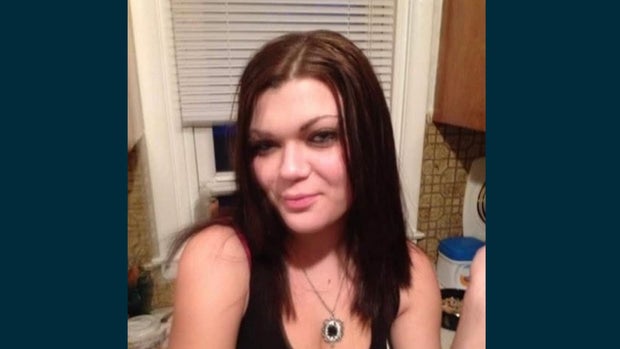
More than 100 FBI agents and analysts from across the country began sifting through more than 1 million pieces of video and photographic evidence.
A closer look at Raymond "R.C." Horsch
Aug. 21: As the investigation unfolded, increasing attention focused on the home's former owner, Raymond Charles Horsch.
Horsch, who went by "R.C.," died in 2025 and has been linked to the disappearances of several missing women. In a 2013 podcast, he discussed "being a villain."
In the episode of "Rialto Report" from December 2013, "R.C." Horsch answered dozens of questions about his life of sex and adult films, as well as allegations that he bought and sold millions of dollars of drugs. These details became a part of the ever-growing investigation.
He talked about his role in playing the villain in adult movies.
"I, of course, was kind of a natural as a perverted serial killer, wasn't much of a stretch at all," he said in the recording.
Aug. 18: CBS News Philadelphia reviewed hundreds of pages of Raymond "R.C." Horsch's books. Much of the material is graphic, disturbing, sexually explicit and violent.
"R.C." Horsch described himself as an artist, porn performer and ex-convict, among other roles, and wrote several books, including "Empathy."
In one chapter, "R.C." Horsch claimed to have murdered a woman and later disposed of her body through a chemical process.
An overview of the 2014 book claims it's an autobiographical memoir of a caring, empathetic serial killer. In it, Horsch claims to have strangled a woman. She was one of several women the book says he was romantically involved with.
"R.C." Horsch was previously married to Amy McHale, who disappeared in 2016. Her last known location was at the house on Chew Avenue.
"Graphic and dark" evidence found inside home
Aug. 12: Philadelphia police held a press conference announcing they found "graphic and dark" evidence that at least two missing women have died.
At this point, police have found more than 600,000 images, 70,000 videos and more than 10,000 pages of writings, manuscripts and drawings on various digital devices at the house on Chew Avenue.
On the first hard drive, detectives found photos and videos shot inside the home in which two women appeared to be dead. Investigators also found videos showing the women alive.
Gabrielle Amarando was one of the women identified from the thousands of pieces of video evidence found inside the home. A childhood friend said she was "a wonderful person."
The women's bodies have not been located.
Pipes at house were clogged, sources say
June 28: Detectives obtained a search warrant during the previous week's investigation to search the pipes for evidence of wet cremation, which is when a mix of chemicals is used to break down human remains, law enforcement sources said.
Sources say no human remains have been located.
June 23: Crews on Thursday appeared to use a camera to look inside pipes outside the home.
July 22: Police sources have confirmed that detectives and the water department excavated pipes from outside of the house.
Our initial reporting in July did not specify the details of the pipe removal. In October, sources confirmed that two clogged sewer laterals were removed. The sewer laterals connected the home to the main sewer line. One of the pipes was abandoned and out of service due to clogging.
The excavation had nearby residents on edge, calling the home "a house of horrors."
"I'm calling it a 'house of horrors' myself," Joel Wells said. "You never know who you're living next to."
Sources did not speculate on what the pipes could contain, but both were taken to a lab for extensive testing.
Grand jury indicts Eugene Horsch
July 13: The FBI returned to the Horsch residence to gather more evidence into the disappearance of a woman who was last reported at the home a decade ago.
Eugene Horsch was not charged with anything in connection with the home.
July 6: Eugene Horsch was indicted on federal charges of knowingly possessing loaded firearms, including a semiautomatic pistol, despite a prior criminal conviction in Pennsylvania, and knowingly possessing fake DEA and FBI identification documents.
Horsch was ordered to surrender the firearms, ammunition, fake IDs and other property to law enforcement.
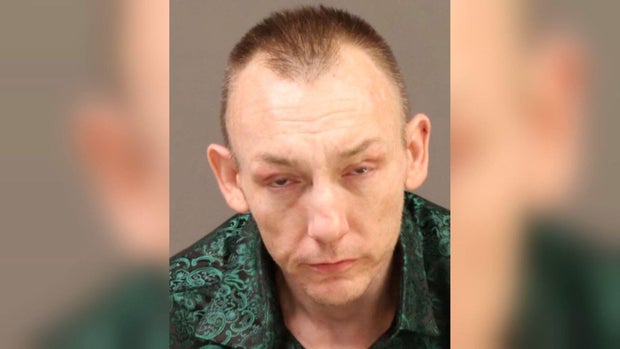
June 27: Eugene Horsch was charged for allegedly carrying a fake federal law enforcement badge, possessing guns with "obliterated" serial numbers and stockpiling toxic chemicals.
Investigators returned to the home to search for possible human remains, but none were found at the property, police say.
How it all began
June 26: A search of Horsch's home uncovered documents connected to missing people, a "laboratory" of toxic chemicals in numerous hidden spaces and a 55-gallon drum connected to hoses and other piping.
The family of Amy McHale spoke with CBS News Philadelphia. McHale's last known location was at the Horsch residence before she disappeared in 2016, her family said.
June 19: A park ranger noticed something suspicious involving 44-year-old Eugene Horsch and an unidentified woman while they were parked near 6th and Market streets near Independence Mall. Authorities found Horsch was carrying a fake DEA badge and two guns with obliterated serial numbers.
The woman was found with identification belonging to a woman reported missing in 2023, which she claims to have obtained from Horsch.
Police said that, given the evidence and the timing of the World Cup match that day, authorities had significant concerns and secured multiple warrants.


