Human DNA found at Olney "house of horrors" in Philadelphia after investigators used luminol to search home, sources say

Human DNA was found at the Olney "house of horrors" in Philadelphia after investigators sprayed luminol to search the home on West Chew Avenue, police sources said Tuesday.
Philadelphia police and the FBI were back at the home Monday night, using luminol to search for signs of human blood. Police sources said Tuesday the human DNA found at the Olney house will be tested further.
It was found in several locations of the residence at the center of a massive investigation, according to police sources.
On Tuesday, police are digging up the backyard of the Olney home with heavy equipment to search for human remains. Roughly a dozen agents from Quantico, Virginia, and Philadelphia homicide detectives are processing the home and surrounding the property. The agents are removing each layer of soil in the backyard and treating it as if it were a mass grave. The front yard is set to be excavated Wednesday.
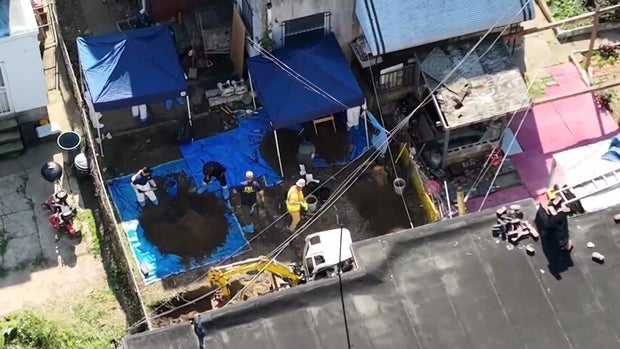
The home, which was owned by Raymond "R.C." Horsch until he died in 2025, and his son, Eugene Horsch, is linked to as many as seven missing women. Five of them are presumed dead. So far, no human remains have been found.
Investigators tore down a shed in the backyard Tuesday so that they could dig beneath it. They found numerous animal carcasses in that area of the property.
What is luminol?
Retired FBI supervisor Richard Marx said luminol is a "presumptive test for blood."
Marx oversaw evidence recovery in some of the most complicated federal investigations, including Pulse nightclub and the World Trade Center.
"When sprayed on trace amounts of what is believed to be blood, it gives off a very faint luminescence, a blue light," Marx said. "It has to be relatively dark in the room to see the light because it's a very faint chemical reaction."
Olney "house of horrors" investigation ramps up
The investigation into the Olney "house of horrors" has ramped up over the last week as law enforcement continues to search for signs of foul play and any human remains.
Investigators have been coming and going from the Horsch home for months. Recently, the investigation has taken up the 400 block of West Chew Avenue as police dismantle the home. Police sources say they've recovered valuable evidence inside.
Last week, investigators used K-9s trained to detect hidden thumb drives and file-storage drives and cards, and to smell oils on those devices, even when they're hidden.
A source close to the investigation told CBS News Philadelphia the basement was broken into a number of rooms and resembled an old high school science lab. A 55-gallon drum was removed from the basement months ago, shortly after the investigation began, along with a couple of dozen containers that police said were filled with an oily, sludge-like material.
Investigators removed two clogged sewer laterals from the property in July, sources said. The sewer laterals connected the home to the main sewer line. One of the pipes was abandoned and out of service due to clogging. Sources did not speculate on what the pipes could contain, but both were taken to a lab for extensive testing.
Investigators continue to search for evidence to corroborate some of the disturbing content they say they've recovered from reviewing a fraction of the 1 million pieces of photographic and video evidence taken from 417 Chew Ave.
Who are Raymond and Eugene Horsch?
Raymond Horsch lived at the home on West Chew Avenue until he died in 2025.
Law enforcement sources say Raymond Horsch is considered a "suspected serial killer." He created dark pornographic films, self-published several books and referred to himself as an empathetic serial killer.
CBS News Philadelphia reviewed hundreds of pages of books that Horsch wrote and published, which have since been yanked from Amazon. Much of the material is graphic, disturbing, sexually explicit and violent.
In one book, Horsch claims he murdered a woman and disposed of her body through a chemical process.
The investigation into the Olney house started after Raymond's son, Eugene Horsch, was arrested following a traffic stop in June at 6th and Market streets. He was pulled over after a nearby park ranger heard a woman say to him, "You're going to hurt me."
Inside Eugene Horsch's vehicle, police found crack cocaine and guns — a .40 caliber and .38 Special, according to court documents. He also had fake Drug Enforcement Administration credentials in the trunk of his car.
The woman with Eugene Horsch had Blair Tonzelli's identification on her. Sources and investigators have since said that set off alarms because Tonzelli was reported missing in 2023.
Eugene Horsch remains locked up on drug and weapons charges, pending a federal trial. His attorney has declined to talk about the case or comment on whether Eugene has spoken with investigators.
Missing women linked to Olney "house of horrors"
Seven missing women, including five who are presumed dead, are linked to the Olney "house of horrors." Two more women known to frequent the home haven't been seen in years.
Nicole Fusaro, Maribel Fresses, Gabrielle Amarando, Amy McHale and Tonzelli have ties to the home.
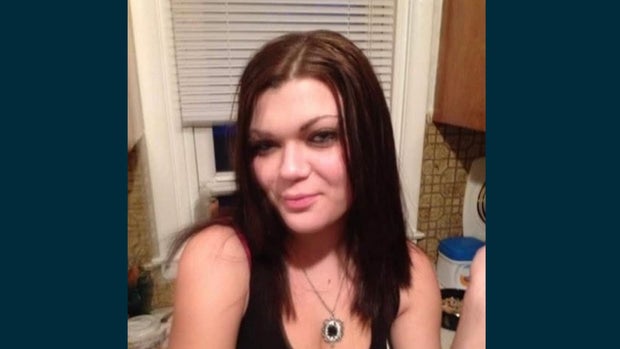
Fusaro has been missing since 2018.
In August, police said in a news conference that they recovered "graphic and dark" evidence that Fresses and Amarando are presumed dead. Fresses was last seen in February 2018, and Amarando has been missing since September 2012.
The Olney home is the last known location of McHale, who was previously married to Raymond Horsch and disappeared in 2016.


