How daylight saving time works
Lindsey Reiser takes a look at the history of daylight saving time.
Watch CBS News
Lindsey Reiser takes a look at the history of daylight saving time.

Lawmakers are one step closer to making daylight saving time permanent after the House passed a bill with overwhelming support.

The measure also allows states to opt out if they take action before the federal law is enacted.
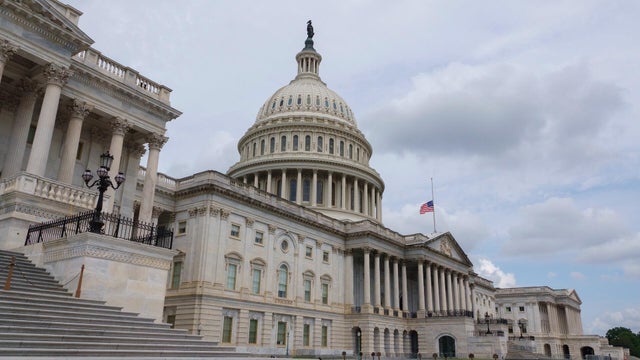
Lawmakers in the House passed a bill on Tuesday with bipartisan support that would make daylight saving time permanent and end the twice-a-year time change. It's now up to the Senate to take up the legislation. Caitlin Huey-Burns has more.
The time change known as daylight savings starts Sunday, March 8, 2026. Most Americans lose an hour of sleep when clocks "spring forward."
Longer and lighter days were supposed to save energy, reduce traffic accidents and help people become more active. Governments thought daylight saving time would save money.
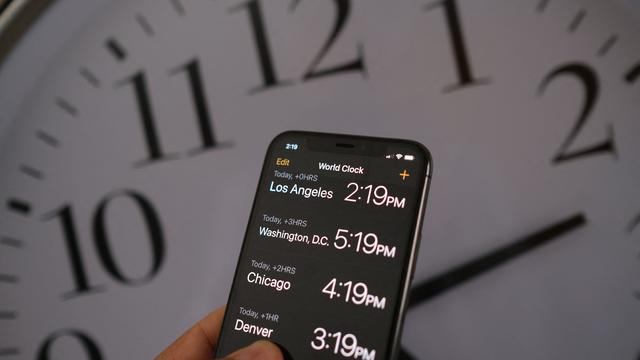
Two states don't do daylight saving time and won't "spring forward" as the clocks change for 2026.
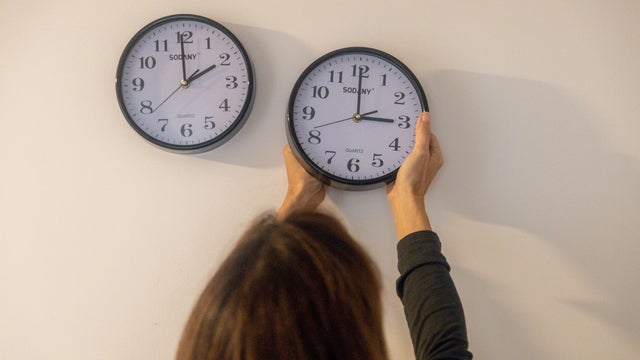
Daylight saving time ended on Sunday, Nov. 2, 2025, when the clocks fell back and we gained an hour.
This weekend marks the end of daylight saving time as most of the U.S. "falls back" and gains an hour of sleep. Sleep expert Shelby Harris, a clinical associate professor at Einstein Medical School in New York City, joins "CBS Mornings Plus" to explain how the time change impacts our health.
Most Americans will set their clocks back on Nov. 2 for daylight saving time, but a new study suggests the two annual time changes may actually be harmful to our health. Jamie Zeitzer, co-author of the study and co-director of the Stanford University Center for Sleep and Circadian Sciences, joins CBS News to unpack the findings.
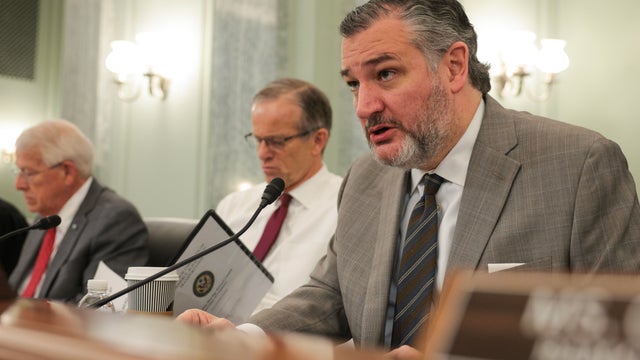
President Trump has suggested he supports eliminating daylight saving time, although he's also called it a "50/50 issue."

The Senate Committee on Commerce, Science, and Transportation heard testimony on the effects of daylight saving time. CBS News' Shanelle Kaul reports.

Daylight saving time in 2025, when clocks change by an hour, has started. Here's a look at when exactly we "spring forward."

Researchers are discovering that "springing ahead" each March for daylight saving time is connected with serious negative health effects.

President-elect Donald Trump said Republicans will try to end the decades-long ritual of changing the clocks twice a year.
The end to daylight saving time means our clocks "fall back" early Sunday, Nov. 3, 2024. But why do we have to adjust the time twice a year?
While most Americans are looking forward to gaining an extra hour of sleep when daylight saving time ends on Sunday, some experts warn it could be harmful to the body and mind. Dr. Norman Rosenthal, clinical professor of psychiatry at Georgetown University, joins CBS News to discuss how "falling back" could disrupt health.
The 2005 Energy Policy Act extended Daylight Saving Time by four weeks. Scott MacFarlane explains the law's origins.
Gaining an extra hour of sleep as daylight saving time ends might sound like a win, but experts say "falling back" can have some health consequences. Here's some advice to help you cope.
Daylight saving time for 2024 is here, which means we lost an hour of sleep as we "spring forward." Here's how to deal with the time change, according to experts.
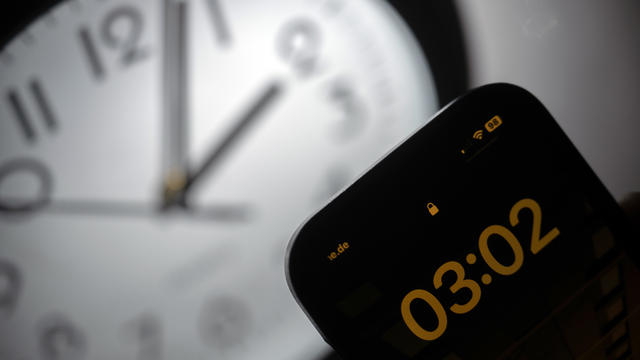
Clocks "spring forward" when daylight saving time begins on Sunday, March 10, 2024.
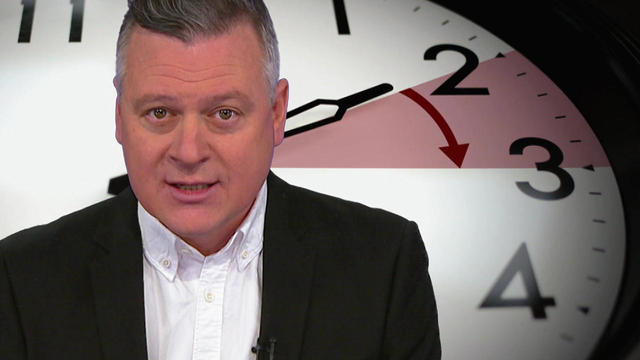
It's that time of year, when Daylight Saving Time costs us an hour of sleep, but gifts us another hour of light at the end of the day. Correspondent Luke Burbank is ready for more.

It's that time of year, when Daylight Saving Time costs us an hour of sleep, but gifts us another hour of light at the end of the day. Correspondent Luke Burbank is ready for more.
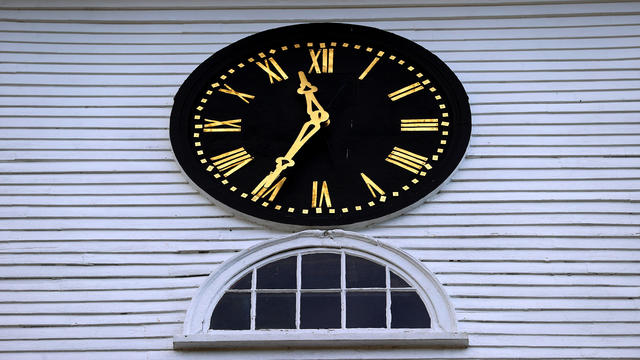
Daylight saving time begins this year in the early hours of Sunday, March 10, giving us longer, sunnier evenings until Nov. 3, 2024. Here's what to know about how the time change works.

Clocks will spring forward at 2 a.m. on Sunday, March 10. And inside the lab at the National Institute of Standards and Technology near Denver, Colorado, scientists and the federal government are perfecting their atomic clock. Scott MacFarlane has more.