South Jersey sisters raise breast cancer awareness with Grab Your Girls campaign
The American Cancer Society is reminding women to grab your girls. That's about holding friends and family accountable for mammograms.
Watch CBS News
The American Cancer Society is reminding women to grab your girls. That's about holding friends and family accountable for mammograms.

During Breast Cancer Awareness month, we're introducing you to two leaders of The Breasties, an all-inclusive community for survivors and others impacted by breast and gynecologic cancers. Chief community officer Trish Michelle and co-founder Paige More join "CBS Mornings" to discuss their personal journeys and how The Breasties is bringing people together and making a difference. They are joined by Dr. Elisabeth Potter, a plastic surgeon who specializes in breast reconstruction and advocated with The Breasties to reverse the Centers for Medicare and Medicaid Services' decision to limit access to reconstruction options for women affected by breast cancer.

Early-onset cancer cases rose more than 79% between 1990 and 2019, the study found.

According to a new study released this week, researchers examined data from 204 countries between 1990 and 2019, and found that cancer rates have increased dramatically in people under the age of 50. Janet Shamlian has more.
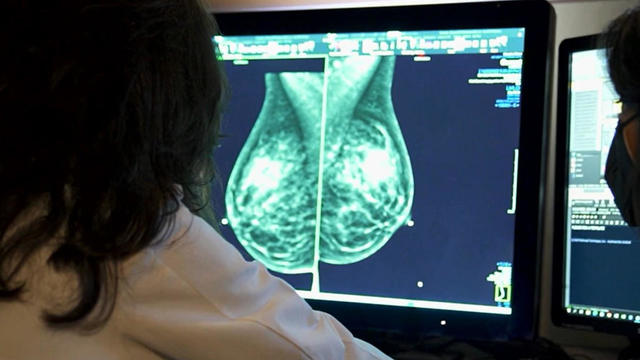
The Centers for Medicare and Medicaid Services backed off from a plan that could have curtailed access to a type of reconstructive surgery known as DIEP flap. Breast cancer patient advocates are relieved.

Coverage for breast reconstruction after mastectomy has been maintained for now following reports by CBS News on proposed changes. CBS News' Anna Werner explains why the government reversed course and how the move will affect women with breast cancer.

A new, wearable ultrasound device that sits in the cups of bras could be a lifesaver for people considered high-risk. The device, developed by MIT, picks up early changes in breast tissue. The lead researcher who helped develop the device, MIT associate professor Canan Dağdeviren, joined CBS News to talk about how it works.

"I had breast cancer two decades ago, and every now and then it pops up again, and I continue to bat it down," the actor said.

The "Charmed" and "Beverly Hills, 90210" actor announced in 2020 that her breast cancer had returned as stage 4.

A new study is showing yet another way artificial intelligence is entering the medical field. This time, researchers found AI algorithms improved on existing practices for predicting breast cancer risk.

The government is reconsidering payment changes for breast cancer surgery after "CBS Mornings" reported the changes could limit reconstruction options for mastectomy patients. Anna Werner teams with KFF Health News to investigate the forces behind the proposed change, and the consequences for women.

The federal government is reconsidering a decision that critics say would limit women's options for reconstructive surgery.

The U.S. Preventive Services Task Force issued updated draft breast cancer screening guidelines recommending all women at average risk should start getting screened for breast cancer every other year starting at age 40, a decade earlier than previous guidelines. CBS News medical contributor and editor-at-large for Public Health at KFF, Dr. Celine Gounder, joins "CBS Mornings" to discuss.

A task force of experts is now recommending that most women start screening for breast cancer at age 40. Dr. Sarah Friedewald, chief of breast imaging at Northwestern Medicine, joins us to discuss the lowered age threshold.

An increase in breast cancer diagnoses has prompted the U.S. Preventive Services Task Force to suggest women begin regular mammograms starting at age 40, 10 years earlier than the previous guidance. Nikki Battiste takes a look at what prompted the change.

Breast cancer screenings should be done every other year beginning at age 40, according to draft guidance issued Tuesday by the U.S. Preventive Services Task Force.