Sunday 9AM ET on CBS
11AM ET on the CBS News app
Sunday 9AM ET on CBS
11AM ET on the CBS News app
Watch CBS News
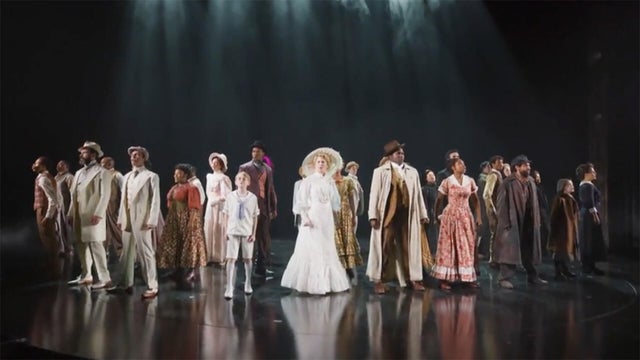
As depicted in the Broadway revival of the musical "Ragtime" (nominated for 11 Tony Awards), the pursuit of the American Dream was just as dramatic, expansive and heartfelt at the turn of the 20th century as it is today. Correspondent Mo Rocca talks with Tony-nominated actors Joshua Henry, Caissie Levy and Brandon Uranowitz, and with lyricist Lynn Ahrens and composer Stephen Flaherty, about the show's parallels to the contemporary world, from issues of race to the immigrant experience.
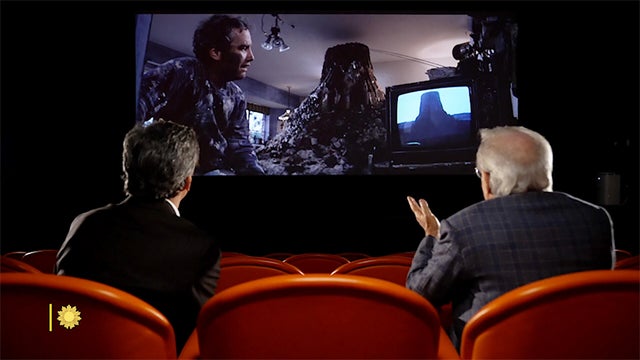
In this web exclusive, Steven Spielberg, director of the new film "Disclosure Day," walks Turner Classic Movies host Ben Mankiewicz through a scene from his 1977 UFO classic "Close Encounters of the Third Kind," discussing Richard Dreyfuss' performance, the widescreen aspect ratio, and John Williams' music.

Based on E.L. Doctorow's kaleidoscopic novel, the musical "Ragtime" tells a sweeping story of a changing America at the turn of the 20th century. In this Jan. 18, 1998 "Sunday Morning" report from the day of the show's New York opening (which also marked the debut of the Ford Center for the Performing Arts), Charles Osgood talked with Doctorow, playwright Terrence McNally, composer Stephen Flaherty and lyricist Lynn Ahrens about expanding the story and characters through music. [The show went on to win four Tony Awards.]

A look at the features for this week's broadcast of the Emmy-winning program, hosted by Jane Pauley.

Iranian-French cartoonist Marjane Satrapi, who won acclaim for her graphic novel "Persepolis" about growing up in Tehran during the Islamic Revolution, died on June 4, 2026 at age 56. In this April 20, 2008 "Sunday Morning" interview, Satrapi talked with correspondent Serena Altschul about telling her family's story, and about adapting her black-and-white book into an Oscar-nominated animated film voiced by Catherine Deneuve and Chiara Mastroianni.

Summer is the time to enjoy live music, indoors and out. Scroll through our gallery of some of 2026's leading musical acts, featuring images by CBS News photojournalist Jake Barlow and photographers Ed Spinelli and Kirstine Walton.

We leave you this Sunday morning with cactus in bloom at the McDowell Sonoran Preserve in Scottsdale, Arizona. Videographer: Scot Miller.

At a very special library in Copenhagen, Denmark, the "books" being checked out are actual human beings, who offer 30-minute conversations on a wealth of subjects – allowing "readers" a better understanding of humanity.

At a very special library in Copenhagen, Denmark, the "books" being checked out are actual human beings. The Human Library, founded 26 years ago, offers 30-minute conversations with living books on a wealth of subjects, and is now available in 80 countries (including the United States) and online. CBS News chief medical correspondent Dr. Jon LaPook talked with the library's co-founder Ronni Abergel, and checked out three unique books on the topics of schizophrenia, refugees, and Greenland.
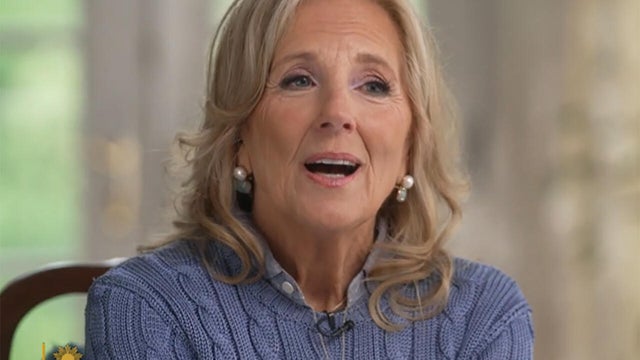
The former first lady discusses her new memoir, "View from the East Wing," and talks about Joe Biden's legacy, his health, the challenges he faced as president, and the demolition of the White House's East Wing by President Trump to erect a ballroom.
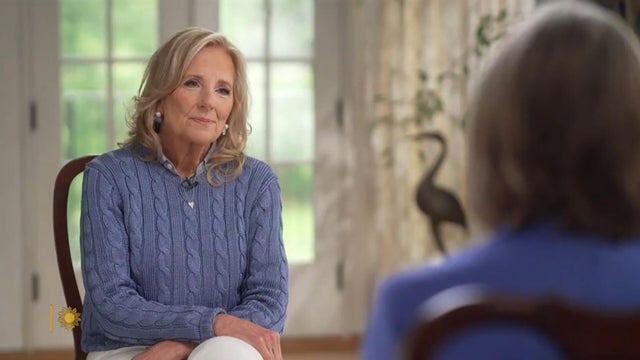
In her first interview since her husband left the White House, Dr. Jill Biden talks with Rita Braver about her years in the White House, and her new memoir, "View from the East Wing."
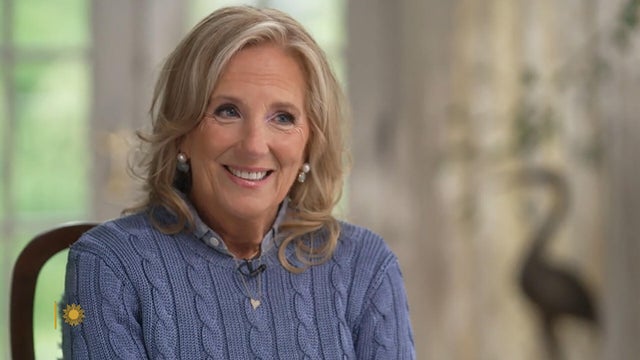
In her new memoir, "View from the East Wing," former first lady Jill Biden discusses her four years in the White House. She sits down with correspondent Rita Braver to talk about the legacy of her husband's presidency, as well as the challenges that Joe Biden faced, from the January 6 insurrection by Trump supporters aimed at overturning his 2020 election victory, to a 2024 debate performance that led to Biden ending his reelection bid. She also discusses her husband's prostate cancer diagnosis; his pardon of son Hunter Biden; and the demolition of the White House's East Wing by President Trump to erect a ballroom.

Last September, David White retired after 33 years in education, the last 15 as principal of the Burgess-Peterson Academy in Atlanta. But retirement didn't sit well with him, and so he applied for a position at his old school, one further down the ladder than his last one. Steve Hartman reports on someone for whom no job – like cleaning gutters – is too small.

More than 6,300 children under 18 – almost all with no criminal record – have been detained by federal immigration authorities during President Trump's second term, with nearly half held at the Dilley Immigration Processing Center in Texas.
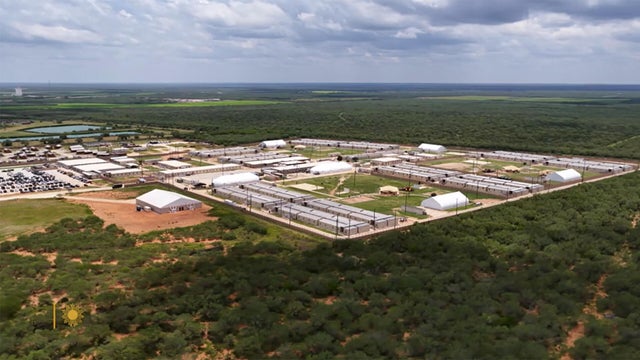
More than 6,300 children under 18 – some as young as two months old, and almost all with no criminal record – have been arrested by federal immigration authorities during President Trump's second term. Nearly half have been detained by ICE at the Dilley Immigration Processing Center outside San Antonio. "Sunday Morning" correspondent Jim Axelrod talks with a family that was held at Dilley for almost four months; and with Rep. Joaquin Castro, who is calling for Dilley to be shut down due to inhumane conditions, charges the Trump administration denies.