Lower Sioux Indian Community aiming to grow "hempcrete" business with new facility
On Thursday, Lower Sioux Industrial Hemp held a grand opening for a new facility aiming to expand operations of making "hempcrete" for homes across Minnesota.
Watch CBS News
On Thursday, Lower Sioux Industrial Hemp held a grand opening for a new facility aiming to expand operations of making "hempcrete" for homes across Minnesota.

Instead of dealing with drought like last year, they dealt with more rain than many fields could handle.

Farming is one of the oldest professions in Minnesota with generations of families embedded in the land. But that can make it hard for newcomers, especially immigrant farmers, to set roots of their own.

A family farm near Hampton has a rich history that dates back to the prohibition.

A trip to a Minnesota county fair this year will include some extra health precautions for our bovine friends, including at the Great Minnesota Get-Together.

As rain became scarce the past few years for Minnesota's sweet corn farmers, it put the crop in jeopardy more than once.

A group of farmers is changing how they use their land. They're working with nature to improve animal health along with helping the soil and water. But they say change in the farming industry can be tough. Some fear failure or disrupting the family legacy. In this NEXT Weather Investigation, Erin Hassanzadeh takes us to Hertel, Wisconsin where a young woman and her mother are forging a path of their own.
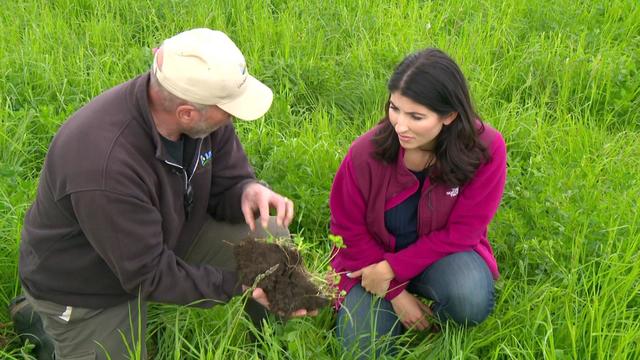
Farmers in Minnesota are in a tough spot. Climate extremes, things like floods and droughts, are hurting production and the state is asking them to cut emissions and do their best to farm sustainably. So what does that look like?

Farmers in Minnesota are in a tough spot. Climate extremes, things like floods and droughts, are hurting production and the state is asking them to cut emissions and do their best to farm sustainably. So what does that look like? We met a group of farmers who are working with nature instead of fighting against it. As Erin Hassanzadeh found out, regenerative agriculture is simple but making the change can be tough.

Parts of rural Minnesota have a half-foot more of rain than they did at this point last year, which has caused a different kind of headache for farmers.

Owatonna-based Bushel Boy has agreed to pay nearly $200,000 in backpay to almost 100 of its workers after an investigation by the Minnesota Department of Labor and Industry.

Animal rights activists have vandalized a new portrait of King Charles III on display at a London gallery.

Lab tests have confirmed highly pathogenic avian influenza in a dairy herd in Benson County, the Minnesota Board of Animal Health said.

Over 6,000 wind turbines produce about 60% of Iowa's energy. They also help struggling farmers offset losses.

Authorities in southwestern Minnesota are investigating a grain bin death earlier this week.

Many tractors use GPS to plant precise rows to avoid gaps and overlap. Farmers rely on it to plant more efficiently and precisely.

A fire wiped out thousands of plants, putting one Twin Cities urban farmer on the verge of losing it all.

rom unpredictable weather to unpredictable farm prices, rural Minnesotans face challenges every day.

Many Minnesota farmers are getting ready for planting season. And in Medina, farmer Marcus Carpenter is also looking to grow crops inside.

Nearly 2 million farmworkers help put food on American tables today, but modern machines powered by AI could eventually replace many of them.

Guinness World Records declared the record for the "behemoth blueberry" that's as big as a ping pong ball.

In September, Travis Muller suffered serious injuries when his legs got caught in a grain auger. Amputation was his only option. But since then, much has changed.

After drought and Texas' largest-ever wildfire, many farmers are facing a "total wipeout" that could force many to leave generations-old land behind.

A farm near Waseca spent the latter part of February planting corn and soybeans. This typically doesn't happen until mid-April.

Research being done this winter could greatly help farmers in the summer. The University of Minnesota is now using artificial intelligence and satellites to help farmers detect aphid infestations. John Lauritsen shows us how it works