Scrutiny over surging oil trades before Trump post
A huge spike in oil futures trading minutes before President Trump announced talks with Iran is drawing suspicion about insider trading. Jill Schlesinger explains.
Watch CBS News
A huge spike in oil futures trading minutes before President Trump announced talks with Iran is drawing suspicion about insider trading. Jill Schlesinger explains.

President Trump is signalling a desire to end the U.S. war against Iran through diplomacy. CBS News' Ed O'Keefe and Elizabeth Palmer have the latest.
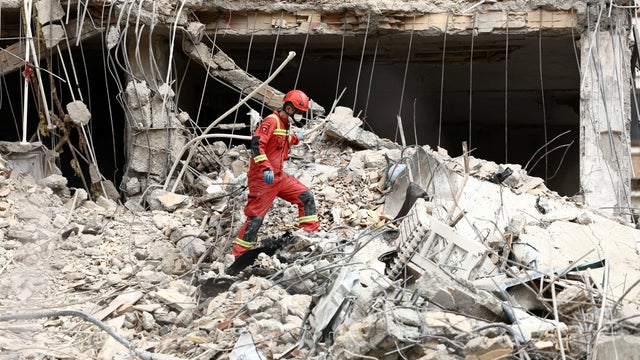
As Iran threatens to mine the entire Persian Gulf, President Trump said his deadline for the Strait of Hormuz to reopen is postponed amid negotiations with Tehran.

Crude oil prices also dropped after President Trump said the administration had held "good and productive" peace talks with Iran.

CBS News contributor H.R. McMaster breaks down the current state of affairs around the Strait of Hormuz after President Trump walked back threats to bomb Iran's power plants.

Oil prices continue to fluctuate as the war in Iran continues and as the Strait of Hormuz's security remains in peril. MarketWatch's Joy Wiltermuth joins CBS News with more.

President Trump announced a halt to attacks against power plants and Iran's energy infrastructure due to apparent movement in talks with Tehran. CBS News' Chris Livesay and Cristian Benavides report.
In a recent CBS News poll, 57% of respondents said they think the war with Iran is not going well for the U.S. and 66% called it a "war of choice." Fewer than one-third think the Trump administration has clearly stated U.S. goals in the conflict. Ed O'Keefe reports.
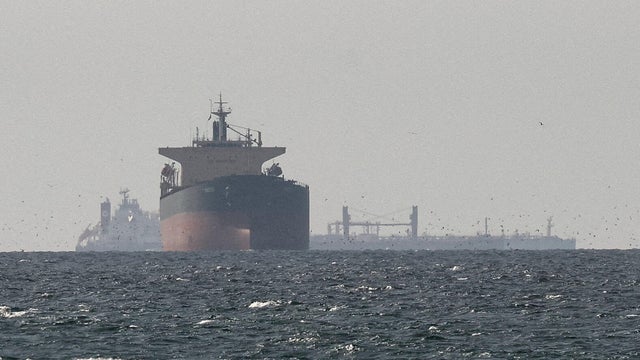
The president threatened to "obliterate" Iranian power plants if Iran didn't reopen the Strait of Hormuz by late Monday night Eastern Daylight Time.

Americans voice a range of goals for the U.S. in Iran, including that it is important to stop Iran's nuclear program, make sure the Iranian people are safe and free -- but also, for most, to end the conflict as quickly as possible, CBS News director of elections and surveys Anthony Salvanto says.

The U.S. Treasury has authorized the purchase of Iranian oil that's already at sea, exempting buyers from the tight sanctions that have restricted Iran's oil industry for years, as the Trump administration grapples with high oil prices.

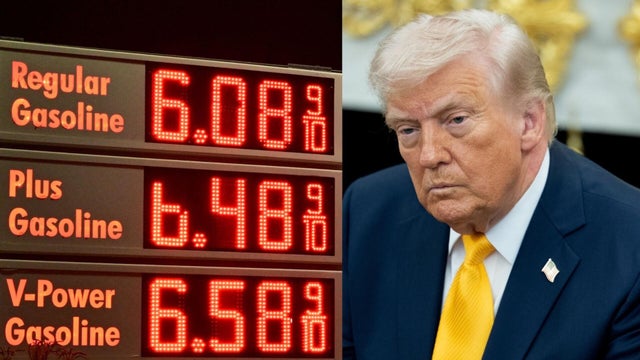
With gas closing in on $4 a gallon, the Trump administration is pulling multiple levers to tame energy prices. The results have been mixed.
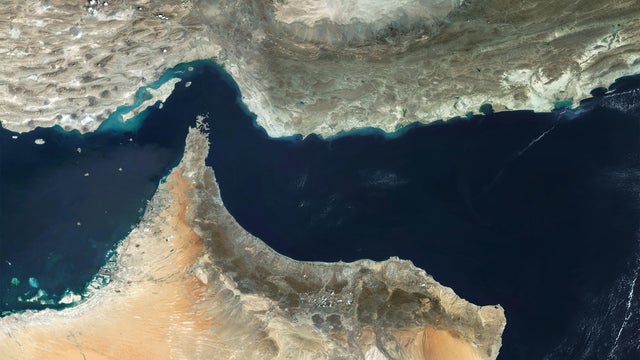
Plunging oil shipments transiting the Strait of Hormuz have sent global energy prices soaring to their highest level in years.

Experts warn that surging energy costs are likely to ripple through U.S. supply chains, resulting in higher prices online and in stores.

All eyes are on Iran's Kharg Island and oil production hubs in the region as the war in the Middle East enters a third week. CBS News' Aaron MacLean and Nancy Cordes have the latest.
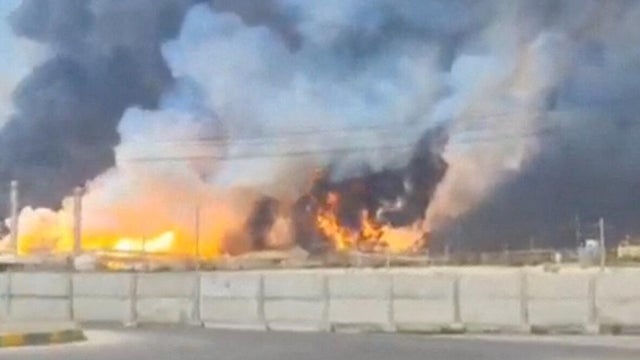
As Iran retaliates for an Israeli strike on the South Pars gas field, one analyst warns the war is "now hitting the plumbing of the global energy system."

Domestic energy companies could benefit from high oil prices in the short-term, but take a hit if the Iran war drags on.

President Trump is trying to distance the U.S. from an Israeli strike against Iran's South Pars gas field. CBS News' Courtney Kealy explains.

Danny Danon, Israel's ambassador to the United Nations, is reacting to the latest strikes against Iran targeting the South Pars gas field, a key oil supplier. Danon joined CBS News 24/7 Mornings with more details on the war.

Defense Secretary Pete Hegseth held a Pentagon briefing on Thursday where he reacted to reports of a $200-billion request to Congress for the war against Iran. This comes as attacks expand to gas fields in the Middle East.

As oil prices continue to rise and add to fears of higher inflation, the Federal Reserve on Wednesday voted to keep interest rates steady for now. Kelly O'Grady explains what to know.

President Trump is threatening an Iranian gas field as Israel and Tehran trade strikes that could impact the world's oil supply. CBS News' Charlie D'Agata reports.

President Trump is grappling with an expansion in the war against Iran after Israeli strikes targeted Tehran's South Pars natural gas field, and as the regime targeted a key natural gas facility in Qatar. CBS News' Ramy Inocencio and Natalie Brand report.

President Trump is temporarily waiving a 100-year-old law to try to ease rising energy costs. He issued a 60-day waiver of the Jones Act, which requires that all goods traveling between U.S. ports be U.S.-built, crewed and flagged. CBS News MoneyWatch reporter Megan Cerullo has more.

The Federal Reserve left U.S. interest rates unchanged for a third consecutive time on Wednesday. CBS News coordinating producer Richard Escobedo has more.