How Facebook plans to inform about vaccines
Facebook Chief Product Officer Chris Cox explains how the tech firm will amplify authoritative information about coronavirus vaccines.
Watch CBS News
Facebook Chief Product Officer Chris Cox explains how the tech firm will amplify authoritative information about coronavirus vaccines.

Twitter announced it will begin applying labels to tweets that include misleading information about COVID-19 vaccines, and it is introducing a strike policy to curb users from repeatedly violating those rules. CBSN's Elaine Quijano has the details.

False and dangerous information about the coronavirus pandemic and politics continues to spread online, and memes are often the vehicle of choice for misinformation on social media. Axios media reporter Sara Fischer joins CBSN to discuss why memes pose a significant threat and what users can do about it.
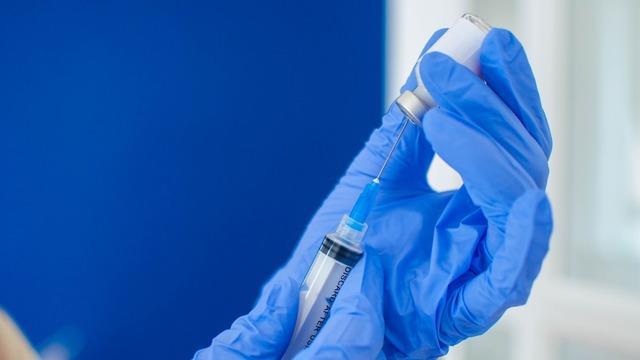
A number of religious-based conspiracy theories about the COVID-19 vaccine are increasingly popular on social media. They often refer to Christian themes regarding the devil and the apocalypse. This type of content is becoming increasingly difficult for social media companies to moderate, despite their recent crackdowns on misinformation. Elizabeth Dwoskin, a Silicon Valley correspondent for The Washington Post, joins CBSN's Elaine Quijano to explain the implications of these false claims.

The platform added a new set of false claims to its list of COVID-19 information that will be removed.

QAnon conspiracy theories have taken center stage in recent politics, fueling the insurrection behind the Capitol Hill riot. Critics are concerned that continued misinformation online will lead to more confusion in politics, and more violence. Major Garrett reports.

Several social media sites suspended President Trump and key allies following the deadly attack on the U.S. Capitol, and a research firm found online misinformation about election fraud dropped more than 70% after those suspensions. Meanwhile, the Washington Post reports the incoming Biden administration is facing bipartisan calls to expand antitrust enforcement on tech companies. Roger McNamee, author of the New York Times bestseller "Zucked: Waking Up to the Facebook Catastrophe," joins CBSN to discuss.

Many Americans are still unpacking an election unlike any other. From a deadly pandemic, to a fight for racial justice, there are multiple factors that shaped the race for the White House. Christina Capatides, senior producer of CBSN Originals documentaries, joined CBSN's Lana Zak to discuss the newest CBSN documentary special, "Hindsight is 2020: An Unprecedented Election".

A new report warns that an "epidemic of misinformation" is eroding people's trust in institutions. The Edelman Trust Barometer found widespread distrust of journalists, business leaders and government officials around the world. Richard Edelman, CEO of the company behind the report, joins CBSN AM to talk about it.

Social media platforms have played a major role in distributing falsehoods and conspiracy theories that spurred on the Capitol attack. Cambridge Analytica whistleblower Christopher Wylie joined CBSN to discuss how tech regulation could tackle the problem of disinformation online.

"60 in 6" correspondent Laurie Segall joins "CBS This Morning" to discuss the president being banned on social media, and the role social platforms have played in distributing falsehoods and conspiracy theories that spurred on the Capitol attack. Plus, she details embedding with extremist groups and the role social media plays for them.

Misinformation has spread like wildfire across the internet, and baby boomers are often the ones sharing fake articles meant to misinform and evoke reactions. Bonnie Kristian, a contributing editor for The Week who explored the phenomenon in "Our parents warned us the internet would break our brains. It broke theirs instead," discussed what's driving it with Anne-Marie Green and Vladimir Duthiers on CBSN.

Across the country, small pharmacies are quickly becoming a vital part of the COVID-19 vaccine distribution. They're stepping up to combat misinformation and administer the vaccine in areas where medical resources and accessibility is often limited. Mireya Villarreal reports from Texas.

With less than a week to go until the Senate runoffs in Georgia, a piece in The New York Times looks at the misinformation campaigns targeting voters there. Sheera Frenkel co-wrote the story, and she spoke with Jamie Yuccas on CBSN about where this misinformation is coming from and what to look out for on your social media feeds.

Hackers breached several U.S. government agencies, including the Treasury and Commerce departments. Russia, a leading suspect behind the cyberattack, is denying any involvement. CBS News senior investigative correspondent Catherine Herridge has more, and CBS News technology reporter Dan Patterson joined CBSN to discuss the investigation, plus new data on the reach of misinformation on social media.

Misinformation is both dangerous and running rampant in our society. So much so that BuzzFeed News goes as far as to say misinformation broke the United States in 2020. Lana Zak spoke with BuzzFeed News senior reporter Jane Lytvynenko about the impact of misinformation in this country.

YouTube said it is removing videos that falsely claim widespread voter fraud or errors changed the outcome of the U.S. election.

President Trump continues to spread baseless claims of widespread voter fraud during the 2020 presidential election. His supporters -- including hundreds of Republican congressional leaders -- are perpetuating this false narrative. University of Washington associate professor Kate Starbird calls this "participatory disinformation." She joins CBSN's Lana Zak to explain its implications for society.

A newly released report from Avaaz suggests Facebook isn't flagging most of the misinformation about Georgia's Senate runoff election on its platform. CBSN technology reporter Dan Patterson joins CBSN's Tanya Rivero to discuss what the report found and what it says Facebook needs to do moving forward.

Facebook has been criticized in recent months for not doing enough to combat the spread of misinformation and hate speech. Now the question of how to handle that is reportedly creating a divide within the company. New York Times cybersecurity correspondent Sheera Frenkel joined CBSN to discuss the company's internal debate about what its priorities should be.

The company wants to remove misinformation about the virus that could lead to "imminent physical harm."

YouTube suspended the pro-Trump media outlet One America News Network on Tuesday as part of the streaming platform's efforts to curb misinformation about COVID-19. The company also announced the channel's existing videos would be demonetized.

As Facebook and Twitter face criticism for how they moderated content in the 2020 election, conservatives are flocking to Parler. The company brands itself as "unbiased social media" and has captured the attention of several allies of President Trump. Tech Reporter Dan Patterson joined CBSN with more on what's behind Parler's surging popularity.

Facebook CEO Mark Zuckerberg and Twitter CEO Jack Dorsey testified before a Senate committee about their platforms' handling of the 2020 election and their content moderation systems. CBS News tech reporter Dan Patterson joins CBSN's Tanya Rivero with his takeaways from the hearing.

Several members of the group were inciting violence, including calls for a Civil War.