6/18: The Takeout with Major Garrett
Vice President JD Vance warns Israel to abide by initial U.S.-Iran deal; Obama Presidential Center holds star-studded grand opening ceremony.
Watch CBS News
Vice President JD Vance warns Israel to abide by initial U.S.-Iran deal; Obama Presidential Center holds star-studded grand opening ceremony.
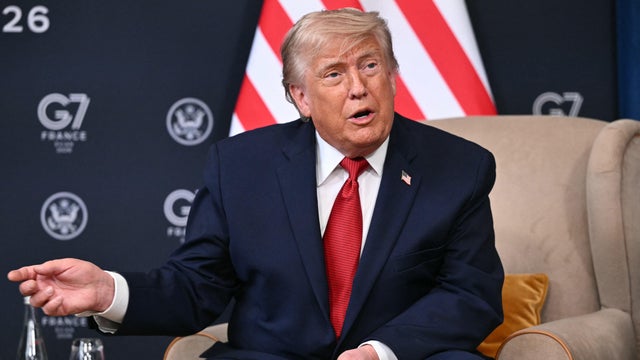
President Trump warned he could order new strikes if Iran's leaders "don't behave." The U.S. and Iran signed the memo of understanding remotely, a White House official said.

A White House official tells CBS News that President Trump and Iranian President Masoud Pezeshkian remotely signed a memorandum of understanding to end the Iran war. Eric Lob, associate professor of politics and international relations at Florida International University, joins with analysis.

After months of war and days of secrecy, U.S. officials dictated the text of President Trump's much-touted deal to end the war with Iran. It would reopen the Strait of Hormuz and would "reaffirm" that Iran "shall not procure or develop nuclear weapons." But in exchange, Iran could get billions in cash benefits. Nancy Cordes reports.

President Trump signed the 14-point memorandum of understanding with Iran Wednesday in France, putting the agreement into effect, a U.S. official tells CBS News. CBS News' Imtiaz Tyab and Aaron MacLean have more.

President Trump on Wednesday jokingly said he'll blame Vice President JD Vance if the preliminary deal with Iran falls through. Political strategists Matt Whitlock and Kendra Barkoff Lamy join with analysis.

Oil prices are falling as the end of the war with Iran seems in sight. Arjun Murti, partner at the energy firm Veriten and the author of the Substack newsletter "Super-Spiked," joins to break down when you can expect the pain at the pump to ease.

Senior U.S. officials dictated the U.S.-Iran memorandum of understanding on a call with reporters Wednesday. CBS News' Nancy Cordes and Samantha Vinograd have the latest.

New details are coming to light about what's inside the memorandum of understanding between the U.S. and Iran, including what Iran can and cannot do in their nuclear program. Jon Alterman, a global security expert for the CSIS, joins CBS News to discuss.

Speaking to reporters in Paris, France, on Wednesday, President Trump criticized the United States-Mexico-Canada Agreement, saying he would "rather not have" it. Mr. Trump signed the trade deal during his first term.

President Trump held a news conference Wednesday at the G7 Summit in France, addressing a variety of issues. Following the president's remarks, Weijia Jiang, Nancy Cordes and Olivia Rinaldi provided context.

President Trump took questions Wednesday on the Iran deal, the situation in the Middle East and several other topics. CBS News' Weijia Jiang, Nancy Cordes and Olivia Rinaldi have more.
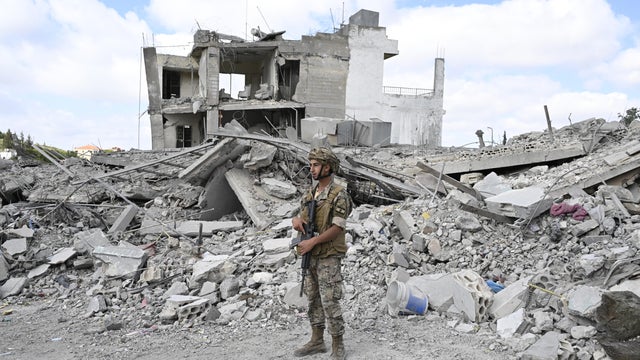
Iran's foreign minister says Israeli troops can't remain in Lebanon under the pending deal with the U.S.
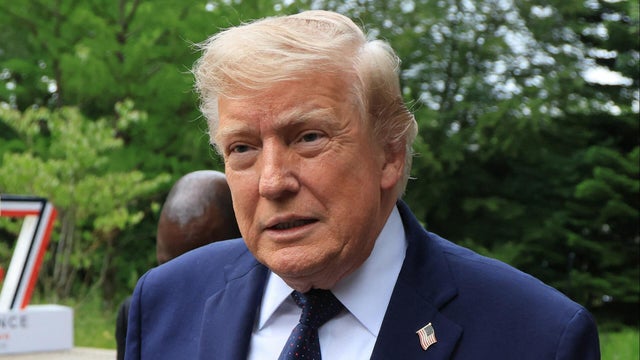
President Trump spent the second day of the G7 summit touting an initial agreement to end the war with Iran, even though no one has seen the text of it yet. CBS News chief White House correspondent Nancy Cordes and national security contributor Joe Zacks join with more.
An initial agreement between the U.S. and Iran to extend their shaky ceasefire is nearing formal signing. Mona Yacoubian, director of the Middle East program at the Center for Strategic and International Studies, joins with analysis.

President Trump is touting a preliminary agreement with Iran that would kick off 60 days of talks to negotiate a final deal. Ian Bremmer, founder and president of the Eurasia Group, joins with analysis.

President Trump is touting an electronically signed preliminary deal with Iran to end the war, but the full text has yet to be released. CBS News' Olivia Rinaldi and Imtiaz Tyab report.
While the U.S. and Iran have signed a preliminary deal to end the war, details remain scarce as the full text has yet to be released. CBS News' Nancy Cordes reports. Then, experts Aaron David Miller and Aaron MacLean join with analysis.

Israel's proxy war with Hezbollah in Lebanon continues while the U.S. looks to close a deal with Iran. While President Trump has said little about the exact terms of the U.S.-Iran deal, Iran says the deal would end hostilities on all fronts, including in Lebanon. CBS News senior foreign correspondent Imtiaz Tyab reports.

The United States and Iran have agreed to end months of conflict, creating a pathway toward a broader agreement over Iran's nuclear program. But questions remain. Imtiaz Tyab has more.

President Trump and Pakistan's prime minister announced Sunday night that the U.S. and Iran had completed a deal to end fighting in the Middle East. Mr. Trump also said the U.S. blockade on the Strait of Hormuz would end immediately. Olivia Gazis reports.

Defense Secretary Pete Hegseth told "Face the Nation with Margaret Brennan" that the process of reopening the Strait of Hormuz will begin "immediately" when the truce between the U.S. and Iran is signed, and the U.S. "is already doing things I can't talk about on this program to ensure that safe passage occurs as soon as possible" through the strait.

The U.S. and Iran appear closer than ever to an agreement that would launch negotiations on a long-term peace deal. CBS News national security contributor Sam Vinograd has analysis, and Linda Bilmes, a senior lecturer at the Harvard Kennedy School, discusses the Iran war's economic impact.
Both the U.S. and Iran said they are closing in on a final agreement that could be signed as soon as Sunday or Monday. It could launch further talks to wind down Iran's nuclear ambitions, reopen the Strait of Hormuz and end months of military hostilities. Ed O'Keefe has more.

A U.S. official said they are 80-85% confident that a deal with Iran will be signed in the coming days, but it's not 100% certain. Washington and Tehran also shared different terms on a potential deal. CBS News political reporter Zak Hudak has more.