Iran says deal with U.S. requires Israeli forces to leave Lebanon
Follow updates on the war in the Middle East for Wednesday, June 17, here. See earlier developments below.
What to know about the Iran war:
- President Trump criticized Israeli Prime Minister Benjamin Netanyahu's handling of Israel's "minor war" against Hezbollah in Lebanon on Tuesday, voicing frustration that the parallel conflict was complicating his efforts to end the war with Iran.
- Iran's foreign minister said any Israeli forces remaining in southern Lebanon, or any Israeli strikes on the country, would constitute a violation of the U.S.-Iran deal. Israeli officials said Monday that troops would stay in Lebanon, as "Trump's agreement does not bind us."
- A signing ceremony is expected Friday in Switzerland to formalize the memorandum of understanding between the U.S. and Iran, which should spark a second phase of direct talks on the future of Iran's nuclear program and other contentious issues.
Several Israeli strikes hit south Lebanon, country's news agency says
Israeli forces carried out airstrikes on several areas in south Lebanon Wednesday, Lebanon's National News Agency reported, despite a memorandum of understanding on the Middle East war that Iran insists includes Lebanon.
NNA said Israeli warplanes launched raids targeting the Nabatieh al-Fawqa area and the eastern outskirts of neighboring town Kfar Tebnit.
The Israelis also launched a drone strike on the town of Ansariyeh in the Zahrani area, NNA reported.
Iran's Foreign Minister Abbas Araghchi said Tuesday that the continuing presence of Israeli forces in Lebanon would be a violation of the U.S.-Iran agreement set to be signed on Friday.
On Monday, Israeli officials said troops would remain in a wide section of southern Lebanon that they have effectively occupied over the last three and a half months, forcing tens of thousands of residents to evacuate.
"Trump's agreement does not bind us," Israel's far-right National Security Minister Itamar Ben-Gvir said.
CBS/AFP
Iranian tankers loaded with oil exit U.S. blockade zone ahead of peace talks
The first tankers carrying Iranian oil exited a U.S. blockade in the Strait of Hormuz, a tracking website said on Wednesday, two days before Washington and Tehran launch talks under terms of a memorandum of understanding between the two nations.
The negotiations on a final settlement are set to begin Friday at Switzerland's Burgenstock mountain resort after the memorandum is formally signed.
The TankerTrackers website, which monitors oil shipments and storage, marked Iran's "first crude oil exports in two months," citing digital tracking data corroborated by satellite imagery.
"At least two National Iranian Tanker Company (NITC) VLCC supertankers named DIONA (9569695) and HERO2 (9362073) have exited the U.S. Navy blockade perimeter carrying a combined total of 3.8 million barrels of Iranian crude oil between them," TankerTrackers said on X, later adding that a third tanker had exited.
The U.S. will let Iran immediately begin selling oil and fuel under the deal, the Wall Street Journal reported Tuesday, citing unnamed people familiar with the agreement.
The waiver of sanctions on oil sales will take effect immediately after the signing, the Journal said.
CBS/AFP
Trump invokes Defense Production Act to boost weapons manufacturing as Iran war intensifies concerns
President Trump has invoked the Defense Production Act to address constraints in the production of munitions, according to a presidential memo released on Tuesday. The war against Iran has highlighted concerns over munitions stockpiles and rates of production.
The memo delegates the Defense Secretary to use the Defense Production Act, which can be used to jumpstart production of key items. The memo says the mechanism is warranted because fragile supply chains and production bottlenecks may "impair the ability" for the U.S. to expand the availability of munitions, missiles and equipment required for the national defense.
Graham says he's "pretty skeptical" about future Iran talks, but "it's worth a try"
Republican Sen. Lindsey Graham of South Carolina told CBS News he's "pretty skeptical" about planned U.S.-Iran talks, but is willing to "wait and see."
The two countries agreed to a memorandum of understanding to extend their ceasefire, reopen the Strait of Hormuz and launch longer-term nuclear talks over the next 60 days.
Asked if he believes that initial deal is a good or a bad idea, the GOP lawmaker and longtime Iran hawk said: "I don't know yet."
"I mean, I like the idea of opening the straits and ending the conflict," he said. "In terms of how the negotiations work long term … let's wait and see. I reserve judgment, but I don't mind jumpstarting the process."
Graham added: "When it comes to Iran, I'm pretty skeptical, but you never know till you try, so it's worth a try."
Graham spoke to reporters after he and other GOP lawmakers met with Defense Secretary Pete Hegseth to discuss Iran and the Pentagon's request for additional funding.
Warnock: "Why were we in this war in the first place?"
Two days after the U.S. and Iran finalized a deal to extend their ceasefire and reopen the Strait of Hormuz, Democratic Sen. Raphael Warnock of Georgia argued the result of months of war with Iran "looks a lot like where we were before any of this started."
"I hope the war is over. but the question is, why were we in the war in the first place?" Warnock told CBS News' chief Washington correspondent Major Garrett. "The Strait of Hormuz, they're saying, will be reopened. Well, it was open before he started the war. And, we are a long way from what Donald Trump promised and what it looks like he's going to deliver."
At the war's outset in late February, President Trump said his goals included degrading Iran's conventional military and preventing Iran from building a nuclear weapon. He also suggested the war could lead to the collapse of Iran's regime.
Mr. Trump has argued the U.S. has succeeded in damaging Iran's military, but the government remains in place, though the former supreme leader and some other top officials were killed.
On the nuclear issue, the memorandum of understanding agreed to by Iranian and American officials over the weekend sets off a 60-day period for the two sides to negotiate a longer-term deal on the fate of Iran's nuclear program, a thorny issue that has proven difficult to resolve.
Warnock also told CBS News the war has "not been good for America or its credibility," and U.S. adversaries like China and Russia have done comparatively well — especially as Russia benefits from higher oil prices.
Asked by Garrett if the U.S. is safer now, Warnock said: "I don't think so."
Senate rejects latest resolution to limit Trump's Iran war powers
The Senate on Tuesday narrowly rejected a war powers resolution on Iran as President Trump touts a framework agreement with Tehran to end the monthslong conflict.
Senators rejected a motion to discharge the resolution out of committee in a 47 to 48 vote. Four Republicans — Sens. Susan Collins of Maine, Bill Cassidy of Louisiana, Lisa Murkowski of Alaska and Rand Paul of Kentucky — joined nearly all Democrats in favor. Sen. John Fetterman of Pennsylvania was the sole Democrat to oppose.
Democrats lash out at Iran deal, demand Trump release text of memorandum of understanding
An angry Sen. Chuck Schumer said he was tired of hearing the Iran war was over from the Trump administration and demanded the president release what is in the memorandum of understanding.
"Now it's been two days since Trump claimed he had reached a peace deal, quote unquote, with Iran, but he still hasn't released any details at all of this so-called deal," the Democratic leader told reporters on Capitol Hill.
"I'm calling on Trump to immediately tell the American people on whatever is in his so-called deal. He needs to stop keeping America in the dark after more than 100 days of bloodshed."
Connecticut Democrat Chris Murphy was particularly animated about the Iran war, which he called a "dumpster fire."
"The president doesn't want you to see this agreement, because it is essentially a report card on what a disaster this war has been," the senator said.
President Trump said Tuesday he will release what's in the deal Friday when a ceremonial signing is scheduled, saying he'd like to "get in a formal setting" before it's released.
"I'll not only release it, I'll probably have a press conference and read it to you word by word, so that the press covers it accurately," Mr. Trump told reporters at the G7.
Rick Scott opposes releasing frozen assets, says money should be used to pay for Operation Epic Fury
Florida Sen. Rick Scott, a Republican, spoke out against the U.S. unfreezing Iranian assets on Tuesday, saying the money should instead be used to pay for Operation Epic Fury.
"I can tell you one thing, I don't think there's anybody in Congress that's ever going to support giving money to them," Scott said. "And, matter of fact, if we have any of their money, they ought to pay for what costs us to do this, to try to bring them to their senses, to stop killing us."
Vice President JD Vance echoed that the U.S. would not be giving Iran any money, but did open the possibility for unfreezing assets.
"What we have said is that we're willing to talk about unfreezing assets, but a much, much bigger deal is unsanctioning their economy — so long as they make the long-term commitments on the nuclear program," Vance told "CBS Mornings" on Monday.
No assets have been released so far, according to Vance, but the Islamic Revolutionary Guard Corps has said under the agreement, the country will receive half of its roughly $24 billion in long-frozen funds before final negotiations begin during a 60-day ceasefire extension.
"The provisions of the memorandum of understanding have been drafted in such a way that the commitments of the American side regarding the release of assets are explicitly and enforceably specified, and the United States will be obligated to fulfill its commitments," the head of Iran's Central Bank, Abdolnaser Hemmati, told Iran's Tasnim News Agency on Tuesday.
Sen. Graham continues to express skepticism over Iran deal
Republican Sen. Lindsey Graham expressed confidence in President Trump and his negotiation skills in a conversation Tuesday with reporters on Capitol Hill, but added it is difficult to predict the Iranians' behavior based on their "47 years of deceit."
"I'm hoping we can get a diplomatic solution to end the nuclear ambitions of Iran," he said.
Graham expressed some skepticism about the deal on Sunday as well, pointing to conflicting comments by Iranian officials and the Trump administration on the memorandum of understanding.
"If they act normal, they'll get relief," Graham said Tuesday. "If they become normal, they'll get relief. The question is, are these people in charge of Iran capable of acting normal? Have they abandoned their goal of creating a master religion for the world? I don't know."
He continued, "We'll see based on their actions, but if the past is any indication regarding the future, the current regime, even though they may be in level four or five of leadership, still is problematic for me."
President Trump was asked about Graham's initial skepticism on Tuesday, to which he said he would have to have a talk with the longtime Trump ally.
"He'll be in big trouble," Trump said in regards to the possibility Graham opposes the deal. "Lindsey's good. Lindsey is fine. He's not skeptical. He's just fine. Look, this agreement covers something very nicely. We're not paying for anything, we're not doing anything."
Iran deal not contingent on Hezbollah, U.S. Ambassador Huckabee says
Israel's fight against Hezbollah is not tied to the Iran-U.S. memorandum of understanding, U.S. Ambassador to Israel Mike Huckabee said Tuesday.
"Fortunately @SecRubio made clear that Iran & Hezbollah aren't linked in a deal," Huckabee wrote on X. "@Israel doesn't need Iran permission to defend itself. The tether of terror must end."
Huckabee made the comments in response to a report Iran wouldn't sign a final agreement unless Israel withdrew from Lebanon, a declaration made again by Iranian Foreign Minister Abbas Aragachi on Tuesday.
"The end of the war in Lebanon is an inseparable part of the complete end of the conflict. Ending the war also includes ending the occupation," Aragachi said at a press conference in front of foreign diplomats and ambassadors discussing the deal. "Without the withdrawal of Israeli forces from the territories they occupied during this war, the war cannot be considered fully concluded."
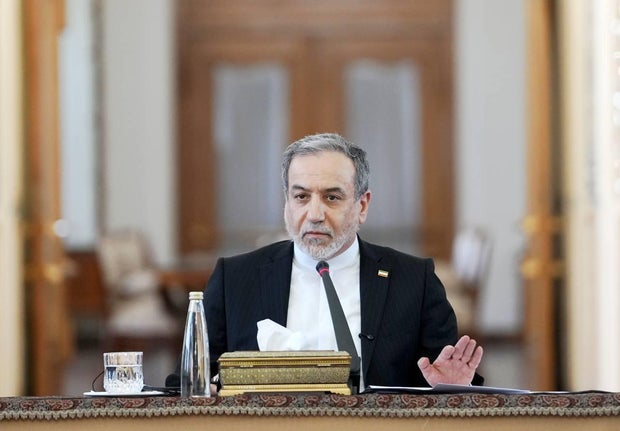
"Any military attack by Israel against Lebanon from this point forward, as well as any continued occupation of Lebanese territory, will be regarded by us as a violation of the memorandum of understanding," Araghchi added.
Israeli officials' prior comments have been in line with Huckabee's post, saying they do not plan to pull troops out of southern Lebanon.
Iranian president calls stop to war "important step," but "remain ready for any scenario"
The president of Iran cautioned Tuesday that a final agreement has not been reached to end the war and appears to have left open the possibility of military action if it is not reached, saying the current memorandum of understanding is just an "important step."
"We have reached an important step to stop the war and start negotiations, but we have not yet reached a final agreement, and we are ready for any scenario," President Masoud Pezeshkian told the semi-official state outlet Tasnim News Agency.
President Trump said Tuesday at the G7 he thinks the next round of negotiations with Iran could "go pretty quickly ... could take longer too, but it could go fast."
The current agreement, set to be signed Friday in Switzerland, apparently calls for 60 days to negotiate a final agreement, including what will happen with Iran's nuclear program. However, the exact wording of the memorandum of understanding has not been released.
Iran has warned the U.S. and Israel that more strikes in Lebanon will constitute a violation of the current agreement, an apparent point of contention between Israel and Iran. Israel said it intends to stay in southern Lebanon and reserves the right to self-defense.
Israeli strikes kill 4 in southern Lebanon, state news agency says
Israeli strikes killed at least four people in the Nabatieh area of southern Lebanon on Tuesday, the country's state-run National News Agency reported.
NNA said Israeli drone strikes targeted two vehicles in the town of Mayfadoun and another in nearby Shukeen, "leading to an initial toll of four dead" and others wounded.
While violence in the war between Israel and Iranian-backed Hezbollah in Lebanon has sharply declined this week following President Trump's announcement of an agreement with Iran, Israeli strikes on the south have killed at least five people since Monday, according to NNA.
Iran's foreign minister said Tuesday that any Israeli forces remaining in southern Lebanon, or any Israeli strikes on the country after the U.S.-Iran deal comes into effect, would constitute a violation of the agreement.
On Monday, Israeli officials said troops would remain in Lebanon, with National Security Minister Itamar Ben-Gvir saying "Trump's agreement does not bind us."
Iran deputy foreign minister says U.S. naval blockade "lifted"
A senior Iranian diplomat said Tuesday that the two-month U.S. naval blockade of Iranian ports and vessels had been lifted ahead of the planned formal signing of a memorandum of understanding between the two countries set to take place Friday.
"The lifting of the blockade was something we had emphasised from the outset. It has now begun, and the blockade has been lifted prior to the formal signing," said Deputy Foreign Minister Majid Takht-Ravanchi, according to the Iranian government's website.
President Trump said on his Truth Social platform Sunday that he was authorizing "the immediate removal of the United States Naval blockade," but the Joint Maritime Information Center, a multinational naval operation that includes the U.S. military, said Monday that the blockade would remain in place until Friday, "pending execution" of the ceasefire.
CBS/AFP
Oman says it's committed jointly with Iran to ensuring "safe and free passage" in Strait of Hormuz
Omani Foreign Minister Badr Albusaidi and his Iranian counterpart Abbas Araghchi spoke by phone on Tuesday and reaffirmed their shared "commitment to international law regarding the safe and free passage of maritime traffic through the Strait of Hormuz," according to Oman's state news agency.
The two top diplomats expressed hope that the coming period would see "serious and sustained efforts by all parties to support an effective and constructive political and diplomatic process aimed at preserving regional security and stability."
Iran has said for weeks that it is working with Oman — as the two states with coastlines in the Strait of Hormuz — to create a new system to manage commercial shipping traffic through the vital waterway.
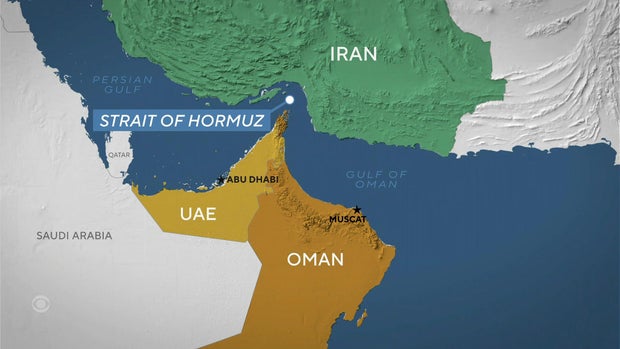
President Trump told The New York Times in an interview published Sunday that the U.S. agreement with Iran would ensure the strait was "permanently toll-free."
Iran says vessels have been — and may again be after a 60-day negotiation period with the U.S. set to begin with Friday's planned signing of the two nations' memorandum of understanding — charged "fees" to transit the strait.
Before the U.S. and Israel launched their joint war with Iran on Feb. 28, the strait had long been free and open to all traffic as an international waterway.
Swiss government says U.S.-Iran deal to be signed at country's Burgenstock resort
A U.S.-Iran deal aimed at ending the Middle East war will be signed at Switzerland's mountainside Burgenstock resort on Friday, the Swiss foreign ministry confirmed to AFP.
The site, located near Lucerne in central Switzerland, is difficult to access and therefore easily secured.
It "was proposed by the Pakistani and Qatari mediators, as well as by the U.S. and Iran," Switzerland's foreign ministry said.
Oil prices drop to $80 per barrel, U.S. stocks drift
Oil prices are sinking again Tuesday and pulled back to $80 per barrel for the first time since early March, while the U.S. stock market drifts near its all-time high.
The price for a barrel of Brent crude fell 3.2% as optimism continues following the tentative deal reached between the United States and Iran that will hopefully reopen the Strait of Hormuz at the end of the week and get the global flow of oil going again. It was at $80.50 after earlier dropping as low as $79.61.
Significant hurdles remain in the negotiations, including what to do with Iran's nuclear program. But the hope on Wall Street is that this agreement will mean a long-term fix to a conflict that has worsened inflation around the world. The price of Brent has come down sharply from its $100-plus level of a few weeks ago, though it could still take months for the energy industry to get back to full speed.
Trump says he'd "like" to send U.S.-Iran agreement to Congress, but doesn't promise it
Speaking to reporters at the G7, President Trump said he'd "like" to send the memorandum of understanding with Iran to Congress for approval, but he didn't commit to doing so.
"I mean, who wouldn't approve it?" he said.
The U.S.-Iran agreement is merely a framework for negotiations on a wider deal to end the war and lay out parameters for Iran's contentious nuclear program, which American and Iranian delegations are expected to haggle over for a 60-day period once the memorandum is signed.
Trump says he'll read U.S-Iran agreement out to media later this week
President Trump said Tuesday that he would hold a news conference with the media when he releases the text of the U.S. memorandum of understanding with Iran "in a couple of days," to go over it "word by word."
Mr. Trump said he hasn't yet released the text of the agreement "because I'd like to get a formal setting first before we do it."
On Monday, the president said he might not release the text of the deal before the signing ceremony on Friday.
"I will actually, I'll not only release it, I'll probably have a press conference and read it to you word by word so that the press covers it accurately," he said. "Because it's a, it's a very important document and - unlike Obama, who could have destroyed the Middle East with the horrible JCPOA, it is the worst agreement. That was a road to a nuclear weapon - Mine is a wall against a nuclear weapon."
Trump says technical negotiation phase could take longer, or less than 60 days
President Trump said the next phase of negotiations with Iran could take longer or shorter than the 60 days agreed to in the memorandum of understanding set to be signed Friday.
Speaking to reporters at a G7 meeting in France, Mr. Trump said the process "could go faster, could take longer, too. But it could go faster."
Under the U.S.-Iran agreement, the official signing ceremony on Friday will begin a 60-day period for the two sides to negotiate further critical details, such as the future of Iran's uranium enrichment program.
The president also said "good things are happening" in the Strait of Hormuz.
"The ships are starting to move now, we're going to have it fully opened by Friday," he said. "The ships are starting to move nicely, oil is starting to go, and the prices are coming down rapidly. Stock market is going up rapidly, a lot of good things are happening."
Tracking data has shown a handful of tankers transiting the strait over the last couple days - including an Iranian ship under U.S. sanctions - but major shipping companies have said they are yet to see a level of detail about the U.S.-Iran deal that would make them comfortable resuming regular operations through the waterway.
Iranian state TV reports U.S. naval blockade in Strait of Hormuz starting to lift
Iran's state broadcaster reported Tuesday that the U.S. naval blockade of Iranian ports and vessels appeared to be lifting.
"Today has been an eventful day in the Strait of Hormuz, the Persian Gulf, and the coasts of the Makran Sea," said a correspondent for the IRIB network. "Based on my field assessments from maritime authorities, some actors in maritime trade and military sources, there are indications that the lifting of the naval blockade is now underway."
The reporter said three Iranian oil tankers and two other ships carrying essential goods were heading from the Indian Ocean toward Iran.
At least one oil tanker owned by Iran's government and subject to U.S. sanctions had crossed the U.S. blockade line in the Gulf of Oman Tuesday, according to open-source data relayed by tracking website MarineTraffic.com.
Sanctioned oil tanker crossed U.S. naval blockade, data shows
A sanctioned Iranian oil tanker crossed the U.S. blockade line in the Gulf of Oman Tuesday, data from open-source tracking website MarineTraffic.com shows.
The ship, which is believed to be carrying oil, was last tracked in late March in the Strait of Malacca, a key route for Iran's illicit oil trade. It turned the tracking back on June 16, reappearing on the other side of the U.S. blockade line in the Gulf of Oman.
The Diona crude tanker is owned by the National Iranian Oil Company and has been under U.S. sanctions since 2018, when President Trump re-imposed the measures after pulling the U.S. unilaterally out of the Joint Comprehensive Plan of Action (JCPOA) - the Iran nuclear deal negotiated by former President Barack Obama's administration.
The U.S. Navy said Monday that its blockade of Iranian ports and vessels would remain in place pending the finalization of the U.S.-Iran agreement on Friday, and it warned ships not to cross without explicit directions.
Oil prices fall further as European stocks extend gains
European stock markets extended gains and oil prices fell further on Tuesday, buoyed by the U.S.-Iran peace deal and the expected reopening of shipping through the Strait of Hormuz.
London, Paris and Frankfurt stock markets all climbed around 0.5 percent in midday deals, after a mixed session in Asia.
World oil prices fell more than two percent Tuesday after Monday's sharp drop, leaving international benchmark Brent North Sea crude trading at around $81 a barrel.
"Although the deal has not been formally signed, there already appears to be a peace dividend for markets," said Kathleen Brooks, research director at trading group XTB.
"We are seeing European markets play catch-up with the US, and this could continue, as some European indices remain below their pre-war levels," including London's FTSE 100 index, she added.
Relative calm in Lebanon, but Israel-Hezbollah war still threatens U.S.-Iran deal
Lebanese media outlets reported relative calm Tuesday in the country's south, where Israel has been fighting Iranian-backed Hezbollah for months.
The fighting has repeatedly threatened to unravel diplomatic progress toward ending the war between the U.S. and Iran, and Tehran insisted Tuesday that Israeli forces must leave Lebanon under the deal agreement set to be signed this week.
Lebanese media reported only two Israeli strikes on Tuesday: One on the outskirts of a southern town, and a drone strike on a vehicle.
Hezbollah did not claim any new attacks against Israel or Israeli forces on Tuesday.
Israel's defense minister said Monday that Israeli forces would remain in a "security zone" that stretches across southern Lebanon and extends some 25 miles into the country from the Israeli border, even after the U.S.-Iran deal comes into effect.
Trump "not happy" with Netanyahu's handling of war against Hezbollah in Lebanon
President Trump told reporters Tuesday he was not happy with Prime Minister Benjamin Netanyahu's handling of Israel's "minor war" against Hezbollah in Lebanon, and he voiced frustration that the parallel conflict was complicating his efforts to end the war with Iran.
"I'm not happy with the way Israel has handled themselves with Lebanon and with Hezbollah," Mr. Trump told reporters France, where he is attending a G7 meeting. "They should have been able to do the job faster. It just goes on forever, and when that happens, it throws a negative light on the big deal, and that's the deal with Iran."
Mr. Trump criticized Israeli operations in Lebanon, saying: "You don't have to knock down an apartment house every time you're looking for somebody, because there are a lot of people in those apartment houses and they're not all Hezbollah, that I can tell you.'
Iran says a "mechanism set out in" deal with U.S. would be triggered by any Israeli violation
Deputy Foreign Minister Majid Takht-Ravanchi said Iranian officials had explained to foreign diplomats in Tehran on Tuesday the contents of the memorandum of understanding with the U.S., and he noted a previously unmentioned "mechanism" in the terms that he said would be triggered in the event that Israel "violates the agreement."
While the agreement is between Iran and the U.S., Iran's foreign minister told the diplomats earlier that in Tehran's view, "the two parties to this memorandum of understanding are the United States and Israel on one side, and Iran and Hezbollah on the other."
According to Iran's official state news agency, Takht-Ravanchi said after the meeting that "a clause in the memorandum of understanding on the termination of war and military operations across all fronts, including Lebanon, explicitly states that if the Zionist regime violates the agreement, then — since the United States has committed on behalf of its partners in this understanding to ending the war on all fronts, including Lebanon — the mechanism set out in the memorandum will be activated."
It was not clear what mechanism the deputy foreign minister was referring to. Neither the U.S. nor Iranian governments have released the text of the agreement that Vice President JD Vance is expected to sign on Friday with Iranian officials.
Iran says Israeli troops must leave Lebanon under agreement with U.S.
Iran's Foreign Minister Abbas Araghchi said Tuesday that the continuing presence of Israeli forces in Lebanon would be a violation of the U.S.-Iran agreement set to be signed on Friday.
Speaking to foreign diplomats in Tehran in remarks aired on state TV, Araghchi said: "When we reached a ceasefire, we declared it across all fronts, with particular emphasis on Lebanon … Any continued occupation of Lebanese territory will be regarded by us as a violation of the memorandum of understanding."
Araghchi said Iran considered Israel, and the Hezbollah group Israel has fought for months in Lebanon, parties to the agreement struck between the U.S. and Iran.
"An important point I want to emphasize is that, in our view, the two parties to this memorandum of understanding are the United States and Israel on one side, and Iran and Hezbollah on the other," Araghchi told the diplomats.
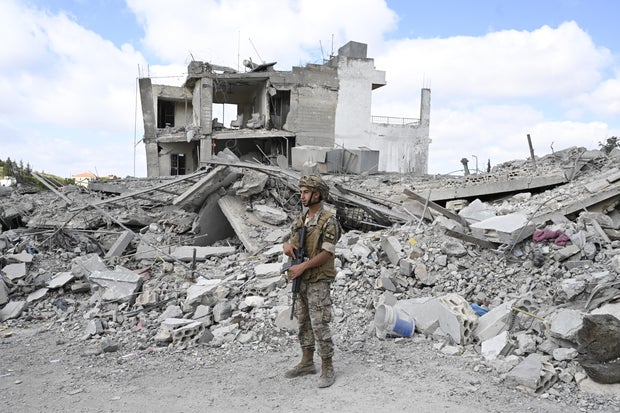
On Monday, Israeli officials said troops would remain in a wide section of southern Lebanon that they have effectively occupied over the last three and a half months, forcing tens of thousands of residents to evacuate.
"Trump's agreement does not bind us," Israel's far-right National Security Minister Itamar Ben-Gvir said Monday.
Vance denies that Iran will receive "billions of dollars of assets" in deal
Vice President JD Vance denied on Monday that Iran will receive "billions of dollars of assets" as part of the U.S.-Iran deal that was announced Sunday and is set to be signed later this week.
"When people say that billions of dollars of assets will be released, that's not true," Vance said on "CBS Mornings." "What is true is that Iran will have a much better and much more prosperous future if they meet the obligations they make in this agreement."
The U.S. has yet to release the terms of the agreement. But Iran's powerful Revolutionary Guard said Monday that under the agreement, the country will receive $24 billion in frozen funds during the 60-day final negotiation period, of which half must be made available before final negotiations begin.
Pressed on the possibility of unfreezing Iranian assets, Vance said while "we're open to a lot of things that are on the table," the $24 billion figure "just doesn't appear anywhere in any of the texts that we've talked about with the Iranians."
Trump calls reports of U.S. funding Iran's reconstruction "fake news"
President Trump wrote on Truth Social that "the story that the U.S. is paying Iran 300 million Dollars is Fake News, put out by the Dumocrats!!!"
The president appeared to be referring to reports that Iran could get access to $300 billion to rebuild as part of the memorandum of understanding it inked with the United States over the weekend. Iran's Revolutionary Guards said Monday the deal requires the U.S. and its allies to present postwar reconstruction plans in at least that amount — though it's unclear whether the money would come from the U.S. or other sources.
Vice President JD Vance — who has helped lead the Trump administration's diplomatic push with Iran — has not ruled out a reconstruction fund, but said it would be paid for by Gulf allies. Asked about the issue on "CBS Mornings" on Monday, Vance said the fund is "the sort of thing they could have access to … so long as they honor their end of the obligation."
Money has emerged as a point of contention in the day-old deal between the two countries. Iran has said the agreement requires the U.S. to unfreeze billions of dollars in sanctioned Iranian assets before nuclear talks between the two sides begin, but Vance and other U.S. officials say Iran will not get any sanctions relief until it demonstrates compliance.
Vance says U.S.-Iran memorandum of understanding is about 1.5 pages
Vice President JD Vance said on CNN the memorandum of understanding between the U.S. and Iran is a "very general document," spanning about a page and a half, with knotty details on the future of Iran's nuclear program and other issues left for future talks.
"On a number of issues, we are going to have to figure this stuff out during the technical negotiation phase," Vance told CNN's Jake Tapper, referring to the deal's 60-day window for further talks, which are set to begin Friday.
Senior U.S. officials told reporters earlier Monday they plan to release the full text of the memorandum of understanding in the next 24 to 48 hours.
In the short-term, the deal is expected to extend the U.S.-Iran ceasefire, reopen the Strait of Hormuz, end a U.S. naval blockade on Iranian ports and launch negotiations on Iran's nuclear program. But the two countries have made conflicting claims about sanctions relief, with Iran's Revolutionary Guards saying the U.S. is expected to unfreeze billions in Iranian assets before the start of talks, while the U.S. says Iran will get nothing until it complies with the deal.
Vance told CNN the claims about unfreezing assets as a precondition to talks are "definitely not true," and argued those claims may have been made by "hardliners" within Iran who tend to "overemphasize what Iran gets from the bargain" to appeal to a domestic audience.
Vance said Iran could get a "very significant sanctions relief package," but only if it meets its obligations.
"There is a really big opportunity for the Iranians, but they only get the benefit of that opportunity if they do the things they promise they're going to do," he said.
It's also unclear what form a potential U.S.-Iran nuclear agreement might take, or whether the two sides will strike a deal in 60 days. And Iran said last week that negotiations will only cover nuclear issues, with Iran's ballistic missile program and its support for militant groups like Hamas and Hezbollah — two other major concerns for the U.S. — excluded from talks.
Vance said preventing Iran from developing a nuclear weapon or reconstituting its nuclear program are the most important issues, but U.S. officials "certainly expect that as part of our broader agreement … Iran is going to stop funding terrorist organizations." He pointed to a portion of the memorandum that said Iran must commit to "regional peace and stability."
Schumer on Iran deal: "The devil is in the details"
Senate Minority Leader Chuck Schumer expressed skepticism about the U.S.-Iran agreement and pressed for more information, arguing "it's been nearly 24 hours since Trump announced there was a potential deal with Iran, and we still don't know the details."
"In these high-stakes negotiations, the devil is in the details, but Trump hasn't even revealed the text of his quote, understanding, unquote with Iran," the New York Democrat said in remarks on the Senate floor Monday. "The American people need to know exactly what's in the deal. Trump must brief Congress and the public on the details of his understanding with Iran immediately and end this war once and for all."
Senior U.S. officials said earlier Monday the text of the U.S.-Iran memorandum of understanding will be released in the next 24 to 48 hours.
The top Senate Democrat also warned that gas prices could remain elevated and Iran could retain some control over the Strait of Hormuz, adding: "Americans are scratching their heads, wondering what we've accomplished in Iran."
Trump projects confidence about Iran deal while meeting with world leaders in France
President Trump has projected confidence about the Iran deal while meeting with world leaders at the G7 summit in Evian-les-Bain, France. He arrived Monday for talks with G7 leaders, including some who have been sharply critical of his management of the 15-week conflict that led to a surge in global energy prices.
Mr. Trump said he isn't sure whether he'll attend the signing of the agreement to end the Iran war on Friday, suggesting during a joint appearance with French President Emmanuel Macron that he "may be involved," although Vice President JD Vance "was originally going to do it."
The U.S. president has hailed the Iran deal as promising, but not a guarantee.
"Hopefully, it's going to be a good relationship, and we're going to get along. If we don't, we go back to where we started. But I don't think that's going to be necessary," said Mr. Trump. "The Iran deal we made is going to bring a lot of, a lot of success to the world, because the oil was really clogged up there for a while."
Trump added that the Strait of Hormuz will "be completely opened" on Friday.