California cleans up after Hilary
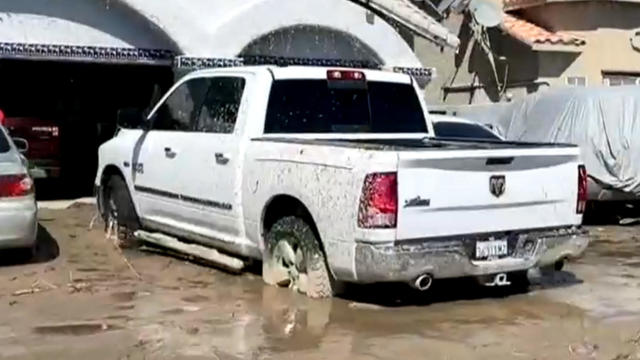
Communities in Southern California are cleaning up after record rainfall from Tropical Storm Hilary brought flooding and mudslides. Carter Evans reports.
Watch CBS News
Communities in Southern California are cleaning up after record rainfall from Tropical Storm Hilary brought flooding and mudslides. Carter Evans reports.
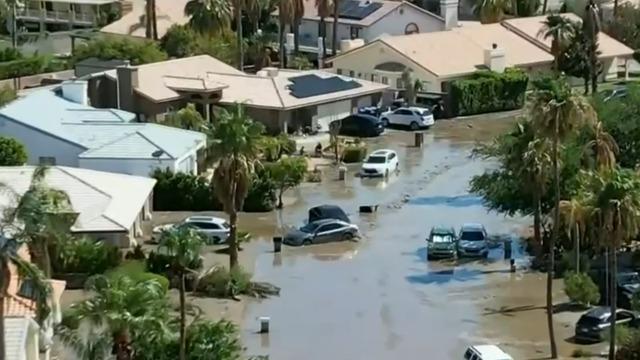
Cleanup efforts are underway in Southern California after Tropical Storm Hilary dropped rain totals not seen in the area in nearly a century. CBS News' Carter Evans has more from Oak Glen, California.
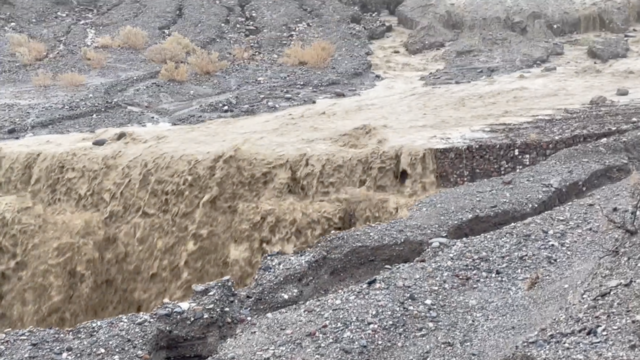
Death Valley broke a rainfall record when Hilary passed through this week.
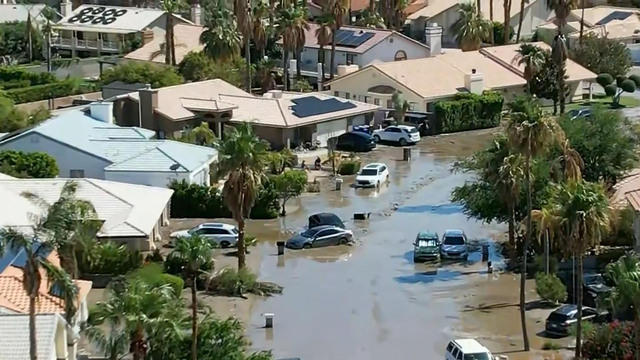
Tropical Storm Hilary brought historic rainfall to the Southern California region.
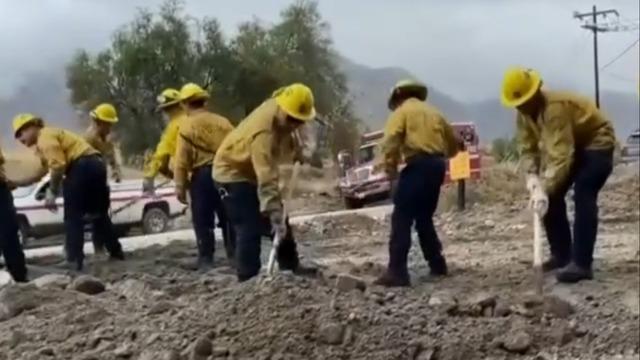
A rare tropical storm took aim at Southern California over the weekend, causing record rainfall, mudslides and flooding across the region. CBS News correspondent Carter Evans has more from communities working to recover after the storm.
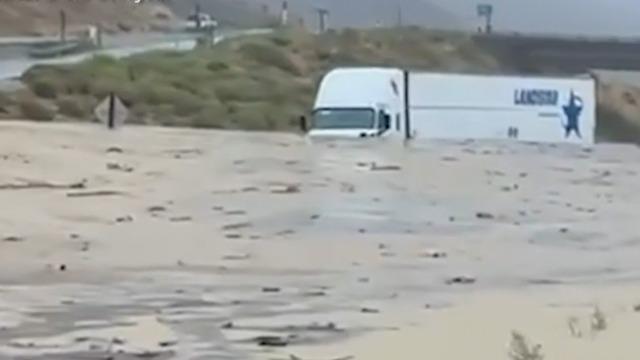
Flooding and numerous rock and mudslides have been reported in parts of California and the Southwest after Hilary slammed the region, affecting many roadways. Tony Tavares, director of the California Department of Transportation, joined CBS News with an update on road conditions in the state.
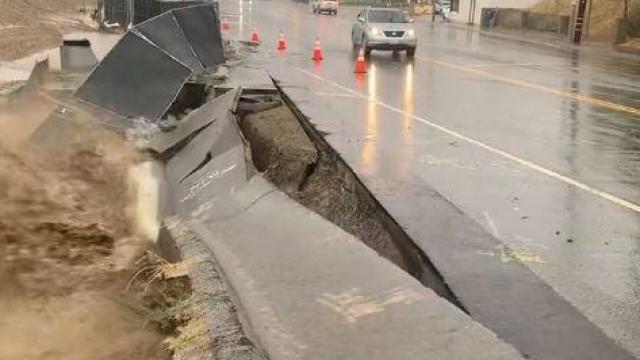
Hilary was the first tropical storm to hit Southern California in 84 years, flooding roads and causing mudslides and rock slides as it barreled north.
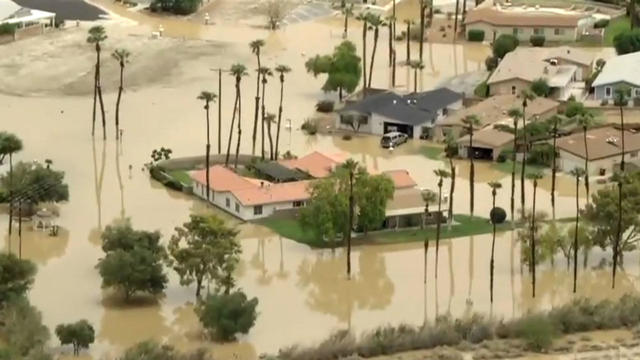
Tropical Storm Hilary moved through Southern California overnight after making landfall in Mexico's Baja California peninsula on Sunday. It's been decades since a tropical storm hit California, and it brought record rainfall, flooding and mudslides. Carter Evans reports.
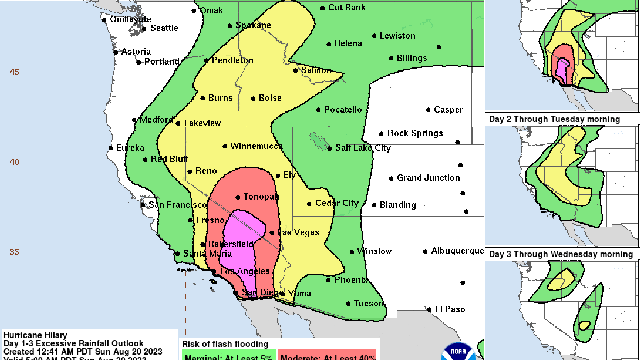
The storm was hitting the southwestern U.S. and could bring "catastrophic and life-threatening flooding," according to the National Hurricane Center.
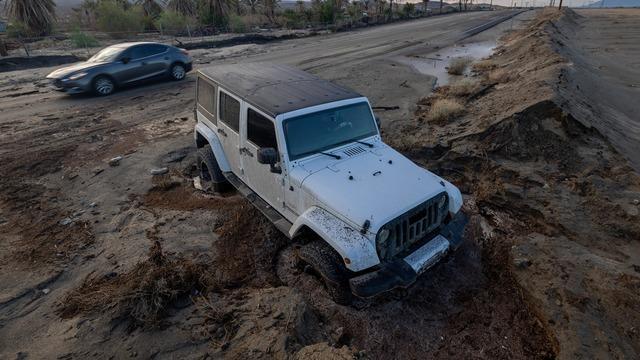
Hilary is still raining down on parts of the U.S., but officials in California are starting to breathe sighs of relief as the storm continues to weaken. Brian Ferguson, deputy director of the California Governor's Office of Emergency Services, and Jane Rodgers, superintendent of Joshua Tree National Park, joined CBS News to discuss the storm's impact.
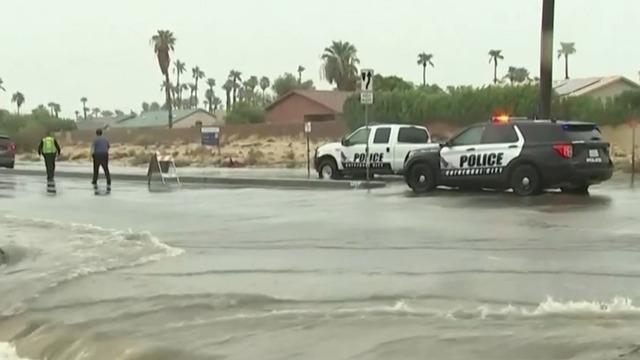
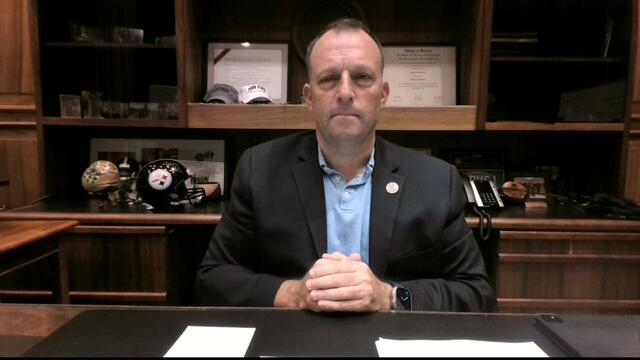
The possibility of flash floods and mudslides remains a concern Monday for parts of Southern California after the region was hit by Tropical Storm Hilary, but much of the heavy rain has passed through. In San Diego, Mayor Todd Gloria told CBS News there was "a huge amount of relief" with "the worst" of the storm over.
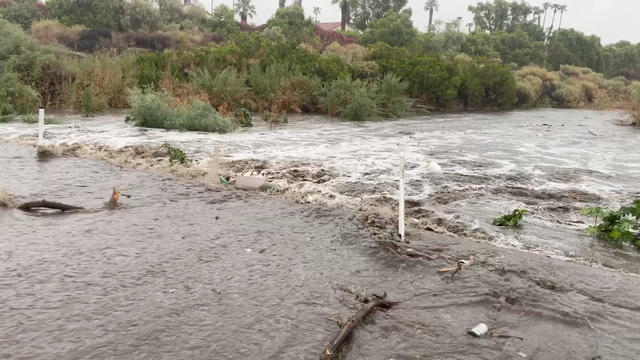
Hilary dropped more than half an average year's worth of rain on some areas, including Palm Springs, which saw nearly 3.18 inches of rain by Sunday evening.
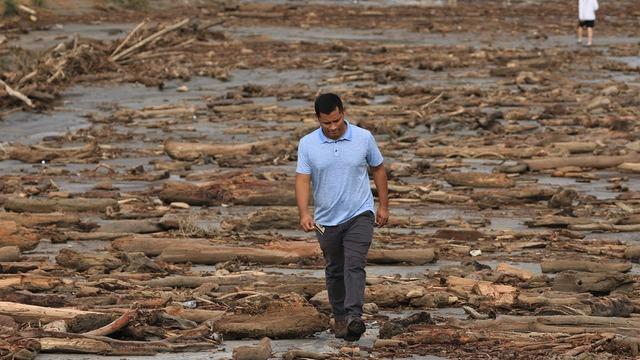
California officials are working to reopen roads after Hilary, once a Category 4 hurricane, dumped torrential rainfall on the state. Dawn Rowe, chair of the San Bernardino County Board of Supervisors, joined CBS News with an update on conditions.
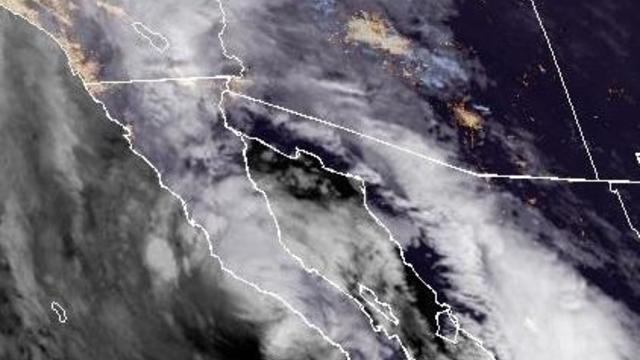
Hilary was downgraded a few hours before landfall to a tropical storm as rain from the storm started spreading in Southern California, the National Weather Service said.
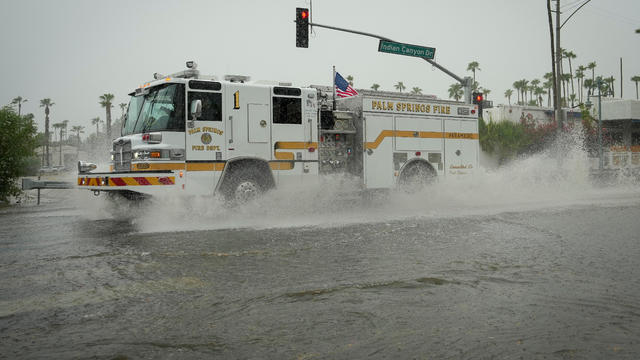
Palm Springs usually sees just 4.85 inches of rain a year. Hilary, however, dropped a whopping 3.18 inches of rain by Sunday evening.
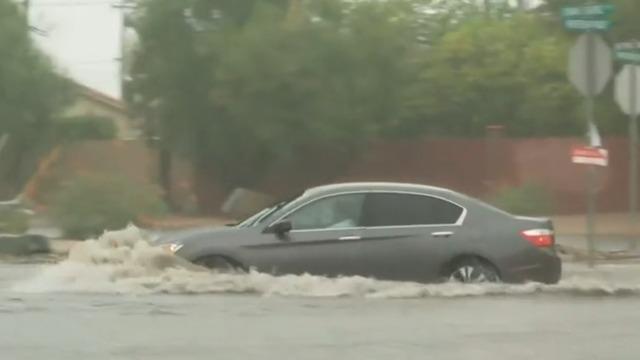
The storm that once was Category 4 Hurricane Hilary is still raining on millions along the West Coast with parts of California in the storm's wake starting to dry out. CBS News correspondents Carter Evans and Elise Preston have more on how Hilary affected desert and mountain communities. And Temecula, California, Mayor Zak Schwank joined CBS News to discuss how his city handled the weather.
This week on "Face the Nation with Margaret Brennan," Los Angeles Mayor Karen Bass and Palm Springs Mayor Grace Garner discuss preparations for Hilary as the National Hurricane Center issued its first-ever tropical storm warning for the area; plus FEMA administrator Deanne Criswell.
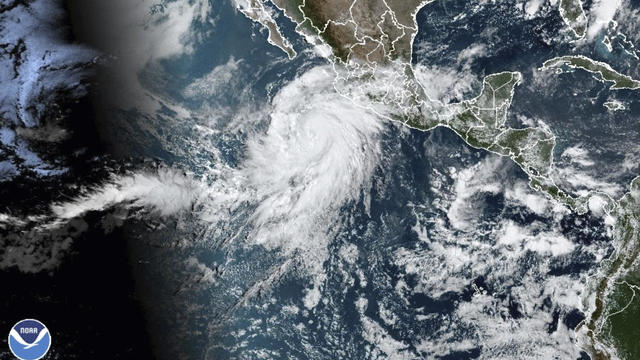
It is extremely rare for California to be hit with tropical storms or hurricanes — but it has happened before.

Missed the second half of the show? The latest on...Los Angeles Mayor Karen Bass and her city's biggest concert of "tremendous rainfall in a short period of time", FEMA administrator Deanne Criswell tells "Face the Nation" that the agency is watching its disaster relief fund "very closely" ahead of hurricane season, and Dr. Scott Gottlieb tells "Face the Nation" that he's "pretty concerned" about the new COVID variant BA 2.86.

Southern California officials are asking residents to seek shelter as Tropical Storm Hilary nears the U.S.
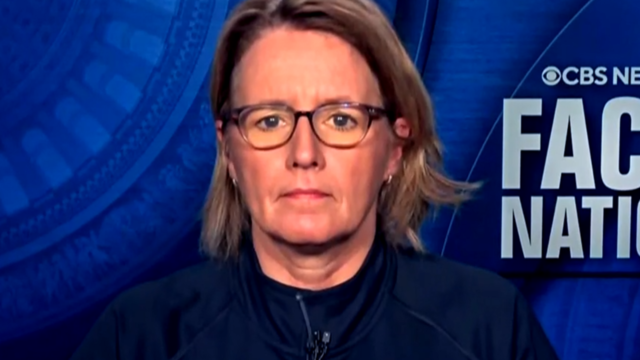
FEMA is expected to run out of funds as it responds to the Maui wildfires and the potential effects of Hurricane Hilary, the agency's leader said.

This week on "Face the Nation with Margaret Brennan," Los Angeles Mayor Karen Bass and Palm Springs Mayor Grace Garner discuss preparations for Hilary as the National Hurricane Center issued its first-ever tropical storm warning for the area; plus FEMA administrator Deanne Criswell.
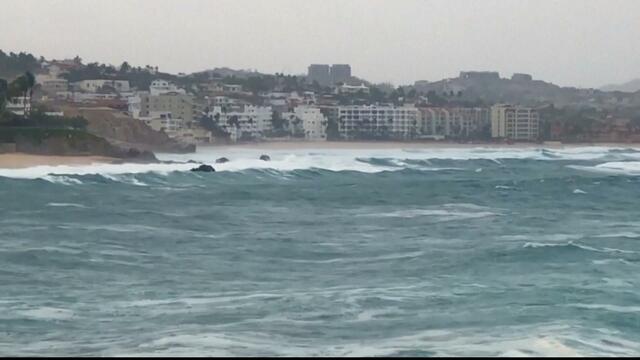
Hilary, downgraded overnight to a Category 1 hurricane, neared Mexico's Baja California early Sunday. The storm prompted the National Hurricane Center to issue the first-ever tropical storm warning for Southern California. Mark Strassmann reports.
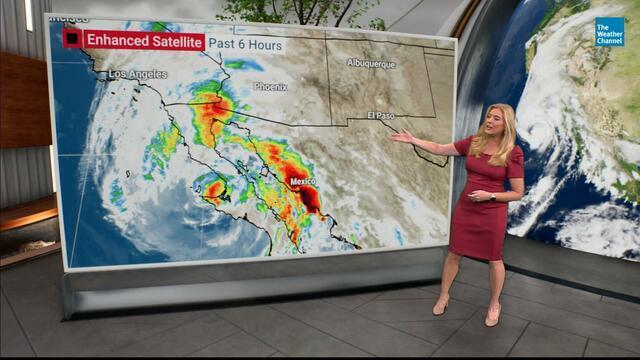
Hilary remains a major threat to southwestern U.S. as it approached landfall Sunday morning on Mexico's Baja California peninsula. Kelly Crass of The Weather Channel has the latest forecast.

Los Angeles Mayor Karen Bass tells "Face the Nation" that her city's biggest concert is "tremendous rainfall in a short period of time." Although the last time a tropical storm hit southern California was 1939, Bass says "we are ready."