Mortgage rates driving lower housing supply
Rising mortgage rates are leading to a reduction in homes on the market. Rachel Siegel, an economic policy reporter for The Washington Post, joins CBS News to discuss how this affects the economy.
Watch CBS News
Rising mortgage rates are leading to a reduction in homes on the market. Rachel Siegel, an economic policy reporter for The Washington Post, joins CBS News to discuss how this affects the economy.

Special counsel points to FBI missteps over handling of Trump-Russia investigation; former president talks family life after the White House.

Research from the human resources management company ADP suggests the "Great Resignation" is over and the "Big Stay" is here. The number of people quitting their jobs has fallen 5% from the same time a year ago. Chip Cutter, a reporter for the Wall Street Journal covering workplace, management and leadership issues, has more.

President Biden is expected to meet with House Speaker Kevin McCarthy on Tuesday to resume talks on raising the debt ceiling. Ian Bremmer, president of the Eurasia Group, joins to discuss how foreign powers are reacting to the debt limit standoff.

The Congressional Budget Office said Friday there is a significant risk the U.S. won't be able to pay its bills sometime in the first two weeks of June unless lawmakers reach a deal to raise the debt ceiling. CBS News congressional correspondent Nikole Killion has the latest on where negotiations stand.

Rail strikes are affecting travel across the U.K., and it comes as the city of Liverpool prepares to host the Eurovision song contest. CBS News correspondent Ramy Inocencio joined Anne-Marie Green and Vladimir Duthiers for MoneyWatch International.

Inflation is down to 4.9% - its first time below 5% since 2021. John Leer, chief economist at Morning Consult, joins to discuss how the Federal Reserve could respond.
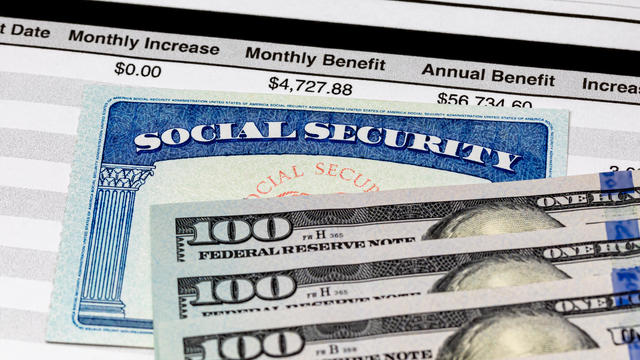
Millions of Social Security recipients "need to be very careful" about spending because payments could be delayed, one expert said.

Title 42, the pandemic-era border policy, ends today; drop in commercial property values could impact U.S. pension plans.

Economic data released Thursday shows that U.S. wholesale price increases decelerated in April and unemployment claims increased in the week ending May 6. Meanwhile, Treasury Secretary Janet Yellen warns that if the U.S. defaults on its debt, it could threaten the global economy. Jeanna Smialek, a Federal Reserve and economy reporter at the New York Times, joins CBS News to discuss.
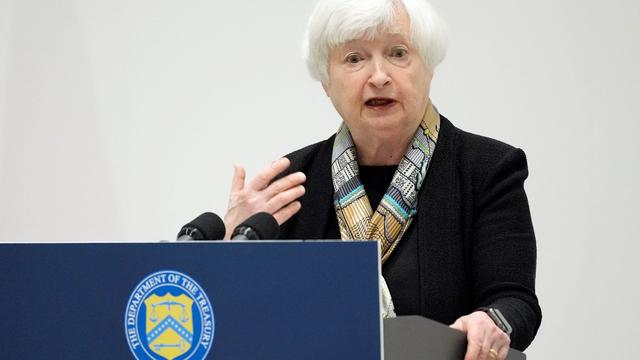
The treasury secretary also told G-7 finance ministers and central bank chiefs meeting in Japan that a first-ever U.S. default on its debts is "unthinkable."

Stocks closed relatively flat Wednesday following the release of Consumer Price Index data for April. Wells Fargo senior global markets strategist Scott Wren joins CBS News to explain what the new inflation numbers mean for consumers and investors.

The Consumer Price Index shows inflation rose 0.4% between March and April. Prices rose 4.9% year-over-year. Axios managing editor for business and markets and CBS News contributor Javier David discusses what this means for the economy with Anne-Marie Green and Vlad Duthiers.

"No one should assume that the Fed can… really protect the economy and the financial system, and our reputation globally, from the damage such an event might inflict," Federal Reserve Chairman Jerome Powell said.

President Biden hosted top congressional leaders at the White House Tuesday afternoon to discuss the debt ceiling standoff. Mark Zandi, chief economist for Moody's Analytics, joins with a look at where talks could go in the coming weeks.

President Biden met with top congressional leaders Tuesday, trying to prevent the economic chaos a default would cause if an agreement isn't reached on the debt ceiling. After the meeting, the president pointed out how far apart the two sides are. CBS News chief White House correspondent Nancy Cordes reports.

Some companies are raising prices faster than costs are increasing, fueling inflation. CBS News' Tony Dokoupil and Errol Barnett are joined by Wall Street Journal reporter Paul Hannon with more.

China's automotive exports have tripled over the last five years. Many of its newest vehicles are hybrid or fully electric. Elizabeth Palmer reports.

The Labor Department's latest report shows employers added 253,000 jobs in April. Daniel Altman, chief economist at Instawork, breaks down the findings.

The U.S. added 253,000 jobs in April, according to a report released Friday by the Labor Department, well above estimates from economists. Unemployment also fell to 3.4%, and wages were also higher. Ed O'Keefe has the details.

The popularity of artificial intelligence has exploded, and its impact could stretch across industries. Nancy Chen takes a look at what it could mean for many types of jobs.

Inflation in the Eurozone ticked up to 7% in April. The European Central Bank raised interest rates to 3.25% and indicated more hikes are to come. Brendan McKenna , an international economist for Wells Fargo, joined CBS News to compare the ECB and Federal Reserve's approaches to inflation.

Salaries for top CEOs rose 7.7% last year, even as most Americans are struggling to keep up with inflation. CBS MoneyWatch associate managing editor Irina Ivanova joins Errol Barnett and Elaine Quijano with more.

Employers in the U.S. added 253,000 jobs in April, and the nation's unemployment rate fell to 3.4% from 3.5% in the prior month, the Labor Department said. CBS News business analyst Jill Schlesinger joined Anne-Marie Green to discuss the jobs report.

Federal Reserve Chair Jerome Powell began a press conference Wednesday saying "the U.S. banking system is sound and resilient." Yet several regional bank shares were on the decline Thursday. Wall Street Journal banking reporter Gina Heeb breaks down the possible implications for the economy.