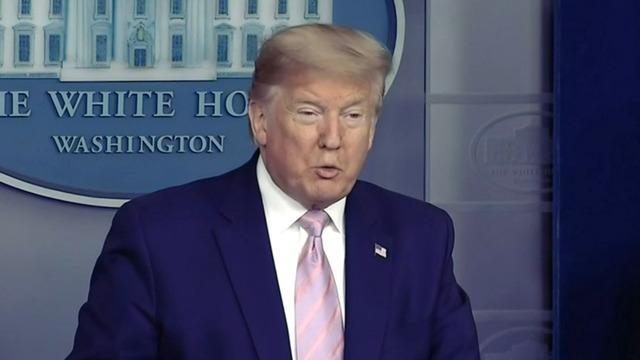
Trump warns of "a lot of death" in week ahead
At a briefing of the White House Coronavirus Task Force on Saturday, President Trump said the upcoming week will be the "toughest week" yet. "There will be a lot of death," he said.
Watch CBS News
At a briefing of the White House Coronavirus Task Force on Saturday, President Trump said the upcoming week will be the "toughest week" yet. "There will be a lot of death," he said.

The head of the National Institute of Allergy and Infectious Diseases has become the face of the nation's pandemic response. Lee Cowan talks about how Dr. Anthony Fauci, the most-trusted voice in the administration's efforts to stem the spread of the coronavirus, has earned plenty of admirers — and some good-natured displays of appreciation.

With spring in the air, people are looking to plant gardens. But the coronavirus pandemic and the challenging times facing those in lockdown have brought to mind among some green thumbs the victory gardens of World War II. Tracy Smith reports on how nurseries are now selling out, not of flower bulbs, but of vegetables, and how online tutorials about growing your own food are sprouting up everywhere.
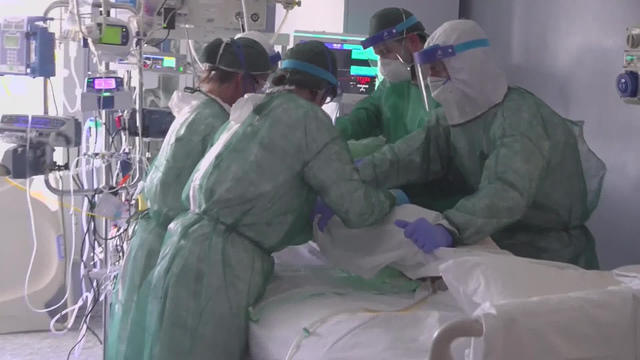
Italian doctors who fought the pandemic of COVID-19 and have seen its devastating toll talk with Seth Doane about the imperative for Americans to prepare, and how time wasted has left their country, and ours, scrambling to respond.
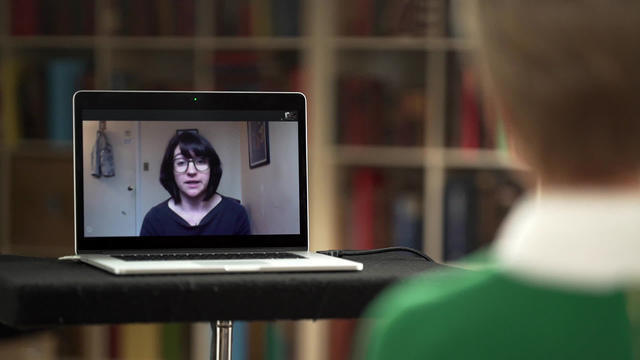
The coronavirus pandemic has meant that Mosaic, a Bronx, N.Y. non-profit mental health center, had no choice but to close its doors to in-person visits. To address the needs of its patients, Mosaic's staff of counselors and therapists took drastic measures, switching all mental health counseling to teletherapy – therapeutic sessions conducted over the phone. Susan Spencer reports on the altered dynamics of teletherapy, and how patients whose feelings of helplessness and anxiety are being compounded by a catastrophically anxious time are getting help.
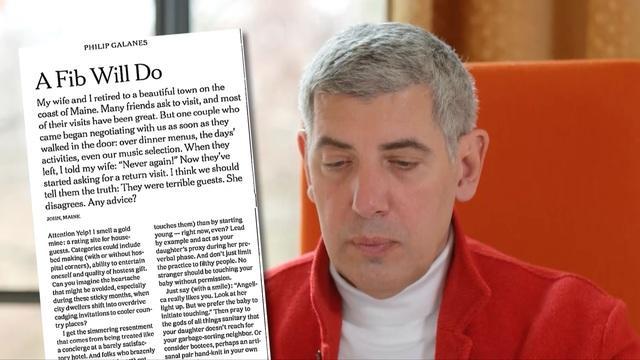
New York Times columnist Philip Galanes, who writes the paper’s “Social Q’s” column that helps readers resolve social dilemmas, talks about aiding those wrestling with new kinds of conflicts created by the pandemic, and explains to correspondent Erin Moriarty why he's an optimist about the current crisis.
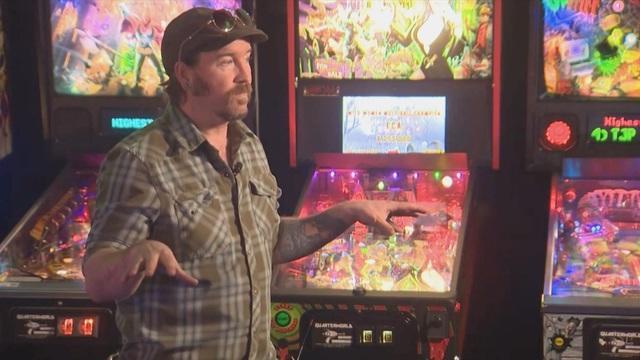
Only a month ago Logan Bowden was celebrating the resurgence of pinball; his Portland, Ore., company, QuarterWorld, which features scores of classic pinball and arcade games, was a success — until the coronavirus pandemic made pinball parlors a no-go. But QuarterWorld turned harrowing financial news into an opportunity, by offering shut-in Portlanders eager to play the chance to rent its games for their very own home. Luke Burbank reports.

A student now detained at an ICE detention facility describes the horrifying situation she and other women face amid the coronavirus outbreak: "We know that we can die inside here."
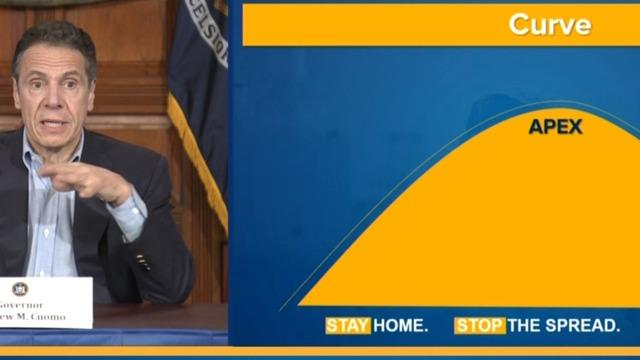
New York Governor Andrew Cuomo said Sunday that the number of deaths in the state has been decreasing over the past few days. Although he said it's too early to tell whether the pattern will hold, he said the state "could be very near the apex, or the apex could be a plateau, and we're on it right now."
Dr. Luana Marques discusses best practices for average Americans and health care workers in dealing with stresses of coronavirus and quarantine.

Dr. Anthony Fauci, the director of the National Institute of Allergy and Infectious Diseases, says the U.S. is "struggling" to get the spread of coronavirus under control.
CBS News' Business Analyst Jill Schlesinger explains why the U.S. economy will not look the same after COVID-19.
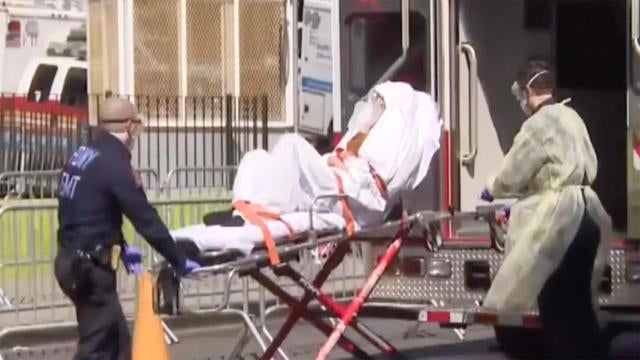
CBS News' Mark Strassmann reports from Atlanta on the growing crisis.

Michael Dowling, the head of Northwell Health, says New York hospitals "have enough protective equipment" to treat the number of COVID-19 patients.
CBS News senior foreign correspondent Elizabeth Palmer has more on COVID-19's impact on the global community.
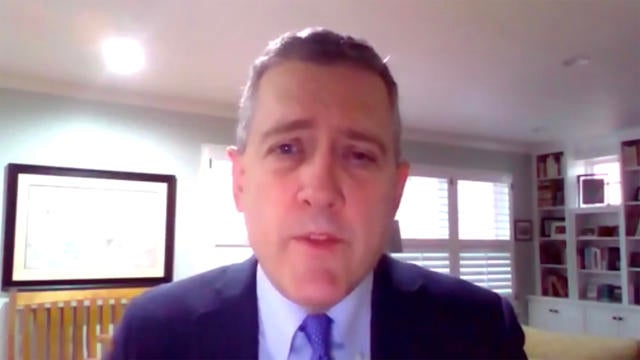
James Bullard, the CEO and president of the Federal Reserve Bank of St. Louis, disputes the notion that the job market is in freefall, saying Americans are staying at home to invest in national health.
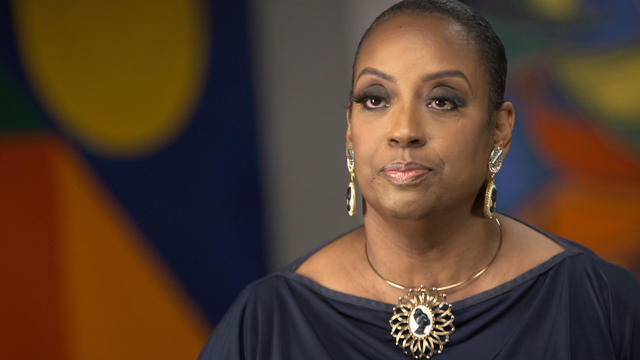
A New York City restaurant owner says she's concerned about the well-being of the employees she's had to lay off as the novel coronavirus grips the region.
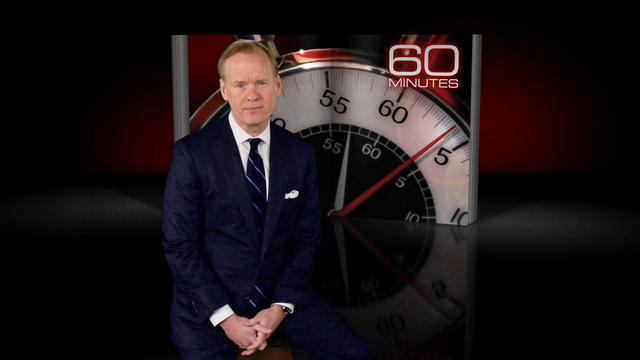
"We see you. We feel your sorrow. You are not alone, even in this moment of deep loneliness." John Dickerson on how we can respond to those who are suffering from losses caused by COVID-19.
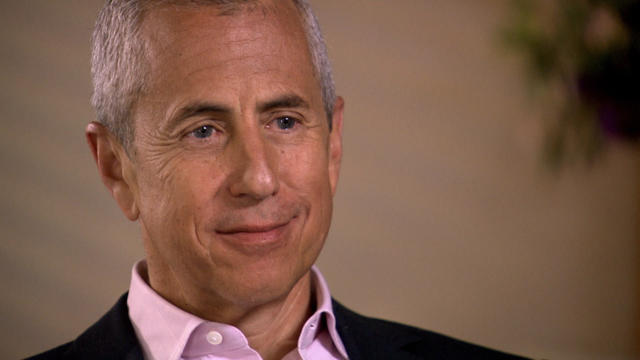
This week on 60 Minutes, Danny Meyer tells Scott Pelley how the coronavirus is impacting his restaurants and the whole industry. In 2007, he told 60 Minutes about the success of his Shake Shack chain and his "no tipping" policy.
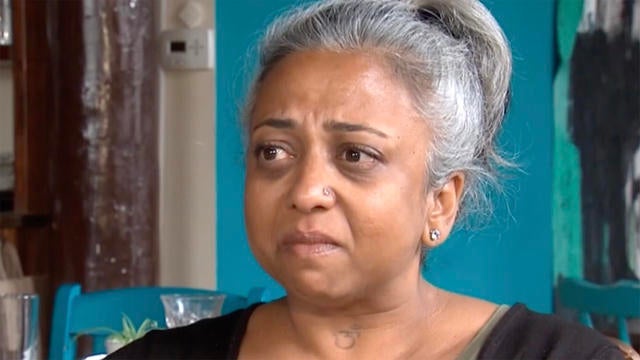
"Face the Nation" asked for viewers to share how coronavirus has impacted their financial futures after a blistering week for the economy.
Today on "Face the Nation," with the month of March behind us, Americans prepare for what's likely to be a catastrophic April.
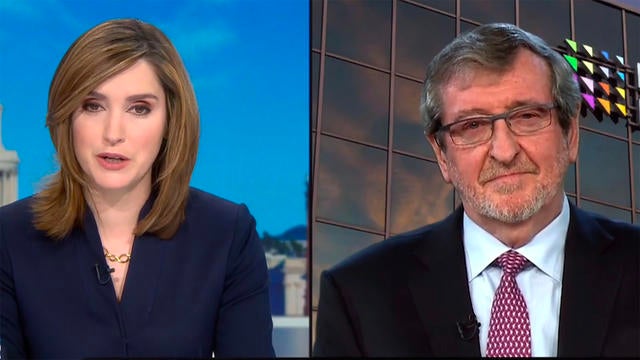
Missed the second half of the show? The latest on the impact coronavirus has had on small business owners and how Americans prepare for what's likely to be a catastrophic April.
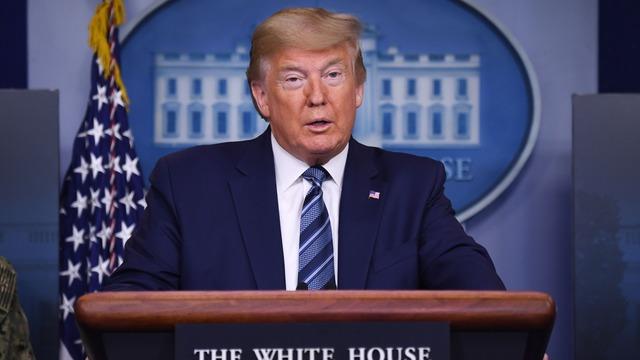
During a Coronavirus Task Force briefing Sunday night, President Trump said major disaster declarations have been approved in all 50 states and territories. The president also laid out details about supplies and ventilators being sent nationwide to battle the pandemic. Watch his remarks here.
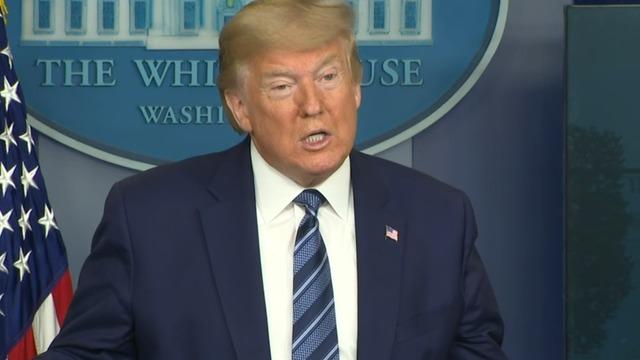
During a Coronavirus Task Force briefing at the White House on Sunday, President Trump said more than 1.6 million Americans have had a coronavirus test. He also mentioned two drugs -- erythromycin and hydroxychloroquine -- as possible treatments for those who catch coronavirus. Watch his remarks here.
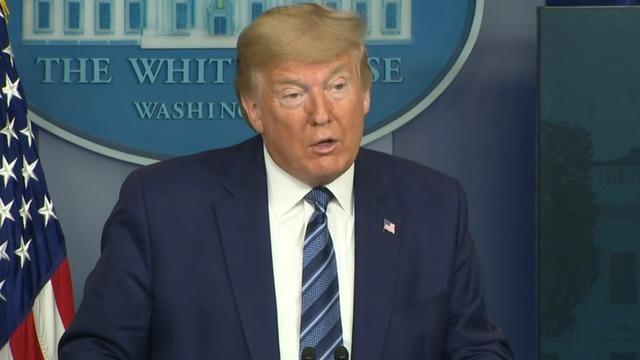
President Trump said Sunday night that Washington state Governor Jay Inslee has returned 400 ventilators for redeployment to states hardest-hit by coronavirus.