COVID vaccine hesitancy runs high in rural Georgia
The country could be headed for another tale of two Americas: those with herd immunity, and those without, including areas that are mostly rural and at continuing risk of mini-epidemics.
Watch CBS News
The country could be headed for another tale of two Americas: those with herd immunity, and those without, including areas that are mostly rural and at continuing risk of mini-epidemics.
As the world battles against the coronavirus, misinformation about the pandemic and the COVID-19 vaccines is spreading online. Tommy Shane, head of impact and policy at First Draft, joins CBSN AM to discuss how our understanding of "truth" and "facts" impacts our approach to information.
President Biden has announced a new goal in battling COVID-19, aiming to get 70% of American adults vaccinated by July 4. But more than 20 states across the country are not ordering all the available doses allocated to them as demand for vaccines declines. CBS News correspondent Laura Podesta joins CBSN AM with details.
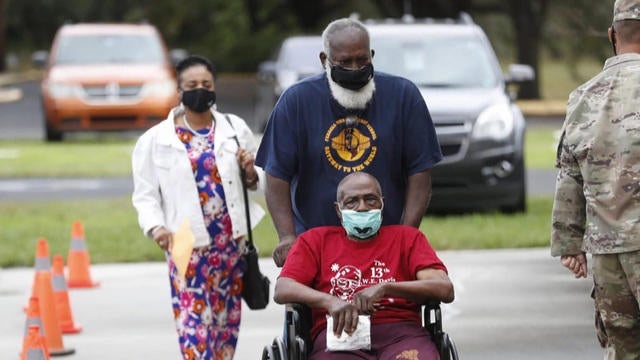
At least 25 states have turned away COVID-19 vaccines because of falling demand. Georgia is one of the states dealing with vaccine hesitancy. Mark Strassmann takes a look.
The Centers for Disease Control is now projecting COVID-19 cases and deaths in the U.S. will fall sharply by the end of July. Dr. William Schaffner, a professor of preventive medicine at Vanderbilt University School of Medicine, joined CBSN's Tanya Rivero with more on the president's new goals for vaccinating Americans.
The CDC Advisory Committee on Immunization Practices will hold an emergency meeting next week, as Pfizer prepares to seek authorization to offer its vaccine for kids age 12 to 15. Internal medicine specialist and immunologist Dr. Neeta Ogden joins CBSN to discuss that, plus efforts to develop future vaccines that could come in the form of a patch or a pill.
As the demand for COVID-19 vaccines begins to dwindle, President Biden is pushing to get more adults in rural communities immunized. David Begnaud reports on the new details and how local health officials are reacting.
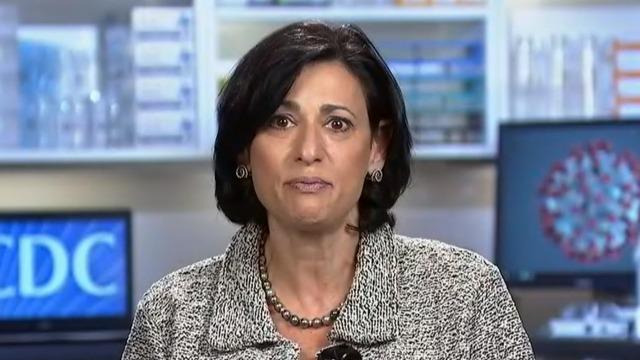
CDC Director Rochelle Walensky joins "CBS This Morning" to discuss President Biden's newly announced plan to give 70% of U.S. adults at least one COVID-19 vaccine shot by July 4.
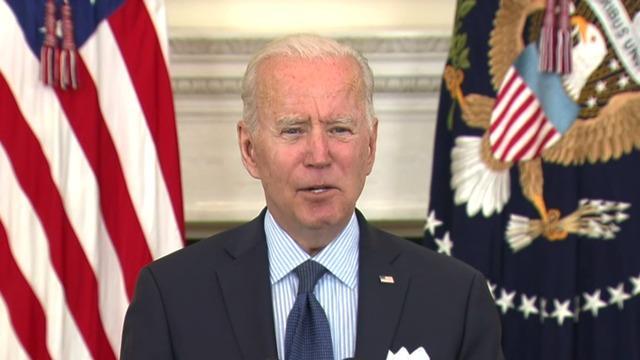
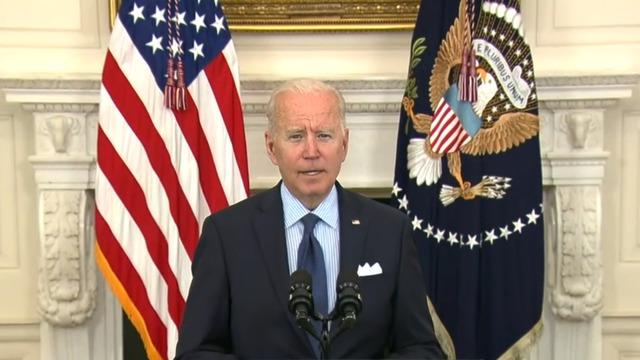
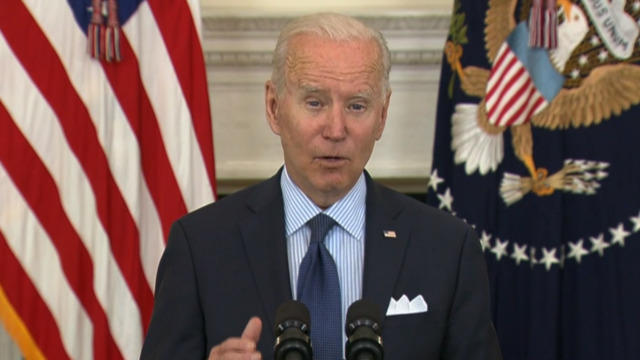
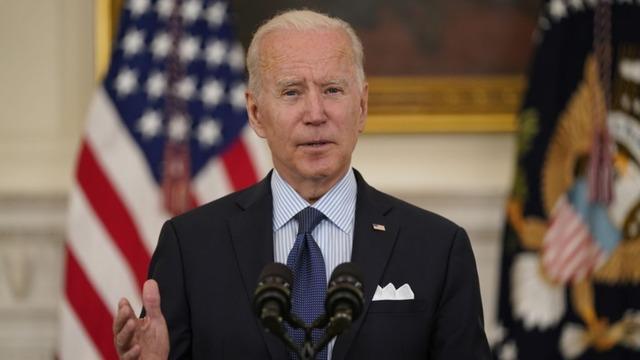
President Biden set a new target of having 160 million U.S. adults fully vaccinated and 70% of adults at least partially vaccinated by July 4, ramping up efforts to reach rural areas and communities where the rate of COVID-19 vaccinations has lagged. Watch his remarks from the White House and read more here.
Despite a decline in new COVID-19 cases and increasing vaccinations, some experts say it's unlikely America will reach "herd immunity." Science writer Carl Zimmer, author of The New York Times "Matter" column, joins CBSN's "Red & Blue" host Elaine Quijano to explain why. He also discusses the next generation of coronavirus vaccines and what is currently known about a variant prevalent in India that's been detected in the U.S.
The FDA could soon approve its first coronavirus vaccine for kids as young as 12 years old. As CBS News' Mola Lenghi reports, children now make up nearly a fourth all new cases in the U.S. Then Dr. Payal Patel, an infectious diseases physician at the University of Michigan Medical School, joins CBSN's Elaine Quijano to discuss the latest COVID headlines.
President Biden laid out a new goal Tuesday of having 160 million adult Americans fully vaccinated before the Fourth of July, and 70% of adults at least partially vaccinated. CBS News senior White House correspondent Weijia Jiang discusses how the Biden Administration plans to meet that goal and their new vaccine distribution strategy.
President Biden set a new goal of administering at least one vaccine dose to 70% of U.S. adults by the Fourth of July. Dr. Bechara Choucair, the White House COVID Response Team's vaccination coordinator, joins CBSN's "Red & Blue" anchor Elaine Quijano with more on the next phase and the expanding role of primary care doctors.
The Biden administration is launching an all-out push to increase the U.S. vaccination rate, which has dropped more than 50% in recent weeks. Weijia Jiang has the latest.

The FDA is expected to authorize Pfizer-BioNTech's COVID-19 vaccine for administration to adolescents by early next week. The company is also preparing to seek full FDA approval — not just emergency authorization — for adults. Mola Lenghi reports.

President Joe Biden announced a new vaccine goal of fully vaccinating 160 million adults by July 4. Dr. Teresa Amato, chairwoman of emergency medicine at Long Island Jewish Forest Hills, joins CBSN's Tanya Rivero with more on the fight against coronavirus.
The next generation of COVID vaccines may come in different forms and might even help prevent future pandemics.
CBS News has learned the Food and Drug Administration is expected to authorize Pfizer's COVID-19 vaccine for children as young as 12 as soon as next week. Meanwhile, as states and cities continue to reopen, a variant in Oregon has led to one of the largest increases in infections in the country. CBS News correspondent Laura Podesta joins CBSN AM with the latest.
The Food and Drug Administration could approve Pfizer's COVID-19 vaccine for children ages 12 to 15 as early as next week. Dr. Julie Morita, a pediatrician and the executive vice president of the Robert Wood Johnson Foundation, joined CBSN's Tanya Rivero with more on how this could impact herd immunity.
A federal health official tells CBS News the FDA is expected to authorize emergency use of Pfizer's coronavirus vaccine for adolescents aged 12 to 15 years old, as soon as this week. This comes as many health experts are warning that vaccine hesitancy and new COVID variants could prevent the U.S. from reaching widespread or "herd" immunity. Dr. Ashish Jha joins "CBS This Morning" to discuss the imminent Pfizer EUA for adolescents and the herd immunity debate.
The FDA is expected to approve Pfizer's vaccine for children aged 12 to 15 year old as early as the end of this week. This comes as New York, Connecticut and New Jersey all announced they would lift most capacity limits on May 19. Mola Lenghi reports.
Remote learning and the dangers of the pandemic have caused parents to become physically and mentally exhausted over the past year. Now, as we begin to approach the end of the school year, experts are giving tips on how parents can avoid burning out while their kids are home for the summer. Parenting and education expert Dr. Karen Aronian joins CBSN's Elaine Quijano to discuss.
Florida Governor Ron DeSantis signed an executive order overturning all local COVID-19 emergency orders in the state. Other states and cities are also easing restrictions as more people get vaccinated and outbreaks decline. CBS News' Natalie Brand reports for CBSN's "Red & Blue."
New coronavirus shutdowns are going into effect in Oregon, as the state leads the nation in new infections for a second week in a row. Meanwhile, Florida and New York are lifting most restrictions. CBS News' Mola Lenghi and Jonathan Vigliotti report on the developments from coast-to-coast. Then, Dr. Leo Nissola, an immunotherapy scientist, joins CBSN's Elaine Quijano with his analysis.
More than 103 million Americans have been fully vaccinated and a daily average of about 2.6 million people received a shot over the last week. Lilia Luciano has the latest on the COVID crisis.
President Trump says the U.S. is joining Israel in "major combat operations in Iran," after a failed effort by the U.S. to pressure Tehran into a new nuclear deal.
President Trump says his objective in attacking Iran "is to defend the American people by eliminating imminent threats" from the regime in Tehran. Read his full statement here.
President Trump said he will give federal agencies six months to phase out their use of Anthropic's AI products.
Renee Good's family said they spent agonizing "hours in limbo," unsure of the details surrounding her fatal shooting by a U.S. Immigration and Customs Enforcement officer in Minneapolis last month.
Hours before Anthropic CEO Dario Amodei's interview, Defense Secretary Pete Hegseth deemed the AI company a "supply chain risk to national security," which restricts military contractors from doing business with Anthropic.
Former President Bill Clinton denied any knowledge of Jeffrey Epstein's crimes in an opening statement before the House Oversight Committee in New York.
Defense Secretary Pete Hegseth deemed artificial intelligence firm Anthropic a supply chain risk on Friday, following days of increasingly heated public conflict with the AI company.
Defense Secretary Pete Hegseth announced Friday that the Pentagon would be canceling troops' attendance at some of the nation's top universities.
Singer-songwriter Neil Sedaka, known for his hits like "Laughter in the Rain," "Breaking Up is Hard to Do" and "Calendar Girl," has died.
Hours before Anthropic CEO Dario Amodei's interview, Defense Secretary Pete Hegseth deemed the AI company a "supply chain risk to national security," which restricts military contractors from doing business with Anthropic.
For Buddy Wiggins of Honolulu, Hawaii, the end result of a yearslong sports gambling addiction has come to this: soliciting strangers on the beach.
Renee Good's family said they spent agonizing "hours in limbo," unsure of the details surrounding her fatal shooting by a U.S. Immigration and Customs Enforcement officer in Minneapolis last month.
Conspiracy theories about the Epstein files have racked up millions of views on social media. Here's what to know about 10 of the most viral claims.
In the years to come, robots will help offset worker shortages in health care, manufacturing and other industries, experts say.
Defense Secretary Pete Hegseth deemed artificial intelligence firm Anthropic a supply chain risk on Friday, following days of increasingly heated public conflict with the AI company.
In the years to come, robots will help offset worker shortages in health care, manufacturing and other industries, experts say.
In his new memoir, the former CEO of Goldman Sachs writes about a life that stretched from the projects of New York City to the pinnacle of Wall Street.
"If somebody charges you something and it's unlawful, they should give you your money back," Dame CEO Alexandra Fine said.
Stocks fell Friday after a report showed higher-than-expected inflation and as Wall Street continues to fret over AI-related disruption.
President Trump says his objective in attacking Iran "is to defend the American people by eliminating imminent threats" from the regime in Tehran. Read his full statement here.
President Trump says the U.S. is engaged in "major combat operations in Iran," after a failed effort to pressure Tehran into a new nuclear deal.
Hours before Anthropic CEO Dario Amodei's interview, Defense Secretary Pete Hegseth deemed the AI company a "supply chain risk to national security," which restricts military contractors from doing business with Anthropic.
Defense Secretary Pete Hegseth deemed artificial intelligence firm Anthropic a supply chain risk on Friday, following days of increasingly heated public conflict with the AI company.
Defense Secretary Pete Hegseth announced Friday that the Pentagon would be canceling troops' attendance at some of the nation's top universities.
More than three dozen states cover dental services for people on Medicaid, but with about $900 billion in cuts expected to hit states over the next decade, many programs could roll back dental coverage.
Chaz and Jean Franklin were facing a sevenfold increase in their health premium payments with the expiration of enhanced federal subsidies for Affordable Care Act plans. Then Jean received a crushing diagnosis.
A British gym chain is offering classes in "kidulting," luring adults into fitness with classes built around playground and PE class classics.
Starting in 2027, the Danish pharma firm will sell its weight-loss and diabetes drugs for $675 per month.
Robert F. Kennedy Jr. has criticized the broadening use of anxiety medications, but doctors and researchers say the MAHA movement is misrepresenting drugs that have been proven to help.
President Trump says his objective in attacking Iran "is to defend the American people by eliminating imminent threats" from the regime in Tehran. Read his full statement here.
President Trump says the U.S. is engaged in "major combat operations in Iran," after a failed effort to pressure Tehran into a new nuclear deal.
The Israel Defense Ministry said in a statement that it launched the strike because it was expecting "a missile and drone attack" from Iran "in the immediate future."
The plane belonging to the Bolivian air force was transporting new banknotes from Bolivia's Central Bank to other cities. A large number of bills were scattered on the ground at the crash site.
Negotiators from the U.S. and Iran have made "substantial progress" toward a deal to curb Iran's nuclear program, Omani Foreign Minister Badr Albusaidi told CBS News on Friday.
Neil Sedaka, the singer and songwriter behind such hits as "Breaking Up is Hard to Do," "Calendar Girl," and "Love Will Keep Us Together," died on Friday, Feb. 27, 2026 at age 86. In this 2020 "Sunday Morning" story, David Pogue talked with Sedaka – as well as Valerie Simpson (of Ashford & Simpson), author John Seabrook, and producer Oak Felder – about the elements that go into writing a hit song.
Singer-songwriter Neil Sedaka, known for his hits like "Laughter in the Rain," "Breaking Up is Hard to Do" and "Calendar Girl," has died.
In his memoir, the Tony Award-winning composer of such hits as Broadway's "Hairspray" writes of his half-century in show business, which grew in part from his youthful worship of Bette Midler - an adoration that would grow into a collaboration.
For Oscar-winning composer Ludwig Goransson, creating the score for "Sinners" was a challenge, explaining he had to find his "voice within the blues." He describes his unlikely personal connection to the music and how he met the film's director.
"Scream" writer and creator Kevin Williamson describes his passion for horror films and being asked to direct a "Scream" movie for the first time, at the request of one of the returning stars. Natalie Morales reports.
In an exclusive interview with CBS News, Anthropic CEO Dario Amodei said that the Pentagon's decision to designate the AI company a supply chain risk is "retaliatory and punitive." The Pentagon made the designation, which restricts military contractors from doing business with Anthropic, after the company refused to give the military unfettered access to its AI model.
Anthropic CEO Dario Amodei said in an exclusive interview with CBS News that the AI company sought to draw "red lines" in the government's use of its technology because "we believe that crossing those lines is contrary to American values, and we wanted to stand up for American values." He added: "Disagreeing with the government is the most American thing in the world."
From labor shortages to environmental impacts, farmers are looking to AI to help revolutionize the agriculture industry. One California startup, Farm-ng, is tapping into the power of AI and robotics to perform a wide range of tasks, including seeding, weeding and harvesting.
For days, one of America's leading artificial intelligence companies and the Pentagon have been in a standoff over this question: who gets ultimate control over the use of that powerful technology? Jo Ling Kent explains what's at stake.
President Trump ordered the federal government to cut ties with tech start-up Anthropic. Defense Secretary Pete Hegseth also said he will designate Anthropic a supply-chain risk to national security. Brendan Bordelon, AI and tech influence reporter for Politico, joins "The Daily Report" to discuss.
NASA Administrator Jared Isaacman announced significant changes to the agency's Artemis program, which aims to land on the moon in 2028.
Documents might help scientists shed light on unexplained phenomena and government secrets, experts said.
A large shark was caught on camera for the first time in Antarctica's waters, surprising researchers. "There's a general rule of thumb that you don't get sharks in Antarctica," one said.
On the evening of Christmas 1776, Gen. George Washington surprised the King's forces by leading the Continental Army in a surprise crossing of a near-frozen Delaware River - a watershed military maneuver that dramatized a changing America, and a changing climate.
On the evening of Christmas 1776, Gen. George Washington surprised the King's forces by leading the Continental Army in an unanticipated crossing of a near-frozen Delaware River. Environmental correspondent David Schechter looks at how Washington's watershed military maneuver dramatized both a changing America, and a changing climate.
Former President Bill Clinton is being deposed by members of the House Oversight Committee over his alleged links to Jeffrey Epstein. CBS News' Nikole Killion reports.
Columbia University acting president Claire Shipman described the ICE detention of student Elmina "Ellie" Aghayeva, claiming agents gained entry to a residential building by stating they were police seeking a missing child. CBS News' Tom Hanson reports.
Former President Bill Clinton is up next for a deposition before members of the House Oversight Committee regarding his alleged links to convicted sex offender Jeffrey Epstein. CBS News' Nikole Killion reports.
Columbia University student Elmina Aghayeva has been released after ICE took her from one of the institution's residential buildings. CBS News' Tom Hanson reports.
Kentucky Republican Rep. James Comer, the chairman of the House Committee on Oversight and Accountability, said Commerce Secretary Howard Lutnick may be asked to testify on his knowledge of convicted sex offender Jeffrey Epstein's dealings. This comes as former President Bill Clinton prepares for his deposition. CBS News' Nikole Killion reports.
NASA has announced a major overhaul of its Artemis moon program amid ongoing safety concerns. CBS News space consultant Bill Harwood has more details.
NASA announced an overhaul to its Artemis moon program as safety concerns persist. CBS News space contributor Christian Davenport breaks down the key takeaways.
NASA Administrator Jared Isaacman announced significant changes to the agency's Artemis program, which aims to land on the moon in 2028.
NASA's Artemis II mission continues to face concerns and delays. Scott E. Parazynski, a former astronaut, joins CBS News with more.
NASA is rolling back the Artemis II moon rocket from its launch pad at the Kennedy Space Center in Florida. It is expected to take up to 12 hours to move the 322-foot rocket, with the journey spanning four miles back to its hangar for repairs. CBS News space consultant Bill Harwood has more.
A look back at the esteemed personalities who've left us this year, who'd touched us with their innovation, creativity and humanity.
Does the evidence show a cover-up, or was Todd Kendhammer wrongfully convicted for the murder of his wife?
Christy Salters-Martin dominated in the boxing ring but faced her toughest challenger at home.
Family seeks answers in death of newlywed who disappeared in 2005 while on Mediterranean honeymoon cruise.
Meet the tattooed beauty charged in the death of Google executive Forrest Hayes.
President Trump announced early Saturday morning that the U.S. is conducting "a massive and ongoing operation to prevent this very wicked, radical dictatorship from threatening America and our core national security interests." See his full remarks.
The U.S. and Israel carried out military strikes on targets in Iran early Saturday after President Trump threatened the Iranian regime for weeks to make a new deal to rein in its nuclear program, and before that, threatened it over its violent crackdown on protesters in January. Carissa Lawson anchors CBS News' special report.
President Trump said the U.S. military has begun "major combat operations in Iran" in a statement released early Saturday morning. Mr. Trump threatened the Iranian regime for weeks to make a new deal to rein in its nuclear program, and before that, threatened it over its violent crackdown on protesters in January.
In an exclusive interview with CBS News, Anthropic CEO Dario Amodei said that the Pentagon's decision to designate the AI company a supply chain risk is "retaliatory and punitive." The Pentagon made the designation, which restricts military contractors from doing business with Anthropic, after the company refused to give the military unfettered access to its AI model.
Anthropic CEO Dario Amodei said in an exclusive interview with CBS News that the AI company sought to draw "red lines" in the government's use of its technology because "we believe that crossing those lines is contrary to American values, and we wanted to stand up for American values." He added: "Disagreeing with the government is the most American thing in the world."