Weightlifter will be first trans athlete to compete at Olympics
At 43, Laurel Hubbard will also be the oldest lifter at the Games.
Watch CBS News
At 43, Laurel Hubbard will also be the oldest lifter at the Games.

But there's a limit of 50% capacity up to a maximum of 10,000 fans for all Games venues, and even that could be quashed by a COVID surge.

Weighed down by a litany of negative news, unwanted by much of the Japanese public and medical community, the fate of the Summer Games seems murky. Lucy Craft takes a look.

The coronavirus has already delayed the Summer Games a year, and there's a chorus calling for it to be nixed completely, but there's an awful lot at stake.

With a nervous population just weeks before the opening ceremony, Japan is finally getting its coronavirus inoculation program into gear.

With the Tokyo Olympics a little over a month away, its host city is still under a state of emergency. Japan is looking to ramp up its COVID-19 vaccination effort ahead of the upcoming Summer Games. CBS News foreign correspondent Lucy Craft reports from Tokyo for CBSN.

The athletes include Kimia Alizadeh, who was the first Iranian woman to win an Olympic medal in 2016.

“CBS This Morning” travels to the U.S. National Whitewater Center in Charlotte, North Carolina to check in with soon-to-be teen Olympic competitor Evy Leibfarth – who heads to Tokyo in July to race in Canoe and Kayak Slalom. She will be one of the first women to compete in the event's history. Mireya Villarreal reports.

Japan's low crime rate may be traced in part to its homogenous society and gun-free culture, but also to the ways in which its police have pushed the envelope on community relations. Correspondent Lucy Craft went on patrol with Tokyo's ubiquitous and helpful police officers, whose guns remain holstered, and whose job includes everything from listening to marital spats, to operating the world's largest lost-and-found.

Organizers of the Tokyo Olympics insist the games will go on this summer even as Japan battles coronavirus cases and protesters demand the games be canceled. Ramy Inocencio reports.
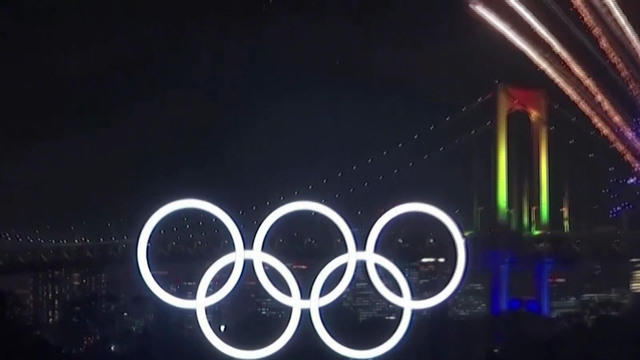
Thursday morning, Tokyo marked 50 days until the start of the summer Olympics. Much of Japan is still under a COVID-19 state of emergency, and many Japanese say the games should be called off. As Ramy Inocencio reports, the chief Olympics organizer says the games that were supposed to be held last year cannot be postponed again.

More than 100 people are missing after a boat carrying about 200 passengers broke and sank in Nigeria's River Niger. Switzerland has ended talks with the European Union, rejecting a treaty agreement for closer ties. CBS News foreign correspondent Ramy Inocencio joins "CBSN AM" from Hong Kong with a roundup of those and other headlines.
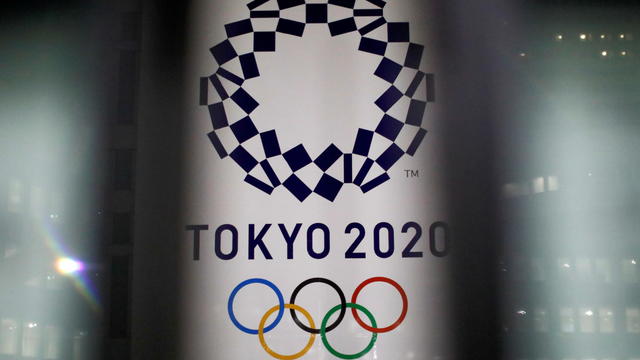
Organizers and Japanese officials have been adamant that the Games can go ahead safely, with restrictions, amid the pandemic, but Japan's residents aren't buying it.
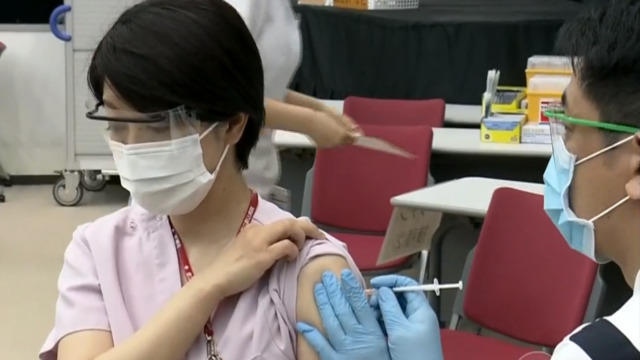
Japan has only approved one vaccine and restricts who can administer the shot.

Police in Brazil are facing international criticism after at least 25 people, including a police officer, were killed in a ferocious gunbattle during a drug raid in Rio de Janeiro. Also, the former president of the Maldives survived an apparent assassination attempt, and officials in Germany opposed a U.S.-backed plan to waive patents on COVID-19 vaccines. CBS News foreign correspondent Ian Lee joined "CBSN AM" from London with headlines from around the world.
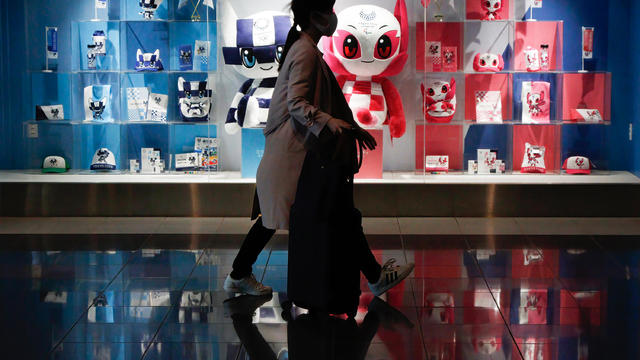
One political scientist says the country won't be "vaccine-ready for the Olympics," leaving many in Japan extremely wary of hosting a COVID-era Games.

At least five people have died in a bombing at a luxury hotel in Pakistan. Meanwhile, the International Olympic Committee is instituting a protest ban for athletes in the upcoming Tokyo Summer Games. CBS News foreign correspondent Ian Lee has a roundup of the headlines.

The "underground Parthenon" has become a tourist magnet, but the modern engineering marvel is also the great protector of Japan's densely-packed capital.

Japan's environmental ministry says temperatures are rising in the country at a faster rate than the global average. That means more rain, and more extreme weather events. But in Tokyo, the world's biggest metropolis, they've deployed a unique weapon to provide protection from floodwaters. Lucy Craft has the details.

"Sunday Morning" takes us this spring Sunday to a setting known in English as "Cherry Blossom Mountain Park" outside Tokyo, home to some 10,000 cherry trees. Videographer: Jiro Akiba.

One of the most serious political crises in Jordan's history has been resolved following discussions between the country's royal family. More than 1,800 inmates have escaped from a prison in Nigeria, and North Korea has pulled out of the Olympic Games in Tokyo. CBS News foreign correspondent Ian Lee joins CBSN AM from London with these stories and more.

North Korea has announced it will not send athletes to the 2021 Tokyo Olympics. The East Asian country is pointing to coronavirus concerns in its decision to skip the summer games, foreign correspondent Lucy Craft reports for CBSN.
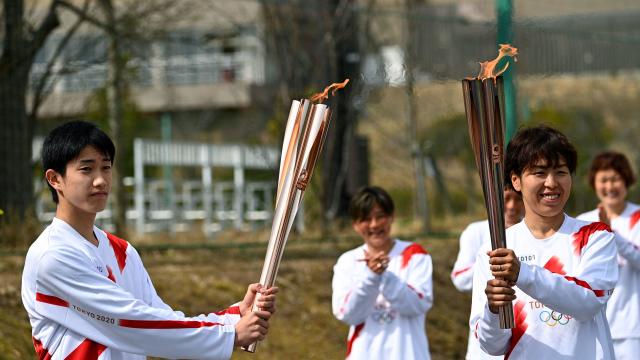
Official run-up to the COVID-postponed Summer Games gets underway in the beleaguered Fukushima region, under a shroud of uncertainty.

"I feel like I have done more in my life with one leg than I ever would have with two," the Purple Heart recipient and mother of two told CBS News.

March is Women's History Month. Dawn Harper-Nelson is a two-time Olympic medalist in track and field, who's setting her sights on the Tokyo Olympics. She discusses her journey in motherhood and the hurdles she's faced from sponsors. She recently received a grant from &Mother, an organization supporting female athletes who are mothers, while she trains for the Olympic trials.