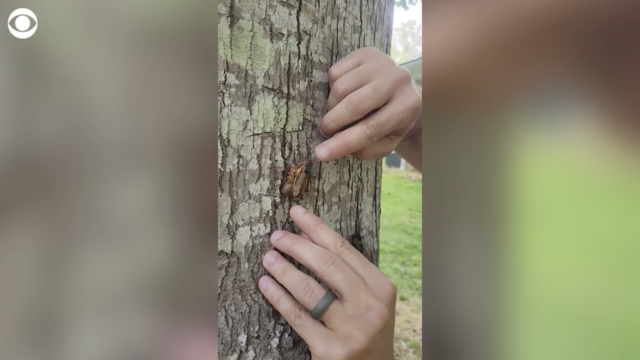
Videos show where cicadas have already emerged in the U.S.
The bugs emit a loud, droning buzzing sound when they emerge — signaling they are ready to mate.
Watch CBS News
The bugs emit a loud, droning buzzing sound when they emerge — signaling they are ready to mate.
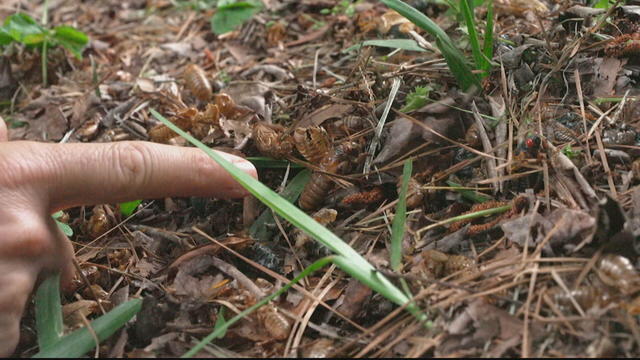
For the first time since 1803, two groups of periodical cicadas are emerging from the ground at the same time in parts of the Midwest and South. However, a small section of Central Illinois marks the only place where both the 13-year and 17-year cicadas are emerging in the same place. Dave Malkoff reports on the extraordinary event.

Blue holes are considered an "oasis" for marine life — but the Taam Ja' Blue Hole off the coast of Mexico remains largely mysterious.

Trillions of periodical cicadas are emerging from the ground this spring, bringing with them their loud buzzing and molted exoskeletons. Here's where you will be able to see them.

"Although to some, the noise is annoying, they pose no danger to humans or pets," the sheriff wrote. "Unfortunately, it is the sounds of nature."
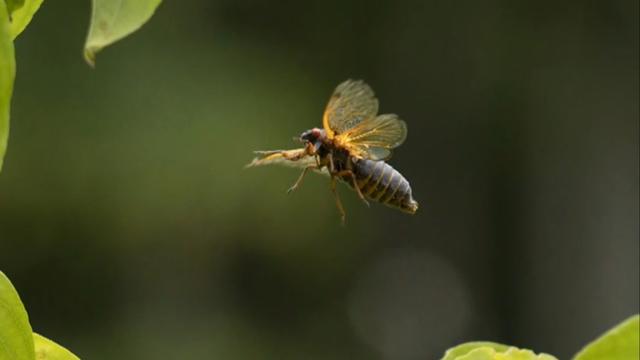
Emerging cicadas are so loud in one South Carolina county that residents are calling the sheriff's office asking why they can hear a "noise in the air that sounds like a siren, or a whine, or a roar." CBS News' John Dickerson has details.

More than 100 nations have agreed to protect 30% of the world's oceans by 2030. One way of doing this is to create what are known as Marine Protected Areas, where human activity is restricted or banned. Ben Tracy reports on how a mix of AI and satellite vessel tracking data can help.

Cancer, heart disease, respiratory illnesses and kidney dysfunction among the health consequences of a warming planet.

60 Minutes traveled to Madagascar in 2012 to report on efforts being made to save endangered turtles and tortoises, including the plowshare tortoise, a species that remains at risk of extinction due to poaching for the illegal pet trade.
More than 100 nations, including the United States, have agreed to protect 30% of the world's oceans by 2030.
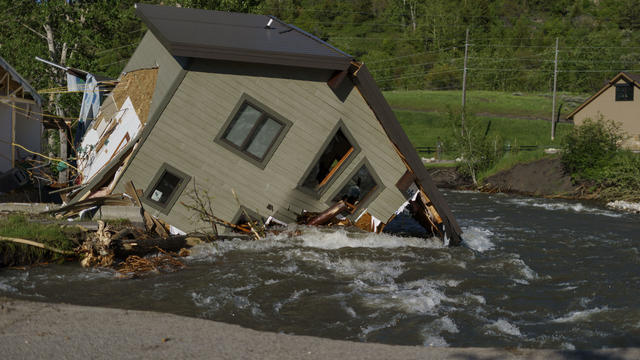
People who have experienced extreme weather are especially likely to say climate change needs to be addressed right away.
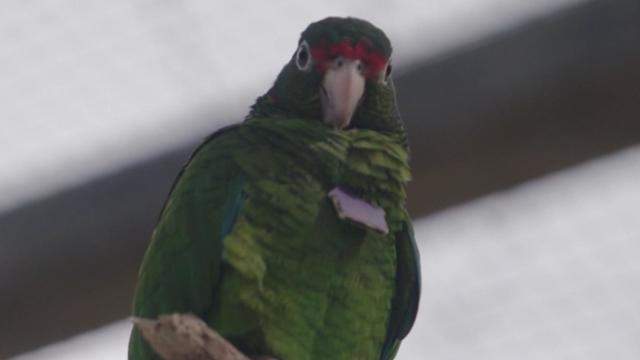
Some of the most critically endangered birds on the planet have been released back into the wild. CBS News national environmental correspondent David Schechter has more on the harsh conditions Puerto Rican parrots face, and the people working to save them.

Greenhouse gas emissions continued increasing in 2023, according to new data from the National Oceanic and Atmospheric Administration. CBS News' Elaine Quijano breaks down the numbers and what they mean for the climate.
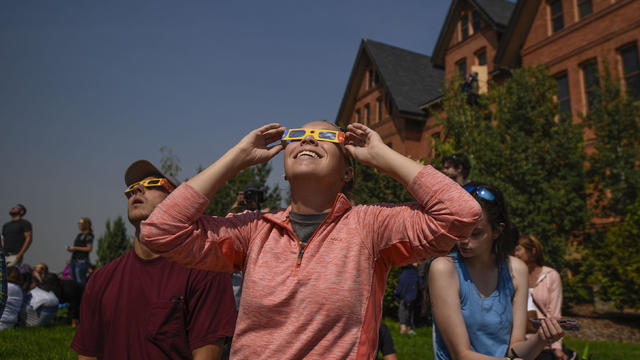
How often do total solar eclipses, like the one on April 8, occur? It was the first in the U.S. since 2017, and the nation won't get another until 2044.
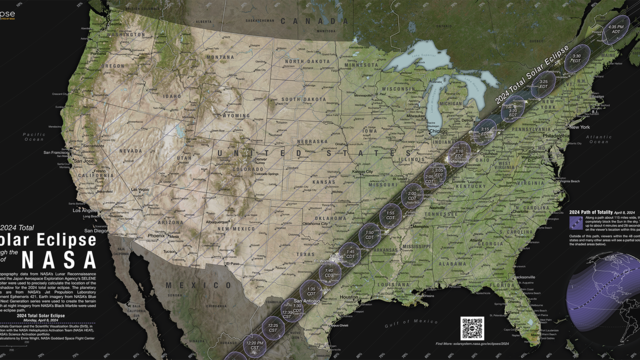
Astronomy fans figuring out where and what time to see the April 8, 2024, total solar eclipse could check out maps showing the path of totality.

Clouds obscured the view for most of the total solar eclipse as it darkened the skies in Niagara Falls, New York. CBS News New York's Kristine Johnson and a family visiting from Atlanta react to the moment clouds parted and revealed the end of totality.

As the solar eclipse reaches totality in Mexico, Texas will become the first U.S. state to witness the celestial event. Bill Nye joins CBS News' Janet Shamlian, Norah O'Donnell and Tony Dokoupil with advice on how to make the eclipse memorable.

Parts of Texas are witnessing totality during the 2024 solar eclipse Monday. CBS News correspondent Janet Shamlian is with thousands of people who gathered to see the moments of darkness in Kerrville, Texas.

Spectators in Cleveland, Ohio, saw the total solar eclipse around 3:15 p.m. ET as the moon covered the sun for a little more than three minutes. CBS News' Dave Malkoff witnessed the event with Stephen Bowen, a NASA astronaut and retired U.S. Navy captain.

Thousands gathered in Dallas, Texas, to experience the total solar eclipse through a partly cloudy sky. CBS News' Omar Villafranca witnessed the event at the Cotton Bowl Stadium surrounded by young Americans experiencing the celestial event for the first time.

A solar eclipse happens when the moon passes between the Earth and the sun, casting a shadow blocking out the sun's light. CBS News' Lana Zak is in Indianapolis, Indiana, and Jim Free, NASA's associate administrator, joins CBS News with more on what viewers should look for when experiencing the eclipse.

A total solar eclipse is moving its way across North America Monday. CBS News' Norah O'Donnell, Tony Dokoupil and Bill Harwood are watching the celestial event from Indianapolis as totality takes over Mazatlán, Mexico. Also, astronomer Lucianne Walkowicz explains how scientists are using the opportunity to study the sun during the eclipse.

Around 50,000 people gathered in Indianapolis, Indiana, at the Indianapolis Motor Speedway to experience the total solar eclipse. CBS News' Norah O'Donnell and Tony Dokoupil could see other planets in the solar system during the celestial event.

Americans across the heartland are awaiting a total solar eclipse Monday that can be seen from parts of Texas through Maine. CBS News' Dave Malkoff, Omar Villafranca and Tony Dokoupil are witnessing gatherings for the celestial event around the U.S., and Dr. Kelly Korreck, NASA's solar eclipses program manager, breaks down how to watch the eclipse safely.

During Monday's total solar eclipse, the moon will travel 8,000 miles closer to the Earth than it did during the 2017 solar eclipse. CBS News' Lana Zak, Dave Malkoff and Jason Mikell have a preview of the celestial event.