Transcript: Alexander Yui, Taiwan's representative to the U.S., on "Face the Nation with Margaret Brennan," May 17, 2026
The following is the transcript of the interview with Ambassador Alexander Yui, Taiwan's representative to the U.S., that aired on "Face the Nation with Margaret Brennan" on May 17, 2026.
MARGARET BRENNAN: We turn now to Ambassador Alexander Yui, Taiwan's representative to the United States. Ambassador, good to have you here in person. There hasn't- there hasn't been a call between an American president and a leader of Taiwan since 1979, but President Trump indicated to reporters there might be one coming. Is there a call planned with President Lai?
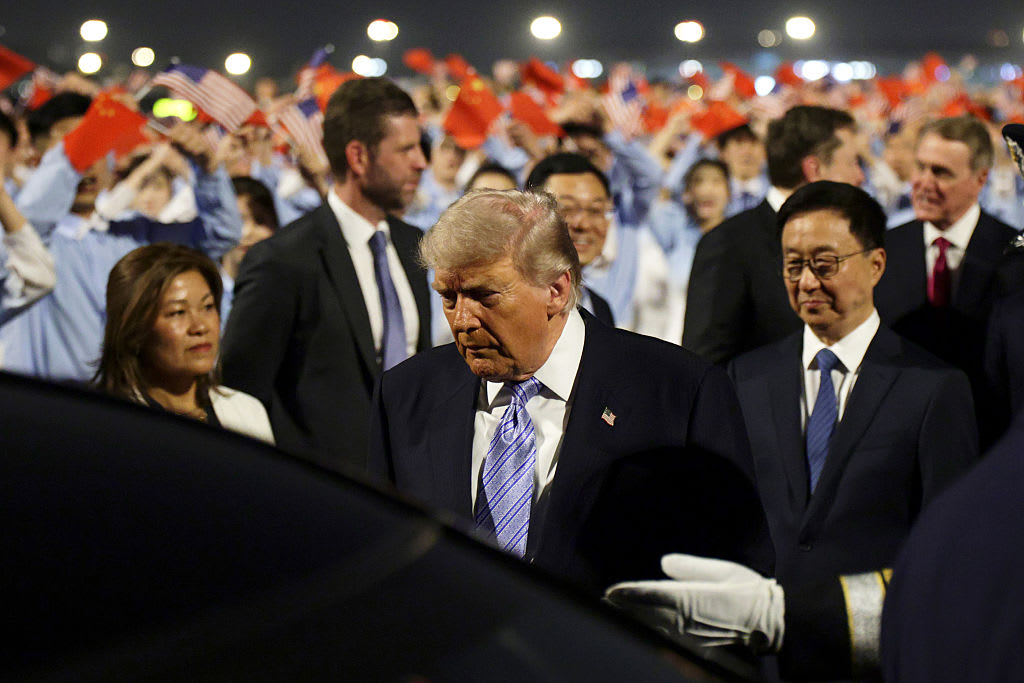
ALEXANDER YUI, TAIWAN REPRESENTATIVE TO THE UNITED STATES: Well, we'll see, but President Trump, when he was in Beijing for the last two days, he mentioned that he heard a lot about Taiwan, you know, he heard a lot about Taiwan those two days in Beijing. But the problem is he heard only their side of the story, you know, he heard the Chinese story, or as I would say in Spanish, el cuento chino. I think he, if he has time, would love to tell him our side of the story, the Taiwan story, which is one that of resiliency, of a state staying up against the Chinese aggression. This has been going on for 77 years. This is not something that just happened when the DPP, the current ruling party in Taiwan, came to power. This has been going on for 77 years, since the inception of 1949 when they became a People's Republic. So this is not a recent thing, as if we are the ones creating problems. It is China- People's Republic of China, creating all this problems--
MARGARET BRENNAN: -- So no call scheduled yet?--
YUI: Well, the communication between Taiwan and U.S. is constant, it's current. But I'll leave it to the U.S. to announce anything. If it happens.
MARGARET BRENNAN: It would be a big deal. He did speak to a past president as president-elect.
YUI: Yes, with President Tsai, yeah, 2015-16.
MARGARET BRENNAN: That's right. So, China refers to your president as a separatist, in part because Lai has talked about being a "practical worker for Taiwan independence." In an interview with Fox News, President Trump said he's not looking to have somebody say let's go be independent because the United States is backing us. Does Taiwan have any intention of declaring independence formally from China?
YUI: Well, let me first say that President Trump and Secretary Rubio have been very categorical during their visit to Beijing, publicly stating that there's no change, United States' longstanding position in Taiwan, which we want to express our appreciation for upholding this position. What is meant by Taiwan independence? My president just made a statement recently, just now, and it means that Taiwan is independent from the Chinese aggression, from the PRC, actually. The formal name of my country is Republic of China, and we're not subordinate to the People's Republic of China, in any way, at all, and that's maintaining our sovereignty, our way of life, our democracy, our- our vibrant economy, our high-tech production.
MARGARET BRENNAN: Yeah.
YUI: And that is, that is- what is meant by independence. We are sovereign, independent away from the Chinese People's Republic of China's attempt to swallow us as one of their own. They have never ruled or controlled Taiwan, ever.
MARGARET BRENNAN: Yeah.
YUI: So that's- that's- that is meant by independence.
MARGARET BRENNAN: What President Trump, though, said- he wants Taiwan to cool it. He also wanted China to cool it. That seems to indicate that perhaps he was listening to Xi Jinping's version of events and might have been persuaded?
YUI: Well, that's why I, you know, if- we'd love to, given our part of the story--
MARGARET BRENNAN: Yeah.
YUI: Not just listen to cuentos chinos, but- but I think that's a statement of saying he wants status quo, President wants status quo, President Trump. That he wants no change in this- in the Taiwan Straits, neither through economic or military coercion, and that the peace and stability of the Taiwan Straits is good for all parties concerned. And that's the position that Secretary Rubio mentioned during his interview, and that's the one that we also long for. We have been a responsible member of- of Taiwan's Straits. We want to strive for peace and stability. You know, President Trump doesn't want a war 9,500 miles away.
MARGARET BRENNAN: That's what he said.
YUI: We- we don't want a war. We want peace and stability. We want to have our lives going on as- as usual, but we're not the ones creating all this trouble, and that's why you know it's like we- our house, those are intruders trying to get into our house, we're trying to beef up our security system. And then they complain, the intruder complains that because we're trying to improve our security system it's making his job harder.
MARGARET BRENNAN: Right. No, I hear your point. And on paper, President Trump's administration has pledged near record amounts of defensive weapons and sales to Taiwan, but the deliveries haven't really been happening. And in Beijing, President Trump told Fox he's going to hold on to the latest weapons sale that Taiwan sought to purchase this year and use it as a negotiating chip with China. What impact will that have on your ability to deter China if you don't get those weapons?
YUI: Well, exactly. If we don't- if we want to prevent a war from happening, I think it's best that Taiwan is strong, able to defend itself, and therefore we should be able to acquire- to buy the arms that we need to have a stronger defense, you know. We- we also abide, we believe in peace through strength, so actually it makes more sense for United States to sell us the arms, so we can defend ourselves, and so you don't have to send your army 9,500 miles away to defend us.
MARGARET BRENNAN: Well, the so-called Six Assurances that the U.S. gave to Taiwan back in the Reagan-era included a pledge not to cut off arms sales to Taiwan and of no prior consultation with Beijing on such sales, but this is what the President told reporters about his discussion with Xi. Take a listen.
[SOUND ON TAPE STARTS]
PRESIDENT DONALD TRUMP: So, what am I going to do? Say I don't want to talk to you about it, because I have an agreement that was signed in 1982? No, we discussed arm sales.
QUESTION: What's his request?
TRUMP: We discussed the Taiwan, you know, the whole thing with the arms sales, it was in great detail, actually, and I'll be making decisions
[SOUND ON TAPE ENDS]
MARGARET BRENNAN: In "great detail." Did that violate America's commitment to Taiwan?
YUI: Well, again, but President Trump has also been very clear in saying that he did not agree on anything that the Chinese side--
MARGARET BRENNAN: --But he did say he's going to hold onto those weapons. And not give them--
YUI: But he didn't say he agreed to anything. So, again, the United States government has been consistent throughout all administrations since 1979 in providing arms to Taiwan, according to a Taiwan Relations Act, which is selling ours commensurate to the threat that Taiwan receives. And past administrations, including President Trump's first term, made considerable amounts of sales, including the F-16 box 70s. And also in his second administration last year, he made two sales to Taiwan. Also, again, the last one also very considerable amount of money on arms sales. So, we believe again that having arms sales continue to Taiwan is in the interest of United States and Taiwan, to keep peaceful and stable Taiwan Straits.
MARGARET BRENNAN: Well, we will try to ask the administration for updates on when those deliveries might happen. But thank you very much, Ambassador.
MARGARET BRENNAN: Face the Nation will be back in a minute. Stay with us.