NTSB describes LaGuardia Airport runway crash cockpit audio. Here's the latest on the investigation.

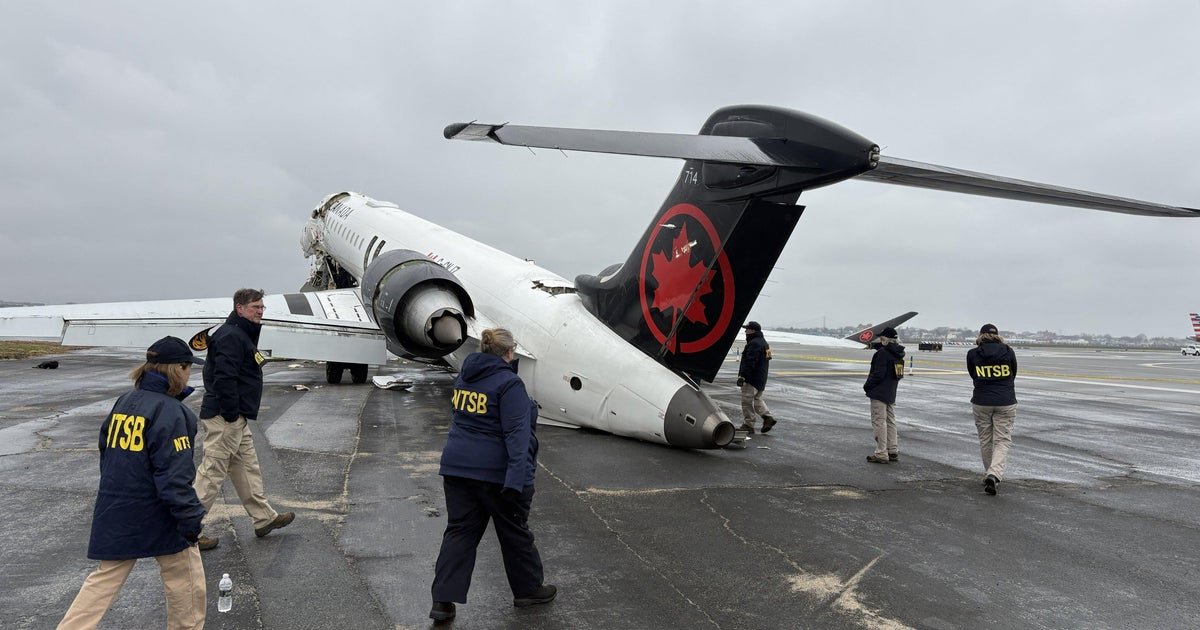
The National Transportation Safety Board on Tuesday released new details on its investigation into Sunday's deadly collision at LaGuardia Airport, as the runway where the crash happened remains closed.
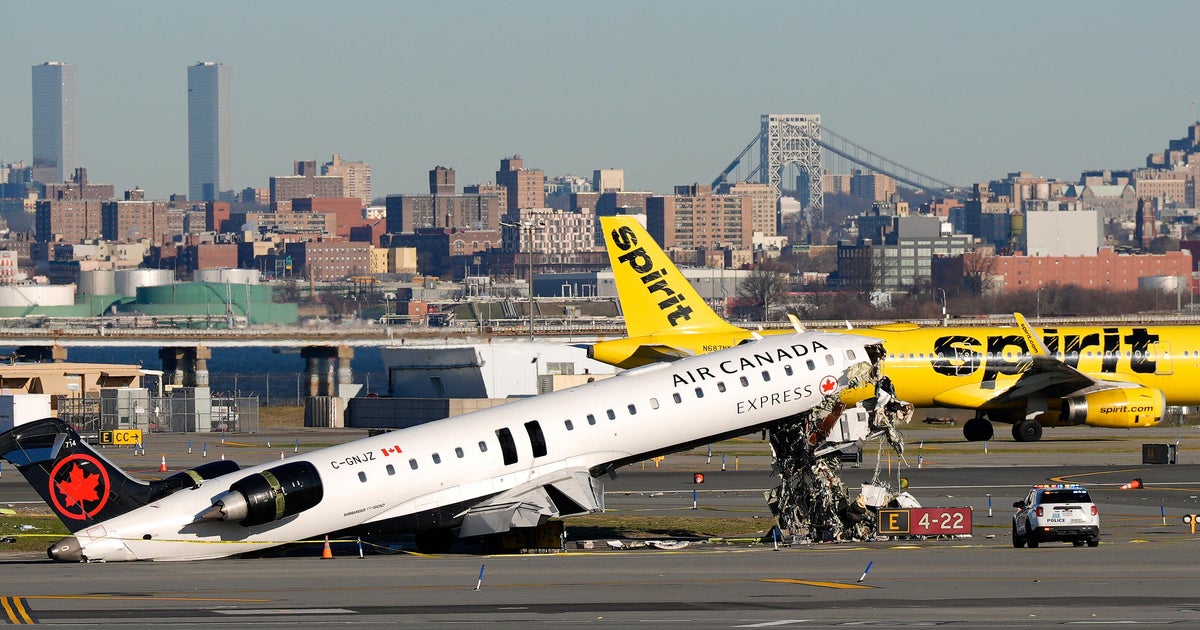
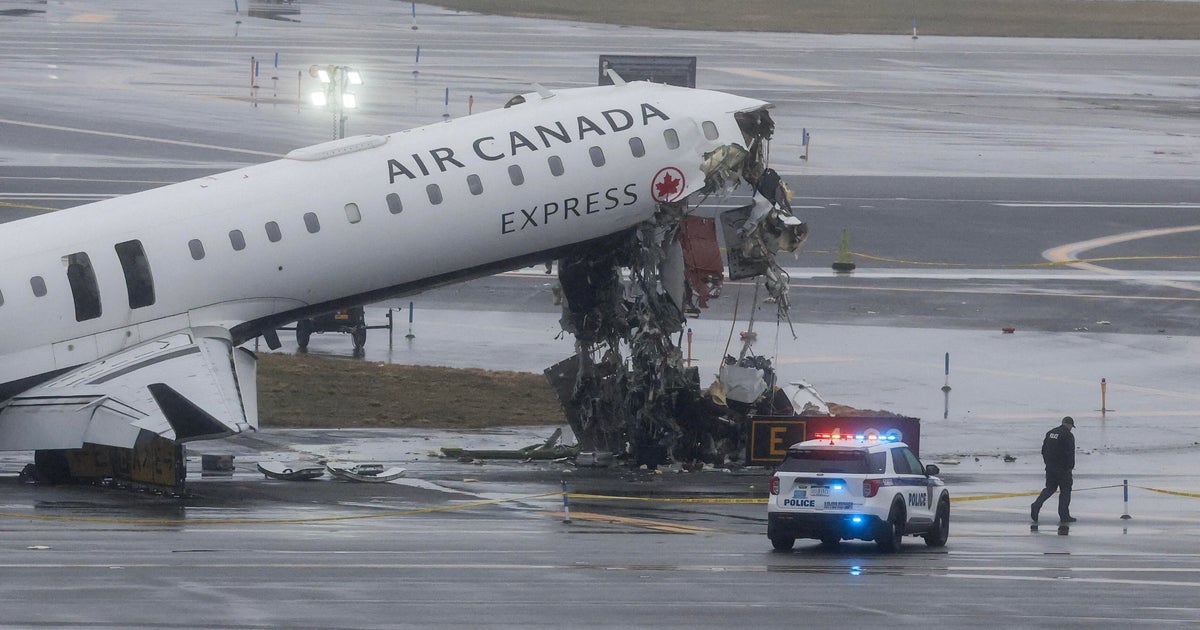
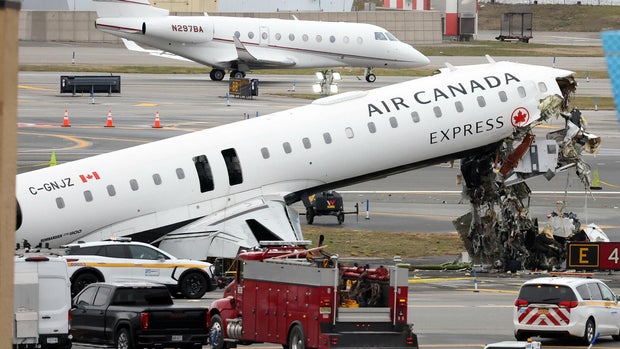
The Air Canada Express plane and the Port Authority of New York and New Jersey fire-rescue truck that collided are still at the scene, both heavily damaged.
Sources said the plane, which originated from Montreal with 72 passengers and four crew members on board, was going about 100 mph at the time of impact.
The cockpit voice recording
NTSB investigator Doug Brazy gave a breakdown Tuesday of the final three-plus minutes of the cockpit voice recording, which revealed conversations between the tower and the pilots of Flight 8646, and the tower and Port Authority truck on the tarmac. The recording stopped nine seconds after the collision.
Counting down from 3:07, investigators explained how the pilots completed normal tasks in preparation for landing, including setting flaps and receiving notifications on decreasing elevation on approach. With 1:12 left on the recording, the flight crew acknowledged that it has completed the landing checklist.
With 40 seconds left, "Truck 1," or the Port Authority fire-rescue truck, begins conversing with the tower. Fifteen seconds later, the truck requests to "cross Runway 4 at taxiway Delta." Five seconds after that, the tower gives the truck clearance to cross, all while the Air Canada plane is within 100 feet of the runway and closing.
With nine seconds left on the recording, the tower instructs "Truck 1" to stop.
Controllers in the LaGuardia tower
NTSB Chair Jennifer Homendy revealed that at the time of the collision there were people on duty in the LaGuardia tower, adding that information is preliminary and many interviews still need to be conducted to find out how many certified professional controllers were in the facility.
"There were two people in the tower cab at the time of the collision, the local controller and the controller in charge," Hormendy said. "The local controller manages active runways and the immediate airspace surrounding the airport. That local controller had signed on at 10:45 [p.m.] and the shift would have ended at 6:45 a.m. That doesn't mean that he was in position at 10:45, but that he had just signed in at 10:45 p.m."
Homendy said the controller in charge is responsible for all safety of operations, adding he signed in at 10:30 p.m. and would have completed his shift at 6:30 a.m. She also said the controller in charge was also doing the duties of the clearance delivery position, which provides pilots with their departure clearance.
One thing the NTSB has not yet determined, is who was in charge of movement on taxiways at the time of the accident.
"It is not clear who was conducting the duties of the ground controller. We have conflicting information. We have some information saying it was the controller in charge. We have some information saying it was the local controller. The ground controller duties are they manage all aircraft and vehicle movements on the taxiways and that generally excludes active runways," Homendy said.
Homendy addresses possible controller fatigue and distraction
She said the combination of the two positions "is in the standard operating procedures for LaGuardia, for the midnight shift. It is also common practice along the national airspace, where you would have two controllers in the tower cab during the midnight shift."
Homendy said the midnight shift is often one that is scrutinized for fatigue, but she made clear she was not saying that was the case Sunday night.
Hormendy also cautioned the media about fixating on distraction.
"This is a heavy workload environment," Homendy said, adding, "We rarely, if ever, investigate a major accident where it was one failure. Our aviation system is incredibly safe because there are multiple, multiple layers of defense built in to prevent an accident. So when something goes wrong, that means many, many things went wrong."
The ASDE-X surveillance system
Homendy then went into the Airport Surface Detection System Model X, or ASDE-X, surveillance system that uses radar and ground-based sensors to track surface movement of aircraft or other vehicles on the tarmac. In theory, the system should have alerted the controller that there was a possible runway incursion, in this case the Port Authority truck. However, Homendy, reading the analysis to reporters, said it did not.
"ASDE-X did not generate an alert due to the close proximity of vehicles merging and unmerging near the runway, resulting in the inability to create a track of high confidence," she said.
Air Canada pilots identified
The flight's pilot and co-pilot were killed and more than 40 others were hurt, including firefighters. The airport was shut down until 2 p.m. Monday, when one runway reopened. Although flights have resumed, the airport is still rebounding from a massive number of cancellations and delays.
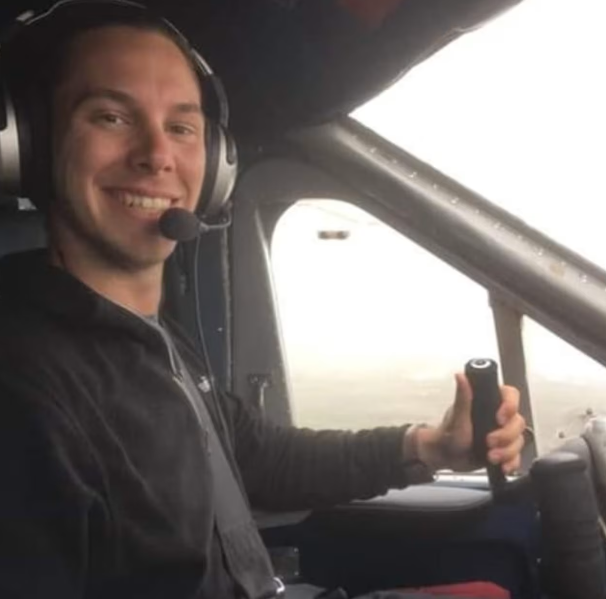
The pilot and co-pilot, or first officer, have been identified as Antoine Forest, 30, a native of Quebec, and Mackenzie Gunther, officials announced on Tuesday.
Crew member Solange Tremblay remains hospitalized after being found strapped to her seat outside the plane. She apparently fell through an opening in the aircraft after the cockpit was severed. She is expected to survive.
Many of the 43 victims were taken to Elmhurst Hospital in Queens, and at least 32 were released Monday.