Advanced DNA testing can be used in accused Gilgo Beach serial killer Rex Heuermann's trial, a first in N.Y. state


A judge in the Gilgo Beach murders case ruled Wednesday that cutting-edge advanced DNA testing can be used in Rex Heuermann's upcoming trial on Long Island.
It marks the first time such evidence could be admitted in a New York court, and sets a new precedent for courts statewide.
The defense immediately challenged the judge's decision, claiming it violates public health law because the lab that conducted the testing is not licensed in New York.
The judge will rule on that challenge on Sept. 23.
The families of some victims were in the courtroom, along with Asa Ellerup, Heuermann's ex-wife.
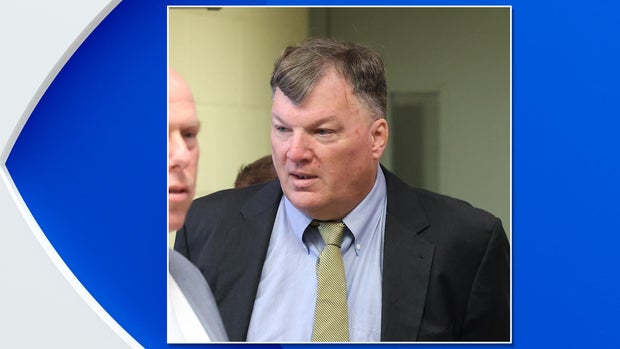
Heuermann entered the courtroom under heavy guard and with a new haircut.
The judge's 27-page decision is considered a major victory for Suffolk County prosecutors. Astrea Forensics connected Heuermann, his ex-wife and his adult daughter, Victoria, to nine hair strands found on the remains of six of the seven victims.
"While relatively new... the principles used are accepted as reliable in the scientific community," the judge wrote.
The defense had argued the method of genome testing from "degraded, rootless hairs" is inaccurate and inconclusive.
"[Heuermann] was disappointed. He sat through the hearing. We disagree with the court's decision," defense attorney Michael Brown said.
"The science was on our side, and that's why won," Suffolk County DA Ray Tierney said.
What is whole genome sequencing?
Investigators used what's known as whole genome sequencing, which can extract DNA from degraded samples.
In layman's terms, it allows old, rootless or poor-quality hair strands to be used to identify a suspect if thousands of small locations on the DNA match up.
"Rather than look at 24 to 27 areas of the DNA, which is what we typically do in forensic cases, we look at thousands, tens of thousands, hundreds of thousands of different variations in the DNA," explained Michael Marciano, director of research for Syracuse University's Forensic and National Security Sciences Institute. "If you think about your DNA, a lot of people see it as a sequence of letters. We're looking for differences in those letters.
"We share most of our DNA with each other. We're looking for those differences, and those differences can provide information as to the identity of an individual," he continued.
Heuermann's attorneys have criticized the process, calling it "magic," but prosecutors say it's commonly used throughout forensic science. It's already used in health care and to exonerate or identify people, but not in murder cases.
"It's not widespread, but this could be one of those critical moments in moving forward in forensic DNA analysis that brings this to the mainstream," Marciano said.
The judge held a series of what are called Frye hearings to hear arguments about the possible use of this DNA testing over the past several months, during which both sides called witnesses, doctors and other experts to make their case.
The founder of the California lab that extracted the DNA testified it's widely accepted science. Dr. Richard Green said law enforcement has referred hundreds of cases to his lab to identify human remains, and that Suffolk County, alone, had spent $130,000 on the Gilgo cases.
"This decision and litigation marks a significant step in forensic DNA analysis," Tierney said.
"This is as monumental of a ruling as you get. This has the potential of totally revolutionizing DNA evidence to an already very sophisticated and complicated investigative tool, adding to law enforcement's ability to investigate evidence," added Anthony La Pinta, a law professor and defense attorney.
DNA evidence in Gilgo Beach murders case
Heuermann is charged in the murders of seven women, dating to 1993. The remains of 11 people were discovered around Gilgo Beach in 2010 and 2011, and investigators believe he may be linked to more killings.
He was arrested in July 2023 and was hit with additional charges last June and December.
Prosecutors say DNA testing matched Heuermann to hairs that were found on belts, tape and burlap around his alleged victims. Shortly after his arrest, the district attorney's office announced DNA from a discarded pizza box linked him to hair found on one of the victims.
There is plenty of additional evidence in the case, prosecutors say, including a document allegedly written by Heuermann, internet searches, his vehicle, a witness, and pings on burner phones. The murders took place while his family was out of town.
Heuermann has denied it all, and wants to go to trial.
"There's no plea deal. There's no plea. I stood in front of you folks from day one, we are preparing for trial," Brown said.