Poisoned Russian opposition leader released from German hospital
It's not yet clear whether Alexei Navalny could suffer long-term effects from the Novichok nerve agent, but he's already back to mocking Putin.
Watch CBS News
It's not yet clear whether Alexei Navalny could suffer long-term effects from the Novichok nerve agent, but he's already back to mocking Putin.

China's Xi Jinping responded to President Trump's comments about the coronavirus and warned that China will not "engage in zero sum game."

Alexei Navalny, still hospitalized in Germany after poisoning with a Novichok nerve agent, says Russia kept his clothes, which are "very important" evidence.

FBI Director Christopher Wray says that Russia is making "very active efforts" to interfere in the 2020 presidential election. The comments came during testimony before a House committee, and differ from those made by President Trump and other officials, who have been downplaying the threat on election security. Evan McMullin, a former Central Intelligence Agency officer, joined CBSN's Lana Zack to discuss.
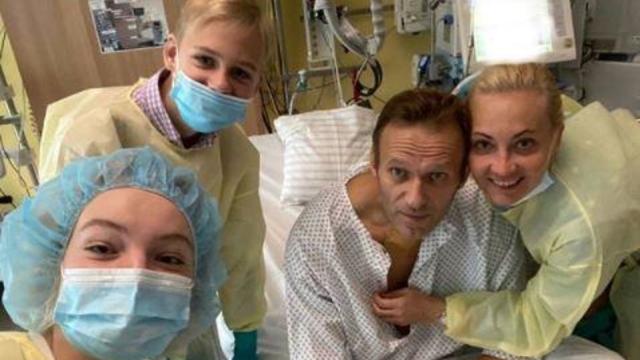
Associates of Vladimir Putin's biggest critic say he was likely poisoned with Novichok by way of a water bottle in his hotel room.
As the opposition leader recovers from a nerve agent attack, and his spokeswoman says there's no reason to think he won't return to Russia.

The embattled leader of Belarus, Alexander Lukashenko, met with Russian President Vladimir Putin for the first time since political unrest broke out over his reelection. CBS News foreign correspondent Chris Livesay has more on what the two leaders discussed.

Tensions are rising in Belarus after the country's embattled leader Alexander Lukashenko held talks with Russian President Vladimir Putin. This comes as massive protests grip the country following last month's highly contested election. CBS News foreign correspondent Chris Livesay joins CBSN with the latest developments.

Russian President Vladimir Putin met with Belarusian President Alexander Lukashenko for the first time since political unrest began last month in Belarus. CBSN's Tanya Rivero spoke with CBS News foreign correspondent Chris Livesay about Monday’s meeting in Sochi.

As hundreds more protesters are arrested, authoritarian leader Alexander Lukashenko is depending on Russia to keep him in power.

Doctors in Germany say Russian opposition leader Alexei Navalny is no longer on a ventilator, as labs in Sweden and France back Novichok finding.

Article says opposition leader Alexei Navalny talking again after Novichok poisoning, which Pompeo says there's a "substantial chance" top Russian officials ordered.

Former FBI deputy assistant director Peter Strzok says he and others are aware of classified information that could hurt the 2020 Trump campaign if it became public. Strzok led the FBI's 2016 investigation into Russian election interference before he was ousted. His new book, "Compromised: Counterintelligence and the Threat of Donald J. Trump" details his time at the FBI and his concerns about what the U.S. currently faces. He joined CBSN to discuss.
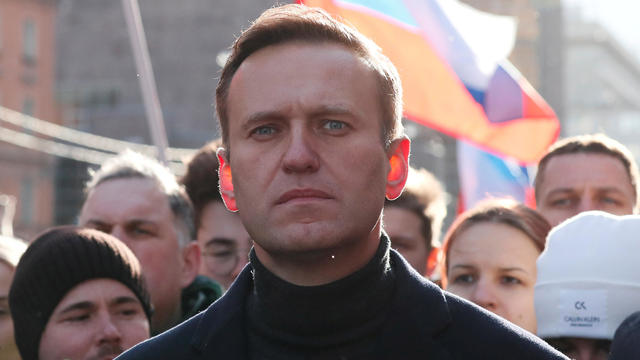
Under mounting pressure from the U.S. and its allies over the suspected poisoning of opposition leader Alexei Navalny, Kremlin calls it all "hysteria."

Vladimir Putin has vowed once again to come to the rescue of his ally, Syrian President Bashar Assad.
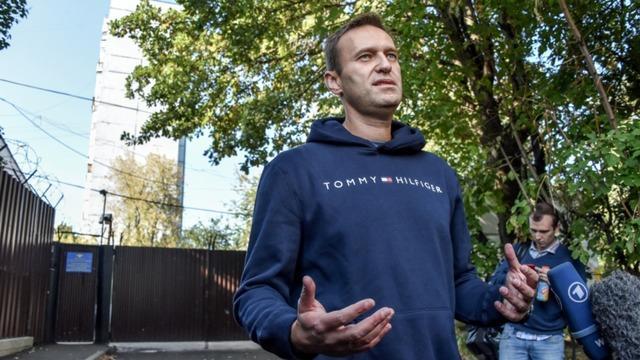
The United Nations is demanding a full investigation into the apparent poisoning of Alexei Nalvany, a prominent critic of Russian President Vladimir Putin. Navalny is finally out of a medically induced coma at a hospital in Germany. Investigators believe his tea was spiked with a Soviet-era nerve agent. CBS News foreign correspondent Charlie D'Agata joins CBSN from London with the latest developments.

Russian Prime Minister Mikhail Mishustin arrived in Belarus today for meetings with President Alexander Lukashenko. It is a high-profile show of support for the beleaguered strongman, who is fighting for his political survival after mass street protests. BBC News correspondent Jonah Fisher joins CBSN's Anne-Marie Green from Minsk to talk about the latest developments and the road ahead.

Russian President Putin and Turkey's Erdogan meet Thursday to discuss the escalating fighting in Syria's Idlib province. The national police chief of the Philippines survives a helicopter crash. And scientists hope a new tracking system for locusts prevents a second surge of Kenya's worst plague in 70 years. Gwen Baumgardner rounds up world headlines from London.

The U.S. launched "defensive" strikes against the Taliban in Afghanistan, just days after signing a peace accord; the International Olympic Committee insists the Tokyo Games are on schedule despite coronavirus concerns; and Russian President Vladimir Putin is proposing a constitutional amendment banning gay marriage. CBS News' Rylee Carlson rounds up world headlines from London.

Russia and Turkey have agreed on a ceasefire between their forces in Syria's Idlib province. Even on his third attempt, Israeli Prime Minister Netanyahu is still short of a majority, which could mean an unprecedented fourth election in a row. And a U.K. court ruled that Sheikh Mohammed Al Maktoum, the ruler of Dubai, had two of his daughters abducted, imprisoned and tortured. Gwen Baumgardner rounds up the world headlines from London.
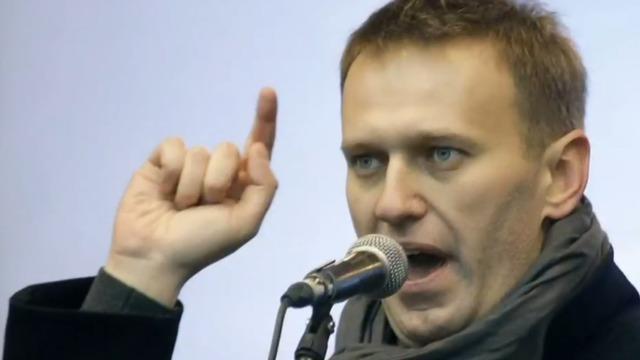
German Chancellor Angela Merkel is calling on President Vladimir Putin to provide answers after confirming that one of the Russian leader's top critics was poisoned. Alexei Navalny was attacked with the same military-grade nerve agent that was used to poison ex-Soviet spy Sergei Skripal in 2018. Former FBI Russia double agent and Naval intelligence officer Naveed Jamali joins CBSN's Lana Zak with expert insight into what appears to be an attempted murder.
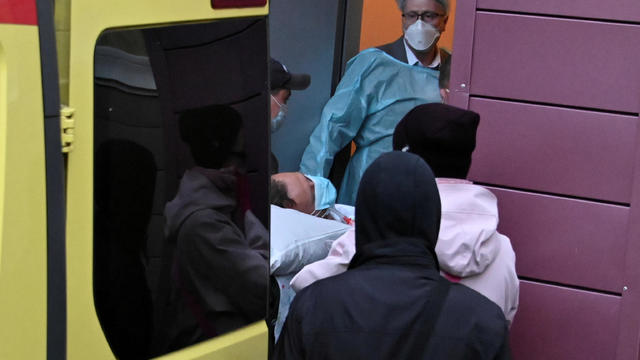
"To poison Navalny with Novichok in 2020 would be exactly the same as leaving an autograph at a crime scene," Navalny's ally tweeted.

On display was the first major demonstration since Russian President Vladimir Putin said last week that he would send in security forces "if necessary."

In the standoff between anti-government protesters and "Europe's last dictator," Putin has offered the dictator his help, if things get "out of control."

Putin's spokesman says it "cannot be true" that Russian officials poisoned Alexei Navalny, and Moscow won't "take it seriously."