Pay for American workers is lagging inflation — again
Roughly three-quarters of Americans say their incomes are lagging behind inflation, according to a CBS News poll.
Recent economic data attests to the dip in so-called real wages. In April, U.S. inflation rose at an annual rate of 3.8% from a year ago, while workers' paychecks grew 3.6% — the first time since 2023 that consumer prices have outpaced wage growth.
That sense of slipping backward, particularly driven by surging gasoline prices, is worsening the affordability challenges facing many people: 76% of survey respondents reported concern about their personal finances, CBS News found.
Some 64% also described the state of the economy as "very bad" or "fairly bad," according to the survey, which was conducted from May 13-15.
"People are looking at higher prices across the board, and their dollar is not carrying them as far as it previously was," Angela Hanks, a former Department of Labor official and currently chief of policy programs at The Century Foundation, a progressive think tank, told CBS News.
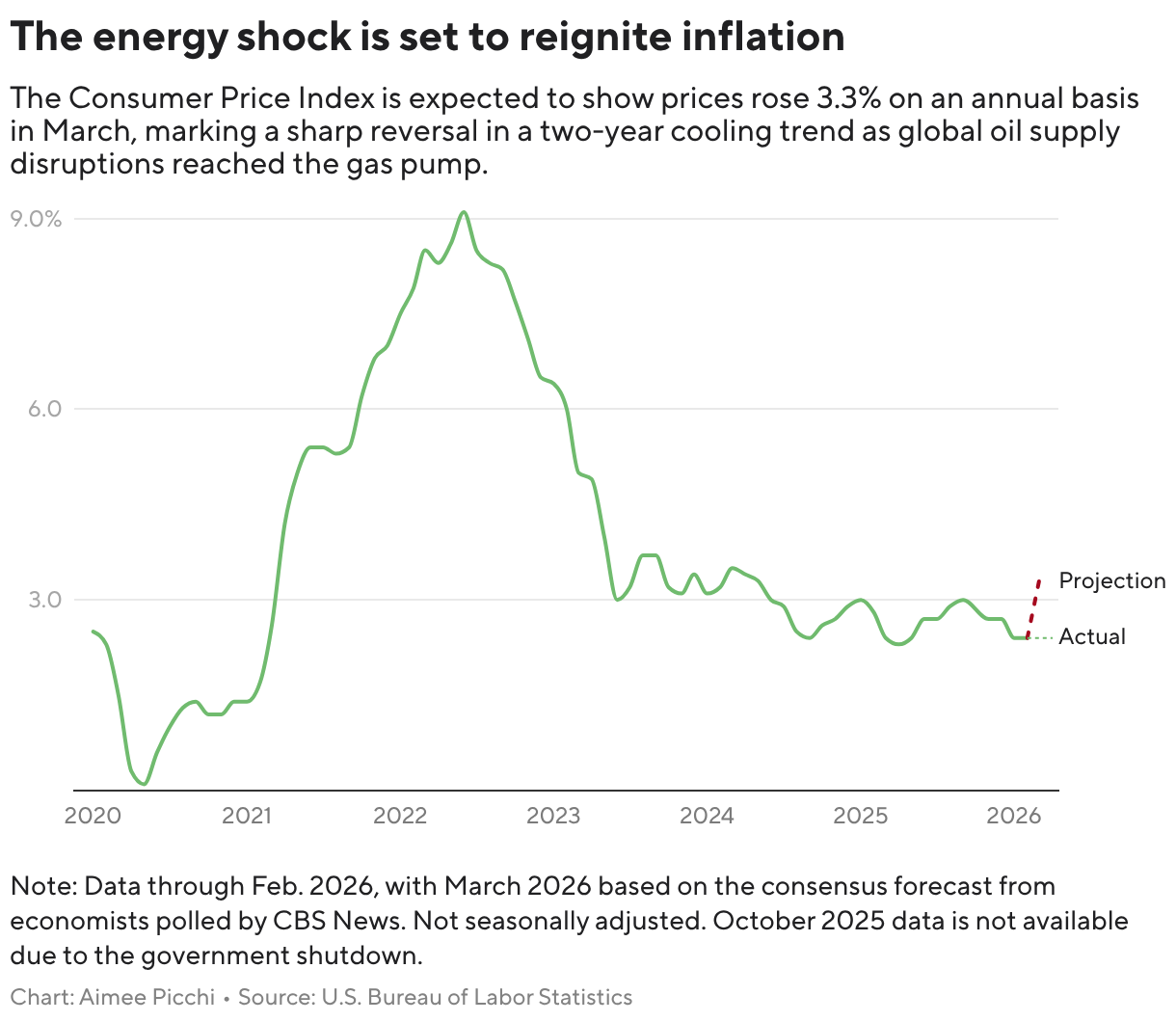
Surging energy prices accounted for 40% of the April inflation spike, labor data showed last week. On an annual basis, gasoline prices jumped more than 28% last month from a year ago. Steeper U.S. tariffs on imports are also contributing to the recent burst of inflation, according to economists.
"In the near term, higher energy prices will push up overall inflation," former Federal Reserve Chair Jerome Powell said on April 29 in his final press conference as head of the central bank. "Beyond that, the scope and duration of potential effects on the economy remain unclear, as does the future course of the conflict itself.
Higher fuel costs are seeping into the price of some consumer goods, Hanks said.
"People are paying more for gas to get to and from work, and it's showing up in how companies are pricing in their costs for consumers as well," she said. "All of those things together create more friction that makes it harder for businesses to hire and for the labor market to maintain its pace."
Consumers bearing the load
Uncertainty over the Iran war makes it hard to predict when inflation might recede, according to some economists.
"There doesn't seem to be any progress in resolving the Middle East conflict, tariffs are still hitting consumers and businesses hard, and cuts to [food stamps] and health care are making life harder for the average household," Gbenga Ajilore, chief economist at the Center on Budget and Policy Priorities, a nonpartisan think tank, said in a statement to CBS News.
Although consumer spending — which accounts for roughly two-thirds of economic activity — has largely held up this year, Ajilore worries that could change quickly.
"At some point, a majority of consumers — not just low-income ones — are going to pull back their spending, and that is going to lead to lower economic growth," he said.