3/11: The Takeout with Major Garrett
Trump says there's "practically nothing left" to target on Day 12 of war in Iran; legislative blockade threatened over SAVE Act.
Watch CBS News
Trump says there's "practically nothing left" to target on Day 12 of war in Iran; legislative blockade threatened over SAVE Act.

Officials are downplaying the risk of Iranian drone attacks against California after an FBI memo said the regime "allegedly aspired" to target the Golden State. CBS News homeland security correspondent Nicole Sganga reports. Then, former FBI Special Agent Jeff Harp joins with analysis.

Iran is amplifying pressure on the Strait of Hormuz, the key choke point in the Middle East where 20% of the world's oil passes through. CBS News national security analyst Aaron MacLean has more.

The Strait of Hormuz sees roughly 20% of the world's oil flow through it, and tankers are stalled on both sides of the narrow chokepoint amid suspected Iranian drone attacks, rattling oil markets. Mike Sommers, president and CEO of the American Petroleum Institute, joins "The Takeout" with analysis.

Rep. Adam Smith of Washington state, the ranking Democrat on the House Armed Services Committee, opposes the war in Iran and wants Congress to be much more involved in policymaking. Smith joins "The Takeout" with his perspective.

Republican Rep. Don Bacon of Nebraska is generally supportive of President Trump's war aims, but, like many in the House GOP, is uncertain about how the war will end, the direction of oil prices and future inflation risks. Bacon joins "The Takeout" to discuss how he thinks the conflict is going so far.

Sen. John Fetterman of Pennsylvania says he's the only Democratic voice in the Senate backing President Trump's decision to go to war with Iran. Fetterman joins "The Takeout" to discuss his stance, how he hopes to end the partial government shutdown and more.

Dozens of U.S. forces suffered brain trauma and shrapnel wounds after a fatal attack in Kuwait, sources say. CBS News senior national security correspondent Charlie D'Agata has the details.

Suspected Iranian drones hit at least three ships in and around the Strait of Hormuz overnight as fighting in the vital shipping lane escalates. CBS News chief correspondent Matt Gutman reports from Tel Aviv, Israel.

Sources told CBS News that dozens of U.S. service members suffered serious injuries, including shrapnel wounds and brain trauma, in an Iranian drone strike on a tactical operation center in Kuwait on March 1. Six U.S. troops were killed in the same attack. Former CENTCOM Commander General Joseph Votel joins CBS News to discuss.

The International Energy Agency agreed Wednesday to release 400 million barrels of oil from its strategic reserves to alleviate the shortage caused by the Strait of Hormuz shutdown. CBS News MoneyWatch correspondent Kelly O'Grady has the details.

President Trump on Wednesday spoke about the Iranian military targets the U.S. has hit over the course of the war. CBS News chief White House correspondent Nancy Cordes reports.

CBS News has obtained an FBI bulletin warning law enforcement agencies in California that Iran "allegedly aspired" to launch drones along the West Coast. CBS News Bay Area reporter Katie Nielsen has the details. Then, former FBI Special Agent Jeff Harp joins with analysis.

Dozens of U.S. service members suffered serious injuries in Kuwait as the war with Iran began, including shrapnel wounds and brain trauma, multiple sources told CBS News. Aaron Navarro has more.

The Trump administration briefed the Senate Armed Services Committee on Tuesday about Operation Epic Fury, but questions loom around the White House's justification for the Middle East conflict. CBS News' Aaron Navarro has more.

Suspected Iranian drones hit ships near the Strait of Hormuz on Wednesday as U.S.-Israeli forces continued operations against Iran. CBS News foreign correspondent Holly Williams has the latest.

Tehran's pollution levels may be more dire as "black rain" threats increase during the war. CBS News' David Schechter reports.

Three ships in the Persian Gulf reported a hit from suspected Iranian drones. It comes as the U.S. steps up attacks on the Iranian navy and both sides fight to control the Strait of Hormuz, a key waterway for global oil supplies. Matt Gutman has the latest.
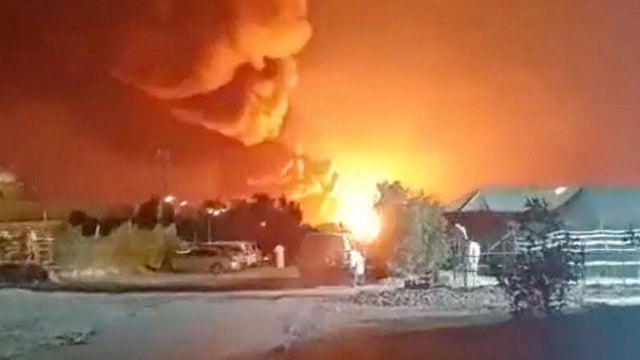
President Trump says the Iran war will end "very soon," but Tehran says it's "prepared to continue attacking" indefinitely, and it won't let oil leave the Gulf.
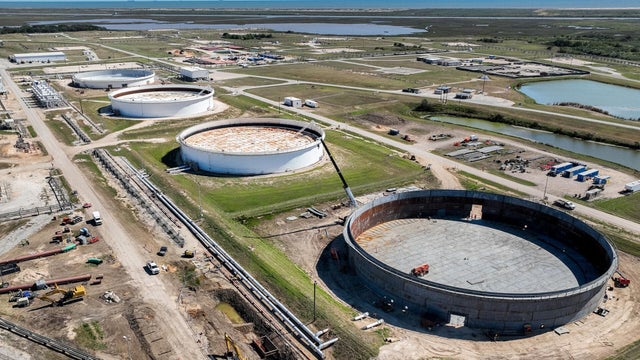
With oil exports through the Strait of Hormuz halted, the International Energy Agency is meeting with G7 countries about whether they should tap their strategic petroleum reserves. CBS News reporter Kati Weis is following the debate.
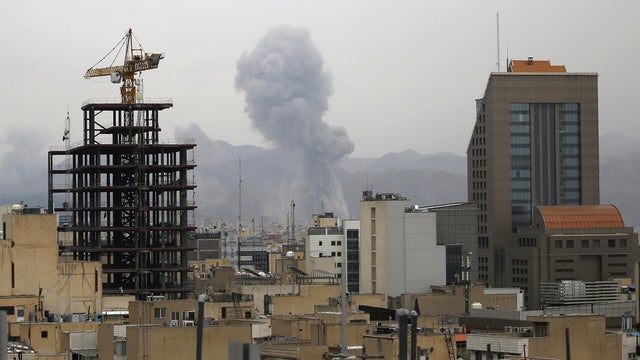
War continues in Iran as Defense Secretary Pete Hegseth promises "most intense day of strikes"; costs of war's first days revealed.

President Trump is offering political risk insurance to any tankers operating near Iran as the Iran war continues. Jatin Dua, director of the Oceans Lab at the University of Michigan, joins "The Daily Report" to discuss.

Warning: Some viewers may find images in this report disturbing. Defense Secretary Pete Hegseth vowed that Tuesday would be the most intense day of strikes against Iran. CBS News' Holly Williams reports on the impact of the war so far and Sam Vinograd has more on the Strait of Hormuz.

Two gunmen fired shots at the U.S. consulate in Toronto, Canada, on Tuesday. No one was injured, and police have not identified suspects or a motive. CBS News national security contributor Samantha Vinograd joins to examine the rise in threats at home and overseas as the war with Iran enters its 11th day.

Strikes across the Middle East continued Tuesday on the 11th day of the U.S.-Israeli war with Iran. Defense Secretary Pete Hegseth promised Tuesday would be the "most intense day" of strikes against Iran, but he still did not indicate how long the fighting might last. CBS News' Eleanor Watson and Olivia Rinaldi report.