New Jersey family who lost 5 loved ones to COVID opens up
The virus spread quickly through their family after they had gathered for a dinner.
Watch CBS News
The virus spread quickly through their family after they had gathered for a dinner.

Dr. Anthony Fauci, President Biden's chief medical adviser, says the U.S. still has a ways to go before it comes out on the other side of the pandemic, but he expressed optimism about the future in an interview with Norah O'Donnell.

A New Jersey family lost five loved ones in the first weeks of the pandemic. They are speaking out for the first time. Nikki Battiste has their story.

Pfizer-BioNtech found that prevention against asymptomatic disease also reached 94 percent.

This will be the president's first prime-time address.

The House is set to vote on the $1.9 trillion COVID-19 economic relief package, which is designed to help millions of Americans in need. Just like in the Senate, the bill isn't expected to get any support from Republicans. CBS News' Debra Alfarone joins CBSN AM with the latest.

March 11, 2021, marks one year since widespread shutdowns began as COVID-19 was declared a pandemic by the World Health Organization. No place in the U.S. was hit harder in the earliest days than New York, which has seen more than 48,000 deaths. Dr. Steven Corwin of New York-Presbyterian Hospital speaks with CBSN's Tanya Rivero to give his thoughts on the pandemic one year later.

"60 Minutes+" correspondent Wesley Lowery joins "CBS This Morning" with a preview of his report on the mental health toll of the pandemic on medical workers. Lowery explains the "Herculean task" we've asked of our doctors and nurses and the long-term mental health impact of the coronavirus pandemic.

It's been one year since the coronavirus pandemic closed the curtain on live theater in the U.S. and around the world. CBSN's Tanya Rivero speaks with CBS News' Broadway contributor Leigh Scheps about the push to bring Broadway back and the challenges shows face.

Australia is slowly returning to a pre-pandemic way of life. The nation's swift actions when COVID-19 first appeared seem to be paying off. CBSN's Tanya Rivero spoke with Ursula Heger, a senior reporter at Network 10 in Australia, about the country's success with the pandemic.

A short film by the New York Times' Opinion is looking at the crucial role nurses have played in the COVID-19 pandemic. "Death, Through a Nurse's Eyes" follows some front-line workers as they work in an Arizona intensive care unit. Lucy King, a senior video journalist for Opinion Video at the Times, joins CBSN's Tanya Rivero to discuss the film.

Rich nations are refusing to waive patents for coronavirus vaccines, despite a push from more than 80 developing countries. CBS News foreign correspondent Debora Patta joins CBSN AM from Johannesburg to discuss the calls for international solidarity in the fight against COVID-19.

President Biden will address the nation tonight, as the world marks one year since the coronavirus was declared a global pandemic. Friday, he's expected to sign his $1.9 trillion relief package into law. CBS News' Debra Alfarone joins CBSN AM with the latest.

Tech companies are working on digital "vaccine passports" that could help the U.S. track people who have received coronavirus vaccines as more businesses and services reopen nationwide. Some researchers believe that this effort could end up further dividing an already fragmented country. Albert Fox Cahn, founder of the Surveillance Technology Oversight Project and a Wired contributor, joined "CBSN AM" to discuss.

President Biden signed his $1.9 trillion American Rescue Plan into law on Thursday, finalizing an early policy achievement that will provide a new round of aid to millions of Americans. After Mr. Biden spoke to reporters in the Oval Office, CBS News chief White House correspondent Nancy Cordes and CBS News political contributor Sean Sullivan joined CBSN to discuss.

We’ve lived with COVID-19 for more than a year now. When will the coronavirus finally disappear? Public health experts say you’re not going to like the answer: Never.

An estimated 12 million women were "unable to access family planning services as a result of the COVID-19 pandemic," resulting in 1.4 million unplanned pregnancies.

After not seeing her family in about a year, Evelyn Shaw was still wary, even after being vaccinated. So, a doctor wrote her a prescription.

President Biden is expected to sign the latest COVID-19 relief bill into law on Friday, sending $1.9 trillion into the economy. Ed O’keefe reports on what that money means for Americans left unemployed by the virus.

Millions of working women have either lost or quit their jobs because of the strain the pandemic has put on the economy and home life. Vanessa Fuhrmans, deputy management bureau chief for the Wall Street Journal, joined CBSN to discuss how women are coping with the pandemic and the long-term effect it could have on their careers.

A new study in Nature Medicine indicates coronavirus patients who felt more than five symptoms in the first week of infection were more likely to become COVID long-haulers. Ann Wallace, an associate professor of English at New Jersey City University, has been living with long-haul COVID-19 for almost a year. She joined CBSN to discuss why those with "long COVID" often feel "invisible and ignored."

Duke had won its first two ACC tournament games, but is just 13-11 overall and 9-9 in conference games.

The year-long coronavirus pandemic has taken a toll on the mental health of medical staff. 60 Minutes+ correspondent Wesley Lowery joined CBSN with more on the struggles frontline workers are now facing.

March 11 marks one year since the World Health Organization declared COVID-19 a global pandemic. Dr. Leo Nissola, a physician and immunotherapy specialist, spoke with Anne-Marie Green and Vladimir Duthiers on CBSN about vaccines, the lessons of the past year and the Centers for Medicare and Medicaid Services' new guidance that people can visit their loved ones in nursing homes.
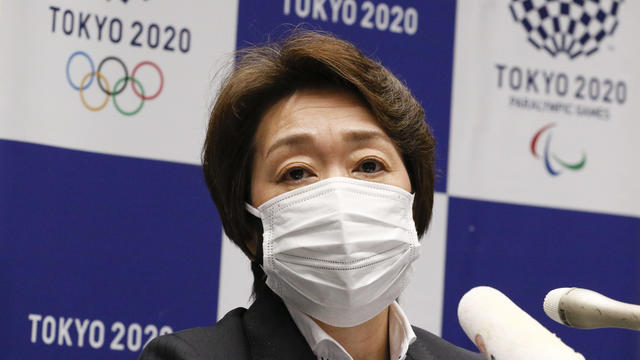
2 days after officials told media outlets spectators from outside Japan wouldn't be allowed amid concerns over COVID-19, the new Olympics boss says it's still being considered.