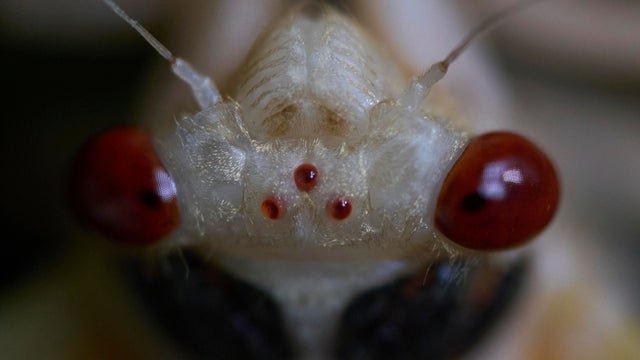
Cicada invasion begins as Brood XIV swarms parts of U.S. See photos.
It is a one-in-17-year event for Brood XIV, which digs its way up from the soil as it warms and descends on neighborhoods in the billions.
Watch CBS News
It is a one-in-17-year event for Brood XIV, which digs its way up from the soil as it warms and descends on neighborhoods in the billions.
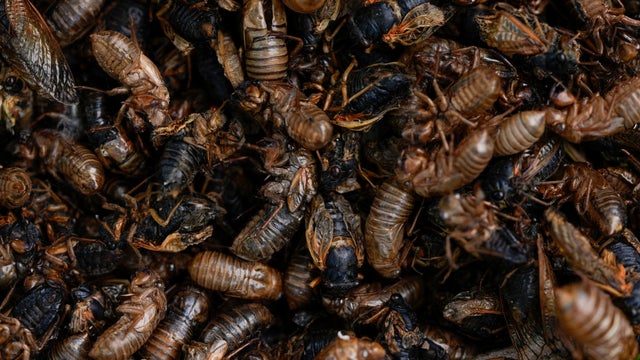
A large brood of periodical cicadas is due to emerge in the spring of 2025. These maps show where people should expect to see and hear the bugs this year.
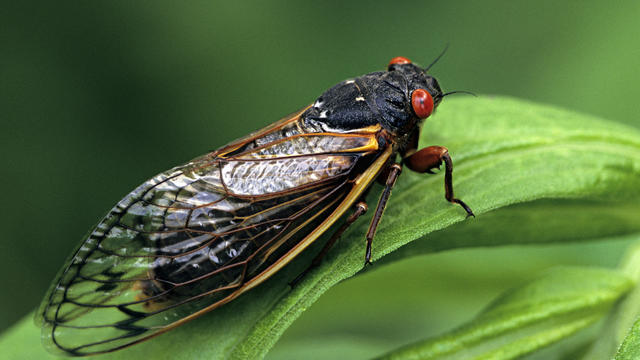
A notably large brood of periodical cicadas will emerge from the underground across parts of the eastern U.S. this spring.

Brood XIV, the second-largest group of periodical cicadas, known for their noisy mass emergence from the ground, will arrive this spring.
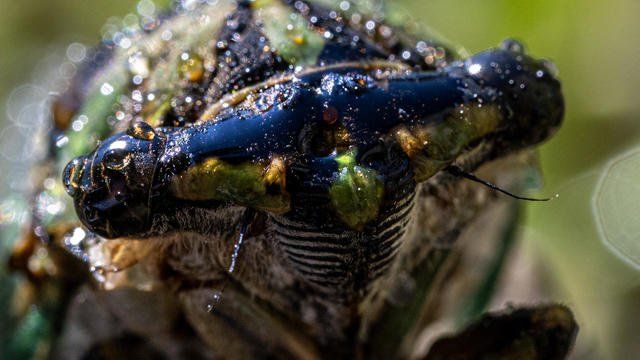
Hundreds of thousands of the tiny wind-soaring and itch-inducing critters can fall from trees every day and are packed with a venom that can paralyze prey 166,000 times their size.
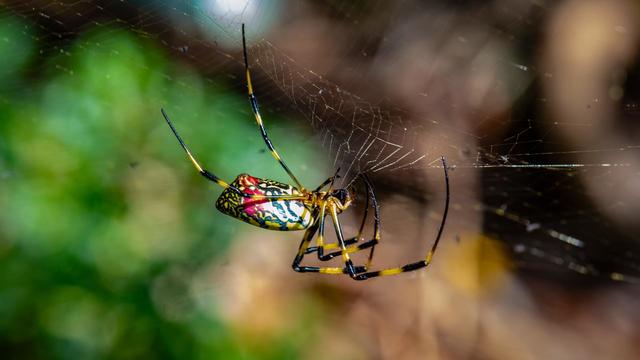
The cicadas have already taken over parts of the U.S., and they may soon have some eight-legged company. Giant flying "Joro" spiders are expected to swing into the East Coast later this summer. David Coyle, assistant professor of forest health and invasive species at Clemson University, joins CBS News to explain what to know about the arachnids.

Veterinarians emphasize it's rare for a cicada-eating issue to turn into an emergency for pets. But with vets seeing such issues across the Chicago area nonetheless, experts have some advice.
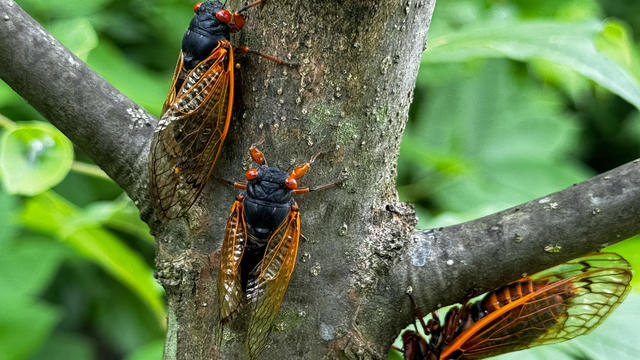
Periodical cicadas used to reliably emerge every 13 or 17 years — but spring arriving sooner interferes with the bugs' internal alarm clocks.
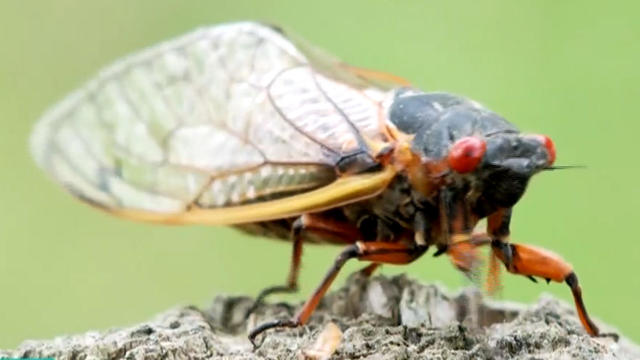
As billions of cicadas emerge from the ground across 16 states in the Southeast and Midwest, scientists are noticing a possible impact from climate change. Since the periodical cicadas that crawl out of the ground are triggered by soil temperature, and since temperatures are rising more quickly in the spring and early summer, the insects, once known for being notoriously predictable, are emerging more than two weeks earlier than usual.

Complete strangers are bonding over the rare, ongoing emergence of two groups of periodical cicadas.
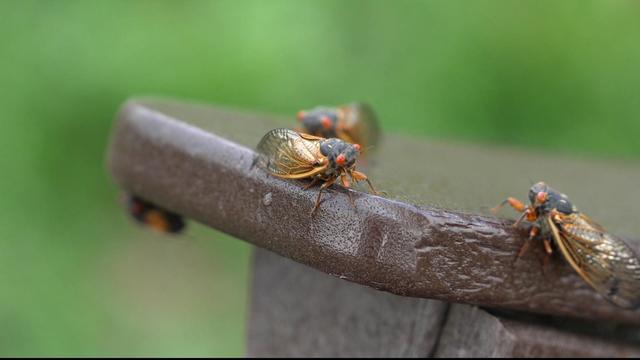
For the first time since 1803, two broods of cicadas are emerging simultaneously in several parts of the U.S. in an extraordinary show of nature. But biologists say there may be a deeper meaning to the insect invasion. Ben Tracy explains.
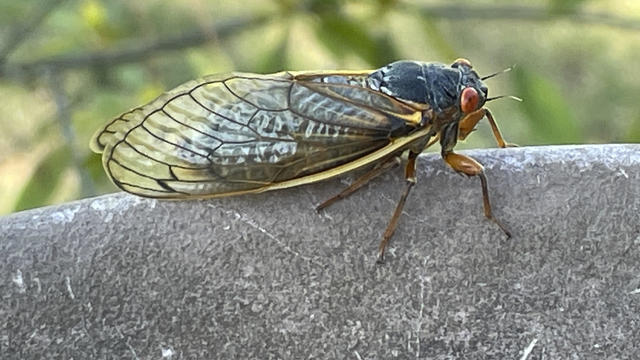
Scientists who study such things have found that cicadas urinate in a jet stream because they consume an incredible volume of fluid during their brief time above ground.

You deserve a treat. And this spring, Mother Nature is providing a seemingly endless supply – trillions of cicadas.
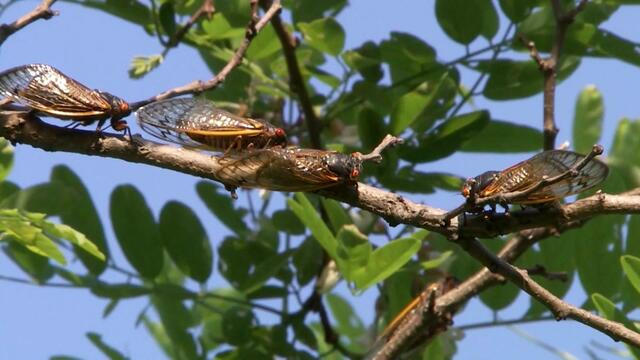
Trillions of cicadas are emerging across 12 states, from the Midwest to the East Coast, after spending more than a decade underground. In Central Illinois, there is a rare opportunity to see two types of cicadas together for the first time in more than 200 years.
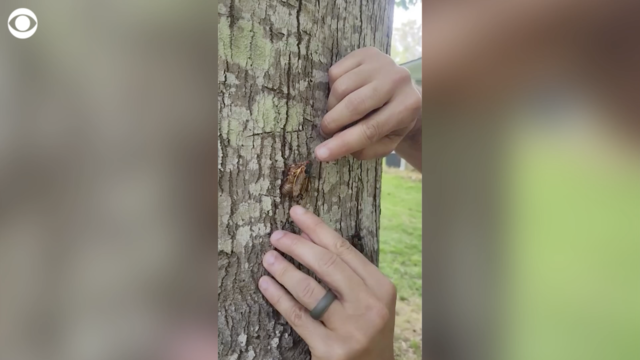
The bugs emit a loud, droning buzzing sound when they emerge — signaling they are ready to mate.
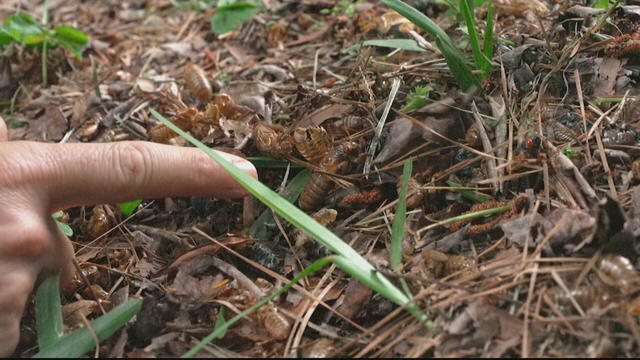
For the first time since 1803, two groups of periodical cicadas are emerging from the ground at the same time in parts of the Midwest and South. However, a small section of Central Illinois marks the only place where both the 13-year and 17-year cicadas are emerging in the same place. Dave Malkoff reports on the extraordinary event.
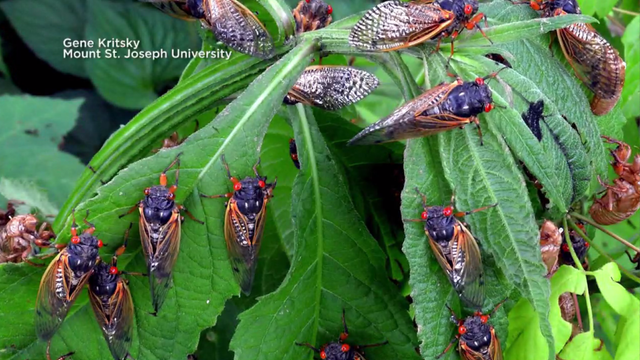
Trillions of periodical cicadas are emerging from the ground this spring, bringing with them their loud buzzing and molted exoskeletons. Here's where you will be able to see them.
It might not be summer yet, but the sounds of the season have already arrived. CBS News national correspondent Dave Malkoff traveled to the Georgia-South Carolina border, where one of two broods of periodical cicadas expected to arise this year in a historic emergence convergence is already molting and traveling to the treetops to mate.
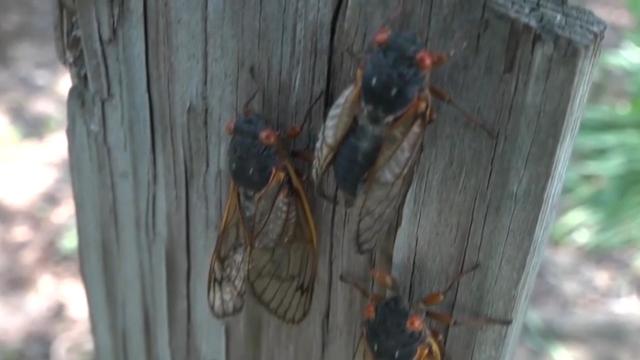
Trillions of cicadas are emerging in some parts of the country after laying dormant for more than a decade. In Illinois, two broods will co-emerge for the first time in over 200 years. The collective noise from the insects can be as loud as a jet engine. Jonathan L. Larson, extension entomologist for the University of Kentucky, joined CBS News to discuss the emergence.
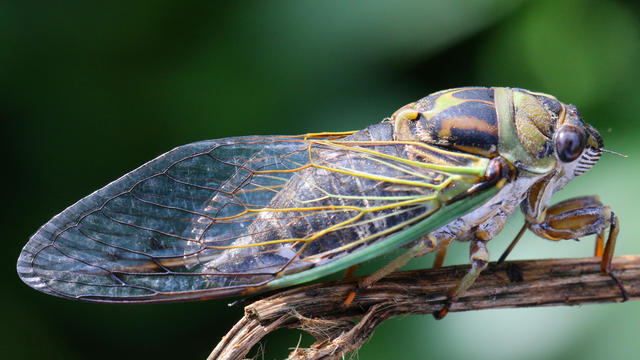
"Although to some, the noise is annoying, they pose no danger to humans or pets," the sheriff wrote. "Unfortunately, it is the sounds of nature."
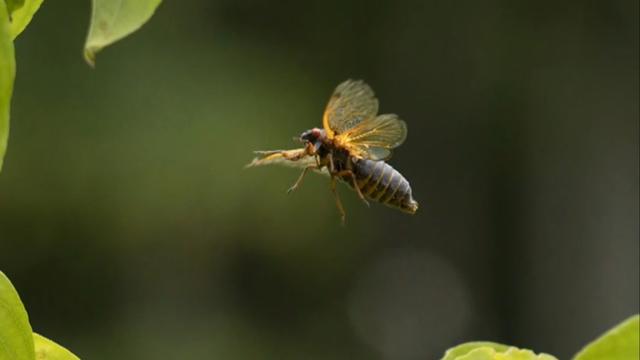
Emerging cicadas are so loud in one South Carolina county that residents are calling the sheriff's office asking why they can hear a "noise in the air that sounds like a siren, or a whine, or a roar." CBS News' John Dickerson has details.