ED O'KEEFE:
00:00:35
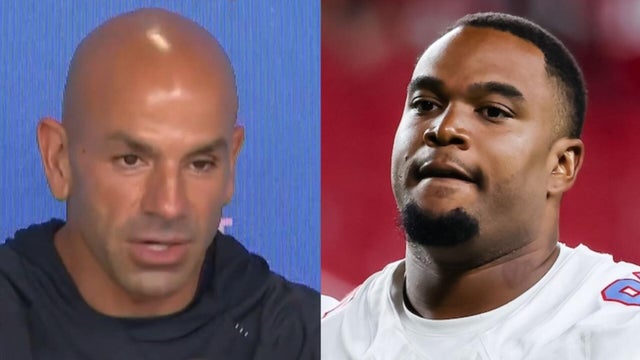
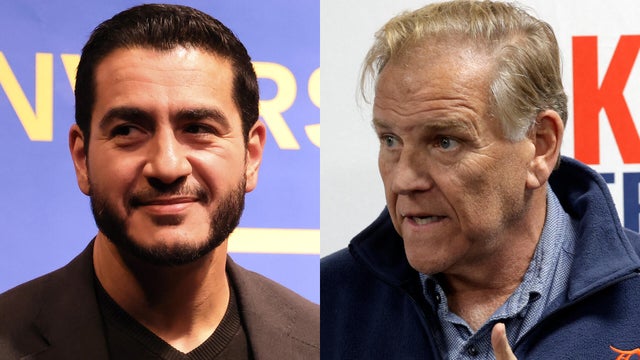
Kentucky Congressman Thomas Massie, the latest in a long line of Republicans defeated after falling out of favor with President Trump. In his concession speech, Massie made a pointed jab at his opponent-- I would have come out sooner, but I had to call my opponent and concede, and it took a while to find Ed Gallrein in Tel Aviv.
ED O'KEEFE:
00:00:55
--after more than $32 million spent by pro-Israel organizations and Trump-backed groups helped power Ed Gallrein's campaign. There is a yearning in this country for somebody who will vote for principles over party.
ED O'KEEFE:
00:01:09
Massie and Trump disagreed on the war with Iran, the Jeffrey Epstein affair, and foreign aid to Israel and Ukraine. He lost to farmer and former Navy SEAL Gallrein, who vows to be a reliable "yes" vote for Trump. I want to thank President Trump for his support, his endorsement.
ED O'KEEFE:
00:01:29
The president, who encouraged those outside groups to spend all that money, showed no mercy. He was a bad guy. He deserves to lose.
ED O'KEEFE:
00:01:37
In Georgia, another one-time Trump foe went down, as Brad Raffensperger lost his Republican bid for governor. The state's top election official famously defied Trump's demand in 2020 to find enough votes to help him win the key swing state. And even before last night's results, the president jumped into the next big contest, a Texas-sized Republican runoff between Senator John Cornyn and Ken Paxton, the state attorney general. Paxton's faced years of investigations and impeachment attempts over corruption allegations that he denies. Many Republicans fear his controversial record could lose the GOP a seat they've held for more than three decades. But Trump says he's endorsing Paxton because he's "always been extremely loyal to me."
ERROL BARNETT:
00:02:23
Ed O'Keefe, thank you.
ADRIANA DIAZ:
00:02:25
CBS News Congressional Taurean Small is in Pennsylvania, following other key primary races. Taurean, I mean, all roads always lead back to Pennsylvania, no matter what election you're talking about. But there are some House matchups that are now set in a number of key districts that we're closely watching. Tell us about those. Yeah, what makes this remarkable, Adriana, is the fact that this is a state that avoided that redistricting arms race we're seeing around the country. Yet, there are still four potential opportunities for Democrats in the state to pick up US Congressional seats. First, Seventh, Eighth, and 10th are the ones we're talking about. Let's zoom in to seven. That's where we saw Bob Brooks, the candidate backed by Governor Josh Shapiro. He's a retired firefighter and a union leader. And he had support not just from the governor, but also from the DCCC, from Senator Bernie Sanders. District One is another curious one. Last night, we were at the rally for Shapiro in Bucks County. That's where we saw his candidate there win in his primary election to take on Brian Fitzpatrick in November. We're talking about what could be the measure of the strength of Governor Josh Shapiro's coattails, especially as he's potentially considering a run for president in 2028.
ERROL BARNETT:
00:03:43
And, Taurean, you actually spoke with Governor Shapiro outside one of the polling locations. What new information did you gather? Yeah, Shapiro made the case that November would be a referendum on Trump and Trump loyalists. However, as we're seeing in the election results last night, over the past couple of months, there is clear evidence that President Donald Trump still has significant clout within Republicans across the country. Take a listen to what he's had to say about that. Trump-backed candidates have won in these primaries. Senator Bill Cassidy lost his primary. What's your response to that, considering there's evidence of Trump's staying power in his party? Well, let's see what November entails. I think what's clear is that Donald Trump keeps injecting chaos and cruelty and corruption into our Commonwealth and into our country. People are sick and tired of it. I think you're going to have a national referendum this November on Donald Trump. As we noted during our election special last night, and of course, throughout our reporting today, Governor Shapiro didn't have a challenger in his primary. He was instead looking for down ballot races to lift those up. He's hoping to get a trifecta in the State Senate, House, and of course, the governor's office, to push more progressive policies next year. But again, this is a man who's largely rumored to be a part of the potential 2028 presidential hopefuls. And as we heard from his speech last night that was largely targeted at Donald Trump, it appears that will be his key goal moving forward to push back on Trump's agenda, at least mitigating what he sees as harm to the Commonwealth here, in Pennsylvania.
ADRIANA DIAZ:
00:05:31
All right. Taurean Small, from the Commonwealth of Pennsylvania, thank you so much.
ERROL BARNETT:
00:05:34
Thanks, Taurean.
ADRIANA DIAZ:
00:05:35
Joining us now in the Broadcast Center, not a Commonwealth, here in New York State, is CBS News Executive Director of Elections and Surveys Anthony Salvanto. Anthony, you got a lot of data last night. What stood out to you? Well, one thing, I think, going forward is you've got yes, the Kentucky Fourth Congressional District. In terms of turnout, this is not the kind of thing you would typically see in a midterm primary race. And what I think Republicans are going to take away from this isn't just OK, we've talked about the president's influence. It's can the Republicans activate voters who might not ordinarily turn out in midterms without the president on the ballot. And I think you see some evidence that they can. And what that does is it speaks to November. That's going to be the central question. Trump's not on the ballot. Do those voters get activated? It seems like their apparatus is out there to do that. So that's one of the things when you look forward, I take away. So what you're saying is turnout was unusually high. Well, it's high for a midterm primary. Yeah. I mean, again, this is a sliver of the voters in Kentucky, in the district even, but in a relative way, compared to other midterm primaries, you see what that spending and that attention does.
ADRIANA DIAZ:
00:06:44
Record spending.
ERROL BARNETT:
00:06:44
And I wonder what then, those numbers suggest on the Democratic side, because the general theme seems to be Trump-backed candidates won and Democratic enthusiasm is high. But I don't know. Is that borne out by the numbers you're seeing? Well, I'll take you to Georgia, and I can take you to Pennsylvania just as well. You are seeing relatively strong Democratic turnout, and it's not just in competitive races. I'm showing you the governor's Dem primary here with Keisha Lance Bottoms. But I could show you a number from Pennsylvania CDs, as well. And some people will read that as, of course, Democrats in a midterm, they're going to vote against the president, even though he's not on the ballot. And they might expect high turnout, as well. Every indication is that they are activated, and some of these primaries do suggest that. And in our last few seconds, is there anything on redistricting or these new jurisdiction lines that has given you any hints of what's to come? I can tell you lots about redistricting, but I'll show you this. When we did polling on this, we saw a couple of things. One is that voters felt that the redistricting going on right now would give diminished political power to Black voters and Hispanic voters. A lot of Democrats, in particular, who say that. And that's coming out of the drawing of districts that you see, especially throughout the South, where some of those districts that are majority-minority districts are going away. And the other thing overall is that you get a majority who think that this is making elections more unfair. I will tell you, across partisan lines, voters do not like this. Most voters say they'd like to see more competitive districts, not just because-- it's not just about whether they can win them, but what comes out of those victories. They want it to be representative of a larger group. And to your point earlier, if that angers the non-usual voter to actually turn up in a midterm election, it could scramble the results in some places in an unexpected way. Yeah. One of the things about redistricting we have to keep emphasizing is that everything folks like me tell you about who gains and who loses is based on past behavior. It's the best we know about those voters to date.
ADRIANA DIAZ:
00:08:56
Meaning past maps. Past maps, past voting patterns. When folks come along and draw lines around people, it's because of the partisanship that they ascribe to them from what they've done in the past. They change their minds this year, all that gets scrambled.
ERROL BARNETT:
00:09:11
Stay close to Anthony's reporting because it's about to get interesting.
ADRIANA DIAZ:
00:09:15
And Anthony has a lot of new maps to study for the midterm. That is true.
ADRIANA DIAZ:
00:09:19
I know. I'm thinking about you, brother.