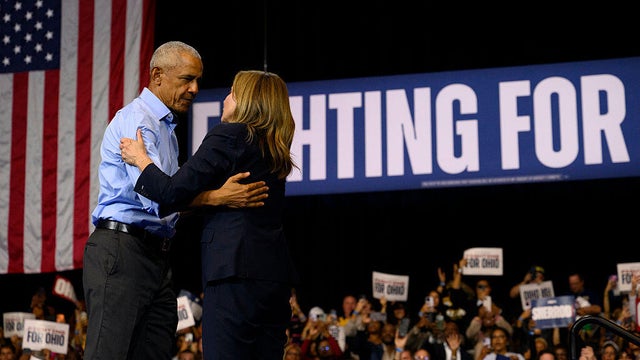
See which jobs could grow fastest — and slowest — over the next decade
New federal labor figures forecast the fastest-growing U.S. job sectors over the next decade.
Watch CBS News
New federal labor figures forecast the fastest-growing U.S. job sectors over the next decade.
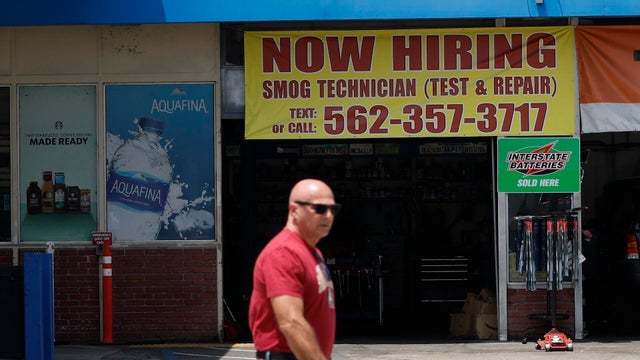
The jobs report released last week showed the job market shrank in July, after months of growth. Employers shed 23,000 jobs that month, far below the 83,000 jobs that were expected to be gained.

Friday's jobs report showed employers shed jobs last month, rather than adding 95,000 new hires that had been forecast by economists.

Layoffs have plunged this year. "Recently laid-off workers are finding jobs as fast as the economy is creating new ones," one economist said.

The Bureau of Labor Statistics will release its July jobs report on Friday, August 7. CBS News business analyst Jill Schlesinger has more on what to expect. (Sponsored by AT&T Business)
CBS News business analyst Jill Schlesinger joins CBS News 24/7 to discuss the upcoming jobs report by the U.S. Bureau of Labor Statistics and the state of the economy. (Sponsored by AT&T Business)

June's payroll gains were much lower than the 100,000 new hires that economists had predicted.
More than 57,000 jobs were added in June, according to new data, falling short of projected numbers. CBS News business analyst Jill Schlesinger has more.
The labor market continues to show strength despite rising inflation and concerns about slowing economic growth.
Hiring once again exceeded forecasts, with employers adding far more than the projected gains of 65,000.

Hint: It involves AI, and a LinkedIn economist says employers are clamoring for people to fill these roles.

A weaker-than-expected February jobs report is raising new concerns about the economy. CBS News MoneyWatch correspondent Kelly O'Grady has the latest.
Economists had forecast a gain of 60,000 jobs last month. The unexpected drop was due to job losses in health care and the federal government.
Surprise burst in hiring across the U.S. last month shows the labor market remains on solid ground.

Employers cut more than 108,000 jobs in January, the highest total for that month since 2009, new data shows.

The monthly job gains were slightly below the 55,000 forecast by economists, according to a poll by FactSet.

Economists had expected CPI to rise at an annual rate of 3% last month.
The unemployment rate in November rose to 4.6%, its highest level since September 2021.
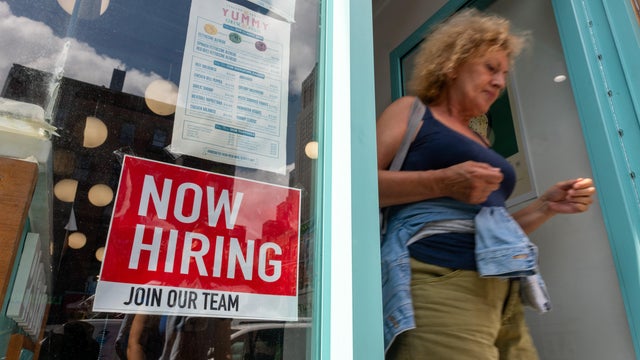
The September jobs report, which was delayed due to the government shutdown, comes amid a slowdown in hiring across the U.S.
The agency's Bureau of Labor Statistics would suspend operations if the U.S. government shuts down this week, potentially delaying key economic reports.
Internal review, which will focus on how BLS collects and reports economic data, follows claims by President Trump that the statistics bureau is politicized.

The Bureau of Labor Statistics released new data revealing the U.S. economy added 911,000 fewer jobs than originally reported from April of last year to March of this year. CBS News MoneyWatch correspondent Kelly O'Grady explains what to know.

The Bureau of Labor Statistics released updated hiring numbers from April 2024 through March of 2025, showing employers added 911,000 fewer jobs that initially recorded over those months. Kelly O'Grady explains.

The U.S. labor market added 911,000 fewer jobs in the past year than earlier reported, the Bureau of Labor Statistics announced on Tuesday. CBS News MoneyWatch correspondent Kelly O'Grady has the details. Then, Douglas Holtz-Eakin, former chief economic adviser for the George W. Bush administration and former director of the Congressional Budget Office, joins with analysis.
Economists expect the Bureau of Labor Statistics to revise its jobs data downward for the year ended in March 2025. Here's why.