FDA approves one-shot vaccine
On Saturday, the FDA approved the one-shot Johnson & Johnson COVID-19 vaccine. The race to vaccinate is picking up as new variants have been identified. Danya Bacchus reports.
Watch CBS News
On Saturday, the FDA approved the one-shot Johnson & Johnson COVID-19 vaccine. The race to vaccinate is picking up as new variants have been identified. Danya Bacchus reports.

Dr. Maria Van Kerkhove, the World Health Organization's technical lead for COVID-19, says vaccination is "critical" but "not enough" to fully defeat the virus.

Britain passed its halfway mark in its goal of vaccinating 15 million, mostly older people, by mid-February. But other European countries are still struggling with their vaccine distribution. Elizabeth Palmer reports.
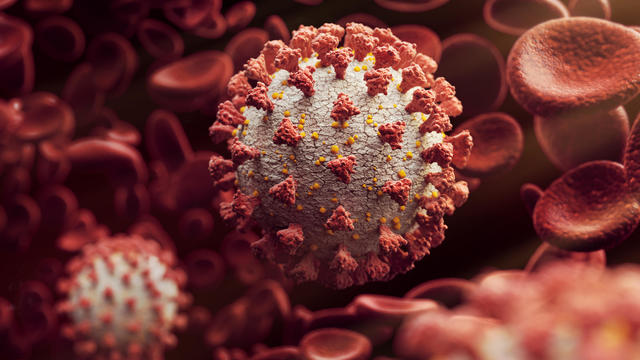
Minnesota officials say the person who has recently traveled to Brazil. It's not clear if the variant causes a more serious illness than the novel coronavirus.

President Biden is ramping up his coronavirus response by reimposing a travel ban on people coming to the U.S. from most European nations, Brazil and South Africa. This comes as Dr. Anthony Fauci and Dr. Deborah Birx say former President Trump received "parallel data" from "opposing sources" in the White House on the pandemic. CBS News senior White House correspondent Ed O'Keefe joins CBSN with the latest.

Dr. Scott Gottlieb, the former FDA commissioner, says he is "fairly confident" that a new strain of the virus from Brazil is already in the U.S., and "we're just not detecting it yet."

New COVID-19 strains have been detected in the United Kingdom, South Africa and Brazil.

The Italian prime minister won a crucial vote in the country's Senate to stay in power. Also, tech billionaire Jack Ma made his first appearance since October, and officials are being warned of a looming shortage of oxygen supplies in the Brazilian city of Manaus. Meanwhile, China is rushing to build a massive quarantine camp. CBS News foreign correspondent Ian Lee joins CBSN AM from London with those stories.

We are following the latest efforts to rescue trapped gold miners in China; Uganda's presidential election results; a migrant caravan heading towards the U.S. from Central America; and COVID-19 news out of Brazil. Ian Lee joins CBSN AM from London with the roundup.

CBS News senior foreign correspondent Liz Palmer reports from London on the global impacts of coronavirus.

Brazil's most populous state will make the coronavirus vaccine compulsory for its 46 million residents, putting São Paulo Governor João Doria at odds with President Jair Bolsonaro, a noted coronavirus skeptic who has said he will not get inoculated. Terrence McCoy, The Washington Post's Brazil correspondent, joins CBSN from Rio de Janeiro to discuss.
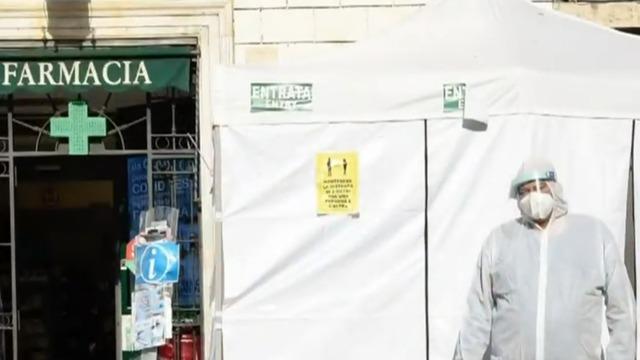
Italy plans to roll out Pfizer's COVID vaccine for widespread use in the country starting in January. Also, dozens of gunmen in Brazil effectively took an entire city hostage overnight in a brazen bank robbery, and the U.N. announced it's signed a deal with Ethiopia to allow unimpeded humanitarian access to parts of the embattled Tigray region. CBS News foreign correspondent Chris Livesay joined CBSN AM with today's headlines from around the world.

Countries across the globe continue to suffer a devastating spike of COVID-19 cases and hospitalizations. Canada has been plunged into a lockdown while Europe is emerging once again as the epicenter of the pandemic. Elizabeth Palmer reports.

Nearly 1 million people have been lost to the coronavirus around the world. Brazil still has not gotten the outbreak under control and parts of Europe are seeing worrying second waves. Elizabeth Palmer reports.

The Associated Press reports that Brazil's plan to protect the Amazon has actually had adverse effects on the country's rainforest. Since May, the rainforest has been under the control of the Brazilian Army, however, deforestation continues to plague the Amazon while investigations into the cause of these devastating wildfires have virtually come to a halt. Mauricio Savarese, the AP news reporter who is the author of the article, joins CBSN with more on the report.

Latin America, which accounts for 8% of the world population, has reported nearly 30% of the global fatalities.

The CDC says there is no evidence to suggest that consuming or handling food is associated with the coronavirus.
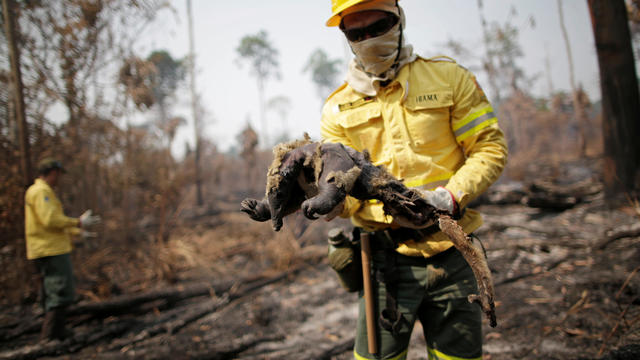
Fires in the Amazon rainforest are surging as Brazil's president claims they don't exist.

He said earlier this month that he had the virus.

Brazil has the second-most reported cases of the coronavirus, trailing only the United States. At least 80,000 people there have died. Mauricio Savarese of the Associated Press joined CBSN from Sao Paulo to explain how the country is grappling with the pandemic despite denials from its president, Jair Bolsonaro.

Since late May, Brazil has recorded more than 1,000 daily deaths on average — a gruesome plateau that has yet to tilt downward.

Brazil's President Jair Bolsonaro said he has tested positive for COVID-19 after months of downplaying the severity of the virus. Bolsonaro confirmed the test results while wearing a mask and speaking to reporters in capital Brasilia.

The fires raise even more concern during the coronavirus pandemic, as the smoke could add complications for COVID-19 patients.

Brazil, where President Jair Bolsonaro has been dismissive of the coronavirus, is the region's hardest-hit nation by far.

Brazil is on track to have the most coronavirus-related deaths in the world by the end of the summer, according to one model.