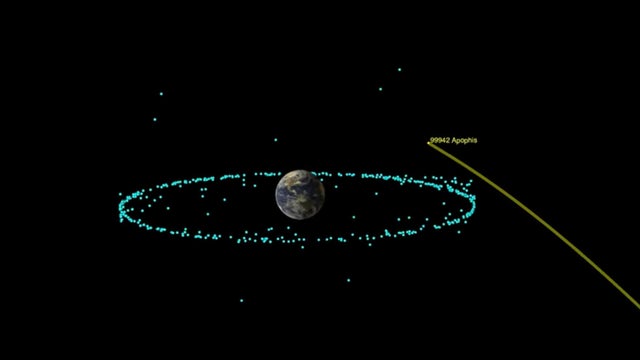
"God of chaos" asteroid will pass close to Earth in 3 years, NASA says
People on the ground in the Eastern Hemisphere will be able to observe the asteroid with their own eyes, weather permitting, according to NASA.
Watch CBS News
People on the ground in the Eastern Hemisphere will be able to observe the asteroid with their own eyes, weather permitting, according to NASA.
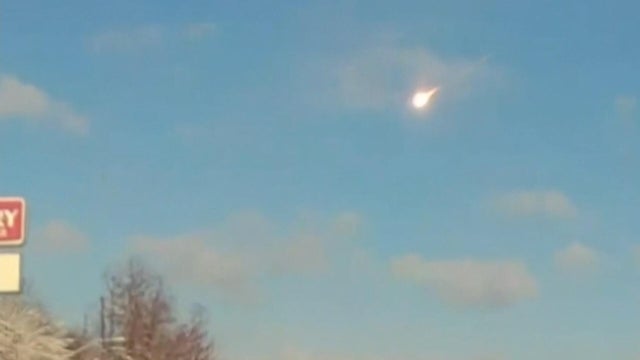
An asteroid weighing about 7 tons and traveling at 45,000 miles per hour zoomed over multiple states and lit up the sky, causing a loud boom that some residents mistook for an explosion. Mark Strassmann reports.
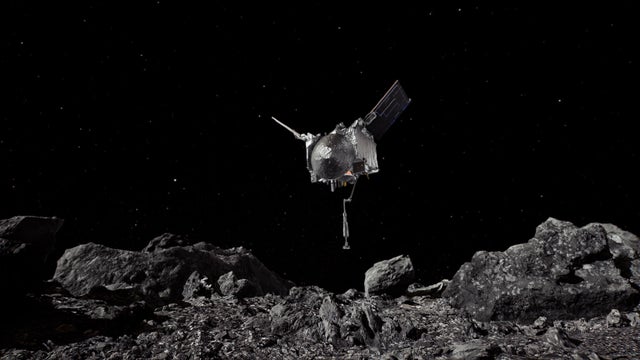
Samples collected from the asteroid Bennu are continuing the shed light on the origins of the solar system and how life developed on Earth, scientists say.
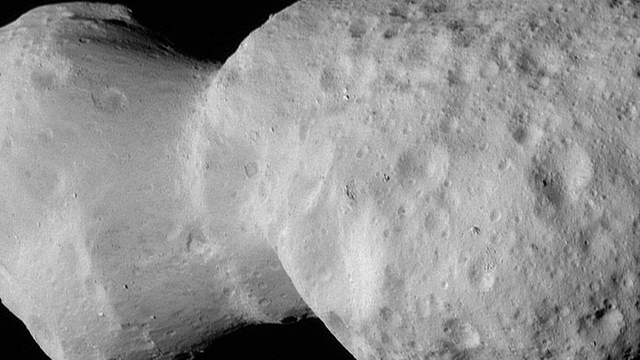
This asteroid is bigger than scientists anticipated, about 5 miles long and 2 miles wide at its widest point — resembling a deformed peanut.
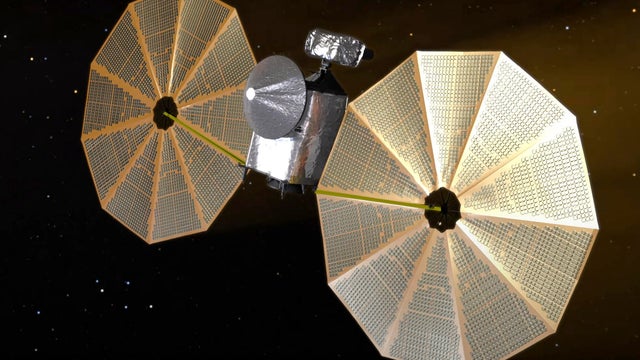
The flyby is a dress rehearsal for 2027 when Lucy reaches its first so-called Trojan asteroid near Jupiter.
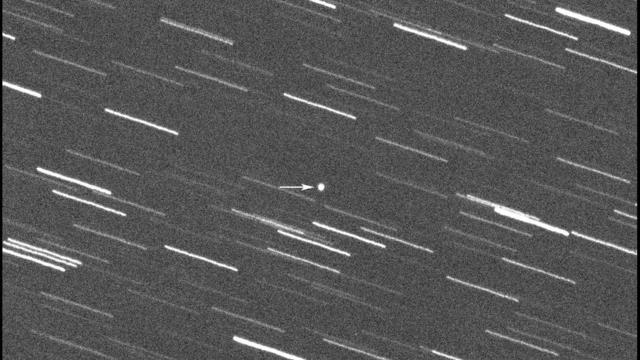
The 2024 YR4 asteroid has a near-zero chance of striking Earth, but a slim chance of hitting the moon, new research says.
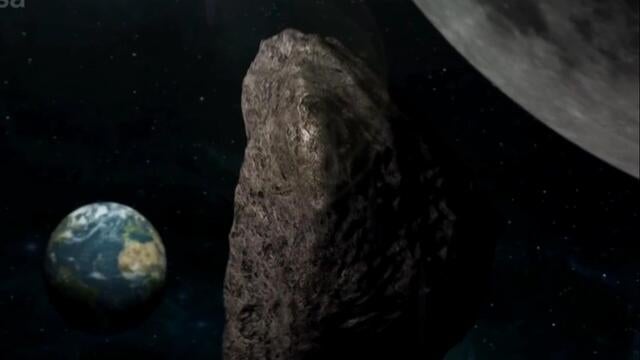
Astronomers believe thousands of large undiscovered asteroids, that could cause regional damage, may be in space.
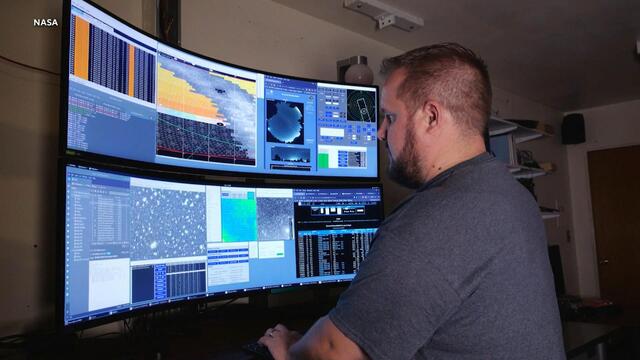
NASA was recently tracking a large asteroid, known as the "city killer," after finding a small chance of it hitting Earth in 2032. NASA says it "no longer poses a significant threat" in an analysis, but it's not the only space rock astronomers are monitoring. Kris Van Cleave shows how "asteroid detectives" and "planetary defenders" are trying to protect Earth from a potential disaster.
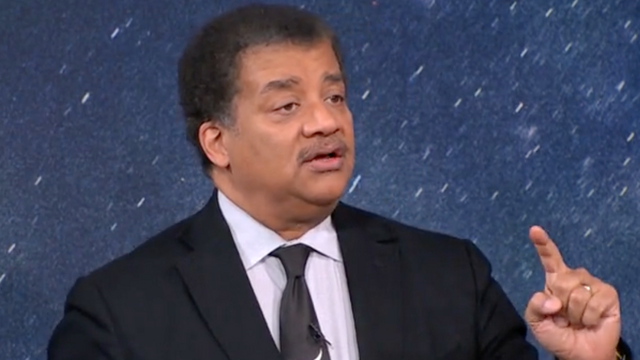
Astrophysicist and best-selling author Neil deGrasse Tyson shows "CBS Evening News" co-anchor Maurice DuBois the path of Asteroid 2024 YR4, which is no longer a risk to Earth in 2032. "This is a reminder that these things are out there," Tyson said.
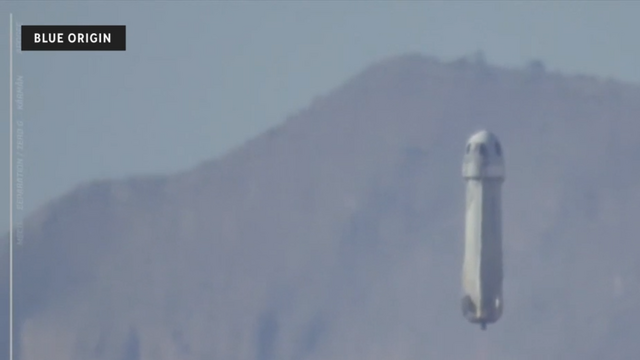
Blue Origin's 10th space tourism flight, nicknamed "Perfect 10," took off from West Texas on Tuesday. The six-person crew launched into suborbital space on the New Shepard Rocket and landed safely 10 minutes later. Franklin Institute chief astronomer Derrick Pitts joins "The Daily Report" to discuss.
2024 YR4 now has roughly a 0.004% chance of hitting Earth in about eight years, NASA said.
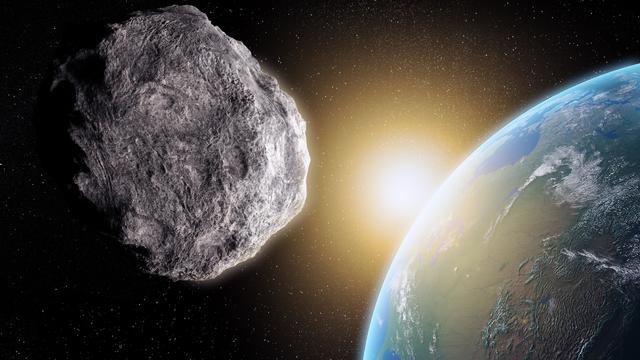
"An asteroid this size impacts Earth on average every few thousand years and could cause severe damage to a local region," the European Space Agency said.
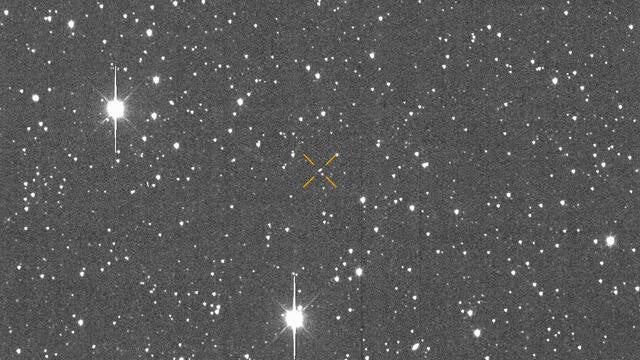
The asteroid 2024 YR4 has a very small chance of striking Earth when its orbit briefly intersects our planet's in December 2032.
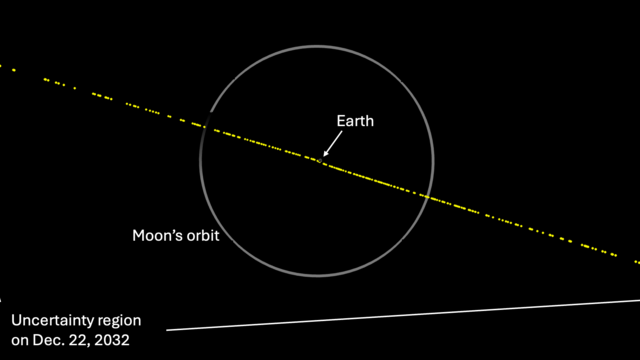
Astronomers will use the Webb telescope to closely monitor the size and trajectory of an asteroid that has a slim chance of hitting Earth in 2032.
The head of planetary defense at the European Space Agency discusses 2024 YR4, an asteroid with a small chance of striking Earth eight years from now.
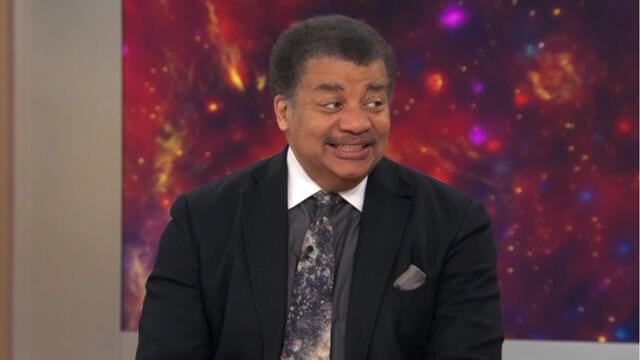
Scientists first spotted asteroid 2024 YR4 in December, initially calculating a record-high 3.1% chance of impact. While the odds have since dropped, questions remain. Astrophysicist Neil deGrasse Tyson joins "CBS Mornings Plus" to break it all down.
An asteroid gaining notoriety for its potential to collide with Earth in 2032 was estimated Tuesday to have roughly a 3% chance of striking our planet -- the highest probability ever assigned -- before additional analysis Wednesday lowered the chances to about 1.5%, according to NASA. Derrick Pitts, chief astronomer at the Franklin Institute, joins to discuss.
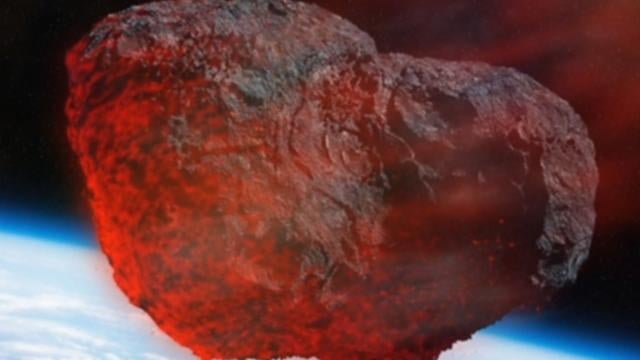
Scientists are closely watching a recently discovered asteroid that is being called a potential "city-killer." NASA calculates there is a 1.6% chance it could hit the Earth in 2032. CBS News space consultant Bill Harwood has more.
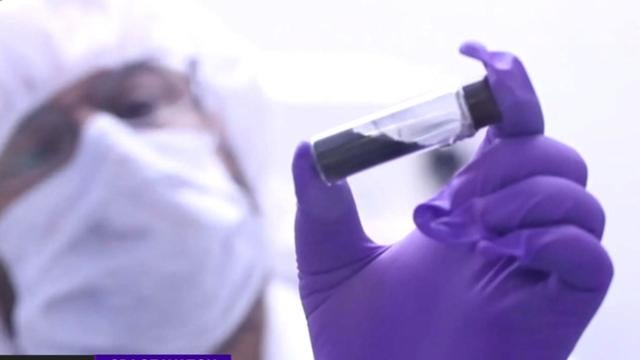
Scientists reported this week that asteroid samples taken from a distant asteroid known as Bennu were found to contain key organic molecules necessary to sustain life. CBS News space consultant Bill Harwood has more.
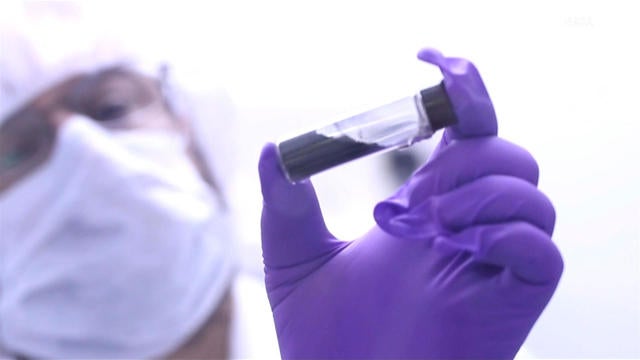
Samples of rock and dirt which were returned to Earth in 2023 from the asteroid Bennu have been analyzed and found to contain some of the key building blocks of life, including ammino acids, scientists said Wednesday.

A NASA spacecraft has returned asteroid samples that hold not only the pristine building blocks for life but also the salty remains of an ancient water world.
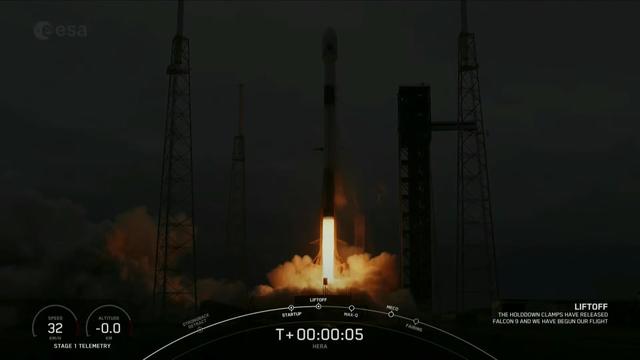
The European Space Agency launched its Hera spacecraft to study an asteroid NASA crashed into two years ago. The mission aims to see if Earth can defend against potential deadly space rocks, but results won't be available until 2026.
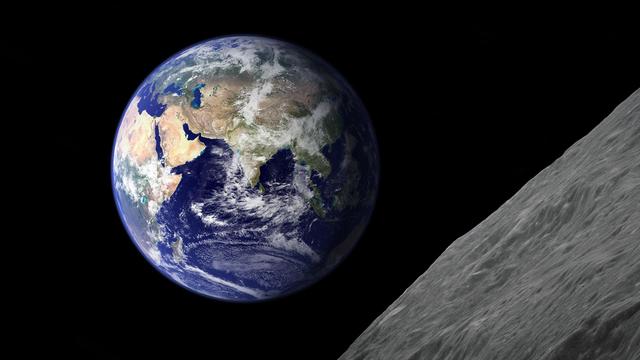
For the next two months, Earth will have a "mini-moon" when a small asteroid temporarily orbits the planet. Scientists say the asteroid, which is only 33 feet long, will enter Earth's gravity in a horseshoe orbit September 29 before leaving on November 25. Most people won't get a glimpse of this mini-moon though, it's too small to see without professional equipment.
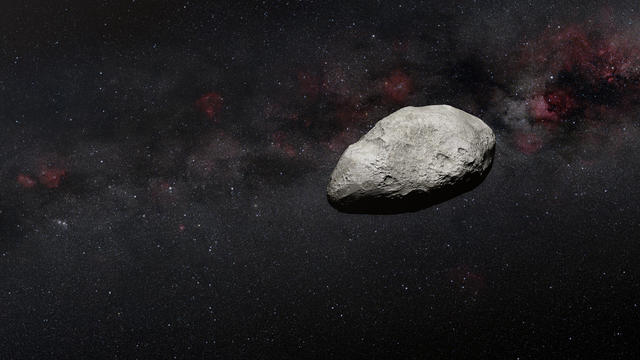
Scientists studied four asteroids that were rich in silicate, and found molecular water on two of them.
The asteroid, as big as a skyscraper and stadium, will pass within 1.7 million miles of Earth and you can see it on a NASA website.