With gas prices surging, some Philadelphia-area drivers consider cutting back
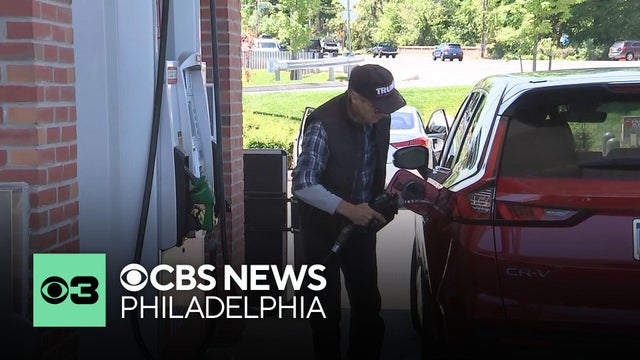
With gas prices surging because of the Iran war, some Philadelphia-area drivers say they plan to drive less.
Watch CBS News
With gas prices surging because of the Iran war, some Philadelphia-area drivers say they plan to drive less.
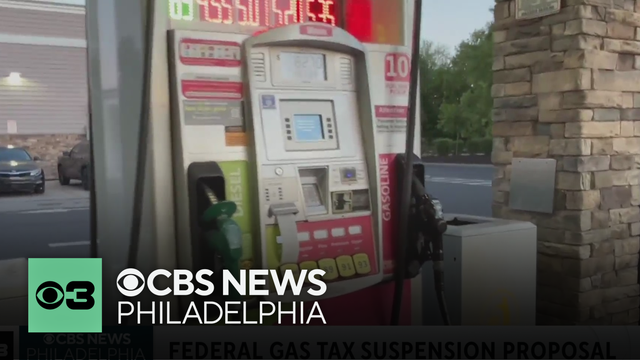
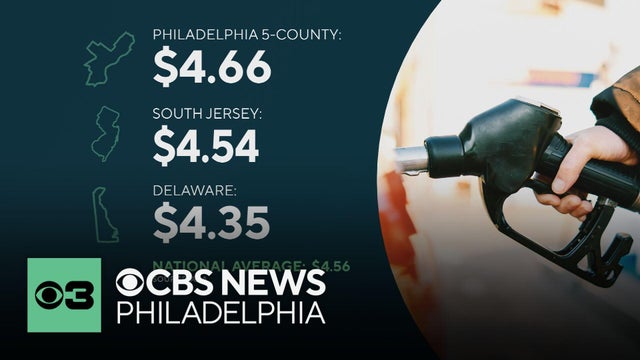
President Trump has he wants to suspend the federal gas tax "for a period of time" as prices at the pump continue to rise. In the Philadelphia area, the average cost of gas is up to $4.62, 12 cents higher than the national average.
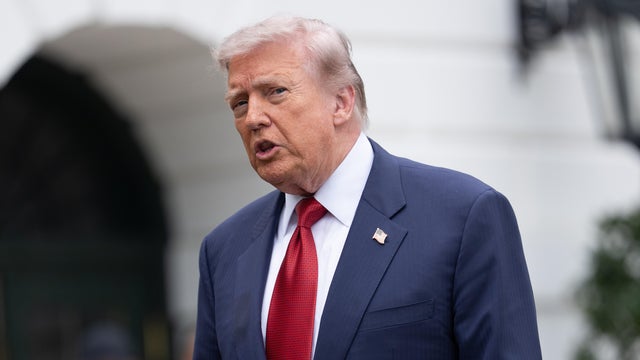
President Trump made the comments in a phone interview with CBS News chief White House correspondent Nancy Cordes.
A gallon of gas is up 22 cents in Philadelphia since the past week, and prices spiked 11 cents overnight in Delaware even as President Trump claims a deal with Iran is "possible." Josh Sanders has the latest from the Pulse Desk.
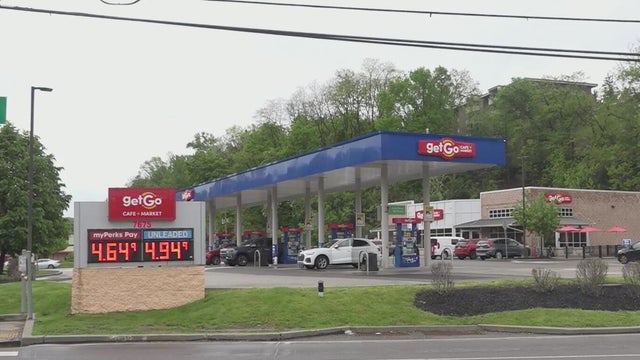
Pennsylvania state lawmakers on both sides of the aisle are talking about suspending the gas tax for some relief.
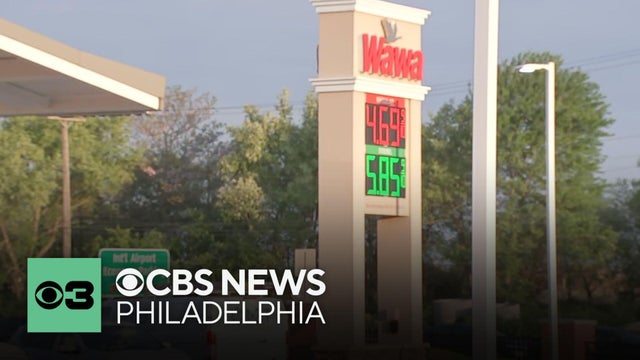
Gas prices climbed even higher in the Philadelphia area Tuesday night into Wednesday morning, with the Philadelphia 5-county average price now at $4.65 per gallon. Ray Strickland chats with rideshare drivers at a South Philly Wawa gas station who are hoping prices can decrease soon.
Gas prices in the Philadelphia area climbed to around $4.58 per gallon this week, according to data from AAA.
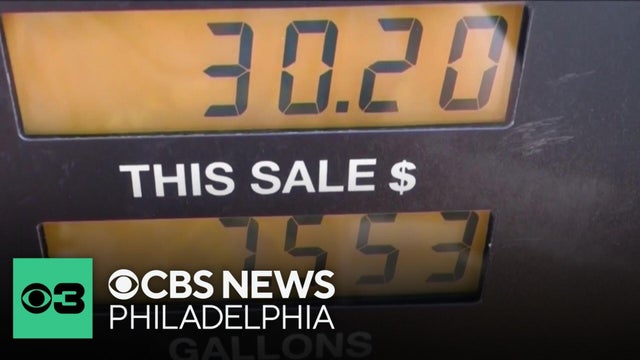
Drivers across the Philadelphia region say rising gas prices are becoming increasingly difficult to manage, as tensions involving Iran continue to disrupt global oil markets and raise concerns about future supply.
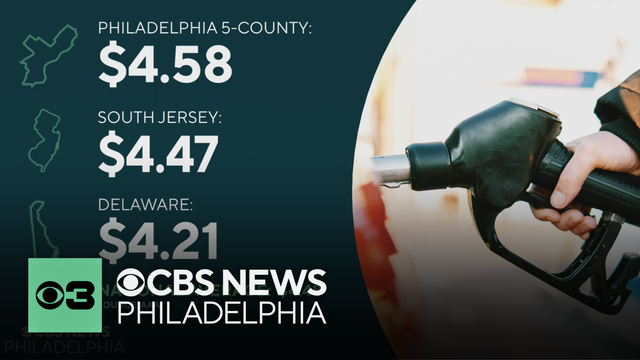
Gas prices jumped again overnight nationwide and the Delaware Valley. In the Philadelphia five-county area, the average price of gas is up to $4.58 a gallon, while in South Jersey the average is up to $4.47.
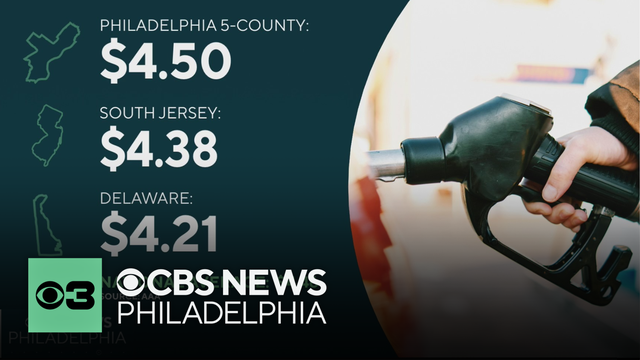
Drivers are waking up to a new national average of $4.46 for a gallon of gas as the war with Iran continues into its third month. In the Philadelphia 5-county area, the average price at the pump is up to $4.50.
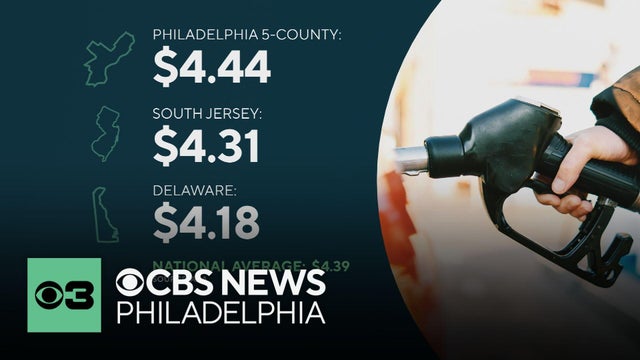
The price of a gallon of gas jumped another 10 cents in the Philadelphia area overnight, bringing the city 5-county average to $4.44. The national average has jumped to $4.39 as the stalling negotiations with Iran led to a spike in oil prices. Josh Sanders has the latest from the Pulse Desk.
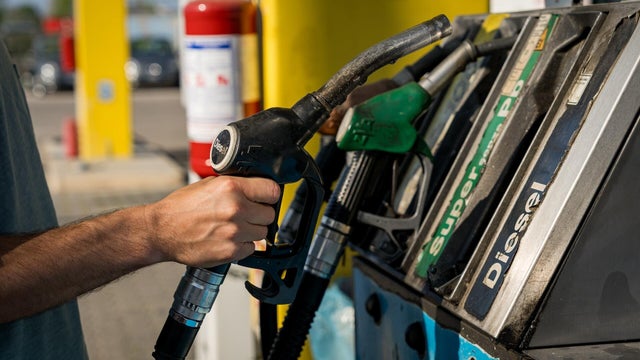
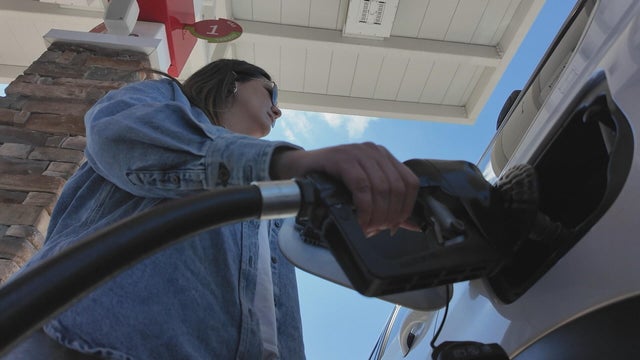
Drivers in the Philadelphia area say filling up their gas tanks is painful as prices surge amid the ongoing war with Iran.
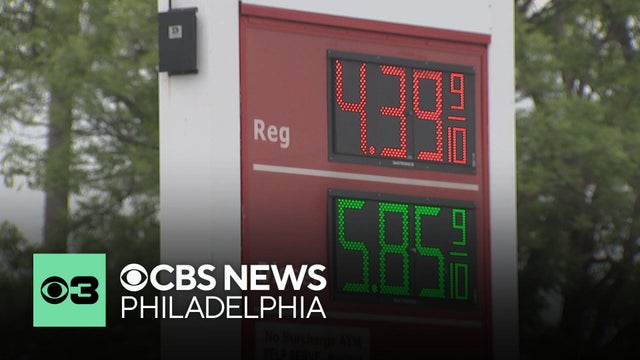
Drivers fueling up in Philadelphia on Thursday said the rising prices are hitting them hard. Reporter Dan Snyder has the latest prices and reaction from drivers.
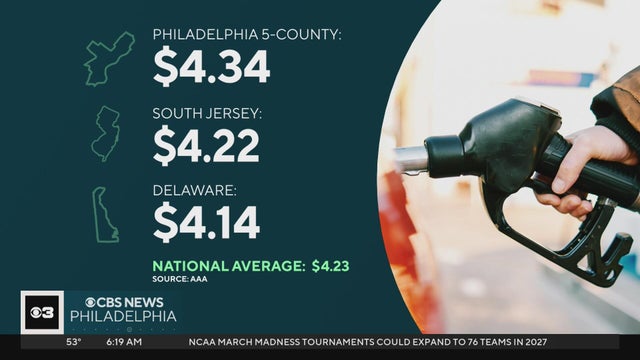
Gas prices have seen a significant uptick over the past two days across the Delaware Valley, where the average price per gallon is well over $4. In the Philadelphia 5-county area, the average cost is up to $4.34 on April 29, more than 10 cents higher than the national average, according to AAA.
Drivers in Pennsylvania and the Philadelphia five-county area can expect to pay even more at the pump after gas prices shot up overnight.
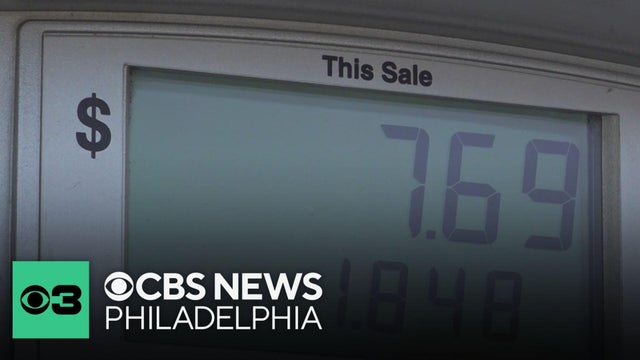
While gas prices have climbed amid the Iran war, Boyle introduced a plan to try to drive down the prices.
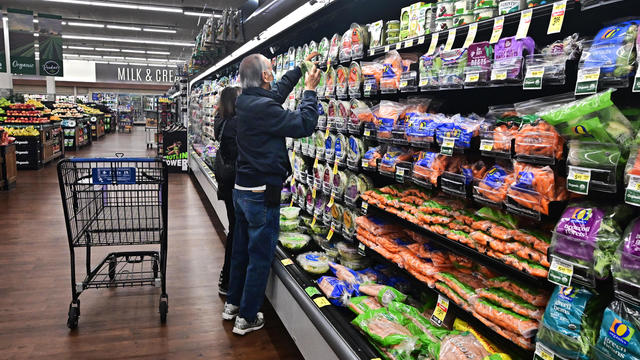
These charts track prices consumers pay for groceries and other goods now compared to five years ago.
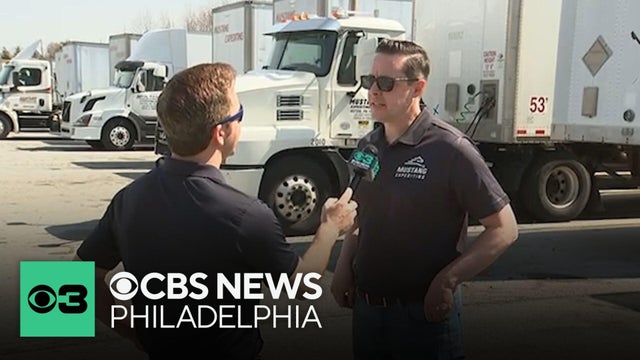
Gas prices are climbing, putting a strain on the transportation industry and its workers in the Philadelphia area.
Rising gas prices are affecting transportation-related businesses in the Philadelphia area such as Wingmom South PA and New Garden Flying Field.
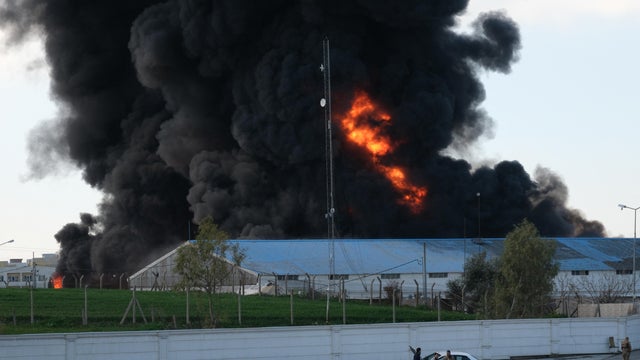
President Trump warned the U.S. "hasn't even started destroying what's left in Iran," and previewed that strikes on bridges and power plants could be next.
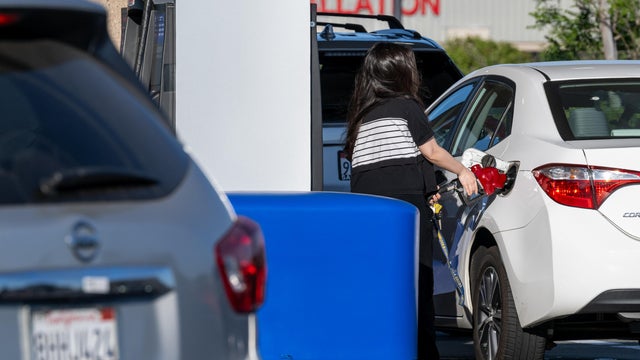
The average price of gas across the U.S. last reached $4 after Russia's invasion of Ukraine sent crude oil prices surging.
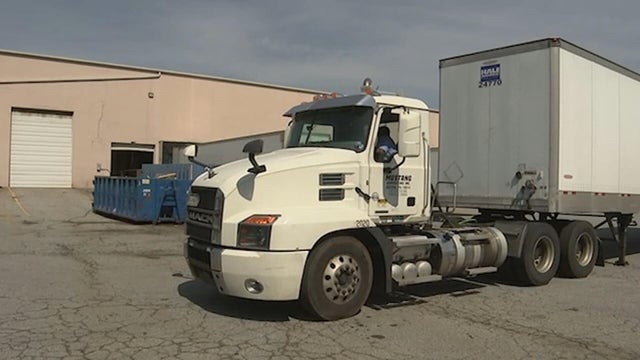
Mustang Expediting in Aston says profitability is practically running on empty with rising gas prices.
For the first time in more than three years, the national average price of gas has jumped to more than $4 a gallon.
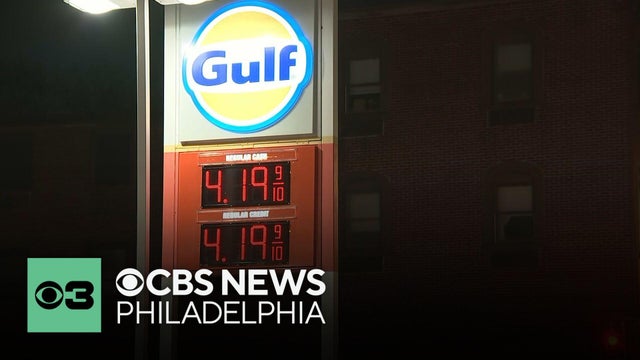
Nationwide average gas prices have crossed the $4-per-gallon mark for the first time since 2022, after Russia's invasion of Ukraine. Josh Sanders has the latest from the Pulse Desk.
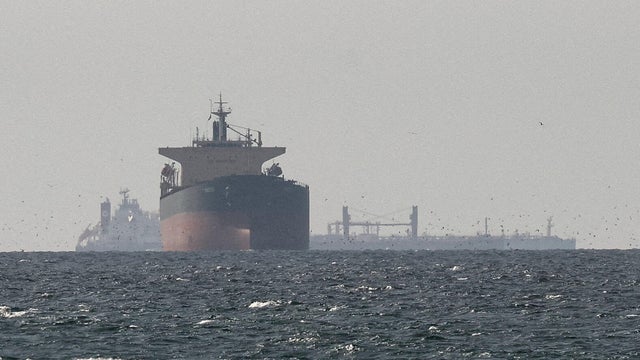
The president threatened to "obliterate" Iranian power plants if Iran didn't reopen the Strait of Hormuz by late Monday night Eastern Daylight Time.