Supreme Court lets Trump end program protecting Haitians, Venezuelans, others
The parole program, known as CHNV, temporarily protected roughly 532,000 people from Cuba, Haiti, Nicaragua and Venezuela from the risk of deportation.
Watch CBS News
The parole program, known as CHNV, temporarily protected roughly 532,000 people from Cuba, Haiti, Nicaragua and Venezuela from the risk of deportation.

The Supreme Court cleared another hurdle for the Trump administration to strip temporary legal protections for hundreds of thousands of migrants.

President Trump issued a proclamation on March 14 invoking the Alien Enemies Act to summarily deport Venezuelan migrants who are allegedly members of the gang Tren de Aragua.

A total of 532,000 migrants from from Cuba, Haiti, Nicaragua and Venezuela entered the U.S. under the CHNV policy.

Presidents are given the extraordinary power by the 227-year-old law to order the arrest, detention and deportation of noncitizens who are 14 years or older and come from countries staging an "invasion or predatory incursion" of the U.S.

President Trump's extraordinary order is breathtaking in its scope and has little precedent in U.S. history.

The Trump administration is reversing the Biden administration's decision to extend the Temporary Protected Status program for Venezuelans in the U.S.

President-elect Donald Trump says Venezuela's embattled opposition leader must be protected as President Nicolas Maduro takes the oath of office for a third six-year term.

Over 100 people gathered in Midtown Manhattan to protest as Nicolás Maduro clings to power in Venezuela. CBS News New York's Lisa Rozner reports.

There is growing concern among the police over an increase in Venezuelan gang activity across New York City.

The U.S. seized Venezuelan President Nicolás Maduro's plane in the Dominican Republic and brought it to Florida on Monday, the Justice Department said.

Hundreds of people joined a rally in Union Square Saturday to protest election results in Venezuela.

Demonstrators gathered outside the United Nations Friday to protest recent election results in Venezuela.

Demonstrators gathered outside the United Nations Friday to protest recent election results in Venezuela. CBS New York's Natalie Duddridge spoke to Venezuelans who fear for their loved ones back home.

Nicolás Maduro was declared the winner in Venezuela's presidential election Sunday, but his opponents immediately disputed the results, claiming a landslide win.

Venezuelan Americans in New York City are angry, devastated and defiant after the recent presidential election in Venezuela. CBS New York's Jessica Moore reports.

The 19-year-old is facing attempted first-degree murder charges. CBS New York's Jennifer Bisram reports.

Ten Americans and a fugitive wanted by the U.S. have been released from Venezuelan custody in exchange for the release of a close ally of Venezuelan President Nicolás Maduro.

The governor says the program will be a double-whammy for New York, solving two issues -- employers who need workers, and asylum seekers who need jobs. CBS New York's Political Reporter Marcia Kramer has the details.

Nonprofit Project Rousseau is working nonstop to help the newcomers file work authorization papers.

Mayor Eric Adams says the Biden administration's new work authorization for Venezuelans is a good first step toward addressing the asylum seekers crisis, but it's not enough. CBS New York's Natalie Duddridge has more local reaction.

Wednesday's demonstration was tame compared to a night earlier when 10 people were arrested.

After months of being pressured to do something about the asylum seeker crisis, President Joe Biden announced Wednesday hundreds of thousands of Venezuelans will be given work permits and granted protection. CBS New York's Ali Bauman reports from Staten Island, where there's more pushback against migrants traveling to our area. Read more: https://cbsloc.al/3Puq6dc
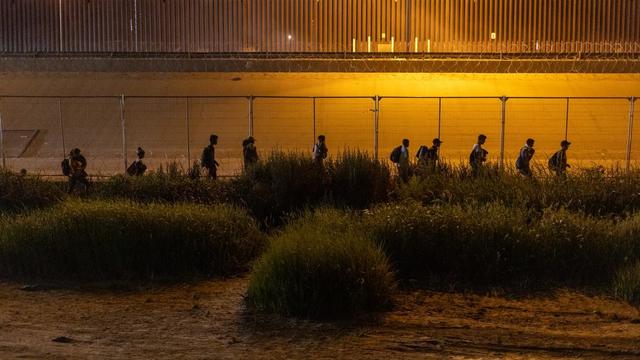
The Biden administration will make hundreds of thousands of migrants from Venezuela eligible for work permits and deportation protections under an expansion of the Temporary Protected Status policy.

Governors in border states, like Texas and Florida, continue to send migrants to northern cities, including New York. While we see the faces of these new arrivals, few may know just what they've gone through and why they made the decision to leave home. CBS2's Astrid Martinez takes a closer look.