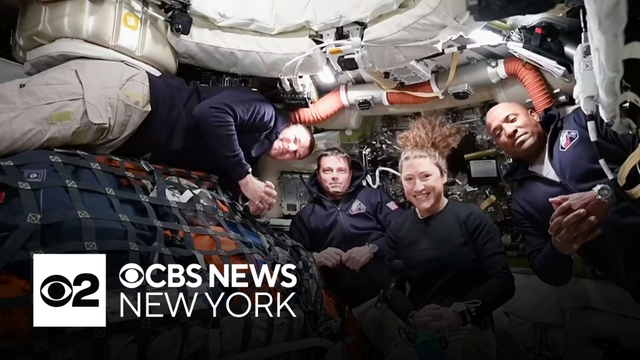
Artemis II crew on the way to far side of the moon
The crew on board Artemis II is on their way to the far side of the moon after spending 25 hours in Earth's orbit. CBS News' Jarred Hill reports.
Watch CBS News
The crew on board Artemis II is on their way to the far side of the moon after spending 25 hours in Earth's orbit. CBS News' Jarred Hill reports.
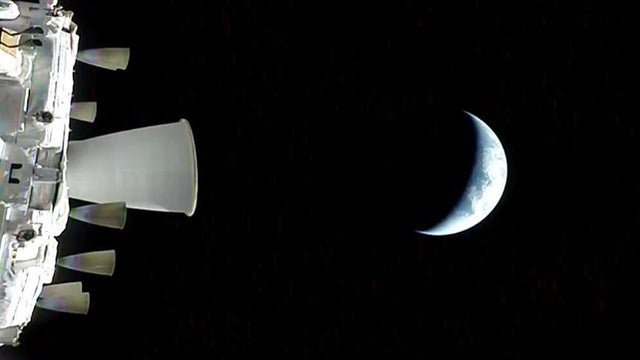
The engine firing provided a slingshot-like boost to the Orion capsule, speeding it to 24,500 mph, the velocity needed to break free of Earth's gravitational clasp for a trek to the moon.
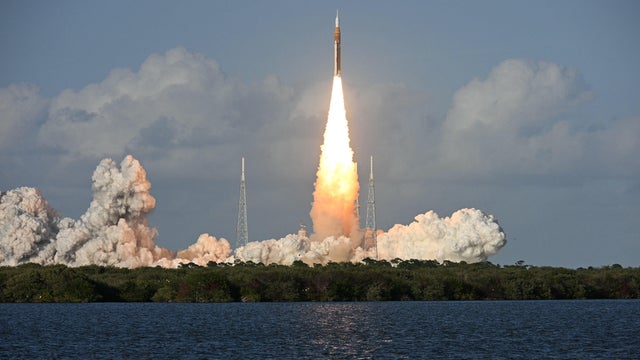
NASA's Artemis II astronauts launched on a nine-and-a-half-day mission around the moon and back.
The four-person team on NASA's Artemis II is orbiting earth after a successful launch Wednesday night from Kennedy Space Center in Florida.
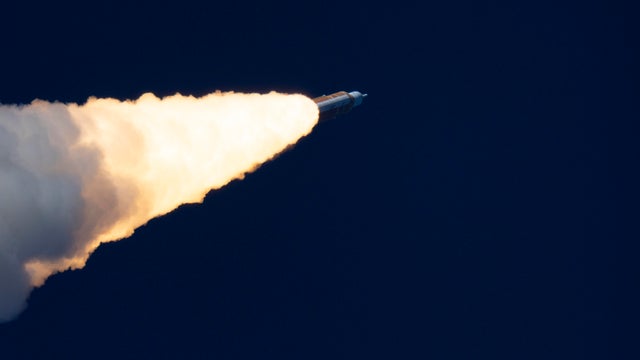
NASA's Artemis II astronauts will spend about 24 hours orbiting the Earth and running checks on their spacecraft and life support systems before heading to the moon.
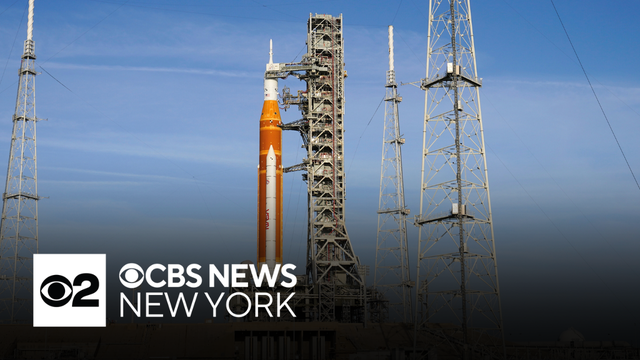
NASA's Artemis II mission aims to send four astronauts on a nine-and-a-half-day journey around the moon and back. The launch window at the Kennedy Space Center opens at 6:24 p.m. Wednesday.
NASA is set to launch the Artemis II rocket for their historic lunar mission. Franklin Institute's Chief Astronomer Derrick Pitts gives a deeper dive on what to expect.
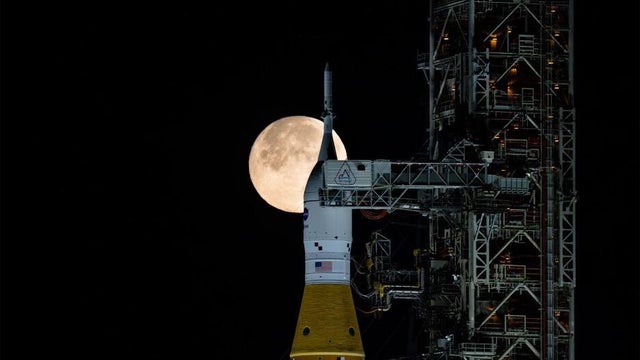
NASA launched four astronauts on a historic nine-day trip around the moon and back. Here's everything to know about the Artemis II mission.
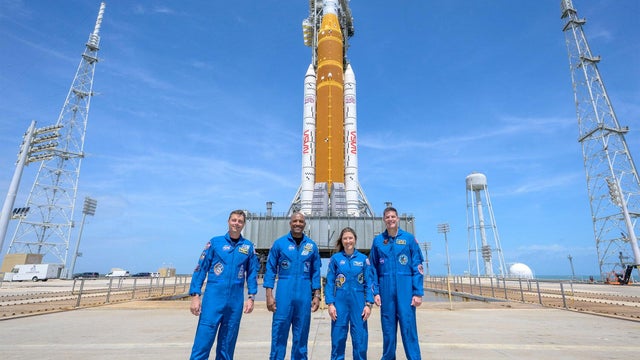
Forecasters continue to predict an 80% chance of favorable weather on Wednesday for the launch of four astronauts on a flight to the moon.
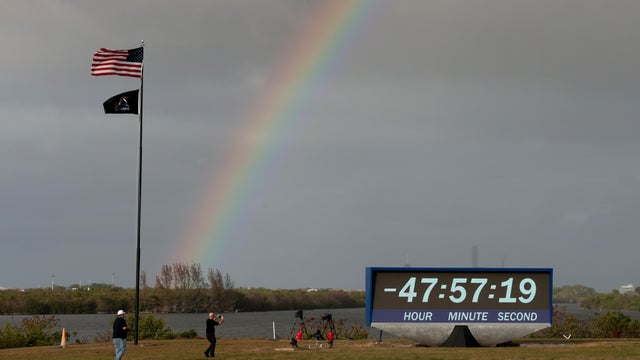
Countdown clocks began ticking Monday, setting the stage for launch of the Artemis II moon mission early Wednesday evening.
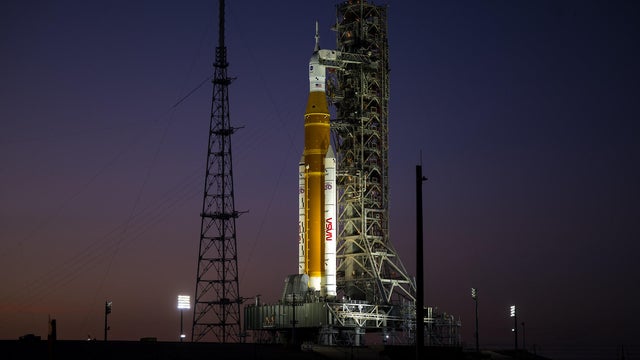
The countdown to launch of the Artemis II crew's flight around the moon begins Monday at the Kennedy Space Center in Florida.
NASA is set to launch a historic flight of four astronauts on a trip around the moon and back. The Artemis II mission is scheduled to lift off Wednesday night.
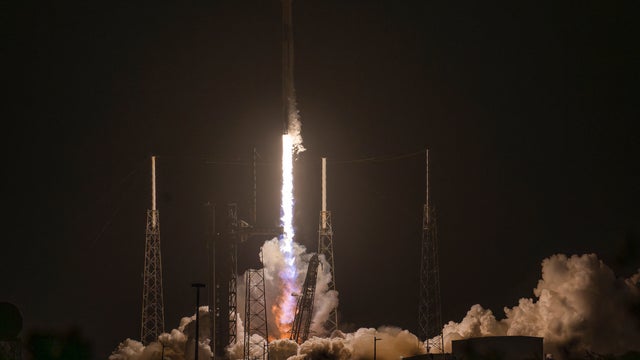
The two-woman, two-man crew is replacing four other station fliers who came home early last month due to a medical issue one was having.
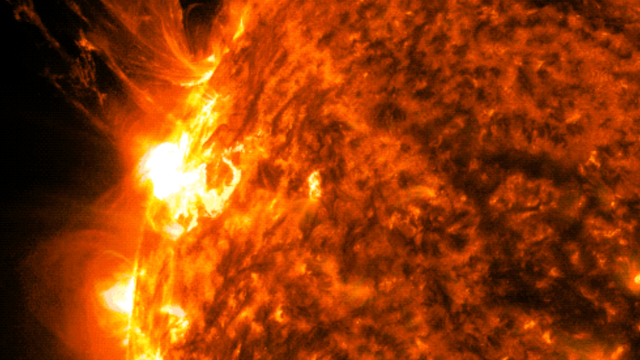
Solar flares and other activity can disrupt radio communications, power grids and navigation signals, according to NASA.
The first supermoon of the year is expected to light up the skies late Monday night into early Tuesday morning.

A blood moon rose in the night sky this week, offering a dazzling celestial event for people across multiple continents.

President Trump announced U.S. Space Command headquarters will move from Colorado Springs to Huntsville, Alabama.
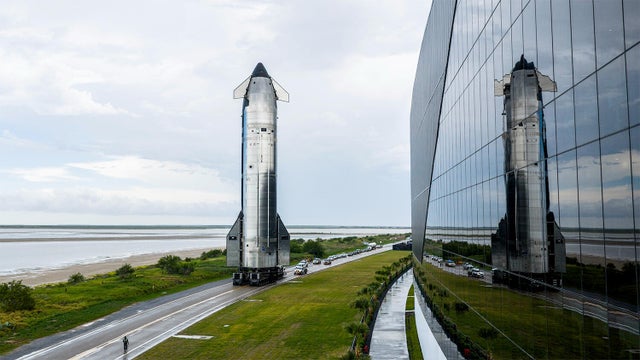
Taking no chances, SpaceX called off an attempt to launch its huge Super Heavy-Starship rocket after running into problems with ground equipment.

The Perseids meteor shower — considered one of the best shows in the sky — is set to peak this week.

NWA 16788, the largest piece of Mars on Earth, fetched $5.3 million at auction. Franklin Institute chief astronomer and planetarium director Derrick Pitts joins CBS News with more.
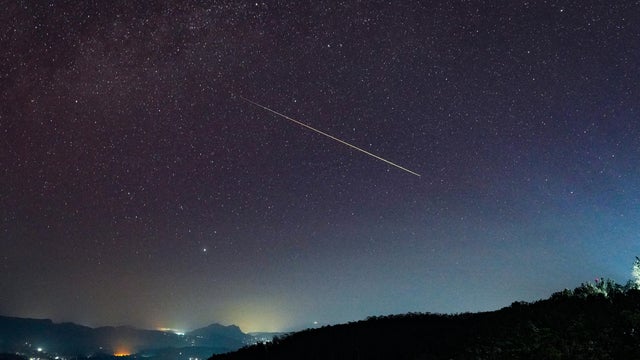
The Perseids meteor shower begins this week and is expected to offer one of the best astronomy shows of 2025.

Actor Pedro Pascal narrates the time-traveling journey through space at the American Museum of Natural History.
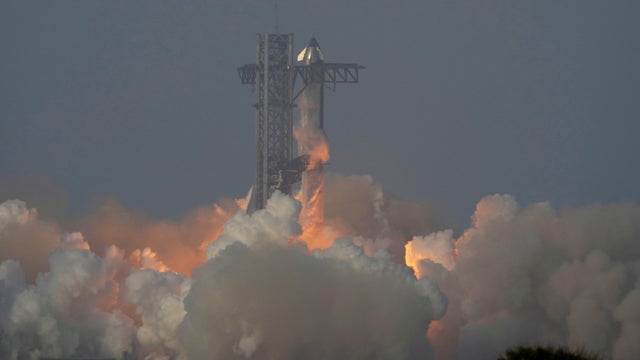
After back-to-back Starship upper stage failures, SpaceX on Tuesday again launched the world's most powerful rocket, but faced new problems.

Cambridge University researchers found what they believe are the strongest signs yet of possible life on another planet.

"CBS Mornings" Gayle King and the rest of Blue Origin's historic all-women spaceflight crew blasted off on Monday.